
Active· since Feb 27, 2026
- 150
- days running
- 0
- relaunches
Ad copy
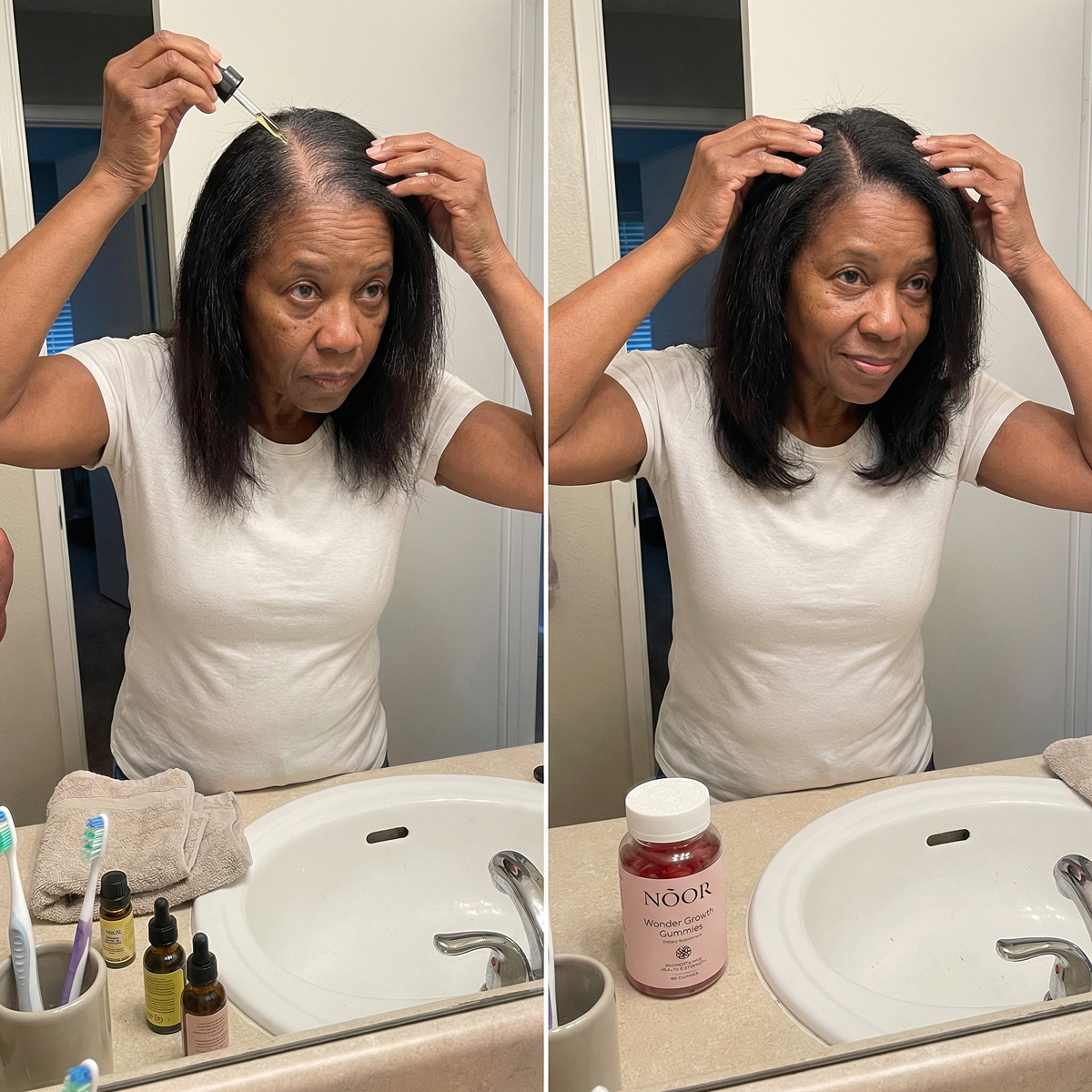
I know the stress is making it worse. I KNOW that. Every doctor has told me. My therapist has told me. My husband has told me. The internet has told me. "Stress causes hair loss." I know. But nobody — not one single person — has told me how to stop being stressed when the thing causing the stress is my hair falling out. Let me tell you what the shedding-stress loop actually looks like from the inside. And what finally broke it. ======== I'm 60 years old. I live in northern New Jersey. About forty minutes outside the city. I was a social worker for 25 years. I spent my career helping other people manage their anxiety, their trauma, their spirals. I know what a psychological loop is. I've explained it to hundreds of clients. "You're caught in a cycle. The thought triggers the emotion. The emotion reinforces the thought. And it loops." I drew that diagram on whiteboards for 25 years. And then I got trapped in one myself. About my hair. ======== It started when I was 56. Post-menopause. The shedding came on gradually. More hair in the brush. More hair on my pillow. More hair in the drain. Normal at first. Or what I told myself was normal. But it kept increasing. By 57, the shedding was impossible to ignore. I'd wash my hair and look down and the drain would have a clump in it. Not a few strands. A clump. That's when the watching started. ======== Let me explain what "watching the drain" means. It's not a glance. It's not a casual observation. It's a ritual. Every night before I wash my hair, my body tenses. My shoulders tighten. My jaw clenches. My stomach drops. Because I know what's coming. I step into the shower. I wet my hair. I apply shampoo. And I look down. I watch. Every hair that falls. Every strand that separates from my scalp and drifts down my body and swirls toward the drain. I count. Not literally. But my brain is tracking. Is this more than yesterday? Is this less? Is that clump bigger than the one this morning? Then I condition. Rinse. More hair falls. Then I get out. Look at the drain cover. Pick up the clump. Hold it in my hand. Stare at it. Is it more than yesterday? It looks like more than yesterday. My heart rate goes up. My chest tightens. More hair. It's getting worse. It's definitely getting worse. I throw the clump away. Wrap my hair in a towel. And the anxiety stays. For the rest of the night. Lying in bed. Thinking about the clump. Thinking about tomorrow's clump. Thinking about what my hair will look like in six months. In a year. In five years. I fall asleep with my hand on my head. Feeling for thin spots. Every single night. That's what watching the drain means. ======== The stress from watching made the shedding worse. I knew this. I'm a social worker. I understand psychosomatic processes. Cortisol. The stress hormone. It disrupts the hair growth cycle. Pushes follicles from growth phase into shedding phase prematurely. Stress → cortisol → more shedding. More shedding → more watching → more stress. More stress → more cortisol → more shedding. The loop. I could draw this diagram in my sleep. I drew this diagram FOR OTHER PEOPLE for 25 years. And I was trapped in it. Completely, totally, helplessly trapped. ======== My therapist was the first to name it. Yes, I have a therapist. Social workers need therapists too. I told her about the drain. The watching. The anxiety. "Ruth, you're in a stress-shedding feedback loop." "I know." "The hair loss is triggering a stress response, which is accelerating the hair loss, which is—" "I KNOW. I know what a feedback loop is. I've explained them to a thousand clients." "So what would you tell a client in this situation?" "I'd tell them to interrupt the cycle. Remove the trigger or change the response." "Can you do that?" "The trigger is my hair falling out. I can't remove that. And the response is stress. I can't just CHOOSE not to be stressed about going bald." She nodded. "What about not watching the drain?" "That's avoidance, not resolution. My hair is still falling out whether I watch or not. Refusing to look doesn't fix the problem. It just makes me anxious about something I'm now also avoiding." She knew I was right. Because I'm a therapist too. Just a different kind. And I knew that behavioral avoidance doesn't break a biological loop. You can close your eyes. The hair still falls. ======== My doctor was the second to address it. Dr. Brennan. "I'm losing my hair and the stress about losing my hair is making me lose more hair." She ran bloodwork. Standard panel. Everything normal. "Your labs look fine. Have you considered that stress might be the primary driver?" "Yes. I've considered it extensively." "Stress management could help. Meditation. Yoga. Deep breathing exercises." I stared at her. "My hair is falling out in clumps and you want me to do yoga." "Cortisol reduction—" "I understand cortisol. I have a master's degree in clinical social work. I understand the mechanism. What I need is something that stops the shedding. Because the shedding IS the stressor. Telling me to reduce stress without addressing the shedding is like telling someone to calm down while the building is on fire." She prescribed Minoxidil. "This might help with the shedding directly." I tried it. Month one: MORE shedding. "Initial shed." The "initial shed" nearly broke me. I was already in a shedding-stress spiral. And now the TREATMENT was adding more shedding. More hair in the drain. More panic. More cortisol. More shedding. The loop accelerated. I stopped Minoxidil at week six. Not because I didn't believe in it. Because I couldn't survive more shedding. Psychologically. I couldn't take watching one more clump go down the drain. ======== The loop got worse over the next year. Let me describe what a shedding-stress loop looks like at its worst. It's not just the shower. It's everything. I'd wake up. Check my pillow. Hair on the pillow. Anxiety spike. Before my feet hit the floor. Brush my hair. Brush fills up. Heart racing. It's only 7 AM. Touch my hair throughout the day. Every time my hand comes away, I'd check for strands. One strand on my fingers. Two strands. Three. Every time I touched my hair, I was checking. Checking, checking, checking. My husband David would watch me. "Ruth, you're touching your hair again." "I know." "You've done it eleven times in the last hour." "I know." "Honey, the checking is making it worse." "I KNOW. I KNOW it's making it worse. But knowing it's making it worse doesn't make me stop. That's what a loop IS." He didn't know what to say. Neither did I. And I'm supposed to be the expert on psychological loops. ======== The worst part wasn't the hair loss. Or the stress. Or the loop. The worst part was being unable to use my own professional knowledge to help myself. I spent 25 years teaching people how to break cycles. How to interrupt spirals. How to create cognitive distance from triggers. And I couldn't do any of it for myself. Because this loop had a biological component. It wasn't just thoughts causing feelings causing thoughts. It was biology driving psychology driving biology. My hair was actually falling out. That wasn't a cognitive distortion. It was a fact. Cortisol was actually accelerating the shedding. That wasn't anxiety talking. It was biochemistry. And every attempt to address the psychology without addressing the biology was like trying to bail water out of a boat without plugging the hole. You can meditate. You can do yoga. You can practice mindfulness. Your hair still falls out. And the loop continues. Because the biology hasn't changed. ======== Year three of the loop. I was barely sleeping. Three, four hours a night. Not because of insomnia. Because I'd lie in bed and feel my scalp. Run my fingers across my head. Feel for thin spots. Count strands on my pillow. Calculate how much thinner my hair was than last month. My therapist was concerned. "Ruth, this is becoming compulsive." "I know." "The drain-watching, the pillow-checking, the touching—" "I KNOW what it is. It's OCD-adjacent behavior driven by a real, ongoing stressor. I've diagnosed this in other people." "What would you tell them?" "I'd tell them to address the underlying stressor. But their underlying stressor can't be addressed because no supplement and no doctor has been able to stop the shedding. So the stressor remains. And the loop continues. And the compulsions escalate." She looked at me with something I recognized. Professional concern mixed with personal helplessness. I'd worn that same expression looking at clients I couldn't help. Now someone was wearing it looking at me. ======== My breaking point was a Wednesday night. In the shower. Same ritual. Water running. Shampoo. Look down. Clump in the drain. A big one. Bigger than usual. I felt my heart rate spike. My vision narrowed. My hands started shaking. And I couldn't breathe. Not figuratively. Actually couldn't breathe. Chest tight. Throat closed. Gasping. I sat down in the shower. Water pouring over me. Hair falling around me. Having a panic attack. In my shower. Over my drain. A social worker with a master's degree in clinical psychology. Having a panic attack on the floor of her shower at 9 PM on a Wednesday. Because of hair in a drain. David heard me. Knocked on the door. "Ruth? Ruth, are you okay?" I couldn't answer. Couldn't breathe enough to answer. He opened the door. Found me on the shower floor. Soaking wet. Shaking. He turned off the water. Wrapped me in a towel. Held me on the bathroom floor. "We have to fix this," he said. "Not the stress. The HAIR. We have to fix the hair." He was right. Fixing the stress requires fixing the stressor. And the stressor is the shedding. Fix the shedding. The stress breaks. Not the other way around. ======== That night. After I'd calmed down. 2 AM. Living room couch. David asleep. I typed: "can't stop watching hair fall out stress loop shedding" Reddit. r/FemaleHairLoss. Thread: "The shedding-stress loop is destroying my mental health. Therapy isn't enough." I could have written that title. Hundreds of comments. Women describing my exact experience. The watching. The counting. The checking. The panic. The sleepless nights. Then a comment that made me read it three times: "Every doctor told me to reduce stress. My therapist told me to stop checking the drain. Neither of them understood: the SHEDDING is the stress. You can't reduce the stress without reducing the shedding. But here's what nobody explains — the shedding-stress loop isn't just psychological. It has a biological floor. After menopause, your body's nutrient delivery system breaks down. Iodine drops. Red blood cell production slows. Your follicles stop getting nutrients. They shed. Not because of cortisol. Because of starvation. The cortisol makes it worse, yes. But even without the stress, the shedding would continue. Because the delivery system is broken. So you need a BIOLOGICAL interrupt. Not a psychological one. Something that addresses the follicle starvation at the cellular level. When the shedding slows because the follicles are finally getting fed — the stress drops. When the stress drops, the cortisol drops. When the cortisol drops, the shedding slows MORE. The same loop — but running in reverse. Positive instead of negative. But the entry point isn't psychology. It's biology. You can't meditate your way into feeding starved follicles. You have to actually feed them." ======== A biological interrupt. Not a psychological one. As a social worker, I know that some cycles can't be broken at the psychological level. When the trigger is biological — real, measurable, physical — you have to address the biology first. Then the psychology follows. This is what every doctor and therapist had gotten backwards with me. They wanted to fix my stress to fix my hair. But the correct sequence is: fix my hair to fix my stress. Because the hair loss is the PRIMARY driver. The stress is the RESPONSE. You can't fix a response without addressing the driver. Social Work 101. And it took a Reddit comment at 2 AM for me to apply it to myself. ======== The comment explained the biology: After menopause, the nutrient delivery system breaks down independently of stress. Iodine drops → thyroid-mediated nutrient distribution slows. B12 absorption declines → fewer red blood cells → fewer delivery trucks. Folate drops → red blood cell quality decreases. Your follicles start shedding because they're STARVING. That's the biological floor. Even in a completely stress-free environment, your follicles would shed. Because the delivery system is broken. They're not getting nutrients. Then the stress layered on top. Cortisol from the shedding-stress loop pushes even more follicles into the shedding phase. So you have two drivers: Driver 1: Biological. Delivery system breakdown. Follicle starvation. Driver 2: Psychological. Stress-cortisol-shedding loop. Every doctor tried to address Driver 2. "Reduce stress." Nobody addressed Driver 1. Fix the delivery system. But Driver 1 is the foundation. Address Driver 1 — feed the follicles — shedding slows. When shedding slows, Driver 2 weakens naturally. Less shedding → less to watch → less stress → less cortisol → less shedding. The loop reverses. Not through willpower. Not through meditation. Through biology. Feed the follicles. The shedding slows. The loop breaks. Biology breaks the psychology. ======== I researched until 4 AM. Post-menopausal iodine decline. Documented. B12 malabsorption after 60. Documented. Red blood cell decline and nutrient delivery impairment. Documented. Cortisol's compounding effect on already-starving follicles. Documented. The biological floor was real. Even without my stress, my follicles were starving. The stress just made it worse. But addressing the stress without addressing the starvation was like treating a fever without treating the infection. You might feel better temporarily. But the underlying problem continues. And the fever comes back. ======== Then I found Noor Wonder Growth Gummies. And I saw it for what it was: A biological interrupt. 2-Layer System: Layer 1 — Rebuild the delivery infrastructure: Iodine: Supports thyroid-mediated nutrient distribution. Addresses the biological floor. B12 + Folate: Supports red blood cell production. Rebuilds the delivery trucks. Gets nutrients moving to follicles again. Layer 2 — Feed the starving follicles: Biotin + Zinc: The building blocks follicles need. Delivered internally. Through the blood. To the follicle. Where starvation is happening. This addresses Driver 1. The biological driver. When Driver 1 is addressed, the shedding slows. When the shedding slows, Driver 2 weakens on its own. The loop reverses. Not because you meditated. Not because you stopped checking the drain. Because the biology changed. And when the biology changes, the psychology follows. $39.95 a month. 180-day money-back guarantee. After three years in a spiral that therapy, meditation, doctors, and Minoxidil couldn't break... $40 for a biological interrupt seemed like the most logical thing anyone had offered me. I ordered it. ======== Two gummies every morning. I didn't change anything else. I didn't try to stop watching the drain. I didn't meditate more. I didn't try harder to be less stressed. I just took the gummies. And waited. ✅ Week 2: The brush was lighter. Less hair. Not dramatically. But my brain — trained by three years of obsessive tracking — noticed immediately. The number was lower. My chest didn't tighten as much when I brushed. ✅ Week 3: The drain. I washed my hair. Looked down. And the clump was... smaller. Noticeably smaller. My heart rate stayed normal. For the first time in three years. I stood in the shower and my heart rate stayed normal. ✅ Week 4: The drain was almost clean. I washed my hair and there was barely anything. I stared at the drain for a full minute. Not in anxiety. In disbelief. That night, I slept five hours. Then six the next night. Then seven. Because the clump was smaller. And my brain could relax. The loop was slowing down. Not because I'd talked myself out of it. Because the biology was changing. Less shedding → less to see → less stress → less cortisol → less shedding. The positive loop. Running in reverse. ✅ Week 6: Baby hairs at my temples. New growth. My brain registered it not just as "new hair" but as "evidence that the shedding is stopping." The anxiety dropped another notch. ✅ Week 8: I washed my hair and didn't look at the drain. Not deliberately. Not as an exercise in avoidance. I just... didn't look. Because I didn't need to. Because the last three washes had been clean. My brain stopped flagging the shower as a threat. David noticed that night. "You didn't check your hair after your shower." "I know." "You didn't check your pillow this morning either." "I know." He got quiet. "Ruth. The checking stopped." "Because the shedding stopped." "How?" "Because the biology changed. And when the biology changed, the psychology followed." He hugged me for a long time. ✅ Week 10: I went a full day without touching my hair to check for strands. An entire day. First time in three years. ✅ Week 12: My therapist asked how the hair was going. I said, "I haven't thought about it in four days." She looked at me like I'd said I could fly. ✅ Month 4: My hair was visibly thicker. But more importantly — I was sleeping through the night. No pillow checks. No scalp touching. No lying awake calculating. ✅ Month 6: The loop was gone. Completely. Not managed. Not coped with. Gone. Because the shedding stopped. And when the shedding stopped, the stress had nothing to feed on. The loop starved. Just like my follicles had been starving. But in reverse. ======== I told my therapist what happened. "I broke the loop." "How? We've been working on it for two years." "I stopped trying to fix the psychology. And fixed the biology instead." She leaned forward. "Explain." "The shedding was the primary stressor. Not a thought distortion. Not a cognitive pattern. A real, physical, biological event happening every day. No amount of cognitive restructuring was going to change the fact that my hair was falling out. But when I addressed the biological cause of the shedding — the nutrient delivery breakdown — the shedding slowed. And when the shedding slowed, the loop lost its fuel." She was quiet for a moment. "So the intervention point wasn't psychological." "No. It was biological. The biology drives the psychology. Fix the biology, the psychology follows." She wrote something down. "I have three other clients in shedding-stress loops." "Tell them to stop trying to out-think the loop. The entry point is biological. Feed the follicles. The shedding slows. The loop breaks on its own." She nodded slowly. "That's actually... really elegant." It is elegant. It's also exactly what I'd been teaching clients for 25 years. Address the root cause. Not the symptom. I just couldn't see it when I was the one in the spiral. ======== David and I went out to dinner last week. Normal Tuesday night. Italian place near our house. After we ordered, he said, "Do you realize you haven't talked about your hair in three weeks?" I thought about it. He was right. For three years, my hair was the first thing I talked about every day and the last thing I thought about every night. It consumed me. The watching. The checking. The counting. The dreading. It was the lens I saw everything through. And now? Three weeks without mentioning it. Not because I'm avoiding the topic. Because there's nothing to mention. The shedding stopped. The hair grew back. The loop broke. And my brain moved on. To other things. Normal things. Books. Dinner plans. My granddaughter's soccer games. Things I couldn't think about for three years because the loop took up all the space. Now there's space again. ======== If you're trapped in the shedding-stress loop... If you know the stress is making it worse and you can't stop the stress because the hair loss IS the stress... If your doctor told you to reduce stress while your drain is full... If your therapist told you to stop watching the drain but you can't because the watching is driven by real, ongoing hair loss... Listen. You can't meditate your way out of a biological problem. You can't yoga your way out of starving follicles. You can't deep-breathe your way into feeding hair that isn't getting nutrients. The loop has a biological floor. After menopause, your delivery system breaks down. Iodine drops. Red blood cells decline. Nutrients can't reach your follicles. They shed. That shedding triggers stress. The stress triggers cortisol. The cortisol triggers more shedding. And the loop runs. But the entry point isn't the stress. It's the biology. Fix the delivery system. Feed the follicles. The shedding slows. When the shedding slows, the loop loses its fuel. The watching stops. The checking stops. The dread stops. Not because you forced yourself to stop. Because there's nothing left to watch. The biology breaks the psychology. Not the other way around. ======== 👉 Click "LEARN MORE" below to see Noor's 2-Layer Wonder Growth Gummies 💝 180-Day Money-Back Guarantee 🌿 Clinical Doses — Iodine + B12 + Folate + Biotin + Zinc 📍 Made in USA, FDA-Registered Facility ⭐ Trusted by thousands of women over 60 Because here's what three years in the loop taught me: You can't break a biological cycle with psychological tools. The shedding drives the stress. Not the other way around. Fix the shedding. The stress evaporates. Feed the follicles. The loop breaks. The biology changes first. The psychology follows. Every time.
Can't stop watching the drain? Read this
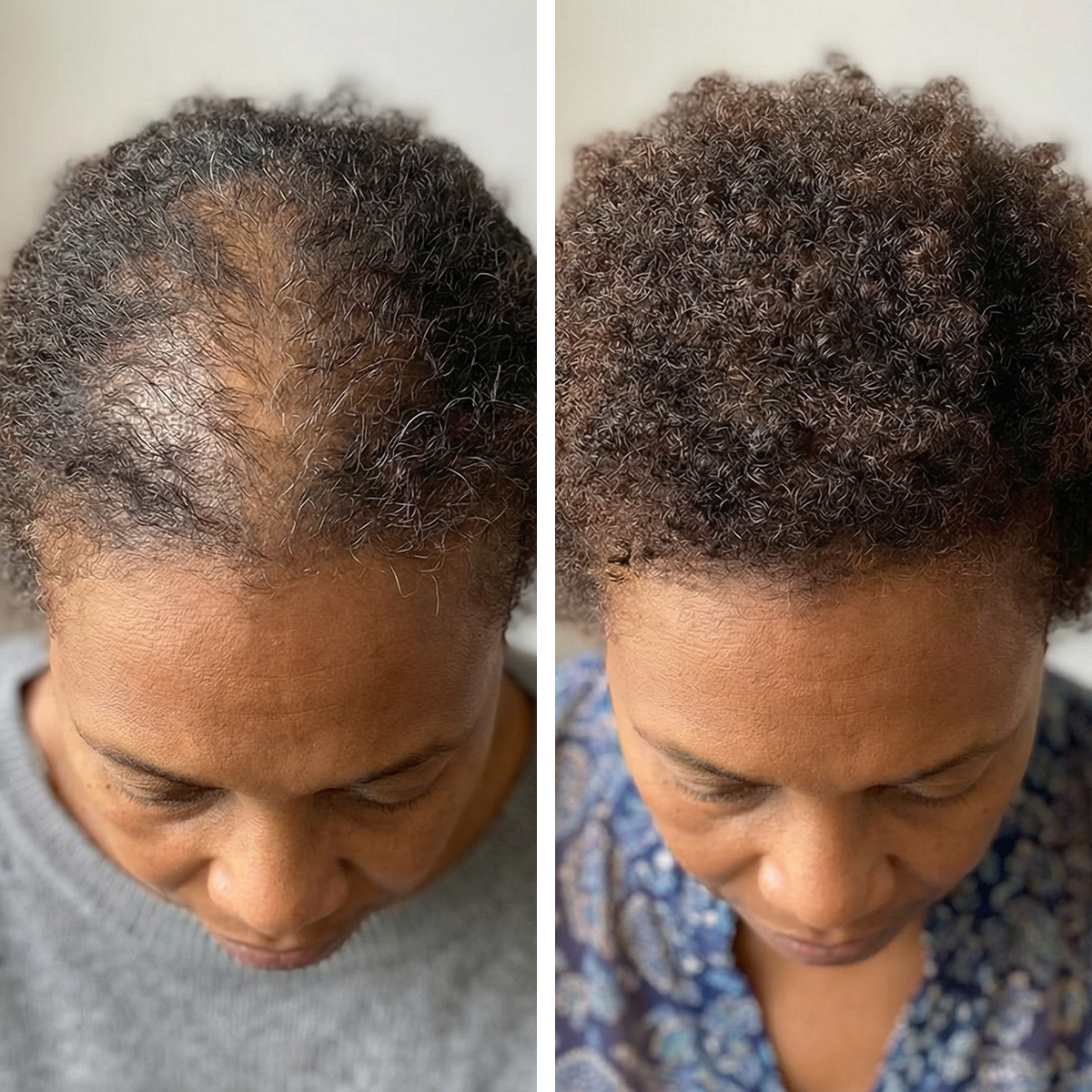
How this red sea moss remedy can help any sister over 40 transform their bald spots, crown, and edges in just 6 weeks (even after years of chemicals and heat damage)
LEARN MORELike this ad? Make it yours.
Crush rebuilds this exact creative around your product — your brand, your colors, your offer — in about a minute.