
Samantha Claire Insider
Inactive· since May 6, 2026
- 40
- days it ran
- 0
- relaunches
Ad copy
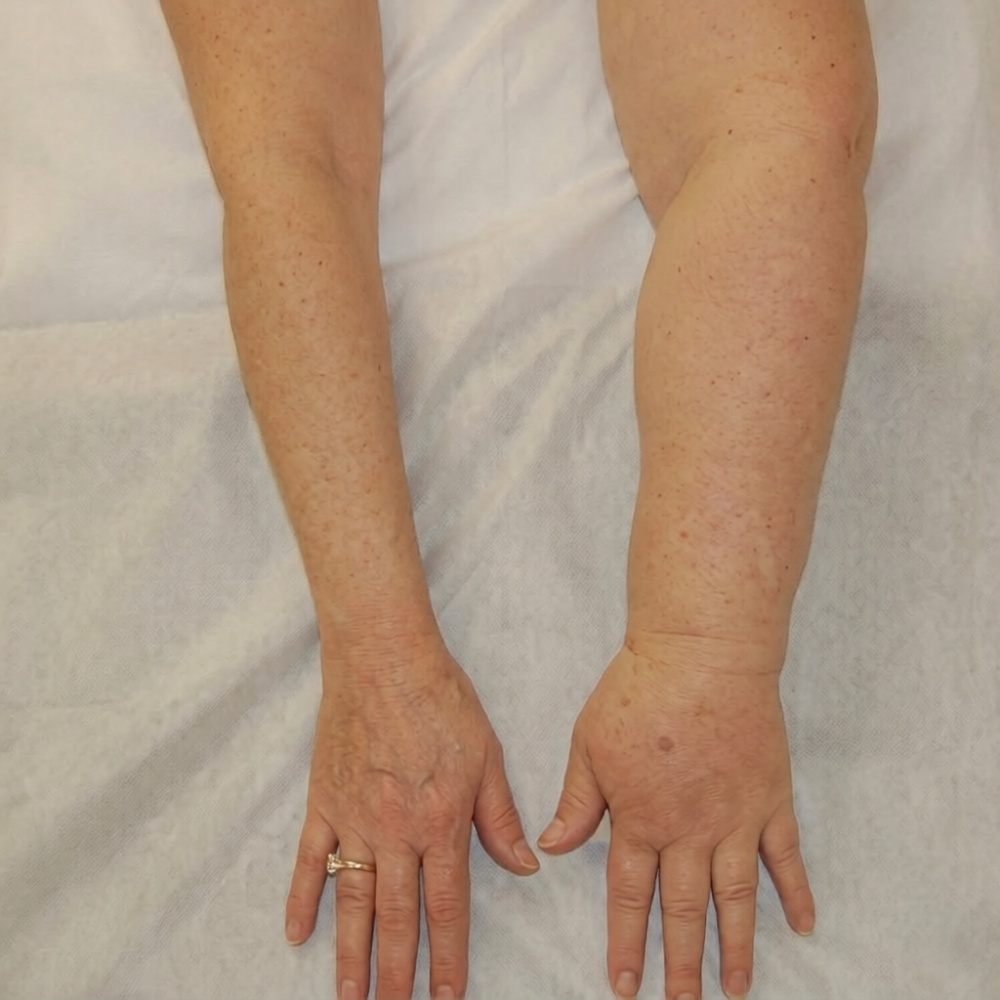
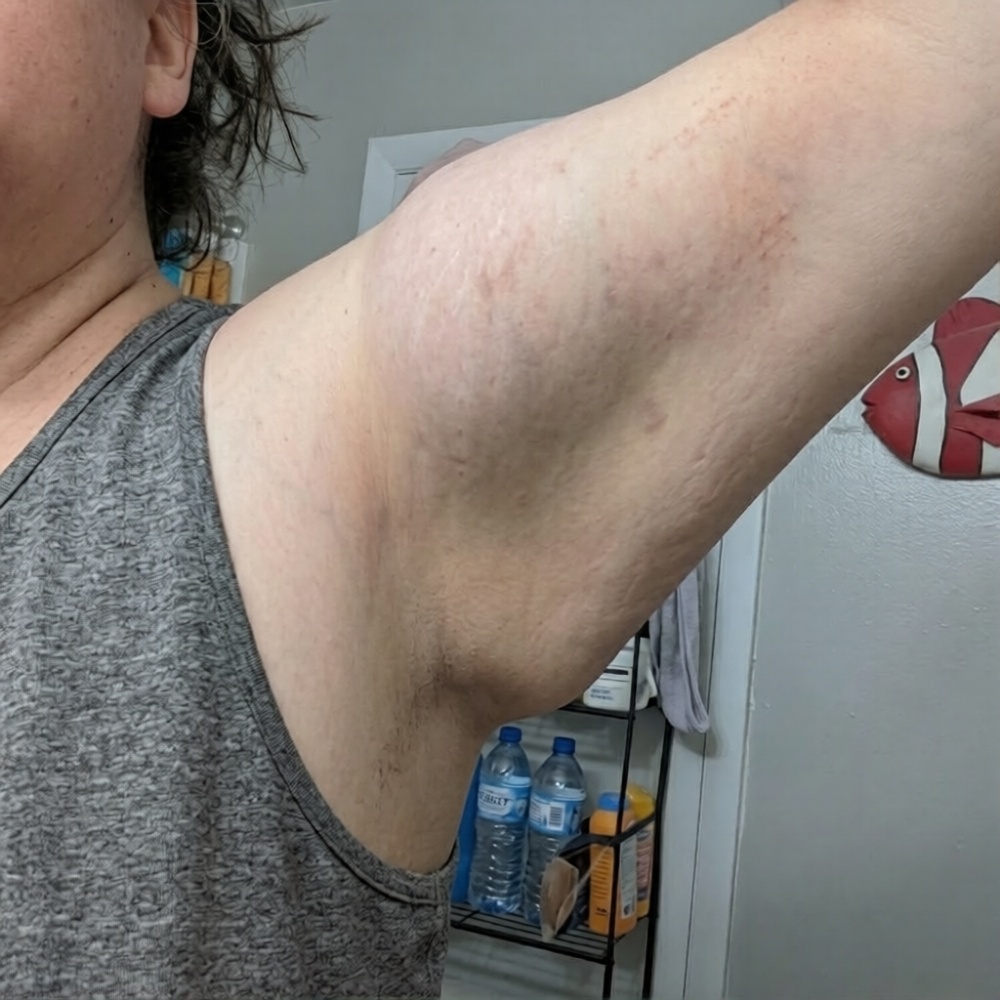
To breast cancer survivors who finished treatment and were told they were “done”. But didn't feel done. Not. Even. Close. My name is Dr. Harrison. I am a vascular specialist and I have been treating post-cancer lymphedema for 33 years. For 33 years I told my patients the same thing. Compression sleeve. Manual lymphatic drainage. Stay active. Manage it carefully. And when they asked me if it would ever go away I told them the truth as I understood it. "This is permanent. You'll need to manage this for the rest of your life." I believed that. Completely. I had been trained to believe it. Every textbook. Every lecture. Every colleague I had ever spoken to about lymphedema said the same thing. Manage it. There is no fix. I never questioned it. Not once in 33 years. Until Margaret walked into my office. I had been treating Margaret for two years. Breast cancer survivor. Lymphedema in her left arm after they removed 18 lymph nodes during surgery. Classic presentation. Sleeve every day. MLD twice a month. Arm stayed swollen. Arm always stayed swollen. I hadn't seen her in six months. She walked in and I almost didn't recognize her arm. No sleeve. No swelling. Both arms the same size. She was wearing a short sleeve shirt and a bracelet on her left wrist. I sat there for a moment just looking at her arm. I asked her what happened. She said she had started taking some drops. Lymphatic drainage drops. Twice a day in water. She had been taking them for about two months before she noticed the sleeve getting loose. By month three she left it at home. She hadn't worn it since. I was skeptical. I had spent 33 years telling patients this was permanent. I was not about to accept that something taken in water twice a day had done what compression sleeves and thousands of dollars of MLD had failed to do. But I couldn't ignore what I was looking at. That night I went home and started reading. Research papers. Clinical studies. Everything I could find on lymphatic vessel function in post-radiation patients. And somewhere around two in the morning something clicked. I realized I had been getting it wrong for 33 years. Not because I wasn't trying. Not because I didn't care about my patients. Because nobody ever taught me what was actually happening inside the arm. Here is what I should have understood from the beginning. When cancer surgery removes lymph nodes it removes the exit routes of the entire arm drainage system. Lymph nodes are like drains in a sink. Their job is to collect fluid from the arm and move it out. No drains. Fluid stays. Arm swells. But that is only the first problem. The radiation that follows damages the lymphatic vessels that are still left. The tiny tubes responsible for moving fluid through the arm. Think of them like small pipes. After radiation those pipes become scarred. Stiff. Barely functional. Like a garden hose that got crimped and bent — water can barely get through. And here is the third thing. The thing I never once mentioned to a single patient in 33 years. When fluid gets trapped in a damaged system long enough it changes. It thickens. Becomes dense. Almost like syrup. Normal lymphatic fluid is thin and moves easily. But fluid that has been sitting in a broken system for months or years becomes thick and heavy. Too thick to move through whatever small drainage capacity still remains. Three problems. Stacked on top of each other. Exit routes gone. Pipes damaged. Fluid too thick to move. Now think about every treatment I had been prescribing for 33 years. The MLD. A therapist manually moving fluid through the arm with her hands. It works. The fluid moves. The arm goes down. For a few hours. Then the damaged pipes can't maintain that movement on their own. The thick fluid settles back. The arm swells again. Every session starting from zero. The compression sleeve. Squeezing fluid out from the outside. Also works temporarily. Take it off — fluid returns. Same reason. Something external doing manually what the body can no longer do on its own. Neither of them touches the actual problem. It is like having a sink clogged with thick mud with broken pipes underneath. Every day someone comes and scoops the mud out by hand. The sink empties. But tomorrow the mud is back. Because nobody fixed the pipes. Nobody addressed why the mud keeps forming. That is what I had been prescribing for 33 years. Better and better ways to scoop the mud. Never once asking why the pipes were broken or whether they could be fixed. And that is exactly why I kept calling it permanent. Because if the only tools you have scoop mud from the outside — you will be scooping forever. The moment you stop the mud comes back. Every time. Permanent wasn't a description of what was possible. It was a description of my own blind spot. That night I kept reading. The damaged vessels in post-radiation arms are not completely destroyed. They are still there. Still structurally present. Just scarred. Stiff. Barely functioning. Not dead. Just stuck. And stuck is completely different from permanent. The research showed that certain botanical compounds when absorbed into the bloodstream can reach the lymphatic tissue directly. From the inside. Doing something no sleeve or massage ever could. They thin the fluid that has thickened from sitting too long. So that whatever drainage capacity remains can actually move it instead of fighting against it. They improve circulation surrounding the damaged vessels. Reducing the inflammation and restriction that radiation left behind. Creating better conditions for lymphatic flow in tissue that has been working against itself for years. And they reduce the overall resistance in the tissue environment. So that the damaged system doesn't have to be operated manually from the outside every single day just to function at a basic level. Moving the flood water out with a bucket and fixing the broken pipe underneath are completely different things. I had spent 33 years handing my patients a bucket. The next morning I called Margaret and asked her exactly what she had been taking. She told me. Alowat. Four botanical compounds. Taken twice daily in water. I started recommending it to my post-cancer lymphedema patients three months ago. I want to be honest with you about what I expected. Not much. I had 33 years of permanent telling me to keep my expectations low. Then Sandra came in for her follow up. Sandra had been my patient for four years. I had told her permanent. She had spent thousands on MLD. Custom sleeves. A compression pump she used every evening. Her arm stayed swollen. It always stayed swollen. Six weeks after starting Alowat she came in for a follow up. She wasn't wearing her sleeve. I measured both arms. The difference that had been consistently between three and four centimeters for four years was down to less than one. She looked at me across my desk and said something I won't forget. "You told me this was permanent." She wasn't angry. She was just stating a fact. She was right. I had told her that. For four years. I didn't have a good answer for her. Except that I was wrong. I have now recommended Alowat to over forty post-cancer lymphedema patients in the past three months. The results I am seeing are unlike anything I have witnessed in 33 years of practice. Not every patient responds the same way. I want to be honest about that. Some see significant reduction within weeks. Others take longer. A small number see modest improvement. But I have not had a single patient tell me it made things worse. If you have arm swelling after cancer treatment — if you have been told this is permanent, if you have spent thousands on sleeves and massage sessions that only work temporarily — I want you to understand something I should have told my patients years ago. Permanent was never the right word. The exit routes are gone. That part is real. But the vessels that remain aren't dead. The fluid that has built up isn't unmovable. The system everyone told you was broken beyond repair still has capacity left — it just needs something to work with it from the inside instead of pushing against it from the outside every single day. I spent 33 years getting this wrong. I'm not willing to spend another day doing that. The drops are called Alowat. Four botanical compounds taken twice daily in water. The same formula Margaret showed me six months ago. The same one I now recommend to every post-cancer lymphedema patient who walks through my door. Take it twice a day. Give it a month. I have watched it give women their arms back. I believe it can do the same for you. P.S. — Several of my patients have tried to order Alowat after I recommended it and found it sold out. If you are considering trying it I would check availability now rather than wait.
Like this ad? Make it yours.
Crush rebuilds this exact creative around your product — your brand, your colors, your offer — in about a minute.