
Samantha Claire Insider
Active· since May 8, 2026
- 135
- days running
- 0
- relaunches
Ad copy
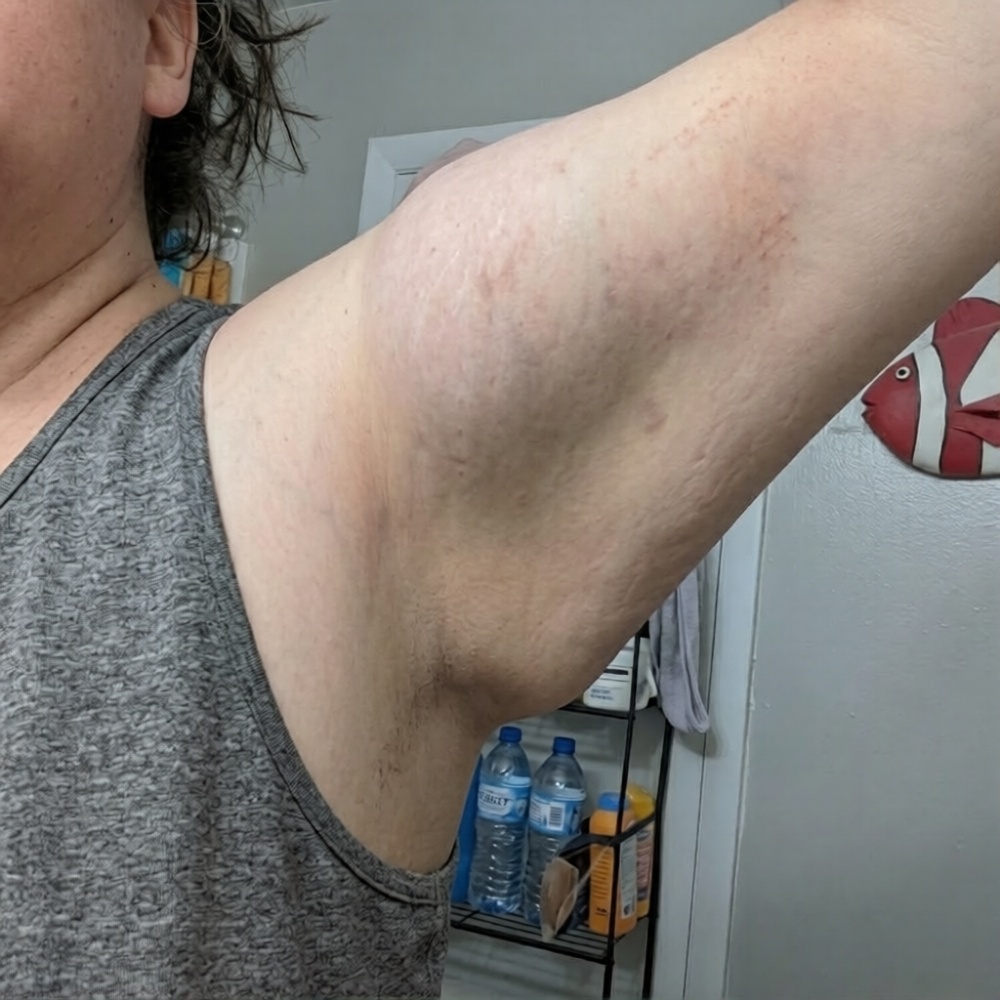
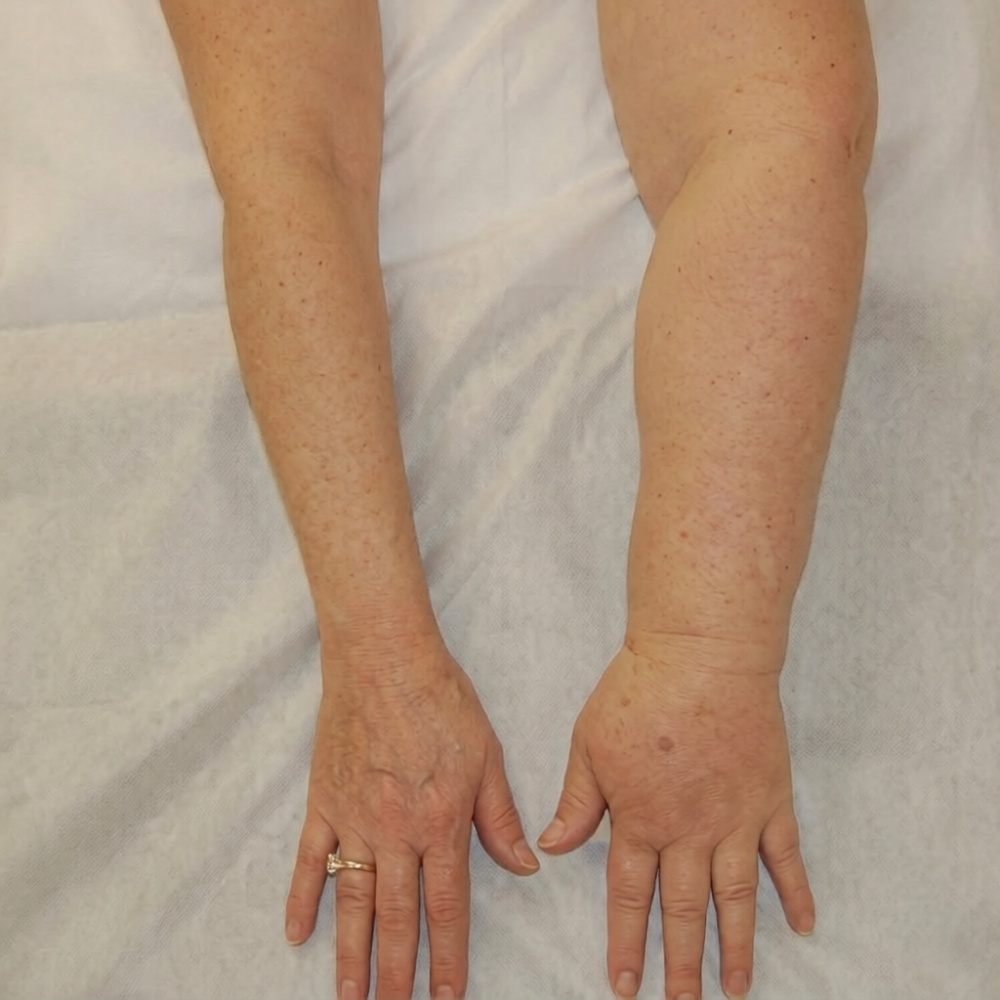
Breast cancer treatment saved my life. But I never thought that I’d never feel like myself again. Eight months after my last treatment my arm swelled up. And it never went back down. I still remember looking at it thinking it was temporary. This will go away. It didn't go away. After a week I finally went back to my doctor. She looked at my arm for maybe thirty seconds and said one word. "Lymphedema." She said it like it was obvious. Like it was just the next thing on the list. Two years of constant cancer treatments and nobody thought to mention that this might happen. Just a prescription for a compression sleeve and a referral to a massage therapist. That was it. And every single morning after that started the same way. Sleeve on. Arm hidden. Day begins. I had just spent two years fighting for my life against breast cancer. Showed up to every appointment. Took every medication. Got through everything they threw at me. So I did everything they said. MLD at $400 a month. Custom compression sleeve. YouTube videos at midnight teaching myself lymph massage because nobody else would show me. But my arm was still swollen. Still tight. Still hard to use. Still the thing people stared at. And every single doctor said the same thing. "This is permanent. You'll manage this forever." Forever. I could handle hard. Two years of cancer taught me that. What I couldn't handle was this. Because the worst part was never the swelling. It was waking up and realizing I still wasn't her anymore. The person I was before all of this. Before my body became a medical chart. Before I started living my days around appointments and sleeves and hiding my arm from questions. Before I learned words like lymph nodes and lymphedema and survivorship. I missed her every single day. I thought the hard part was over. I thought I would bounce back after I did the impossible thing. But I still couldn't get myself back. I just wanted to feel normal. I wanted to stop being the woman with the sleeve. Stop being a patient. I was sitting in my car after yet another MLD session, arm already swelling back up on the drive home — and I just started crying. Not because of the pain. Because nothing was ever going to change. I was going to do this forever and I was never going to get myself back. That night I couldn't sleep. I opened my phone and found a forum thread with over 300 comments. Women after cancer. Same sleeve. Same massages. Same answer from every doctor. But one name kept appearing in the replies. Not from anyone selling something. From the women themselves. Quietly recommending him to each other like they didn't want anyone else to miss it. Dr. Harrison. A lymphedema specialist who spent 20 years working exclusively with post-cancer patients. Not general lymphedema. Post-cancer lymphedema specifically. I found his blog. Started reading. And for the first time in two years I wasn't reading about how to manage the swelling. I was reading about why it was still there. Here is what Dr. Harrison explained. When cancer surgery removed my lymph nodes it removed the exit routes of my arm. Lymph nodes are like drains in a sink. Their job is to collect fluid from your arm and move it out. No drains. Fluid stays. Arm swells. But that was only the first problem. The radiation that followed damaged the lymphatic vessels that were still left. The tiny tubes responsible for moving fluid through my arm became scarred. Stiff. Barely functional. Like a garden hose that got crimped and bent — water can barely get through. And here is the third thing nobody ever told me. When fluid gets trapped in a damaged system long enough it changes. It thickens. Becomes dense. Almost like syrup. Normal lymphatic fluid is thin and moves easily. But fluid that has been sitting in a broken system for months or years becomes thick and heavy. And thick fluid resists movement even through whatever small drainage capacity still remains. Three problems. Stacked on top of each other. Exit routes gone. Vessels damaged. Fluid too thick to move through what little drainage is left. Now think about every treatment I tried. The MLD. A therapist manually moving fluid through my arm. It worked. The fluid moved. My arm went down. For a few hours. Then the damaged vessels couldn't maintain that movement on their own. The thick fluid settled back. The arm swelled again. Every session starting from zero. The compression sleeve. Squeezing fluid out from the outside. Also worked temporarily. Take it off — fluid returns. Same reason. Something external doing manually what my body could no longer do on its own. Neither of them was touching the actual problem. It was like having a drain clogged with thick mud. Every day someone comes and scoops the mud out by hand. The sink empties. But tomorrow the mud is back. Because nobody fixed the drain. Nobody addressed why the mud keeps forming. That was my life. Scooping every single day. And that is why every doctor called it permanent. Because if the only tools you have move fluid manually from the outside — you will be doing that forever. The moment you stop the fluid comes back. Every time. Permanent wasn't a description of what was possible. It was a description of what happens when you only treat the symptom and never touch the cause. That's when Dr. Harrison said something that changed everything. "The goal isn't to move the fluid better manually. The goal is to stop having to move it manually at all." He explained that the damaged vessels still had some capacity left. Not much. But some. And the thick stagnant fluid surrounding them was adding resistance on top of the damage — making it almost impossible for whatever drainage remained to function. So the question wasn't how to squeeze fluid out more effectively from the outside. It was — what if something could reach the lymphatic tissue from the inside. Through the bloodstream. And do three things that no sleeve or massage ever could. Thin the fluid that had thickened from sitting too long. So that whatever drainage capacity remains can actually move it instead of fighting against it. Improve the circulation surrounding the damaged vessels. Reducing the inflammation and restriction that radiation left behind. Creating better conditions for lymphatic flow in tissue that has been working against itself for years. And reduce the overall resistance in the tissue environment. So that the damaged system doesn't have to be operated manually from the outside every single day just to function at a basic level. That's when he mentioned something called lymphatic drainage drops. Not a sleeve. Not a massage. Not another device you strap to your arm. A liquid formula you take in water twice daily. Four botanical compounds absorbed directly into the bloodstream — reaching the lymphatic tissue from the inside in a way that nothing applied from the outside ever could. He said most lymphedema patients never hear about this because doctors are trained to manage swelling. Not reverse the conditions causing it. Compression and MLD are the protocol. They move fluid. They work. Temporarily. And so permanent becomes the only word anyone ever offers. But squeezing fluid out from the outside and actually fixing the system from the inside are completely different things. I was skeptical. After thousands spent on treatments that worked for a few hours and then stopped. After being handed the same mop by every specialist I had seen. I didn't believe something taken by mouth could reach what no sleeve or massage ever had. But I ordered a bottle anyway. I started taking them twice a day. Mixed in water. The first thing I noticed was how often I had to use the bathroom. It wasn't random flushing. It felt like my body was finally releasing fluid it had been holding for years. Like something that had been stuck finally let go. By the end of the first week my arm felt slightly lighter. Not dramatically. Just different. I remember thinking it was probably nothing. Probably just in my head. I had been disappointed too many times to let myself believe anything was actually changing. But I kept taking them. By the end of week two my custom compression sleeve felt loose. I hadn't changed anything. Same routine. Same everything. Just the drops twice a day. I looked down at my hand. I could see my knuckles again. I stood there just staring at them. Running my finger over them. They were there. Visible. Real. I hadn't seen them properly in over a year. My hand looked like my hand again. By the end of the first month I made a decision I hadn't made in years. I left the compression sleeve at home. Not because someone told me to. Not because a doctor cleared me. Because MY arm looked like MY arm again. I pulled out a bracelet I hadn't been able to wear since before my diagnosis. Slipped it on. It fit. But it wasn't just the bracelet. I went to dinner with friends and wore a sleeveless dress. No compression. No planning my outfit around hiding it. No crossing my arms the moment I walked in. And nobody stared. Nobody asked what happened to my arm. Nobody treated me like I was still sick. Because I didn't look sick anymore. I looked like myself. For the first time since my diagnosis when someone asked how I was doing I didn't have to lie and say fine. I actually was. And I realized something sitting at that dinner table. I had spent two years fighting cancer to get my life back. And then two more years fighting lymphedema just to feel like myself again. I wasn't the woman with the sleeve anymore. I wasn't a patient anymore. I was just me. The person I was before all of this. Before my body became a medical chart. Before survivorship became my whole identity. And if you're still waking up every morning reaching for that sleeve — I want you to know something I wish someone had told me years ago. I'm telling you what I wish someone had told me years ago. Permanent wasn't the whole truth. The exit routes are gone. That part is real. But the vessels that remain aren't dead. The fluid that has built up isn't unmovable. And the system that everyone told you was broken beyond repair still has capacity left — it just needs something to work with it from the inside instead of pushing against it from the outside every single day. I'm not a doctor. I'm not telling you this will work for everyone. I'm just someone who spent years being handed a mop and told to keep mopping — and then found out the drain could actually be fixed. The drops I used are called Alowat. The same formula Dr. Harrison described. Four botanical compounds taken twice daily in water. This is the one thing that works on what's actually causing it. Not from the outside. From the inside. Take it twice a day. Give it a month or two. And see if you start getting yourself back too. I hope you do. Because you've already been through enough. P.S. A friend from my support group tried to order these the same day I told her about them. Sold out. Three week wait. Check if they're still available.
Like this ad? Make it yours.
Crush rebuilds this exact creative around your product — your brand, your colors, your offer — in about a minute.