
Inactive· since Apr 10, 2026
- 111
- days it ran
- 0
- relaunches
Ad copy
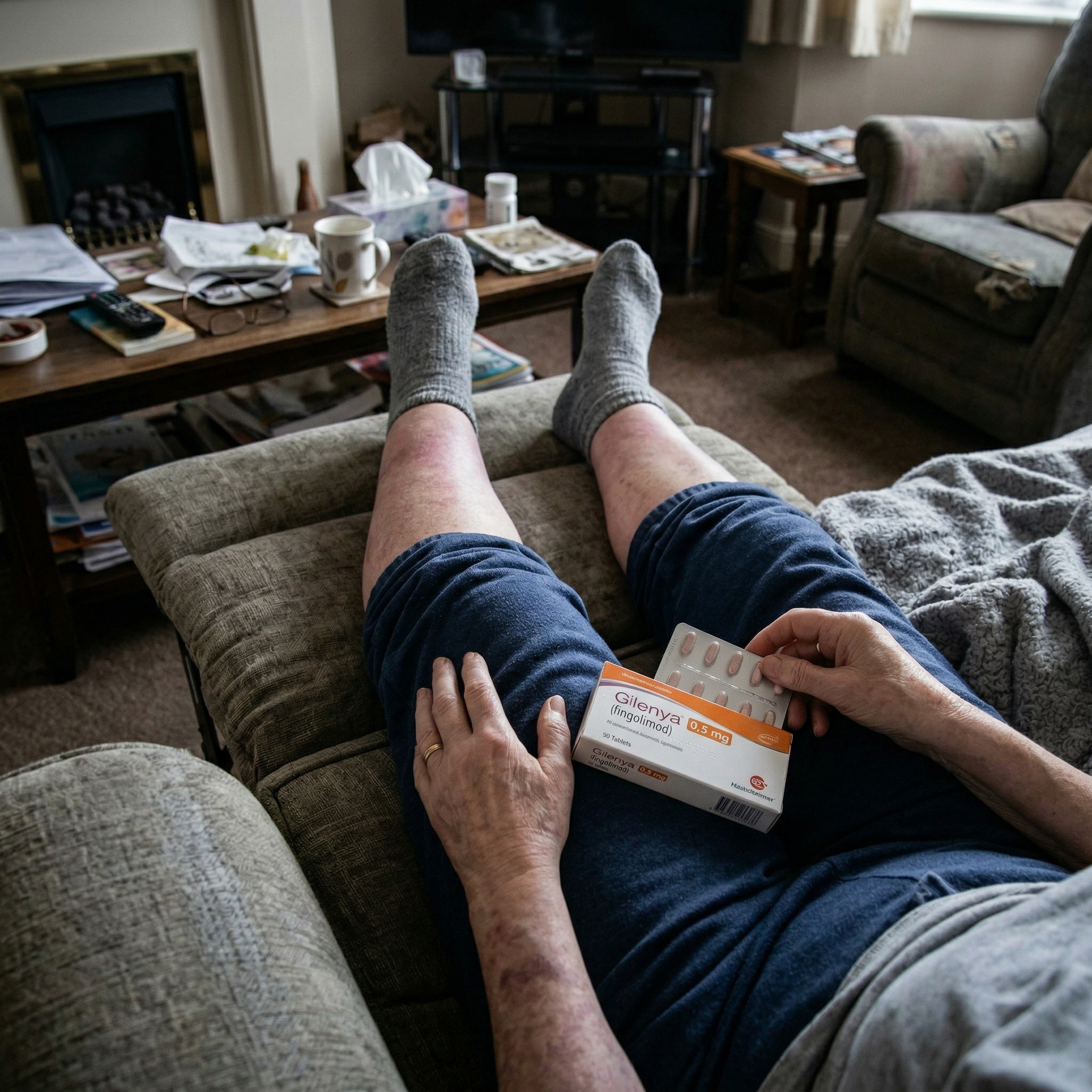
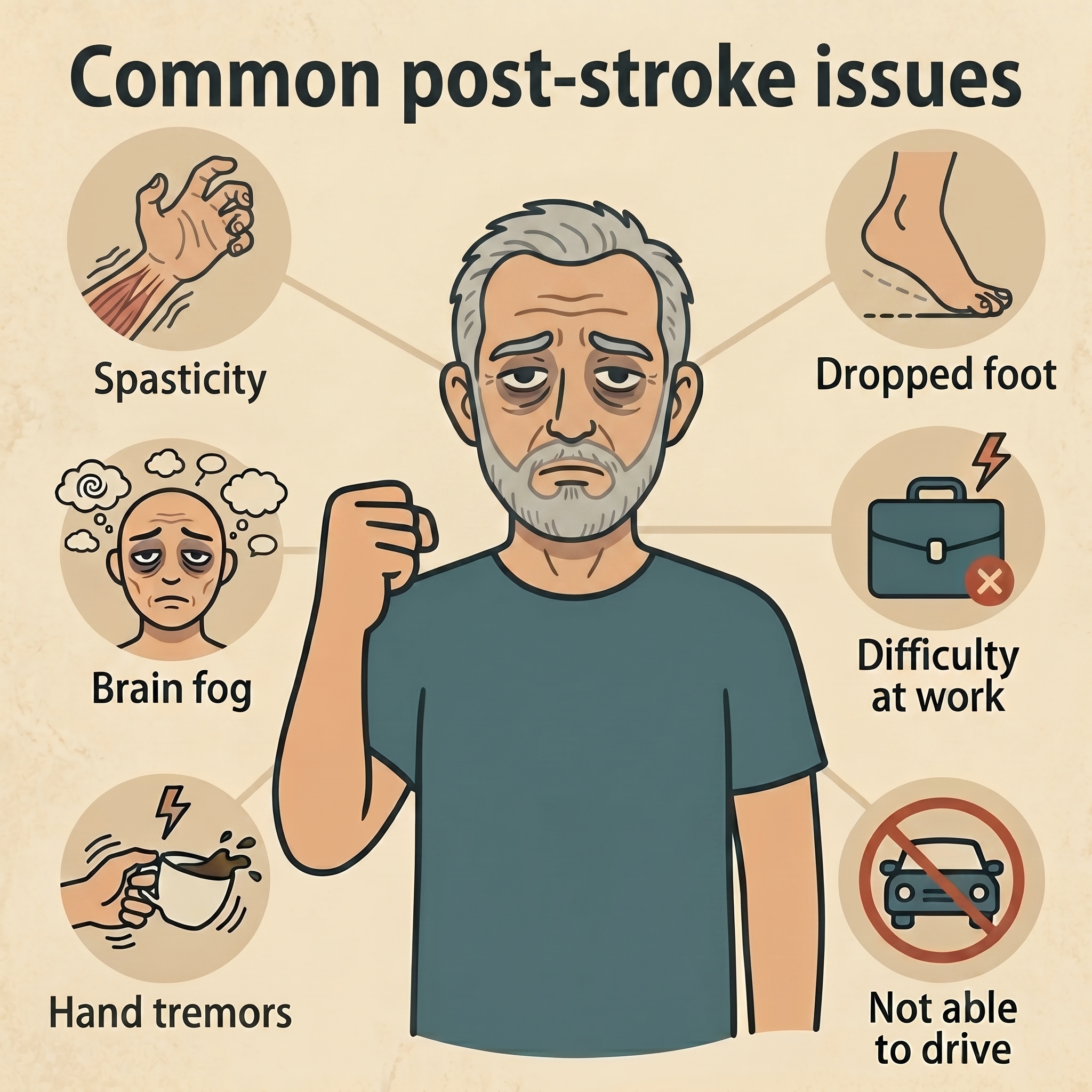
If you or a loved one has been dealing with legs that cramp, lock, and seize up since a stroke, calves so tight they feel like they're made of concrete, toes that curl under and won't release, and muscles that fight you on every single step... I need you to read this. Because your doctor keeps saying "it's spasticity, it's common after stroke." And the pills they've given you either barely touch the cramping or make you so drowsy you can't function. And you already know this isn't getting better. It's getting worse. I'm Dr. Steven Jones. Board-certified neurological rehabilitation specialist. Twenty-two years treating post-stroke recovery. Over 3,100 patients. And I'm going against the grain of my own profession to tell you this. Because there are three things happening right now: One - Your stroke damaged the part of your brain that tells your leg muscles to relax, so they're stuck in a permanent state of contraction, cramping and seizing because they literally can't hear the "let go" signal anymore Two - The medical system's answer is to drug your entire brain with muscle relaxants just to loosen two legs, which makes you drowsy, foggy, and weak everywhere else And three - Nobody is addressing what's actually happening in your legs locally, because there's no pill for that and no recurring revenue in fixing it So let me tell you what happened with one of my patients, because his story is going to change how you understand post-stroke cramping forever. His name was James. 61 years old. Fourteen months post-stroke. For EIGHT months, his legs had been turning against him. It started about six weeks after the stroke. A tightness in his right calf that wouldn't ease. He thought it was just deconditioning from the hospital stay. Then it got worse. Within three months, his calf was locked so tight you could see the tendons pulling through the skin. His toes curled under like they were gripping the floor. His ankle pointed downward and wouldn't flex. And the cramping. The cramping was relentless. Not the kind of cramp you get from a long run. A deep, burning, vice-like grip that would seize his entire calf and hold it for minutes. Sometimes hours. It would wake him up at 3am, his leg locked rigid, his foot twisted inward, tears streaming down his face while he tried to massage it out. His wife would hold his foot and try to stretch it. Sometimes it released. Sometimes it didn't. Sometimes they'd be up for an hour waiting for the muscle to let go. During the day, the stiffness made every step a battle. His leg was a rigid pole. His knee wouldn't bend. His ankle wouldn't give. Every step required him to hike his hip and swing his stiff leg around to the side because it couldn't swing forward normally. The cramping would spike with movement. The faster he tried to walk, the harder the muscles clamped down. It was like his own leg was fighting him. He stopped going to the shops because standing in a queue triggered the cramping. Stopped walking in the park because the uneven ground made the spasticity worse. Stopped sitting on the couch with his wife because the cramps would hit and he'd have to get up and pace, trying to stretch out a muscle that refused to release. He told me once: "It feels like someone poured concrete into my calf and it set. And every now and then someone takes a vice to it just to remind me it's there." The man who'd played weekend football until he was fifty-five couldn't sit through a film without his leg seizing up. And here's what nobody tells you about post-stroke cramping and spasticity: It's not just tightness. It's your muscles firing relentlessly because your brain can't tell them to stop. In a healthy nervous system, your brain sends signals down the spinal cord that say "relax." Those signals keep your muscles loose until you need them. Your stroke damaged the pathways that carry those "relax" signals. Without them, the spinal cord panics and your motor neurons fire continuously. The muscles contract and won't let go. And every time you try to stretch or move, the stretch receptors detect the movement, the spinal cord overreacts, and triggers an even HARDER contraction. That's the cramp. That's the spasm. Your body trying to "protect" a muscle that doesn't need protecting. The harder you fight it, the harder it fights back. And here's what makes me angry: I was one of the specialists he came to see. Multiple doctors. His neurologist. A physiatrist. Me, the rehab expert. We're talking thousands of dollars in appointments, assessments, brace fittings, the works. And you know what every single one of us did? Drugged his entire brain to loosen two legs. "Let's start you on baclofen. It'll relax the muscles." "Still cramping? Let's increase the dose." "The baclofen is making you drowsy? Let's add tizanidine at night for the nocturnal cramps." "We could try Botox injections into the calf. $500 every twelve weeks." BOTOX. INTO HIS CALF. This man's leg was cramping because his brain couldn't send a "relax" signal, and our answer was to paralyse the muscle with a toxin every three months. Not fix the problem. Paralyse it. But here's where it gets worse, and this is the part that changed everything for me. We started him on baclofen. His calves loosened up slightly. But he could barely keep his eyes open past lunchtime. The drowsiness was crushing. His brain felt wrapped in fog. He'd fall asleep at the kitchen table. His wife found him asleep in the car in the driveway because he was too drowsy to make it inside. We increased the dose. The cramping eased a bit more. But now his legs were so weak he couldn't stand up from a chair without help. The pills weren't just relaxing the spastic muscles. They were relaxing ALL his muscles. His good leg. His core. Everything. His cramping was slightly better but he was too weak and too drowsy to do anything with the looser legs. We tried Botox in his right calf. The cramp stopped in that specific muscle for about eight weeks. Then it came back. And in the meantime, the injected muscle was so weakened by the toxin that his foot drop got worse. We'd traded a cramp for a drag. I watched this man bounce between cramped and drugged for eight months. Every solution for the cramping created a new problem somewhere else. Because every solution targeted the brain or poisoned the muscle instead of addressing what was actually happening at the spinal reflex level. And I didn't understand why we couldn't find a way to release the muscles locally, without sedating his brain or paralysing the tissue. Until a neurorehabilitation researcher at a conference explained three mechanisms that changed everything I understood about post-stroke spasticity. April 2023. Washington DC. American Congress of Rehabilitation Medicine annual meeting. After my presentation, a woman approached me. Dr. Patricia Hensley. Thirty years in post-stroke motor recovery. Published extensively on spasticity management and neuromuscular intervention. She looked at my data and said something I'll never forget: "You're drugging the whole house to fix one room. And the room isn't even fixed. It's just sedated." She asked if I had fifteen minutes. I gave her two hours. Here's what she taught me: "There are three specific ways you can release spastic muscles locally, in the legs, without touching the brain. Without drowsiness. Without weakness. Without brain fog." Mechanism one: Reciprocal Inhibition. "The nervous system is hardwired so that when one muscle group contracts, the opposing group is forced to relax. When you electrically activate the muscle on the front of the shin, it sends a signal to the spinal cord that forcefully shuts down the motor neurons firing the cramped calf muscle on the back. Activate the front of the leg and the back of the leg is forced to let go. It's a neurological override. The spinal cord can't keep the calf contracted while the shin is being activated." Mechanism two: Controlled Muscle Fatigue. "The spastic muscle is locked in continuous contraction. It's been firing nonstop. EMS delivers rhythmic impulses directly to that muscle, forcing it to contract and release at a rate it can't sustain. The muscle depletes its energy stores. It's artificially exhausted. And because it's exhausted, the faulty spinal signals can no longer force it to contract. The cramp breaks. The muscle is forced into relaxation. You're not asking it to let go. You're making it too tired to hold on." Mechanism three: Sensory Habituation. "The cramping is partly driven by overactive sensory feedback from the muscle back to the spinal cord. The spinal cord keeps receiving 'emergency' signals that trigger more contraction. EMS floods the sensory nerves with structured electrical input. This creates a bottleneck at the spinal cord level. The nervous system habituates to the input and the overactive reflex calms down. The alarm system that's been keeping the muscles locked gets turned down." Three mechanisms. All local. All targeting the legs specifically. None crossing the blood-brain barrier. No drowsiness. No brain fog. No whole-body weakness. And here's the critical difference from pills: baclofen sedates the entire brain to quiet a spinal reflex. Botox paralyses one muscle for twelve weeks while weakening it permanently. EMS modulates the spinal reflex directly through the muscles themselves. It addresses the CAUSE locally instead of suppressing everything systemically. The science is published. Functional electrical stimulation reduces spasticity in stroke patients. Reciprocal inhibition is one of the most effective non-pharmacological approaches to managing spastic tone. The American Stroke Association lists electrical stimulation as a treatment option. This isn't fringe. It's established. But you'll never hear most stroke neurologists recommend a home EMS device for cramping. Because pharmaceutical companies sell baclofen. Allergan sells Botox. There's recurring revenue in quarterly injections and monthly prescriptions. There's no recurring revenue in a device that releases the cramp from the feet up. A patient on the standard post-stroke spasticity pathway pays $200 to $800 per month in antispasmodic pills. Plus $500 Botox injections every twelve weeks. Plus therapy at $150 per session. Plus specialist visits. Easily $500 to $1,000 per month. For treatments that either sedate the brain or paralyse the muscle. An EMS device that releases the cramp locally through three proven mechanisms? One-time purchase. Now here's the problem I ran into... Most "foot stimulators" on the market are useless for post-stroke spasticity. I tried a TENS unit. It tingled the skin. Did nothing for the locked calf underneath. James said "my skin buzzes but the cramp doesn't care." I tried a vibrating foot plate. It shook. That's it. No reciprocal inhibition. No controlled fatigue. No sensory habituation. Just vibration bouncing off a concrete muscle. Because vibration and TENS are NOT the same as EMS. TENS stimulates sensory nerves for pain relief. Vibration shakes the skin. Neither forces actual muscle contraction. Neither triggers reciprocal inhibition. Neither can fatigue a spastic muscle into releasing. True EMS sends electrical impulses directly to the motor neurons, forcing real muscle contraction. When applied through a foot plate, it activates muscles through the soles and up into the calves, triggering all three mechanisms simultaneously. The opposing muscles activate, forcing the spastic muscles to release. The spastic muscles are rhythmically fatigued into letting go. And the sensory flood calms the overactive spinal reflex driving the whole cycle. Every device I tested failed at least one mechanism. Until I found Restural. True EMS foot plate. Not a TENS unit. Not a vibrator. Actual electrical muscle stimulation with deep motor nerve penetration that reaches through spastic tissue. All three mechanisms. Reciprocal inhibition through opposing muscle activation. Controlled fatigue through rhythmic contraction cycles. Sensory habituation through structured afferent input. Built on the same protocols used in stroke rehabilitation clinics and spasticity management programmes. One-time purchase. Under 60 dollars. 20 minutes, twice daily, while sitting in your favourite chair. No drowsiness. No brain fog. No whole-body weakness. No needles in your calf every twelve weeks. Just your legs, locally, specifically. I started using it with James first. Week 1: The sensation was immediate. He could feel the muscles on the front of his shin activating, and as they did, the iron grip in his calf began to ease. Not disappear entirely. But ease. For the first time in months, his ankle had some give. His toes uncurled slightly. "It feels like someone loosened the vice," he said. The relief lasted about four hours after the first session. By day three, it was lasting into the afternoon. And he wasn't drowsy. He wasn't foggy. His head was clear and his leg was looser than it had been in months. Week 2: The nocturnal cramps started spacing out. Instead of waking up every night with his calf locked rigid, it was happening every other night. Then twice a week. His wife stopped sleeping with one hand on his leg, ready to stretch it when the cramp hit. "I woke up this morning and my foot was flat on the mattress," he told me. "Not curled. Not pointed. Flat. I stared at it for a full minute because I'd forgotten what that looked like." Week 4: His passive range of motion had improved by 36 percent. His ankle was flexing. His knee was bending during walking instead of staying locked straight. The cramping hadn't disappeared but the episodes were shorter, less intense, and less frequent. He walked through the supermarket without a single cramp forcing him to stop. He stood in a queue for ten minutes. His leg stayed calm. Week 8: Full assessment. Spasticity reduced significantly. Walking speed improved by 29 percent. Cramping episodes reduced by 61 percent. He'd cut his baclofen dose in half with his neurologist's supervision. Less drowsy. Less foggy. More alert. More himself. And his calf? Still tight. But manageable. Workable. A muscle he could negotiate with instead of one that held him hostage. He sat through an entire film with his wife. Two hours. No cramps. No getting up to pace. No stretching in the aisle. Just sitting. Watching a film. Like a normal person on a normal evening. He told me afterward: "You don't realise how much the cramping takes until it stops taking. It's not just the pain. It's the waiting. The knowing it could hit at any second. The planning your entire day around a muscle that might seize. When it calmed down, I didn't just get my leg back. I got my head back. I stopped bracing for the next cramp." Then I introduced it to every post-stroke spasticity patient on my caseload. Eighteen patients over the next six months. The results were consistent: Average reduction in cramping episode frequency: 54 percent by week 8 Average improvement in passive range of motion: 41 percent Average improvement in walking speed: 27 percent Number of patients who reduced antispasmodic dosage: 13 out of 18 Number of patients who reported reduced nocturnal cramps: 15 out of 18 Number of patients who reported "my legs feel lighter": 16 out of 18 And the compliance rate: 17 out of 18 were still using it twice daily at six months. Because it's 20 minutes in a chair. Not another pill. Not another injection. Not another appointment that trades one problem for another. Not just less cramping. Clearer heads. Better sleep. More energy. Lives opening back up. The films they couldn't sit through. The queues they couldn't stand in. The walks they'd given up. The nights they'd lost to 3am cramps. That's the one that matters after a stroke. Because spasticity doesn't just lock your muscles. It locks your entire life around the anticipation of pain. This is the approach they're not telling you about. Because the second you start releasing those muscles locally, without drugging your brain, everything shifts. The cramping eases. The stiffness softens. The toes uncurl. The ankle flexes. And your head stays clear because nothing is crossing the blood-brain barrier. You get looser legs AND a sharper mind. Not one at the expense of the other. You don't stop your rehabilitation. But now you're addressing the spasticity directly, at the source, in the legs, through the actual neurological mechanisms driving it, instead of sedating your entire nervous system and hoping the legs loosen up as a side effect. It's not a cure. Stroke damage is real. But it addresses the one piece that pills, injections, and braces all miss: the overactive spinal reflex keeping your muscles locked, released locally through your own muscles, without touching your brain. Now here's what I need you to understand about timing: The longer your muscles stay spastic, the worse the secondary effects become. Prolonged spasticity causes muscle fibres to shorten, elasticity to decrease, and eventually contractures to develop. Contractures are permanent structural tightening that can't be reversed with any amount of stimulation or pills. First 6 months of spasticity: Muscles are tight but still elastic. Response to EMS is typically rapid. 4 to 6 weeks for meaningful improvement. The concrete hasn't set permanently. 6 months to 2 years: More established spasticity. Some muscle fibre shortening. 6 to 10 weeks. Still very achievable. 2 to 4 years: Significant muscle adaptation. Recovery is possible but slower. 8 to 12 weeks. Early structural changes may limit full range recovery. 4 years and beyond: Risk of permanent contractures increases. EMS can still provide relief but may not fully reverse structural changes. James was at 14 months. He responded beautifully. But the patients who'd had severe spasticity for 4 or more years showed slower improvement. The muscles had begun to structurally adapt to being locked. Every month the spasticity goes unaddressed at the muscular level, the harder it becomes to reverse. If your legs have been cramping, locking, and fighting you for over six months, the muscles are adapting to the spastic state every month you wait. Your pills are managing it by sedating your brain. Your Botox is paralysing individual muscles for twelve weeks at a time. But nobody is addressing the overactive spinal reflex driving the whole cycle. If you've been dealing with this, calves that lock like concrete, toes that curl under, cramps that wake you at 3am, the exhaustion of fighting your own muscles all day, the pills that make you drowsy and foggy, the injections that weaken the muscle they're supposed to help, and nothing is actually fixing the cramping? It's not because the stroke took too much. It's not because spasticity is untreatable. It's because your pills sedate the whole brain to quiet two legs. Your injections paralyse one muscle while weakening it. And nobody is modulating the spinal reflex locally, in the legs, through the actual mechanisms that would release the cramp without touching your brain. The Restural EMS Stimulator has a 90-day money-back guarantee. If it doesn't release the cramping, you pay nothing. And honestly? Even if you're sceptical, try it for a month. See if your legs respond the way James's did. The way 16 out of 18 of my patients did. Because the medical system isn't coming to release your muscles locally. They're too busy prescribing pills that sedate your brain and injections that paralyse your tissue. But your legs don't need sedation. They need the spinal reflex modulated from below. Locally. Specifically. Without touching anything else. A stroke rehabilitation researcher taught me more about post-stroke spasticity in two hours than I learned in two decades of treating stroke patients. It's about time I passed that lesson on. Go get it. P.S. - Keep taking your meds as prescribed. But if the baclofen makes you so drowsy you can't function, and the Botox wears off before the next injection, and the cramping keeps waking you up at 3am despite everything, that's not management. That's trading one misery for another. EMS releases the cramp locally without crossing the blood-brain barrier. Your legs loosen and your head stays clear. That's the combination nobody else is offering. P.P.S. - If your spasticity has been worsening for over a year and your doses keep climbing while your function keeps declining, the muscles are structurally adapting to being locked. Every month of unchallenged spasticity moves you closer to permanent contracture. Don't wait for the next Botox appointment to temporarily paralyse what could be permanently released. P.P.P.S. - James: "Eight months of cramping. Pills that put me to sleep. Injections that weakened my calf. Nights where my wife held my foot for an hour waiting for the cramp to release. Eight weeks with my feet on a pad and I sat through a whole film without my leg seizing once. My wife fell asleep on my shoulder. She hasn't done that since before the stroke. Because she was always awake. Waiting for my cramp. 60 dollars. That's what it cost to get our evenings back."
Relieve Post-Stroke Cramping - Naturally
3-in-1 Technology clinically designed for swelling, stiffness fd...
LEARN MORELike this ad? Make it yours.
Crush rebuilds this exact creative around your product — your brand, your colors, your offer — in about a minute.