
Inactive· since Jul 28, 2026
- 27
- days it ran
- 2
- relaunches
Ad copy
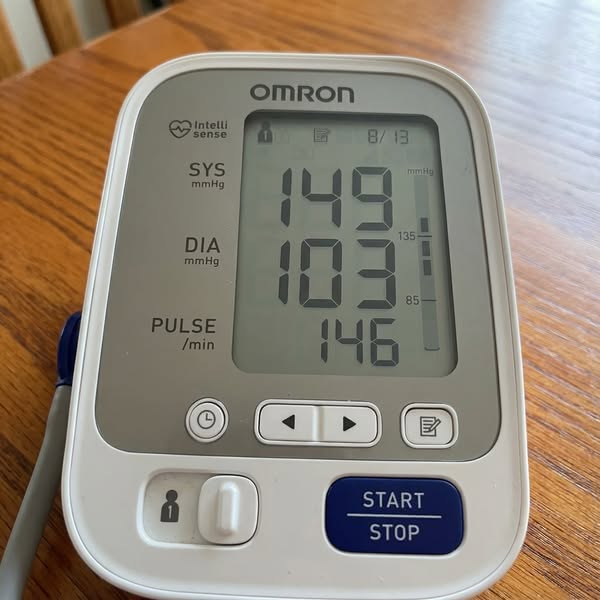
I'm a cardiologist. I ran a 90-day experiment on myself using a little-known Amish root to see if it could fix my blood pressure without drugs. Here are the actual results. I've been a practicing cardiologist for 28 years, and high blood pressure is the single most common thing I treat. I've sat across the desk from thousands of patients and explained the same things over and over. The chronic dry cough from Lisinopril that never goes away no matter how long you take it. The swollen ankles from Amlodipine that make your shoes feel two sizes too small by noon. The bone-deep fatigue from Metoprolol that makes you wonder if the cure is worse than the disease. I've watched patients break down in my exam room because their quality of life is disappearing — and the very drugs that are "saving" them are the reason why. About 2 years ago, it happened to me. I'm 59. My blood pressure came back at 158/94. Consistently. Three readings over two weeks. Numbers I'd write a prescription for without a second thought. All those years of hospital cafeteria food, stress that never stopped, 14-hour shifts with no time for exercise, age doing what age does. It finally caught up with me. My PCP wanted to start me on Lisinopril. 10mg to start. I told her I'd think about it. But I knew I wasn't going to take it. I prescribe Lisinopril, Amlodipine, Losartan, and Metoprolol every single day. I also see what they do to people. The hacking cough from ACE inhibitors that keeps patients up at night for years. The swollen legs from calcium channel blockers that make people look and feel 20 years older. The crushing fatigue from beta blockers that steals every ounce of drive and energy. The erectile dysfunction that ruins marriages but nobody wants to talk about. And the worst part? Half my patients are on two or three of these stacked together and their pressure is STILL not controlled. My own father was on blood pressure medication for the last 20 years of his life. Lisinopril, then they added Amlodipine, then a diuretic on top of that. Three pills every morning. His pressure was "managed" on paper. He still had a stroke at 71. I'm a cardiologist and I couldn't prevent it. I wasn't going down that same road. So I did what I tell every patient to do first. I cut sodium drastically, started exercising every morning before clinic, lost weight, and tried to manage my stress. My pressure dropped slightly but I was still consistently above 145/88. Not where I needed to be. I tried natural supplements too. The literature on natural compounds for cardiovascular health is solid. I've been aware of it for years. I bought magnesium glycinate. Added potassium citrate. Tried hawthorn extract and garlic capsules. Took them every morning for 8 weeks alongside the lisinopril. Side effects didn't improve. My blood pressure barely moved. Still in the danger zone. I figured my own biology must just be too far gone for natural compounds to make a meaningful difference. Then about 3 months ago, one of my regular patients came in for his follow-up. Good guy, 61, has been on Lisinopril and Amlodipine for over 6 years. He'd been complaining about the cough and the swollen ankles for years. I'd told him the same thing every time: "The benefits outweigh the risks." But this time something was different. He wasn't coughing. His ankles looked normal. He seemed energized — sharper, more present. I asked how things were going. He got a little sheepish and said "Doctor, I stopped both my medications about two months ago. I didn't want to bother you about it." I told him he could bother me about it. He pulled a bottle out of his jacket and said after everything he'd tried, this was what finally brought his pressure down without the cough and the swelling and the fatigue. Then he said "My brother tried the cheap kind from the grocery store and it didn't do anything. You have to get the right one." I'll be honest, I was very skeptical. Patients bring me supplements every week and 99% of them are nonsense. But I took his pressure right there in the office. 124/78. On nothing. A man who'd been running 155/96 for six years on two medications was sitting in front of me at 124/78 on zero. That night I sat in my home office. Tired. Tense. Feeling my own pulse throbbing in my temples at 9 PM from doing nothing. So I opened my laptop and went deeper into the literature than I had in years. The problem isn't that your heart is pumping too hard. It's that your blood vessels have lost their ability to relax. Your arteries are lined with a thin layer called the endothelium. This lining produces a molecule called nitric oxide — the master signal that tells your blood vessels to dilate, to open up, to let blood flow through without resistance. When you're young, your body produces nitric oxide abundantly. Your vessels are flexible. They expand when they need to. Blood flows freely. Pressure stays low. But as we age — and as stress, processed food, and inactivity accumulate — nitric oxide production drops by as much as 75% by age 60. Your arteries become stiff. Rigid. They can't relax anymore. Your heart has to pump harder to force blood through vessels that refuse to open. That's high blood pressure. Not a heart problem. A vessel flexibility problem. Blood pressure medications force your numbers down by blocking enzymes, preventing contraction, slowing your heart, or draining fluid. But none of them restore nitric oxide production. None of them fix why your vessels can't relax. That's why one medication becomes two becomes three. That's why "controlled" blood pressure still leads to strokes and heart attacks. The vessels are still stiff underneath the medication. Still deteriorating. That's what happened to my father. The compound my patient was using works through a completely different pathway: When you consume something called “dietary nitrates”, your body converts it directly into nitric oxide. The exact molecule your endothelium has stopped producing enough of on its own. It doesn't block, force, or drain anything. It restores the natural vasodilation signal that aging shut down. Vessels relax. Blood flows freely. Pressure drops because there's nothing to push against anymore. Not forced compliance. Restored function. "So where do you actually get dietary nitrates in meaningful amounts? Researchers tested hundreds of foods. Spinach, arugula, celery -- they all contain some. But one source blows everything else out of the water. Beetroot. It contains more bioavailable nitrates per gram than any other food ever measured." I kept reading. And that's when I hit the real problem. Most beetroot supplements use heat processing, which destroys up to 60% of the nitrate content. They pad the label with "1,000mg beetroot extract" but the actual dietary nitrates inside are a fraction of what's needed for clinical results. So even when a label says "beetroot," the active nitrates your cardiovascular system needs are nowhere near therapeutic levels. I'd been aware of beetroot research for years and I'd never actually investigated the processing or nitrate standardization of what was commercially available. None of my patients trying grocery store beetroot were getting anywhere close to clinical levels. None of us were. I started looking for any beetroot supplement that was: ✅ Shade-dried, not heat processed (so nitrate compounds survive intact) ✅ Full 1,300mg clinical concentration per serving ✅ Third-party tested with a published Certificate of Analysis I kept seeing the same brand mentioned over and over in the reviews. Rosabella Beetroot. The same one in my patient's jacket pocket. I ordered it. It was more expensive than the grocery store capsules I'd tried before. At that point I didn't care. When it arrived, I checked the Certificate of Analysis on their site first. Full 1,300mg shade-dried organic beetroot. Standardized nitrate levels. Verified by an outside lab. I took my first dose with breakfast that Monday morning. The first week — my evening headaches disappeared. That throbbing behind my temples that I'd lived with for two years just... wasn't there. By day four I was sleeping through the night. No more waking at 3 AM with my heart slamming against my ribs. Week two — 138/84. Down from 148/90. I know ten points doesn't sound like much. But I need you to understand what ten points FEELS like. That constant tightness in my chest — the one I'd blamed on stress, on the job, on age — was dissolving. Like my body was finally exhaling after holding its breath for years. Week four — 132/80. Arterial stiffness improving. My vessels were literally becoming more flexible. I stared at my own lab results and felt something I hadn't felt in a long time. Hope. Week six — 126/79. Resting heart rate dropped from 78 to 68. My heart wasn't fighting anymore. It was just pumping. Easily. The way it's supposed to. By day 90, I tested everything again. Average blood pressure: 122/76. The flexibility of my blood vessels had improved by 31%. My endothelial function was testing like a man 15 years younger. I thought about my father. Three medications. "Controlled" numbers. Dead at 71. For the first time in 2 years, my cardiovascular system was functioning the way it's supposed to. Not forced into compliance by chemicals — actually restored. My vessels could relax again. Blood flowed without resistance. Without medication. Without side effects. Without slowly deteriorating underneath a pharmaceutical band-aid. I sat in my office and stared at the results. I'm a cardiologist. I treat blood pressure every day. And nothing I'd done for 2 years — lifestyle changes, magnesium, potassium, garlic, hawthorn — had produced numbers like this. The headaches that throbbed behind my eyes every evening? Gone. The racing heart that woke me at 3 AM? Gone. The constant tension that made me feel like a rubber band stretched too tight? Gone. At my 90-day mark, I felt like myself again. Calm. Clear. And my blood pressure — measured the real way, at home, multiple times daily — was better than it had been in a decade. I've started mentioning Rosabella to select patients since then. The ones who've followed through have all come back with better readings. One man who'd been on Lisinopril and Amlodipine for 6 years was able to discontinue both entirely under careful monitoring. He told me it's the first time in 6 years he can breathe without coughing and his ankles look normal again. Look, for almost 2 years I thought I had two options. Start the medication and deal with the cough and the swelling and the fatigue, or avoid the pills and watch my pressure climb until something gave out the way it gave out on my father. As a cardiologist, I knew exactly where the second road ended. I was wrong about the first option being my only alternative. And here's something I wish I'd understood sooner: Not all beetroot supplements are created equal. I was aware of the research for years and dismissed it because patients only ever tried cheap, heat-processed garbage that did nothing. Rosabella's shade-dried, clinical-concentration, third-party-tested formula is the only one that actually restored my nitric oxide levels and brought my pressure into the healthy range. If my patient hadn't pulled that bottle out of his jacket, I'd still be tense, headachy, and slowly declining toward the same stroke that took my father — or starting medications that would mask the problem while my vessels continued to stiffen underneath. I'm sharing this because I hope it helps someone else. After 28 years as a cardiologist, I thought I knew every option for high blood pressure. Turns out, my patient knew something I didn't. Here's where I got mine: 👉 https://track.tryrosabella.com/cdc16426-3e48-40a7-9fad-21098084f6cf (They're running a sale right now. I just ordered 3 more bottles.) ~ Dr. David Harrington P.S. A few things I wish I'd known before I ordered: When I first ordered Rosabella, I didn't know they had a 90-day money-back guarantee. If your blood pressure doesn't improve, you get a full refund. No questions asked. I wish I'd known that earlier — would have saved me 8 weeks on cheap brands that did nothing. Most people order at full price, but right now they're running a discount that knocks the cost down significantly. That's how I was able to grab 3 bottles at once. The catch is Rosabella is a small operation. They use shade-dried organic beetroot and only source from one third-party tested supplier who meets their quality standards. They sell out often. I've had patients message me asking if it's back in stock yet. I want to apologize in advance because when you click below, you might see they're sold out. If they are, I'm sorry. If you've been dealing with high blood pressure, medication side effects, that constant cough, swollen ankles, fatigue, or you're watching your cardiovascular health decline while the pills make you feel worse — I'd grab a few bottles before they're gone. I went from tense, headachy, and heading toward my father's fate to calm, clear, and healthy blood pressure in 90 days. As a cardiologist, I've seen thousands of patients on multiple BP meds. None of them showed that kind of improvement. If there's even a chance this could work for you, it's worth trying. 👉 Check if Rosabella Beetroot is in stock here: https://track.tryrosabella.com/cdc16426-3e48-40a7-9fad-21098084f6cf
Support stamina and heart health every day
LEARN MORELike this ad? Make it yours.
Crush rebuilds this exact creative around your product — your brand, your colors, your offer — in about a minute.