
Inactive· since Apr 3, 2026
- 3
- days it ran
- 0
- relaunches
Ad copy
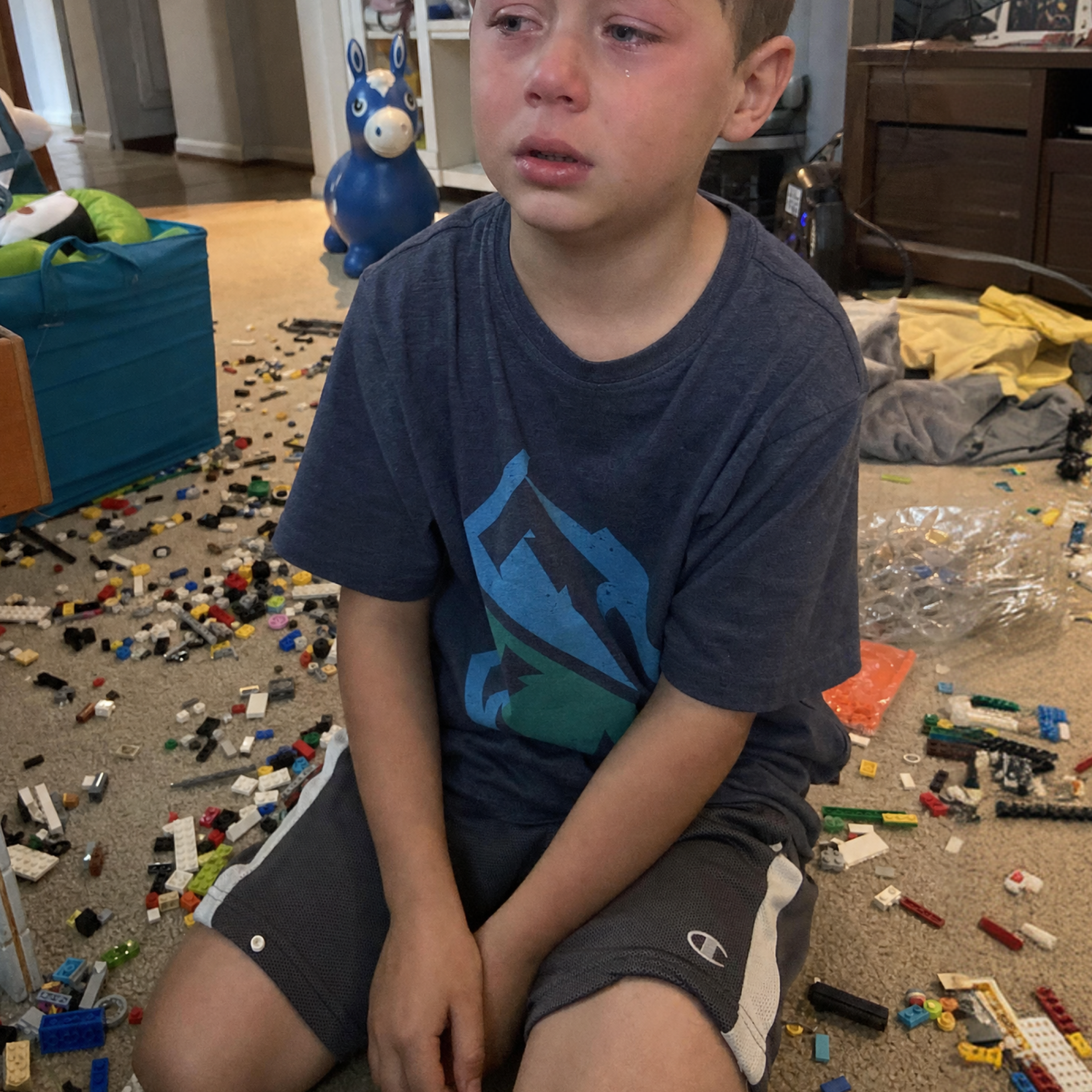
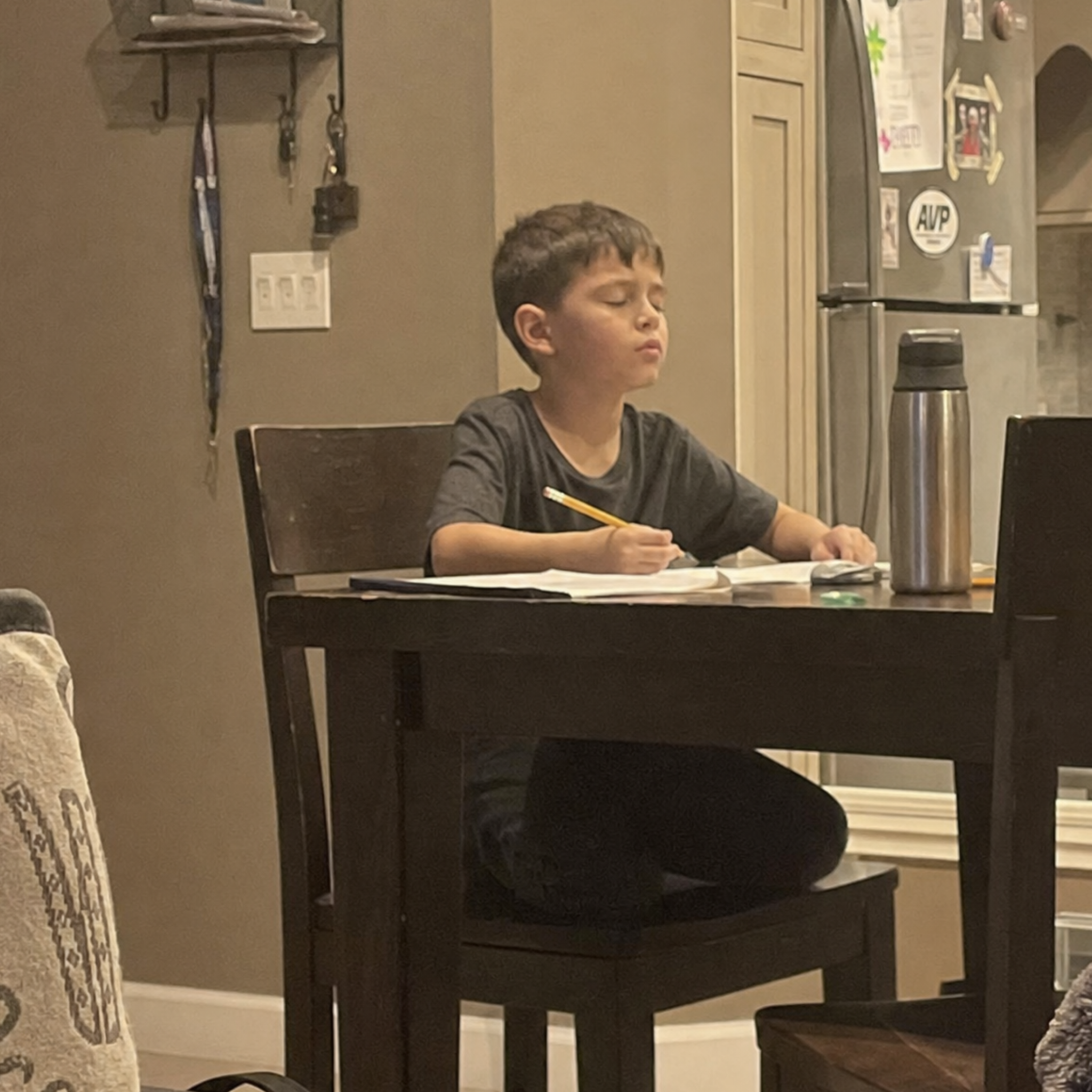
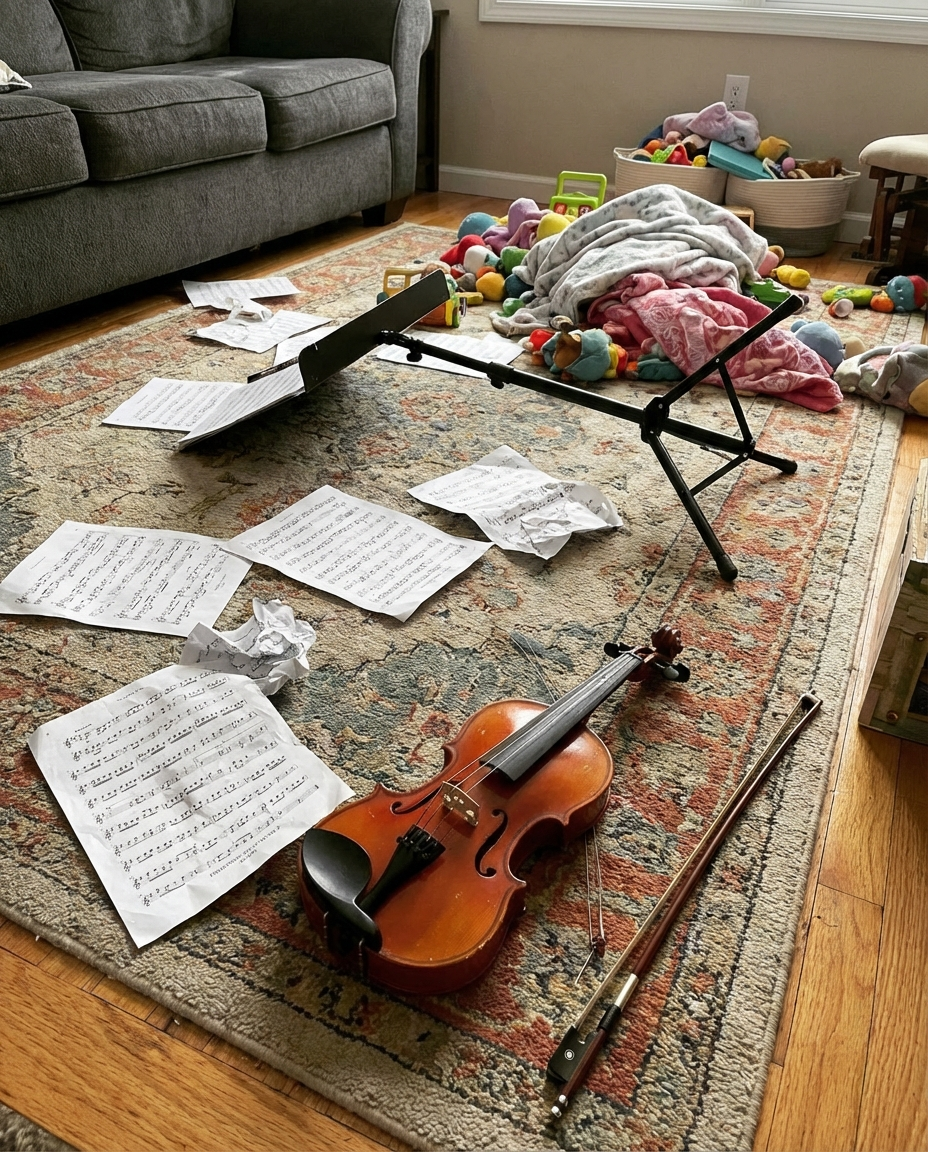
My son's hands were still shaking as he crawled into my lap and whispered, "why can't I just be normal?" He's only 7 years old Seven years old, and he's on the living room floor screaming "I'M TERRIBLE" while the torn pages settle around him like confetti at a funeral. Twenty minutes before that, he'd been playing beautifully. Eyes closed. Swaying a little. The kind of quiet, focused joy you almost don't breathe near because you're afraid you'll break it. Then one note landed wrong. The bow came down on the music stand like a gavel. The sheet music came off in fistfuls. He wasn't just crumpling it. He was clawing at it, tearing it into strips, like he was trying to destroy the evidence that he'd ever attempted something and fallen short. Then the screaming started. Not a tantrum scream. A wound scream. The kind that comes from a place so deep inside a child that it makes the dog leave the room and your chest go cold. "I'M STUPID. I CAN'T DO ANYTHING RIGHT. I'M THE WORST." His little sister was on the couch behind him, coloring. She didn't look up. Didn't flinch. Just quietly gathered her crayons, slid off the cushion, and padded down the hallway to her room. She's five. She already knows the protocol. My husband stood in the kitchen doorway with both hands on the frame. Not moving. Not speaking. We made eye contact over our son's head and had an entire conversation without words. The conversation was: not yet. I sat on the floor three feet away from him and waited. Not because I'm patient. Because I've learned that touching him before the wave passes makes him swing. Not at me. At himself. He hits his own legs. Pulls his own hair. Like his body is the enemy and he's trying to fight his way out of it. Forty-five minutes. That's how long it took. Forty-five minutes of a seven-year-old prosecuting himself for a single missed note. Building airtight arguments for why "good enough" is a coward's standard. Citing evidence. Drawing conclusions. Sobbing the entire time. By the end his voice was raw and his eyes were so swollen he could barely keep them open. He crawled across the carpet to me, climbed into my lap, and pressed his face into my neck. That's when he asked me why he can't just be normal. I didn't answer. I just held him and rocked and stared at the torn sheet music on the floor and thought about how strange it is to be afraid of your own child's intelligence. The next morning I packed his lunch while he sat at the table eating cereal. Neither of us mentioned it. We never do. It's the unspoken rule of this house: mornings are for pretending last night didn't happen. He ate slowly. Pushed the Cheerios around with his spoon. At one point he looked up at me and said, "Mom, do you think I should quit violin?" I said no. I said he was wonderful at it. I said one mistake doesn't mean anything. He looked back down at his cereal and said, "It does to me." I drove him to school. He sat in the back seat with his backpack between his knees, staring out the window. At drop-off he opened the door, then paused. "Sorry about last night," he said. Without turning around. I watched him walk through the double doors. Backpack too big for his body. Shoulders pulled in tight like he was bracing for something only he could see. I sat in the parking lot for ten minutes with both hands on the steering wheel, engine running, trying to figure out how a child who can explain the lifecycle of a star to you in detail cannot survive making one mistake on an instrument he loves. That night, the violin case stayed in the corner of his room. Closed. It's still there. So I did what any mother does when her brilliant child is falling apart from the inside out. I went looking for help. The biggest bet was therapy. A specialist who worked with gifted kids. $200 a session, every Wednesday at 3:30. She was wonderful. Patient. She taught him to name what he was feeling, to recognize the spiral before it swallowed him, to take deep breaths and count backwards from ten. He learned every tool she gave him. Mastered them, actually, the way he masters everything — quickly, thoroughly, and with an understanding that made her smile and tell me how "exceptionally self-aware" he was. He could narrate his own meltdowns like a documentary. The meltdowns didn't care. He'd be mid-spiral, tears streaming, fists clenched, screaming — and he'd look at me and say "I KNOW I'm catastrophizing, Mom. I KNOW this isn't rational." And then he'd keep going. Because knowing wasn't the problem. It was never the problem. His brain could diagnose the tornado while standing inside it. It just couldn't build a wall. I sat in that waiting room week after week, writing checks and watching the clock, telling myself this would be the session where something clicked. Where all that brilliant self-awareness would finally translate into self-control. It never did. And one night — after another meltdown, another round of perfectly articulated despair, another forty minutes on the floor followed by another whispered apology — I stood at the kitchen sink and thought the thing no parent of a gifted child is allowed to say out loud: What if his intelligence is the thing that's breaking him? That question kept me up until 2am. I was in bed, phone in hand, doing the thing I always do after a bad night. Scrolling. Searching. Typing the same desperate variations into Google like maybe this time the algorithm would finally give me something I hadn't already tried. "Gifted child emotional meltdowns." "Why is my smart kid so angry." "Gifted child can't handle mistakes." And then I found something I'd never seen before. A phrase I'd never heard any therapist, any teacher, any parenting book use in seven years of searching. Asynchronous development. I almost scrolled past it. But something in the description stopped me cold. It said that gifted children don't develop evenly. That their intellectual growth races years ahead of their emotional growth. That a seven-year-old who thinks like a twelve-year-old still feels like a seven-year-old — or younger. And that the gap between those two things is where every meltdown lives. I sat up in bed. Read it again. Then again. Because suddenly I wasn't looking at a paragraph on a screen. I was looking at my son. The child who can explain black holes but can't survive a wrong note. The child who argues like a prosecutor but sobs like a toddler. The child who can diagnose his own spiral with terrifying precision and still can't stop it — because diagnosing is an intellectual skill, and stopping is an emotional one. And those two systems are running on completely different timelines. That's the mismatch. That's what nobody told me. His brain sees the world like a twelve-year-old. It notices imperfection with the sharpness of someone twice his age. It sets standards his body hasn't grown into yet. It perceives failure not as a moment but as an identity threat — because when your whole world has told you you're "the smart one," falling short doesn't feel like a mistake. It feels like you're losing the only thing that makes you you. And then all of that — all that perception, all that intensity, all that meaning — crashes into an emotional regulation system that is exactly where it should be for a seven-year-old. The system overloads. The thinking brain goes offline. And the primitive brain takes over. That's not a tantrum. That's a traffic jam between two parts of the brain that are developing at completely different speeds. And here's the thing that made me cry at 2am, alone, in the dark: Every single strategy I'd tried — therapy, breathing exercises, reasoning with him, consequences — they all made the same mistake. They all assumed that because my son could think like an older child, he could regulate like one too. The therapist talked to his twelve-year-old brain. The seven-year-old emotions never got the message. Of course it didn't work. It was never going to work. Not because the therapist was bad. Not because my son wasn't trying. But because every tool was aimed at the wrong system. It wasn't his fault. It wasn't my fault. It was a gap. A developmental gap with a name and a mountain of neuroscience behind it. Researchers at the National Institutes of Health used MRI scans to track the brains of over 300 children and found that gifted brains follow a fundamentally different growth pattern — the thinking centers keep thickening and developing years longer than average, physically outpacing the emotional centers that are supposed to keep them in check. My son's brain wasn't broken. It was just building itself in the wrong order. And for the first time in years, the question changed. It wasn't "what's wrong with him" anymore. It was "what would happen if I stopped trying to fix his intellect… and started training the emotional skills his development left behind?" That's when I found the program. It wasn't therapy. It wasn't another parenting book. It was a daily confidence training system built on research from Harvard, Yale, and Duke — designed specifically to build the emotional skills that gifted kids' development leaves behind. Five minutes a day. That's it. Five minutes. After years of $200 therapy sessions and three-hour meltdowns and entire evenings lost to the aftermath — five minutes felt almost insulting. But I was desperate enough to try anything that actually matched what I'd just learned about my son's brain. So we started. Every night before bed, we'd sit together and do one workout. A story about a real person — an athlete, a leader, someone who'd faced something hard and pushed through it — followed by a short exercise we'd do together. Sometimes it was talking through how he sees himself. Sometimes it was practicing what to say to his own brain when it starts telling him he's not good enough. He loved it. Not tolerated it. Loved it. He'd remind me if I forgot. He'd ask for it the way he used to ask for bedtime stories. And here's the part that caught me off guard: it became our time. Not crisis time. Not damage-control time. Just… us. Sitting together, talking about real things, without the shadow of the last meltdown hanging over every word. No more outsourcing his emotional development to a therapist who sees him one hour a week. No more waiting rooms. No more praying that today's session would be the one that finally stuck. I was building it with him. Daily. In our own home. With a system grounded in actual neuroscience — not Instagram parenting trends that sound nice and do nothing. And unlike everything else we'd tried, this was actually working. Slowly, quietly, in ways I almost didn't trust at first. But I was starting to see a difference. The first shift came around week two. He was working on a drawing — something detailed, something he cared about — and his pen slipped. A line went crooked. I braced myself. Held my breath the way I always do when a mistake happens, already calculating how long the meltdown would last and whether his sister was in a safe room. He looked at the line. His jaw tightened. And then — quietly, under his breath — he said, "Shake it off." Did a little shimmy with his shoulders. And kept drawing. I stood in the kitchen doorway and cried. That was his Mistake Ritual. Something he'd built during one of our workouts — a phrase and a physical action to let go of an error instead of letting it swallow him whole. He'd chosen it himself. And he used it without me saying a word. By week four, the self-talk was changing. I overheard him at his desk one afternoon, erasing something on his homework. Old version of my son would've torn the page. This time, he whispered to himself: "That's not true. One mistake doesn't mean I'm bad at this." Then he kept writing. It was the Catch and Replace exercise — catching the inner critic mid-sentence and swapping the lie for something real. He was doing it on his own. Without a therapist. Without a prompt. Without me. Week seven, the violin case came out of the corner. I didn't say anything. I didn't even let him see me notice. He carried it downstairs after dinner, sat on the couch, rosined the bow, and started playing. He hit a wrong note about four minutes in. Stopped. Took a breath. Said, "I am Eli, and I am brave, and creative, and a hard worker." And started the measure over. No screaming. No torn pages. No forty-five minutes on the floor. Just a boy, and a violin, and the quiet confidence to try again. Part of me wanted to believe it was a fluke. A good week. A phase. Because I'd been burned by hope so many times before that trusting it felt dangerous. So I did what I always do. I went looking for proof. I searched online and found the community — thousands of parents using this same program. And the stories I found weren't just similar to mine. They were mine. Written by strangers who somehow knew exactly what my kitchen floor looks like at 7pm on a Tuesday. A mom whose nine-year-old had been drowning in negative self-talk for years said it changed everything. "It has truly improved my son's ability to handle stressful situations and learn a wide range of techniques to apply to everyday life. His confidence has greatly improved." A dad whose son was already showing signs of anxiety and self-doubt at school — scared to talk to other kids, convinced he didn't belong — signed him up on a whim. "There was this kind of a switch that flipped on him where he's starting to really see that what he's thinking in his mind is just in his mind. 30 days, 40 days, he's changed significantly and for the better." A mom whose son had been through therapy and meds and years of worrying said the thing that stopped me mid-scroll. "This app has been, hands down, one of the best things to happen to my kid. Therapy, meds, years of worrying — but he BEGS for Legends every single night. It's really made a difference in the way he sees himself." Another parent — day one — wrote something that made my chest tighten because I remembered that exact feeling. "My son actually cried at the end of it and told me how happy he was that I bought this for him. He said he really talks to himself in a negative way and wants to stop." And a mom of a seven-year-old, just fifty days in, said what I wished I'd known a year ago. "What this has done for my kid and me is nothing short of remarkable. It has not only taught her how to build up her own confidence, it has taught her mindfulness, awareness, breathing, and so much more." Thousands of families. Same story. Same shift. Same quiet, daily transformation that no therapist's office and no parenting book ever delivered. It wasn't a fluke. It wasn't a phase. It was the thing that had been missing all along. The program is called Legends. And if you've read this far, you already know why you're here. You're not here because you're curious. You're here because you have a child whose brain is extraordinary and whose emotions haven't caught up yet — and you've watched that gap tear through your family long enough. So here's the choice. You close this page and go back to what you've been doing. The therapy that teaches your child to narrate the tornado but never stop it. The breathing exercises they can recite perfectly while screaming. The quiet, creeping fear that your child's intelligence — the thing everyone else celebrates — is the thing slowly breaking them from the inside out. You know where that road goes. You've been walking it. Or you give your child five minutes a day. Five minutes to build the emotional skills that their development skipped over. Five minutes that cost less time than one meltdown, less energy than one whispered apology, less heartbreak than one more night wondering if your kid is going to be okay. Legends comes with a full money-back guarantee. Try it with your child. Do the workouts together. Watch what happens over the next few weeks — to their self-talk, to their reaction when something goes wrong, to the way they carry themselves through a hard moment. If you don't see the shift, you get every penny back. No questions. No hoops. No guilt. You risk nothing. Your child gains everything. Click the link below to see if Legends is still available and start your child's first confidence workout today. https://try.buildlegends.com/listicle1/giftedKids Don't wait for the next torn page to remind you why you're here. You already know. P.S. — I still think about the night he whispered it. That small, raw voice in my lap, asking me why he can't just be normal. Eyes swollen. Hands still trembling. Seven years old and already convinced that his own brain was the enemy. If your child is carrying something like that — whether they say it out loud or just show you with their fists and their tears and their silence — please don't let another week pass. This isn't about an app. It's about giving your kid the one thing that every therapist, every book, and every well-meaning expert forgot to build: the quiet, bone-deep belief that they can make a mistake and still be okay. That they are more than the smartest person in the room. That they can try, and fall short, and try again — without the world ending. Five minutes a day. That's where it starts.
If You Have A Child, Read This 👆
If you're a parent going through something like this, you're not alone.
LEARN MORELike this ad? Make it yours.
Crush rebuilds this exact creative around your product — your brand, your colors, your offer — in about a minute.