Ridgewood Veterinary Clinic
Ridgewood Veterinary Clinic Facebook ad: “Veterinarian speaks the truth…”
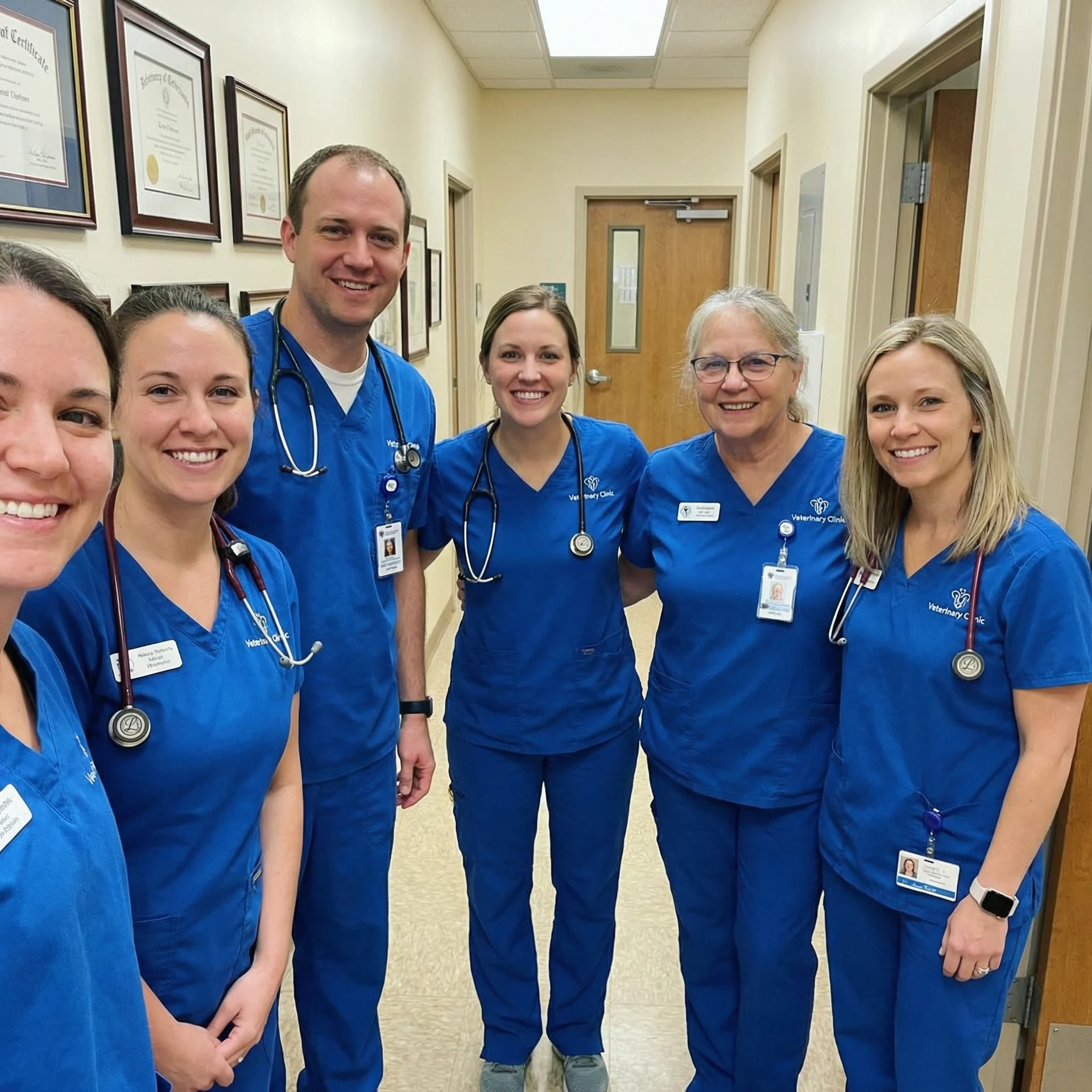
Ran for 22 days, from February 25 to March 19, 2026, the last day Crush saw it.
Run by Ridgewood Veterinary Clinic on Facebook. Crush is not the advertiser and does not verify its claims. See this ad in Meta's Ad Library(opens in a new tab)
Want an ad like this for your product?
Crush makes new ad images for your product from this ad: your logo, your product photo, your offer.
Trials from $19.95 USD, then $79.95 USD a month. Cancel anytime.
About this ad
- Meta Ad Library ID
- 1267493162111269
- Platforms
- Facebook, Instagram, Audience Network, Messenger and Threads
- Relaunches
- 0
- Niche
- Pets
Ad text
I'm not against taking your dog to the vet. I'm not against allergy medication. And if your dog is miserable right now, scratching until they bleed, keeping you both up at 3 AM with that constant paw licking... I get it. You'd do anything to make it stop. What I want to talk about is what happens after. Because if your dog has been on allergy medication for more than a year and the doses keep going up, the injections keep getting closer together, and the allergies keep coming back a little worse every season, there's a reason for that. And it's not because your dog has "bad genetics" or "severe allergies." It's because of what the medication is doing. And more importantly, what it's not doing. Let me start from the beginning. Because I know your story. I've heard it hundreds of times. Your dog starts scratching. Maybe it's the paws first. Then the belly turns red and hot to the touch. Then you notice the ears. That thick, dark wax. That yeasty corn chip smell. You take them to the vet. They run an allergy panel. Maybe they do a skin scrape. They rule out mites, fungal infections, the obvious stuff. Then they suggest a food trial. A limited ingredient diet. Maybe a hydrolyzed protein. You spend $80 on a bag of food your dog barely touches. You wait eight weeks. The scratching doesn't stop. So the vet prescribes medication. And it works. Within days, the scratching slows down. Within a week, the ears start clearing. Your dog is sleeping through the night again. You're sleeping through the night again. You feel like you can finally breathe. You did the right thing. You absolutely did the right thing. That medication gave your dog relief when they needed it. And it gave you relief too. After weeks or months of watching them suffer, of cleaning the ears every day, of waking up to that slurp-slurp-slurp sound at 2 AM, you finally had your dog back. I would never want you to feel bad about that. But here's what nobody told you at that first appointment. The medication didn't fix what was causing the allergies. It turned off your dog's reaction to them. There's a huge difference. Your dog's skin has a barrier. Think of it like a raincoat. When your dog was young, that barrier was sealed tight. Pollen, dust, grass, bacteria. Nothing got through. That barrier is made of collagen. And after age two, your dog's body produces less of it every year. By four, the barrier has gaps. By six, it's breaking down. Every year, more allergens soak through. More bacteria get in. More moisture escapes. The skin dries out. Yeast takes hold. The ears start smelling. The paws turn rusty from constant licking. The belly goes from pink to angry red to that thick, dark, leathery skin. That's not "allergies getting worse." That's the barrier falling apart, year after year. Now here's the part that changed how I think about this. The allergy medication stops your dog from reacting to the allergens pouring through the holes in that barrier. But it doesn't patch the holes. It doesn't rebuild the barrier. It doesn't even slow down the deterioration. Every month your dog is on medication, the barrier continues to break down underneath. Quietly. Invisibly. Because your dog isn't scratching, everything looks fine on the surface. But the structure that's supposed to protect them is getting thinner and weaker. That's why the medication that worked so well in the beginning starts to fade. Not because the drug stopped working. But because there's so much more getting through now that the drug can't keep up. So the dose goes up. The injections get closer together. A second medication gets added. Then a steroid. Then a medicated shampoo on top of that. You're doing more and more. And your dog is getting worse. And the hardest part is that you've done everything right. You've changed the food. You've tried the elimination diet. You've driven to the specialist. You've spent money you probably didn't budget for. You've lost sleep over this. None of that was wasted. You just weren't given the full picture. Because the system you've been working within is set up to manage the reaction. Not fix the barrier. And there are reasons for that. Allergy medication is a massive market. We're talking billions of dollars a year. These drugs cost very little to manufacture and they retail for $60 to $200 per month. Per dog. And the dog stays on them for life. The companies behind these medications sponsor veterinary conferences. They fund the continuing education courses. They send reps into clinics every month. The entire infrastructure of how vets learn about allergy treatment runs through these companies. I don't think anyone is being malicious. I really don't. Your vet prescribes what they were trained to prescribe. They see your dog suffering and they want to help. That's genuine. But the approach that actually rebuilds the barrier? The one that could reduce or eliminate your dog's need for medication altogether? It doesn't get taught. It doesn't get promoted. It doesn't have a sales team walking into your vet's office. Because you can't patent collagen. And you can't build a billion-dollar business around something that fixes the problem permanently instead of managing it monthly. So it sits in research papers. Published. Available. And almost nobody in clinical practice talks about it. It's not an overnight fix. And I think that's part of why it gets overlooked. When your dog is suffering, you want relief now. Tonight. And medication delivers that. Nobody wants to hear "give it four to six weeks." I understand that completely. But that instant relief is what started the cycle. And the slow fix is what actually ends it. So what does "fixing the barrier" actually look like? Collagen. Specifically, hydrolyzed collagen peptides. The raw material your dog's body used to produce on its own but has been making less and less of since age two. When you supplement it in the right form, the body uses it to physically rebuild the barrier that's been thinning for years. The research is clear on this. A study out of Cornell University in 2014 showed measurable improvement in skin barrier function within six weeks. Not symptom suppression. Structural repair. But here's where most people get it wrong. The form matters. A lot. It has to be liquid. Not chews. Not tablets. Most allergy supplements on the market are chews packed with pea starch, grain binders, and Brewer's Yeast. And a lot of allergy dogs react to those exact fillers. So the product that's supposed to help ends up adding to the problem. Some are loaded with artificial flavorings and preservatives so they can sit on the shelves at big box pet stores for months. That's great for the retailer. Not so great for your dog. And tablets sit in the stomach for hours before they break down. A liquid absorbs almost immediately through the gut lining and reaches the skin where it's actually needed. It also can't just be collagen alone. The research shows four things working together: Hydrolyzed collagen peptides to rebuild the barrier. Vitamin C so the body can actually synthesize the collagen. Hyaluronic Acid to hold moisture in the skin while it heals. And Biotin to support the coat growing back. All four. In liquid form. Clinically dosed by weight. I've tried the most popular brands myself. The ones on Amazon. The ones on Chewy. The ones sold through veterinary clinics. Most of them get one or two of these right but miss the rest. Some are packed with the exact fillers that trigger allergy dogs. Some aren't dosed properly. Some are loaded with artificial flavorings and preservatives so they can sit on the shelf at Petco for six months. The one I recommend to my patients is Nature's Paw. Veterinary-grade liquid collagen in small batches. Grass-fed hydrolyzed peptides. All four active ingredients. Clinically dosed by your dog's weight. Zero Brewer's Yeast. Zero pea starch. Zero grains. No fillers. No artificial preservatives. I started recommending it about a year ago. Quietly. To my worst allergy cases. The ones who'd been through everything. Sophie was the first. A 5-year-old French Bulldog. Her owner, Megan, had been through the full cycle. Two years of allergy medication. Three food changes. Medicated baths twice a week. Sophie's belly was dark and leathery. Her paws were raw and rust-stained. The ears never fully cleared no matter what they tried. Megan was exhausted. She told me once, "I feel like people think I'm not taking care of her when they see her skin. But I've spent thousands. I've done everything." She had. She absolutely had. We added the liquid collagen alongside Sophie's existing protocol. I told her to give it six to eight weeks. I told her not to expect anything overnight. Week two, Megan texted me: "Sophie didn't lick her paws last night. First time in months." Week four: "The ears are clearing. That black gunk that I've been cleaning every single day? It's barely there." Week six: "I looked at her belly this morning and I actually cried. The skin is lighter. It's softer. It doesn't look like elephant skin anymore." Week ten, we reduced her allergy medication by half. Sophie was still comfortable. Still not scratching. Week twelve, we took her off it completely. Megan sent me a video of Sophie rolling on her back on the living room carpet. Something she hadn't done in over a year because her belly was too raw. "I forgot she used to do this," Megan wrote. "I forgot what she was like before all of this started." Then there was Oakley. A 7-year-old Golden Retriever. Chronic ear infections. The wax was so thick his owner was cleaning both ears every morning. Three rounds of antibiotics in four months. The smell was so bad that visitors would comment on it. Four weeks on the liquid collagen, the wax production dropped in half. Eight weeks, his owner sent me a photo of clean, pink ears. She said the vet techs at the front desk didn't recognize him. Then Duke. A 4-year-old Pit mix. Rusty paws. Bald patches spreading across his chest. His owner was spending $180 a month on medication and still watching him scratch. Six weeks. The fur was filling back in. The staining on the paws was fading. His owner told me strangers at the dog park were asking what she changed. "Just a liquid collagen I put on her food," she said. "No more pills. No more injections. Just that." I've now recommended this to over 40 dogs. The pattern is consistent. Paw licking reduces or stops within 2-3 weeks. Ear issues improve noticeably within 3-4 weeks. Skin texture and coloring begin normalizing by week 6. Coat thickness improves by week 8-10. Most owners are able to work with their vet to reduce or eliminate allergy medication within 8-12 weeks. Not every dog. Every dog is different. I always tell owners that. But the trajectory is the same. Rebuild the barrier. And the body stops overreacting to everything. I think about all the dogs I saw over the years who came in with that same pattern. The scratching that started small and got worse every year. The medication that worked beautifully at first and then slowly stopped keeping up. The owners who did everything right and still watched their dogs deteriorate. The information was there. The research was published. The approach existed. It just never had a reason to make it into the exam room. I can't change what I didn't know before. But I can tell you now. If your dog is on allergy medication and you're watching the doses creep up, the injections get closer together, and the symptoms come back a little worse each time, the medication isn't failing. The barrier underneath is. And until you address that, the cycle doesn't end. It just gets more expensive and harder to manage. There is a version of this where the scratching stops, the ears stay clean, and you're not counting down the days until the next injection. It exists. It's not the overnight fix. But it's the one that actually lasts. And after everything you've already been through, a few weeks is nothing. Click here to learn more about Nature's Paw 👇 https://trynaturespaw.com/products/natures-premium-liquid-collagen
Where the ad sends people
trynaturespaw.com
Veterinarian speaks the truth…
Dogs lose collagen every day after age 2 — and it shows in the skin first. As the gut barrier weakens, allergens slip through, triggering the itching, hot spots, and scratching that won't stop. It also shows in stiff joints and dull, thinning coats. One daily pour rebuilds the barrier from the ins...
Shop now: trynaturespaw.com(opens in a new tab)