
Inactive· since Jun 28, 2026
- 18
- days it ran
- 0
- relaunches
Ad copy
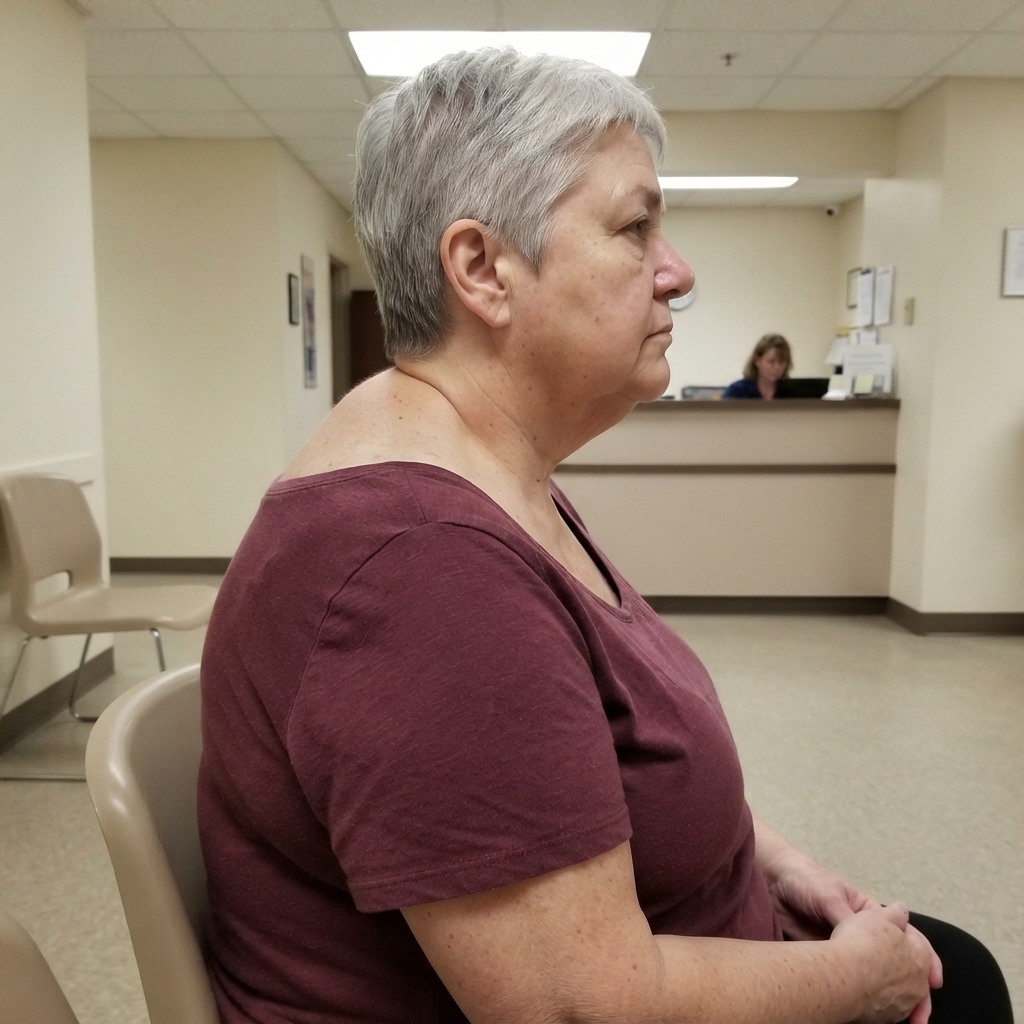
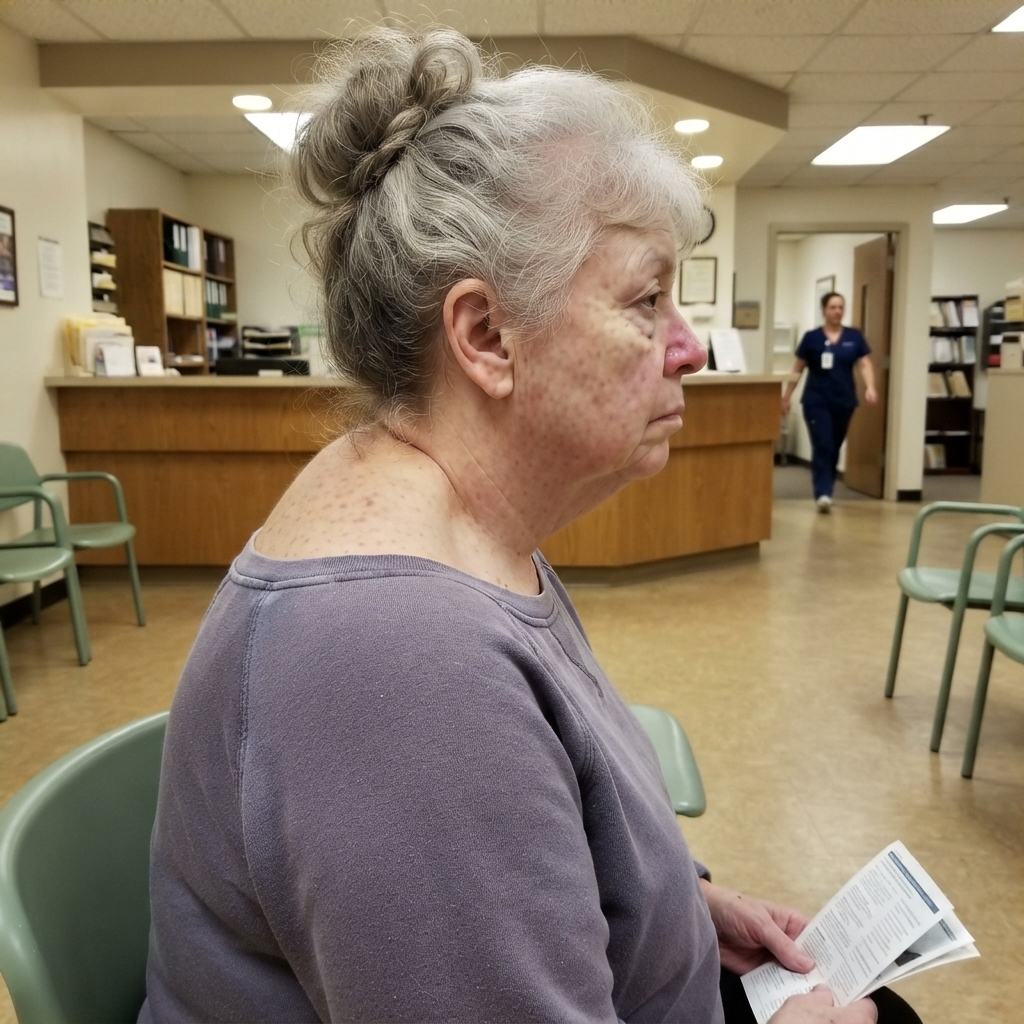
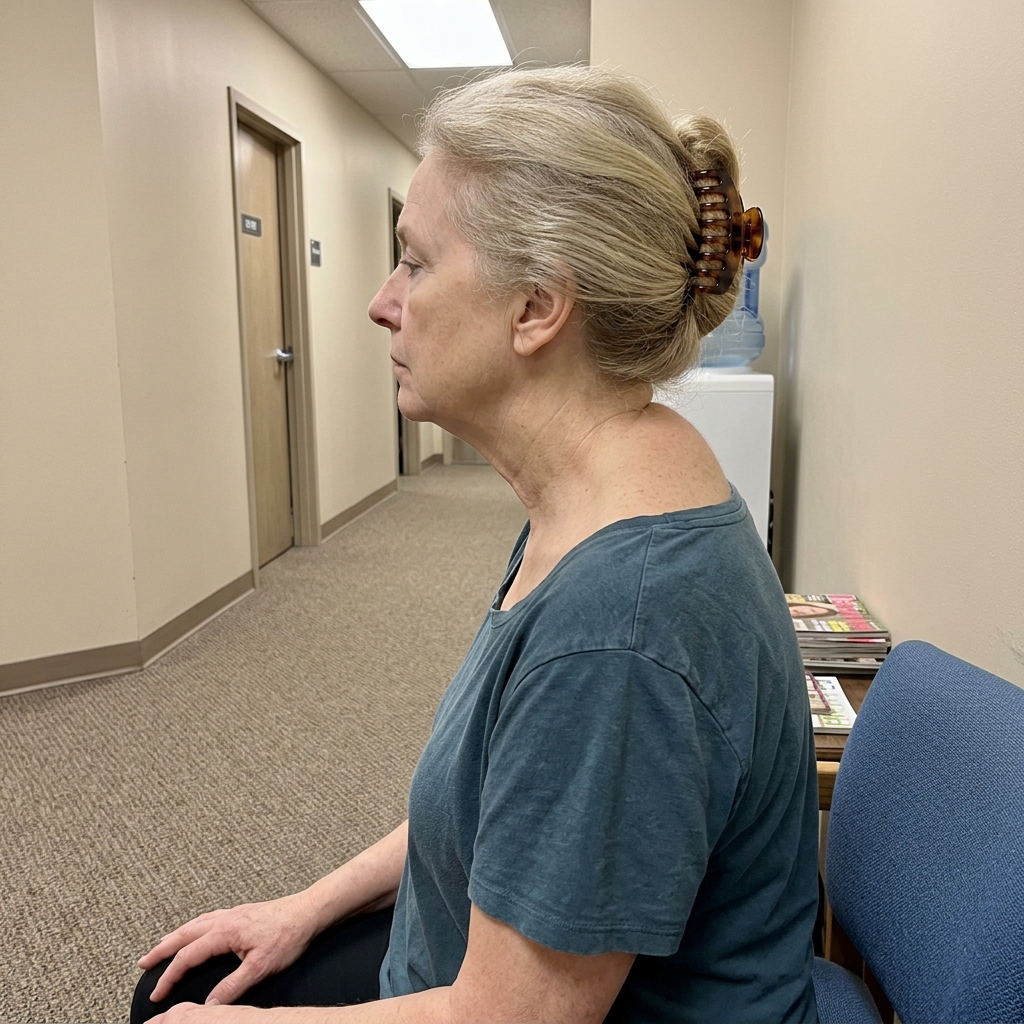
I had a neck hump crisis on a Mediterranean cruise. The ship's specialist was from Vienna. She asked me ONE question that made my American PT look 15 years behind. I'm 56 years old. My husband and I saved for two years for this cruise. Two weeks through the Mediterranean. Greece, Italy, Spain. Day four, we're walking through Santorini. Cobblestone streets. Steep hills. Beautiful. But I'm managing. Five days into the trip, I've been in more photos than I've been in for years, and every single one has required calculation. The angles, the lighting, the position. The familiar rounding at the base of my skull visible in every side shot. By the time we get back to the ship, I'm exhausted from managing. The constant awareness is worse than the profile itself. There's a tightness at my skull base that has followed me from Athens to Santorini and won't let go. My husband looks at me differently in the photos. "We need to talk about this." I don't want to talk about my neck. I haven't talked openly about the rounding in four years. Not with a friend. Not with a practitioner I didn't have to see. Not with my husband in detail. But the exhaustion is bad enough that I don't have a choice. The next morning, I mention it at breakfast. He listens. "Maybe see the ship's wellness practitioner? We're at sea tomorrow." I go to the ship's concierge. "I need to see someone about my posture. My neck." She makes a call. Gets me an appointment that afternoon with the ship's rehabilitation specialist. Her office is small. Clean. On Deck 3 near the wellness center. Dr. Weber. Viennese accent. Maybe mid-50s. She observes my posture. Assesses my cervical alignment. Asks me to sit naturally. "The immediate issue is the exhaustion from five days of constant self-management," she says. "But this is more than the cruise. How long have you been actively managing this?" "About five years," I say. "My PT back home has me on a daily exercise protocol. Every morning." "Has she ever assessed your deep cervical neuromuscular function? Or the integrity of your brain-muscle signal?" I stare at her. "What's that?" She looks at me for a moment. Then sets down her notes. "Your cervical muscles don't hold on their own anymore," she says. "They hold on a signal — a continuous instruction from your brain to the deep muscles at the base of your skull. In chronic cases like yours, that signal has degraded. Gone quiet." "And the bigger issue is what years of passive management does to that signal. Every exercise done around the broken connection, every brace worn instead of it — it trains the deep muscles to wait for external input rather than fire on their own. The signal weakens further. The muscles stop initiating. You need more exercises. They work less. The rounding progresses. You're managing today's position while the signal that should be running your holding keeps degrading." I'm listening. But I don't understand why my PT never explained this. "My PT never said anything about a brain-muscle signal." Dr. Weber nods slowly. "It's not commonly discussed in standard posture practice," she says. "Most focus on surface strengthening and passive support devices. But in Austria and Germany, we've been treating progressive neck hump as a neuromuscular signal problem for over a decade." "So what do I do?" I ask. "There's extensive research on restoring the signal directly," she says. "Calibrated EMS — electrical muscle stimulation delivered bilaterally to the deep cervical muscles — bypasses the broken pathway entirely. When you deliver the right stimulus to the right muscles at the right intensity, the signal pathway begins to rebuild. The muscles reactivate. The holding returns. It's been showing significant results for progressive neck hump, especially in patients who've failed passive management and exercise protocols." "My PT never mentioned anything like that." "It's well-established in European rehabilitation practice," she says. "But not standard protocol yet in the US. If I were you, I'd look into it when you get home." She paused. Then added: "Five years on a protocol that manages today's position is not treatment. It's monitoring the decline." I thank her and leave. But I can't stop thinking about it. For the rest of the cruise, it's in the back of my mind. Five years. My PT had been prescribing exercises. Checking my alignment every few months. Watching my rounding progress from barely visible to something I plan every outfit around. Telling me to keep going. But she never once mentioned that passive management trains the deep muscles to wait rather than fire on their own. Or that there was a specific signal pathway — the cervical neuromuscular connection — that had been degrading the whole time. Or that there was research on restoring it directly with calibrated EMS. When we got home, I couldn't let it go. The night we unpacked, I opened my laptop. It was 11:45 PM. I started searching. "cervical neuromuscular inhibition EMS" "brain-muscle signal neck hump" "European cervical rehabilitation passive management" At 1:30 AM, I found it. Peer-reviewed neuromuscular research. Published in rehabilitation journals. Study after study confirming exactly what Dr. Weber had told me. Deep cervical muscles depend on a continuous brain-muscle signal to hold. Chronic overload degrades that signal. Passive management — braces and exercises that work around the signal — deepens the dependency without restoring the pathway. Calibrated bilateral EMS bypasses the broken connection and forces the muscles to fire directly. Consistent daily stimulation rebuilds the pathway over time. The research was there. Published. Peer-reviewed. Some of it over a decade old. I read the studies three times. I felt something rising in my chest. Not anger. Something else. Disbelief, maybe. My PT had been prescribing the same protocol since 2019. Five years. And there was published neuromuscular research — from before she even started treating me — showing that passive management deepens signal dependency and that restoring the signal directly could rebuild the holding. Why hadn't she mentioned it? I kept reading. More studies. European research. Clinical data. All showing the same mechanism. Same results. At 2:50 AM, I started looking for devices. Most EMS devices were generic. Single-program units designed for post-exercise soreness. Fixed output with no calibration for inhibition stages. Nowhere near the bilateral cervical delivery the research described. But I found one device built specifically for this. The Cevera Pulse. Eight programs calibrated for different stages of cervical neuromuscular inhibition. Nineteen adjustable intensity levels. Bilateral cervical delivery. Clinical-grade parameters. I read the reviews. Women describing exactly what I was going through. Years of passive management that never restored their holding. Then real change within weeks of restoring the signal directly. I ordered one at 3:15 AM. When it arrived, I started immediately. Fifteen minutes before bed. No brace in the morning. No foam roller. No exercise protocol. Sixty seconds to set up. Done. Week one, the constant forward pull — that familiar weight I'd carried for years — was calmer. Something was reaching the muscles from inside. Week two, I stood at the bathroom mirror one morning and my head was sitting further back than it had in months. No brace. The first time in five years it had held on its own overnight. It happened again two days later. And again. Week four, consistent morning holding. Visible. The rounding at the base of my skull felt softer. My collars sat differently. The constant calculation was quieter. Week eight, I took a photo of my profile and compared it to one from two months earlier. The difference was visible. A neck that was holding. Daily. On its own. The calculation had stopped. The dependency had dropped to nothing. No more managing what the exercises were never going to fix. At three months, I went back to my PT. She assessed my alignment. Then she stopped. "Your forward head displacement has reduced significantly," she said. "Your cervical alignment is meaningfully improved. That's unusual after five years of slow progression." "I stopped the exercise protocol three months ago." Her head came up. "You stopped?" "I found something else. A device. Calibrated EMS. Eight programs for different inhibition stages. Bilateral cervical delivery. Restores the brain-muscle signal the passive management was working around." My PT looked at my assessment chart. "I'm not familiar with that approach," she said. "But the results speak for themselves. Keep doing whatever you're doing." I left her office feeling something I hadn't felt in years. Not angry. Not betrayed. Just aware. My PT wasn't hiding anything from me. She just didn't know. The research existed. The studies were published. The results were documented. But it wasn't part of her training. It wasn't standard protocol in posture practice. So she did what she was taught — prescribe exercises, monitor the progression, escalate to specialist referral if it gets severe. Meanwhile, in Austrian and German rehabilitation clinics, they'd been restoring the cervical signal directly as a treatment approach for over a decade. I'm 57 now. My neck holds. On its own. And I think about that specialist in Vienna all the time. The one who took ten minutes to explain what my deep cervical muscles need. What the brain-muscle signal does. Why passive management makes the dependency worse. Something my PT had never mentioned in five years. If your PT is prescribing exercises and telling you to "stay consistent" with no improvement after months or years, you need to know something. The research exists. Published neuromuscular studies. Peer-reviewed clinical data. Showing that passive management deepens signal dependency and that restoring the signal directly with calibrated bilateral EMS can rebuild the holding. Your PT probably hasn't seen it. Not because she's incompetent. But because standard posture training focuses on surface exercises and passive support devices. Restoring the cervical signal with calibrated EMS isn't standard protocol yet. So when your PT says "keep doing your exercises," she's telling you what she was trained to recommend. But she's not telling you about the research that could actually address why the holding stopped returning on its own. The device I use is the Cevera Pulse. Eight programs calibrated for cervical neuromuscular inhibition stages. Nineteen intensity levels. Bilateral cervical delivery. Fifteen minutes before bed. I don't get anything from sharing this. I just know what it's like to do the same exercises every morning for five years with no real improvement. And I know what it's like to have a specialist in Vienna, someone I found by accident because my husband finally said what I hadn't let myself say out loud — explain in ten minutes what my PT never mentioned in five years. If you're being told to "just keep doing your exercises," you deserve to know there's research your PT might not have seen. Research that could restore your holding without passive management or surgical referral. Research that's been understood in European rehabilitation clinics for over a decade. You don't have to wait for your PT to learn about it. You can look into it yourself. https://trycevera.com/pages/adv2-womens-wellness-report 90-day money-back guarantee. If you don't see your holding returning, full refund. P.S. My husband took a photo of me in Santorini. Standing slightly apart from the group, angled away from the camera, not quite in the frame, while everyone else looked at the view. Last month, we went to my daughter's birthday dinner. He looked at me afterward and said, "You didn't calculate a single photo." I'd been calculating for so long I didn't know I was doing it anymore. I haven't calculated since I started restoring the signal my neck was missing.
Like this ad? Make it yours.
Crush rebuilds this exact creative around your product — your brand, your colors, your offer — in about a minute.