
Stopped· since Feb 27, 2026
- 142
- days it ran
- 1
- relaunches
Ad copy
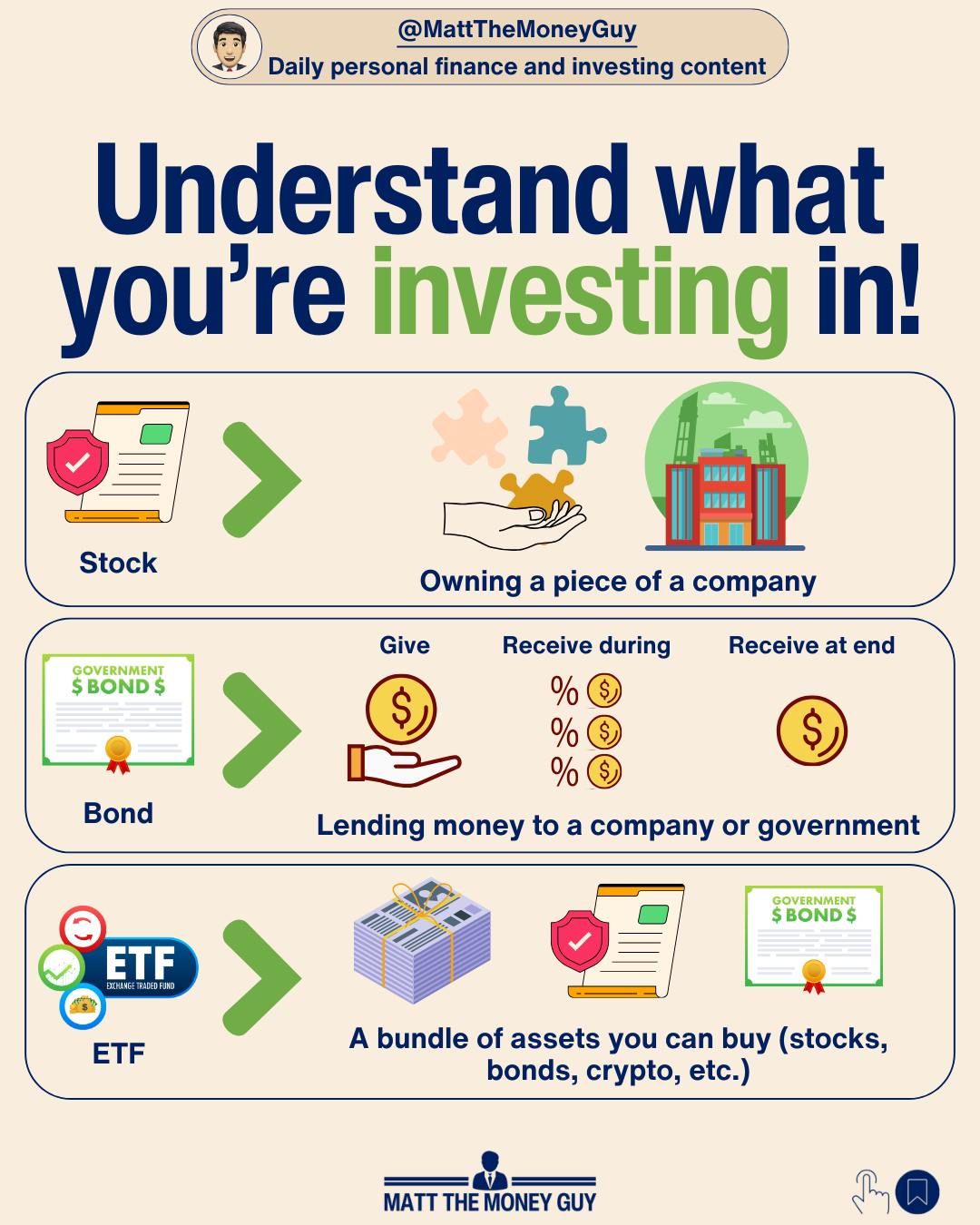
Follow me @mattthemoneyguy for DAILY personal finance and investing content like this! Investing is like learning a language, you have to know the vocab before you start speaking! These are 3 core terms you should understand, and when I say understand, I don't just mean know the definition. Before you buy any of these, you should really understand at a fundamental level what you are purchasing! Stocks are a part of a company. If your buddy was starting a candy company, and he said give me $10k and you can own half the company (and all the profits associated with that), that would be owning stock in a private company. It's no different than you buying a share of Apple, albeit Apple is obviously at a MUCH larger scale. Bonds are much more commonly misunderstood. A bond is you LOANING money to an organization. In return for that loan, they will give you small payments over the course of a time period, then give you back your loan principal at the end. This is a common way that governments and companies raise money. It's called fixed income because you know exactly what you're getting if you buy a bond (assuming the organization doesn't default on the payments). Finally I threw in ETF here because they are one of the most common methods for investing today. An ETF isn't really an asset in itself, but rather a package that assets are put in. When you buy an ETF, you're buying a share with a bunch of different assets (e.g., stocks or bonds) held in it. ETFs can be great low fee investment options, or they can be terrible high-fee funds that you should stay away from. Make sure you understand what these are before you buy any of them! - Matt
Matt the Money Guy
LIKE PAGELike this ad? Make it yours.
Crush rebuilds this exact creative around your product — your brand, your colors, your offer — in about a minute.