
Active· since May 6, 2026
- 130
- days running
- 1
- relaunches
Ad copy
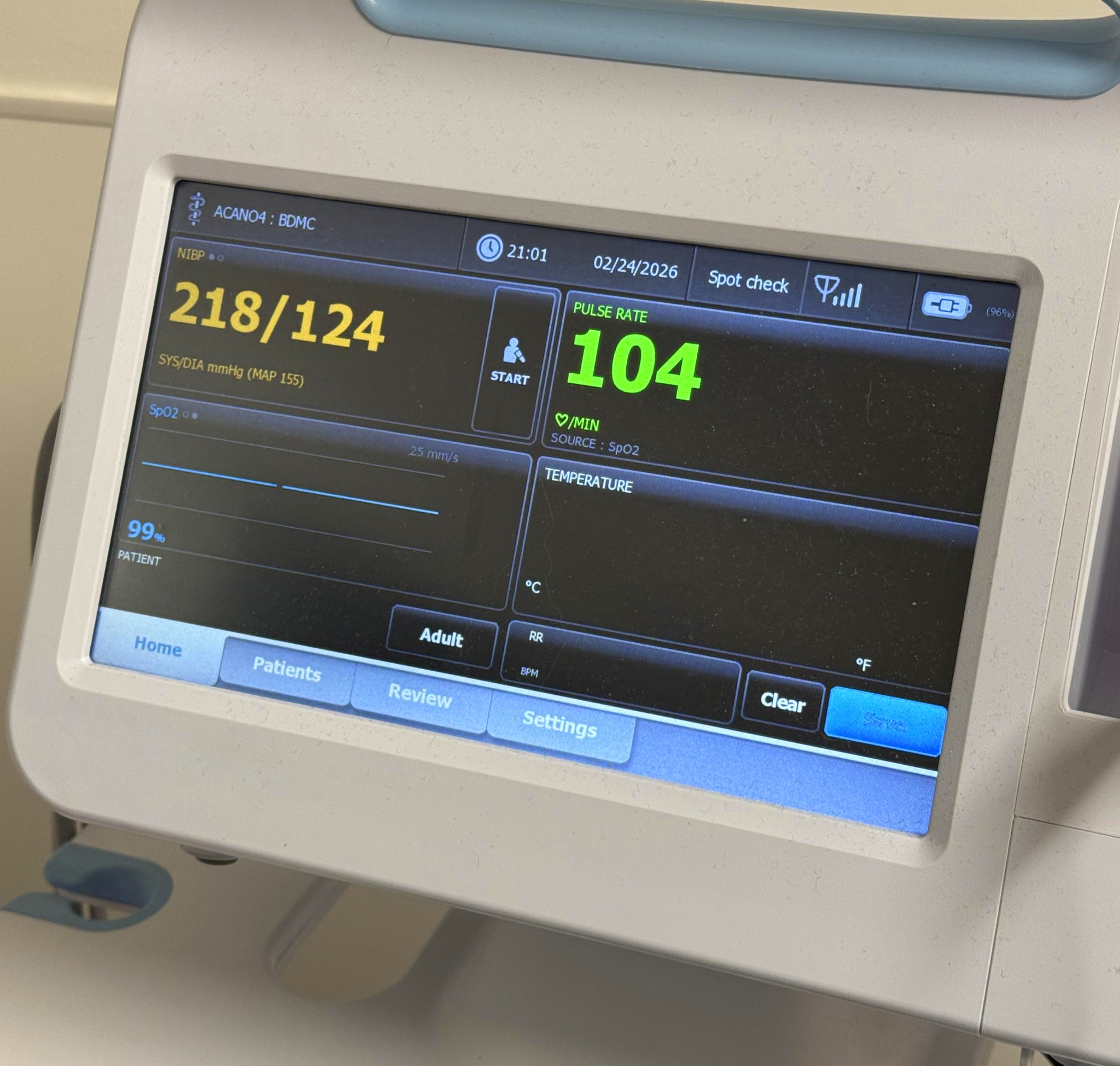
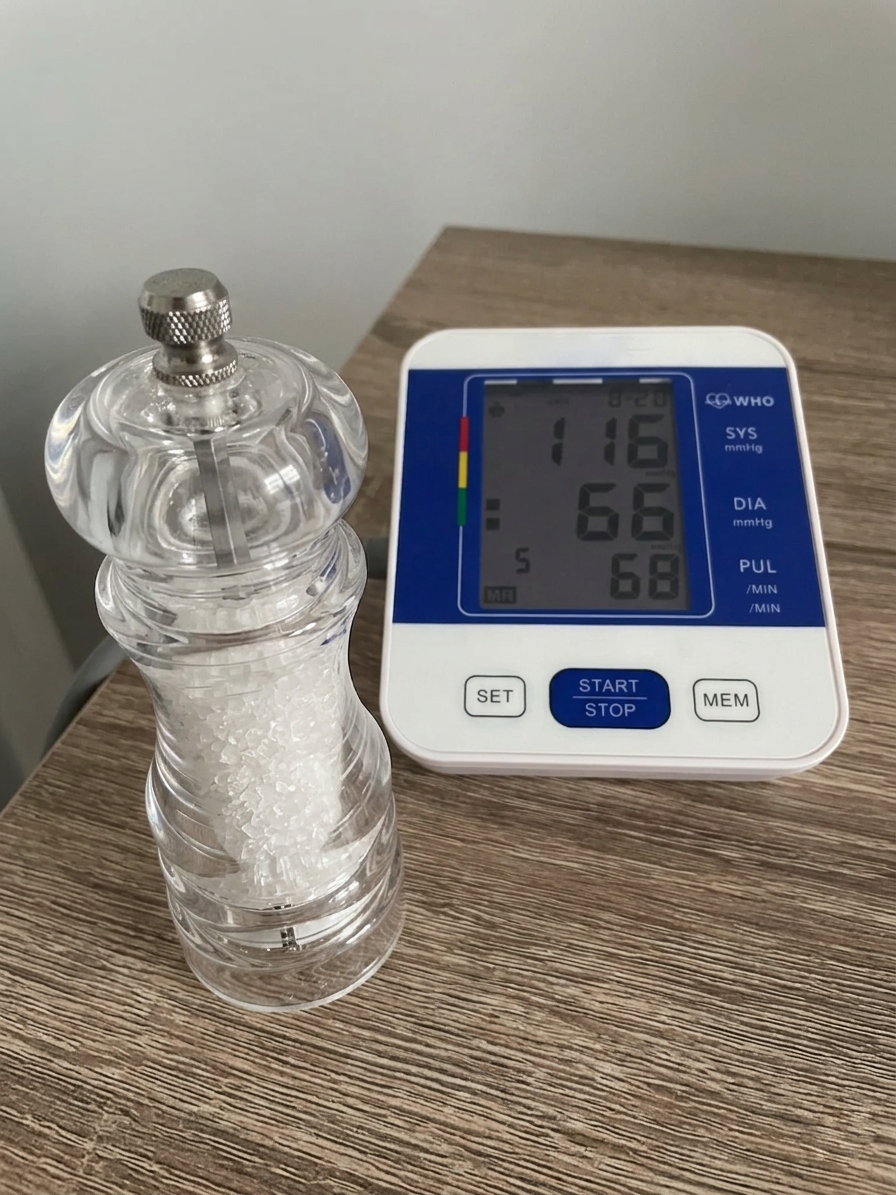
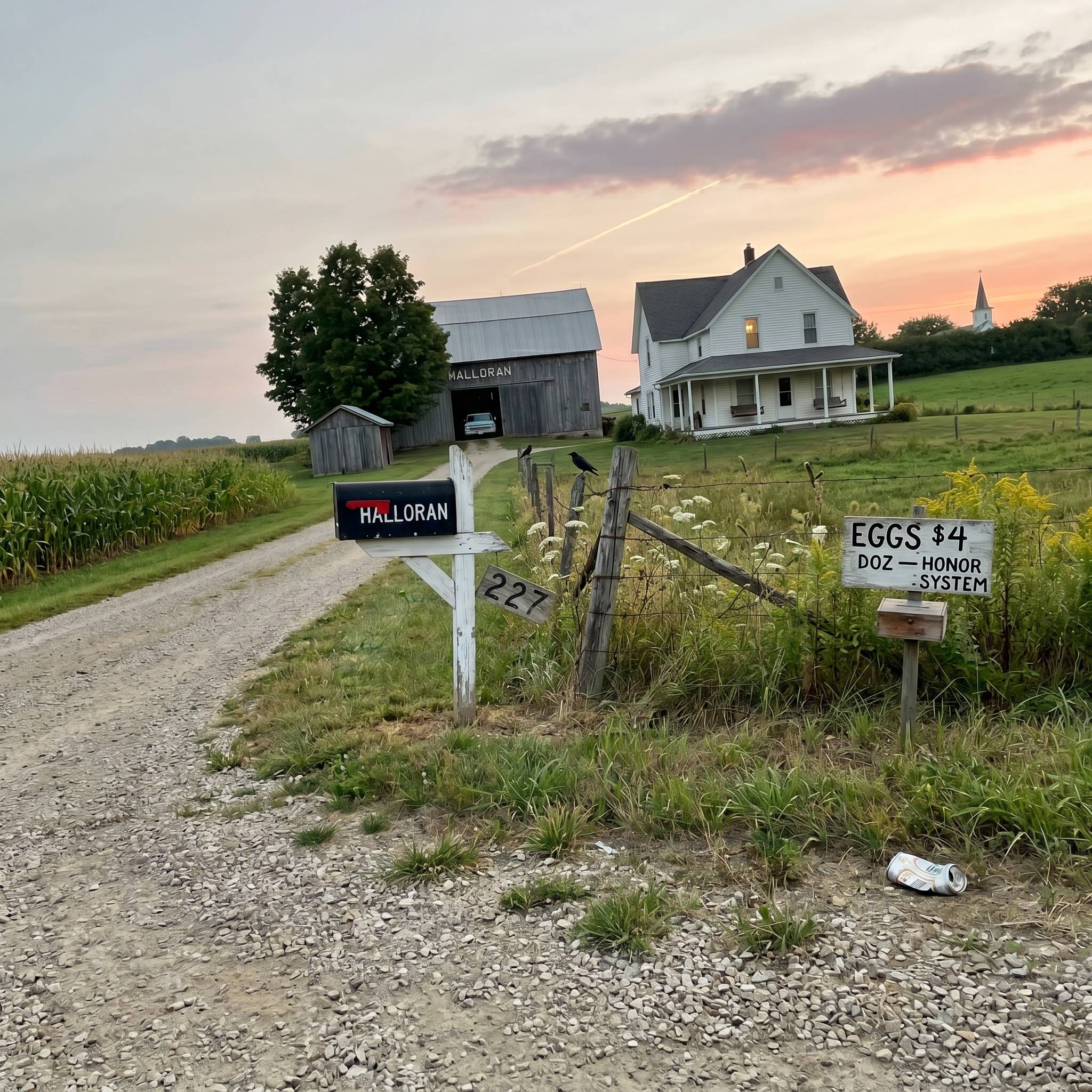
There's a 1972 pickup truck in my neighbor's barn that hasn't moved in over a year. But every Saturday morning at sunrise, the barn door slides open and somebody dusts it. Not on Saturday afternoon when the rest of the gravel road is firing up tractors and pulling out trailers. Early. Before the sun is fully up. Sometime between 5:30 and 6:30 AM, the heavy sliding door rolls open just wide enough for one person to step through. The dash gets wiped down with an old rag. A feather duster runs over the bench seat. The chrome gets a once over. Fresh wildflowers go in a small mason jar set on the passenger side of the bench seat. Then the door slides closed, the latch drops, and whoever did all of this disappears back into the trees. I've watched it happen for a year without knowing who was doing it. My husband Mark noticed the truck first. The first few months we'd drive past on Friday evenings on the way to our place down the road and he'd say "somebody loves that truck." After a while he stopped saying it. You can only comment on something so many times before the comment becomes the question. Why maintain a truck this carefully if it never moves? Why dust a dashboard nobody sits behind? And who pulls a barn door open at 5:30 AM every single Saturday to do it? I asked the man who runs the feed store about it once. He shrugged. "Halloran place. Old Walter's truck. His widow keeps it up. Nobody's seen her in town in months." That was it. Even the people who'd known the family for 40 years didn't know what was happening up at that barn. But I kept noticing. Every Saturday I walked the gravel road past their property and there'd be evidence. The barn door never sat at exactly the same width twice. The dust on the truck hood was always thinner than the dust on the workbench. Tire tracks in the dirt outside the barn always pointed back to the house, not to the road. After a while I started to feel like I was looking at a religious ritual. We've had our farmhouse 9 years. Half a mile down the gravel road from the Halloran place. A few acres. Not a working farm, but enough land to feel like one. A vegetable patch. A henhouse Mark built one summer. A back acre Mark used to mow on his old riding mower. We bought it when his shoulders were still strong enough to lift a bag of feed without thinking about it. We were going to spend our retirement here. That was the plan. This past spring I started doing the chores without him more weekends than he came out. He said his back hurt. He said the riding mower was acting up. He said he'd help next weekend. He didn't help next weekend. He watched television on his iPad in the living room while I closed up the henhouse at sunset and pulled the hose around the side of the barn and tried not to notice I was doing it alone. I got into a habit. Saturday mornings I'd walk down our gravel road in the dawn cool just to move my body before the day started. Not because I had a destination. Because I needed to be outside and around the smell of cut hay and dirt before I went back to a quiet kitchen alone. And every Saturday I'd walk past the Halloran barn and look for the evidence of whoever had been there. The slightly different width of the door. The missing feather duster from its hook on the wall. I'd look around for a person. I never saw anybody. Whoever they were, they were always gone by the time I got there. On the first Saturday in June I couldn't sleep. I was up at 4:30 staring at the ceiling. By 5:15 I was dressed. By 5:30 I was walking down the gravel road past the corn field. If I was awake, I thought, maybe I'd finally see them. There was a green pickup truck I'd never noticed parked next to the Halloran farmhouse. Or maybe I had noticed it, a hundred times, at the tail end of my usual Saturday walks, after she was already gone. Faded paint. 1970s Ford. Rusted wheel wells. One of those trucks a man buys new in his 30s and keeps for the rest of his life. I walked up the long gravel drive. The barn door was open. I could see her from the road, a small figure inside, lit from behind by the dim work bulb hanging from the rafter. She was at the back of the truck bed, leaning over the tailgate, trying to lift a wooden crate with both hands. White hair pulled back in a silver clip. A navy windbreaker one size too big, like she'd borrowed it from somebody taller. A small cooler set on the running board next to her. A bundle of wildflowers laid across the bench seat through the open driver's window. She'd probably picked them off the roadside on the walk down from the house. The crate looked heavy for her. She was leaning into the tailgate to get leverage. Then her foot slipped on the concrete floor of the barn where the oil stain was still slick from a recent spill, and she stumbled half a step. She caught the side of the truck bed with her free hand. I almost didn't walk over. I'm not the person who strikes up conversations with strangers. My husband makes fun of me for it. Says I'll stand in line at the post office for 20 minutes and not say a word to the woman next to me even if we're wearing the same cardigan. I tell him I don't mind people, I just don't see a reason to interrupt them. Plus this was clearly private. Whatever she was doing in that barn was something personal. Something she'd been doing every Saturday for a year without needing anyone else. I stood at the edge of the gravel drive and had a conversation with myself I'm not proud of. She's fine. She caught herself. She's been doing this by herself for a year. If you walk over, you're going to embarrass her. Whatever this is, it isn't yours to be in. But the crate was heavy. And she looked small. And I was the only other person on this road at 5:42 in the morning. And if she stumbled again on that oil stain and I wasn't close enough, I'd be standing at my own kitchen window next Saturday thinking about it for the rest of my life. I walked over. "Morning. Can I help you with that?" She looked up. Her eyes were sharp but tired. "Oh. I can manage." "I know you can. Let me carry it anyway." She studied me for a second. I must have passed whatever test she was running. "Thank you." I lifted the crate out of the truck bed. It was heavier than it looked. Old mason jars from the feel of it, wrapped in newspaper, plus what felt like a couple of foil wrapped packages on top. Two of everything. I noticed that immediately, though I didn't understand it yet. If I'd known what was in that crate, not just the canning jars, but a story that would change my life, I'd have carried it more carefully. I'd have taken a breath. Gathered myself. But I didn't know. So I just carried it. She gestured for me to set it on the workbench against the side wall of the barn. I set it down gently. Without the weight of the crate she seemed even smaller. Her left hand went into her jacket pocket and stayed there. Her right hand picked up the bundle of wildflowers from the bench seat of the truck. The truck. Up close it was beautiful. Pale blue paint, faded but cared for. Chrome bumper polished. The name "Halloran Farm" hand painted on the driver's side door in white block letters, the paint chipped but readable. The kind of truck a man builds his whole working life around. She opened the driver's door. Climbed up onto the running board slowly, one hand on the door frame the whole way. Reached across the bench seat and picked up an old mason jar that had been sitting on the passenger side of the bench. The wildflowers from last week were still in it, still fresh-ish, still holding on. She set the old jar carefully on the dash. Took a small glass vase wrapped in a dish towel out of the cooler. Filled it from a water bottle. Placed the new wildflowers. Set the new jar where the old one had been on the bench seat. Then she sat down on the driver's side of the bench. Hands folded in her lap. She didn't move. I stood next to the workbench not knowing what to do. I felt like I'd walked into a church in the middle of a service. "Ma'am. I'll head back to the road and let you be." She turned slightly. Looked at me through the open driver's window. "Would you sit a minute? I poured an extra cup." "You poured an extra cup?" She looked at me for a beat. "I always pour two. Always have." Her name was Jean. She was 71. I climbed up onto the running board on the passenger side and sat on the bench next to her, the mason jar of fresh wildflowers between us. She unscrewed a thermos and poured coffee into the lid and handed it to me. Her hands were steady but bony, the veins standing up on the backs like they do when you've lost weight you couldn't afford to lose. She poured her own in a small tin camping mug. "It used to be his thermos. I bought a second one to match after he died. Without his thermos and mine sitting next to each other on the bench seat, the truck looked wrong." I didn't say anything. You don't say anything in that moment. You just let someone sit with it. "Walter was my husband. He bought this truck new in 1972. He used it every single day for 49 years. Hauled hay in it. Took produce to the farmers market every Saturday from May to October. Drove me to church in it every Sunday from 1976 onward. We never owned another vehicle. Just this one. He'd say a man only needs one good truck if he treats it right." She smiled a small smile at the coffee in her mug. "He died a year ago April. I come out here every Saturday anyway. I dust the dash the way he dusted it. I check the chrome the way he checked it. I put fresh flowers on the bench seat. I drink my coffee. I sit here until the sun is full up. I've done it every Saturday for a year. 53 weeks now." "This is the first Saturday somebody else has sat with me." She didn't cry. Her eyes were wet but she didn't cry. I think she was past crying in that quiet way some people get after the first year. "Can I ask why the truck doesn't run anymore?" Jean looked through the windshield. At her own hands in her lap. "Because he drove this truck for 49 years and I can't bring myself to be the one who takes it down a road he never will again. The truck belongs in this barn. That's the only thing I know. Everything else about my life doesn't make sense anymore. But the truck belongs in this barn." We sat there a while. The sun came up enough to throw long bars of yellow light through the gaps in the barn slats. Dust motes drifted in the beams. Somewhere out behind the barn a rooster started up. "Would you come back to the house with me for a bit?" Jean said finally. "I'll put on real coffee, not this stuff. I haven't had anyone at my table in a long time." I thought about the empty kitchen I'd been sitting in for two months. The empty chair across my empty table. The husband back home on his iPad. "I'd like that." We walked the gravel path from the barn to the farmhouse together. The house was an old white clapboard two-story with a wraparound porch and a sagging screen door that banged when she opened it. Inside was small and clean the way a house is clean when only one person uses it. Wood floors. A wood stove in the corner of the kitchen. A long pine table Walter had built. One coffee mug on the drying rack. One bowl. One set of silverware. A loaf of bread under a cloth on the counter. A framed black and white photograph hung on the wall above the table. A man in his 50s in overalls standing in front of the same blue truck. Younger truck. Same paint. Same hand-painted door. "Walter's father," Jean said when she saw me looking. "1958." There were two recliners in the living room visible through the door, but only one had the remote on the armrest and the blanket bunched where someone's feet go. The other recliner was untouched. The fabric still had the indentation of a man's body from a year ago. She made coffee. Real coffee, like she'd promised. From a percolator on the wood stove. While it brewed she talked. She didn't start with the sad part. That's how you know someone really loved somebody. They don't begin with the loss. They begin with what was there before the loss. "Walter was a farmer. 4th generation on this land. Walter spent his whole life on this dirt. Knew it the way you know your own face. He could grab a handful of soil and tell you what it needed. Lime, nitrogen, more rest. He'd let it sift through his fingers and squint and just know." She poured the coffee. Set the mug in front of me. Sat down across the table. "He had these hands. Big hands. Calloused. Scars from 50 years of baling wire and barbed wire and chain. He delivered calves with those hands. He splintered an axe handle once by gripping it too hard chopping firewood. I watched him do it." She said it the way you say a fact about something beautiful. "We were married 49 years. 49. People say that like it's a number. It's not a number. It's every Sunday morning for 49 years where he had the truck warming in the driveway by 8:15 sharp because church started at 9. It's a man who walked out to the barn at 4:30 AM in the dark to feed the chickens before he made me coffee. It's someone who knew how I take my coffee and never once got it wrong. Half sugar. Splash of cream. Every time." She looked at the recliner by the window. "That was his chair." "His doctor put him on Lisinopril when he was 63. Blood pressure was high. 156 over 96. I remember the numbers because Walter wrote them on a yellow sticky note and stuck it on the fridge. He did that with everything. Numbers. Vet appointments. Seed orders. The fridge was covered in his handwriting for 20 years." She smiled. This time the kind that hurts. "The doctor said take this capsule every morning, come back in 3 months. Walter took it every morning. He was like that. If a man with a degree told him to do something, he did it. Didn't argue. Trusted the system. Trusted the man in the white coat the same way he trusted his pastor." "3 months later his blood pressure was 132 over 84. The doctor was thrilled. Walter was thrilled. I was thrilled. We thought we'd fixed it." She wrapped both hands around her mug. "He was on it for 12 years. Never missed a dose. Every time he went in the doctor would smile and say the same sentence. 'Numbers look great, Walter. Keep doing what you're doing.'" "And for 12 years, Walter kept doing what he was doing. Taking the capsule. Going to the appointments. Getting the pat on the back." She set the mug down. "But he wasn't great. And I watched it happen so slowly I didn't realize what I was watching until it was too late." "The first thing was the cough." "It started maybe 6 months in. A dry cough. No phlegm, no cold. Just a dry hack that would wake him at 3 AM and he'd sit on the edge of the bed and cough into his hand for 10 minutes. Every night. He'd come back to bed and apologize for waking me. I'd say it's fine. It wasn't fine. But you adjust." "He mentioned it to the doctor. Doctor said cough is a known side effect of Lisinopril. For most people the benefits outweigh the risks. Keep taking it." "Then his energy. Walter was a 4 AM man. Up before the sun, every day, no exceptions, since he was 12 years old helping his daddy with the dairy herd. By year 3 on that medication I was the one feeding the chickens. He'd lie in bed until 6. Then 6:30. Then some mornings I'd be dressed and out at the henhouse and he'd still be under the covers. Not sleeping. Just. Not getting up." "I thought he was getting older. That's what I told myself. He's 66. He's 67. Men slow down." "Then his ankles." She looked down at her own hands when she said it. "By year 5 his ankles would swell up by the end of every day. Not bad. Not enough to scare anybody. But by 6 PM the bands of his work socks were cutting little ridges into his skin. He'd take them off at night and the marks would still be there in the morning. He started wearing looser socks. Then he stopped walking the property line in the evenings because his boots got tight." "His head got foggy too. He'd be telling me a story about a tractor he'd owned in the 70s and lose the word he was reaching for. He'd say 'what's that thing called, the thing you, you know.' I'd guess at it. Sometimes I'd guess right. Sometimes neither of us could land on it and we'd just laugh and move on. But it got worse. And it stopped being funny." "By year 8 the chickens stopped getting let out before noon because he couldn't get out there before noon anymore. Told me his back was acting up. His back wasn't acting up. He was slow. The man who built this barn out there with his daddy in 1969 couldn't climb the porch steps to come back inside without stopping at the top to catch his breath. He was 68. Sixty eight is not that old. My brother is 76 and still drives a school bus part time and plays the organ at church on Sundays." "Then the truck stopped running. Or he said it stopped running. He'd say 'the carburetor's acting up, I want to look at it before we go to town.' Or 'tires need rotating, I want to do that first.' Or 'starter sounds funny, let me listen to it.' It was always something. Small things. Reasons." "Then one Saturday in May of year 10 he sat at this table in his bathrobe at 8 AM and said 'Jeannie, I don't remember if I planted the back acre this year.' He'd planted that acre every spring for 47 straight years. He looked at me and his face was so scared. Like he was looking at me from the other side of a window." "I told him to call the doctor. He did. Doctor checked his pressure. 130 over 82. 'Your numbers look outstanding, Walter. Some cognitive changes are normal at your age.'" "Normal at his age. He was 71. Not the age you forget if you planted your own field. Not if something isn't taking it from you." She was quiet for a long moment. Drank her coffee. Set it down carefully. "His last year was hard. He stopped going down to the barn. Told people he was retired. He wasn't retired. He was used up. He'd sit in that chair there and look out the window at the back acre. Sometimes he'd talk about wanting to get the truck out. He'd say 'this Saturday, Jeannie, weather looks good for the farmers market.' The weather was always good. He wasn't." "I'd say 'Walter, let's just go. I'll drive. You sit.' And he'd say 'next Saturday, Jeannie. I want to grease the wheel bearings first.'" "He never drove the truck again. Not once in his last year." "The farmer who could read his land couldn't read his own body anymore. Including the part of it that gave out on the barn floor." She looked at the window. The one Walter used to look out of. "April 14th. A Tuesday. I was at the grocery store in town. Gone maybe 40 minutes. Came home and the screen door of the back porch was open. Not wide. Cracked. Like he'd gone out to check on something and hadn't made it back inside." "I walked out to the barn first. I don't know why. Maybe I knew. I found him on the concrete floor next to the running board of the truck. Face down. His hand was on the chrome step. Like he'd reached out to pull himself up into the cab and couldn't hold on." "I called 911. I already knew. You don't live with a man for 49 years and not know." "Massive heart attack. The left anterior descending artery. They call it the widowmaker. I learned that word that day. I wish I didn't know it." She traced the rim of her coffee mug with her finger. Slowly. Around and around. "Blood pressure of 124 over 78 at his last appointment. 12 years on Lisinopril. Every check perfect. Every appointment a gold star. And his heart stopped on the concrete floor of his own barn on a Tuesday morning while I was buying flour." "The cardiologist tried to explain it. I asked him how that was possible when Walter's blood pressure had been controlled for 12 years. You know what he said?" "He said: 'Mrs. Halloran, the medication kept the number down. But the inside of his arteries had been deteriorating for years. The number doesn't tell the whole story.'" "The number doesn't tell the whole story. 12 years. Thousands of dollars. A body that fell apart. A brain that faded. Ankles that swelled. A cough that woke him up at 3 AM. And the number didn't tell the whole story." "It didn't tell ANYTHING except that my husband was dead." Jean looked at me across her kitchen table. A woman I'd known for 2 hours. A stranger who'd helped her carry a crate to a workbench because she was the only other person awake on a country road at 5:42 AM. And she said something I carry with me every day: "They told us the numbers were the whole story. They weren't. The numbers were the cover of the book. Nobody ever read what was inside." I walked back down the gravel road in silence. No phone. No radio. Just the morning birds in the hedgerow and Jean's voice in my head. Walter's blood pressure was 124 over 78. Walter is dead. Walter took his Lisinopril every morning for 12 years. Walter is dead. Walter's doctor said "outstanding numbers" while Walter forgot if he planted his own field and couldn't open his own feed bags and stopped driving a truck he'd owned for 49 years. And Walter is dead. I walked up our gravel drive and unlocked the back porch and stood in the kitchen and looked at the back acre Mark hadn't mowed in two years. I set my coffee down. I didn't go out. Mark had come out that weekend. He'd driven up Friday night because I'd asked him to, not because he wanted to. He was in the recliner when I came in. iPad on his lap. His reading glasses on the tip of his nose. A glass of water next to him on the side table that he'd probably been nursing for an hour because that's what he does. He pours a glass and then forgets about it. He looked tired. He always looks tired lately. Mark is 61. He's been on Lisinopril for 7 years. His doctor put him on it when his pressure hit 152 over 94. The drug brought the numbers down. It sits around 134 over 84 now. Doctor's happy. Mark is. Compliant. That's the word for it. Not happy. Not relieved. Compliant. I walked in and he looked up. "Where've you been?" "Long story. I'll tell you later." I kissed the top of his head and went into our bedroom to change. And I stood in the bedroom we've shared for 9 years and I saw what I hadn't let myself see for years. Mark's Lisinopril on the nightstand. Same bottle. Same capsule. Same drug Walter was on for 12 years. Different body. Same slow erasure. Mark used to mow the back acre on his old riding mower every Saturday morning. Used to be the man who built the henhouse from scratch in one weekend the first summer we owned this place. Used to fix the broken fence post on the north end last spring, twice, before we gave up and called somebody. He hasn't started the riding mower in 2 years. The mower is in our garage with cobwebs in the spokes. I went out to look at it in May and the mouse droppings on the deck told me how long it had been since anyone touched it. The cough. I've been listening to it for 4 years. Dry. No phlegm. He coughs into his pillow at 3 AM and apologizes when he comes back from the bathroom. I tell him it's fine. He thinks I sleep through it. I never sleep through it. The brain fog. He couldn't remember our anniversary last month. Not the date. The number. 33 years. He said "is it 32?" I said "it's 33, Mark." He laughed like it was a joke. It wasn't a joke. His ankles. He thinks I don't notice. I notice everything. He sits on the edge of the bed at night and pulls his socks off and there are red ridges in his skin. He massages his calves before he gets up. He's 61. He's not old. He's not sick. He's on a drug his doctor says is keeping him safe. And he's dimming. I stood in our bedroom that Saturday afternoon and I saw Walter. The cough at 3 AM. The fog that couldn't name a planted field. The man who owned a truck for 49 years and then couldn't drive it. The chair by the window that became a life sentence. The doctor who watched a number while the man attached to it disappeared. And I saw the barn. Walter on the concrete floor. Hand on the chrome running board. Reaching for something to hold onto. 124 over 78. I went back to the living room. I sat next to Mark on the couch. I didn't tell him about Jean. Not yet. I didn't have the words. I needed to know if what happened to Walter was a fluke or a pattern. That night, after Mark went to bed, I opened the laptop at the kitchen table and typed the question I'd been carrying since Jean's farmhouse. "Why do people on blood pressure medication still have heart attacks." I expected medical disclaimers. I expected to be told the medication is effective and my concern was overblown. What I found over the next 4 nights, sitting at that table reading until my eyes burned, changed everything. Here's what 7 years of Mark's doctor visits never explained to us, and what 12 years of Walter's Lisinopril never addressed. Your blood vessels aren't just tubes. They're living tissue. The inside of every vessel is lined with a thin inner wall. A layer of living cells that controls how your blood flows. When the wall is healthy it produces a molecule called nitric oxide. Nitric oxide is your body's signal that tells your vessels to relax and open up. Healthy wall. Plenty of nitric oxide. Vessels stay relaxed. Blood flows through without forcing. Pressure stays balanced. You don't think about it. The same way you don't think about breathing. It just works. Your body has been doing this your whole life. You don't need a pill for it. As long as the wall is intact. But that wall is exposed to everything in your blood. Processed food. Blood sugar spikes. Stress hormones. Years of inflammation. It all flows across that wall, scraping it, year after year. And it wears the wall down. Like the inside of an old pipe that's been corroding for decades. The surface that was smooth is now raw and pitted. Once the wall is damaged, it stops producing nitric oxide. The supply gets cut off at the source. Without nitric oxide, vessels can't relax. They stay tight. Blood has to force its way through. The heart has to push harder with every beat. That's high blood pressure. Not a mystery. Not bad genes. Not "just aging." A damaged inner wall that stopped producing the one molecule your body needs to keep the vessels open. And here's the part that explained why it never gets better on its own. The harder blood pushes through a damaged vessel, the more it tears up the wall. Every beat of the heart shreds it further. More damage means less nitric oxide. Less nitric oxide means tighter vessels. Tighter vessels mean blood pushes harder. Even more damage. Even tighter. Even more pressure. A cycle that feeds itself. Running inside Walter for 12 years. Running inside Mark right now. Running inside me. That's why blood pressure was "a little high" 5 years ago, higher last year, and higher again at the last check. That's not aging. That's a cycle accelerating. And here's what Lisinopril actually does, and doesn't do. Lisinopril forces the vessels open. It pries them apart with chemicals. Blocks an enzyme. Overrides the signal. Muscles the vessels wider regardless of what condition they're in. The number on the cuff drops. The doctor sees 132 over 84 and says "great, the medication is working." But that inner wall? Still damaged. Still corroding. Still not producing nitric oxide. Still getting shredded by every beat of the heart pushing blood across a raw surface. The drug didn't fix the wall. It didn't restore nitric oxide. It just forced the pipe open wider while the inside kept falling apart. That's why the dose goes up. That's why the doctor adds a second pill. That's why you need the medication forever. The number is the only thing the drug touches. The wall keeps deteriorating underneath. Like polishing the chrome on a truck while the engine block was cracked underneath. The doctor was watching the cuff. Nobody was checking the wall. And here's what explained every single thing I'd been watching happen to both men. Walter and Mark. The cough. The brain fog. The exhaustion. The swollen ankles. Those aren't aging. Those aren't bad luck. Those are what your body does when a drug forces open a system that was designed to regulate itself. You're overriding your body's controls. And everything else connected to those controls breaks down as collateral damage. 20% of people on Lisinopril get the dry cough. ONE IN FIVE. That's not a rare side effect. That's a defining experience. And doctors keep writing "benefits outweigh the risks" in the chart while their patients are coughing into their pillows at 3 AM and waking up with marks in their ankles and forgetting if they planted their own back acre. The benefits outweighed the risks for Walter right up until the moment they didn't. And then Jean was alone in a farmhouse with one coffee mug on the drying rack and a truck that couldn't be sold. I read all of this sitting at the kitchen table with the back acre dark outside the window. And I got angry. Not because I'd been lied to. Because I'd been watching Mark disappear for 7 years and nobody had told me what I was actually looking at. The beetroot powder I bought him last spring. The garlic capsules he took for 6 weeks. The fish oil in the medicine cabinet. The magnesium I put on his nightstand. None of it was going to save him. Beetroot adds nitric oxide from the outside. Sounds smart. If the wall isn't producing enough, just add more. But your body already makes nitric oxide. The problem was never a shortage you could fix from a bottle. The problem is the wall that produces it is damaged. Adding more nitric oxide to a system with a broken wall is like pouring water into a bucket with a hole in the bottom. Doesn't matter how much you pour. The bucket is broken. That's why the beetroot didn't move Mark's numbers. Garlic thins the blood a little. Doesn't touch the wall. Magnesium relaxes the muscle around the vessel. Doesn't reach the wall. Fish oil reduces inflammation in the blood. Can't repair damage already done to the wall itself. It's cleaning the water while the pipe keeps corroding. Every single thing we'd tried was working around the wall. Nothing was repairing it. Then, on the 4th night, I found something I'd never heard of. It grows in the foothills of the Himalayas. A small green fruit healers used for over 5,000 years. They called it "the nurse." The one remedy they reached for when someone's body was breaking down from the inside. When their circulation was failing. They didn't have the language for nitric oxide and inner walls and oxidative stress. They just watched what it did. It's called Amla. Modern science now knows exactly why it worked. Amla contains compounds called emblicanins. Powerful antioxidants found only in this fruit. When scientists tested the antioxidant strength of over 3,000 foods, Amla ranked number one. Not blueberries. Not turmeric. Not green tea. Amla. And it wasn't close. Here's what emblicanins do. They repair the damaged inner wall of your blood vessels. The free radicals corroding the inner wall for years, the ones from stress and processed food and inflammation and just getting older, emblicanins find them and neutralize them. Not in your gut like garlic. Not in the muscle around the vessel like magnesium. Not floating in your blood like fish oil. Directly on the wall itself. Where the actual damage is happening. When the assault stops, the wall starts to heal. The raw, corroded surface that hadn't been doing its job in years begins to rebuild. The same way a cut on your skin heals once you stop picking at it. And when the wall heals, something happens that no medication has ever been able to do. It starts producing nitric oxide again. On its own. The way it did when you were younger. The way it did before the damage shut it down. Your body's own signal that tells your vessels to relax. The same molecule beetroot was trying to replace from the outside. Your wall starts making it again from the inside. You didn't need more nitric oxide from a bottle. You needed to fix the wall that produces it. When nitric oxide comes back, vessels relax on their own. Not because a drug is forcing them. Because the wall is working again and telling them to open. The way the system was designed. When vessels relax, blood flows through without forcing. The heart doesn't have to push as hard. Pressure drops. And when pressure drops, the wall stops getting shredded. The cycle that's been running for years finally breaks. Pressure comes down. Not because something overrode your body. Because your body is doing what it already knew how to do. You just had to fix the wall first. Then I found the clinical trial that made me sit back in my chair. Standardized Amla extract went head to head with Simvastatin. One of the most widely prescribed cardiovascular drugs in the world. The Amla matched it. Blood pressure dropped. Inflammation markers declined. Side effects reported in the trial? None. No dry cough. No brain fog. No swollen ankles. No exhaustion. No body paying the price for a chemical override it was never designed to sustain. A fruit. Matching a cardiovascular drug. In a peer reviewed clinical trial. And I'd never heard of it because you can't patent a fruit. There's no billion dollar industry built around something that grows on a tree in the Himalayas. I kept thinking about Walter. 12 years of a drug that lowered a number while the inside of his arteries got quietly, steadily destroyed. There was something that could repair the wall. Nobody told them. Nobody. Before I ordered anything I vetted it carefully. Because the second thing I learned that week is that not all Amla is the same. Most of what's sold online is cheap fruit powder. Ground up scraps. No standardization. Doses too low to move the needle. Heat processing that destroys the emblicanins. The difference between raw Amla powder and a properly standardized extract is like the difference between chewing willow bark and taking an aspirin. The brand that kept coming up was Alevia. Alevia's Amla. Organic. Third party tested for purity and potency. Made in the USA. Small batch production to preserve the active compounds. Standardized extract verified to contain the concentration of emblicanins used in the clinical trials. 2 capsules every morning with a glass of water. I ordered it that Sunday night. 4 days after sitting at Jean's kitchen table. I didn't tell Mark. Not because I was hiding anything. Because Mark is the kind of man who says "I'm fine" to everything. If I showed him the research he'd glance at it and say "interesting" and go back to his iPad. If I told him about Walter he'd say "that's terrible" and mean it and then take his Lisinopril at bedtime because that's what the doctor said to do. I couldn't wait for Mark to save himself. Jean waited for Walter to save himself. Walter took the capsule. Walter trusted the system. Walter is buried in the Methodist cemetery on the hill above his own back acre. So I did what Jean couldn't do. The bottle arrived Wednesday. Thursday morning I put two capsules on the counter next to Mark's coffee cup. "What are these?" "Something new. Just take them." "What are they?" "Mark. Just take them. For me." He looked at me. Looked at the capsules. Swallowed them with his coffee. Went back to his iPad. Friday morning I did the same thing. Didn't explain. Just put them on the counter. Saturday he was looking for them before I set them down. Day 5, a Monday, Mark didn't cough at 3 AM. I lay in bed waiting for it the way I had every night for 4 years. It didn't come. I checked his side of the bed at 4. He was breathing. Steady. Quiet. I stared at the ceiling for a long time. By the end of week 2, the cough was almost gone. He was staying up past 9 for the first time in 2 years. The iPad was being replaced by actual conversation. One Wednesday night he looked up during dinner and said, unprompted, "I should look at that mower this weekend." I said yes so fast I almost knocked over my water glass. Week 3. Saturday morning I woke up at 7 and Mark wasn't in bed. I walked into the kitchen and he wasn't there either. I looked out the window and saw him in the garage. He'd dragged the riding mower out from behind the workbench. He was brushing the cobwebs off the seat with his bare hand. I stood at the window with my coffee and watched him. He didn't start it. He just got it ready. Pulled the spark plug. Cleaned it. Checked the air filter. Sat on the seat next to the workbench for 20 minutes. The way you sit next to a friend you haven't seen in a long time. Week 4. He started it. The engine coughed twice and then caught and ran rough for a minute and then settled. He drove it through the gate to the back acre. I watched from the kitchen window. He was out there for two hours. When he came back the back acre was mowed in clean straight lines for the first time in two summers and he walked up the porch steps with his shoulders a little higher than I'd seen in 2 years. He said "the mower still runs." I said "I can see that." He said "I thought it might not." I had to turn around so he wouldn't see my face. Week 6. We drove past the Halloran barn and Mark said "that's a beautiful old truck somebody's got in there" looking through the gap in the door. He didn't know it was Walter's. He just said it. I didn't correct him. Week 8. Mark came up the front steps of our farmhouse from the gravel drive without gripping the railing. Both hands at his sides. Walking up steps like a man walks up steps. He didn't notice. I noticed. We checked his pressure at home at 10 weeks. I'd talked to Mark by then. Told him everything. Jean. Walter. The research on the inner wall. The nitric oxide. All of it. He listened. Really listened. For the first time in 7 years he didn't say "I'm fine." He said "I haven't felt fine in a long time." He tapered his Lisinopril over 6 weeks with his doctor's reluctant agreement. Fully off for the last 4 weeks. The reading. 122 over 76. On Lisinopril it had been 134 over 84. Off the drug, his numbers were better than on it. We bought a cuff and checked it for 7 days straight. Same range every morning. 121 over 75. 124 over 78. 120 over 76. Steady. Without the drug. Without the cough that had owned our nights for 4 years. Without the swelling. Without the fog. Mark took the readings to his doctor. The doctor studied them for a long time. "You stopped the Lisinopril." "6 weeks ago." "What are you taking instead?" Mark told him. Amla. The emblicanins. The damaged inner wall. The nitric oxide research. He told him about a man named Walter. 12 years on Lisinopril. Pressure of 124 over 78 at his last appointment. Dead on a barn floor on a Tuesday morning. The doctor was quiet a long moment. Then he said: "I'm not familiar enough with this research to comment. But your numbers are better than they were on the drug. And you look better than you have in years." He didn't tell Mark to go back on Lisinopril. First time in 7 years. I walked up the gravel road to Jean's place 3 weeks later. I brought a jar of the strawberry jam I'd put up that summer and a loaf of sourdough because I didn't know what else to bring. She hugged me at the door like we'd known each other for years. We sat at the same pine table. Same chairs. But something was different. The recliner by the window had the quilt draped over it more carefully. Like she'd been in there dusting it. Making space for company. I told her everything. What I'd found in the research. What had happened with Mark. The readings. The walk up the steps without the railing. The riding mower out on the back acre. Jean listened. She didn't interrupt. When I finished she said: "Walter would still be in that recliner if somebody had told us this 3 years ago." She looked at the empty chair. "He might still be in that chair." I reached across the table and held her hand. The small thin hand that used to be held by a farmer's hand 3 times its size. "I can't change what happened to Walter. But I can tell you it doesn't have to happen to anyone else." She squeezed my hand. Harder than you'd expect from a 71 year old woman. "Then tell them." I'm telling you. If your husband is on a blood pressure medication, Lisinopril or any other one, and his cough is keeping him up at night, his energy is fading, his ankles are swelling, his brain is foggy, and his doctor keeps saying "your numbers look great," the numbers might not be the whole story. They weren't Walter's. They weren't Mark's. If you've been watching someone you love slow down, sit more, do less, and accept it as "just getting older," maybe it's not aging. Maybe it's the drug. Maybe it's the cost of forcing a system open while the inside falls apart. If you're on a blood pressure pill yourself and something in you knows this isn't right, that the cough shouldn't be this bad, the tiredness shouldn't be this deep, the fog shouldn't be this thick, trust that feeling. I sat across from a woman who watched her husband trust the system for 12 years. The system watched his number and missed his heart. Alevia's Amla. The emblicanins repair the damaged inner wall your medication ignores and break the cycle nothing else has been able to reach. Jean's husband didn't have this. Nobody told her about the inner wall. Nobody explained what the drug was doing and what it wasn't doing. Nobody gave her an alternative. I can't go back and put a bottle on Walter's kitchen counter. But I can put one on yours. 👉 https://alevia.com/amla/8 P.S. If you're the wife reading this and your husband is on a blood pressure medication and something in him has been dimming for years, you're not imagining it. You're not being dramatic. You've been watching something real. You've been watching what I watched. Trust what your eyes have been seeing. The doctor has been watching the cuff. You've been watching the man. You're closer to the truth than the cuff is. P.P.S. You'll know it's working before the cuff confirms it. Mark felt it by day 5. The cough goes first. Then the energy. Then the fog clears. Like someone slowly wiping a windshield you didn't know was dirty. If you've been watching your husband decline on a blood pressure drug for years, you've gotten used to it. You've adjusted your life around it. When it starts reversing, you'll notice. Because you'll remember who they were before. The drug didn't kill them. It buried them. Alevia's Amla digs them out. P.P.P.S. Alevia has a 90 day money back guarantee. If your numbers don't improve, every penny back. No questions asked. In all the years Walter was on Lisinopril, nobody ever offered Jean her money back when the drug failed. Nobody offered to refund the 12 years it took from him. The system doesn't do refunds. Alevia does. P.P.P.P.S. Alevia is a small company. Small batch production to preserve the active compounds. They sell out. I learned this the hard way when I tried to reorder Mark's second bottle and had to wait 11 days for the next batch. I keep 2 bottles in the house now. One for Mark, one for me. Because after what I learned about the inner wall, I started taking it too. I'm not waiting to be Jean. If your husband's next appointment is in 30 to 60 days and you want him to walk into that visit with real numbers instead of the same "everything looks fine" he's been hearing while his body tells a different story, check if they have stock now. They currently have a buy 3 get 2 free deal that I used to stock up. Walter waited 12 years. Don't let your husband wait another month. P.P.P.P.P.S. Don't forget about the 90 day money back guarantee. You're risking nothing. Walter risked everything. 👉 https://alevia.com/amla/8
Like this ad? Make it yours.
Crush rebuilds this exact creative around your product — your brand, your colors, your offer — in about a minute.