
Active· since May 10, 2026
- 124
- days running
- 1
- relaunches
Ad copy
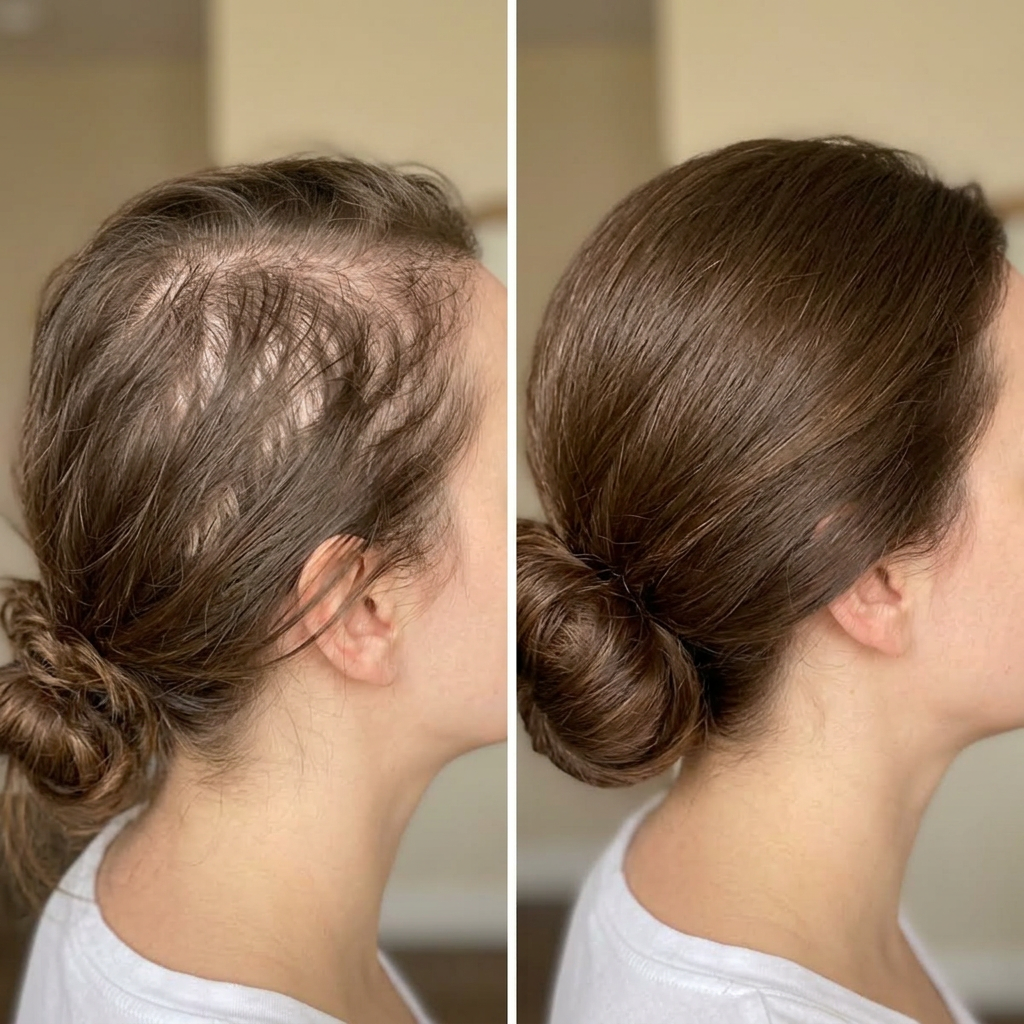
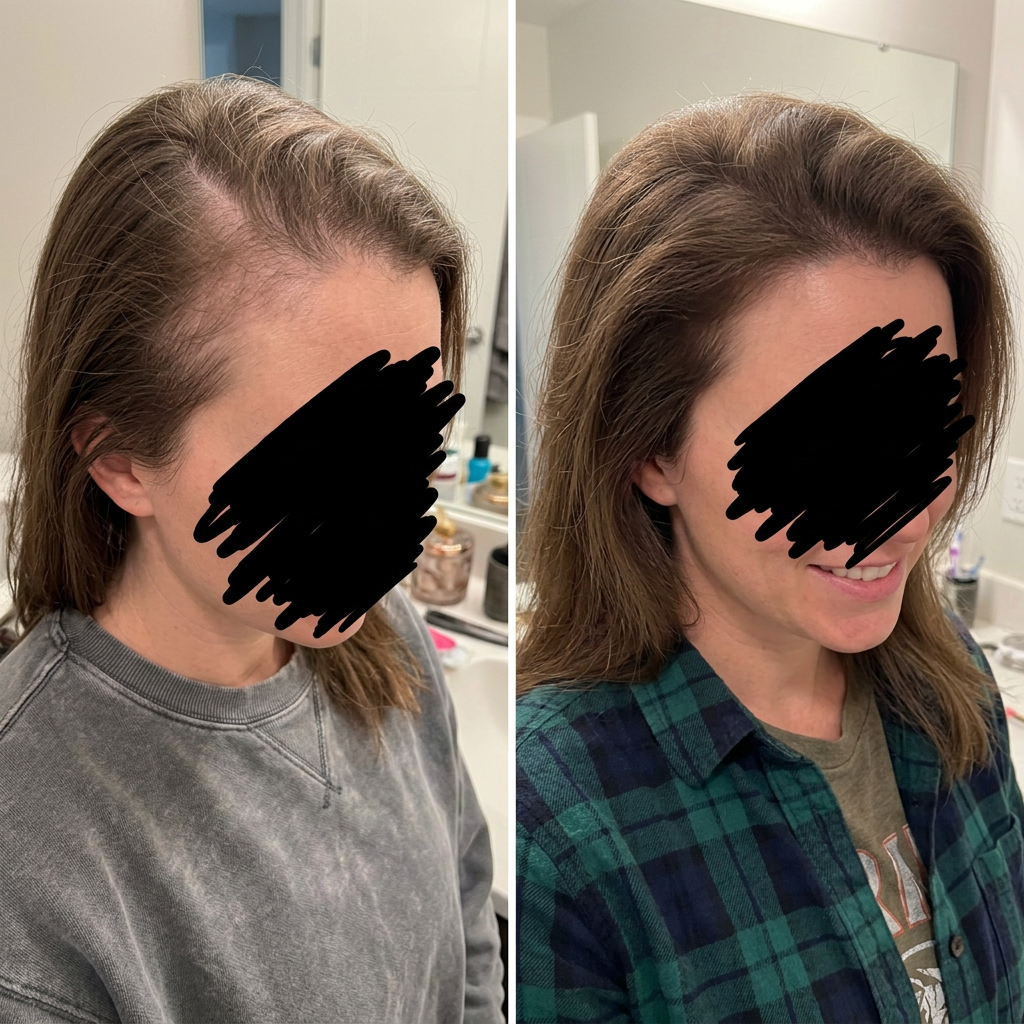
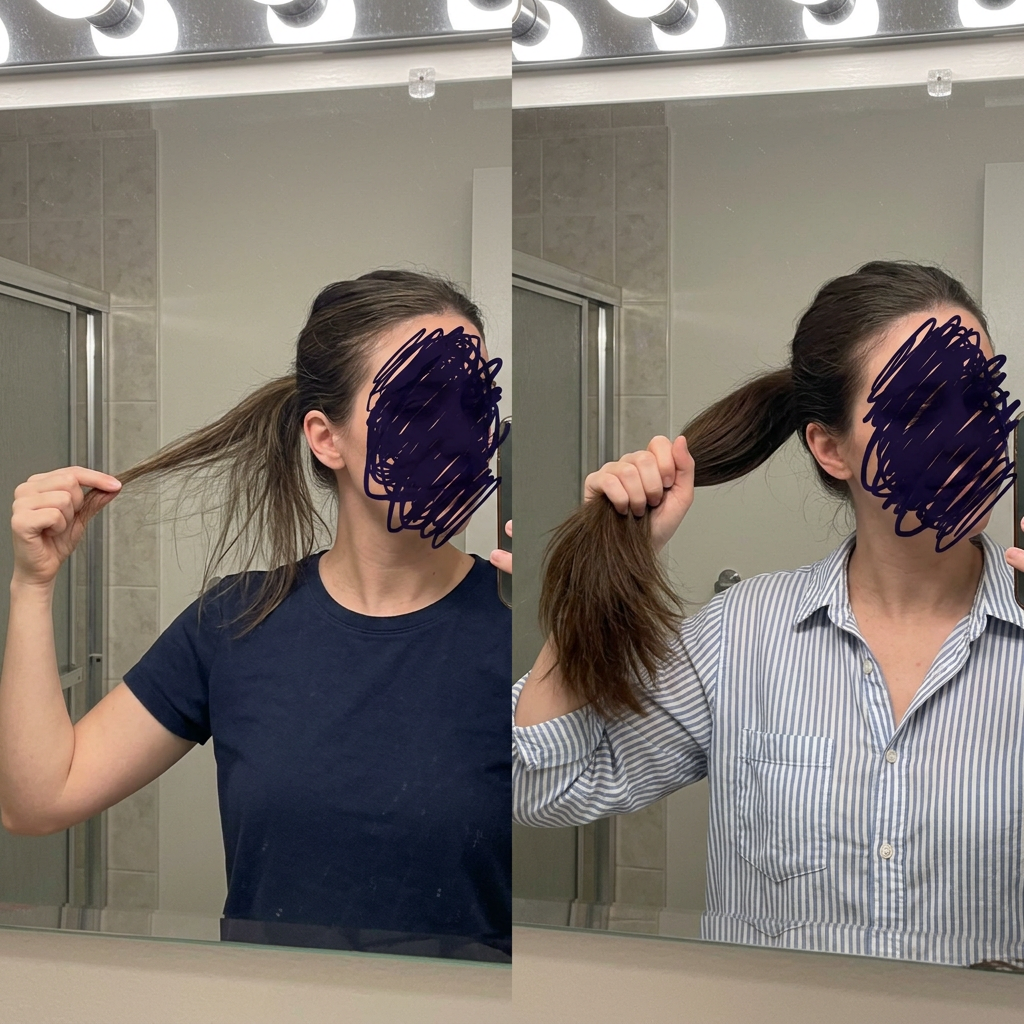
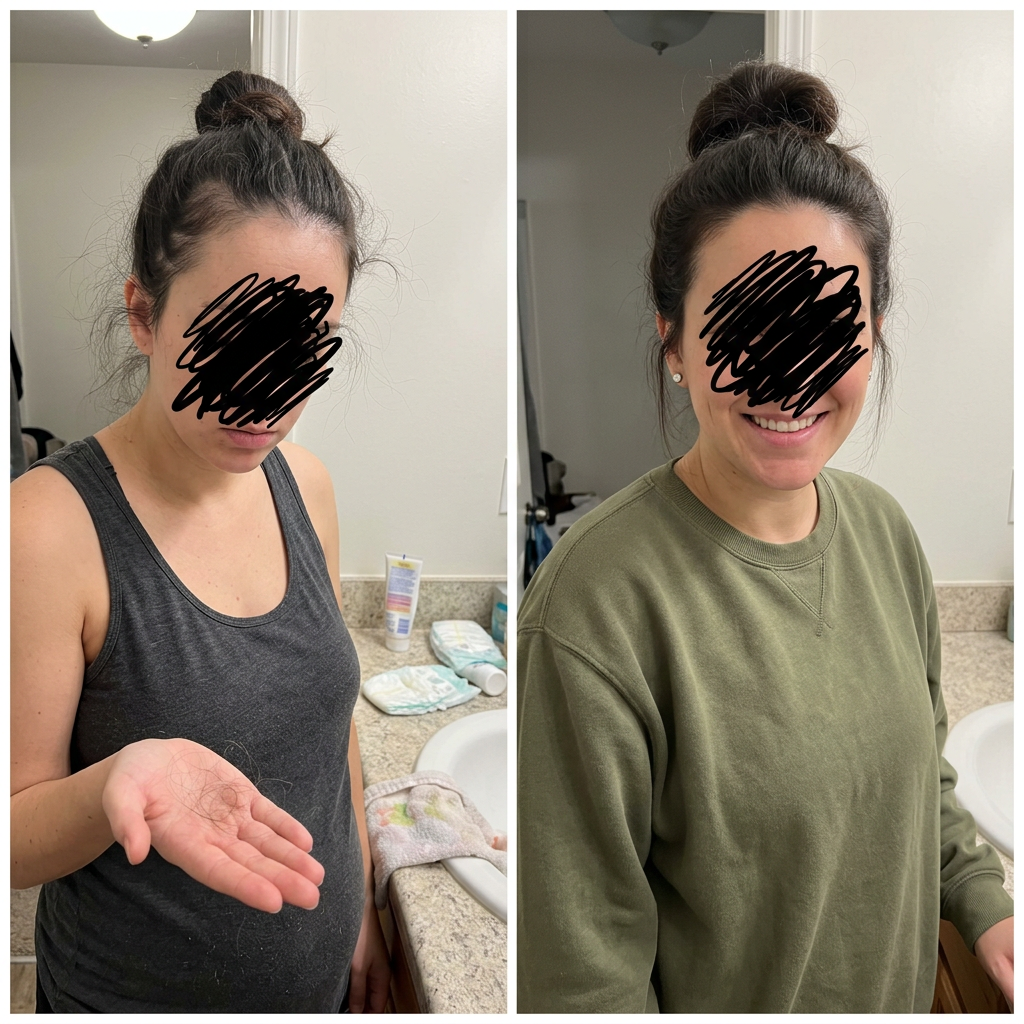
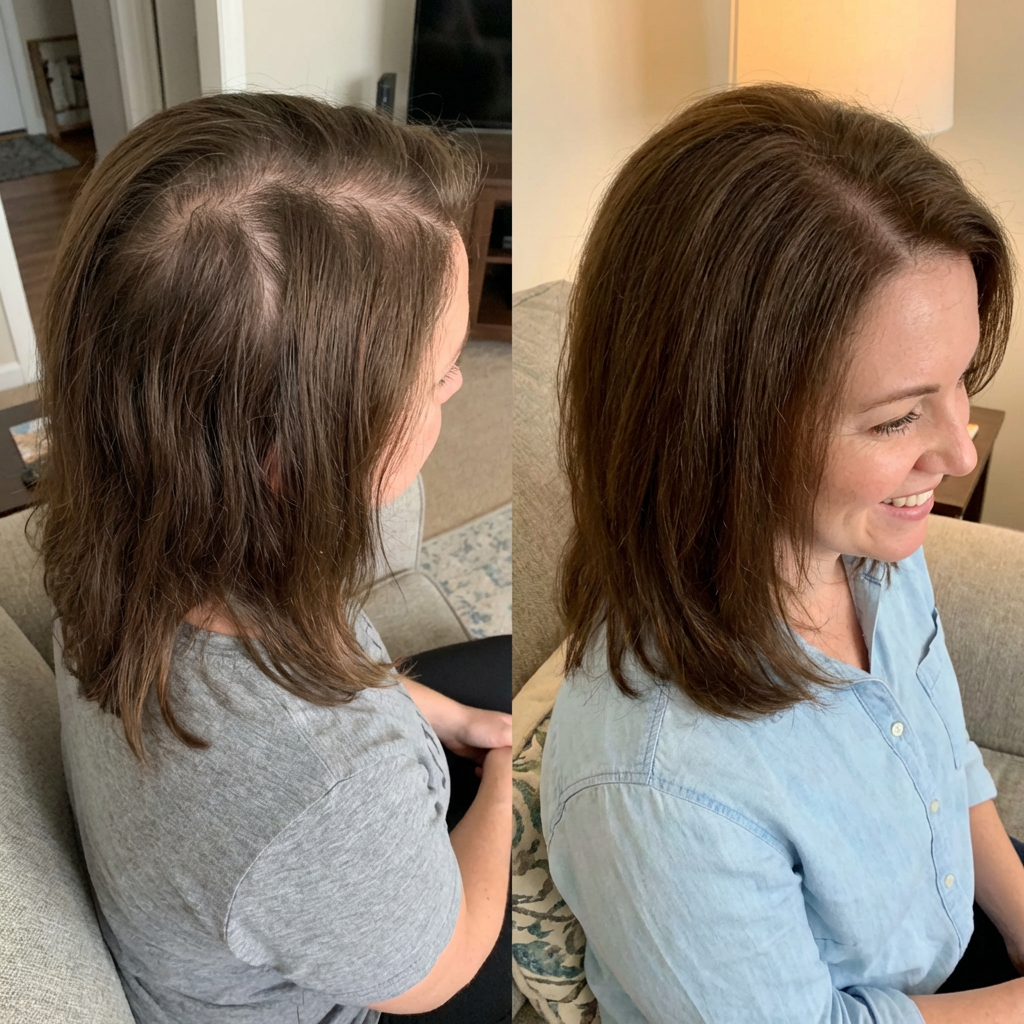
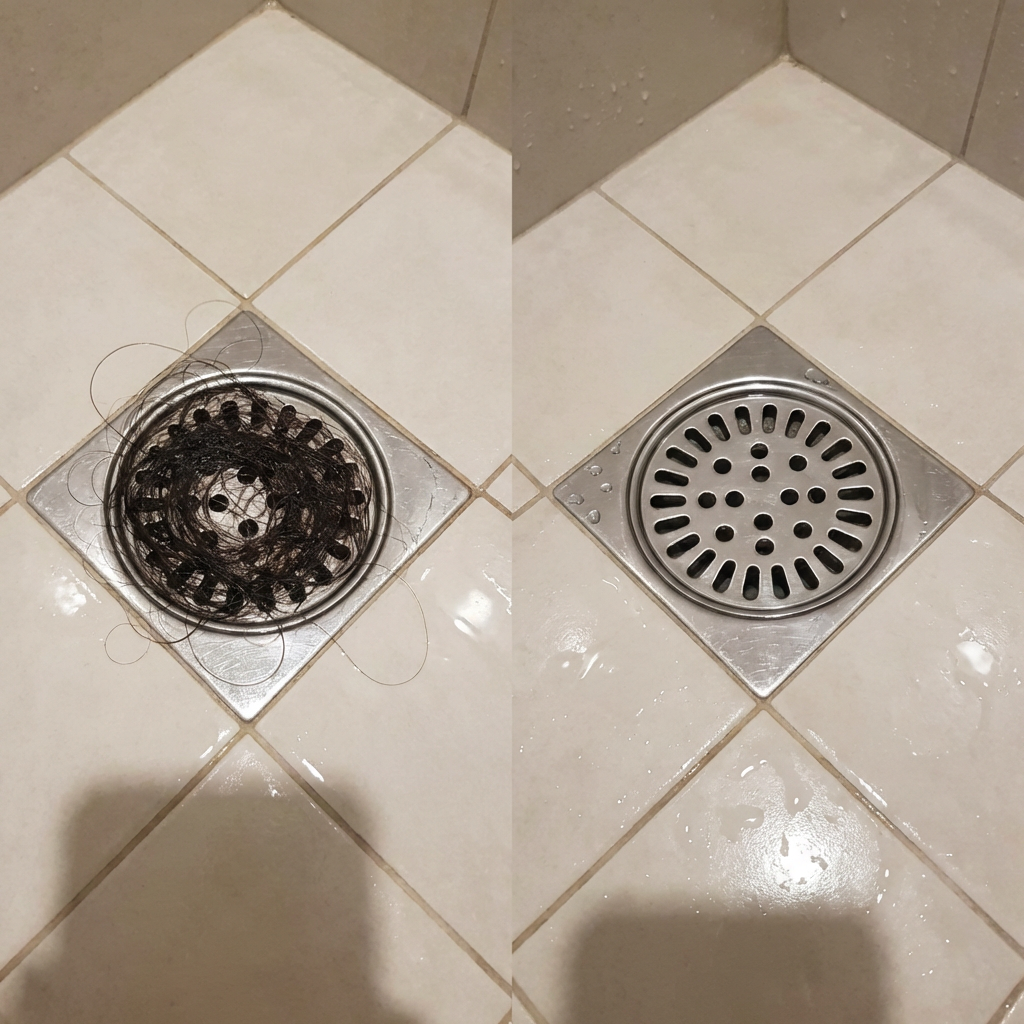
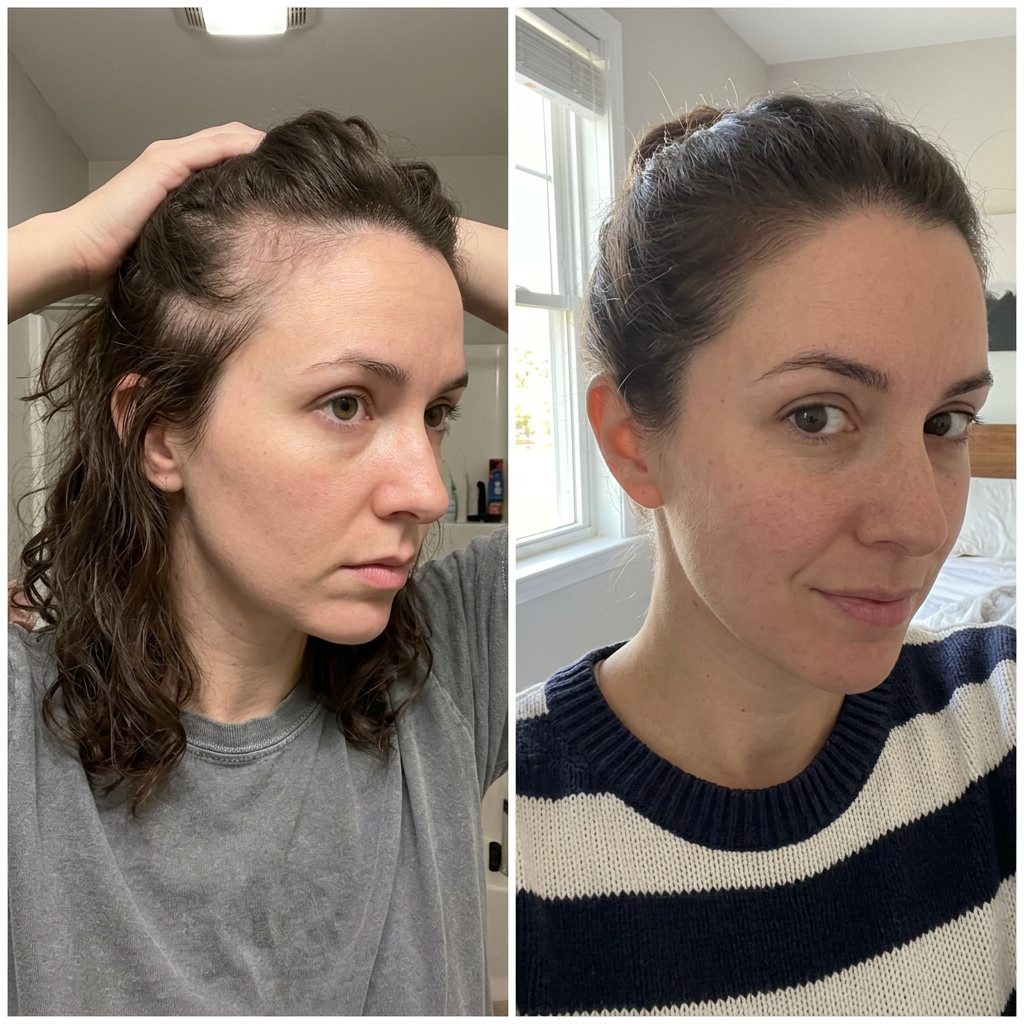
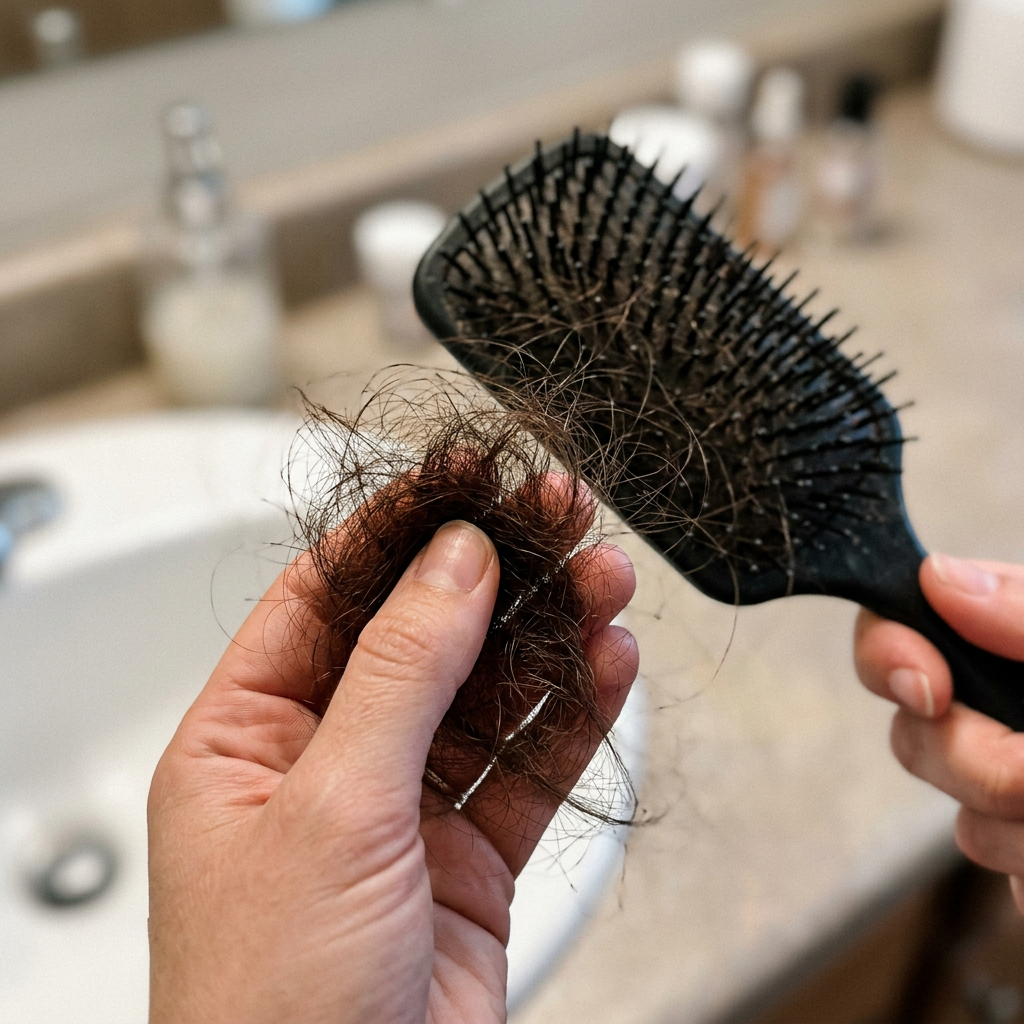
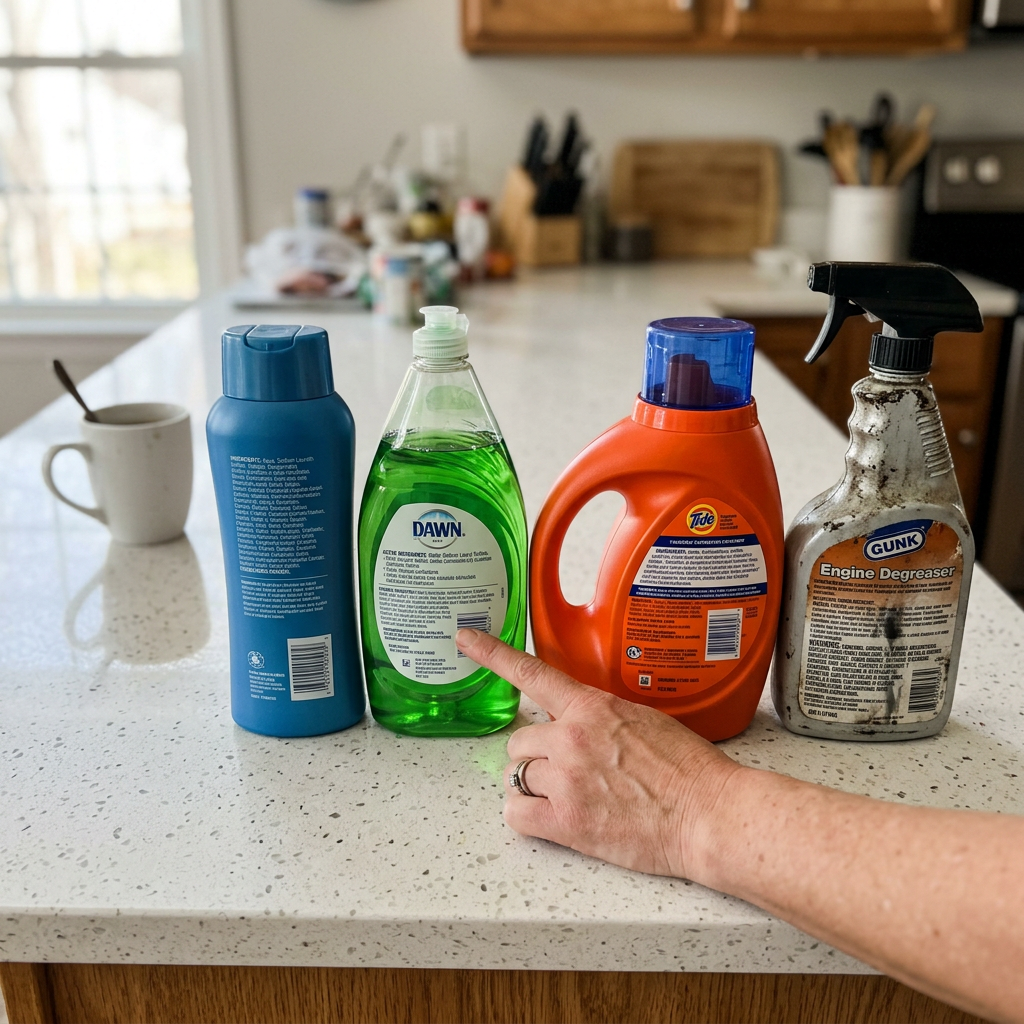
I spent sixty days reading the back of every "hair growth" shampoo I could buy in America. Fifty-two bottles. Target, CVS, Walgreens, Ulta, Sephora, Amazon's top twenty best-sellers in the category, and four "clean beauty" boutiques I drove to in three different states. Forty-nine of them list a sulfate in the first five ingredients. The other three list one in the first ten. Zero of the shampoos marketed specifically to women with thinning hair were free of the exact class of chemical that, according to the peer-reviewed research I'm going to walk you through in a minute, is almost certainly a significant cause of the problem they claim to fix. I am not a chemist. I am not a dermatologist. I have never sold a product in my life and I do not have an Instagram with more than 340 followers, most of them my family. I am a 44-year-old woman who started losing her hair at 42, spent about four hundred dollars on the things every woman spends four hundred dollars on (biotin, collagen, a Nutrafol trial, one bottle of a thinning-hair shampoo system that cost more than a nice dinner), and then, somewhere around month five, got suspicious instead of desperate. I used to work as a fact-checker at a women's magazine. Old habit. When something isn't adding up, I start making spreadsheets. This is what two months of spreadsheets found. I am writing it out in plain English because nobody did that for me and I had to figure it out the hard way. What I actually did So you know what kind of investigation this is and what kind it isn't. I bought, or photographed the ingredient panel of, 52 shampoos currently sold in the United States and marketed with language related to hair growth, thinning hair, volumizing, hair loss, fuller hair, density, or follicle support. I logged every ingredient from each bottle into a single sheet. I cross-referenced the formulations against fourteen peer-reviewed studies published in dermatology journals (the full list is at the bottom of this piece, I'm not going to make you take my word for it). I called the customer service lines of six different brands and asked them, as a consumer, what percentage concentration of their hero ingredient was in the formula. Four would not tell me. One told me "under one percent." One told me "that's proprietary" in a tone that made me laugh out loud on my own porch. I also, because this is the part that finally broke me, bought and logged the ingredient panels of Dawn dish soap, Tide laundry detergent, a Suave body wash, and, yes, a bottle of Gunk brand engine degreaser I found at an AutoZone off I-40. I am going to show you what I found in order of how angry each finding made me. Finding 1. The shampoo, the dish soap, and the engine degreaser share a second ingredient. I want you to actually do this, in your own bathroom, in the next sixty seconds, before you read the rest of this piece. Go pick up your shampoo bottle. Turn it around. Find the ingredient panel. Read the second ingredient. If it is Sodium Laureth Sulfate, Sodium Lauryl Sulfate, or Ammonium Lauryl Sulfate, I want you to text the name of the ingredient to yourself so you have it. Then come back. I'll wait. Here is what that ingredient is. Sulfates (SLS, SLES, ALS) are a class of chemical called surfactants. A surfactant's single chemical function is to bind to oils and sulfur-containing compounds and rinse them away. That is the entire job. That is why they lather. That is why your shampoo feels "cleansing." That is why your dishes come out greaseless. That is why a mechanic can get brake fluid off a driveway with a can of degreaser and a hose. The ingredient in all three products is doing the same thing. It strips. That's the job. In my spreadsheet: 49 of 52 "hair growth" shampoos contain SLS or SLES in the first five ingredients. Dawn Ultra lists Sodium Laureth Sulfate as the second ingredient. Tide Original lists Sodium Laureth Sulfate in the first five. Gunk Foamy Engine Brite lists Sodium Lauryl Sulfate third. I sat at my kitchen table the night I finished this comparison and I stared at the four bottles for a long time. Then I got up and threw the $79 bottle of "clinically proven" thinning hair shampoo I had been using for five months into the kitchen trash. I did not even take the cap off first. I understand now that this was dramatic. I was upset. Finding 2. Your hair is, chemically, a sulfur protein. The ingredient you are washing it with is designed to strip sulfur. Here is the piece of biology I did not know before I started this project, which I now believe every woman over 35 in America should be required to know. Hair is made of a protein called keratin. The structural feature that gives keratin its strength, thickness, and elasticity is a chemical bond called a disulfide bond. Disulfide bonds are, as the name implies, sulfur bonds. Your hair is, at the molecular level, a sulfur protein. Your scalp produces sulfur naturally. Your hair follicles use that sulfur as the raw material to build new keratin. That is how new hair grows in, and that is how existing hair stays thick. Sulfates bind to sulfur. That is not a marketing claim. That is not a conspiracy theory. That is the chemical definition of what a sulfate surfactant does. If you wash your hair with a sulfate shampoo once, your body replaces the sulfur that gets stripped within a few days and nothing bad happens. If you wash your hair with a sulfate shampoo every single morning for twenty-five years, which, if you are an American woman who came of age in the 1990s, is approximately what you have done, your scalp cannot keep up with the stripping. The follicles slowly lose access to their raw material. They begin producing thinner, weaker strands. Some of them stop producing hair entirely and go dormant. This process has a name in the dermatology literature. It is not "androgenetic alopecia," which is the term my own doctor used on a printed handout when I asked her what was wrong. It is closer to what some of the topical-depletion research calls "surfactant-induced follicular miniaturization." The research on this is not hidden. It is published. I have it in a folder on my desktop. The reason you have not heard of it is not that it is secret. It is that nobody selling you a $79 blue-bottle shampoo system has any commercial reason to tell you about it. Finding 3. The "thinning hair" category is, chemically, the same shampoo at a higher price. When I sorted my spreadsheet by product category, something jumped out that I want to describe carefully because I know how it sounds. The base formulation of the average "regular" shampoo on the shelf and the base formulation of the average "for thinning hair" or "hair growth" shampoo on the shelf next to it are, for all intents and purposes, the same formulation. Both are built on a sulfate surfactant system, usually SLES or SLS, with water as the primary carrier and a handful of cheap co-surfactants and conditioning agents making up the rest. The "thinning hair" version has one additional ingredient, usually listed somewhere between fourteenth and twenty-second on the panel, which is the "hero" ingredient featured on the front of the bottle. Biotin. Caffeine. Keratin. Ginseng. Rosemary. Saw Palmetto. When I called the manufacturers, the concentrations I was able to pry out ranged from 0.1% to just under 1%. Under one percent. Of the hero ingredient. In a product selling at a fifty to two hundred percent premium over the "regular" version of the same base. A former cosmetic chemist I eventually tracked down (she worked six years for a brand whose name I am not going to print, at her request, but that is almost certainly in your bathroom right now) put it to me this way when I asked her how these formulations get built. "Marketing picks a benefit. They tell R&D, build me a product that delivers that benefit. R&D already has the base formula, because the base formula is the same base formula the company uses for everything. They add a measured splash of whatever ingredient the marketing team wants on the front of the bottle. The splash is not there to do work. The splash is there to make the claim legal." I asked her if I could quote her. She said yes as long as I did not name the company. I am keeping that promise. Finding 4. The "onion shampoo" wave is, by my count, 90% theater. When I started this investigation, a well-meaning friend told me that "onion shampoo" was "the new thing" and that I should look into it. I said I would. Here is what I found. Of the twenty best-selling "onion shampoos" on Amazon at the time I ran this search: 17 of 20 contained SLS or SLES in the first five ingredients. Of the 11 that disclosed their onion concentration, the highest was 3%. The lowest was 0.1%. The median was around 0.5%. 19 of 20 used "onion" prominently on the front of the bottle. Exactly 1 of 20 listed the actual concentration on the packaging. In other words, the category that presents itself as the solution to the sulfate problem is, in the overwhelming majority of cases, also sulfate-based, with a fractional concentration of onion extract added to justify the front-label claim. This is the part I want you to actually hold on to, because it almost tricked me. I spent about two weeks, somewhere around week four of this investigation, convinced the answer was just "buy any onion shampoo on Amazon." I almost ordered three of them before I actually read their panels. All three contained SLES. Two of them listed it higher on the panel than the onion extract. If I had not slowed down, I would have paid a premium to do the same thing to my scalp I was already doing, with an onion sticker on the bottle. Finding 5. You cannot supplement your way out of a topical problem. I spent a truly embarrassing amount of money on supplements in the first five months of trying to fix my hair. I am not going to shame anyone who has done the same. I did it too. The industry is very good at selling it to us. Here is what I learned, mostly by reading pharmacokinetics papers I was definitely not trained to read, but which I eventually got the gist of by calling a pharmacist friend and asking her to translate. When you swallow a biotin capsule, the biotin enters your digestive system. It is broken down, partially absorbed in the small intestine, distributed through the bloodstream, and delivered throughout the entire body. Your hair follicles are not the only tissue in your body that uses biotin. Your skin uses it. Your nails use it. Your nerves use it. Your liver metabolizes whatever your tissues don't use and your kidneys clear the rest. By the time a measurable amount of the biotin you swallowed actually arrives at a specific follicle on your scalp, it is a rounding error. That is for biotin, which at least has a clear biological pathway to hair. The math is even worse for collagen (which is broken down into amino acids during digestion and is not, contrary to the marketing, delivered as "collagen" to your hair). And it is worse still for most "hair growth" multivitamin blends, which are, to put it bluntly, regular multivitamins with an extract or two and a premium price. None of this is bad for you. Biotin will not hurt you. Collagen will not hurt you. Nutrafol will not hurt you. They just cannot, mechanically, reach a problem that is happening at the surface of your scalp every morning while you wash your hair. The chemist I interviewed put this better than I can. She told me: "Picture a bathroom sink with the faucet running and the drain wide open. You can pour water into that sink all day. It will never fill. You are the sink. The faucet is your supplements. The drain is your shampoo. You cannot out-pill a drain." I wrote that down and stared at it for ten minutes. Finding 6. The research on what actually works is not subtle, and it is not new. One of the things that made me the angriest during this whole investigation is how much of this is already published. It is not hidden. It is not obscure. It is, in some cases, a decade old. The reason you have not seen it is not that it is unavailable. It is that it is not being marketed to you. A short summary of what is actually in the peer-reviewed dermatology literature on topical hair regrowth (I will link the citations at the bottom): Onion extract, applied topically, produces measurable regrowth in a majority of participants in as little as six weeks. The study most often cited was published in the Journal of Dermatology. The mechanism is believed to be the delivery of bioavailable sulfur directly to the follicle, which is exactly what the keratin-synthesis research would predict would help. Rosemary oil, applied topically (not swallowed), has performed comparably to 2% minoxidil over a six-month period in at least one controlled trial, without the known minoxidil side effects (scalp irritation, unwanted facial hair growth) and, critically, without the "rebound shedding" problem where stopping minoxidil causes you to lose whatever you regrew. Nettle extract is one of the few botanicals shown to gently influence DHT, a hormone linked to hair thinning as we age. It's an underappreciated factor for many women, and a plant-based option is a welcome alternative to the synthetic route. Peppermint oil increases dermal microcirculation at the scalp and has been shown, in at least one animal study and several smaller human studies, to increase dermal papilla activity, which is the part of the follicle responsible for producing new hair. Topical biotin, delivered directly at the follicle rather than swallowed, actually arrives at the site where it can be used in keratin synthesis, rather than being distributed throughout the body. Everything in the above list is topical. Everything works at the scalp. Everything was already published before I ever started losing my hair. None of it was in the shampoo I was using. Finding 7. Exactly one formulation in my entire spreadsheet passed my filter. By the end of week seven, I had what I called "the filter." It was the checklist I built from the research. For a shampoo to make sense as a serious topical intervention for a sulfur-depleted scalp, it needed to meet, at minimum: 1. Genuinely sulfate-free. Not "sulfate-free cleansing system," which is a marketing phrase that can legally be placed on a bottle that contains sulfates. I mean: no SLS, no SLES, no ALS, anywhere on the panel. 2. Onion hydrosol as a named ingredient at a real concentration. Based on the dosing in the published studies, I set my floor at 10%. I preferred 15% or higher. 3. Rosemary oil, nettle extract, and peppermint oil in the same formula, not sold separately. 4. Topical biotin, delivered in the formula rather than as an upsell. 5. No parabens, no silicones (silicones coat the hair and can block topical absorption of the rest of the ingredients). 6. A matching conditioner that also met these standards, because a sulfate-free shampoo paired with a silicone-loaded conditioner is, functionally, a sulfate-free shampoo. 7. A money-back guarantee, because I had already learned that every other product in the category, from the biotin to the Nutrafol to the $79 blue-bottle system, was either non-returnable or auto-renewing or both. I ran 52 shampoos through this filter. Fifty-one failed. The one that passed is made by a small family business I had never heard of before this investigation started. It is not a conglomerate. It is not a brand my former magazine would have covered. It does not have celebrity endorsements. It has, as far as I can tell, no marketing budget to speak of. It is sold primarily through its own website. The formula, verified against the panel on the actual bottle (I bought one, at retail, with my own money, before I ever decided I would write any of this down): - 15% pure onion hydrosol - Rosemary oil - Nettle extract - Peppermint oil - Topical biotin - Aloe vera - Hydrolyzed vegetable protein - Zero sulfates. Zero parabens. Zero silicones. Zero harsh surfactants of any kind. The matching conditioner contained onion extract, castor oil (for visible thickness), argan oil (for shine), and biotin for breakage. Also sulfate-free, paraben-free, silicone-free. This is not a formula I would expect a large corporation to produce. It is, frankly, too expensive to manufacture at the margins a corporation would require. The onion hydrosol at 15% alone costs more than the entire base formula of most drugstore shampoos. There is no corner-cutting in the panel. Which is probably why there is exactly one of it. Brief personal epilogue, because I know you want to know. I have been using the shampoo and conditioner I described above for about four months. I am writing this at month four because I wanted to be certain before I said anything publicly. I stopped the biotin at week two. I stopped the collagen at week three. I cancelled the Nutrafol at week four (they put me on the phone with a retention specialist named Dennis, which is a separate small investigation I may write up at some point). I threw the blue-bottle thinning system away, as already noted, the night I finished the sulfate comparison. Week one: my scalp stopped feeling tight after washing. The lather was noticeably lighter. I had to retrain myself to not keep squeezing more product into my hand looking for foam. The lather is not the clean. The lather was never the clean. Week two: measurably less hair in the drain. I counted. I went from an average of approximately thirty-two strands per wash to approximately fourteen. I have the counts in the same spreadsheet as the ingredient panels, which tells you something about me as a person. Week three: the brush felt heavier during blow-drying. Not tangles. Weight. Week four: baby hairs. A visible halo of new growth at my temples and across my crown, which is the part of my head I had, six months earlier, stopped photographing. Week eight: my husband, whose powers of observation are well-documented in our marriage, asked if I had gotten my hair colored. I had not. Week twelve: my part, which had widened from a line into something closer to a delta over the eighteen months before I started this investigation, is back to a line. I checked it against a photo I had taken, for reasons I do not want to discuss, the previous August. Week sixteen, which is now: I am writing this. I am not going to claim my hair is back to my twenties. I am 44. What I am going to claim is that the top of my head, under overhead lighting, no longer looks pink to my children, which is a sentence I did not know I was going to need to write when I started this project. A note on the smell, because I know. I was braced. I opened the bottle the day it arrived with the bathroom fan on like I was defusing something. What I actually smelled was herbal, faintly minty, clean. My sister asked me what perfume I was wearing the next time she hugged me. It was the shampoo. Not one person, in four months, has asked me why my hair smells like onions. It does not smell like onions. I promise. Why I am publishing this. I am not a journalist anymore. I left the magazine in 2019. I am publishing this on my own, under my own name, because when I finished my spreadsheet two months ago I realized I was sitting on something that every woman I know over 40 has been quietly, individually, expensively, shamefully trying to figure out on her own. There are somewhere between 20 and 40 million women in the United States currently experiencing some form of visible hair thinning. The overwhelming majority of them have been told, by doctors, by dermatologists, by product marketing, and by each other, that the cause is aging, hormones, stress, or "bad genes." Some of that is true for some women. Almost none of it is the whole story for most of them. A significant, and I would argue the leading, driver of female thinning hair in the 35-to-60 age range is the daily, years-long, mechanical depletion of scalp sulfur by a product class that was sold to us as gentle, cleansing, and in the premium tier, restorative. The product kept working as designed. The design was never restorative. The design was to strip. The fix is, genuinely, embarrassingly simple, and it is the same fix a chemist would tell you if she could afford to say it out loud: stop stripping, then feed what is starving. In that order. Close the drain, then turn on the faucet. If you are reading this and your shampoo has SLS or SLES in the first five ingredients, you are currently in the "still stripping" phase. Nothing you add to the top of that sink is going to fill it until the drain is closed. The product I found, the one formulation out of fifty-two that passed every filter, comes with a 30-day money-back guarantee. I want to be specific about why that matters, because I am a person who reads terms of service. Every other product I bought during my hair-loss year was either non-returnable, auto-renewing, or both. The biotin was final sale once opened. The Nutrafol was a subscription that required a phone call and a retention conversation to cancel. The $79 blue bottle system was "final sale for hygiene reasons." Every one of those transactions was structured to keep the financial risk on the buyer. This one isn't. You order it. You try it for thirty days. If your hair does not look and feel meaningfully different, you email them, you get your money back. No forms. No phone tree. No retention specialist named Dennis. Which means the real cost of testing whether I'm right is a shipping label and thirty days of your time. Compared to the fourteen months and $1,000+ most women in my situation spend spinning in the wrong direction, that is not a close call. What I'm asking you to do tonight. Walk into your bathroom. Pick up your shampoo. Turn it around. Read the second ingredient out loud. If it is Sodium Lauryl Sulfate, Sodium Laureth Sulfate, or any other sulfate, you have just identified the drain. You cannot fix anything happening above it until the drain is closed. Throw the bottle out. Or give it to someone who does dishes. Or keep it under the sink as a reminder. I don't care. Just stop washing your hair with it. Then replace it with something the research actually supports, at concentrations that are actually therapeutic, in a formulation that does not contain the exact ingredient that caused the problem in the first place. Your follicles are not dead. Your body is not failing. You are not aging faster than you should. You are being depleted, every morning, by a product that was sold to you as a solution, and every day you keep using it is another day of depletion that someone, somewhere, is going to have to undo. I wish somebody had sat me down at month two and told me all of this. Nobody did. I had to build a spreadsheet. I built the spreadsheet so you don't have to. — Jamie P.S. If you are the woman who is going to read all the way to this postscript and still not order, because that is a kind of woman I very much understand (I was her for five months), I want to name the thing you are probably doing. You are assuming that if this were really true, somebody bigger than me would have said it by now. A major publication. A doctor you trust. A morning show. I assumed the same thing for a long time. Here is the answer to that assumption: the organizations that could publish this at scale are the same organizations that run, on the same page or the same broadcast, the advertising of the companies this finding would bankrupt. That is not a conspiracy. That is the business model. The reason you are reading this from a woman you've never heard of, on a page with no masthead, is that this kind of finding can only come from outside the system that profits from not publishing it. I know how that sounds. I sounded like that to myself for two months. Then I built the spreadsheet. P.P.S. On the smell, one more time, because I know half of you scrolled back to check. Herbal. Slightly minty. My sister asked what perfume I was wearing. My husband, who I love and who has the nose of a particularly congested bloodhound, said "that's nice, what is it" the first time he smelled it. Zero people have asked me if I've been cooking onions. I promise. It is one of the things I was most worried about and one of the things I most wish I hadn't wasted worry on. P.P.P.S. The citations: the onion extract study is Sharquie and Al-Obaidi, Journal of Dermatology, 2002. The rosemary oil vs. minoxidil study is Panahi et al., SKINmed, 2015. The nettle/DHT work is summarized in multiple reviews in Phytomedicine and Journal of Herbal Medicine. The peppermint oil/dermal papilla paper is Oh et al., Toxicological Research, 2014. I am not going to pretend I read all of these in the original Greek. I read the abstracts, I read the methods, I read the results, and in the cases where I couldn't follow the statistics I asked a friend with a PhD to translate. If you want to check my work, it is checkable. That is the whole point.
Like this ad? Make it yours.
Crush rebuilds this exact creative around your product — your brand, your colors, your offer — in about a minute.