
Inactive· since Apr 5, 2026
- 160
- days it ran
- 10
- relaunches
Ad copy
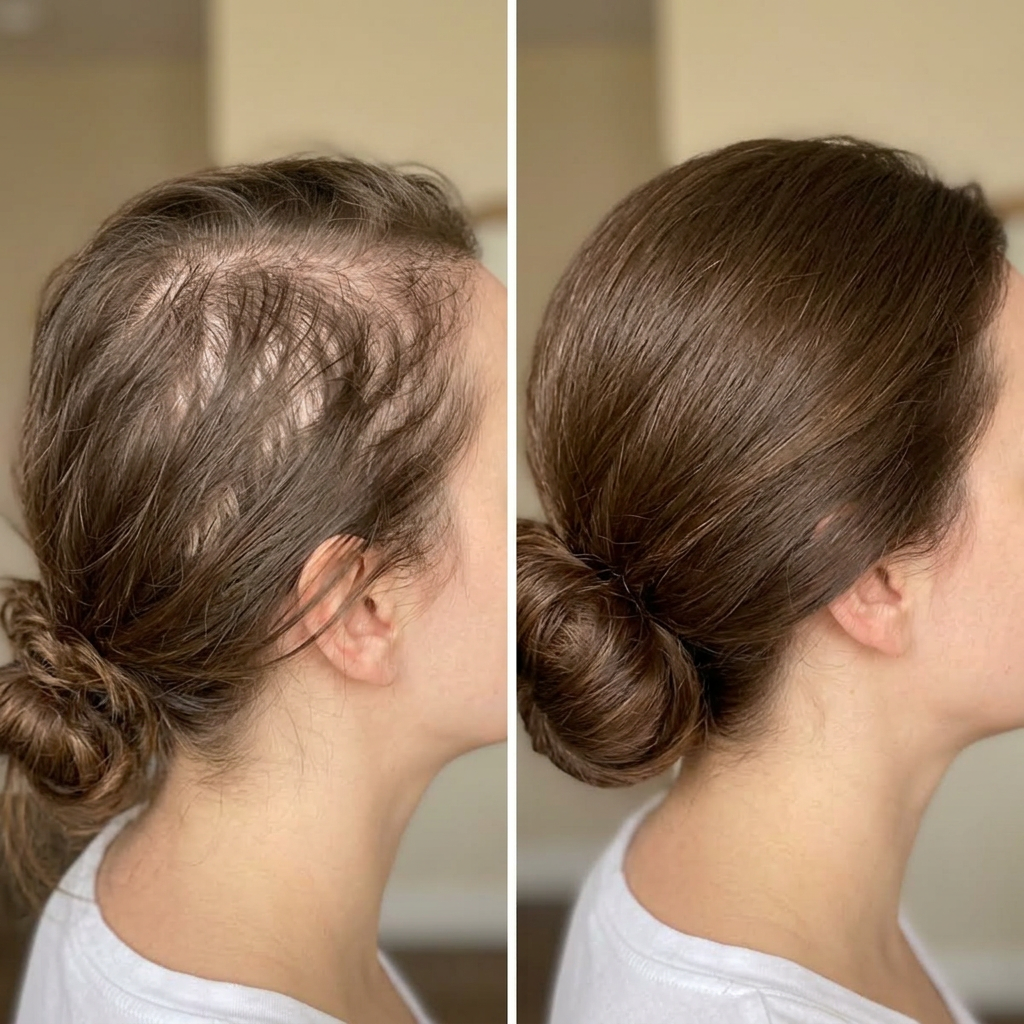
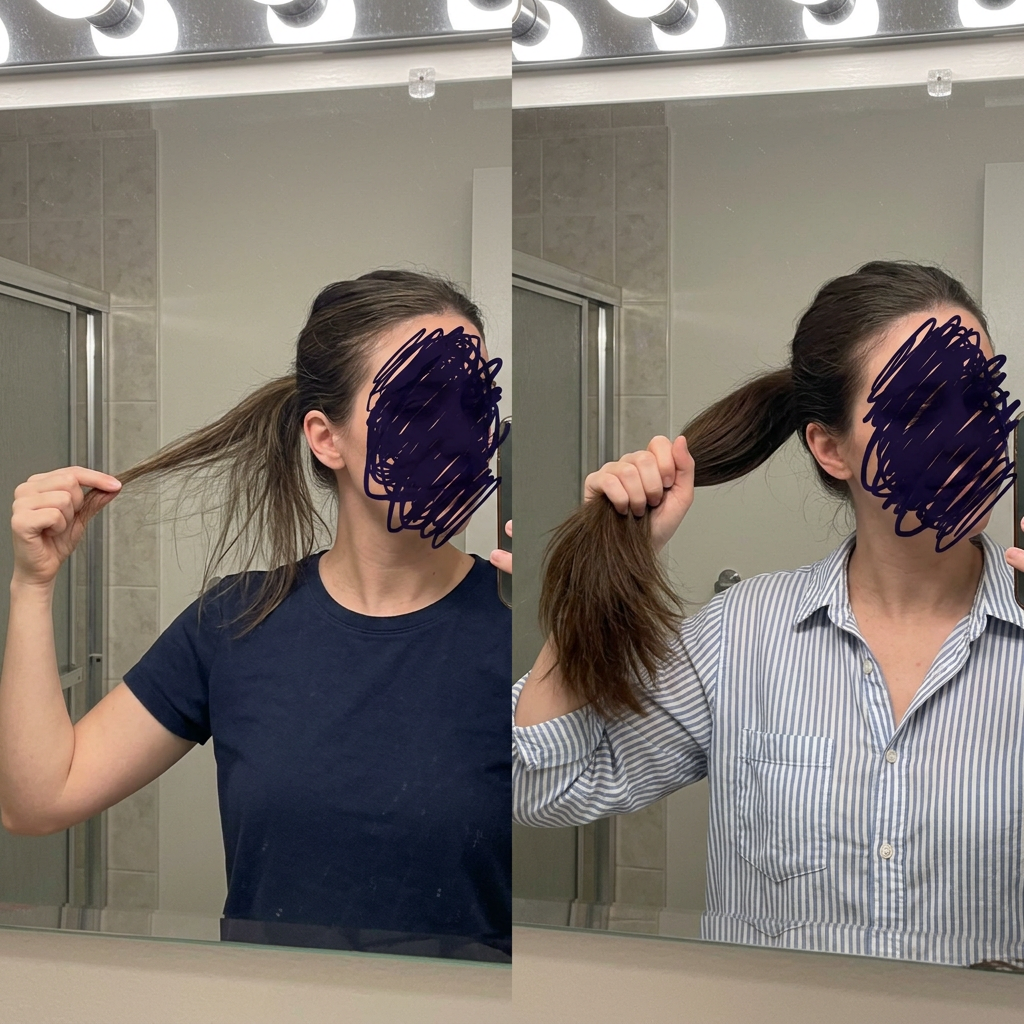
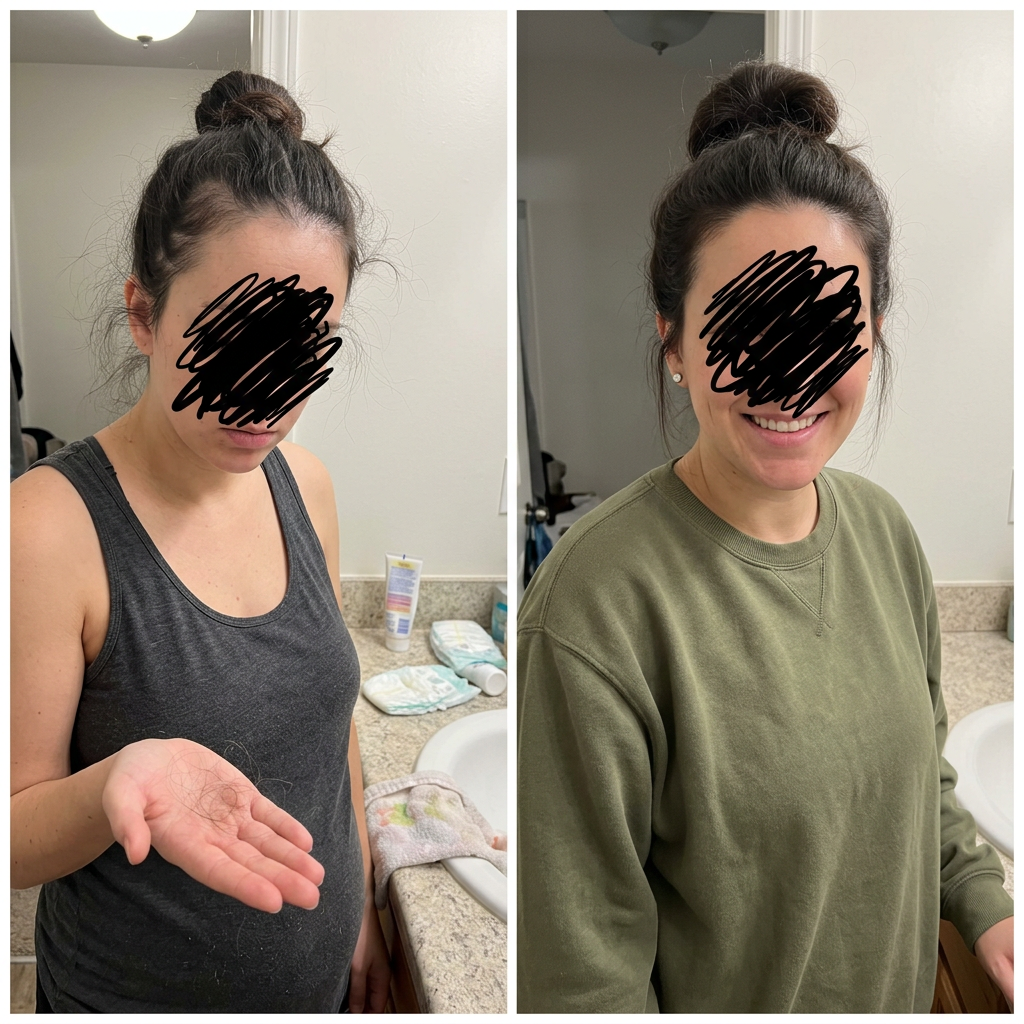
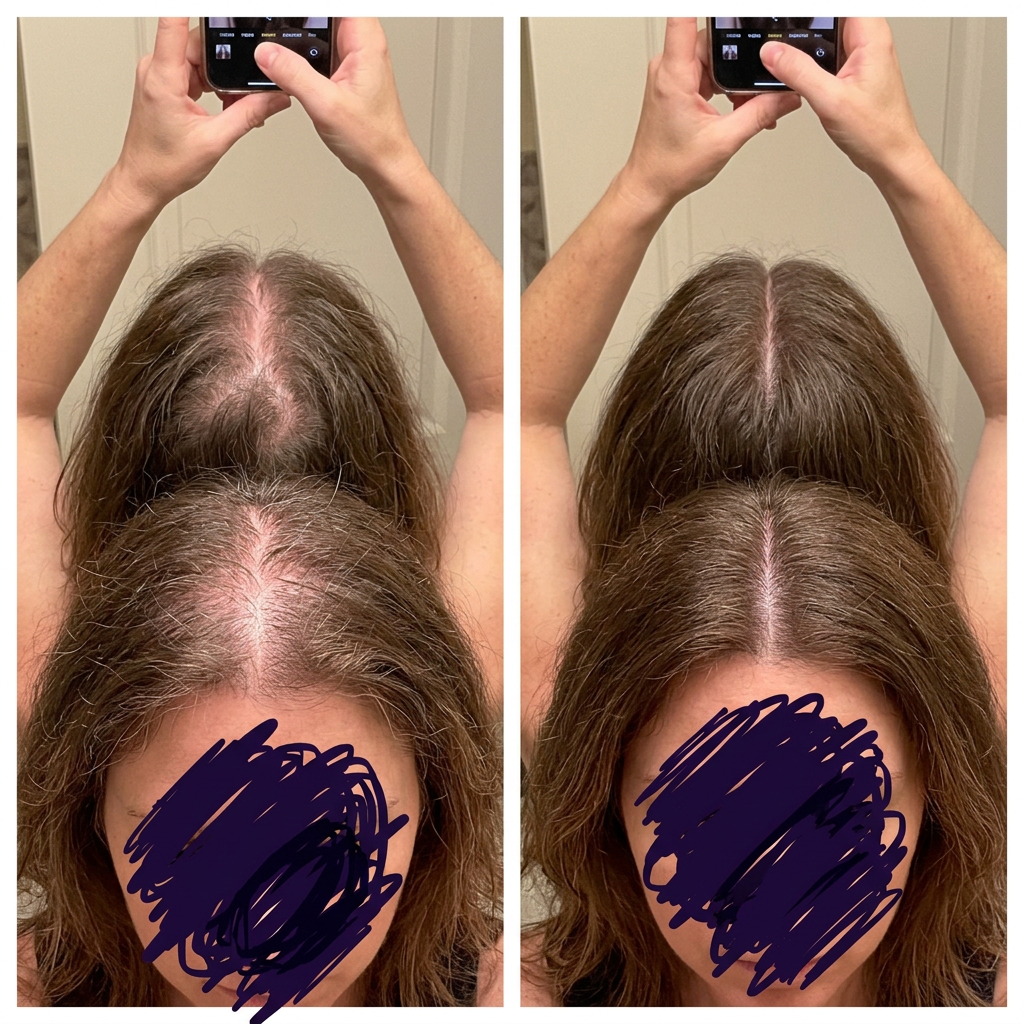
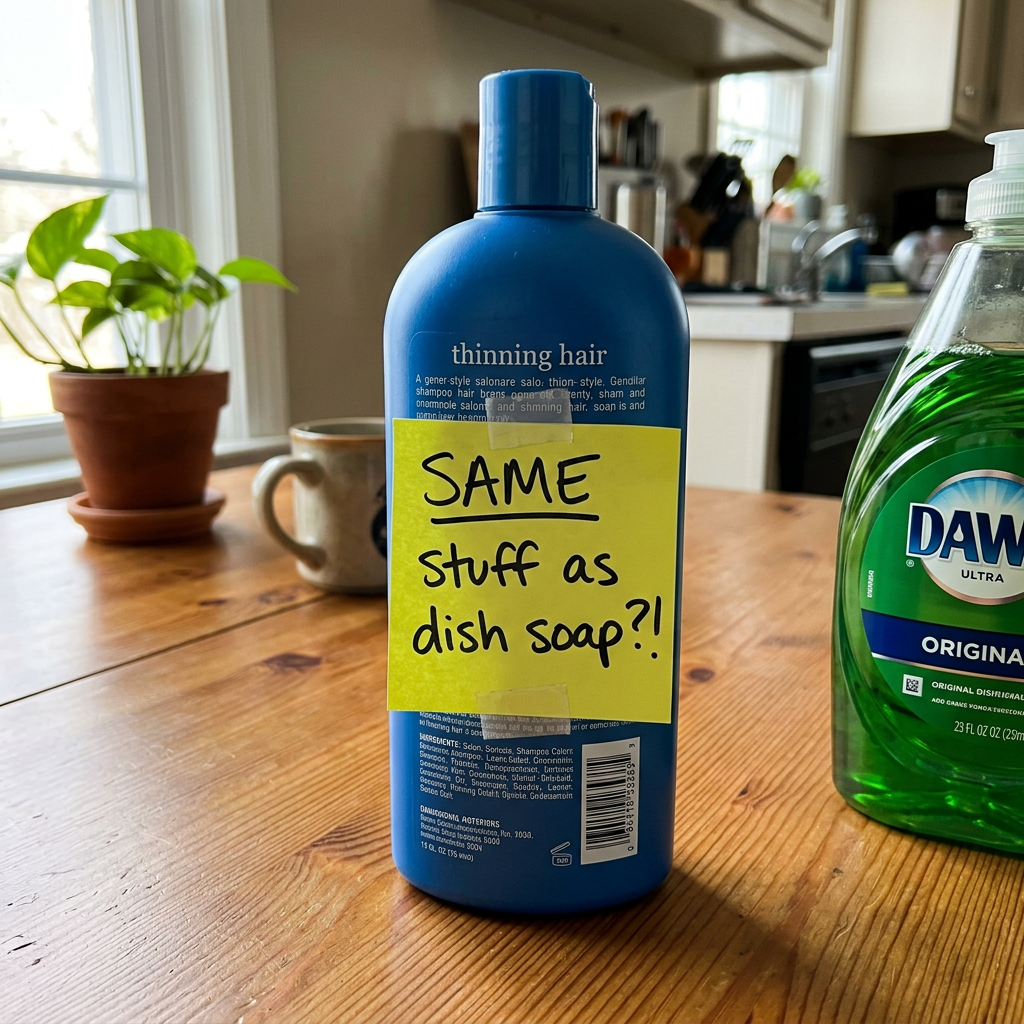
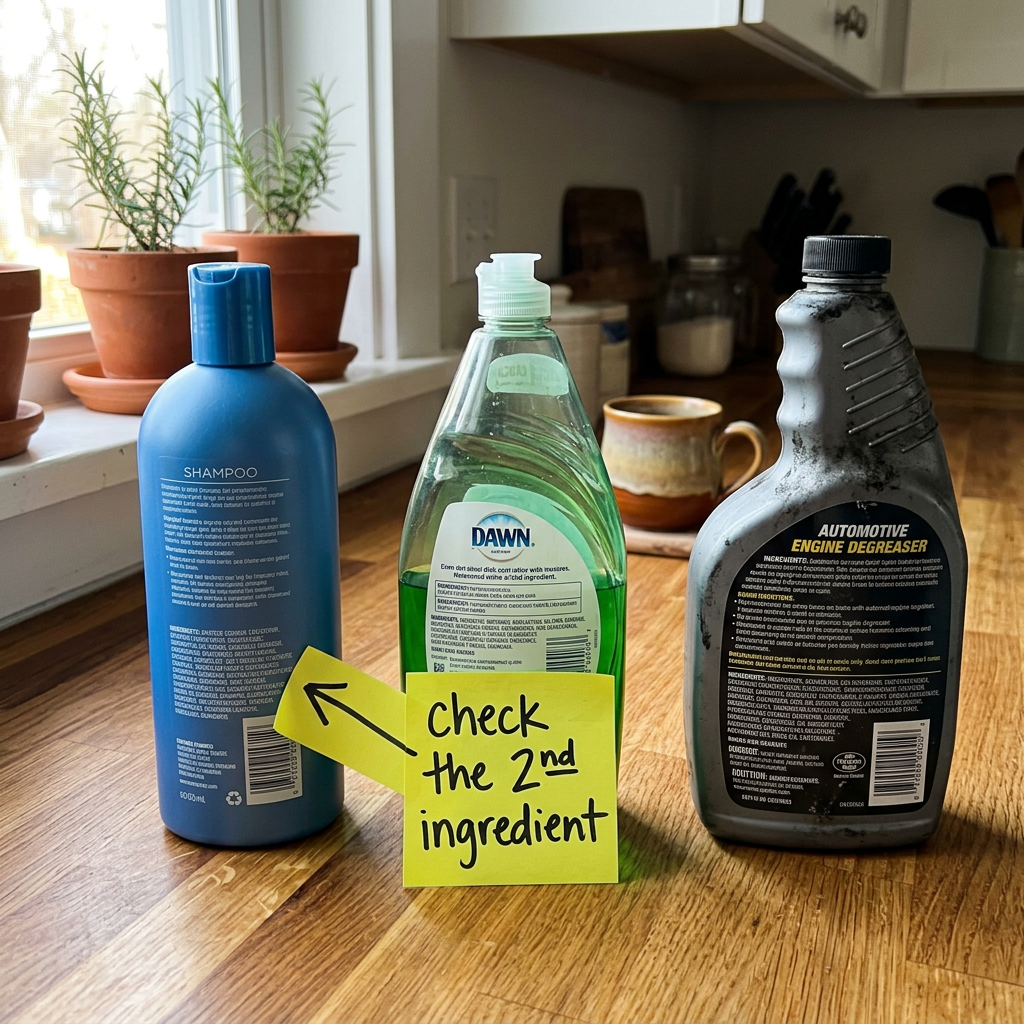
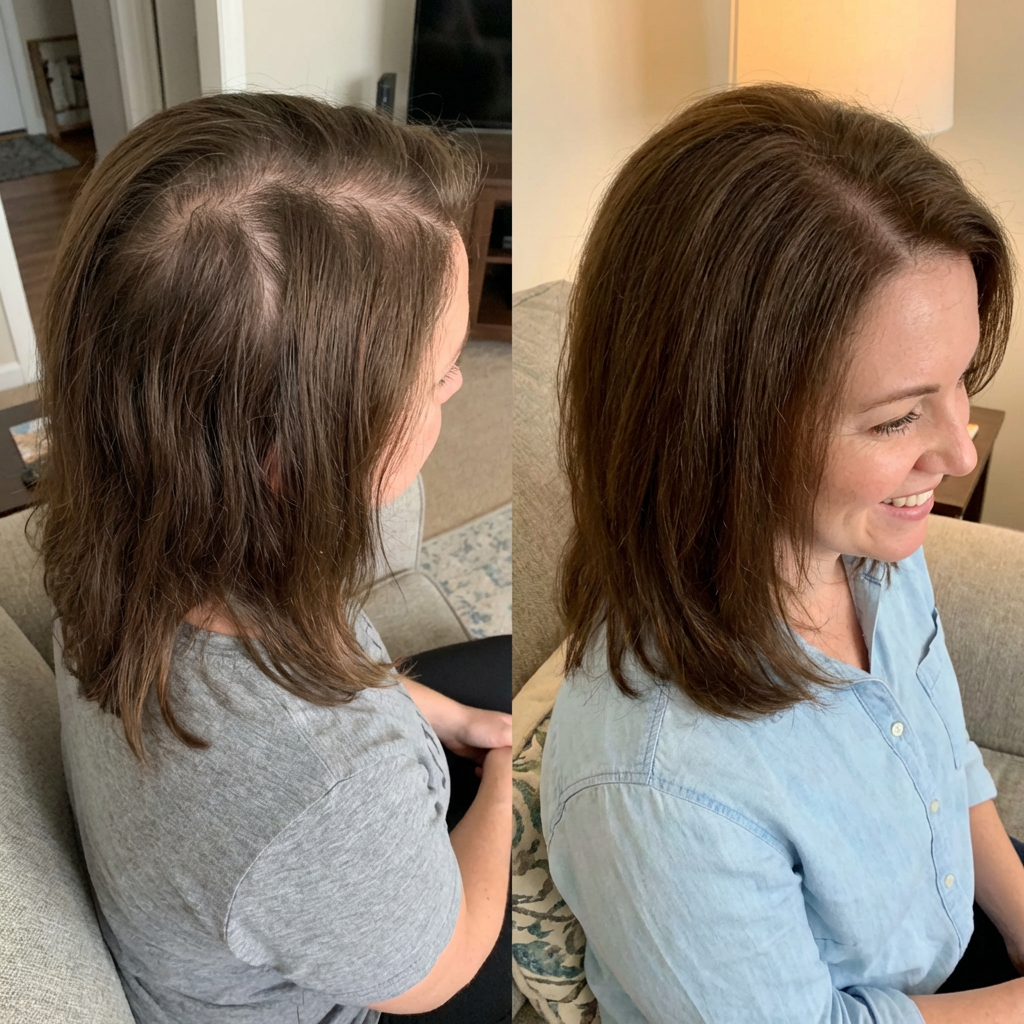
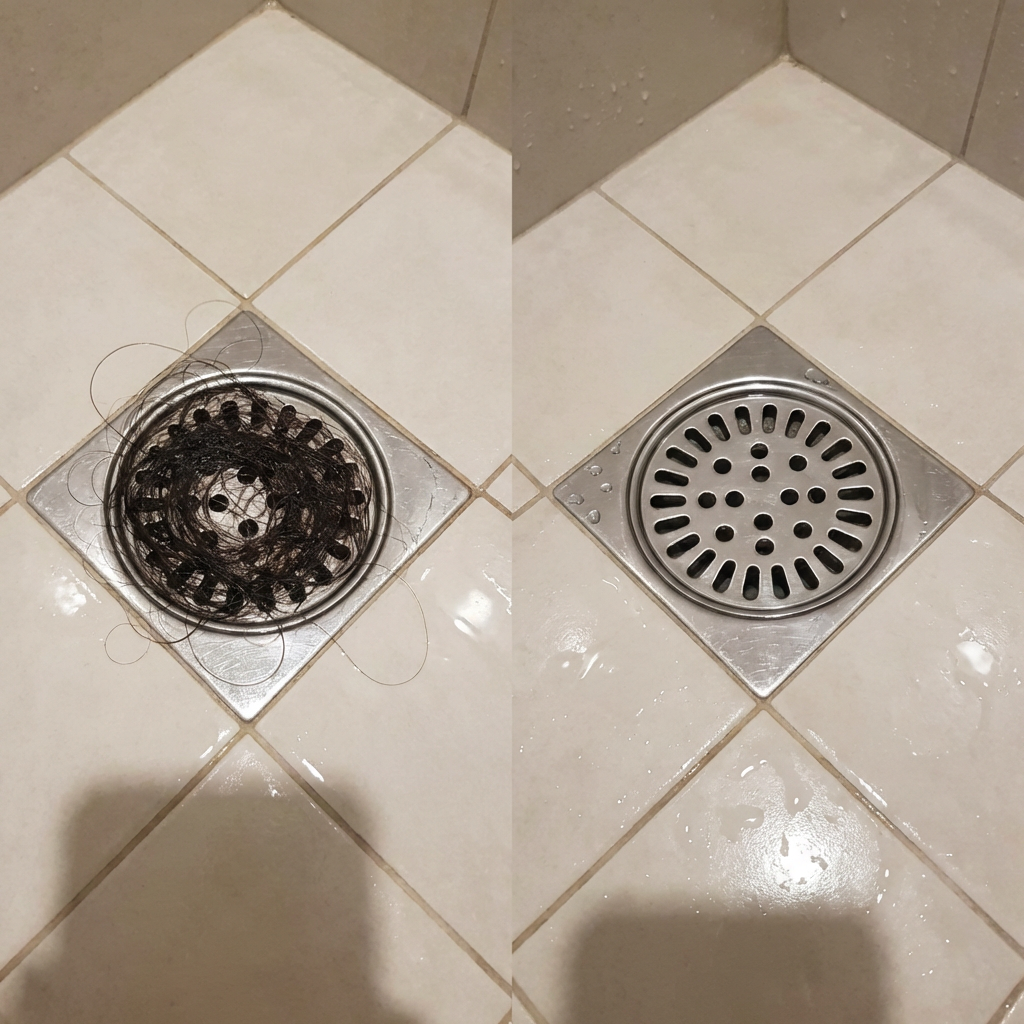
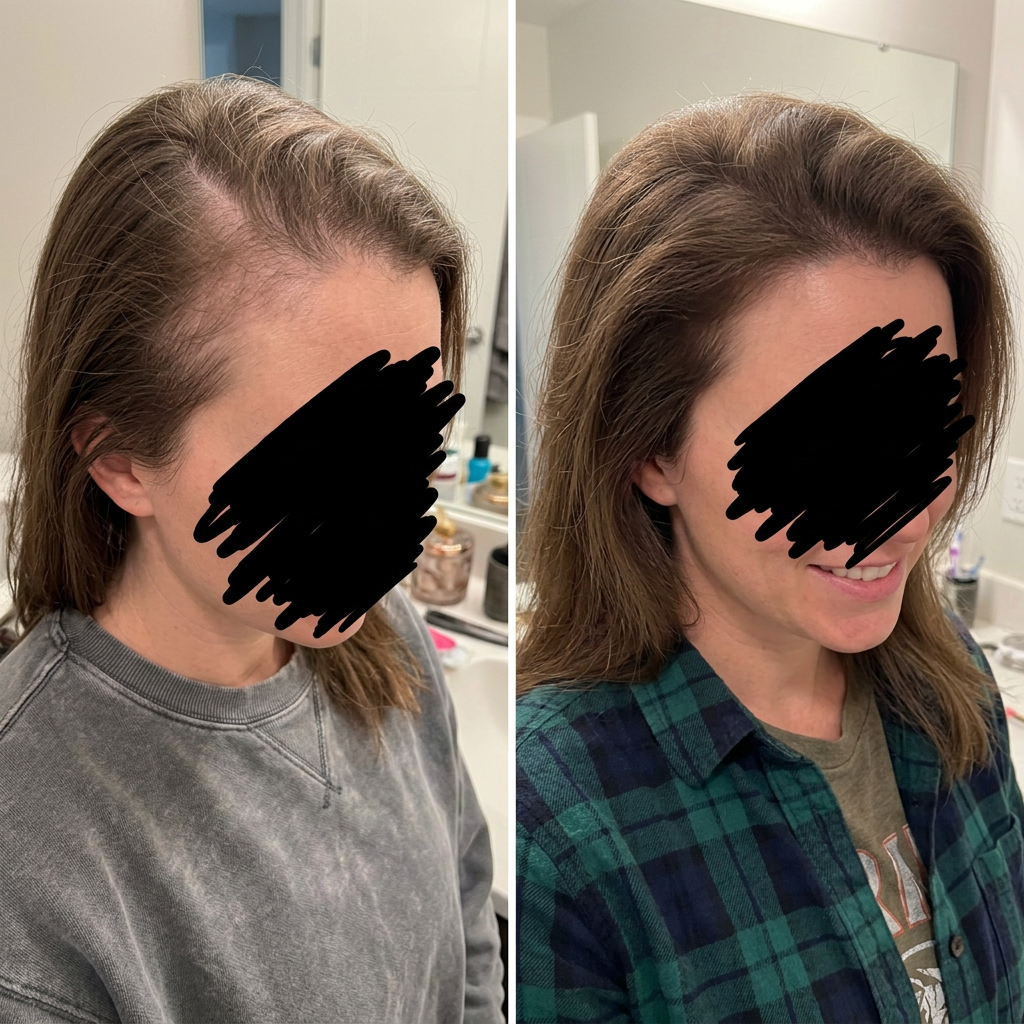
Please STOP buying hair growth supplements until you check your shampoo. I know that sounds ridiculous. But I spent over $900 and nearly two years swallowing biotin pills, choking down collagen powder, and massaging serums into my scalp every night before bed. None of it grew back a single strand. And the reason none of it worked was something so obvious, so simple, so infuriating that when I finally figured it out, I sat on the edge of my bathtub and cried. The thing that was killing my hair was sitting on the shelf in my shower the entire time. I used to have thick hair. The kind of hair where my stylist would say "God, you have SO much hair" every time I sat in her chair. The kind that took 45 minutes to blow dry. The kind I actually complained about because it was "too heavy" and "too much." I would give anything to have that problem again. I don't know exactly when the thinning started. That's the cruel part — it happens so gradually you don't notice until it's already bad. For me, the first sign was my ponytail. I'd always wrapped the hair tie around twice. Then one morning I wrapped it three times. Then four. And it still felt loose. I told myself I was imagining it. Then I started finding hair everywhere. On my pillow. On the back of my office chair. In the shower drain. On the bathroom floor. Wrapped around the bristles of every brush I owned. I'd run my fingers through my hair and three, four, five strands would come with them. Every single time. But the moment I knew — the moment I couldn't pretend anymore — was at my daughter's birthday party. My sister took a photo of me from behind while I was leaning over the cake. When I saw it that night, I zoomed in and felt my stomach drop. I could see my scalp. Through my hair. In a photo taken from three feet away. My part looked like a highway. The crown of my head — where my hair used to be thickest — was thin enough to see pink skin underneath. I stared at that photo for twenty minutes. Then I deleted it. The next morning I started Googling. "Why is my hair thinning" "Best supplements for hair loss women" "How to regrow thinning hair" Every article said the same things: Take biotin. Try collagen peptides. Make sure you're getting enough protein. Consider Nutrafol. Use Nioxin shampoo. So I did. All of it. I bought biotin — the 10,000 mcg ones. Took them every single day for three months. Nothing. I ordered collagen peptides from Amazon. The expensive kind — $47 a tub. Mixed it into my coffee every morning even though the texture made me gag. Four months. Nothing. I bought Nutrafol. $89 for a one-month supply. They said to give it at least three months. I gave it four. $356 total. Nothing. I bought the entire Nioxin system — shampoo, conditioner, scalp treatment. Used it exactly as directed. Twice a week for the "deep treatment." Every day for the "daily care." Another $80 every couple months. Nothing. I bought rosemary oil and mixed it with castor oil and rubbed it into my scalp three times a week. My bathroom smelled like an Italian restaurant. My pillow was permanently stained. My hair was still falling out. I tracked my spending one night because I couldn't sleep. In 14 months, I had spent $937 on hair growth products. $937. And my hair was thinner than when I started. I went to my doctor. Told her everything. She ordered blood work. Thyroid — normal. Iron — normal. B12 — normal. Vitamin D — normal. "Everything looks great," she said. "It's probably just stress. Or hormones. Or genetics. It happens to a lot of women." She said it so casually. Like she was telling me about the weather. I wanted to scream. "It happens to a lot of women" wasn't an answer. It was a dismissal. It was her way of saying "I don't know, and I'm not going to try to find out." I left that office feeling more alone than I had in years. The thinning got worse. I stopped wearing my hair up because it showed how thin the sides had gotten. I stopped standing under overhead lights because they turned my scalp into a spotlight. I parted my hair in three different places trying to find the angle that hid the most scalp. None of them worked. I started wearing hats. Not because I liked hats. Because I was terrified someone would see. One night my husband found me crying in the bathroom. I was holding a clump of hair I'd just pulled from the shower drain. He tried to hug me and I snapped at him. "You don't understand. You can't understand. I'm losing myself." That wasn't dramatic. That's exactly how it felt. My hair had been part of my identity my entire life. And it was disappearing, and nothing I did could stop it. I felt defective. Like my body was broken in some way that doctors couldn't find and supplements couldn't fix. Three weeks later, I went to get my hair cut. I almost cancelled the appointment. I'd been avoiding the salon for months because sitting in that chair, under those lights, with someone else looking closely at my hair — it felt like being exposed. But I went. And that appointment changed my life. My stylist — Maria — she'd been doing my hair for six years. She knew what my hair used to look like. So when she ran her hands through it and I saw her face change, I knew she could see it too. She didn't say anything at first. Just kept sectioning, clipping, working quietly. Then, while she was washing my hair, she asked me a question nobody had ever asked before. "What shampoo are you using at home?" I told her. A popular drugstore brand. One I'd been using for years. She was quiet for a second. Then she said: "Can I be honest with you?" "Please." "I think your shampoo might be part of the problem." I almost laughed. My shampoo? I'd spent $937 on supplements, serums, and treatments. I'd had blood work done. I'd changed my diet. And she was asking about my shampoo? But Maria wasn't joking. "I've been doing hair for 18 years," she said. "And in the last few years, I've had more clients come in with thinning hair than in my entire career combined." "Every single one of them was using a shampoo with sulfates." "And every single one of them was trying to fix their hair with supplements and oils and treatments — while continuing to wash their hair with the thing that was causing the problem." She let that sit for a second. "You know what sulfates do, right?" I didn't. Not really. "They strip everything. That's their entire job. They're industrial-strength degreasers. The same chemical compound is in dish soap. Floor cleaner. Engine degreaser. And it's in about 90% of the shampoos on the shelf at Target." "Every time you wash your hair with a sulfate shampoo, it strips your scalp of its natural oils. That's why your hair feels 'squeaky clean' after. But it's also stripping something else. Something your follicles desperately need to survive." "Sulfur." I'd never heard anyone talk about sulfur and hair before. "Sulfur is the building block of keratin," Maria said. "Keratin is literally what your hair is made of. Your scalp produces sulfur naturally, and your follicles need it to grow strong, thick hair." "But when you wash with sulfates every day — sometimes twice a day — you strip that sulfur away faster than your body can replace it." "Over months. Over years. Your follicles slowly starve. They weaken. They stop producing healthy hair. Eventually some of them go dormant entirely." "And no amount of biotin or collagen or Nutrafol is going to fix that. Because you're not deficient in biotin. You're deficient in sulfur. At the scalp. And you're washing it away every single morning." I sat in that salon chair feeling like the floor had dropped out from under me. Two years. $937. Countless supplements. Doctor visits. Tears. Anxiety. Hats. And the thing destroying my hair was the $6 bottle of shampoo I used every single day. I drove home in a daze. I walked straight to my shower and picked up my shampoo bottle. Turned it around. Read the ingredients. Sodium Laureth Sulfate. Second ingredient. Right after water. I picked up the conditioner. Dimethicone. Silicones. More chemicals I couldn't pronounce. Then I looked at the Nioxin bottles I'd been using as part of my "hair recovery routine." The $80 system I'd been trusting for nine months. Turned them around. Sodium Lauryl Sulfate. I felt my face get hot. The "hair growth" shampoo system I'd been using — the one marketed specifically for thinning hair — contained the exact same sulfates as the $6 drugstore bottle. I had been stripping my scalp of sulfur every single day while simultaneously taking supplements to try to regrow the hair that the sulfates were killing. It was like trying to fill a bathtub with the drain wide open. No wonder nothing worked. I was undoing every dollar I spent the moment I stepped in the shower. I felt sick. Then I felt furious. That night I couldn't sleep. At 1:22 AM I got out of bed, went to the kitchen table, opened my laptop, and started searching. Not "best shampoo for thinning hair." Not "hair growth products." I'd done those searches a hundred times. This time I typed: "sulfur deficiency scalp hair loss" And what I found made me want to throw my laptop across the room. Not because it was bad news. Because the information had been right there. The entire time. Study after study. Published research — in the Journal of Dermatology — confirming exactly what Maria had told me. Sulfur is essential for hair growth. It's a key component of keratin — the protein your hair is literally made of. It forms the disulfide bonds that give hair its strength, elasticity, and thickness. Your scalp needs sulfur to maintain healthy follicles. Without adequate sulfur, follicles weaken, shrink, and eventually go dormant. And sulfate-based shampoos — the ones used by roughly 90% of women — strip sulfur from the scalp with every single wash. I kept reading. The research explained why supplements fail for so many women: Biotin supports keratin production — but keratin can't be produced without adequate sulfur at the follicle level. Collagen provides amino acid building blocks — but amino acids can't strengthen hair if the follicle itself is starved and shutting down. It's like delivering lumber to a construction site that has no foundation. The materials just sit there. Useless. Because the ground-level problem was never addressed. And the ground-level problem, for millions of women, is sulfur depletion at the scalp. Caused by the very product they trust to "clean" their hair every day. I read for three hours straight. By the time I looked up from my screen, it was after 4 AM. I had one question: if sulfur is what my follicles need, how do I get it directly to my scalp? That's when I found onion hydrosol. I know. Onion. For your hair. It sounds insane. I literally laughed out loud at my kitchen table at 4 AM. But the science stopped me cold. Onion — specifically the hydrosol, which is a concentrated water extract from onion bulbs — is one of the richest natural sources of bioavailable sulfur on earth. And unlike supplements that have to pass through your digestive system and hope that some fraction of the nutrients eventually make their way to your scalp through your bloodstream, onion hydrosol delivers sulfur directly where it's needed. Topically. Right to the follicle. The Journal of Dermatology published a study showing that onion juice applied to the scalp produced visible hair regrowth in the majority of participants. Not "might help." Not "showed promising trends." Visible regrowth. And it wasn't just sulfur delivery. The research showed that onion hydrosol does three things simultaneously: First — it delivers concentrated sulfur directly to starving follicles. The raw material they need to produce keratin and grow strong hair again. Second — it stimulates blood circulation in the scalp. More blood flow means more oxygen and nutrients reaching the follicles. Think of it like unclogging a pipe that's been blocked for years. Once circulation is restored, everything downstream works better. Third — it helps reactivate dormant follicles. Not dead follicles — dormant ones. The ones that shut down because they weren't getting what they needed. Give them sulfur and proper circulation, and many of them wake back up and start producing hair again. I sat there staring at my screen thinking: this is it. This is what every single product I tried was missing. Not another pill to swallow. Not another serum to layer on top of the damage. The actual nutrient my scalp was starving for, delivered directly to the place it needs to be. But then I thought: if this is real, why isn't everyone doing it? And then it hit me — some people are. In India, Turkey, the Middle East, women have used onion on their scalps for centuries. It's one of the oldest hair growth remedies in the world. The modern research was just confirming what traditional medicine had known for generations. The reason it's not mainstream in the West? Because there's no money in telling women to stop buying expensive supplements and fix their shampoo instead. The hair loss industry is worth billions. They need you buying pills, serums, treatments, subscription boxes, and 8-step "systems." They don't make money if the answer is "the problem is your shampoo, and a simple ingredient swap could change everything." I spent the next three days researching onion hydrosol shampoos. And I learned something that made me even more frustrated. Most shampoos that claim to contain "onion extract" or "onion oil" use almost none of it. A fraction of a percent. A trace amount. Just enough to put it on the label and charge a premium. It's like putting a single drop of orange juice in a glass of water and calling it "fresh-squeezed." Technically not a lie. Functionally useless. I needed a product with a real concentration. Enough onion hydrosol to actually deliver meaningful sulfur to my scalp with each wash. That's when I found one with 15% pure onion hydrosol. Fifteen percent. Not a splash. Not a marketing claim. Fifteen percent of the actual formula. And it wasn't just the onion hydrosol. The formula included other ingredients I recognized from my months of late-night research: Rosemary oil — clinically studied and shown to promote hair growth by boosting scalp circulation. One study even showed it performed comparably to minoxidil over six months — without the side effects or the dependency. Nettle extract — a natural DHT blocker. DHT is a hormone that can shrink and weaken hair follicles. I hadn't even considered hormones as part of my problem, but this shampoo was covering that angle too. Attacking the problem from multiple directions. Peppermint oil — which stimulates the scalp and promotes blood flow to follicles. Biotin — but not in a pill. Delivered topically, directly to the follicle, where it can actually do its job supporting keratin production instead of being diluted through the entire digestive system. Aloe vera — to hydrate and soothe the scalp. Because a calm, healthy scalp is the environment where follicles thrive. Hydrolyzed vegetable protein — to strengthen the hair structure itself. And zero sulfates. Zero parabens. Zero silicones. Zero harsh chemicals. The very ingredient that had been destroying my hair for years — sulfates — was completely absent from this formula. Instead of stripping sulfur away, this shampoo was flooding my scalp with it. It was the exact opposite of everything sitting in my shower. There was a matching conditioner too — with onion extract, castor oil for visible thickness, argan oil for shine, and biotin to prevent breakage. I sat on the product page for a long time. Read the ingredient list twice. Read every review I could find. Then I thought about the $937 already wasted. Then I thought about Maria's voice: "You're not deficient in biotin. You're deficient in sulfur. And you're washing it away every day." I ordered the shampoo and conditioner that night. When the package arrived, I'll be honest — I was nervous. Not even about whether it would work. I was nervous about the smell. Onion shampoo? I pictured walking into work smelling like a deli counter. I pictured my husband leaning away from me on the couch. But when I cracked open the bottle and held it to my nose, I actually laughed out loud. It smelled like herbs. Fresh, clean, slightly minty. Not even a whisper of onion. Nothing. I smelled it three more times just to be sure. I got in the shower that night and used it for the first time. The texture was different from what I was used to. It didn't foam up into that thick, sudsy lather I expected. Because that lather? That's the sulfates. That "squeaky clean" feeling is actually the feeling of your scalp being stripped bare. This shampoo had a gentle, light lather. It felt like it was nourishing instead of scrubbing. I worked it into my scalp with my fingertips for about a minute, then rinsed. My scalp didn't feel tight or dry afterward. It felt calm. Soft. Almost like it had finally gotten a drink of water after being lost in the desert for two years. I followed with the conditioner. Worked it through the ends. Rinsed. Got out. My hair didn't look dramatically different. I wasn't expecting it to. But it felt different. Softer. Less brittle. Like something had shifted. "OK," I thought. "Let's see what happens." Here's what happened. Week 1. Less hair in my brush. Not a dramatic difference — but I noticed. Where I used to pull out what looked like a small animal after every brushing session, it was noticeably less. Maybe 30% less. The shower drain, which I used to clear daily, didn't clog once. I told myself not to get excited. I had been disappointed too many times. Week 2. The shedding continued to slow. My pillow, which always had strands on it every morning, was clean for the first time in months. And my scalp felt different. Not itchy. Not tight. Not flaky. Just... healthy. It sounds strange, but it felt like my scalp was breathing again. Like it had been suffocating under all those sulfates and it was finally getting air. I ran my fingers through my hair and only two strands came with them. Two. I used to lose ten or fifteen every time I touched my head. Week 3. I was brushing my hair one morning and I stopped mid-stroke. Something was different. The brush was meeting more resistance — not from tangles, but from volume. Like there was simply more hair on my head than there had been three weeks ago. I leaned close to the mirror. Looked at my part. Was it... narrower? Or was I seeing what I wanted to see? I pulled up the photo from my daughter's birthday party on my phone. The one I'd deleted from the camera roll but was still saved in my "recently deleted" folder because I hadn't had the heart to permanently erase it. I held it next to my reflection. I wasn't imagining it. The part was narrower. Not dramatically. But visibly, undeniably narrower. My hands started shaking. Week 4. I saw them. Baby hairs. Tiny little strands, maybe a quarter inch long, sticking up along my hairline. New growth. Hair that hadn't been there a month ago. I got so close to the mirror that my breath fogged the glass. Tilted my head under the bathroom light and examined my part inch by inch. They were everywhere. Dozens of tiny new hairs growing along the edges of my part. Along my hairline. At my temples. Filling in the spaces that had been empty for months. I called Maria. I could barely get the words out. "I can see them," I said. "There's new hair growing." She didn't sound surprised. She sounded satisfied. "I told you. Once you stop stripping and start feeding, your follicles come back. They were never dead, hon. They were just starving." Week 6. My husband was standing behind me while I was brushing my hair one evening, waiting for the bathroom. He tilted his head and said something that nearly made me drop the brush. "Hey — is it just me, or does your hair look thicker?" I spun around. "You can see it?" "I mean... yeah. It looks different. Fuller or something." This man does not notice when I get my hair cut. He once didn't notice I'd rearranged the entire living room until I pointed it out. If he could see a difference in my hair, it was real. Week 8. I wore my hair in a ponytail for the first time in over a year. Not because I had to. Because I wanted to. Because it looked good. Because when I wrapped the hair tie around, I could only wrap it twice again. Twice. I stood in the bathroom staring at that ponytail in the mirror, tears streaming down my face, thinking about every month I'd spent hiding. Every hat I wore in the summer heat. Every photo I deleted. Every time I angled myself away from overhead lights. Every morning I spent rearranging my part to cover the thinning. And all I had needed to do was stop poisoning my hair and start feeding it. All I needed to do was swap my shampoo. It's been four months now. I use the onion hydrosol shampoo and conditioner every day. That's the only thing I changed. I stopped taking biotin. Stopped choking down collagen powder. Stopped Nutrafol. Stopped the rosemary oil scalp massages. Stopped all of it. Just the shampoo and conditioner. That's it. My hair is not back to where it was at its absolute thickest. I don't know if it ever will be. But it is incomparably, undeniably better than it was four months ago. The thin spots are filling in. My part looks like a part again — a line, not a highway. I can wear my hair up, down, curly, straight, in a ponytail, in a bun, in a clip — whatever I want, however I want, without thinking about it. Without strategizing. Without hiding. I went back to Maria last week for a trim. She sectioned my hair and stopped mid-clip. "Look at all this new growth," she said, turning me toward the mirror. "See all these baby hairs? Your density is coming back. I can feel it." Then she said something that hit me harder than I expected. "You know how many women sit in this chair every week and I can see their scalp thinning? And they're spending hundreds on supplements that won't work because they're still using sulfate shampoo every single day? And I tell them. I tell every single one of them. And half of them don't believe me. Because it sounds too simple." She looked at me in the mirror. "You believed me. And look at your hair now." If you're reading this and you see yourself in my story — if your hair is thinning and you've tried biotin, collagen, Nutrafol, Nioxin, castor oil, rosemary oil, or any other supplement or treatment that promised to help and didn't — I need you to hear something. The problem might not be what you're putting IN your body. The problem might be what you're putting ON your scalp. Every single day. Go to your shower right now. Pick up your shampoo bottle. Turn it around. Read the second or third ingredient. If it says Sodium Lauryl Sulfate or Sodium Laureth Sulfate, you're stripping your scalp of sulfur every time you wash your hair. And if your follicles are starving for sulfur, no supplement on earth is going to overcome what you're doing to them daily. It's like watering a garden while someone stands behind you salting the soil every night. You can water all you want. The plants are still going to die. You have to stop the damage first. Then you can feed the growth. That's exactly what switching to onion hydrosol shampoo did for me. It stopped the stripping. It started delivering the sulfur my follicles had been starved of for years. And within weeks, those follicles responded. Not because of magic. Because of science. Published, peer-reviewed science. Your follicles probably aren't dead. They're dormant. They're starving. They're waiting for the one thing they need most. You've just been washing it away every morning. The shampoo I use has 15% pure onion hydrosol — not a token trace amount like most brands that slap "onion" on the label, but an actual effective concentration. It also contains rosemary oil for circulation, nettle extract to block DHT, peppermint oil to stimulate the scalp, biotin delivered directly to the follicle, and aloe vera to soothe and hydrate. Zero sulfates. Zero parabens. Zero harsh chemicals. It smells like herbs, not onions. I promise. It's made by a small family business — not a corporation. And it comes with a 30-day money-back guarantee. If you don't love how your hair looks and feels, you get a full refund. No questions asked. I mention that because I know what it's like to spend money on something that doesn't work. I've got $937 worth of proof sitting under my bathroom sink. This guarantee means you're not stuck if it's not for you — unlike every other product I wasted money on over two years. Don't waste another month on supplements that can't fix a scalp problem. Don't spend another dollar on "hair growth" shampoos that still contain the sulfates destroying your hair. Don't sit in your bathroom staring at your widening part, convinced your body is broken. Your body probably isn't broken. Your follicles probably aren't dead. They're starving. For something you've been washing away every single day. Stop stripping. Start feeding. Your hair is waiting to come back. You just have to stop standing in its way. P.S. — My biggest regret is the two years I wasted on supplements while the real problem was in my shower the whole time. Every single wash with sulfate shampoo was another day of stripping the sulfur my follicles needed. If someone had told me this 24 months ago, I would have saved $937 and more tears than I can count. Don't be me. Check your shampoo bottle tonight. P.P.S. — If you try it, give it at least 3–4 weeks. Week 1 you'll notice less shedding. Week 2 your scalp starts feeling different — calmer, healthier, like it can finally breathe. Week 4 is when the baby hairs started for me. And the smell? It's genuinely lovely. Herbal and fresh. My husband actually complimented it. Zero onion. I swear on my new baby hairs. 😊
Like this ad? Make it yours.
Crush rebuilds this exact creative around your product — your brand, your colors, your offer — in about a minute.