Rachel Morrison
Rachel Morrison Facebook ad: “Knowing Why Isn't Enough”
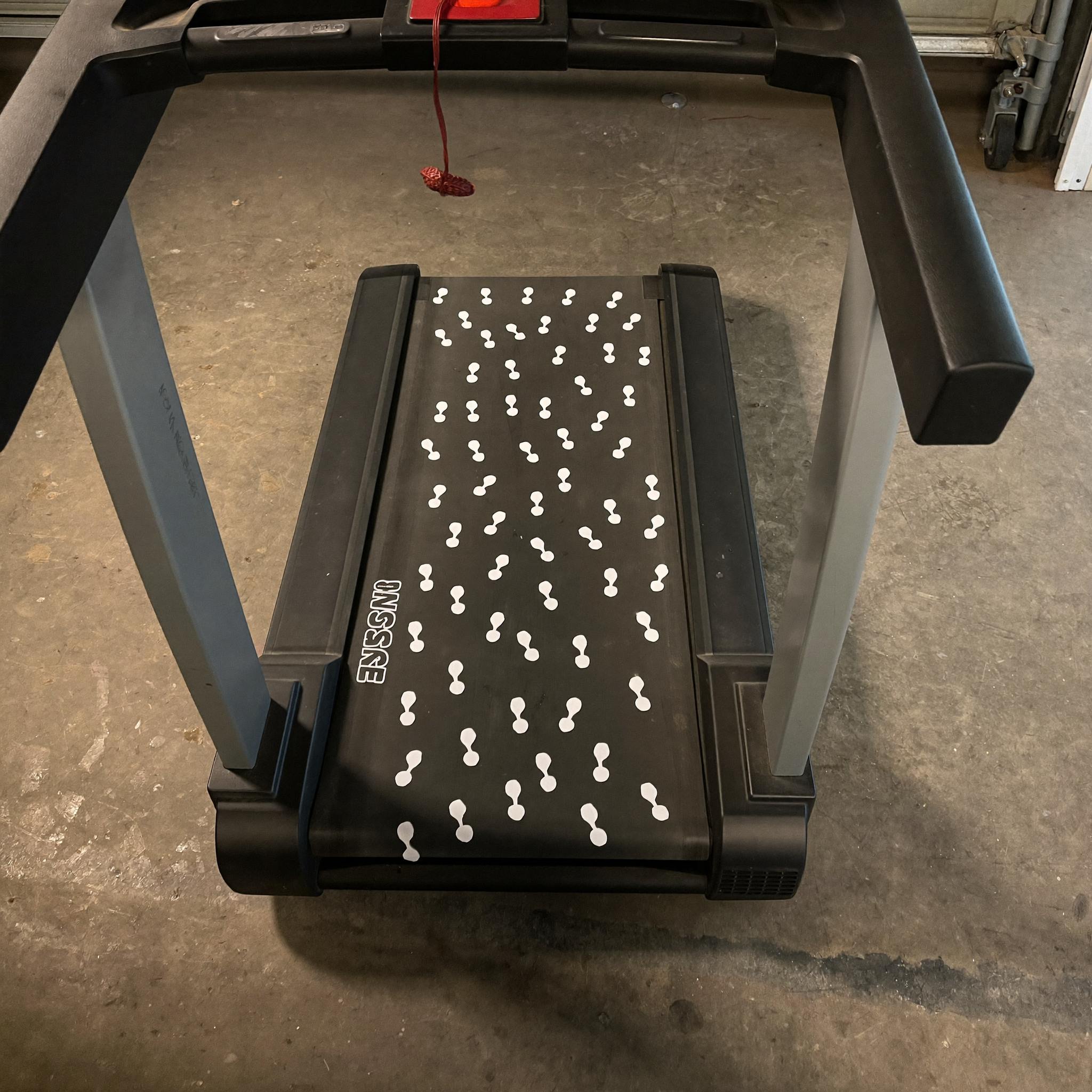
Ran for 11 days, from July 6 to July 17, 2026, the last day Crush saw it.
Run by Rachel Morrison on Facebook. Crush is not the advertiser and does not verify its claims. See this ad in Meta's Ad Library(opens in a new tab)
Want an ad like this for your product?
Crush makes new ad images for your product from this ad: your logo, your product photo, your offer.
Trials from $19.95 USD, then $79.95 USD a month. Cancel anytime.
About this ad
- Meta Ad Library ID
- 1294375502769773
- Platforms
- Facebook, Instagram, Audience Network, Messenger and Threads
- Relaunches
- 0
Ad text
Six months ago my marriage ended, and by the time the papers were signed, I already understood every single reason why. I want to start there, because I think that's the part people don't expect. I wasn't blindsided. I wasn't the last to know. I had been in some form of therapy for nine of the eleven years we were married — first the two of us together, twice a week during the worst stretch, then just me, once the couples counselor gently suggested that maybe what I needed at this point wasn't a marriage counselor, it was my own person to talk to. By the end I could recite the whole thing back to you like a case study. I knew I was the pursuer and he was the distancer, and I knew exactly which of my parents taught me to chase reassurance and which of his taught him to disappear rather than fight. I knew the exact conversation, four years before the end, where I'd felt the first real crack and talked myself out of naming it because naming it felt like giving up on something I'd worked too hard for. I could tell you, in order, every small accommodation I made so that neither of us would have to look directly at how bad it had actually gotten. I had, in the most literal sense, done the work. And it still ended. And understanding why didn't make the ending hurt any less. If I'm honest, it made it worse in a specific way — because I didn't even get the mercy of not knowing better. I knew better. I'd known better for years. I just hadn't been able to do anything with the knowing. What "explaining it to death" actually looked like For the first two months after he moved out, my nights had a shape to them that I got almost embarrassingly good at predicting. I'd be fine, functional, normal, until somewhere around 11pm, and then I'd be back in a conversation from four years ago — not remembering it, replaying it, word for word, the way you'd rehearse a monologue. I'd narrate the whole marriage to myself, beginning to end, complete with the psychological explanation for every beat. I could tell you why I did what I did and why he did what he did and I would fall asleep, some nights, mid-explanation, and wake up and start again. My friends noticed I'd gotten strange about it — not sad exactly, or not only sad. One of them said, kindly, that talking to me about the divorce felt like sitting in on a lecture. She wasn't wrong. I had built an entire, coherent, psychologically fluent account of my own life falling apart, and I could deliver it on request, and it had done exactly nothing to make me feel like the thing had actually happened and finished happening. I was narrating a wound I had never once let close. That's the part that's hard to explain to someone who hasn't lived it. It's not that I lacked insight. I had more insight than anyone I knew. I had, if anything, too much of it — I had turned my own grief into a subject I was fluent in, the way you get fluent in a language you use every day, and somewhere in becoming fluent in it, I'd stopped actually feeling it move. What I'd already tried I don't want to pretend I hadn't tried things. I'd done EMDR for six sessions the year before, which helped with a specific memory but didn't touch the marriage itself. I had two different journals in a drawer — one a five-year one with a padlock I'd bought myself in my twenties and abandoned after three weeks, one a gratitude journal a friend gave me that wanted three good things every night, which I quit almost immediately because some nights there weren't three good things, and being asked to manufacture them felt like being graded on my own grief and failing. I'd done a meditation app for forty-one consecutive days at one point, which I know because it told me, cheerfully, exactly how many days I'd lost when I finally missed one. None of it was wrong, exactly. None of it was the thing either. I was accumulating tools the way you accumulate vocabulary — more ways to describe the problem, no new way to actually move through it. The sentence that changed how I saw all of it I said something to my sister, maybe three months in, that I still remember almost word for word: "I've explained this marriage to death. I could give the postmortem in my sleep." I meant it as a joke, mostly. She didn't laugh. She said, "Maybe that's the problem. You've explained it. You've never once put it down." I didn't have a response to that. I remember sitting with it for days, turning it over, because it didn't feel like the kind of thing you're supposed to say to someone who's already "done the work." It felt almost unfair. But it also landed somewhere true — it named something I'd felt for years without having language for, which was strange, because I had language for everything else. Why understanding something and releasing it aren't the same skill Here's the part I didn't know at the time, and only pieced together later, partly from my sister, partly from something my own therapist eventually said, partly from just paying attention to what was and wasn't changing in me. The part of you that explains things — that builds the narrative, understands the pattern, names the wound — is not the same part of you that carries the actual charge of it. One lives in language. The other lives somewhere older, faster, and much less interested in your insight. It doesn't update when you understand something. It updates when your body has enough small, survivable proof, repeated enough times, that the threat is actually over. That's not a metaphor. It's closer to how you'd retrain any startle response — not by explaining to yourself that the noise is safe, but by hearing the noise, safely, over and over, until the part of you that flinches stops flinching before you've consciously decided to. That's why I could understand my marriage perfectly and still relive it at 11pm on a loop. My insight was doing its job. It was just the wrong tool for the job that was actually left undone. The journal, and why I almost didn't try it My sister was the one who eventually gave it to me — not with any big pitch, she was almost apologetic about it, because she knows how I feel about self-help. She said her own therapist had recommended it to her during a hard year — it's called the Back to You Journal, from Held & Honest — and the thing that struck her wasn't the prompts, it was what it didn't ask her to do. No streak. No date printed anywhere that could quietly shame her for missing a week. No demand to find the silver lining in something that didn't have one yet. I was resistant. I'll say that plainly. I have two unfinished journals in a drawer and a meditation app that guilt-tripped me over a missed day, and another "tool" felt, honestly, a little insulting. I know what a reframe is. I know what a cognitive distortion is. I did not think I needed something to help me understand myself better. I had that part covered. It turned out that wasn't what it was for, and that was the whole difference. What the actual structure of it does — graduated nervous system calibration The prompts weren't asking me to analyze anything. They were smaller than that, on purpose, and they built on each other in a way I only noticed in hindsight — early on, they asked almost nothing of me. What do you need today that you're afraid to admit. One sentence. Some nights, half a sentence. Nothing that required me to relive the whole marriage to answer it. Later — weeks in, not days — the prompts got a little closer to the actual charge, but never all the way, never in a way that dropped me back into the 11pm spiral. It was less like being handed the whole truth at once and more like being given small, tolerable doses of contact with it, in an order that let something in me settle a little further each time before being asked to go any deeper. I didn't understand, doing it, why it was sequenced the way it was. I just noticed that it never once put me back on the bathroom floor the way an unstructured journaling session by myself sometimes had. That's the part nobody explained to me going in, and the part I think matters most: this wasn't a better version of the insight tools I'd already tried. It wasn't a smarter workbook. It was built on the idea that the thing left to do wasn't more understanding — it was small, repeated, survivable contact with what I already understood, in an order my nervous system could actually tolerate, until it stopped needing to relitigate it every night to prove to itself the danger was over. What actually changed, slowly, and what didn't I didn't notice anything for a while. I want to be honest about that, because I think it matters more than a dramatic before-and-after would. There was no single entry that cracked something open. It was slower and much quieter than that. Somewhere a few months in, I noticed the 11pm loop had gotten shorter. Not gone — shorter. I noticed I could see something that reminded me of him — a song, a street we used to walk down — without immediately building the whole explanatory monologue about us in my head first. I noticed I'd stopped rehearsing conversations with him before we had to speak about logistics, the kids of our friends, whatever it was. I noticed, one night, that I'd gone to bed without narrating anything at all, and only realized it the next morning, which felt strange in a good way — like something I'd been doing on a loop for months had just quietly stopped running. I mentioned some of this to my own therapist, a few months in, half-expecting her to say a journal couldn't have done what years of sessions hadn't managed. She didn't say that. She said something closer to, "Insight was never going to be able to finish this part on its own. It sounds like you finally found somewhere for it to actually land." What I'm not claiming I'm not going to tell you I feel "healed," because I'm not sure that's a real, finished state, and I'd be suspicious of anyone who told me a journal made them into someone else entirely. I still think about the marriage. I can still, if you ask me, give you the whole psychological account of why it ended — that part of me hasn't gone anywhere, and I don't think it's supposed to. What's different is that the account isn't running on a loop underneath everything else anymore. I understood it before. I'm not carrying it the same way now. Where this leaves you, if any of this sounds familiar If you're like I was — if you can explain, in detail, exactly why something in your life fell apart, and that explanation hasn't loosened its grip on you even slightly — I don't think the answer is more insight. I don't think you're missing a better book, a sharper reframe, a smarter therapist. I think, like me, you might just be missing somewhere for everything you already understand to actually go. I don't know if it will do for you what it did for me. But it came with one condition that made trying it feel low-risk instead of like one more thing to fail at: if it didn't feel different, I didn't have to pay for it. That was the only reason I let my sister talk me into trying one more thing, after everything else hadn't worked. 🕯️
Where the ad sends people
heldhonest.com
Knowing Why Isn't Enough
Held & Honest
Learn more: heldhonest.com(opens in a new tab)