
Active· since Apr 27, 2026
- 145
- days running
- 0
- relaunches
Ad copy
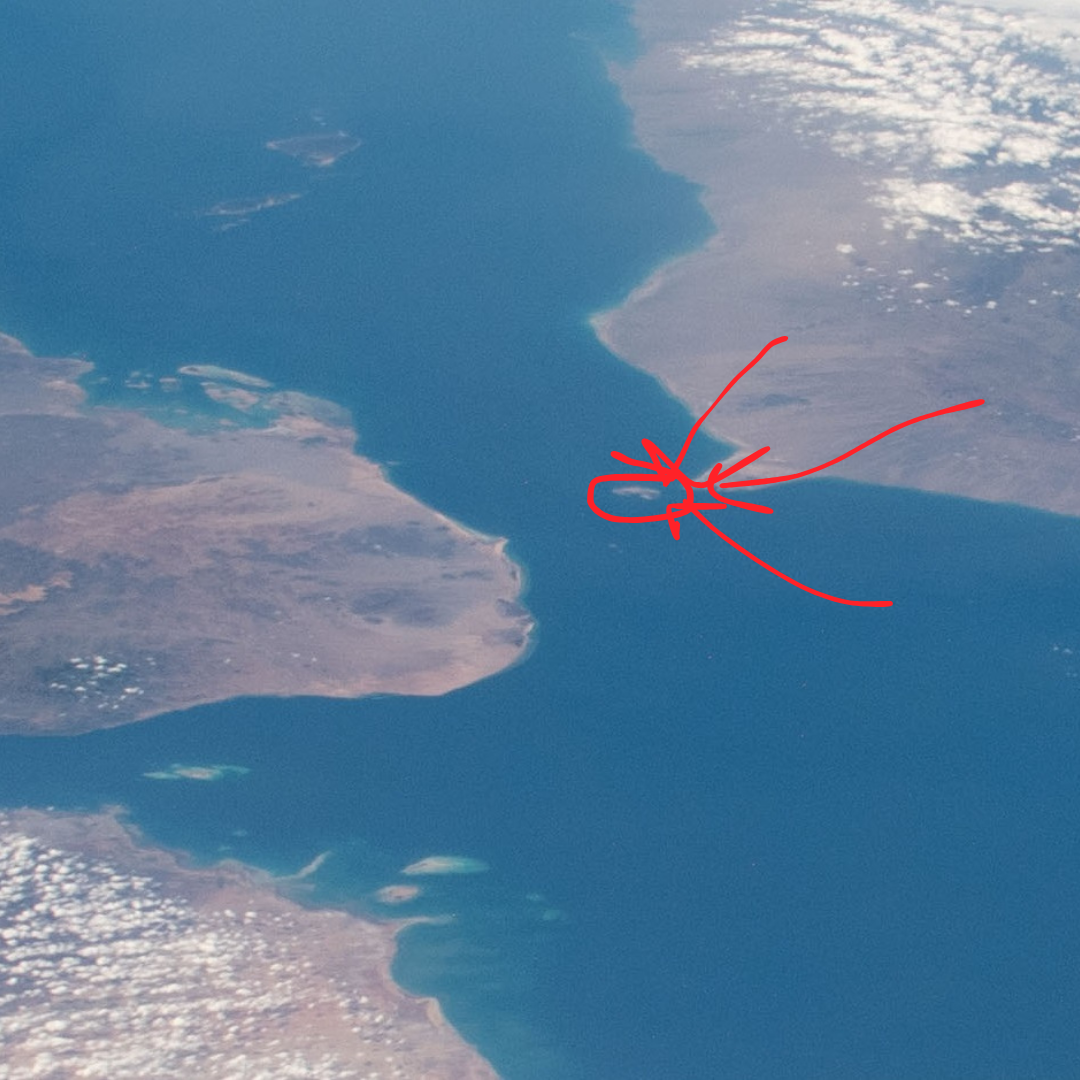
Every officer this man served under in the Navy told him the same thing about the strait currently dominating the news: it wasn't the one they were actually worried about. He told me this last Saturday on the porch step of a property two hours north of the city, where I'd gone to pick up firewood and ended up staying for forty-five minutes. By the time I got back in my truck, I understood why he'd started preparing in January — and why nobody on the news has caught up to him yet. It was 12:03 on a Saturday afternoon in late March. Two hours north of the city, at the end of a gravel road I'd never been on before. I was there to pick up half a cord of firewood. That was all. My husband couldn't make the drive, so I'd offered. But within thirty seconds of stepping out of my truck, I knew I wasn't standing on a normal property. A second fuel tank behind the garage. Padlocked. Seven sealed water drums lined up along the side of the workshop. Each one stamped with a date in black marker. Solar panels on the roof of the shed. Not the house. The shed. And a man in a Carhartt jacket walking across the gravel toward me — calmer than anyone I'd spoken to in two months. "You must be Frank's wife," he said. "That's me. I really appreciate you doing this on a Saturday." "No trouble. Pull the truck around to the side. I'll start loading." I backed the truck up next to the woodpile and got out. He was already pulling on a pair of work gloves. I tried to make conversation while he worked. "Been out here long?" "Twenty-one years." "It's beautiful." "It's quiet." That seemed to be the extent of it. He wasn't being rude. He just wasn't the kind of man who fills silences for you. So I stood there and let him work. A crow was making a lot of noise somewhere behind the workshop. The wind was moving through the pines at the edge of the clearing. I could hear his dog barking from inside the house. I watched the drums again. Counted them. Seven. Each one stamped with a date in black marker. The earliest date I could read was January. January. Before any of this was on the news. Before the gas prices. Before my daughter rolled her eyes at me and told me to put the phone down. I kept thinking about that. Mike came back for the next load. "Sorry, I don't want to hold you up," I said. "Can I ask you something kind of random?" "Go ahead." "Those drums along your workshop. Have they been there a while?" He glanced over at them. Like he'd almost forgotten they were there. "Most of them. Yeah." "When did you fill them?" "End of January. Beginning of February. I'd have to check the tags." "That was before all of this started." "Before what started?" I felt my face warm up a little. "You know. The news. The gas prices. The oil thing." He nodded slowly. Still loading. "I guess it was, yeah." He set another armful of oak into the truck bed and went back for more. I watched him go. I was thirty seconds away from getting in my truck and driving home and letting it be. But I didn't. "Mike — I don't want to be nosy. But how did you know to do that back in January?" That one made him pause. He set the log he was holding down on the tailgate. Took his work gloves off. Wiped his hands on his jeans and looked at me properly for the first time since I'd pulled into his driveway. "Ma'am," he said. "I spent twenty-two years in the Navy. The last eight of those, I was on ships over in the Middle East." I nodded like I understood. "Most of the guys I served with," he said, "we still talk. Text chain goes back fifteen years. The moment some of the stuff I was seeing in late January started showing up on the group chat, I knew what was coming." "What was coming?" He didn't answer right away. He looked past me, out toward the road. Then back at the drums. Then at me. "Come sit for a second. There's something I want you to understand before you drive home." He walked over to the porch step and sat down. Patted the spot next to him. I sat. For a minute he just looked out at the pines. Like he was deciding where to start. "What do you know about the Strait of Hormuz?" "The one on the news? My son-in-law explained it to me twice. It's where most of the oil comes through. It's been closed since the end of February." "Right. That's the one they're pointing at." He said it the way you'd say that's the magic trick. "There's another one," he said. "Smaller. A lot further south. At the bottom of a big bay between the Middle East and Africa." "I've never heard of it." "Most people haven't. It's called Bab el-Mandeb." He said it slowly. Like he wanted me to remember it. "What's there?" "It's a chokepoint. Eighteen miles wide at the narrowest part. Every oil tanker, every cargo ship, every container of anything moving between the Middle East and Europe — they either go through it or they don't get there at all." "Eighteen miles? That's it?" "That's it. Small enough that a handful of men on the coast with the right equipment can shut the whole thing down. And the group that controls that coast has been saying — out loud, for the last three weeks — that closing it is exactly what they plan to do if things get worse." "Wait. They're saying it out loud?" "On the record. In the news over there. Nobody's hiding it." "Then why isn't it the story here?" "Because the story here is still Hormuz. Hormuz is the big one people know. Bab el-Mandeb is the one the officers I served under used to lose sleep over — because if Hormuz closes, there's a workaround. Ships reroute south, they go through Bab el-Mandeb, and the world keeps moving. That's what's been happening the last two months. Oil prices are high but the wheels are still turning." He leaned forward. "But if Bab el-Mandeb closes too? There is no workaround after that. That's the whole point. That's the one they always told us was the real one." I sat with that for a second. "Mike — and I'm sorry if this sounds stupid — but why does a strait between two places I've never been to have anything to do with me? I'm not an oil trader." He almost smiled. "That's the question I've been waiting for someone to ask." He leaned back against the porch railing. "What runs your water?" "What do you mean?" "Your tap. The water that comes out of it right now at your house. What do you think is making it come out?" "I don't know. The city. Pressure." "And what do you think runs the pressure?" I thought about it. "…Electricity?" "Partly. But the main pumps at almost every municipal water plant in this country run on diesel. Big industrial diesel engines. When the grid flickers, those are what keep your pressure on." "Okay." "What about the chemicals they use to clean the water. Chlorine, mostly. How do you think that gets to the plant every week?" "A truck?" "A diesel truck. And what about the cases of bottled water you've got stacked up in your garage right now? The ones you told Frank you weren't going to stop buying?" I blinked. "…How did you —" "Every woman your age in this country has those cases in her garage right now. I'm not guessing. Those got there on a diesel truck too." He pointed at his own fuel tank behind the garage. "Every single thing that keeps your kitchen sink working and your fridge full of clean water runs on one thing. And that one thing comes across the ocean through two straits. One of them is already closed. The other one is what I just told you about." He let that sit. "So when those guys on my group chat went quiet in late January, it wasn't because they were scared of the war. They've seen wars. It was because they already knew what the second strait closing would do to the diesel supply. And what the diesel supply does to the water supply. And nobody was going to talk about it on TV until people were already turning on their taps and getting something they didn't recognize." "How long after it closes?" "Depends where you are. Some places, weeks. Some places, days. The plants run on reserve diesel for a little while. Then the chlorine deliveries start getting skipped. Then the bottled water shelves at Costco stop getting refilled. And by the time the news is talking about it, you're already halfway through the thing." "This is really going to happen?" "I don't know when. Nobody does. I know what the men I trust are doing about it. And I know none of them are waiting to find out." I looked at him for a second. "Okay. So what are you doing about it?" He almost laughed. "That's the right question. That's the one my own daughter asked me back in February." He stood up off the porch step. "Come inside. I'll show you." I followed him into the workshop. It was clean. Everything on hooks. Nothing wasted. He walked over to a drawer under the workbench, opened it, and pulled out a small sealed package about the size of a deck of cards. He broke the seal and held up what was inside. A light blue cylinder. About the size of a highlighter. Threaded on one end. "That's it?" "That's it." I looked at it. Then I looked at the drums outside through the open workshop door. Then back at the thing in his hand. "Mike — you have hundreds of gallons of water out there. A fuel tank. Solar panels. You've been getting ready for twenty years. I ask you what you're doing about it and you show me a… what is that?" "It's a water filter." "A water filter?" "Yeah." "That's what you're doing?" He almost smiled. "That's the question I was hoping you'd ask." He held it up between his fingers. "Everything you saw outside — the drums, the fuel tank, the solar on the shed — that was me preparing for the last twenty years of my life. Long-term stuff. Big stuff. Expensive stuff." "Right." "When things started getting quiet on the group chat at the end of January, I didn't go buy more drums. I didn't buy another fuel tank. I bought forty of these." "Forty?" "One for me. One for my wife. One for each of my kids. One for each of the grandkids. One for every friend I actually trust. Forty." "Why this? Out of everything you could've done?" "Come here. Let me show you." He walked me back outside to a green plastic rain barrel at the corner of the shed. "Give me your water bottle." I had a half-empty plastic one in my truck. I grabbed it and handed it over. He unscrewed the cap. Screwed the little blue filter onto the mouth of the bottle instead. Then he dipped the whole thing straight into the rain barrel. The water was green-tinted. Leaves floating on top. He handed it back to me. "Drink." "Mike — that's rain water. From your roof." "I know. Drink it." I took a small sip. Then a bigger one. It tasted like nothing. Like water. Clean. I looked at him. "What did you just do?" He took the bottle back and unscrewed the filter. Laid it on his palm so I could see it properly. "Two ounces. Whole thing. You could drop this in your purse and forget you had it." "How does it actually work? That water was green." "Four stages of filtration. You want me to walk you through it?" "Yes." "The core is a thing called a hollow fiber membrane. Think of it as a bundle of microscopic straws. The holes in those straws are a tenth of a micron wide. Bacteria is bigger than that. Parasites are way bigger than that. Neither one fits through. Water molecules fit through just fine." "So anything that could make me sick —" "— doesn't get past that membrane. Yeah." "What about the taste?" "There's activated charcoal in there too. Same stuff they use in the big treatment plants. Handles taste, smell, anything that makes water feel off." "And the leaves and stuff?" "Two layers of cotton on the front end. Catches the sediment before it ever gets to the membrane. That's why the water you just drank didn't taste like a roof." "How long does one of these last?" "Four hundred gallons before you retire it." "Is that a lot?" "One filter is years of drinking water for one person." He let me hold it. It was lighter than my phone. "But Mike — I still don't understand why this, over the drums. The drums are hundreds of gallons. Already there. Already ready." He nodded. Like he'd been waiting for that one too. "Here's the thing most people get wrong about preparing. They think preparing means storing. Bigger pantry. More cases of bottled water. Another drum in the garage. All of that? It's a countdown timer. Every drum out there, I know exactly how long it lasts. I pull from it, the number goes down. Eventually it hits zero." He held the filter up again. "This is the only thing I own that doesn't hit zero. Four hundred gallons doesn't mean four hundred gallons of stored water. It means four hundred gallons of whatever water you can find. A creek. A puddle after rain. Your neighbor's pool. The tank on top of your water heater. You're not drawing down a supply. You're making your own." He pressed it into my palm. "Drums run out. This is how you get water after they do." I drove home with it on the passenger seat of the truck. Didn't tell Frank right away. I needed to think. That night I got back on my phone at four in the morning. But I wasn't scrolling anymore. I ordered six more. One for each of my grandbabies. One for my daughter. One for my son. One for Frank. They arrived that Tuesday. I drove one over to my daughter's place on the way to pick up my granddaughter. Didn't give a speech. Didn't lecture her. Just set it on the counter next to the coffee maker. "Try it. Fill it from your garden hose if you want. You'll see." She rolled her eyes. But she didn't throw it out. It's been three weeks. Last Sunday at my grandson's birthday party, my granddaughter pointed at the little blue thing next to her mom's sink and asked what it was. My daughter said, "Grandma brought it over." My granddaughter said, "Can I have one?" I pulled the one Mike had given me out of my purse. Put it in her little hand. I sleep now. Not because nothing's coming. Because if something does — my grandkids drink. Look — if you've read this far, you already know why. You've been watching the same news I have. You've seen the gas prices. You've seen the headlines that come and go and somehow never add up to the thing your gut is already telling you. You've tried to warn somebody and been told to calm down. I'm not going to tell you what to think about any of it. I'm just going to tell you what I did. I went online that night and I ordered six of these filters for the people I love. They're called HYDRA-X1. Made by a company called Primitive Labs Research. The specs Mike walked me through — the two-ounce weight, the four-stage filtration, the four hundred gallons, the hollow fiber membrane that catches bacteria and parasites — all of that checked out when I looked it up. I'm told they're running a discount on them right now. I'm also told they've been selling out faster than they can restock — because I'm apparently not the only woman whose husband has a cousin who knows somebody like Mike. Quietly, a lot of families are ordering these. Nobody's posting about it on Facebook. They're just doing it. If you want one — or six, which is what I ended up with — the site is below. primitivelabsresearch.com/products/hydra-x1-portable-filtration-unit P.S. — I finished writing everything above a few days ago. I wanted to sit with it. Make sure I still believed what Mike had told me before I put it in front of anyone else. Then this weekend happened. Saturday morning, things escalated in the first strait. Ships came under fire. A vessel from that side got intercepted in response. The rhetoric coming out of the group chats, the social media accounts, the official statements — it all hit a level we haven't seen since the war started back in February. And buried in the same news cycle — the part nobody is putting on the front page — officials from that same side announced they will extend the shutdown to the Red Sea if things don't change. The Red Sea. That's Mike's strait. The one we sat on his porch step and talked about three weeks ago. The one that hadn't been said out loud yet. They just said it out loud. I called Mike last night and asked him what he's doing differently now. He said, "Nothing. I was already ready." I'm not. But I'm closer than I was three weeks ago. And my grandkids have theirs.
If you're a parent or grandparent, please read this👆
Lightweight portable emergency water filter removes 99.99% of contaminants. Perfect for evacuations, disasters, and family emergency preparedness. Free shipping.
SHOP NOWLike this ad? Make it yours.
Crush rebuilds this exact creative around your product — your brand, your colors, your offer — in about a minute.