
Inactive· since Jul 29, 2026
- 37
- days it ran
- 1
- relaunches
Ad copy
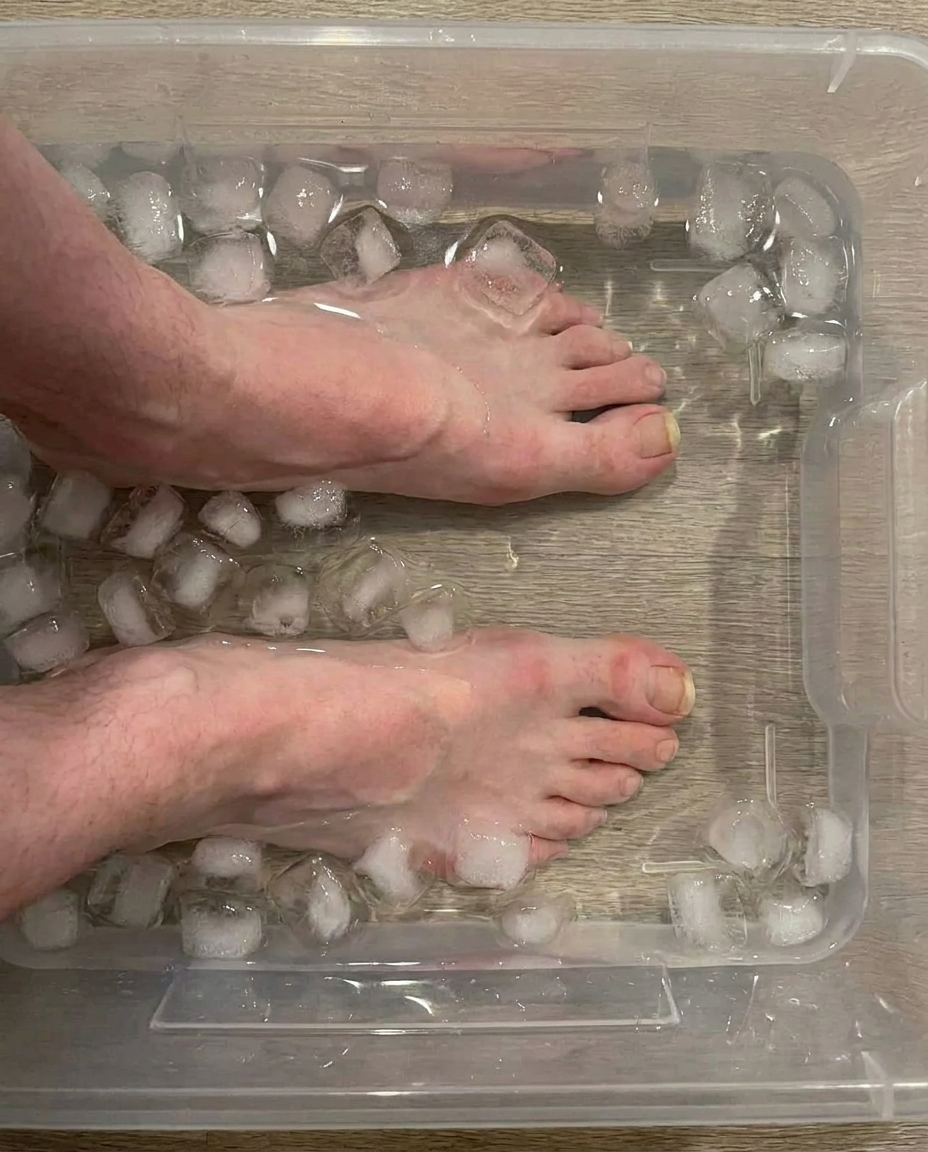
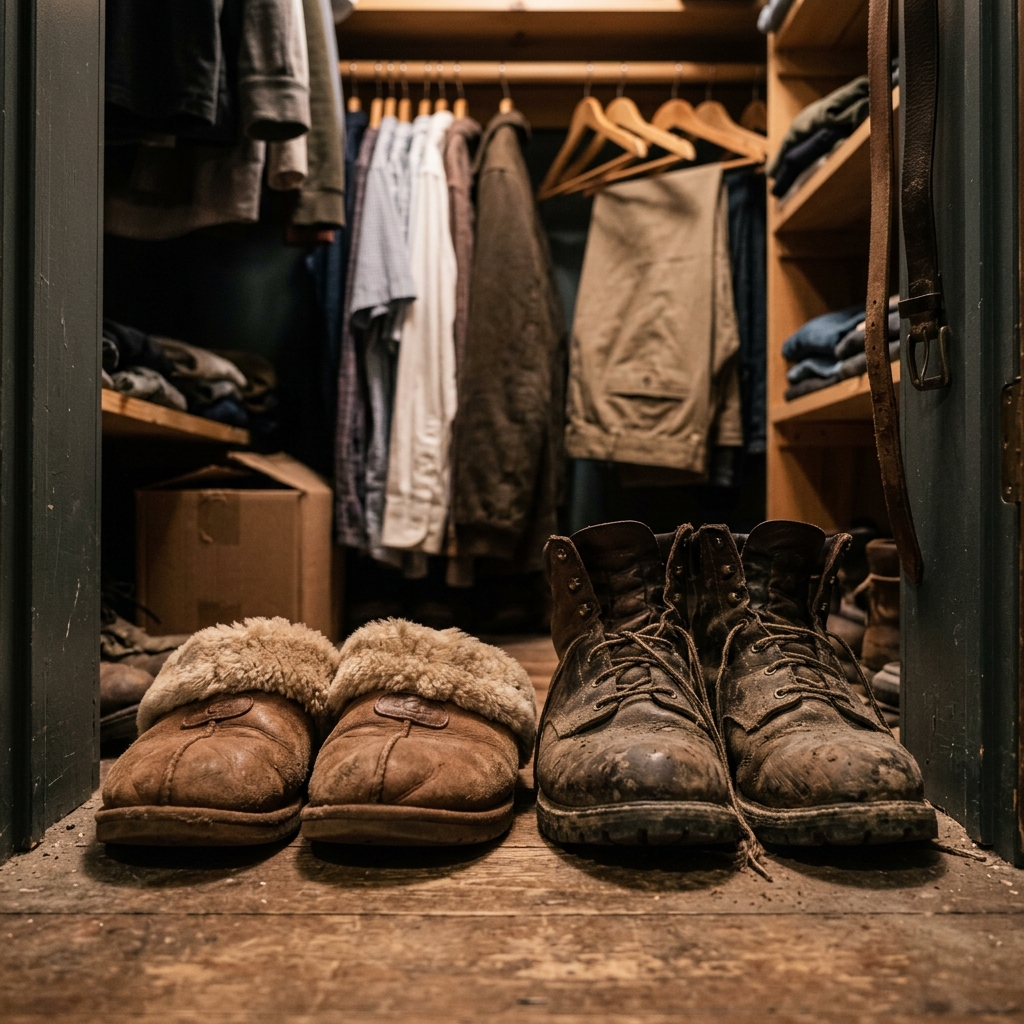
My husband Dale stopped walking barefoot in our own kitchen 14 months ago. He won't say why. Not out loud. Not to me, not to our daughter, not to the cardiologist who sees him twice a year and asks about his feet like he already knows the answer. But I know why. I've known for a while. He told me one night last summer, the only time he ever said it plain, that walking on the tile feels like he's stepping on aluminum foil. Like crinkled tin. Like he can't tell if the floor is cold or hot or there. He said it once and then he laughed it off and changed the subject and we ate our spaghetti and watched the news and he never said it again. But he started wearing socks to bed. He started keeping a pair of slip-ons next to the bathroom at 3am. He started getting up slower in the mornings, putting his feet down one at a time on the bath mat I bought from Target, easing his weight onto them like he was testing whether the floor would hold him. My husband retired from UPS in 2022 after 31 years on a delivery route. He drove the same loop in Greensboro for almost two decades. He knew every dog on Pisgah Church Road by name. He knew which porches had the wobbly second step and which mailboxes leaned. He was on his feet eight to ten hours a day for three decades and his feet were the most reliable part of his body. And now they aren't his anymore. That's the thing nobody warns you about when your husband's body starts to go. He doesn't lose his feet all at once. He loses them quietly, in pieces, in moments small enough that nobody else would notice. The way he hesitates at the top of the basement stairs. The way he stopped going outside to get the paper barefoot the way he did for 20 years. The way he sits on the edge of the bed for an extra 30 seconds before standing up. I'm Marlene. I'm 58 years old. We've been married 34 years this June. We live in a one-story brick ranch off Lawndale Drive on the north side of Greensboro, North Carolina, the kind of neighborhood where the houses were built in the 60s and the trees are now so big they meet over the street in the summer. Dale is 61. He's a big man. Six foot two, broad through the shoulders, hands the size of dinner plates. He used to be able to pick our daughter Whitney up off the floor with one arm when she was little. Now he holds onto the back of the couch when he walks from the living room to the kitchen and he thinks I don't see him do it. I want to back up and tell you how this all started, because if I don't, the rest of this won't make sense. Dale was diagnosed with Type 2 about 11 years ago. He was 50 then. He took it seriously. He cut soda. He lost 22 pounds. He went on metformin and he stayed on metformin and his numbers settled into a range his doctor called "managed." But "managed" is not the same as "fine." About four years in, he started complaining that his feet felt funny at night. Not painful. Funny. Tingly. Sometimes a little burning. His doctor told him it was probably mild neuropathy, that it's common, that he should keep his blood sugar in range and wear good shoes and watch for any open sores. So he did. He bought the special diabetic socks from the Walgreens on Battleground. He kept the soft slippers by the door. He checked his feet every night before bed, sitting on the side of the tub with his reading glasses on, inspecting the soles like a mechanic checking tires. For a few years, it held steady. Funny but not worse. Then about two and a half years ago, it changed. It wasn't tingly anymore. It was numb. He'd put his foot in the bathwater and not know it was too hot until his calf was already red. He'd step on Whitney's dog Biscuit's tail and not realize until Biscuit yelped. He'd drop a fork on his bare foot and feel nothing. He went back to the doctor. The doctor doubled down on the same advice. Keep your sugar in range. Wear shoes. Check your feet. The doctor wrote something on a pad about a cream. Capsaicin. Some kind of pepper extract. Said it might help with the burning sensation. The cream did nothing. We bought another one. Some kind of menthol thing from the pharmacy on Wendover. Did nothing. We bought a third one. A foot lotion specifically marketed for diabetic feet, $32 a tube at the CVS on Cone, with a label that said "soothes nerve discomfort." Did nothing. For two years I watched my husband sit on the edge of our bed every night and rub a cream into the bottoms of his feet that did absolutely nothing. He'd done it 700 nights in a row. He didn't even open the tube anymore with hope. He opened it the way you do a chore. Brush your teeth. Lock the door. Rub the cream in. He kept buying it. Last December, I found four nearly-full tubes of foot cream in the bottom drawer of his nightstand. Stacked. Like a little library of disappointment. I want to tell you about the shoes too. Because if you have someone in your life who's dealing with this, you'll recognize this part. Dale used to walk barefoot everywhere. Out to the mailbox. Across the wet grass after a thunderstorm. He'd come in from cutting the lawn and kick his sneakers off in the laundry room and pad through the house in his socks. On Sunday mornings he'd make coffee in his boxers and a t-shirt, no socks, no slippers, hair sticking up in every direction. That was Dale. About a year and a half ago, the slippers started. Then the slippers in bed. Then the socks at the dinner table. I bought him a new pair of slippers from L.L. Bean last winter as a Christmas present. Soft sheepskin, $89, the kind with the rubber sole so you can wear them outside to take the trash to the curb. I gave them to him on Christmas morning while Whitney and her husband were over and he opened them and his eyes got wet for half a second and then he laughed and put them on. He wore them for one day. They sit in his closet now next to a row of work boots he'll never wear again. The slippers I bought aren't soft enough. Nothing is soft enough. Because the problem isn't the slipper. The problem is the floor underneath the slipper that he can't feel. Whitney came home for the weekend at the end of October. She's our only kid. She's 28. She's in her second year of nursing school at UNC Greensboro, studying to be a nurse practitioner eventually. She works part-time at a pediatric office out near Friendly Center and lives in an apartment about 20 minutes from us. She comes home maybe once a month for a weekend, usually with her laundry in a duffel bag and a stack of textbooks. That weekend, she walked in on a Saturday morning and Dale was sitting at the kitchen table in his slippers reading the News and Record. She came over and hugged him from behind and he reached up and patted her hand without looking up. She watched him stand up from the chair to refill his coffee. She watched him put his hand on the back of the chair to steady himself. She watched him take three slow steps across the kitchen tile. Then she looked at me with her eyebrows pulled together and tilted her head toward the back porch. We went outside. It was cold. Mid 50s, gray, the leaves all down in the backyard from the dogwood. She stood with her arms crossed against the chill in her UNC Greensboro hoodie. "Mom. How long has Dad been walking like that?" "Like what." "Mom. He's walking like a 75 year old man. He's holding onto furniture. He's wincing every time his foot hits the floor. How long?" I told her. I told her the whole thing. The aluminum foil. The creams. The hot bathwater. The slippers. The L.L. Bean shoes still in the closet. Two years of slow loss. Doctors who shrugged. She didn't say anything for a minute. She just stood there with her arms crossed, looking out at the dogwood. Then she said, "Mom. I think I might know something that could help. I'm not promising anything. But I want you to listen to me." She told me about a guest lecturer who had come to one of her pharmacology classes the previous week. A clinical pharmacist who'd been in practice for 30 years and now consulted on integrative medicine cases at hospitals around the Triangle. He'd spent part of his lecture on what he called the "cellular energy" angle of diabetic complications. The way Whitney explained it, the prevailing way most doctors think about diabetic nerve issues is that high blood sugar damages the nerve fibers over time. Which is true. That's part of it. But it's not the whole story. The other half of the story, the part most doctors don't get into during a 12 minute office visit, is what's happening at the cellular level inside the nerves themselves. The nerves in your feet are the longest nerves in your body. They have to be fed energy from one end to the other. And the way nerves get energy is through tiny structures inside the cells called mitochondria. Mitochondria are the engines. They take the food you eat and turn it into the energy your cells use to function. In someone with long-standing blood sugar issues, two things are happening at the same time. One, the nerves themselves are getting some direct damage. Two, and this is the part that gets ignored, the mitochondria inside the nerve cells are getting worn down. They're producing less and less energy. The nerves at the far ends of your feet, the longest nerves in the body, are the first to run out of fuel. So when Dale steps on the tile in the morning and it feels like aluminum foil, it's not just that the nerves are damaged. It's that the nerves don't have enough power to send a clear signal back to his brain. The signal is getting garbled because the engines that power the signal are running on fumes. Whitney told me the guest lecturer had spent about 20 minutes on this. He said the way to think about it is like trying to deliver lumber to a job site with no power. You can have all the lumber in the world, but if there's no power on site, no saws run, no nail guns work. The framer just stands there. The work doesn't happen. In Dale's feet, the lumber is the nerves. The framer is his body trying to maintain them. And the power is gone. The guest lecturer had then said something that made Whitney write it down in her notebook. He said there was an old fruit from Ayurvedic medicine, called amla, that had been studied for its effect on something called AMPK. AMPK is the master switch for cellular energy. When AMPK is active, your mitochondria work harder and cleaner. They produce more energy. And in cells that have been struggling, like the nerve cells in someone with long-standing diabetes, that extra energy can show up as the body finally being able to do its maintenance work again. Whitney looked at me on the back porch with her arms still crossed and she said, "Mom. He said this stuff has been studied for a while. He said there's good research on its effect on inflammation and on oxidative stress, both of which are the main things wearing down the cells in nerve tissue. He said if he had a family member with what Dad has, he'd at least try it. He said the body in some cases will start to recover function once the cellular energy is back." She pulled out her phone. She'd written down a brand. Her instructor had specifically mentioned one that her own father had been taking. Alevia Amla. She'd looked it up. Two capsules a day. Made in the USA. Free shipping. A 90-day money-back guarantee, which she pointed out twice, because Whitney is methodical. She said, "Mom, if it doesn't do anything, we send it back. We're out nothing." I want to tell you something about my daughter. Whitney has been right about my body and her father's body more times than her own father has. She caught my pre-diabetic numbers two years before my GP did, just from watching me get up off the couch. She told her father to get the chest pain checked in 2019 and it turned out to be his gallbladder, not nothing. When Whitney tells me to try something, I try it. I ordered the bottle that night on my phone, sitting on the edge of the bed while Dale watched football in the living room. Arrived three days later in a brown padded envelope I picked up off the porch. I did the same thing my friend Janet did with her husband. I didn't make a big thing of it. I put the bottle in the kitchen next to my multivitamin and I started taking two capsules every morning with breakfast. Dale watched me do it for about four days before he said anything. On the fifth morning he was buttering toast at the counter and he said, "What's that orange one you're taking now." "Something Whitney told me about. Two a day. I figured I'd try it." "What's it for." "General stuff. Cellular energy. Whitney said her pharmacology lecturer had it on his short list." He kept buttering his toast. Didn't say anything for a minute. Then he said, "Set me out two." That was it. No long conversation. No "Dale you should try this." He decided on his own. Which is the only way Dale Holcomb does anything. I want to be careful here, because I don't want to oversell this. He didn't wake up the next morning with feeling in his feet. He didn't take it for a week and dance across the kitchen tile. The first thing that happened, after about 10 days, was that he slept through the night. For about two years, Dale had been waking up at least once a night because his feet were buzzing or burning enough to pull him out of sleep. Not every night. But probably four nights a week. He'd get up, walk to the bathroom in his slippers, sit on the edge of the tub for a few minutes, and come back to bed. On the eleventh day after he started taking it, he slept from 10:45pm to 6:20am without getting up. He didn't mention it. I noticed because I'm a light sleeper and I always heard him get up. I lay there in bed that morning realizing he hadn't moved all night and I almost cried into the pillow. Then it kept happening. Three nights that week. Five the next. Three weeks in, he told me one morning that the bathroom tile didn't feel quite as crinkled as it had been. "Crinkled. Aluminum foil crinkled?" "Yeah. Less today." That was the second thing. Five weeks in, he walked from the bedroom to the kitchen one Saturday morning without putting his slippers on. I was at the kitchen island making coffee. I heard his feet on the hallway carpet. Then on the kitchen tile. Then he was standing next to me in his pajama pants and a t-shirt and bare feet, scratching the back of his head, asking me where the cream was for his coffee. I didn't say anything about his feet. He stood barefoot on the tile and drank a cup of coffee with me at the kitchen island for the first time in a year and a half. He didn't acknowledge it. I didn't either. We talked about whether to put the storm windows up that weekend. Eight weeks in, he took the trash out to the curb at the end of the driveway in his bare feet. Ten weeks in, he wore the L.L. Bean slippers I'd bought him for Christmas. He took them out of the closet on a Sunday morning and put them on without saying anything and shuffled around in them all day. Three months in, we went to Whitney's birthday dinner at her boyfriend's parents' house out by Lake Brandt. There's a long flagstone walkway from the driveway to the front door. Dale walked it without holding my arm. He stepped up onto the porch without holding the railing. He stood at the door in his church shoes and his pleated khakis and he looked like my husband from 10 years ago. Whitney met us at the door. She hugged him. She looked at me over his shoulder and her eyes filled up. That night, on the drive home up Battleground Avenue, Dale said, "Tell Whitney thank you for me." "Tell her yourself." "I will. But tell her again." I'm not a doctor and I'm not a pharmacist and I'm not going to tell you Alevia Amla cured my husband's neuropathy. Nothing cures neuropathy. Whitney told me that the first time we talked about it. What I am telling you is that a man who hadn't walked barefoot in his own kitchen in 14 months walked across the tile this morning to refill his coffee while I was writing this post. If you have someone in your life whose feet have been leaving them, the way Dale's feet were leaving him, here's what I'd tell you. It's two capsules a day. It comes in a brown bottle. It's made in the USA. Shipping is free. They back it with a 90-day money-back guarantee, which means you get three full months to see if your body responds, and if it doesn't, you send back what's left and they refund the whole purchase. Whitney made me promise I'd write this. She said too many people have a Dale in their life and they don't know there's anything else to try after the creams stop working. So here it is. 👉 alevia.com/amla/33 P.S. Last Sunday morning Dale came in from getting the paper at the end of the driveway. He was wearing his bathrobe and nothing on his feet. He'd walked down the driveway in November on cold concrete and walked back up with the News and Record under his arm. He set the paper on the kitchen table and he looked at me and he said, "Marlene, my feet were cold." That's the most beautiful sentence anyone has ever said to me. My feet were cold. He could feel that the concrete was cold. P.P.S. About the guarantee. I want to make sure you heard this because it matters. 90 days. Three full months. That's the window. Whitney's pharmacology instructor said it took most of his patients about eight to ten weeks to really notice. So you have the time you need. If your body doesn't respond, you send back what's left of the bottle and they refund you. I don't know how to be clearer than that. You're not risking money. You're either getting feeling back or getting your money back. P.P.P.S. When I went back to the Alevia website yesterday to grab the link for this post, there was a note about a limited November supply. I don't know if that's a sales thing or if it's real. I'm just telling you what I saw. If you've been sitting on this kind of thing for a while, don't sit on it another month. Put the bottle on the counter next to your vitamins. See what happens. The worst case is you mail it back and you're out 10 minutes of your life. 👉 alevia.com/amla/33
Like this ad? Make it yours.
Crush rebuilds this exact creative around your product — your brand, your colors, your offer — in about a minute.