
Active· since Aug 4, 2026
- 43
- days running
- 1
- relaunches
Ad copy
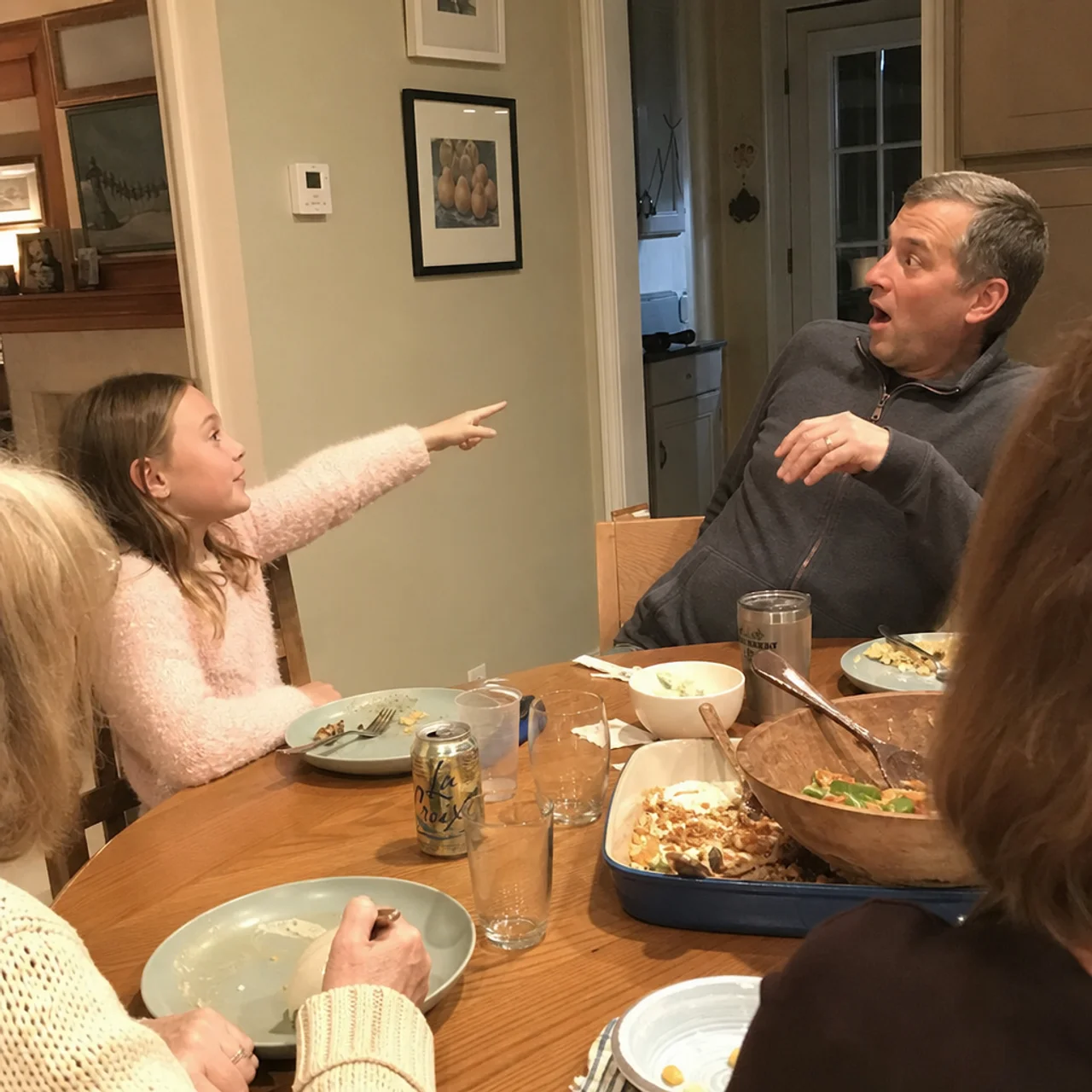
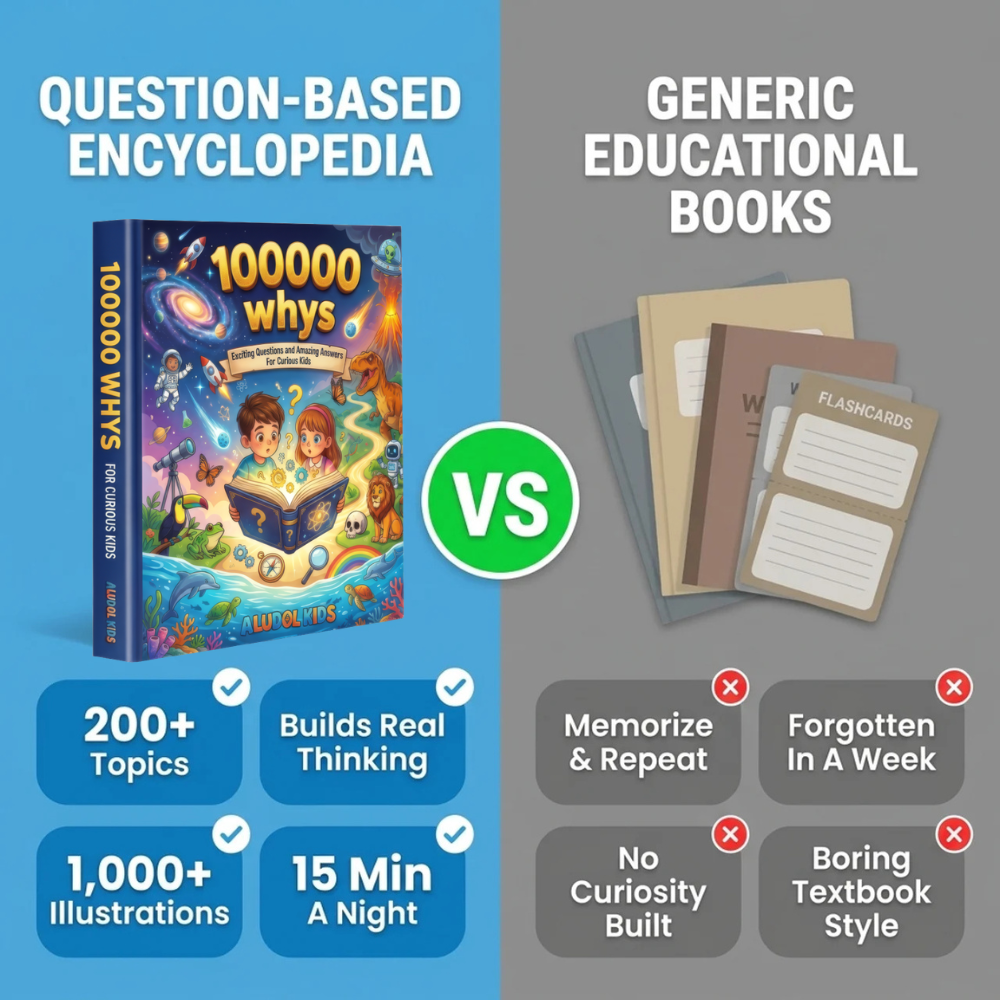
I tried 4 different things about my grandson's one-word answers and blank stares. Not one of them addressed what was actually shutting him down. I sat in my living room, looking at another unopened workbook on my coffee table. This was my fourth attempt in 2 years. The first was an educational app. His mother said "this is what kids use now." He tapped through it every night like a game and couldn't tell me a single thing he'd learned the next morning. The second was a tutor. $100 an hour. She drilled him on test strategies and formulas. His grades went up half a point. His curiosity didn't move an inch. The third was a set of workbooks. The expensive kind with awards on the cover. He filled in the blanks dutifully for about a week. Then they sat on his shelf untouched for 6 months. The fourth was flash cards. Hundreds of them. He could recite anything I put in front of him. Ask him WHY any of it was true and he'd stare at me. I was 67. Meanwhile, my daughter-in-law mentioned at dinner that she'd signed Lucas up for another app subscription and everyone at the table praised her for being so proactive with his education. One mention. One round of applause. No questions asked. But me? When I'd suggested reading a book together, she'd smiled and said "Mom, that's sweet, but it's not how kids learn anymore." I was left to silently watch: My grandson coming to visit and heading straight for his iPad without looking at me. Asking him a question about his day and getting a one-word answer or a shrug. The curiosity that used to pour out of him. Why is the sky blue, why does the moon follow the car, gone completely by age 8. Feeling invisible in my own grandson's life, like I had nothing left to offer him. My friend Diane called one afternoon. I almost didn't pick up. I'd been sitting in my kitchen thinking about how Lucas had been over that morning and hadn't said a single real thing to me in 3 hours. "You sound tired," she said. "I'm not tired. I'm losing him, Diane. And nobody thinks anything is wrong because his grades are fine." Diane's granddaughter Ella is 8. Same age as Lucas. And Ella is a completely different child. The last time I was at Diane's house, Ella walked into the kitchen and said "Nana, did you know the ocean isn't actually blue? It just swallows every color except blue and sends it back to your eyes." She was 8. Reasoning through optics. Unprompted. My grandson, same age, same kind of school, same kind of family, couldn't tell me why the sky is blue if I begged him. I asked Diane what she was doing differently. She didn't say tutoring. She didn't say an app. She didn't say flash cards. She said something no one had ever said to me in 2 years of trying. "I stopped trying to make her memorize things. I just let her wonder." I blinked. "What do you mean?" "Between school and homework and all the drilling, when is the last time anyone asked Lucas what he THINKS? Not what he knows. What he thinks." And that's when everything I'd been doing wrong for 2 years became painfully clear. Every app I'd tried. Every workbook. Every tutor. Every set of flash cards. They were all built the same way. Hand the child an answer. Make them memorize it. Test them on it. Move on. Not one of them ever asked Lucas to wonder. Not one ever asked him what he thought before giving him the answer. Not one of them built the thing that actually matters. The ability to think for himself. I'd spent 2 years and hundreds of dollars on products that all aimed at the same target. Memorization. The surface. The grades. And the actual problem was underneath all of that. In a curiosity drive that had been slowly shutting down since he started school. Every worksheet buried it deeper. Every flash card covered it over. Every "good job, you got the right answer" taught his brain one lesson: don't wonder, just wait for the answer and repeat it back. Diane put it simply. "It's like trying to grow a garden by painting the dirt green. It looks fine from the outside. But nothing is actually growing underneath." I felt tears welling up. But not from frustration. These were tears of recognition. I'd spent 2 years hearing: "He's doing fine in school." "Some kids just aren't as curious." "That's just how children are now." 2 years of watching him fade. 2 years of feeling invisible. 2 years of trying everything I was told to try while his curiosity quietly disappeared underneath perfect grades. All because nobody asked one simple question. When is the last time anyone asked this child to wonder? "So what do I actually do?" I asked Diane. She smiled. "You stop sending memorization to fix a curiosity problem. You can't drill wondering into a child. You have to let them reach for the answer before you hand it to them. That's how the thinking gets built." "But how?" I asked. "There's an encyclopedia built entirely around the questions kids naturally ask. Why is the sky blue. How do planes stay up. Why do we dream. You read 2 pages before bed. You ask them what they think before you read the answer. That's it." She explained: "But the method is everything. You can't just hand a child a textbook or a workbook and expect them to wonder. Those are built to deliver answers. This is built to make the child reach first." She told me what to look for: ✅ Questions first, not lessons. The child wonders before being told. ✅ Guided wondering. You ask them what they think. They reason. They guess. They reach. ✅ Short sessions. 2 pages. 15 minutes. While the curiosity is still burning, not after it's been drilled out by an hour of homework. ✅ No testing. No right or wrong. Just wondering. So the brain stays in exploratory mode instead of shutting down into memorize-and-repeat. "Most educational books and apps won't do this," she said. "They're built to drill. They look educational on the outside. But they're just painting the dirt green." That night, I went looking. I found other grandmothers sharing the same story. Same pattern I had. Watched the curiosity disappear. Tried the apps. Tried the tutoring. Tried the workbooks. Nothing reached the actual problem. They were sharing how their grandchildren finally started thinking again when they switched from drilling answers to letting them wonder first. One grandmother's story stopped me cold. ⭐ Barbara, 71, Ohio: "I'd been buying him every educational thing I could find for 3 years. None of it worked. He could recite the periodic table but couldn't tell me why the sky is blue. 2 weeks with this book and he explained to me why the moon doesn't fall out of the sky. Then he asked me what I used to wonder about when I was little. Nobody has asked me that in 9 years of being his grandmother." ⭐ Denise, 68, Florida: "I almost gave up. I thought I'd lost him to screens forever. His mother said I was old-fashioned for thinking a book could help. A month later, his teacher called asking what changed. He was raising his hand. Asking questions nobody prompted. Thinking out loud in class for the first time all year." ⭐ Karen, 65, North Carolina: "His school couldn't fix it. The apps couldn't fix it. The $100-an-hour tutor couldn't fix it. I spent $45 on this book and 15 minutes every Sunday. His mother called me crying because he explained to her how airplanes stay up. He's 8." I ordered it that evening. My daughter-in-law saw the package arrive. "Another book?" she asked gently. "This one's different. It doesn't drill him. It lets him wonder." She nodded politely. The same smile she gave me when I'd suggested we read together. And that's when I realized she didn't just think I was old-fashioned. She'd stopped believing I had anything to offer him. I didn't hand it to Lucas. I didn't announce it. I didn't make it a thing. I just left it open on my kitchen table the next time he came over. On a page about why the ocean is blue when the water in your glass is clear. He walked past it on his way to ask for the WiFi password. Then he stopped. Came back. Sat down. He read quietly for a few minutes. Then he looked up. "Grandma. It says the ocean swallows every color except blue and bounces it back. Is that actually real?" I asked him what he thought. He actually thought about it. That first evening, something shifted. Not dramatic. Not a miracle. Just a child who, for the first time in 2 years, reached for an answer instead of waiting to be handed one. The next morning, his mother called me. "He woke up and asked me if the sky works the same way as the ocean. Before breakfast. Where is that coming from?" By the end of the first week, he was bringing questions to dinner unprompted. Not school questions. His own questions. Why does ice float. Why do we dream. How do birds know where to go in winter. The iPad sat in his bag untouched. Nobody took it away. He just stopped reaching for it. 2 weeks in, his teacher pulled his mother aside. "Something changed with Lucas. He raised his hand 3 times this week. He hasn't raised his hand all year. He asked the class why ice floats when everything else sinks. We looked it up together." A month later, he was sitting at my kitchen table on a Sunday evening and said something I never expected to hear. "Grandma, why does hot water freeze faster than cold water? That doesn't make any sense." He was proposing hypotheses. At my kitchen table. Voluntarily. On a Sunday. Then he looked at me and asked, "What did you used to wonder about when you were little?" Nobody had asked me that in 9 years of being his grandmother. My daughter-in-law called me that week. "Mom. His teacher says something changed. He's thinking out loud. Asking questions. Explaining things to other kids." A pause. "What did you do?" "I gave him a $45 book and 15 minutes of wondering. The one thing none of the apps or tutors or workbooks ever asked him to do." Silence. "The tutor cost us $400 a month." "I know." More silence. "Can you show me how you do it with him? The wondering thing?" I smiled. Same smile as when she'd told me books aren't how kids learn anymore. Different reason entirely. At his next visit, Lucas walked through my front door. The first thing he said wasn't "what's the WiFi password." It was "Grandma, did you know octopuses have 3 hearts and 9 brains?" And for the first time in 3 years, I didn't feel invisible in my own grandson's life. So if you're reading this and wondering if it's worth trying. Do it. Because the truth is that every app, tutor, and workbook you've been buying has been aiming at the same target. Memorization. The surface. The grades. And the actual problem, the curiosity that's been slowly shutting down, sits underneath all of it, untouched. They drill. They test. They drill again. The child memorizes and forgets within weeks. And you're left watching them fade, wondering what you're doing wrong. You're not doing anything wrong. The method is wrong. If I could talk to myself 2 years ago, I'd say: You're not old-fashioned. You're not out of touch. Your instinct that something was wrong was right the whole time. If you're where I was. Dismissed by the people around you. Watching your grandchild disappear into a screen. Spending money on things that drill the surface while the wondering dies underneath. Please hear this. You deserve more than being told "that's just how kids are now." You deserve more than watching from across the room while they stare at a screen. You deserve more than one-word answers from a child who used to ask you why about everything. You deserve to hear them wonder again. You deserve yourself back. 2 pages before bed. 15 minutes. Because in a system that tells grandmothers they're old-fashioned and hands children another app to tap through... Sometimes thinking begins when you let a child wonder before anyone hands them the answer. Your grandchild isn't broken. They just need someone who lets them reach. — Grandmother of 4, age 67. EDIT: For everyone asking where to get the book, it's by Aludol Kids and it's NOT available at typical bookstores or libraries. I've linked it below this post.
Like this ad? Make it yours.
Crush rebuilds this exact creative around your product — your brand, your colors, your offer — in about a minute.