
Active· since Jul 19, 2026
- 60
- days running
- 0
- relaunches
Ad copy
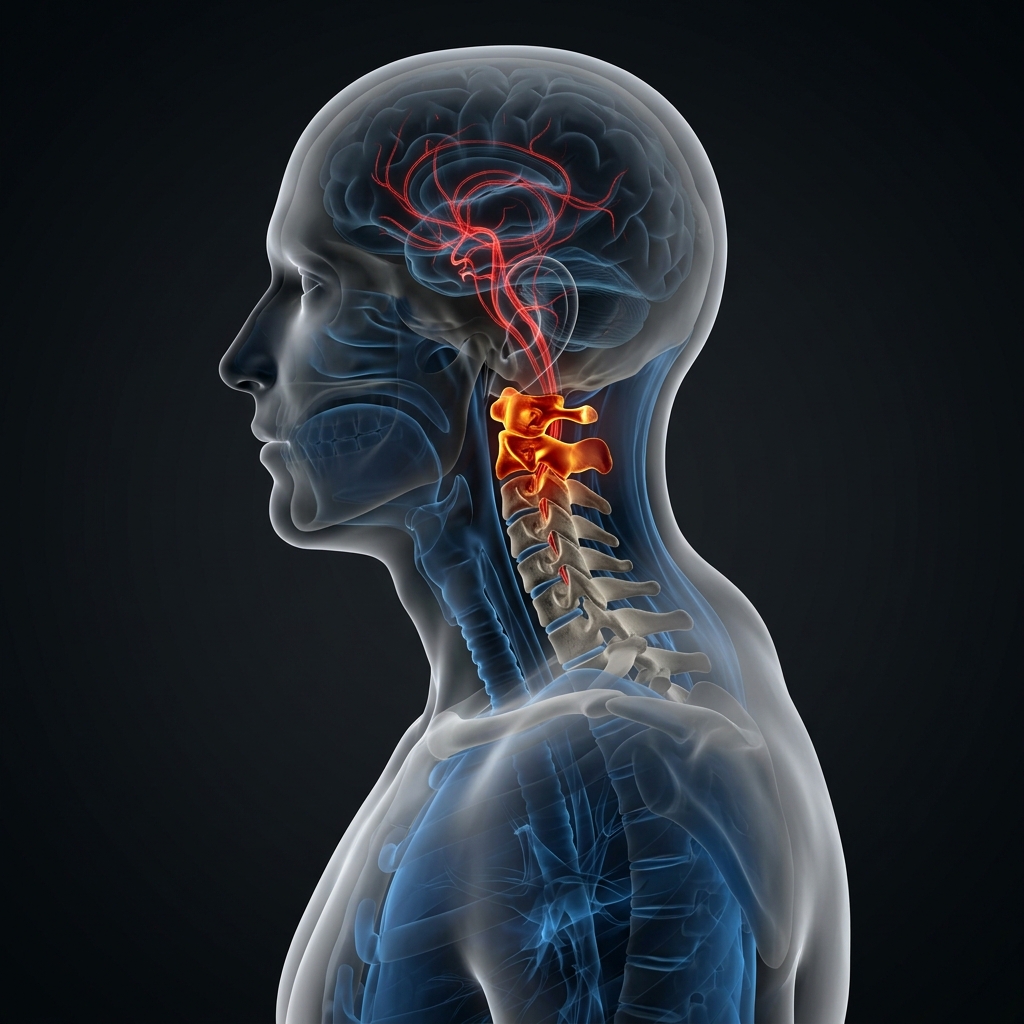
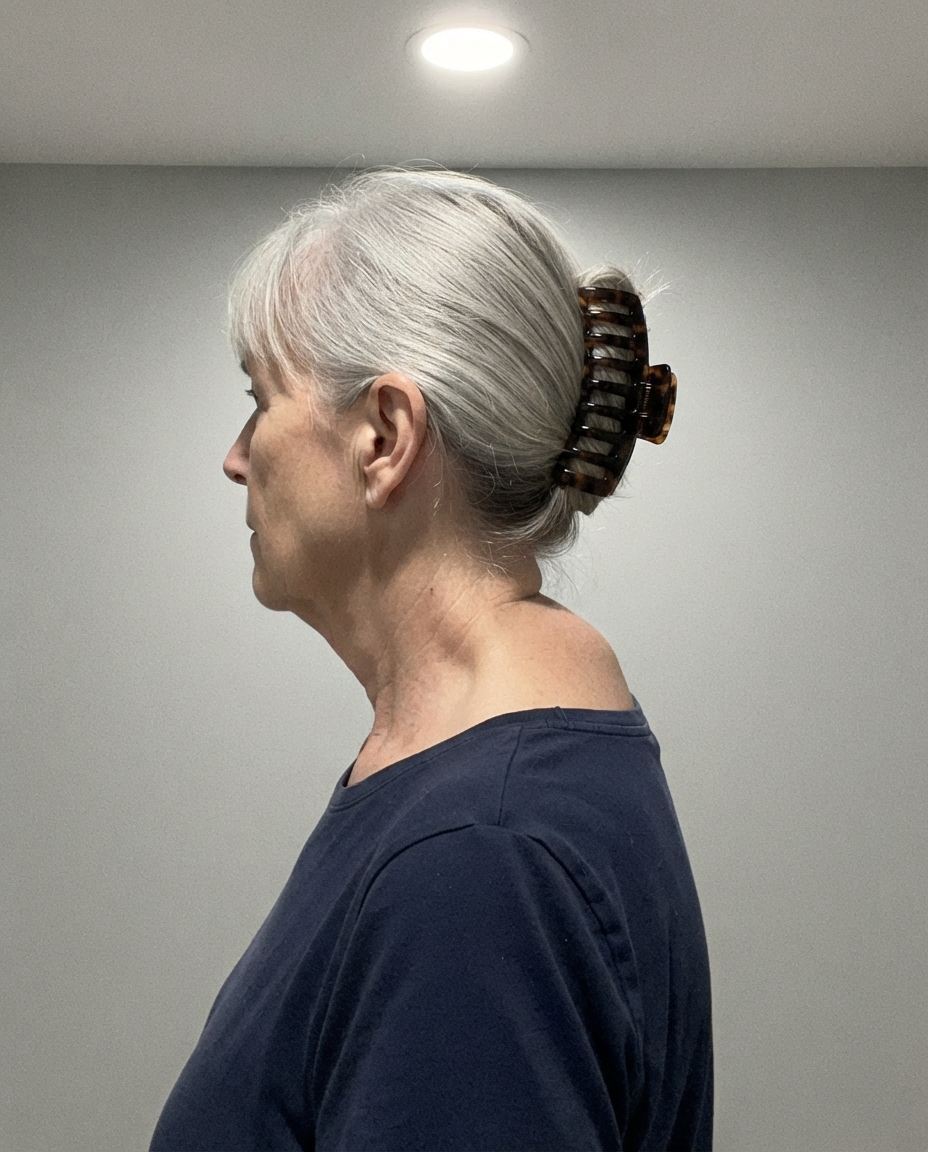
If you are a woman over 60 and your cervical holding has disappeared, weakened, or started going backwards, you have somewhere between three and five years before the same signal failure could reach your social presence completely. I am a cervical rehabilitation specialist with 19 years of practice. I have spent the last decade watching this exact timeline unfold in women past 60 while telling none of them what was actually coming. I am writing this letter to break that silence. The single most common phrase I hear from women over 60 who come into my office with progressive neck hump, deepening collar habit, or fading social presence is "it is just aging." That phrase was given to them by a specialist in an eight-minute appointment, and it has cost more women past 60 their cervical signal and their presence than any other phrase in modern rehabilitation. I'm Dr. Anne Müller. I'm a board-certified cervical rehabilitation specialist who spent fifteen years repeating that phrase to thousands of women over 60 without telling them what was actually happening underneath their symptoms. When my own cervical symptoms started at 51, I knew something I had never explained to a single patient. The collar habit isn't the disease. The positioning before every room isn't the disease. The progressive thickening isn't the disease. They are all symptoms of one underlying problem — the progressive deep cervical signal failure that drops neuromuscular activation by 50 percent or more in every woman past 50, and 60 percent or more in every woman past 60, regardless of how consistently she wears her brace or how often she exercises. The signal damage is happening to almost every woman in this age group. The only question is which symptom you notice first, and whether you let the rehabilitation system mask it with braces while the underlying signal failure continues toward complete social withdrawal. I have treated thousands of women over 60 in my career. I have seen what happens at 62. At 65. At 68. At 72. And I have seen what almost no cervical specialist documents properly because the appointments are too short and "it is just aging" has become a clinical shortcut that closes the conversation. The 62-year-old. Came in last spring with a deepening collar habit and avoiding photos for the last two years. No brace prescriptions yet. Her specialist had told her for the last two years that her symptoms were "normal for her age." Her displacement was 2.1 centimeters. Her forward pull was present every morning. Her social presence had been quietly retreating for over a year and she had stopped looking for it. She was not on a single brace protocol and her cervical signal had been silently failing for at least a decade. She was almost certain she was about to start the cascade. The posture brace she was about to be prescribed would have been the first intervention. Within six months deepening collar habit. Within two years a stronger brace added. Within four years the social withdrawal nobody saw coming. The 67-year-old. "It is just aging, Doctor. Nothing serious." Her displacement had been progressing for eight years. Her collar habit had deepened three years ago. Her social presence had been retreating for five. Her specialist had told her every one of these was a normal part of aging and had not connected them to anything. Then her physiotherapist found a cervical holding capacity assessment at critically depleted levels during a routine workup. Then her specialist started her on a brace protocol and added physiotherapy six months later. By the time she came to me for a second opinion, three different practitioners had been managing three different symptoms with three different passive interventions and not one of them had told her the symptoms were connected to the signal depletion underneath. I see these women in follow-up appointments. They do not complain. They are grateful I am "managing" their condition. They have accepted that their bodies are simply doing what bodies do after 60. But I know what they lost. They had years — sometimes more than a decade — to address the deep cervical signal failure that was producing every one of their symptoms simultaneously. Years to restore neuromuscular activation. Years to save themselves from the cascade. Their symptoms had been screaming the warning the entire time. Their specialists had answered each scream with "it is just aging" while the underlying signal damage compounded toward the social withdrawal their bodies had been warning them about for ten years. What almost no specialist explains to a woman over 60 with a progressive collar habit is this. Your body maintains a signal called neuromuscular activation. It is produced in the deep cervical motor endplates in every layer of your deep cervical musculature — a single-pathway-thick layer called the neuromuscular signal chain. This signal is what tells your deep cervical muscles when to activate, your holding capacity when to maintain, and your cervicothoracic junction when to stay in position. Without enough signal activation, your deep muscles go quiet, your holding capacity stops responding correctly, and your head drifts forward — taking the path of least resistance into forward displacement instead of holding in natural position. Neuromuscular signal production peaks in your mid-twenties and declines steadily from there. By age 50, most women have lost about half of their peak deep cervical signal production. By age 60, two-thirds. By age 70, even more. The decline is steeper in women with chronic desk posture, screen exposure, sedentary lifestyle, and chronic forward load — but it happens to every woman, regardless. Every collar habit, every progressive displacement, every fading social presence, every deepening calculation before every room, every social withdrawal that wasn't a personality change in a woman over 60 traces back to the same underlying decline in deep cervical neuromuscular signal production. "It is just aging" is technically correct. But it is incomplete in a way that has cost women their lives. Yes, this is what happens with aging. No, you do not have to accept the cascade that follows. The decline in neuromuscular signal production can be slowed, partially reversed, and partially restored — even at 65, 70, or older — if the right intervention is applied at the right signal pathway. The collar habit you have been quietly living with is not the warning. The social withdrawal is the warning. The positioning before every room that came before it is the warning before the warning. The presence slowly disappearing from gatherings you used to attend without thinking — silent for now, complete later — is the disease. A 2006 study in European Rehabilitation documented this timeline. Progressive cervical displacement precedes complete social withdrawal by an average of three to five years. Women with documented collar habits and advancing displacement carry a cumulative presence risk that is substantially higher than women in the same age cohort without either. Your cervical symptoms are not embarrassing. Your collar habit is not just "what happens after 60." They are your 10-year early warning system. I was not going to start the cascade I had been writing for thousands of women past 60. And I needed to find a path that actually addressed the mechanism rather than masking the symptoms. I tried what women past 60 try. Posture correction exercises. Physiotherapy. Brace compliance. Helped marginally but the collar habit persisted. Standard passive interventions. Foam roller. Cervical pillow. Posture tape. Surface strengthening. The standard list. Did not move the needle. My displacement was stable on surface assessment. My collar habit had not changed. But my neuromuscular signal markers stayed low. My holding capacity stayed weak. My social presence stayed inconsistent. The passive management work had moved some surface numbers while the deep signal kept declining at the age-driven rate. But I kept thinking about something that made no sense in standard practice. Age-related deep cervical signal decline can be partially reversed if the right signal pathway is activated. Neuromuscular activation can be restored even in women past 60. The rehabilitation research had been showing this for fifteen years. Almost no one in standard practice was applying it. So why was I not applying it to myself? November 14th. 10:23 PM. I was reviewing journals after a long clinic day. Couldn't sleep. The collar habit was worse. The social presence was almost completely gone. I was scrolling through research on deep cervical neuromuscular interventions. Not looking for anything specific. Just exhausted. I found a paper on calibrated bilateral EMS and motor endplate activation in deep cervical musculature. Calibrated bilateral EMS activates the motor endplates in the deep cervical signal pathway directly. These endplates trigger sustained neuromuscular activation through a pathway that remains functional in older patients even when the body's baseline signal production has dropped significantly. Neuromuscular activation causes the deep muscles — and the holding capacity, and the cervicothoracic positioning — to function correctly. The mechanism didn't just support symptom relief. It supported signal restoration across age groups. Sustained bilateral calibrated EMS had been shown in multiple studies to reverse early deep cervical signal failure, reduce passive dependency, and restore neuromuscular activation — including in study populations over 60. I sat there at 10:23 PM staring at the diagram. A posture brace forces surface compliance by holding from outside. The compliance lasts as long as the brace is in position. Your underlying signal failure does not improve. The collar habit is the price you pay for the symptom relief. Calibrated bilateral EMS activates your body's natural motor endplates. Continuous neuromuscular signal release. Natural sustained deep cervical activation. Your signal pathway heals instead of being mechanically suppressed. The signal failure causing your collar habit, your progressive displacement, your fading social presence, and your accumulating presence risk simultaneously — actually improves. I have been a cervical rehabilitation specialist for 19 years. And I had never connected calibrated bilateral EMS to progressive neck hump in older women at the signal level. The shared mechanism — the underlying age-related signal root that explains why women over 60 cluster collar habits, progressive displacement, fading social presence, and accelerating social withdrawal in the same individual — was never part of any rehabilitation curriculum. At 11:11 PM I went looking for a properly calibrated bilateral cervical EMS device. What I learned during that search is something every woman over 60 who tries home EMS needs to know. Calibrated bilateral signal is delivery-specific. When you use a single-channel generic EMS device, the surface receives stimulation at one side at one fixed intensity without ever reaching the deep cervical bilateral co-activation pathway. For bilateral EMS to actually reach the motor endplates where the signal lives, it must be delivered simultaneously to both sides at a stage-matched calibration level that meets the current level of inhibition. Absorption rates for deep cervical signal restoration go from 10 percent with single-channel fixed devices to nearly 90 percent with true calibrated bilateral delivery. Almost no device on the market does this. Most use the cheapest possible delivery approach — single-channel fixed intensity. The delivery format works against the mechanism it claims to address. I found one device that was different. The Cevera Posture Release Pulse. Eight programs calibrated for different stages of cervical neuromuscular inhibition — the exact stage-matching the clinical research uses. True bilateral delivery rather than single-channel. Nineteen intensity levels rather than fixed output. BioEquivalent calibration ensuring the signal meets the deep pathway at therapeutic concentration. Clinical-grade parameters alongside for additional signal support. Plus comprehensive rehabilitation research validation at every stage of the protocol. I ordered one that night. Fifteen minutes before bed. I started November 15th. November 22nd. One week in. Morning collar habit quieting. Not consistent yet. But present improvement for the first time in over a year. November 29th. Two weeks in. Did not check the mirror before leaving the house the previous morning for the first time in two years. December 13th. Four weeks in. Natural morning holding every day. Social presence returning. My husband asked what I had changed. "Different approach," I told him. "Whatever it is, keep doing it." January 10th. Eight weeks in. Repeat clinical assessment. Forward head displacement down from 2.6 centimeters to 1.7. Deep cervical holding capacity measurably restored across the panel. Social calculation before gatherings gone. I went back to my rehabilitation colleague for a full cervical assessment and signal density evaluation. She looked at my holding capacity. Looked at her notes from six months ago. "Anne, what did you do? Your deep cervical signal is back to where it was when you were 45." I explained the motor endplate activation. The continuous bilateral signal pathway. The calibrated EMS mechanism. The way it remained effective even with age-related baseline decline. She was quiet for a long moment. "I have hundreds of patients over 60 I have been telling for years that their symptoms were just aging. If what you are describing is reproducible..." "The mechanism is real. It works in older patients. The calibration matters. The bilateral delivery matters. And the timeline matters." She started recommending it for her patients over 60 with progressive displacement and deepening collar habits. I am not writing this letter because I think passive management approaches are bad. Braces work. Physiotherapy works. Surface exercises work. They relieve the symptoms they were designed to relieve. But they do not fix your underlying signal failure. They do not address the age-related neuromuscular decline that produces the symptoms in the first place. They do not lower your accumulated presence risk. They do not reverse the disease. They temporarily mask each individual symptom while the underlying signal damage compounds toward a social withdrawal that no specialist on your team is currently tracking. And I see what happens five years later when women past 60 who masked their cervical and social symptoms with braces walk into a specialist's office with advanced displacement, a collar habit nobody had tracked, and a social withdrawal that nobody was addressing. Your collar habit is not failing you. Your progressive displacement is not failing you. They are warning you. The same age-related signal failure that is causing your collar habit, your progressive displacement, and your fading social presence is right now deepening the passive dependency in your deep cervical system. You have two choices. Mask each symptom with a separate passive intervention while the underlying signal failure accelerates. Or address the signal root that is causing all of them simultaneously. I think about what I almost did. I almost started a brace protocol myself. I almost accepted the collar habit as the cost of "managing" my displacement. I almost became the patient I had been making for fifteen years — the woman in her late fifties on three passive interventions for three symptoms with no specialist connecting them to the underlying signal failure that age and endothelial decline had been quietly producing. Eight weeks. That is how long it took my displacement to drop, my collar habit to ease, my social presence to return, and my holding capacity to recover to where it had been at 45. Eight weeks of letting my deep cervical signal do what it was designed to do. Restore. I am not saying age is reversible. I am saying the cascade is not inevitable. Your collar habit is your check engine light. A posture brace is electrical tape over the indicator. The light is still on underneath. You just cannot see it anymore. But I see it every day in the women over 60 who come back to me three years after their first brace prescription, asking why their social presence has stopped working — and six years later when their physiotherapist calls me to ask what I prescribed. Every single one of them says the same thing. "I wish someone had told me my collar habit was connected to my social withdrawal." I am telling you now. The Cevera Posture Release Pulse costs $69.95 for two devices. 90-day money-back guarantee. Send back the devices, even used, if your symptoms have not measurably improved. https://trycevera.com/pages/adv2-womens-wellness-report — Dr. Anne Müller, Cervical Rehabilitation Specialist, 19 years, Practicing clinician P.S. — Give it 60 to 90 days. The upside is the version of yourself that does not accept "it is just aging" as the explanation for a body that has been trying to warn her for a decade. P.P.S. — You are not too late. Your deep cervical signal is older but it is not dead. The motor endplates still work. Neuromuscular activation still responds. Please activate it now, before the cascade your specialist has been calling "just aging" finally reaches the presence they will pay attention to.
Your collar habit is the warning. Your presence is the target.
Dr. Anne Müller reviews the Cevera Posture Release Pulse currently being discussed in cervical rehabilitation circles
LEARN MORELike this ad? Make it yours.
Crush rebuilds this exact creative around your product — your brand, your colors, your offer — in about a minute.