A. Elisabeth Smith
A. Elisabeth Smith Facebook ad: “If you have nail fungus, you'll want to try this”
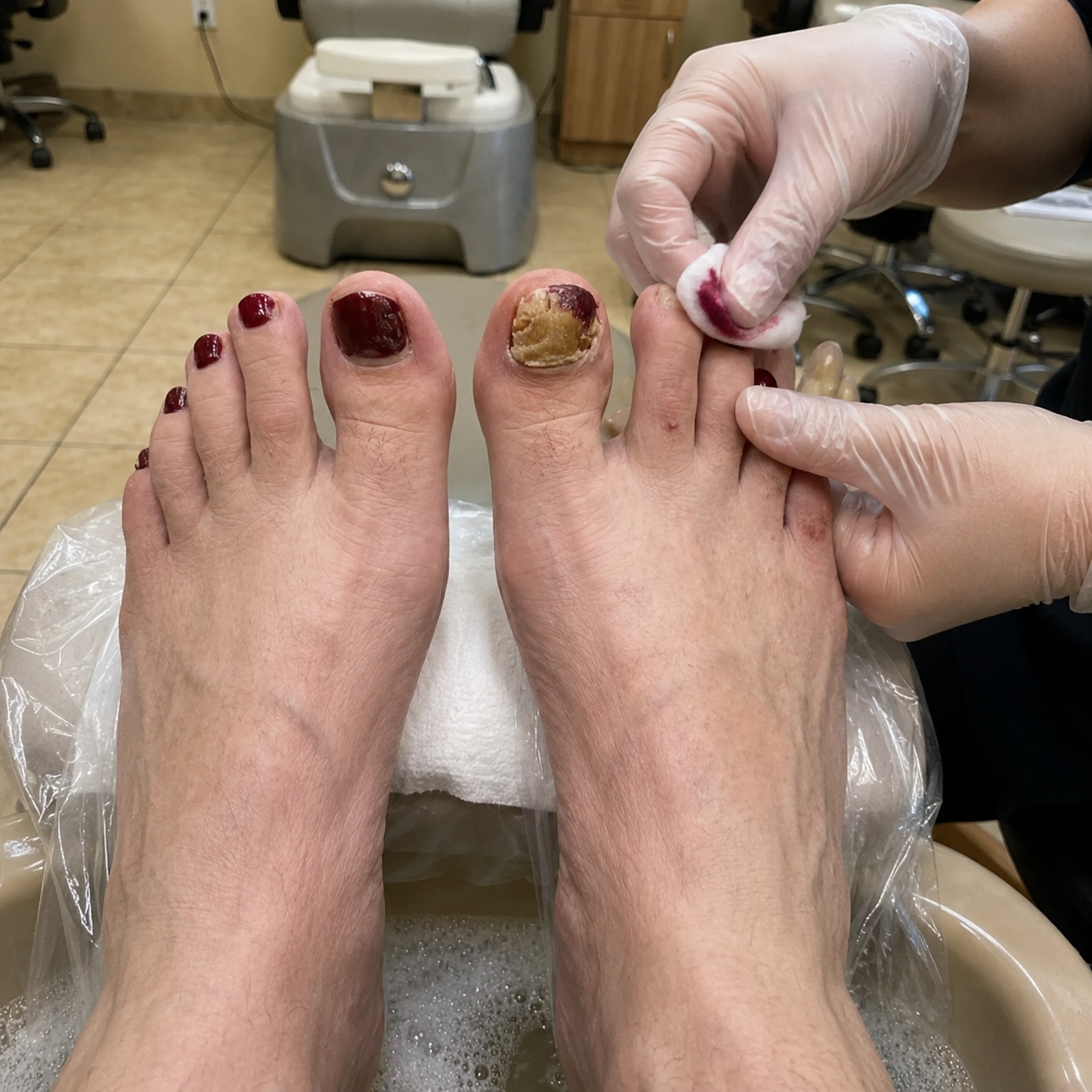
Ran for 10 days, from June 14 to June 24, 2026, the last day Crush saw it.
Run by A. Elisabeth Smith on Facebook. Crush is not the advertiser and does not verify its claims. See this ad in Meta's Ad Library(opens in a new tab)
Want an ad like this for your product?
Crush makes new ad images for your product from this ad: your logo, your product photo, your offer.
Trials from $19.95 USD, then $79.95 USD a month. Cancel anytime.
About this ad
- Meta Ad Library ID
- 1317031193869722
- Platforms
- Facebook, Instagram, Audience Network, Messenger and Threads
- Relaunches
- 0
Ad text
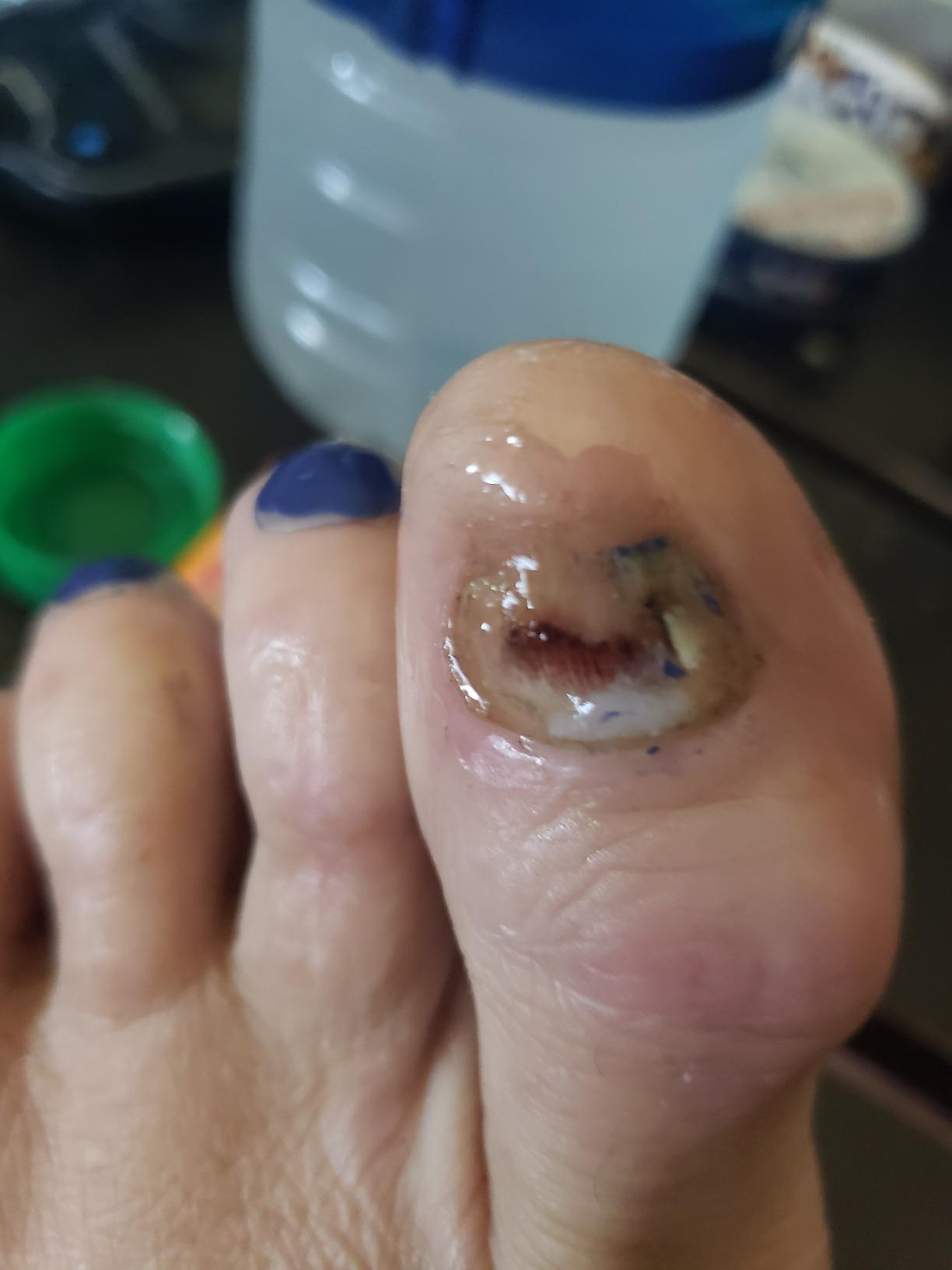
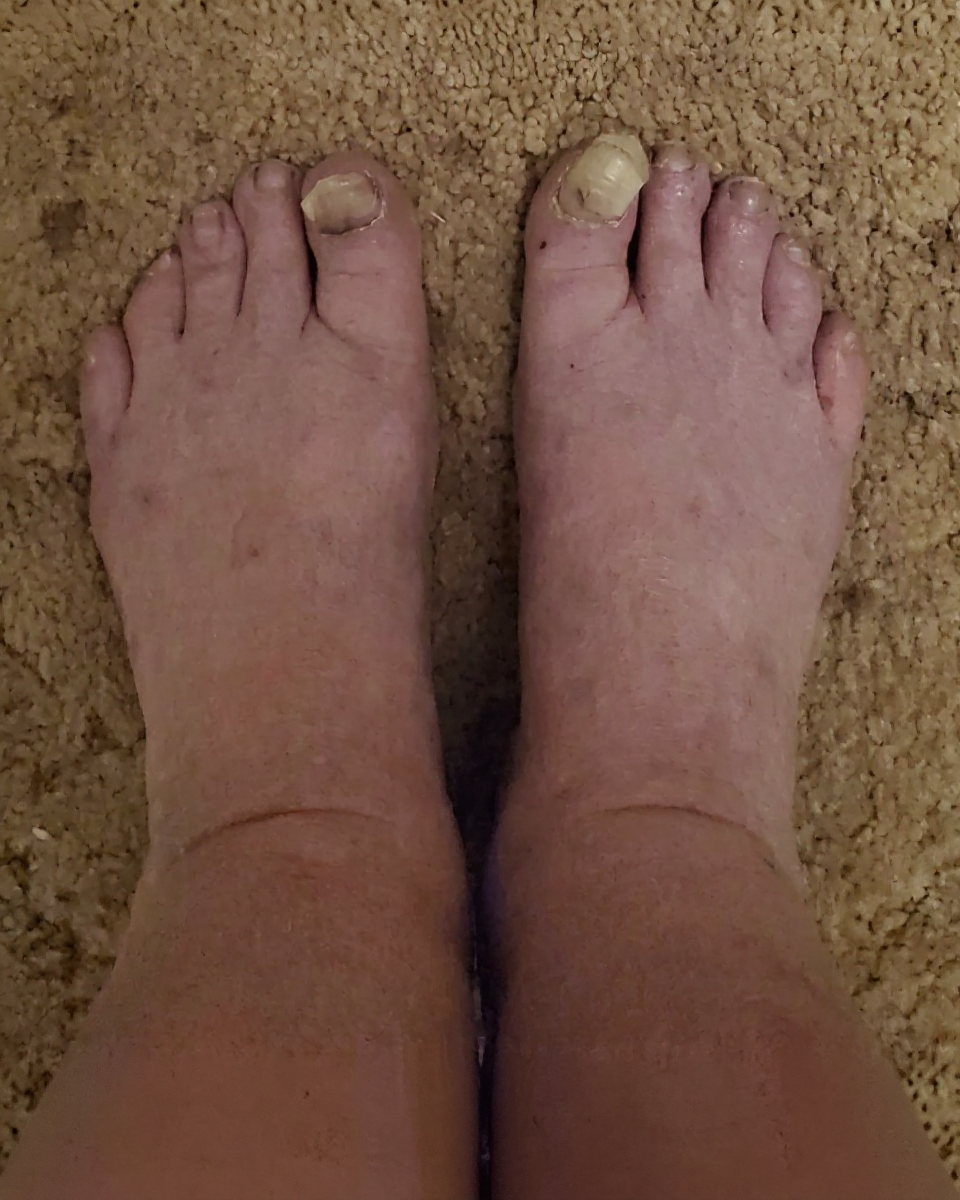
I painted over hundreds of women's fungal nails knowing the polish was feeding what was underneath. I couldn't do it one more time. People think a nail tech is just the girl with the brush. A woman sits in my chair, puts her foot up, looks at her phone, and assumes I'm thinking about the color. That I don't know anything. That I'm decoration with a buffer. I know everything. I know which of my clients haven't let their husband see their bare feet in years. I know who books the first appointment of the day so the lamp's the only light and nobody's waiting behind them. I know the exact face a woman makes when she slides her sock off and watches mine to see if I flinch. And I know — because I had my face six inches from it every two weeks for eleven years — exactly what is happening under the polish I painted on to hide it. That's what I have to confess. Because I painted over it for hundreds of women, knowing what the paint was doing, and I stayed quiet to keep them comfortable and keep my chair full. I'm not quiet anymore. If any of this sounds familiar — painting over a yellow nail, asking the girl with the brush which color hides it best — that polish is paying someone to seal the thing in. I was that someone. Read this to the end, because I'm going to tell you what I watched, and what I finally did about it. Let me tell you about one woman. I'll call her Diane, and her feet are the reason I quit the chair. Diane started coming to me at 52 with one yellow corner on her right big toe. The kind anyone tells themselves is a bruise. She'd ask for a dark red so it wouldn't show, I'd paint it, she'd call me a lifesaver, and she'd walk out feeling normal for two weeks. Her podiatrist had told her what they tell everyone: paint this lacquer on every night, be patient. So she was patient. For nine years. And here is the thing only someone in my chair could tell you. Her podiatrist saw those feet twice a year for ten minutes. Her husband hadn't seen them bare in four years — she told me that once, almost in a whisper. I saw them every two weeks, under a bright lamp, with my face right down close. Nobody on this earth watched what happened to Diane's feet more closely than the girl with the brush. So believe me when I tell you what I watched. Year one, a corner. Year two, the whole big toe gone yellow, the nail thickening and lifting just enough that I had to paint into a little gap. Year three, it jumped to the second toe, then the third. The yellow went from the color of old paper to the color of bone, and it started to crumble, and every visit I'd be scraping a chalky, rotten-smelling debris out from under the free edge before I could even begin. Year five, two nails lifting off the bed entirely, packed underneath with a yellow-white gunk that smelled like something dead. She'd wince when I cleaned it. She'd apologize to me. A grown woman apologizing for her own feet. And every two weeks, I painted over all of it. Because that's what she paid me for. And every coat I brushed on sealed it in deeper. I'm going to tell you what I eventually understood about why — because no one selling you a $45 cream or a $650 prescription lacquer will say it to your face. Toenail fungus is not a stain. It's a living colony. And it is not on the nail — it's trapped underneath it, behind a wall nothing you've tried can cross. The polish doesn't cover the problem. It locks it in. A nail is not skin. Skin absorbs. A nail is a dense, hard, waterproof slab of keratin whose whole job is to keep things out. So when you paint a lacquer on it, less than 3% gets through. The other 97% dries on top and rubs off in your sock. Diane painted hers perfectly for nine years, and 97% of it never once reached the fungus. I know, because I'm the one who watched the surface stay painted while the thing underneath kept eating. That's the first wall. There's a second one I didn't learn until later, and it's the part that made me furious at my own trade. Under the nail, the fungus builds itself armor — a biofilm, a hard slime-like shield cemented between the nail and the bed beneath it. The research is old and settled: that biofilm is up to 1,000 times harder to kill than loose fungus. So there are two walls. The waterproof nail above. The biofilm fortress below. And every coat of polish I ever brushed on sealed the warm, airless dark between them that the colony loves. And it feeds the whole time. Fungus eats keratin — it eats the nail. That crumbling debris I scraped out of Diane's nails every two weeks for years wasn't dirt. It was the nail itself, being eaten from underneath, packed in around the colony as its pantry. I had my hands in it twice a month and I called it cleaning. So picture what I was actually doing. The fungus is dug into a bunker under two walls. Every coat of polish I painted was a cup of water poured on the roof. It ran off. It never touched what was inside. That's why nothing those women tried ever worked — not because they were careless, but because every treatment they'd been handed physically could not reach the infection, and I was sealing the door over it every two weeks with a smile. And behind those walls, left alone, it keeps a schedule. One corner becomes a nail. One nail becomes five. The nail thickens past clipping, lifts, crumbles. The root takes permanent damage. And that's when the podiatrist stops saying lacquer and starts saying oral pills, and then surgery. 90% of women with an established infection reach that surgical line within ten years of leaving the root alone. I watched Diane walk that whole road. Every option they gave her along the way did the same useless thing — it hit the roof, and never got past the two walls. The prescription lacquers — Jublia, Kerydin, the $650 "stronger" bottle her podiatrist pushed — are the same cup of water in a fancier cup. Jublia clears it in about 15 of 100 people; the others, single digits. 9 out of 10 women paint it on for 48 weeks and never clear it. Switching brands just changes the color of water hitting the wall. The oral pill, terbinafine, came at year six. Twelve weeks of nausea and that metal taste that kills food, with monthly blood draws on her liver — because the FDA's own label says it has caused liver failure, sometimes needing a transplant, sometimes fatal, in people with no liver trouble before. And it comes back in a quarter to half of patients. Diane did two rounds, sick for months, yellow again within a year both times. The laser was a thousand to fifteen hundred dollars, cleared only to temporarily improve how the nail looks, not to treat the infection — not even a first-line option. The surgery, at 67, took both her big toenails. Months in a surgical boot. And they grew back yellow, infected from the root, because removing the nail only removes the roof and leaves the biofilm cemented in the bed. The infection was never the nail. And the gentle stuff — tea tree oil that evaporates off the top, vinegar that can't touch a waterproof wall, a $12 urea cream built to soften dry heels — all of it dries on the surface with everything else. The same word on a label is not the same strength or the same job. So if you've painted and covered and tried and failed, it was never that you were lazy or dirty. You were handed things that were never built to reach it, and a girl like me was paid to paint over them while they spread. I did that for eleven years. I'm the one who saw the proof and stayed quiet. That stopped the night after Diane's surgery. I got home, sat on the edge of my tub, and pulled off my own sock. I'm on my feet in that salon all day. And there it was — one yellow corner, right big toe, the exact spot Diane started, at almost the exact age. I knew too much to call it a bruise. I'd had my face six inches from where this ends. But I also had something Diane never got — I'd caught it at the very first corner. And I was not going to spend nine years painting over my own feet until a surgeon took my nails. So I did the one thing eleven years in that chair had actually taught me. I stopped asking which lacquer was strongest — they all fail for the same physical reason — and I asked what a treatment would actually have to do, in order, to reach the thing. One: break down the hard, waterproof keratin wall, or it dies on the surface like all the rest. Two: cut through and lift the dead packed debris underneath — the pantry I'd scraped out of Diane's nails for years — so the colony loses the place it hides and feeds. Three: only then, with the path finally open, kill the fungus at the root and stop it rebuilding its armor. Break the wall. Lift the buildup. Kill what's underneath. In that order. No lacquer does the first. No pill does the second. No oil alone does the third, because it never gets through the first. And here's where eleven years in that chair actually paid off. I didn't have to guess anymore — I knew exactly what failure looked like, because I'd had my hands in it twice a month for over a decade. I knew the smell of a nail that was being eaten from underneath. I knew the difference between a product that softened the top of a nail and one that actually changed what was happening below it, because I'd watched a thousand nails do both. So I stopped reading labels for the words on the front — "clinical strength," "maximum," "doctor recommended," the same words on every box in my drawer of failures — and I read them for one thing only: does it break the wall, lift the buildup, and kill the fungus, in that order. I ruled them out in seconds, the same way I'd size up a nail the moment a sock came off. 2% drugstore urea built for dry skin — that's a moisturizer, it fails at step one, I'd watched it do nothing on a hundred feet. Tea tree oil with nothing to open the nail — evaporates off the top, fails at step one. A "kit" that was a lacquer and a file — that's the chair I was already sitting in, it fails at all three. I'd painted every one of these onto someone's foot at some point and watched it lose. One formula was built for all three, in the right order. It's called Deep Nail Renewal, and it was the first thing I ever found made for the two walls instead of pretending they weren't there — the first thing that did the two steps every product in my drawer skipped before it ever tried the third. It starts with 40% urea — not the 2% in a foot cream, forty — which breaks down the waterproof keratin wall and opens a path straight through the thick yellow nail that turned away every lacquer I ever painted. A review of 560 studies confirmed 40% urea significantly improves how well antifungals get into the nail, and a controlled trial published by Karger cleared more infected nails by day 21 than the treatments it was tested against. That's the door through the first wall that nothing else had. Then 2% salicylic acid dissolves the dead keratin glue and lifts the packed debris — the exact gunk I used to scrape out — so the colony loses its reservoir. In human nail testing that urea-and-salicylic pairing raised penetration into the nail by 50% in seven days. That's the second step nothing else even tried. And only then do the antifungal oils finally reach what's underneath. Coconut oil's lauric and caprylic acids are among the most documented antifungals in nature and cut the fungus's ability to rebuild its biofilm by up to 40%. Avocado extract, tested on real patients with stubborn nail fungus, didn't just slow the two most common nail fungi — it acted on both, and broke down the protective colonies by 74%. Aloe extract stops it growing the filaments it uses to dig deeper. That's the third step — the one everything else was reaching for without ever getting through the wall. I used it on my own toe first. Then I started telling my clients, quietly, one at a time, while I painted what they asked me to paint. And I started seeing the one thing I had never once seen in eleven years in that chair. I watched it grow back clean — starting with my own foot. I'll tell you exactly where to watch, because it's not the yellow tip. It's the base. First the red around the cuticle calms. Then a thin clear crescent appears at the base of the nail — pink, smooth, new — the first healthy growth in years. Then it widens. Two millimeters by week three. Nearly three by week four. The yellow doesn't vanish; the new nail pushes it up and out from the root the way a nail is meant to grow. By week eight, over four millimeters of clear pink nail on the big toe. The crumbling slows. The thickness that made clipping impossible eases. And no new nail turns yellow. The spread stops. My own toe is clear now. And the first client I ever gave it to slid her sock off on my couch a few months later, casually, not even announcing it — and I had to go to the back room so she wouldn't see me cry. That's why I left the chair. Because for the first time I had something true to hand a woman instead of a brush and a bottle of polish. So now it's you. And you're sitting exactly where Diane sat at 52, and exactly where I sat on the edge of my tub — one yellow corner, and a choice. Two roads. One is the one I watched Diane walk for nine years and almost walked myself. Keep painting over it. Keep paying someone like me to hide it for the wedding, the vacation, the pool day. Keep sealing it in while the colony eats and thickens and lifts and spreads on its schedule — toward thick yellow armor, toward the pills and the liver draws, toward a surgeon taking your nails and watching them grow back infected from the root. That's not a maybe. That's the direction the yellow is already moving. The other road is the one I took on the edge of that tub the night I refused to become Diane. Break the wall. Lift the buildup. Kill the fungus at the root, where every lacquer and pill and coat of polish never reached. And watch that first clear crescent come in at your own cuticle — the thing I never saw on Diane's feet until it was too late, and watched grow back on my own. Every day you wait, the biofilm thickens and gets harder to break. Every day it seeds the next nail. Every day you tell yourself the next coat is buying you time. It is not buying you time. It is selling you the bunker. Don't pay anyone to paint over it for one more event. Don't hand a podiatrist 48 more weeks of a lacquer that clears it 1 time in 10. Treat the two walls the only way they can be treated — break the wall, lift the buildup, kill what's underneath — and do it now, while it's one corner and not five nails. Get Deep Nail Renewal from the official page — not a marketplace knockoff with the wrong strength and no protocol behind it. Get the complete Clear & Prevention course, enough to work through all three steps and support the new growth coming in. Right now it's 60% off — three jars, two free with free shipping, a free professional nail file kit, a free antifungal tea tree oil pen, and a $20 gift card toward your next order, all under a 120-day money-back guarantee. That's four months to watch your own cuticle for that first clear crescent. If your nails aren't changing, send it back and you're out nothing. I spent eleven years as the girl with the brush, sealing this in for women who trusted me, telling myself it wasn't my place to say anything. Then I found it on my own foot. This is me finally saying it. Watch the base of your nail. Not the tip. Start now — before you pay one more person to paint over the proof. https://getaerixis.com/sp-v1 — The nail tech who's done staying quiet
Where the ad sends people
getaerixis.com
If you have nail fungus, you'll want to try this
“I tried creams, pens, even prescription treatments... nothing worked for me. My nails were thick, yellow, and honestly embarrassing. After using Aerixis's deep nail renewal for a few weeks, I finally started seeing clearer nail growth from the base and felt comfortable showing my feet again."
Learn more: getaerixis.com(opens in a new tab)