A. Elisabeth Smith
A. Elisabeth Smith Facebook ad: “If you have nail fungus, you'll want to try this”
Ran for 1 day, from June 28 to June 29, 2026, the last day Crush saw it.
Run by A. Elisabeth Smith on Facebook. Crush is not the advertiser and does not verify its claims. See this ad in Meta's Ad Library(opens in a new tab)
Want an ad like this for your product?
Crush makes new ad images for your product from this ad: your logo, your product photo, your offer.
Trials from $19.95 USD, then $79.95 USD a month. Cancel anytime.
About this ad
- Meta Ad Library ID
- 999238859386615
- Platforms
- Facebook, Instagram, Audience Network, Messenger and Threads
- Relaunches
- 0
Ad text
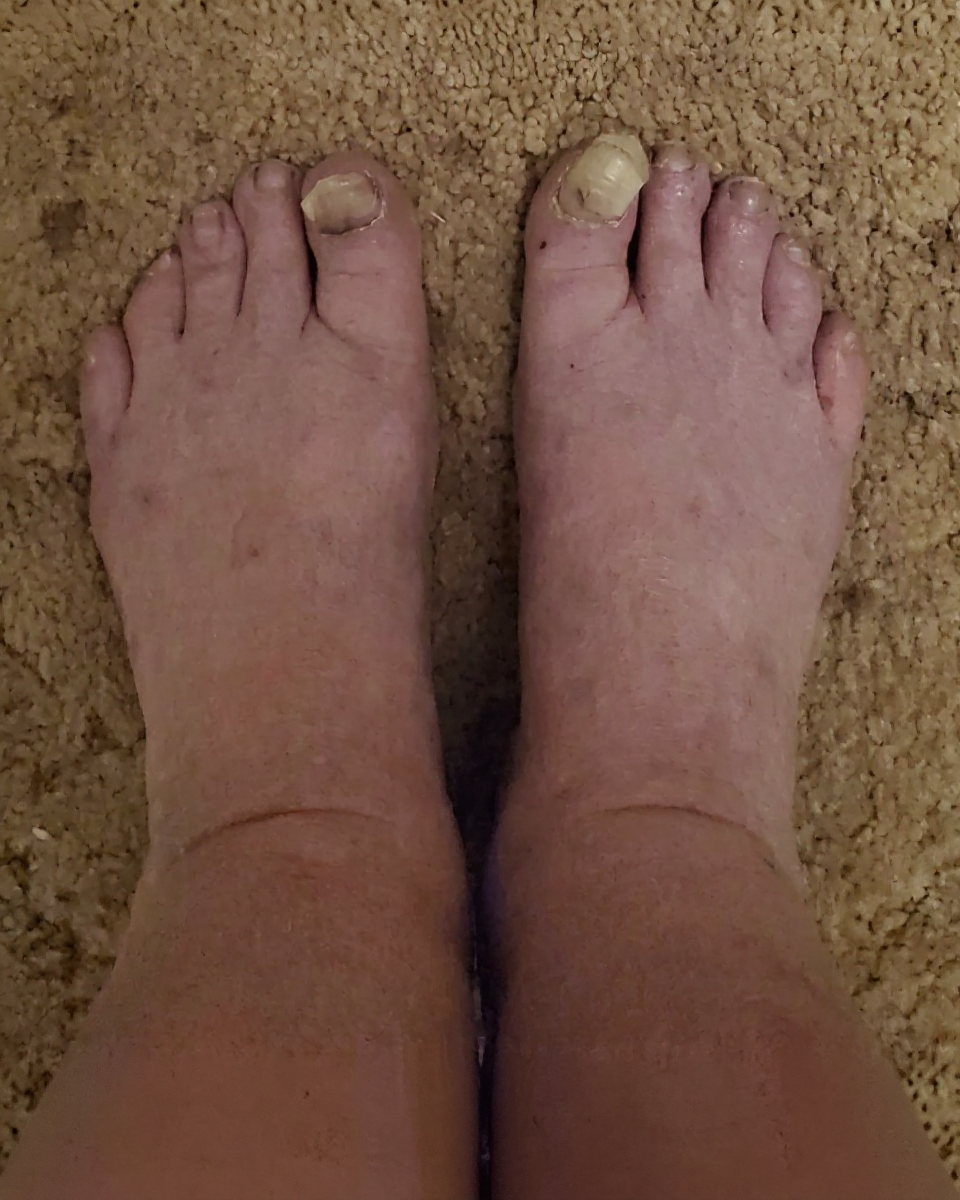
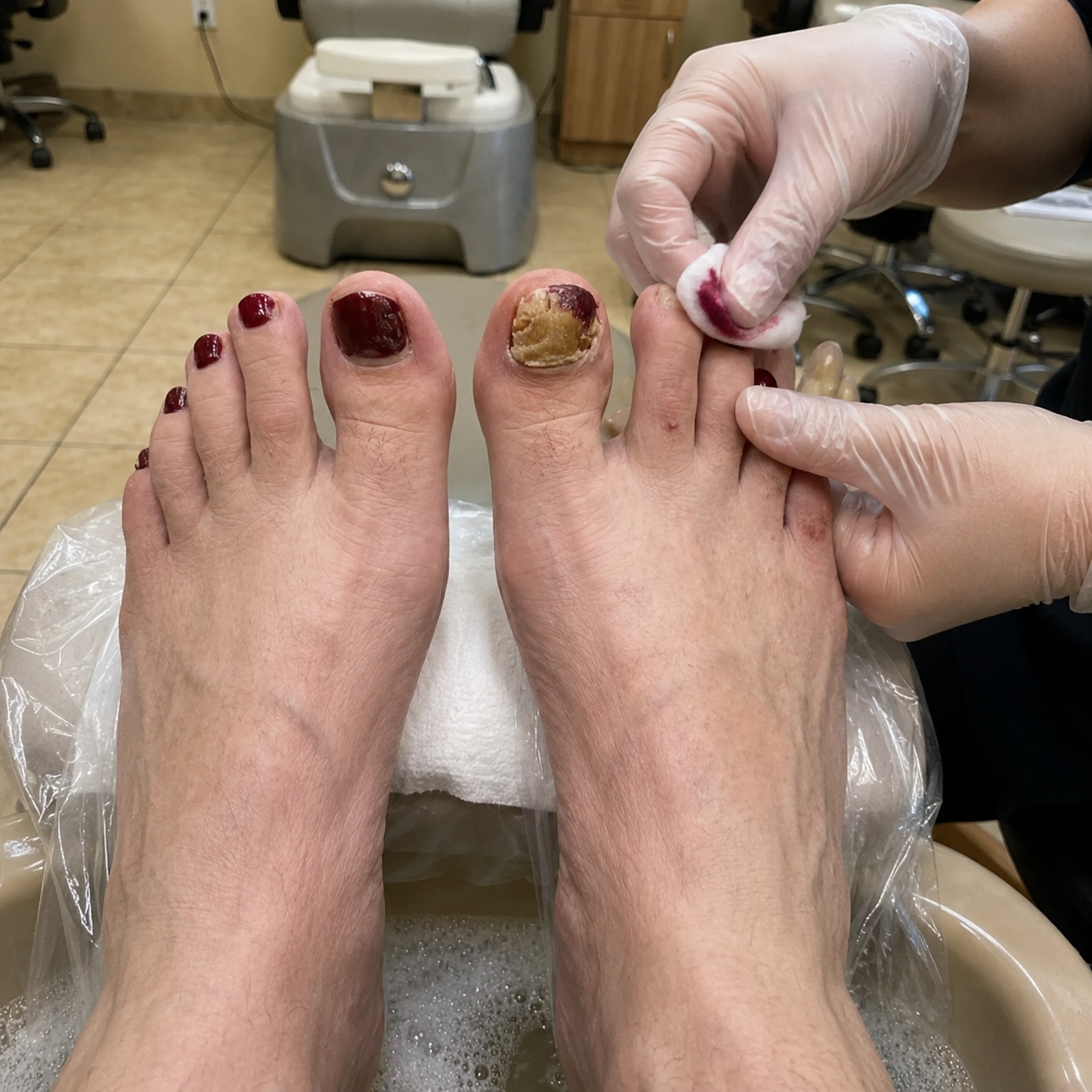
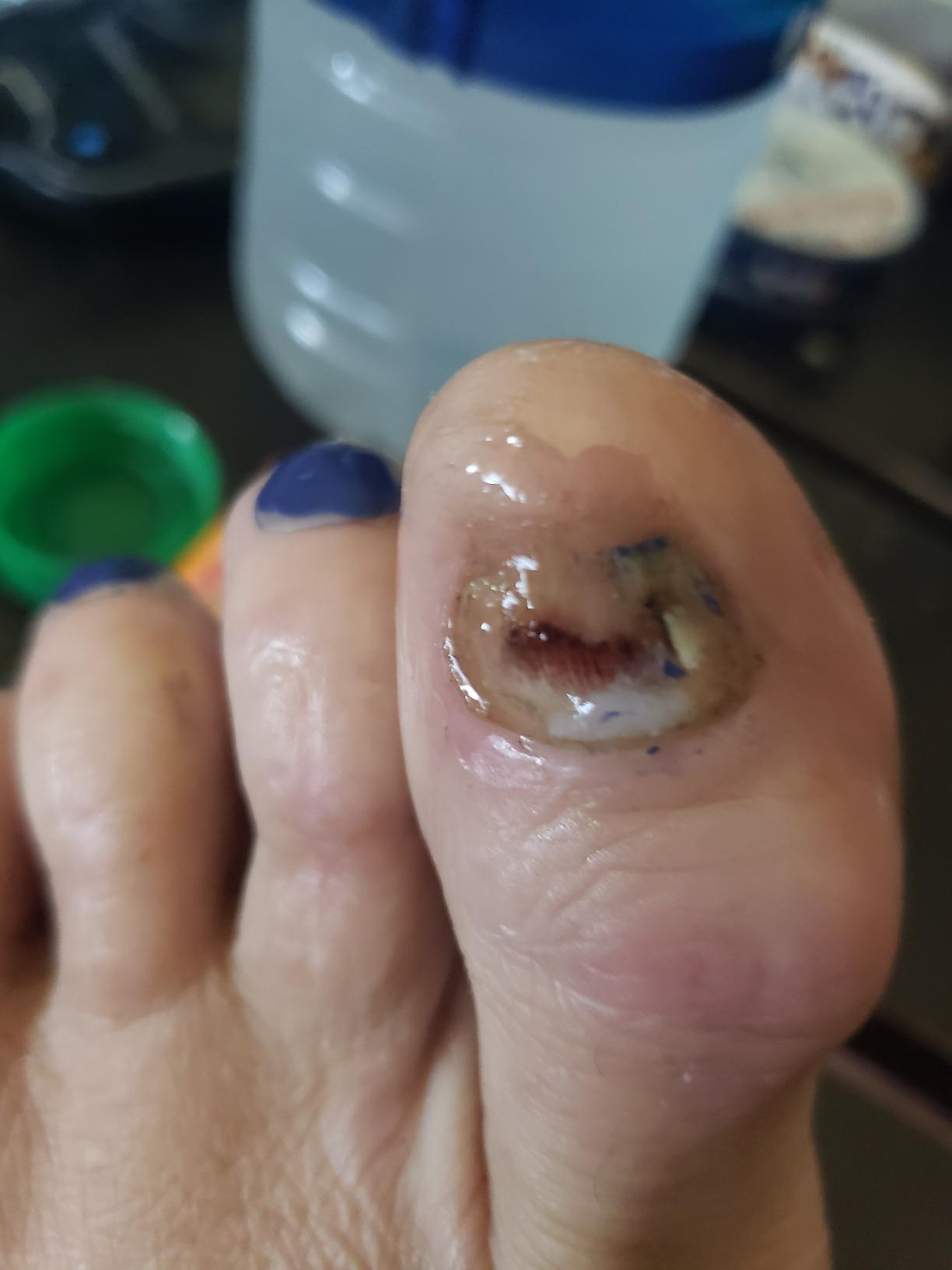
A Patient Called It "Just An Ugly Nail." Nine Weeks Later She Had A 2cm Ulcer Under It. Here's What I Wish She'd Known. I spent 31 years as a diabetic foot-care nurse, and the thing I watched destroy more feet than anything else wasn't the fungus. It was the shrug. "It's just an ugly nail." "It doesn't hurt." "I'll deal with it later." I heard it a thousand times. From people who had no idea that on a diabetic foot, a thick, lifting, fungal nail isn't a cosmetic problem. And it can't get worse fast if left untreated. Let me tell you what I actually watched, year after year. A nail gets thick. Crumbly. It lifts at the edge. On anyone else, that's gross but harmless. On a diabetic, that hardened ridge starts pressing into the skin beside the toe — or rubbing the inside of the shoe — in a spot the person often can't fully feel, because the nerves there don't report pain the way they should. So the rubbing continues. Quietly. Day after day. Until the skin underneath breaks down. I kept the numbers on my own unit, because nobody else seemed to be counting. Over my last decade there, roughly 1 in 3 of the diabetic foot ulcers we treated started under or beside a thick, neglected toenail. A third. Over a nail the person had been told to "just keep an eye on." And once a diabetic foot ulcer opens, the odds stop being abstract: a real percentage of them never fully heal, and a real percentage of those end in amputation. Those aren't scare numbers. Those are the numbers I charted. That's the part that stayed with me. It was never the dramatic cases. It was the ones who did everything right and got blindsided by the one thing everybody called harmless. About two years ago, it happened to me. My own big toenail started thickening. Yellowing at the edge. Lifting. The exact nail I'd warned my patients about for three decades was now on my own foot — and I'm borderline diabetic myself, A1C creeping up year after year, with the family history to match. My father lost two toes. I knew which road this was. I went to my doctor. He looked at it for about four seconds. "That's just fungal. Cosmetic, really. Keep it trimmed, keep an eye on it, let me know if it bothers you." Keep an eye on it. Thirty-one years of watching where "keep an eye on it" leads, and that was the advice. My numbers weren't bad enough yet for anyone to take the nail seriously. But I knew exactly what I was looking at. I'd stood at the foot of too many hospital beds to pretend a thickening nail on a diabetic foot was nothing. So I did what I tell my patients to do. I tried to manage it myself. Tea tree oil. Vicks. The drugstore antifungal paint. A pricey lacquer the pharmacist swore by — $58 for a bottle that did nothing. I filed it down every week until my hand cramped. Eight months later? The nail was thicker than when I started. Still lifting. Still pressing. I knew the next stop. An antifungal pill conversation, or worse — the podiatrist mentioning removal. I'd assisted on enough nail-removal procedures to want no part of one on my own foot. But the truth was, I didn't know what else to do. Then about four months ago, one of my old patients came by — Diane, 67, diabetic for fifteen years. I'd treated her big toe for the same thick fungal nail for as long as I'd known her. We'd both more or less given up on it. But this time her foot looked different. The thick, raised buildup on that nail was gone. The nail was flat against the bed. Smooth at the edge. No ridge digging into the skin beside it. I asked her what on earth she'd done. She told me she'd stopped trying to kill the fungus first. Said someone had explained to her that she'd been doing it backwards for years — that the problem was never just the fungus, it was the wall of dead, hardened keratin sitting on top of it. As long as that buildup was there, nothing reached underneath. So she used something that broke the buildup down first, then went after what was living under it. "The thick part softened and came away within the first couple of weeks," she said. "And once that was gone, the nail finally had a chance to grow in flat." I'll be honest. I was skeptical. After 31 years, I've heard every miracle-cure story there is. Apple cider vinegar. Bleach soaks. Listerine. Patients who swear something worked when really the nail just looked different that day. But Diane wasn't like that. She was sharp. She'd been burned by every drugstore product on the shelf, same as me. And she was genuinely relieved — the way you only are when a thing you'd accepted as permanent finally lets go. That night I sat down and looked at my own foot. Same thick, lifting nail. Same pressure ridge I'd been filing for eight months. And I kept thinking about what she'd said. Backwards. So I started digging. Because clearly nobody else was going to figure this out for me — not my doctor and his "keep an eye on it." Here's what I'd been getting wrong my entire career. When a nail goes fungal and thick, it builds a wall of dead, compacted keratin. That wall is the whole problem. It's what presses into the skin. And it's also what makes the fungus almost impossible to reach — every antifungal oil, paint, and drugstore drop sits on top of that wall and never gets underneath it. Studies on topical nail treatments put the cure rate as low as 8%. Eight percent. Not because the ingredients are weak — because more than 90% of the time they never reach the infection. They die on the surface of the wall. Which means the conventional approach is backwards. Everyone goes straight at the fungus. But you have to deal with the wall first. And that requires a completely different standard than anything I'd been reaching for on the drugstore shelf. It needs three things, in the right order: First, something that actually dissolves hardened keratin — that breaks the thick, lifting buildup down so it softens and clears away. That's what relieves the pressure ridge. That's the step that matters most for a diabetic foot. Second, something that strips off the loosened dead layers underneath, clearing the path down to the nail bed. Third — and only now — the antifungal oils, which can finally reach the bed where the infection actually lives instead of dying on the surface. Break down the wall. Strip the buildup. Then reach the bed. In that order. No wonder the things I'd tried never worked. They were all step three. Nobody had a step one. So I started looking for something that actually did all three in sequence. And that's where it got frustrating — because most products on the shelf are still just the same antifungal oil in a new bottle. One ingredient, pointed at a wall it can't get through. I tried two more before I found the right one. Six weeks each. The buildup didn't budge. Then Diane told me the specific one she'd used. It's called Deep Nail Renewal. I looked it up expecting to be disappointed again. But it was built around exactly the standard I'd worked out — and it was the only one I found that did all three steps in order. 40% urea — the concentration that actually dissolves hardened keratin, not the trace amount in a foot lotion. That's the wall coming down. 2% salicylic acid — to strip away the loosened dead buildup underneath. Then coconut oil, avocado oil, aloe, and green tea extract — the antifungal and nourishing oils that finally reach the bed once the path is clear. Three steps. The right order. The first product I'd seen that treated the buildup as the actual problem instead of an afterthought. I ordered it. When it arrived, I measured the nail before I started — I'm a nurse, I document everything. The thickened nail plate was 4mm at the worst edge. The healthy nail on my other big toe was 1.5mm. That was my baseline. I used it that night. Didn't expect much. I'd been burned twice already. Within the first week, the surface of that thick nail started softening. By the end of week two, I measured again: 3mm. The raised buildup at the edge — the ridge I'd been filing down for eight months — had thinned enough that it stopped catching on my sock. Week three: 2.5mm. I could press the skin beside the toe and feel that the pressure was gone. The nail was sitting flatter than it had in over a year. Week six: 2mm, and new growth coming in at the base — flat, not lifting. Closer to my healthy nail than it had been since this started. My husband noticed before I said anything. Watched me walk across the kitchen one morning without that little hitch in my step I'd stopped even noticing. It's been four months now. That nail measures 1.5mm — the same as the healthy one. Flat against the bed. Smooth at the edge. The pressure ridge is gone — and so is the thing I was actually afraid of: a hardened nail quietly grinding down skin I can't afford to lose. No pressure point. No rubbing. No "let's keep an eye on it" while the clock runs. Last month I went barefoot on the beach with my granddaughter for the first time in years. Not because the nail finally looked pretty — though it does. Because I wasn't worried about what was happening underneath it anymore. I'm sharing this because I watched this exact problem hurt too many people who never saw it coming. If you're diabetic, or borderline, and you've got a thick, yellow, lifting nail that someone told you was "just cosmetic" — please understand what I spent 31 years watching. On your feet, that's not a cosmetic problem. It's a pressure point in the making. If you've tried the oils and paints and they did nothing — now you know why. They were all step three. They never got through the wall. An 8% cure rate isn't bad luck. It's the wrong order. Deep Nail Renewal is different because it starts with the wall. 40% urea to dissolve the buildup, 2% salicylic acid to strip it, then the oils to reach the bed. In that order. Built for exactly the nail I was warning patients about for three decades. After 31 years, I thought I'd seen every option there was. Turns out my own patient knew something I didn't. Here's where I got mine: https://getaerixis.com/lp-v1 (They're running a buy-two-get-one-free offer right now, so I ordered the full set and a backup.) — a retired diabetic foot-care nurse P.S. — A few things I wish I'd known before ordering: Deep Nail Renewal comes with a 120-day money-back guarantee. If your nail doesn't respond, you send it back and get your money back. No questions asked. I wish I'd had that before I wasted eight months and a small fortune on drugstore paints that never had a chance of working. The only catch is it's a small company, and the full treatment sets go out of stock when one of these posts gets around. I'd check while they have it. If you're diabetic and you've got a thick, lifting nail you were told to ignore — don't ignore it. I watched where that road goes for 31 years. Clear the buildup before it becomes the thing nobody warned you about. Check if the full set is in stock here: https://getaerixis.com/lp-v1
Where the ad sends people
getaerixis.com
If you have nail fungus, you'll want to try this
5 Reasons People Who “Tried Everything” and Hid Their Feet for Years Are Finally Watching Clear, Pink Nails Grow Back
Learn more: getaerixis.com(opens in a new tab)