Age Spot Reset
Age Spot Reset Facebook ad: “What your skin has lost”
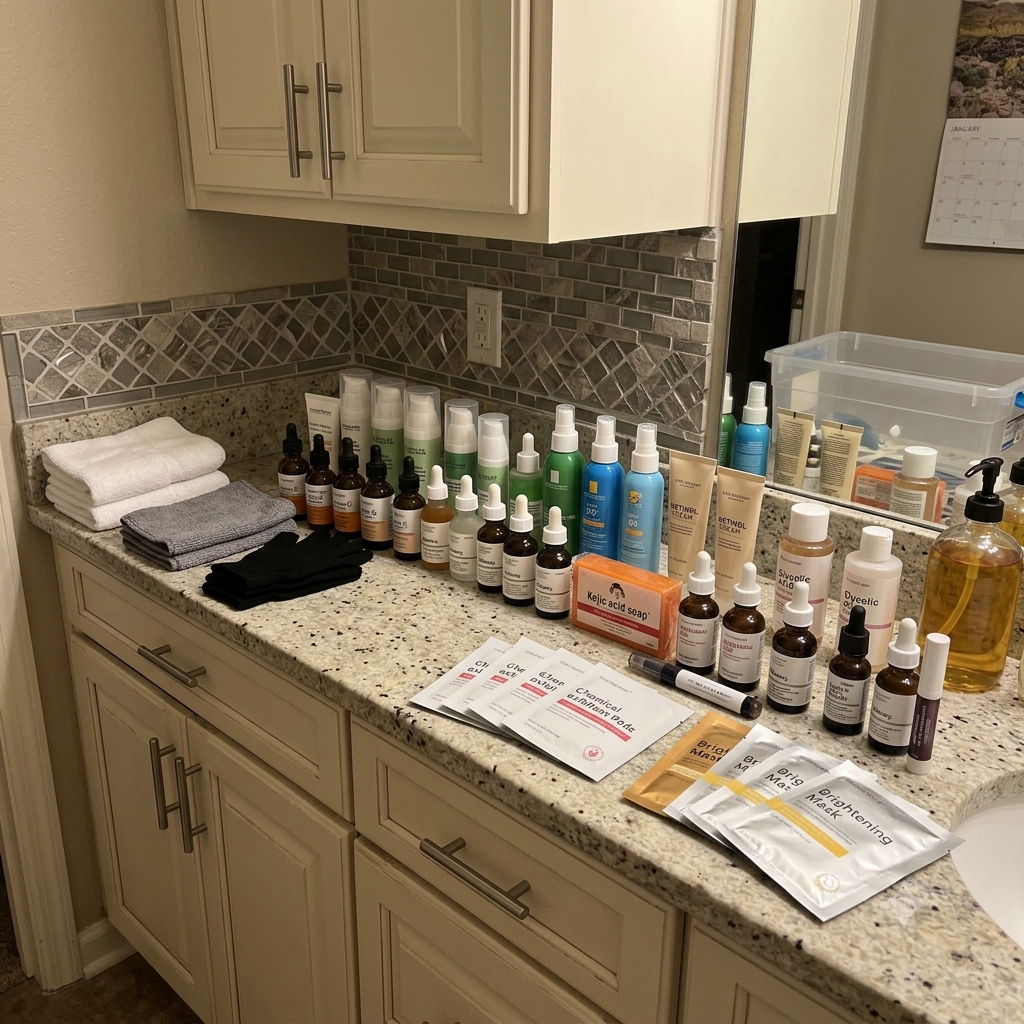
Ran for 6 days, from July 13 to July 19, 2026, the last day Crush saw it.
Run by Age Spot Reset on Facebook. Crush is not the advertiser and does not verify its claims. See this ad in Meta's Ad Library(opens in a new tab)
Want an ad like this for your product?
Crush makes new ad images for your product from this ad: your logo, your product photo, your offer.
Trials from $19.95 USD, then $79.95 USD a month. Cancel anytime.
About this ad
- Meta Ad Library ID
- 1319976950220955
- Platforms
- Facebook, Instagram, Audience Network, Messenger and Threads
- Relaunches
- 0
Ad text
I am going to say something that nobody with age spots wants to hear and I don't give a f*k if it upsets you. My sister started her treatment in July, 2024. Threw out every bottle of the cheap stuff. Applied brightening serum every morning and night. Layered on the SPF religiously. Started rubbing vitamin C oil on, of all things. She did everything the dermatologist told her. She gave up and lived in shame until the day she stopped leaving the house on October 19th at 4:17 AM. She was 61 years old. Started the new routine on July 8th. Did nothing the doctor didn't approve. Applied three times a day, rain or shine. Spent $2,200 on brightening products. The dermatologist bills came to $6,300. The laser consultation was $1,200. Her favorite short-sleeved blouse is still in the closet by the door. I can't move it. If I move it, she's really gone. I need to tell you what happened to Diane. Because I'm seeing the same posts on Facebook that I was making just months before she gave up, "my sister's dermatologist told her her spots are spreading to her arms, any tips?", and it makes me physically ill. If you're over 50 and your age spots keep darkening, or someone you love's do, please read this entire thing. I know it's long. I know you're scrolling. I know you have things to do. Fifteen months ago I would have given anything, everything, for someone to tell me what I'm about to tell you. Diane went in for a routine skin check on June 28th, 2024. She felt fine. Better than fine. She'd just turned 60. She still walked the neighborhood every morning. She still wore short sleeves to the farmer's market on weekends. She thought it was nothing and honestly so did I. Two days later her dermatologist called. Spots spreading across both forearms. Three new patches on the décolleté. "Your pigmentation is progressing, Diane. We need to talk about your sun damage." Diane was quiet on the call. I was in the kitchen pretending not to listen. "How are you treating?" "Brightening serum twice a day. SPF every morning. Vitamin C at night. Maybe a retinol sometimes." "That's not reaching it. You need to stop the darkening. Completely. No exceptions. We'll re-check in three months." Diane hung up the phone and sat at the kitchen table for forty minutes without saying anything. Then she stood up, walked to the bathroom, and took everything out. I watched her throw out a $40 bottle of drugstore brightener. A $25 tube of vitamin C cream. A $30 box of retinol serum. Two bottles of SPF mist down the bathroom sink. The whole skincare shelf, gone in under an hour. "That's it," she said. "I'm done with all of it. I'm doing this the right way." And she was. For 103 days, she didn't skip a single routine. No missed serums. No forgotten SPF. No lazy nights. Not at our niece's wedding in August. Not at the beach trip in September where she wore long sleeves the whole time. Not at her own 61st birthday dinner in October where her friend wore a sleeveless dress right in front of her and Diane wore a cardigan in the summer heat. She stopped going to her Tuesday morning garden club because she couldn't sit there with her arms uncovered while everyone else laughed and gestured. She lost her friend Mike's wife, who told her "you cover up too much now" and stopped inviting her. She lost the Friday afternoon walks with the neighbors. She lost a piece of herself she'd been carrying for 35 years. And she did it anyway. Because the dermatologist said to. She layered every product in those three months. She bought a prescription hydroquinone cream, Diane, with the prescription pad, I still can't picture it. She started a chemical exfoliant her dermatologist "wasn't against." She did the light therapy sessions. She used the brightening mask the aesthetician sold her, the one she called "sandpaper for skin." She did everything right. The follow-up check came back on October 7th. Forearms: spots darker than before. Décolleté: two new patches appeared. She'd treated her skin every single day for 90 days and the darkening had only gotten worse. The dermatologist said "give it more time. Pigmentation responds slowly. We'll re-check in 6 months. Keep doing what you're doing." Diane came home that night and sat at the kitchen table again. The same table she'd sat at after the first call. She didn't say anything for a long time. Then she said: "Carolyn, I gave up everything. Covered up all summer. And it didn't work." I told her to give it time. I told her the doctor said six months. I told her to trust the process. She nodded. She kept applying. She kept layering. She kept doing the light therapy follow-ups. Five days later, five days, she woke up at 2 AM because she'd been lying awake staring at her hands in the dark. I drove to her house. By the time I got there at 4:30 AM, she was sitting at the kitchen table with her hands flat on the surface looking at them like they belonged to a stranger. Not "a little dark." Dark. Like something underneath had been building for years and finally broken through. The dermatologist, a young woman, couldn't have been 35, looked at Diane's forearms at the emergency appointment and her face did this thing. "Ms. Carter, the signal in your deep dermis is now fully established. The pigmentation cascade is locked in. We're talking about laser resurfacing and a surgical referral." "But I've been treating it for three months," Diane said. The doctor just looked at her. "I know, Ms. Carter. I'm sorry. The serums never reached it." Diane spent the next year in a battle she couldn't win. I learned things about age spots I never wanted to know. I learned that when the pigmentation signal gets into the deep dermis, it builds a kind of barrier around itself. They call it the lipid barrier. It means the darkening your sister is fighting stops being something you can wipe away. Every serum she put on top just sat on the surface, useless. On day 6 of the prescription cream, Diane asked me three times in twenty minutes if her hands looked any lighter. They didn't. They hadn't for years. I learned that they recommend something called laser resurfacing when nothing else works. The aesthetician told me it burns the surface and forces new skin to grow. She said it's the only thing strong enough at this stage, and they have to do multiple sessions because the signal underneath keeps driving the pigment back. She said it's the nuclear option, and Diane was already scared of what it might cost her. She did two sessions. Three months in, the new spots were already appearing at the edges of the treated areas. The doctors talked about more sessions. Then they talked about how the darkening kept returning. Then they stopped talking about a solution altogether. Five months in, the spots spread to her upper arms. She started wearing cardigans to hide her skin. She wouldn't go sleeveless. The shame of it kept spreading. I called my daughter. Month eleven, she stopped wearing short sleeves entirely, even in her own home, even in the July heat. She'd given up. The dermatologist called it "treatment-resistant solar lentigines." I called it the thing that stole the last good summer from my sister. That last morning, October 19th, I was in the kitchen down the hall. She'd asked me to give her a minute alone. At 4:09 AM I heard her crying. At 4:17 AM, Diane walked into the kitchen in her long-sleeved robe. I knew before she said it. "I'm done fighting this. I'll never have my skin back. I'm so tired." I drove home at 6 AM after sitting with her all night. The serums were still on the counter. The SPF was by the back door. The hydroquinone was on the windowsill above the sink, next to the retinol. Her favorite short-sleeved blouse, the one she kept because she loved it so much, was still in the closet by the door. Where it sits today. I sat in her recliner. I didn't move for six hours. The house was so quiet I could hear the refrigerator hum. 38 years we'd been close. And now the only sound in my mind was her voice saying she'd given up. She stopped leaving the house the following January. The last family gathering was January 19th. Our cousin flew in from Arizona. My daughter drove up from Bloomington. The grandkids wore their nice clothes. My five-year-old granddaughter asked me: "Grammy, why does Auntie Di always wear long sleeves?" I told her Auntie Di's skin had been hurting her. She said: "Did the doctors fix it?" I had to walk out of the room. After that, I tried to go back to normal. I couldn't. Because every time I opened my phone I saw women my age, women Diane's age, posting things like "dermatologist said my age spots are mild, anyone tried lemon juice?" or "annual checkup, slight pigmentation, no big deal." And I knew, I KNEW, some of them were doing exactly what Diane did. Applying. Layering. Protecting. Scrubbing. Doing the laser sessions. And watching the spots keep coming back anyway. I couldn't just sit there and watch it happen. So I started researching. Not because I wanted to. Because I had to. Because if Diane gave up everything for nothing, if I can't save even one person from what happened to her, then I can't live with that. I read for weeks. Dermatology journals I barely understood. Skin health forums. Studies out of Japan and Germany. And one thing kept coming up, over and over, that no dermatologist ever told us: The reason Diane's spots never faded is that serums and creams only treat the surface. They can't reach the signal that's already driving the darkening from underneath. Specifically: the lipid barrier. The outer skin layers are a waterproof shield made of lipids. Every serum, every cream, every treatment you put on top bounces right off, the same way water beads off a waxed car. And underneath, the pigmentation signal builds in the deep dermis, locked in and protected, that makes it nearly impossible to reverse from the outside. And here's what no one told us. After age 40, the skin's lipid barrier thickens by a little more every single year. Sun damage, aging skin, years of exposure, build that barrier even faster. By 55 most people have a barrier so established that nothing water-based can penetrate it without knowing it. And here's the part that made me sit up straight: When the lipid barrier thickens, the signal driving pigmentation can't be reached by anything you apply on top. Diane's spots weren't darkening because she didn't apply enough. They kept darkening because her treatments physically could not get through to where the signal actually lived. Read that again. Her spots didn't win because of the serums. They won because the signal had built a fortress underneath that water-based treatments physically cannot break. And here's why all that applying and layering didn't save her: treating the surface stops nothing. The signal lives below the barrier. Her treatments never got through it. Serums, creams, the brightening mask, those things sit on the surface. They don't reach what's already locked in underneath. That's why her spots wouldn't fade. She gave up everything she loved to fight a signal from the outside of a fortress it was hiding deep inside. I sat with that for three days. And then I started looking at what I'd been doing. I'd thrown out Diane's vitamin C serum the week after that last gathering. But I bought a new bottle for myself. Because I'm 59. Because my own hands had started showing spots at the edges. Because I was scared. I rubbed it on for three weeks. My doctor, a different one than Diane's, who I called because I trusted her, laughed when I told her. "Carolyn, vitamin C serum only touches the surface of the skin. But you can't reach a signal hiding behind a lipid barrier it can't get through. It sits on top. It never reaches anything." Then she said something I'll never forget: "If Diane had been on something that actually penetrated all 7 skin layers and reached the deep dermis signal from the inside, the picture might have been very different." I stopped breathing for a second. "Why didn't her dermatologist tell us that?" She was quiet for a long time. "Because we don't recommend botanicals. And the formula that works isn't something we sell." I went to the beauty store the next day. I stood in that aisle for forty minutes. Vitamin C serum. Brightening cream. "Age spot" 30-day kits. Retinol treatments. Niacinamide drops. Generic botanical brightener, $14.99, the cheap stuff. I bought the cheap one. Used it for two weeks. No change to my darkening hands. I started Googling and what I found made me throw the bottle in the trash. A water-based serum cannot penetrate the lipid barrier. The active ingredients never get through the outer skin layers before they evaporate or wipe off. Most of what you're paying for never makes it where it needs to go. You're rubbing $14.99 into nothing. A lipid-soluble botanical oil bypasses this entirely. Oil penetrates oil. The right formula reaches the deep dermis from the inside, where the signal actually lives. I had been doing the right thing in the wrong form. I was furious. I'm still furious. About a week later I was reading a thread on Facebook, one of those skin health groups, full of women like Diane was, "spreading spots" women, "keeps coming back" women, and a woman posted something that stopped me cold. She said her sister had been told to treat her pigmentation at 58. She treated it. The spots barely faded for six months, sound familiar?, and then she found a cold-pressed botanical oil that combined bakuchiol with oil-soluble vitamin C, to reach the deep dermis signal from the inside. Her sister's forearms went from covered in dark patches to visibly lighter at the edges in ten weeks. Without going back to the serums. Without doing anything else different. I read that post six times. I started looking into the formula she mentioned. And what I learned is that there are three things a serious age spot treatment has to do at the same time, or it's a waste of your money: It has to penetrate all 7 skin layers and reach the deep dermis from the inside. That's why it has to be an oil, not a water-based serum. Not something you layer on the surface. The actual delivery route, through the lipid barrier the signal hides behind. It has to switch off the pigmentation signal in the deep dermis. That's bakuchiol, the cold-pressed botanical active. It acts like a biological key that unlocks the overdrive switch, calming the cascade that forces your skin to keep producing excess pigment. It has to calm the inflammatory signal feeding the darkening. That's oil-soluble vitamin C, working systemically where no water-based serum on the surface can reach. Shutting down the cycle from below instead of chasing it from above. Three things. All three. At the same time. As an oil. I went through every product I'd looked at in that aisle. Not one of them did all three. Most did one. The expensive ones were still water-based serums. None of them were a real lipid-soluble oil. That's when I found Dermiqua. It was the only formula I could find that hit all three. Cold-pressed bakuchiol. Oil-soluble vitamin C. Sea buckthorn. Camellia oil. A cold-pressed botanical oil, applied morning and evening. 90-day money-back guarantee tied to your actual results, if your spots don't improve, you get every penny back, no questions asked. I almost didn't order it. After the beauty store aisle. After the vitamin C serum. After Diane. After everything. But I had a best friend who was still fighting the spots the way Diane used to fight them. I had a niece with "borderline" pigmentation on her hands. I had myself. I ordered it. My best friend Eleanor. Came back from a routine dermatologist visit with spots spreading to four new areas. Didn't know what to do. I sent her a bottle. I didn't ask. I just sent it. Wrote a note that said "If you don't apply this every single morning and evening I will never speak to you again, Eleanor, I mean it." She applied it. She kept covering her arms, she still felt ashamed, she's stubborn the way Diane was stubborn, but she applied it every morning and evening. She went back to her dermatologist four weeks ago for a follow-up. Forearms: visibly lighter at the edges. Fading. After years of darkening. In ten weeks. She hadn't changed her diet. She hadn't started any new serum. She hadn't done any laser. The only thing she changed was the botanical oil she applied morning and evening. She called me crying. My best friend. 57 years old. Crying on the phone like a kid. She said: "Carolyn, I think Diane gave up because nobody told her about this." I had to hang up. Then there's my niece. 44, two kids, "borderline" pigmentation on two areas at her last checkup. Started applying it six weeks ago. She says she's wearing short sleeves again. She says the dark patch on her forearm, the one her dermatologist said was "just cosmetic," is visibly lighter at the edges. My neighbor Karen. Her wife battled age spots for years before she passed of something else. Two of us on the same street who watched someone we love cover up. She started applying it two days after I told her. She says it's the first time in a decade she's looked forward to summer. I told my sister-in-law. I told Diane's daughter. I told the women in my book club. I told the gals at Diane's old garden club when I went to drop off a casserole. I'm not a dermatologist. I'm not a scientist. I'm not selling anything and I don't get a penny from any of this. I'm a 59-year-old woman sitting in my late sister's chair at 2 in the morning because I can't sleep and I can't stop thinking about my best friend and whether she's going to end up where Diane ended up. Here's what I know because I lived it: Serums and creams treat the surface. They don't reach what's locked in the deep dermis. They don't change anything. Vitamin C serum sits on top of the lipid barrier. It doesn't get through to the signal underneath. A water-based serum cannot penetrate the lipid barrier properly. A cold-pressed botanical oil bypasses this. Diane gave up everything she loved for 103 days and it didn't save her skin because nobody told her where the signal was actually hiding. I wish someone had told us before June 28th, 2024. Before the routine skin check. Before the serums in the trash. Before the 103 days of long sleeves in the summer heat. Before October 19th at 4:17 AM. I can't go back. Diane can't get those summers back. Her short-sleeved blouse is still in the closet and it's going to stay there. But you can still go forward. Your sister can. Your best friend can. You can. The page that explains all of this, the lipid barrier mechanism, why the spots don't fade when you treat the surface, what your dermatologist doesn't know about penetrating the deep dermis, and what Dermiqua actually contains, it's the page I found at 3 AM. Not layering. Reaching from the inside. That's the line that finally made it click for me. I want you to read it. Not for me. For whoever you'd hate to see cover up for the rest of their life. 👉 https://dermiqua.com/pages/age-spots/ Diane used to say: "You can't un-darken what's already set, but you can stop it from going further." You can stop it from going further. Margaret Collins, age 59, Springfield, IL P.S. The blouse is still in the closet. I still can't move it. Every summer I walk past it and for one second I forget. For one second I think she's about to come over and show me her arms before her morning walk. She can't. $6,300 in dermatologist bills. $1,200 for the laser consultation. 103 days of her giving up everything she loved for nothing. And a botanical oil that costs less than her Tuesday morning garden club dues, an oil that reaches the deep dermis signal from the inside, the way her own doctor told me could have changed everything if we'd known. Please. Don't end up here. Don't let someone you love end up here. 👉 https://dermiqua.com/pages/age-spots/ P.P.S. I don't work for Dermiqua. I don't get a penny from this. I'm writing this at 2:14 AM because I can't sleep and Diane's side of the family is so quiet now and my best friend is 57 and stubborn and I'm scared every time she tells me she's "fine." Share this with anyone you love whose age spots keep darkening. Even a little. Even "occasionally." Even if they already gave up. Please.
Where the ad sends people
dermiqua.com
What your skin has lost
Try Dermiqua for 90 days. If you don't see real changes in your spots, your confidence, or how your hands look overall, we'll refund every cent. Just an email. That's it.
Learn more: dermiqua.com(opens in a new tab)