
Active· since Jul 3, 2026
- 25
- days running
- 3
- relaunches
Ad copy
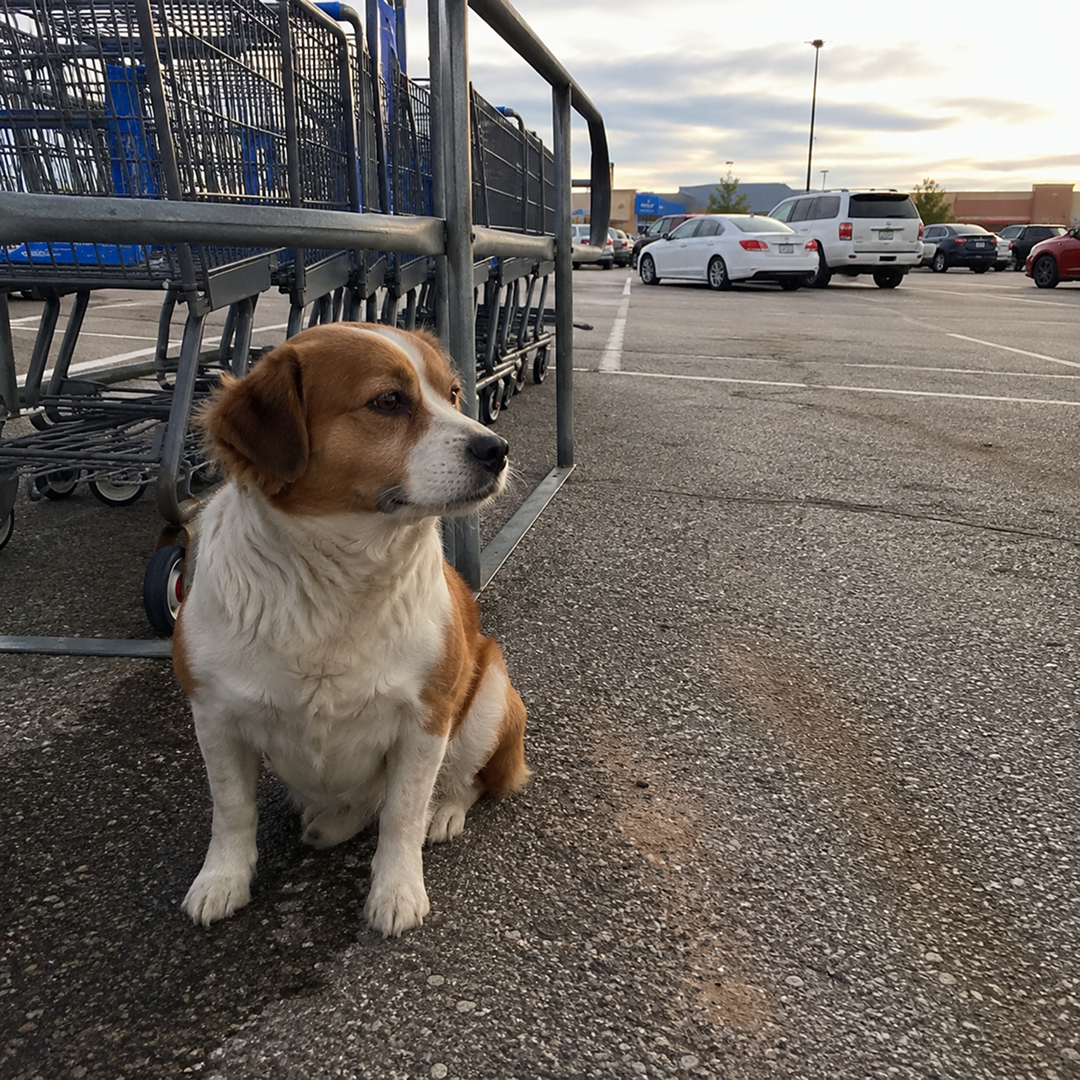
I found a dog in the Walmart parking lot last Tuesday. Small thing. Brown and white. Sitting by the cart return like it was waiting for someone who wasn't coming back. If I'd known what was on the other side of the door I was about to knock on, I would have sat in my car a little longer and gathered myself. But I didn't know. So I just walked up to that porch with a stray dog at my heels. I almost walked past it. I was loading my bags into the trunk, laundry detergent and garbage bags, nothing exciting, when I saw it out of the corner of my eye. Just sitting there. Not barking. Not running around. Just sitting. Looking at every car that drove by like it was checking to see if this one was the right one. My husband says I can't walk past anything that needs help. I tell him somebody has to care. The dog had a collar. Faded red. A handwritten tag in shaky permanent marker. The name Benny. An address. No phone number. I pulled up the address on my phone. Thirty minutes away. I stood in that parking lot and had a conversation with myself I'm not proud of. The shelter was easier. The shelter was on my way home. The shelter would probably scan him eventually and probably call the owner eventually. Probably. But the dog was old. You could see it in his face. The gray around his muzzle, the cloudy edges of his eyes, the careful way he stood up. And whoever wrote that tag had hands that didn't work as well as they used to. That handwriting was someone's last attempt to keep the only thing they had left from being lost. I opened the back door. Benny climbed in like he'd been waiting for a ride and put his chin on his paws. The address took me off the highway and down a two lane road. Past a closed farm stand. Past a church with a gravel lot. The house was small and white. Tired the way a yard gets tired when one person used to keep it up and now nobody can. The gate on the side fence was broken. One hinge snapped clean. The kind of repair a husband would have made in twenty minutes on a Saturday morning. Nobody had made it. Benny was sitting up in the back seat now. His tail was sweeping back and forth. He recognized this place. I knocked. It took a while. Slow footsteps. A chain sliding. The door cracked open four inches and a small woman with white hair looked through. I didn't get to introduce myself. Benny pushed through the gap. The woman dropped to her knees the slow careful way old knees drop and she had her dog in her arms before she was even on the floor. She was holding him against her chest with both hands and saying his name into his fur over and over. He was making the high pitched whine dogs make when their person comes home. She looked up at me eventually. Her eyes were wet. "That gate's been broken for two months," she said. "I keep meaning to call someone. Gene would have mended it the same day it broke. He would have had it done before lunch." "Gene?" "My husband. Eight months." She pressed her face back into Benny's neck. "He got Benny for me the year before he passed. Said he didn't want me alone in this house." She looked up at me again. "Benny still sits by Gene's chair every morning. Every morning for eight months. He's the only thing in this house that still waits for him." Her voice broke. "I can't lose him too." Then she looked at me, a stranger who had driven thirty minutes to bring back a dog she could have dropped at a shelter, and she said please come in. Let me make you coffee. The kitchen was small and clean the way a kitchen is clean when one person uses it. One mug on the drying rack. One plate. A table with two chairs where only one had been used recently. The other had a stack of envelopes on the seat. Medical bills. Benny walked straight to that second chair and lay down beside it. Put his chin on the floor. Looked up at the empty seat. Waiting. Her name was Ruth. She was 78. She made coffee in a percolator on the stove, the kind that takes ten minutes and fills the whole house with the smell. And while it brewed she talked. She didn't start with the sad part. That's how you know somebody really loved somebody. They start with what was there before the loss. "Gene was a plumber. Forty one years. The kind of plumber people called at 2 AM on Christmas morning when a pipe burst because they knew he would come. And he always came. Boots on, truck running, didn't matter what time. He could mend anything. He could carry a water heater up a flight of stairs by himself. He had hands twice the size of mine." She held up her own hand. Small. Thin. "We were married 52 years. People say that like it's a number. It's not a number. It's every Tuesday morning for 52 years where he had coffee made before I woke up. Two sugars, splash of cream. He never once got it wrong." She looked at the empty chair across from her. The one Benny was still lying beside. "That was his." I didn't say anything. You don't say anything in that moment. "His doctor told him he had fatty liver when he was 61. His ALT came back at 78. Doctor said it wasn't serious. Take some milk thistle, eat a little better, we'll keep an eye on it. Gene wrote the number on the back of a business card and stuck it on the refrigerator. He did that with everything. His handwriting was on the fridge for thirty years." She smiled in the way that hurts. "He took the milk thistle every morning for fourteen years. Bought it at the pharmacy. The girl behind the counter recommended a brand. He trusted her the same way he trusted his doctor. If somebody who knew more than him told him to do something, he did it. He never missed a day." "Every six months he went in for bloodwork. Every six months they'd pull up the chart and say his ALT looked stable. 84. 82. 91. They kept saying stable. They said the milk thistle was doing its job. They said diet and monitoring were the protocol. Gene would come home and tell me. We'd both be relieved. We thought we'd dodged something." She wrapped both hands around her mug. "He was on that protocol for fourteen years. We thought stable meant safe." She set the mug down. "But he wasn't safe. And I watched it happen so slowly I didn't realize what I was watching until it was too late." "The first thing was his energy. Gene was a 5 AM man. Up before the sun. Coffee on, boots on, out the door. Forty one years he was like that. By year three on that milk thistle, I was the one making coffee. He started staying in bed until 6. Then 6:30. Then some mornings I would be dressed and he would still be under the covers. Not sleeping. Just not getting up." "I thought he was getting older. That is what I told myself. He is 64. He is 65. Men slow down." "Then his hands." She looked at her own hands. "Gene could hold a pipe wrench for eight hours. By year five he was dropping tools. Wrenches sliding out of his grip. Coming home with his fingers locked into a half curl he could not open without running them under hot water at this sink. He would stand there working them straight one finger at a time and tell me it was just stiffness. Just stiff. He said that for three years." "By year eight he had cut his work down from four jobs a day to two. Told me business was slow. Business was not slow. His hands were slow. His legs were slow. Everything was slow. The man who carried water heaters up stairs could not climb our front porch steps without gripping the rail with both hands." "I told him to push the doctor. He did. You know what they said." I knew. But I let her say it. "'Numbers look stable, Gene. ALT is 91. Whatever you are doing, keep doing it.'" "Gene's numbers looked stable. Gene could barely get out of bed. Gene's hands, the hands that mended every leaking pipe in this county for forty years, could not open a jar of peanut butter. But the chart said stable. The milk thistle was doing its job. The system was happy." "The brain fog came around year nine or ten. He would be telling me something and just stop. Look at me like he was trying to remember not the word but the whole thought. One night at dinner he asked me what he did that day. It was 6 PM. He had worked a full day. He could not retrieve any of it." "I begged him to push the doctor harder. He did. They ran a fibroscan. He came home and told me they said the liver was 'a little firmer than they would like.' Nothing alarming. Stay on the protocol. We will look again in a year." "A little firmer than they would like. He was scarring. He was developing cirrhosis under that protocol for years and they kept saying stable." She was quiet for a minute. Drank her coffee. Set it down carefully. "His last year was hard. He stopped taking jobs entirely. Told people he was retired. He was not retired. He was used up. He sat in that chair where Benny is laying right now and stared out the window. Sometimes he would talk about mending the fence in the back. Or replacing the faucet in the upstairs bathroom. Things he could have done in an hour ten years earlier. He talked about them like they were expeditions. Like they required courage to attempt." I thought about the broken gate hinge. "I would say Gene, let me call somebody. He would say I will get to it, Ruthie. Just give me a day or two." "He never got to it." "The plumber who could mend anything could not mend anything anymore. Including himself." She looked at the window. The one he used to stare out of. "February 12th. A Tuesday. I was at the grocery store. Gone maybe 45 minutes. I came home and the front door was open. Not wide open. Cracked. Like he had stepped out to get the mail and not made it back." "He was in the hallway. Face down. His hand was on the wall like he had reached out for something to hold onto and could not hold on." "I called 911. I already knew. You do not live with a man for 52 years and not know. But I called anyway because that is what you do." She traced the rim of her cup. "Hepatic encephalopathy. That is what they called it at the hospital. His ammonia level was through the roof. The doctor at the ER asked me when I had last seen him 'oriented.' I told him this morning at breakfast. He nodded the way you nod when you are not sure how to tell somebody something." "It was a fall, but it was not just a fall. His liver had been failing for years and the ammonia had built up enough to confuse him completely. He probably did not even know which room he was in when he reached for that wall." "ALT of 91. Fourteen years on milk thistle. Every blood test stable. Every appointment a gold star. And his liver stopped on the hallway floor on a Tuesday morning while I was buying eggs." "The hepatologist at the hospital said his fibroscan was F4. Cirrhosis. I asked him how that was possible when the protocol had said stable for fourteen years. You know what he said?" "He said 'Mrs. Hartwell, milk thistle protects what is still healthy. It does not address what is already damaging. We did not catch the progression because the enzyme number is not the whole picture of what is happening inside.'" "It is not the whole picture. Fourteen years. A body that fell apart. A brain that faded. Hands that could not hold tools. And the protocol he was on was looking at one number while the rest of him collapsed." Ruth looked at me across her kitchen table. A stranger she had known for an hour. And she said the sentence I have carried with me every day since: "They told us the number was the whole story. It wasn't. The number was the cover of the book. Nobody ever read what was inside." Benny lifted his head from beside the empty chair and looked at her. Then he put his chin back down. Still waiting. I drove home in silence. No radio. No phone calls. Just me and the road and Ruth's voice. Gene's ALT was 91. Gene is dead. Gene took milk thistle every morning for fourteen years. Gene is dead. Gene's doctor said stable while Gene forgot what he did that morning and could not open a jar and stopped working and stopped moving and stopped being the man who put snow tires on his wife's car every November. And Gene is dead. I pulled into my driveway at 4:15 PM. Through the kitchen window I could see my husband Ray sitting at the table. Watching something on his iPad. Reading glasses on the tip of his nose. A glass of water beside him he had probably been ignoring for an hour. He looked tired. He always looks tired lately. Ray is 61. He has had elevated ALT for seven years. His doctor put him on a milk thistle and Mediterranean diet protocol when his number first came back at 84. The number sits around 76 to 92 on any given visit. Doctor's happy. Ray is compliant. That is the word for it. Not better. Not relieved. Compliant. I walked inside and he looked up. "Where've you been?" "Long story. Tell you over dinner." I kissed the top of his head and went upstairs. And I stood in our bedroom and saw what I had not let myself see for years. Ray's milk thistle on the nightstand. The same protocol. Same supplement Gene took. Same six month bloodwork cadence. Same pat on the back. Ray used to coach our son's baseball team. Used to sprint to first base during the parent kid games. Used to build things in the garage. A pergola over the back patio that the neighbors still mention. He has not built anything in three years. The garage has sawdust on the workbench from his last project and nothing has moved since. I used to ask him when the next one was starting. I stopped two years ago because the answer was always one of these days, Jessica. I'm just tired. He is always tired. That is the thing. Not sick. Not bad enough to push the doctor. Just dimmed. Like somebody turned his brightness down and walked away. He gets home from work and sits. He wakes up Saturday and sits. His hands. I have noticed his hands. The grip that used to tighten a bolt without thinking, weaker now. He uses both hands to open jars. He thinks I do not see. The morning stiffness. He thinks I am asleep when he sits on the edge of the bed at 5:30 and flexes his fingers. I am not asleep. I have been watching him do that for two years. Open. Close. Open. Close. Negotiating with his own hands. The fog. He missed our nephew's birthday last month. We talked about it that morning. By 4 PM he was on the couch and when I said we needed to leave he looked at me like I had spoken to him in a language he did not know. He is 61. He is not old. He is not sick. He is on a protocol his doctor says is keeping his numbers stable. And he is becoming somebody I do not fully recognize. I stood in our bedroom that Tuesday evening and I saw Gene. I saw the hands. The brain. The energy. The chair that becomes a life sentence. And I saw the hallway. I went downstairs. Made dinner. Told Ray about Benny and Ruth and Gene. About the protocol. About the fourteen years. About ALT of 91 on the morning Gene's liver gave out in a hallway while his wife was buying eggs. Ray looked at me for a long time. Then he said "Jessica, I'm fine. My numbers are stable. That's a terrible story but I'm fine." He said I'm fine the way he always says it. Not like a man who believes it. Like a man who needs it to be true. I did not argue. That night, after Ray was asleep, I sat at the kitchen table with my laptop. I typed "Why do people on milk thistle still develop cirrhosis." The first night was useless. A pharmacy site told me milk thistle was safe and effective. A wellness blog told me it was a scam. A supplement company sold me on a $79 bottle of liver detox tea. A medical journal said the evidence for milk thistle was weaker than commonly believed. Every source had an agenda. The truth was somewhere underneath all of them. I closed the laptop at 1 AM not knowing anything I had not known at 10. But I could not sleep. Every time I closed my eyes I saw the hallway. Gene's hand on the wall. And the image kept shifting. Same hallway. Same floor. But it was Ray. Wearing the gray T shirt he sleeps in. His reading glasses still on. His hand reaching for something to hold and finding nothing. I went back to the laptop the next night. I searched differently. I stopped looking for opinions and started looking for explanations of what I had already seen. Because I had seen it. I had sat across from Ruth and listened to her describe, year by year, exactly what happened to a healthy man on a "stable" protocol for fourteen years. I started searching for the mechanism behind progression on stable enzyme numbers. That was when the first piece clicked. ALT is one number from one organ. It is the enzyme that lives inside the liver cell. When it leaks into the blood, the doctor sees it on the test. They use it as a proxy for liver damage. But ALT only tells you about cells that have already ruptured. It tells you nothing about what is happening inside the cells that are still standing. And inside those cells, the engine of damage runs on something the enzyme number can never see. It runs on the mitochondria. A healthy liver repairs itself automatically. The reason mine did not progress and Gene's did and Ray's might, came down to the same place. The mitochondria inside the hepatocyte. Hepatocytes are packed with mitochondria. More than almost any cell in the body, because the liver burns through metabolic work constantly. Every drink, every meal, every medication, every toxin you breathe in, the mitochondria process it. They produce energy and they handle the load. When the load gets chronic, processed food, chronic stress, environmental toxins, the slow background accumulation of fat in the liver, the mitochondria start failing. They cannot keep up with the demand. They start leaking. Specifically they leak reactive oxygen species, the same kind of free radicals that drive aging and damage everywhere else in the body. That leak is what drives the rupture. The leak weakens the cell membrane. The membrane fails. The cell dies. The enzyme spills out. ALT rises. Eventually scar tissue lays down where dead cells used to be. Fibrosis. Then cirrhosis. And the standard milk thistle protocol does almost nothing to address it. Because most milk thistle on the American shelf is degraded silymarin. The active compound oxidizes fast after harvest. By the time it sits in a warehouse, then a distributor, then a pharmacy, it is mostly inactive plant material. Silymarin's actual job, when it is fresh and standardized, is to stabilize the mitochondrial membrane and quench the ROS leak. That is the mechanism. That is what the European pharmaceutical grade extract does in the trials. What is on the American shelf does not do that. So the leak continues. The damage continues. The fibroscan creeps up. The doctor watches the enzyme number stay stable because the cells are dying slowly and quietly enough that ALT does not spike. And the patient develops cirrhosis on the protocol. I sat at the kitchen table and stared at that on my screen. For 14 years, Gene took milk thistle that was not actually stabilizing his mitochondria. The leak kept going. His liver kept scarring. His doctor watched a number on a chart and called it stable. Stable was Gene's liver dying quietly enough not to set off the alarm. I went to bed at midnight. Not because I was done. Because my eyes would not focus. But for the first time in seven years, what I had been watching in Ray had a shape. There was a reason his hands did not work. There was a reason his brain went blank. And the reason was a hepatocyte mitochondrial leak that the protocol on his nightstand was not addressing. The third night I went looking for what would actually address it. I found research on the silymarin specifically. The European pharmaceutical grade extract. Standardized to a specific percentage of the active compound. Fresh harvested, not warehouse aged. That version, the one used in the clinical trials, did stabilize the mitochondrial membrane. It did slow the ROS leak. It did stop the rupture cycle. And then I found research on NAC. The compound the ICU pushes through an IV line during acute liver crisis. The same compound the hospital reaches for when a liver is shutting down. NAC restores glutathione, the master antioxidant your hepatocytes use to neutralize the ROS the mitochondria leak. Without enough glutathione, the leak overwhelms the cell. With it, the leak gets quenched on the way out. And then choline. The raw material the hepatocyte uses to package and export the fat that has been building up inside it for years. Without choline, the fat stays trapped. The trapped fat keeps weakening the cell membrane. The weakened membrane keeps making the mitochondrial damage worse. The cycle spins. With clinical choline, the export pump runs. The fat clears. The pressure on the mitochondria eases. Three compounds. All three working on the same cycle from three different angles. Silymarin protecting the mitochondria and the cell membrane while the leak slows. NAC restoring the antioxidant defense that handles whatever the mitochondria still leak. Choline removing the fat that has been driving the leak in the first place. That was the protocol the small studies kept pointing to. And here was what enraged me. The studies existed. They were published. They were sitting in journals. They were not on Ray's doctor's reading list because nobody had a pharmaceutical rep going into his office to tell him about them. There is no patent on silymarin. No patent on NAC. No patent on choline. No company is funding a $200 million trial to prove that something that costs almost nothing is the missing piece in the standard liver protocol. The standard protocol generates billions in repeat appointments and fibroscans for monitoring slow progression. Replacing it with three compounds that actually address the underlying mitochondrial leak would collapse the system. So nobody at scale has tried. The studies sit in journals. The hepatocytes keep leaking. The patients keep progressing. The protocol stays the same. Gene's doctor did not know. For fourteen years. Ray's doctor does not know. After seven. Nobody was going to bring this to us. The fourth night I found the one I started with. The formula that combined all three at the doses the research actually uses. European pharmaceutical grade silymarin, fresh harvested. Clinical NAC at hospital strength. Real choline. Two capsules in the morning. A 60 day money back guarantee tied to actual labs. Buy two get one free. It is called Happy Liver. By Ritual Labs. I ordered it that night. It arrived three days later. I did not tell Ray what it was for. I just handed him 2 capsules that Friday morning with a glass of water. "What's this?" "Something new. Try it." "What is it?" "Ray. Just try it. For me." He looked at me. Picked up the capsules. Swallowed them. Went back to his iPad. I handed him 2 every morning after that. He stopped asking. He just took them. Alongside his regular bloodwork schedule and his appointments. Not instead of them. Something happened. Not dramatic. Not overnight. By the second week his mornings were slightly different. He was not gripping the edge of the bed as long. Up by 6 instead of 6:30. One night he stayed up watching a game past 9 instead of falling asleep at 8:15. I noticed. I notice everything. By week three he got up Saturday morning and went out to the garage. I watched from the kitchen window. He was not building anything. Just standing at the workbench moving tools around. The way you visit a room you used to live in. He came back inside after an hour. "The miter saw needs a new blade," he said. I said I would pick one up. Week four. He mowed the lawn. The whole thing. Didn't stop. Didn't spend two days recovering on the couch. Mowed it like a chore again instead of an expedition. Our son called that weekend. I heard Ray on the phone laughing. The kind of laugh from deep in the chest. The kind I had forgotten the sound of. I went to the bedroom and closed the door. Not because I was sad. Because what I was feeling needed a room to itself. He was coming back. We ran bloodwork at ten weeks. I had told him everything by then. Gene. Ruth. The mitochondrial leak. The silymarin grade. All of it. He listened. For the first time in seven years he did not say I'm fine. He said "I haven't felt fine in a long time, Jessica. I have known it. I just did not want it to be true." That was the first time he said it out loud. The results came back on a Tuesday. ALT: 34. Down from a stable 84 that had not moved in seven years. AST: 28. Down from 72. Fibroscan was scheduled the following month. We would see what that one showed when it came back. But the bloodwork alone made his doctor pause in a way Ray said he had never seen before. "What did you change." Ray told him. Happy Liver. European silymarin. Clinical NAC. Choline. The mitochondrial protection mechanism. The full story. The doctor was quiet for a long time. Then he said "I am not familiar with this formulation specifically. But your bloodwork is the best it has been since you became my patient. Keep doing whatever you are doing. Bring me the bottle next time so I can look at the label." First time in seven years he had not just told Ray to stay on the protocol. I went back to see Ruth three weeks later. Brought flowers for Gene's grave and banana bread because I did not know what else to bring. The headstone was simple. EUGENE THOMAS HARTWELL. 1946 to 2025. Beloved husband. Beloved plumber. He mended everything. I stood there for a while. Then went inside. Ruth had the percolator going. Benny met me at the door, tail moving, the whole back end of him wiggling. We sat at the same table. But the second chair was clear now. She had moved the mail. Benny was lying at her feet instead of beside the empty chair. Something in him had shifted too. I told her everything. The mitochondrial leak. The degraded silymarin on the American shelf. The European pharmaceutical grade. The clinical NAC. The choline. What it meant about Gene. About what the old protocol had not been doing for fourteen years while his liver scarred quietly under it. About Ray. About the workbench. About the bloodwork. She listened. Did not interrupt. Did not ask questions. Just held her coffee. When I was done she was quiet a long time. Then she said: "Gene would still be sitting in that chair if somebody had told us this three years ago." She looked at the empty chair. "He might still be sitting in that chair." I reached across and held her hand. The hand that had been held by a plumber's hand for 52 years. "I cannot change what happened to him," I said. "But I can tell you it does not have to happen to anybody else." She squeezed back. Harder than you would expect from a 78 year old. "Then tell them." I'm telling you. If your husband is on a "milk thistle and monitor" protocol for elevated liver enzymes and his energy is fading, his hands are stiff, his brain is foggy, and his doctor keeps saying the numbers are stable, the numbers might not be the whole story. They were not Gene's. They were not Ray's. If you have been watching somebody you love slow down, sit more, do less, and accept it as just getting older, maybe it is not aging. Maybe it is mitochondrial damage that the protocol on his nightstand is not addressing. Maybe it is fibrosis progressing quietly under a number that looks fine on paper. If you are the patient yourself and something in you knows this is not right, that the tiredness should not be this deep, the fog should not be this thick, your hands should not be this weak, trust that feeling. I sat across from a woman who watched her husband trust the system for fourteen years. The system watched his number and missed his liver. Happy Liver. 2 capsules every morning. European pharmaceutical grade silymarin that actually stabilizes the mitochondrial membrane. Clinical NAC at the dose the research uses. Choline to clear the trapped fat that drives the leak. Alongside your regular monitoring and your hepatologist visits. Not instead of them. This is the piece the standard protocol is missing. Ruth's husband did not have this option. Nobody told them about mitochondrial damage. Nobody told them what the milk thistle on the pharmacy shelf was actually delivering. Nobody gave them anything different. I cannot go back and set a bottle on Gene's kitchen counter. But I can set one on yours. 👉 https://rituallabs.shop/products/happy-liver P.S. Ray has been off the standard protocol and on Happy Liver for three months now. He is in the garage most weekends. Built a new shelf for the mudroom last Saturday. Nothing fancy. But he was out there for four hours with sawdust on his shirt and a look on his face I have not seen in years. His grip is back. His mornings are different. He is up at 5:45 without an alarm. Last week he asked our son if he wanted to go fishing. Our son called me after and said what happened to Dad. I said I will tell you about it this weekend. I bought our son a bottle of Happy Liver instead. He started Tuesday. P.P.S. You will know it is working before the bloodwork confirms it. Ray felt it by day five. The mornings get easier first. Then the energy. Then the fog clears, not all at once, but like somebody slowly wiping a windshield you did not know was dirty. If you have been watching your husband or your father or yourself decline on a "stable numbers" protocol for years, you have gotten used to it. You have adjusted your life around it. When it starts reversing, even slightly, you will notice. Because you will remember who they were before. And you will realize they are still in there. P.P.P.S. Happy Liver has a 60 day money back guarantee tied to your actual lab numbers. If the bloodwork does not move, every dollar back. No questions asked. In all the years Gene was on his protocol, nobody ever offered Ruth her money back when the protocol failed. The system does not do refunds. Ritual Labs does. P.P.P.P.S. Buy two get one free is running right now. Ritual Labs is a small company. They sell out. I learned this the hard way when I tried to reorder Ray's second bottle and had to wait. I keep two bottles in the house now. One open, one sealed. Because after what I learned about mitochondrial damage, I started taking them too. I am not waiting to be Ruth. 👉 https://rituallabs.shop/products/happy-liver
Like this ad? Make it yours.
Crush rebuilds this exact creative around your product — your brand, your colors, your offer — in about a minute.