
Active· since May 11, 2026
- 128
- days running
- 3
- relaunches
Ad copy
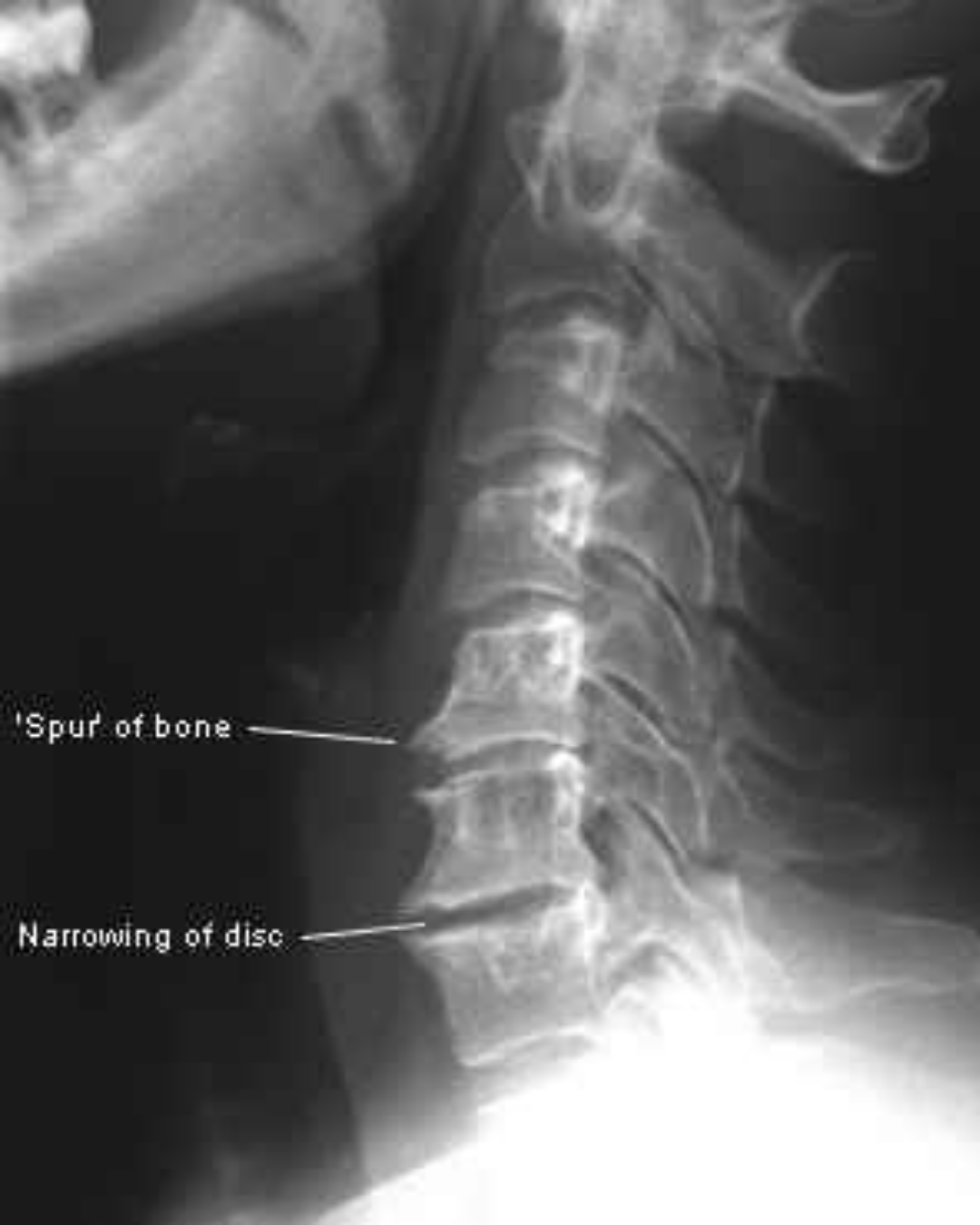
That dull, heavy pressure right where your skull meets your neck, usually paired with headaches that wrap around to your eyes and that foggy, exhausted feeling, are all signs of occipital nerve compression, and it's something I see get completely dismissed in patients every week. As a spine specialist, I spend a lot of time studying how the cervical spine actually works, and I think helping people understand what's happening inside their own neck is one of the most important things I can do. So in simple terms: your head weighs about 10 to 12 pounds when it's stacked directly over your spine. But years of screen time, desk work, or even just how you sleep, make your head drift forward. And for every inch it drifts, the effective load on your cervical spine increases by roughly 10 pounds. At just 3 inches forward, your neck muscles are managing the equivalent of a 40-pound head, 24 hours a day. It’s like a 4-year-old child hanging from your neck. That chronic overload tightens the suboccipital muscles at the base of your skull into a near-permanent state of contraction, putting direct pressure on the occipital nerve that runs through them. So what you feel as burning pain, headaches, and brain fog is actually that nerve being slowly, continuously squeezed. And although it's rarely explained this way, this is exactly why painkillers, neck pillows, and even regular massage don't touch the problem long term — because the nerve is still physically compressed between the tightened muscles and the narrowed vertebral space. The moment the massage ends, you stand up, and gravity reasserts the same 40 pounds of pressure right back onto the same nerve. What's most important to understand is that this gets worse as you get older, not better. Cervical discs naturally lose hydration and height over time, which reduces the amount of space the nerve has to sit in. The same amount of forward head position that caused mild tension ten years ago is producing daily headaches and constant pressure now, because there is measurably less room for the nerve to exist without being compressed. A lot of people are being told to try stretching, heat patches, or more ibuprofen — but all of these work around the symptom. None of them creates physical space inside the cervical spine. And that space is the only thing that takes pressure off the nerve. So, what actually has to happen first is decompression. The vertebrae need to be gently separated to create room for the nerve. The surrounding muscles need to relax at a depth that surface massage can't reach. And inflammation in the local tissue needs to be reduced, not masked, actually reduced through increased blood flow. Those three things, in that order, are what let the nerve decompress properly and stay that way. The only way to do this is not through painkillers or heat patches alone, but by combining cervical decompression, deep tissue vibration, and targeted heat therapy simultaneously, because doing any one of them without the others leaves part of the problem in place. A 2018 meta-analysis by researchers at the University of Bologna reviewed multiple randomized controlled trials and found that cervical decompression combined with other therapies produced significantly greater improvements in nerve compression pain than those therapies alone. Now, physical therapy can deliver this combination. The problem is that to see lasting results, most physical therapists recommend two to three sessions per week, for months. At $80 to $150 per session, that's $600 to $1,200 a month… Most people can't maintain that schedule. And the moment they stop going, the compression returns, because the results depend on how consistent you are. But the biggest mistake I see is people using heat or massage without decompressing first. When you do that, you get temporary relief — but nothing has actually changed. The nerve is still compressed. The muscles relax for a bit, then tighten right back. And every time that cycle repeats, they tighten a little harder than before. This is why people who rely on heat patches or massagers long-term describe the pain as getting harder to shift, not easier. So decompression isn't just one part of the solution — it's what the other therapies depend on to work. And the angle of decompression matters too, because the cervical spine isn't flat. It has a natural curve, and a generic device that doesn't match that curve either barely decompresses at all or pushes on the wrong spots, making things worse. Instead, when applied correctly, most people start noticing real change within 5 to 9 days as the muscles progressively relax and the vertebrae hold their spacing between sessions. The device we use with patients is Fisiorest because it's currently the only one that combines all three therapies in a single device you can use from home. It decompresses the neck at a clinically designed 26-degree angle that matches the natural cervical curve, has adjustable heat to drive blood flow into the compressed tissue, and a deep vibration system tuned to reach the suboccipital muscles specifically, not just the surface. It was designed with spine specialists and physical therapists for exactly this problem, and it takes 15 minutes lying down. So if that pressure at the base of your skull came on gradually and hasn't responded to anything you've tried — this is why. I’ll link Fisiorest below and I hope this helps get a better understanding.
The truth about base of skull pain
Summary: If you constantly feel tightness, pressure, or tenderness right at the base of your skull and it keeps triggering headaches, neck pain, or brain fog, you’re not imagining it.Most people are told it’s stress, age, or “just tension” but those explanations miss what’s actually happen...
LEARN MORELike this ad? Make it yours.
Crush rebuilds this exact creative around your product — your brand, your colors, your offer — in about a minute.