Margaret Holloway
Margaret Holloway Facebook ad: “$1,284 Of Creams. Same Spots.”
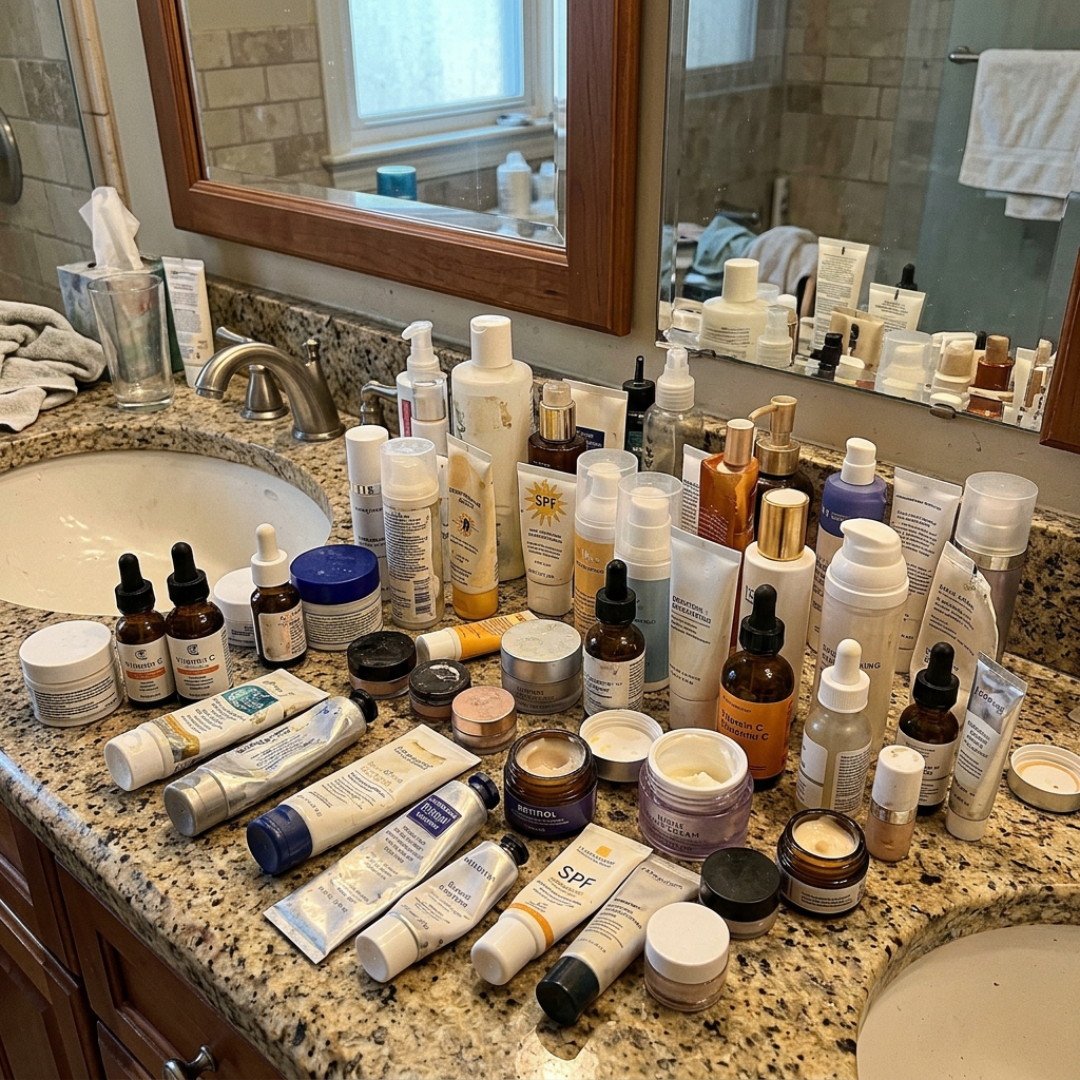
Ran for 19 days, from June 30 to July 19, 2026, the last day Crush saw it.
Run by Margaret Holloway on Facebook. Crush is not the advertiser and does not verify its claims. See this ad in Meta's Ad Library(opens in a new tab)
Want an ad like this for your product?
Crush makes new ad images for your product from this ad: your logo, your product photo, your offer.
Trials from $19.95 USD, then $79.95 USD a month. Cancel anytime.
About this ad
- Meta Ad Library ID
- 1338614385126442
- Platforms
- Facebook, Instagram, Audience Network, Messenger and Threads
- Relaunches
- 0
Ad text
I took this photo the night I finally stopped buying dark spot creams. That is not my skincare “collection.” That is not a beauty routine. That is $1,284 worth of disappointment sitting on my bathroom counter. Hand creams. Brightening creams. Dark spot correctors. Vitamin C serums. Retinol lotions. SPF tubes. “Age spot” treatments. One tiny jar from a department store that cost more than my electric bill and came with a promise that made me feel stupid for believing it. Some are empty. Some are half-used. Some I used three times before I knew they were going to be like all the others. Soft skin. Same spots. I am 63 years old, and I am going to say something most skincare brands will never say out loud: Most dark spot creams are designed to make you feel like you are doing something. That does not mean they are actually fixing the reason your hands, arms, chest and shoulders look the way they do. I wish someone had told me that before I spent years rubbing pretty creams into skin that needed something completely different. Let me back up. I was never the woman who panicked over every wrinkle. I earned my face. I earned my laugh lines. I earned the little creases around my eyes. I raised children. I worked. I buried people I loved. I sat in the sun at soccer games, weddings, beaches, backyard barbecues, and hundreds of ordinary afternoons I never thought twice about. So no, I was not trying to look 30 again. I just wanted my hands to stop looking older than the rest of me. That is the part younger women do not understand yet. It does not happen all at once. At first it is one little brown mark near your thumb. Then another near your wrist. Then a darker patch across the back of your hand. Then your forearms start looking uneven in sunlight. Then your chest starts showing those little speckled marks near the neckline. Then one day you are sitting in your car, holding the steering wheel, and the afternoon sun hits your hands just right. And your stomach drops. Because they do not look like your hands anymore. They look like your mother’s hands. Or your grandmother’s. Or some older woman’s hands you were not ready to see attached to your own body. That is when I started hiding them. I stopped wearing my gold bracelet because it pulled attention to the back of my hand. I stopped wearing a ring I loved because the spots around my knuckles made me stare. I started holding my coffee mug differently. I tucked my hands under the table at restaurants. I pulled my sleeves down in photos, even in warm weather. And when my daughter sent me pictures from family events, I would zoom in on my hands before I looked at my own face. That is embarrassing to admit. But if you have dark spots on your hands, arms or chest, you know exactly what I mean. You can tell yourself nobody notices. Maybe they do not. But you notice. You notice in the car. You notice at the grocery store. You notice when you hand someone your credit card. You notice when sunlight comes through the kitchen window. You notice when your granddaughter grabs your hand and someone takes a photo. That happened to me. My granddaughter’s sixth birthday. She grabbed my hand to pull me toward the cake, and someone snapped a picture. Later that night, my daughter sent the photos to the family group chat. There I was, smiling behind her. And right in the middle of the photo were my hands. Dark spots everywhere. Dry-looking. Uneven. Older than I felt. I zoomed in. Then I hated myself for zooming in. Then I cropped the photo before I saved it. That was the night I went into my bathroom and pulled everything out of the cabinet. Every cream I had bought because I thought this one might finally be different. The drugstore dark spot corrector. The “clinical” brightening lotion. The Vitamin C serum that smelled like pennies. The retinol hand cream that made my skin peel but did nothing to the spots. The body lotion with niacinamide. The expensive French jar. The SPF hand cream I kept in my purse. The little tube my friend from church swore by. The one I bought from an ad at 1:13 AM because the woman in the video said her hands looked ten years younger. I lined them all up on the counter. Then I started adding the prices. $18.99. $29. $47. $64. $89. $118. $146. By the time I finished, I had spent $1,284. $1,284 to make my skin feel soft for a few hours. $1,284 to still hide my hands in photos. $1,284 to keep waking up, looking down, and seeing the same spots. That is when I took the photo. I wanted to see the whole thing in one place. Not because I was proud of it. Because I was angry. Angry at the products. Angry at the promises. Angry at myself for believing the next jar would be different. But mostly angry because nobody had ever explained what was actually happening to sun-damaged skin. A few days later, I sent the photo to a woman I used to know who had worked around cosmetic dermatology for years. I expected her to say, “Try this one instead.” She did not. She sent back one sentence. “You are treating old sun damage like dry skin.” I stared at that sentence for a long time. Then I called her. She asked me where the spots bothered me most. I said, “Hands.” Then I said, “Forearms.” Then I said, “My chest. And shoulders in the summer.” She said, “Exactly.” Then she explained something that made me feel sick, because it was so obvious once she said it. Your face gets the expensive routine. Your hands get whatever is left. Your arms get ignored. Your chest gets sunscreen only after it has already burned a few times. Your shoulders get years of summer sun, driving, gardening, walking, beach days, patio lunches, and “just a few minutes outside.” Then decades later, the damage finally starts showing up. Not as one neat little spot. As uneven tone. Dark patches. Brown clusters. Dull skin. Thin-looking texture. Crepey dryness that makes every mark stand out even more. And what do most women do? They buy a cream. A water-based cream. A pretty lotion. A fast-absorbing serum. Something that feels nice, disappears quickly, and makes the surface feel moisturized. That is the trap. Because when your skin feels softer, you think it is working. So you keep going. Then the tube is empty. The spots are still there. So you buy another one. That is how the bathroom counter happens. One hopeful purchase at a time. I told her some of the creams had good ingredients. Vitamin C. Retinol. Niacinamide. She said, “Ingredients are only part of the story.” Then she asked me a question I had never asked myself. “Why are you using face-style creams on areas that have taken decades of sun exposure?” I did not have an answer. Because that is what everyone sells us. A cream for everything. A lotion for everything. A tiny jar with a prettier label and a bigger promise. But hands, arms, chest and shoulders are not the same as your face. They are the places that carried the sun for years without being protected the same way. They are drier. They are more exposed. They are easier to ignore until the spots are impossible to ignore. And by the time those dark spots are visible, the story did not begin yesterday. It has been building underneath for years. That is when she told me to stop looking for another dark spot cream. She said, “Look for a concentrated oil-based formula made for sun-exposed skin.” I almost laughed. Oil? I had spent years avoiding anything that sounded greasy. But she told me the problem with most creams is not that they feel bad. It is that they disappear too quickly. They are made to absorb fast. They are made to feel light. They are made to sit nicely under clothes, smell pleasant, and make dry skin feel comfortable. But comfort is not the same as visible improvement. Softness is not the same as a more even-looking tone. And a lotion that vanishes in thirty seconds is not the same as a concentrated oil that stays in contact with the areas that need it most. That was the first time the whole thing made sense to me. I had not failed. My skin had not failed. I had been using the wrong kind of product for the wrong kind of problem. That night, I started reading everything I could about sun-damaged skin on older hands, arms, chest and shoulders. Not face wrinkles. Not acne scars. Not teenage hyperpigmentation. The kind of brown, uneven, stubborn sun history that shows up after decades. And the same idea kept coming up: If the skin is dry, dull, sun-exposed and uneven, ordinary creams often make it feel better without changing how it looks enough to matter. That was exactly my life. Every cream made my skin feel better. None made me stop hiding my hands. Then I found the Dermiqua article. I did not buy anything at first. I just read. That is what made it different. It did not start by telling me I needed another jar. It explained why so many jars had failed me. It explained why water-based creams can feel good while doing very little for the look of stubborn sun damage. It explained why oil-soluble ingredients make sense for the areas women actually complain about. Hands. Arms. Décolleté. Shoulders. It talked about sun exposure that builds quietly for years. It talked about why the spots you see on the surface are often only part of the story. It talked about the difference between ordinary body lotion and a concentrated Sun Damage Repair Body Oil. That phrase stuck with me. Sun Damage Repair Body Oil. Not hand cream. Not body lotion. Not a little face serum repackaged for older women. A body oil made for sun-exposed skin. The article explained the formula too. Oil-soluble Vitamin C. Bakuchiol. Sea buckthorn. Camellia oil. A blend of botanicals made to support skin that looks darker, duller, drier and more uneven from years of sun. And one thing stood out immediately: It was not mostly water. After staring at $1,284 worth of creams on my counter, that mattered to me. Because most of what I had been buying felt like moisture with a marketing claim attached. Dermiqua sounded different. Not because it promised magic. Because the explanation finally matched what I had lived through. Soft skin. Same spots. That was my problem. The article put words to it before I could. I ordered one bottle after reading it twice. When it arrived, I put it on the same bathroom counter where I had taken the photo. Just one bottle. It looked almost too simple next to all those jars. The first night, I used it on the backs of my hands. Then my wrists. Then down my forearms. I used too much because I always overdo things when I want them to work. The second night, I used less. A few drops. Warmed between my palms. Pressed into the backs of my hands and arms before bed. It felt different immediately. Not like a lotion. Not like a cream that disappears before you even leave the bathroom. It felt like my skin was actually being fed. That is the only way I can describe it. A cream covered the dryness. The oil made the skin look nourished. After the first week, I noticed texture first. The backs of my hands looked less papery. The skin around my knuckles did not look as dry. My forearms had less of that dull, tired look. The spots were still there. I am not going to pretend they vanished in seven days. But the skin around them looked healthier. And that mattered because when the surrounding skin looks dry and thin, every spot screams louder. By the second week, the harsh contrast looked softer. The darker marks did not look as angry under bathroom light. I noticed it in the car one afternoon. That same sunlight that used to make my stomach sink hit my hands on the steering wheel. And for the first time in a long time, I did not immediately turn them over. By week three, I started using Dermiqua on my chest. That was the area I avoided thinking about. The little brown marks near my neckline. The uneven tone that made me choose higher collars. The skin that looked fine indoors but rough and speckled in sunlight. I rubbed the oil there every night after showering. Then my shoulders. Then back to my hands. It became a ritual. Not a 12-step routine. Not a drawer full of products. Not one cream for hands, one for arms, one for chest, one for neck, one for “mature skin.” Just one oil before bed on the places I had been hiding. By week four, I wore my bracelet again. That may not sound like much. It was. I had stopped wearing it because every time I looked down, the gold made the spots on my hand look darker. That morning, I put it on without thinking. Then I realized what I had done. I stood in the bathroom and cried. Not because my hands looked young. Because they looked cared for. There is a difference. I do not need young hands. I need hands that do not make me flinch when I see them in a photo. I need arms I do not automatically cover. I need a chest I do not feel like hiding every time the sun comes out. That is what changed. The spots looked less harsh. The tone looked more even. The dry, dull look softened. My skin looked smoother, brighter, and more alive. Not perfect. Better. And after years of “soft skin, same spots,” better felt enormous. I wish I could go back and tell myself before the first $18.99 cream. Before the department store jar. Before the retinol hand treatment that made me peel. Before the late-night purchases. Before I spent $1,284 trying to fix old sun damage with products that were mostly built to moisturize. I would say: Stop blaming your skin. Stop buying another cream just because the last one almost made sense. Stop treating hands, arms, chest and shoulders like they are an afterthought. And stop assuming dark spots are just age. They are not just age. They are history. Years of sun. Years of driving. Years of gardening. Years of vacations. Years of protecting your face and forgetting everything else. And once that history starts showing on the surface, an ordinary cream may not be enough. That is what the Dermiqua article explains better than I can. It explains why so many women keep buying dark spot creams and keep seeing the same hands in the mirror. It explains why sun-exposed skin needs a different approach. It explains why an oil-based formula makes more sense than another water-based lotion. It explains the ingredients, the routine, and why the hands, arms, chest and shoulders are usually the first places women start hiding. I am not telling you to buy another product because I know how that feels. I am telling you to read the explanation before you buy one more cream. Because if your bathroom counter looks anything like mine, you do not need another random jar. You need to understand why the jars did not work. That is what changed everything for me. Not a promise. Not a pretty bottle. The explanation. The page I read goes through the whole thing — why ordinary creams often fail, why sun damage shows up the way it does, why oil-soluble ingredients matter, and why Dermiqua was made as a Sun Damage Repair Body Oil instead of another body cream. Read that first. Then decide for yourself. If your hands look older than you feel… If your arms have spots that seem darker every summer… If your chest has uneven patches you keep trying to cover… If every cream you bought made your skin soft but did nothing for the way it looked… Please read the article before you spend money on another jar. I wish I had found it before the photo. I wish I had found it before $1,284. I wish I had found it before I started cropping my own hands out of memories with my granddaughter. You can read the full explanation here. It is not the product page. It is the article that finally made me understand why the creams on my counter never stood a chance. Almost forgot the link. Here it is: https://dermiqua.com/pages/age-spots/
Where the ad sends people
dermiqua.com
$1,284 Of Creams. Same Spots.
Dermiqua
Learn more: dermiqua.com(opens in a new tab)