
Active· since Jan 26, 2026
- 182
- days running
- 0
- relaunches
Ad copy
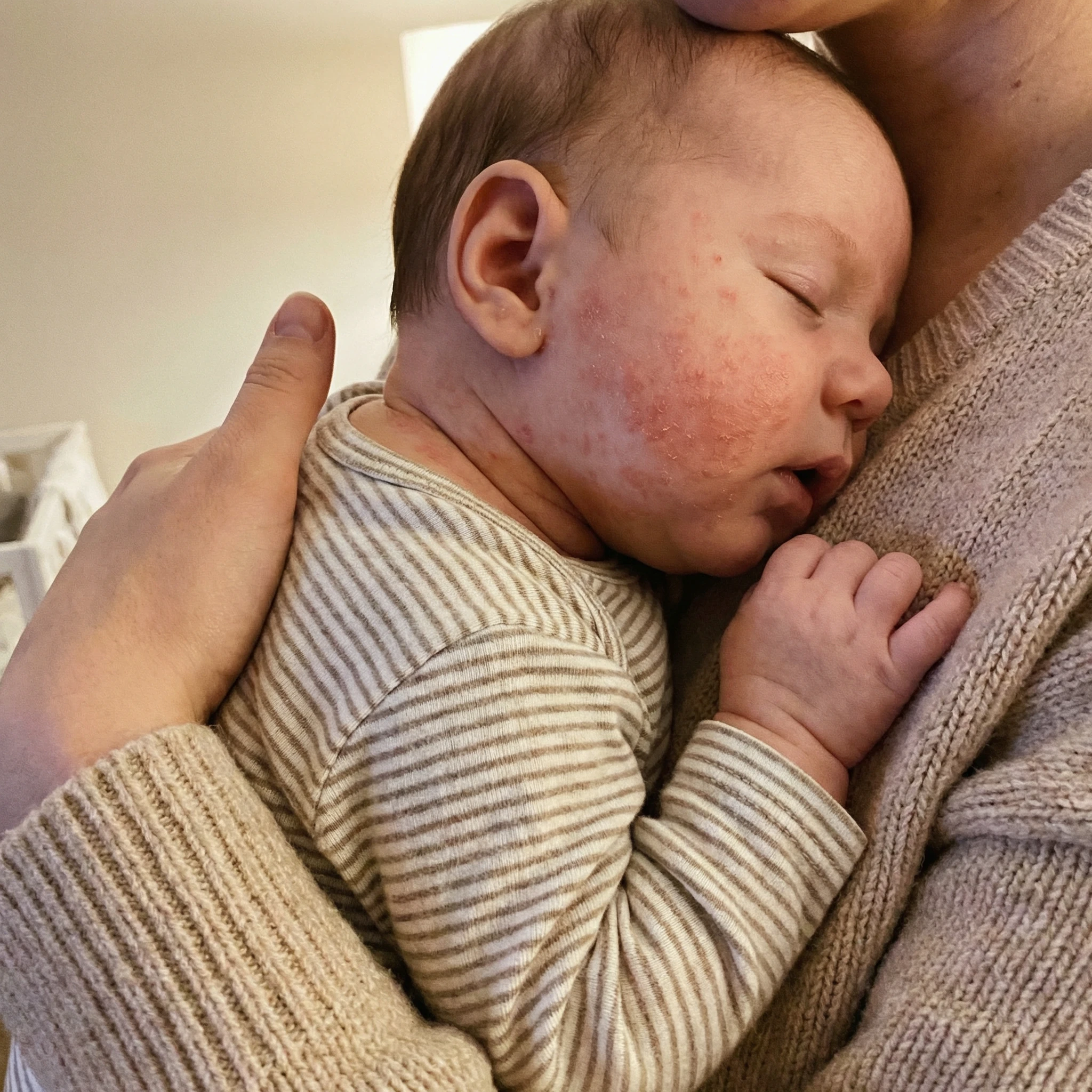
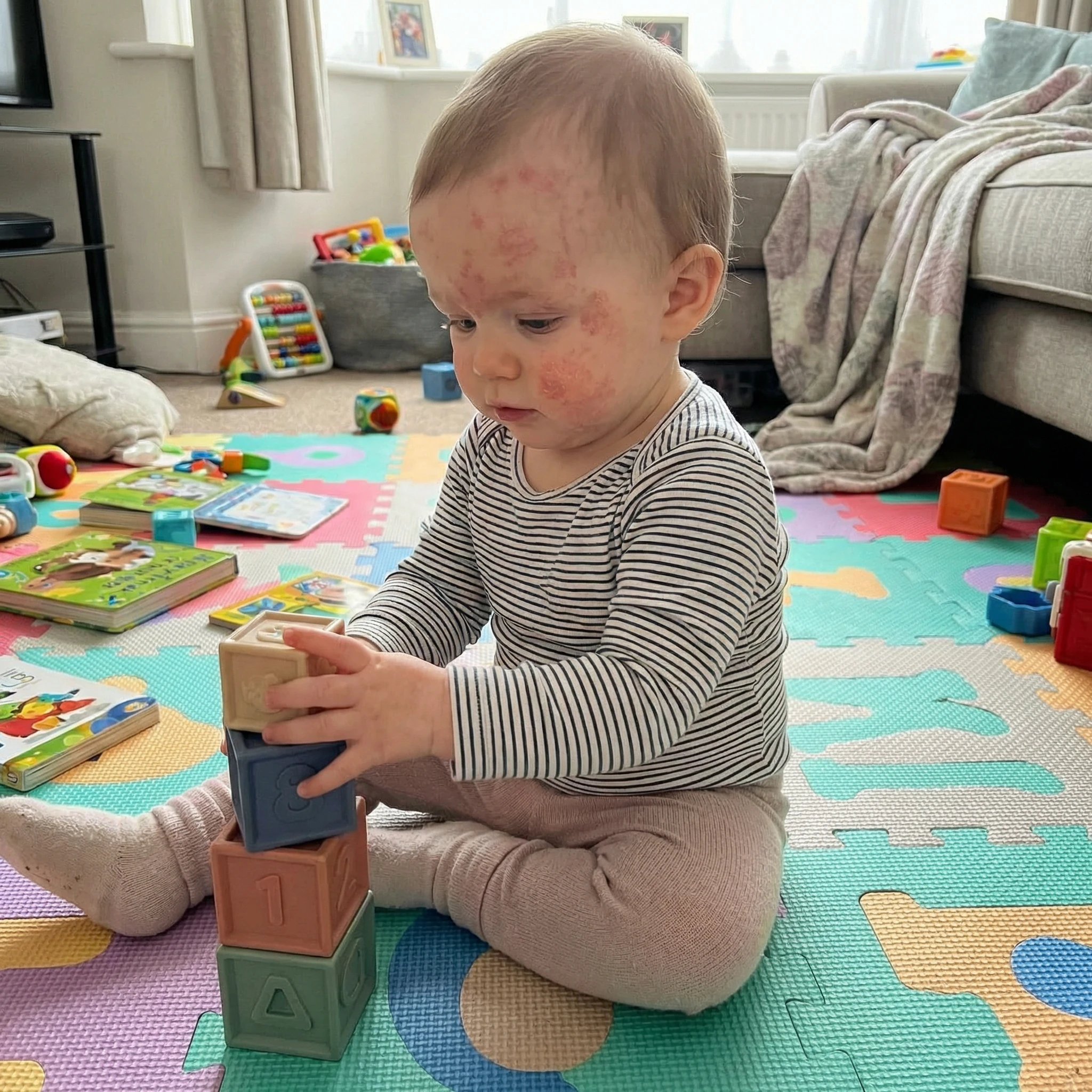
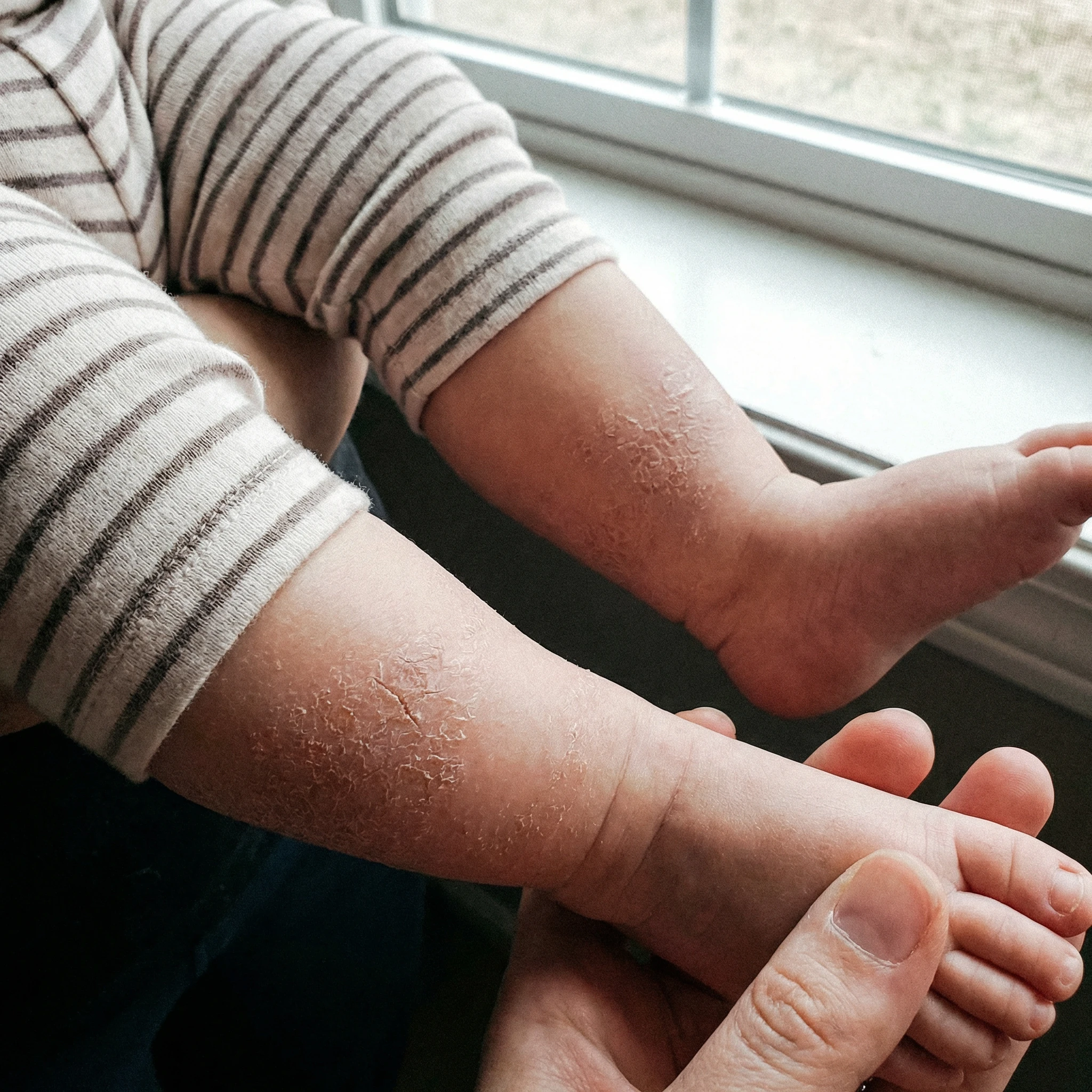
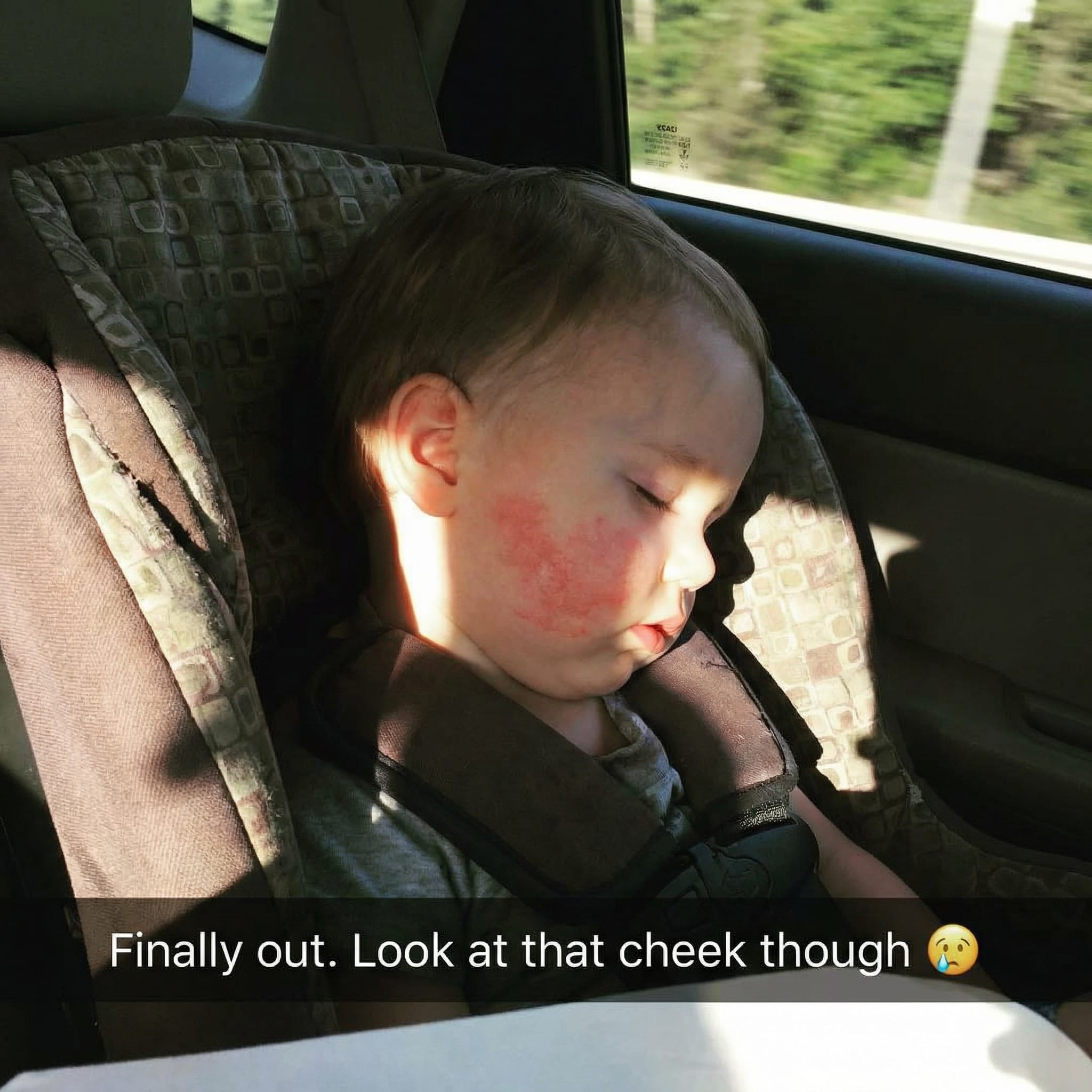
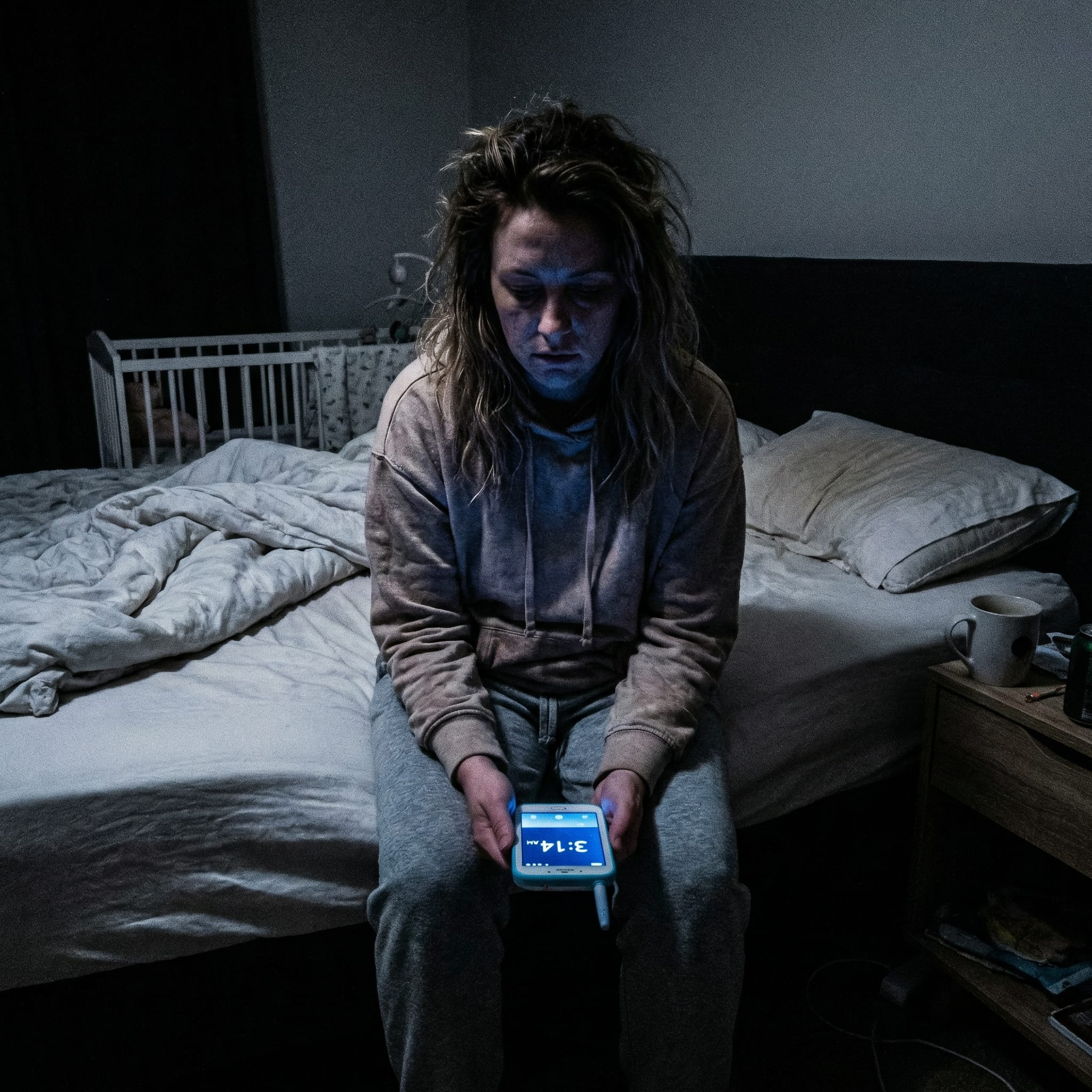
She woke up 42 times that night. 42 times I had to hold her tiny hands away from her face so she wouldn't scratch. 42 times I watched her little body tense up, her face twist, her fingers clawing at skin that was already raw. By morning, there was blood on her sheets again. I sat on the nursery floor with my back against the crib, and I cried. Not the pretty kind of crying. The kind where your whole body shakes and you can't breathe and you don't even care if anyone hears you because you're so far past the point of holding it together. That was the night I realized I couldn't remember the last time I felt like myself. --- The creams were lined up on her changing table like soldiers. CeraVe. The pediatrician's first recommendation. Worked for three days. Aveeno Baby Eczema Therapy. The one the nurse said "works for most babies." Worked for four days. Aquaphor. The "gold standard" everyone swore by. Made it worse somehow. Eucerin. Vanicream. Tubby Todd. That $42 organic cream from Whole Foods that the mommy blogger promised was "the only thing that finally worked for us." Half-used tubes everywhere. Each one representing a moment where I thought: "This is it. This is the one." Each one representing a crash when it stopped working five days later. I'd spent over $400 in three months. On creams that did nothing. On hope that kept getting ripped away. --- The elimination diets started around month two. I was still breastfeeding, and I'd read that food sensitivities could cause flares. So I cut dairy. Then gluten. Then soy. Then eggs. Then nuts. I was eating plain chicken and roasted sweet potatoes for every meal because I was terrified that something in my body was poisoning her. I lost eleven pounds in six weeks. Not because I was trying to. Because I was scared to eat anything. My husband would come home and find me crying over a bowl of plain rice because I'd accidentally used a pan that had touched butter and now I was convinced I'd ruined everything. --- My friends stopped inviting me places. Not because they didn't care. Because I always said no. How do you explain that you can't come to dinner because the wrong soap in someone's bathroom might trigger a flare that lasts two weeks? How do you explain that you can't let anyone hold your baby because their lotion or perfume might send her into a scratching fit at 2 AM? You don't explain. You just stop responding. And eventually, they stop asking. I watched their lives continue on Instagram. Brunches and vacations and babies with perfect skin in cute outfits. And I sat in my nursery at 3 AM, holding my daughter's hands so she couldn't tear her own face open. --- My husband and I were taking shifts. Three hours on. Three hours off. Like we were in a war zone. We'd pass each other in the hallway without speaking. Too tired for words. One night, I woke up for my shift and found him sitting in the rocking chair, just staring at her. "I don't know how much longer I can do this," he said. I didn't answer. Because I'd had the same thought an hour earlier. --- His mom kept saying "she'll grow out of it." My pediatrician kept saying "just use the hydrocortisone." And I'd stare at that little tube and feel my stomach twist. Because it worked. God, it worked. For five days, her skin would be almost normal. Soft. Not angry. Then we'd stop—because you're not supposed to use steroids long-term on babies—and it would come back worse. Redder. Oozing. Spreading to places it had never been before. So I'd use it again. Hating myself. Googling "topical steroid withdrawal baby" at 3 AM until my eyes burned. I was trapped in a cycle I couldn't escape. Every time I opened that tube, I felt like I was failing her. And every time I didn't, I watched her suffer. There was no right answer. Only two different ways to lose. --- One night, holding her while she screamed because her face hurt, I had a thought I'll never admit out loud to anyone. "I don't know if I can keep doing this." Not just the sleep deprivation. The guilt. The suffocating, crushing guilt that I was failing at the one job that mattered. Every mom at the park had babies with perfect skin. Soft cheeks you wanted to kiss. Not raw. Not bleeding. Not covered in Aquaphor that stained everything they touched. I felt like I'd been given a test everyone else passed, and I was the only one who failed. --- The dermatologist appointment I'd waited nine weeks for lasted eleven minutes. "Keep moisturizing. Here's a stronger steroid for flares." That was it. No explanation for why the creams only worked for three days. No answer for why it kept coming back. Just the same advice I'd already heard a hundred times. I walked out with a prescription I didn't want to fill and threw the "living with eczema" brochure in the trash before I reached my car. --- That night at 2:38 AM, I hit bottom. She'd been crying since 11 PM. Not hungry. Not wet. Just uncomfortable in her own skin. I was sitting in the rocking chair, her finally asleep on my chest, scrolling with one thumb because I couldn't put her down. And I found something that changed everything. An article about skin bacteria. One sentence caught my eye: "90% of people with atopic dermatitis have elevated levels of Staphylococcus aureus bacteria on their skin." I sat up straighter. Read it again. Then started searching. For the next three hours, I read everything I could find. And what I learned made me furious. --- Here's what no one had told me: Eczema isn't just dry skin. It's not just inflammation. In 90% of cases, there's a bacteria called Staph living on those red, angry patches. This bacteria creates an invisible shield on the skin. And that shield constantly triggers your baby's immune system. Your baby's body sees the bacteria and sends inflammation to fight it. That's what makes the skin red. Itchy. Painful. Raw. The problem is the bacteria never leaves. So the inflammation never stops. --- Now here's the part that made me want to scream. Moisturizers can't break through that bacterial shield. They just sit on top. Like putting a blanket over a fire alarm. The alarm keeps ringing underneath. Worse—moisturizers create a warm, damp environment on the skin. You know what bacteria loves? Warm, damp environments. Every time I'd smeared cream on my daughter's face, thinking I was helping her heal, I was giving the bacteria a better place to live. I wasn't treating her eczema. I was feeding it. --- Steroids made horrible sense too. Hydrocortisone doesn't kill bacteria. It suppresses the immune system. Tells your baby's body to stop fighting. That's why it works so fast. But the bacteria is still there. Waiting. The second you stop the steroid, your baby's immune system wakes back up, sees the bacteria, and sends inflammation all over again. Often worse than before. Because the bacteria grew while the immune system was asleep. That's why we were trapped in the cycle. The steroids were never fixing anything. Just hitting pause on a war that would start right back up. --- I sat there in the dark, my daughter breathing on my chest, and felt two things: Rage. At every doctor who'd told me to "just moisturize." At the dermatologist who'd dismissed me in eleven minutes. And hope. For the first time in months. Because if the bacteria was the real problem, maybe there was something that could actually kill it. --- I started searching for what kills Staph. Antibiotics came up first. But oral antibiotics for a baby seemed extreme. Then I found something unexpected. Medical-grade honey. At first I thought it was a joke. Honey? But the research was real. Published studies. Clinical trials. Hospital use cases. Medical-grade raw honey—the kind that's never been heated—contains enzymes that actively kill bacteria. Including Staph. Hospitals use it on infected wounds. Burns. Ulcers that won't heal with conventional treatment. And unlike antibiotics, bacteria can't develop resistance to it. --- But here's the catch. Regular honey doesn't work. The stuff in the plastic bear has been heated and pasteurized. All the bacteria-killing enzymes are destroyed. The honey has to be raw. Cold-extracted. Never heated. And almost no skincare products use it. Because it's expensive. Hard to formulate. Most companies use "honey extract" as a marketing ingredient and charge $40 for something that does nothing. --- The next morning, I posted in an eczema mom group about everything I'd found. Within an hour, I got a message from a woman named Sarah. "I need to call you," she wrote. "My son had the same thing." Twenty minutes later, we were on the phone. Sarah told me about her son Liam. The same cycle I was in—creams that worked for days then failed. The steroid trap. The guilt. "Then I found a cream that actually uses real raw honey," she said. "Not the fake kind. Cold-extracted. Never heated. The kind that actually kills the bacteria." "What's it called?" "HoneyCalm." She told me it was a small company. Started by parents who'd gone through exactly what we were going through. They'd spent months researching the bacteria connection, sourcing real medical-grade honey, formulating something that could actually work. Then she sent me photos of Liam. The before looked exactly like my daughter. Angry red patches. Raw skin. Scratched open. The after? Clear. Smooth. Normal baby skin. "That's really him?" My voice was shaking. "Two weeks," she said. "By day three, he stopped scratching at night." I ordered it before we hung up the phone. --- The jar arrived two days later. I put a small amount on the worst patch—the angry red one on her left cheek that had been weeping for a week. She didn't cry. That was the first miracle. Every other cream made her fuss and squirm and try to rub it off. Like it stung. With this, she just looked at me with those big eyes and went back to chewing on her toy. The cream absorbed in maybe thirty seconds. No greasy residue. No sticky film. I didn't let myself hope. Not yet. --- That night, I waited for the 2 AM wake-up call. The crying. The scratching. The blood. It never came. I woke up at 3:15 AM in a panic because I hadn't heard her. I ran to the nursery and found her sleeping. Peacefully. Hands by her sides. I stood in the doorway and cried. --- Day 2: The weeping stopped. Still red, but not wet. Day 3: She slept through the night again. Day 4: The redness was fading. Day 5: I touched her cheek and she didn't flinch. Day 7: She slept through the night for the fifth night in a row. My husband and I slept in the same bed for the first time in weeks. Week 2: Her face was clearer than it had been since she was two months old. The patches weren't just managed. They were healing. Actually healing. --- I took a photo and compared it to one from a month earlier. I couldn't believe it was the same baby. The angry red patches were gone. The rough texture. The weeping, the crusting, the raw spots—all gone. She had baby skin again. And she was smiling. Not the tight, uncomfortable smile of a baby in pain. A real smile. I saw her for the first time in months. Not the eczema. Not the condition I was managing. Her. My baby. --- It's been three months now. Her skin is clear. Soft. Healthy. She sleeps through the night every single night. We haven't touched the hydrocortisone since week two. We haven't had a single flare. --- But here's the thing. The biggest change isn't her skin. It's me. I sleep in my own bed now. Next to my husband. Through the night. I went to brunch last weekend. With friends I hadn't seen in four months. I posted a photo of her without cropping out her face. I eat butter again. I feel like myself. Not the exhausted, guilt-ridden version who couldn't remember the last time she felt okay. Myself. --- If you're reading this at 2 AM, scrolling while your baby finally sleeps on your chest, I need you to know something. You're not failing. The creams aren't working because they can't work. Your baby probably has bacteria on those eczema patches—90% of babies with eczema do—and moisturizers can't touch it. You've been putting lotion on top of an infection. You need something that actually kills the bacteria. Cold-extracted raw honey does that. The real kind. Medical-grade. Never heated. That's what HoneyCalm uses. --- I'm not going to tell you it works for every baby. Nothing works for every baby. But I've spent $400 on creams that couldn't possibly work because they were never designed to kill bacteria. HoneyCalm was. And if it doesn't work for your baby, you get every penny back. They have a 60-day money-back guarantee. Not 30 days. 60. That's two full months to try it. To see if the scratching stops. If the sleep comes back. If the skin finally heals. If it doesn't? Full refund. No questions. No hassle. You just email them and they send your money back. I would have paid ten times what I paid if I'd known what it would give me. Sleep. Peace. Myself. My daughter with soft skin and a real smile. You've got nothing to lose except the sleepless nights. Link below.
Like this ad? Make it yours.
Crush rebuilds this exact creative around your product — your brand, your colors, your offer — in about a minute.