
Inactive· since Feb 16, 2026
- 12
- days it ran
- 0
- relaunches
Ad copy
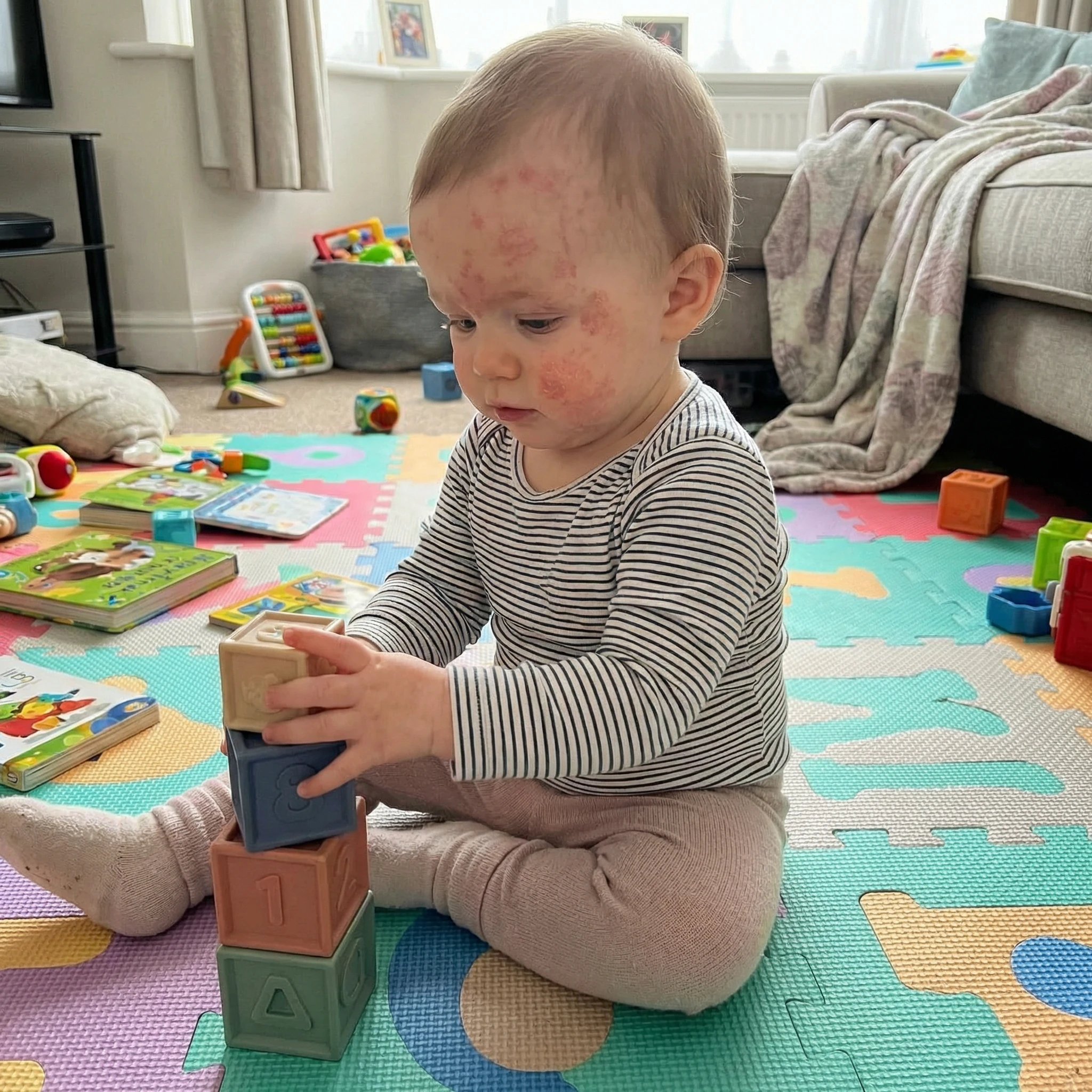
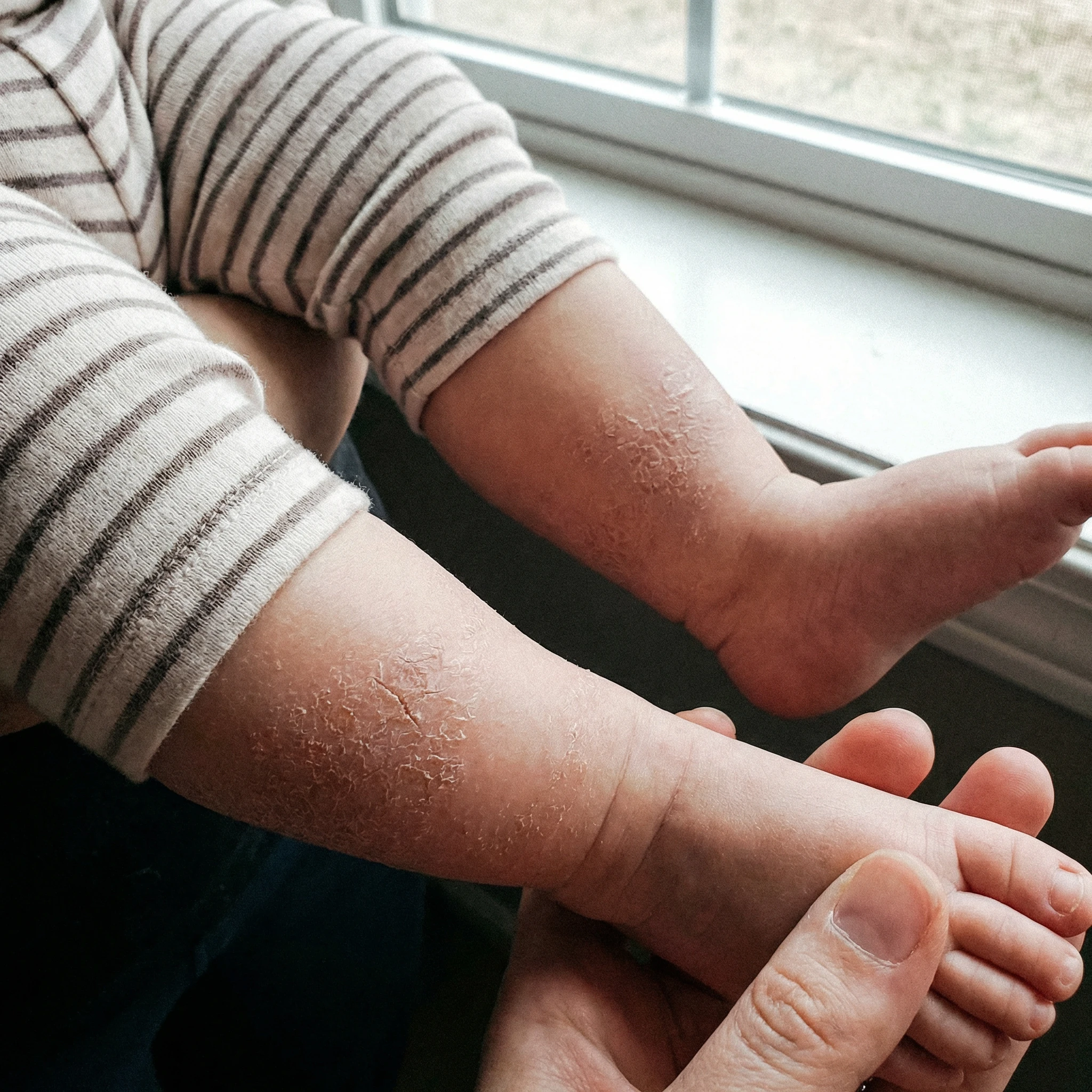
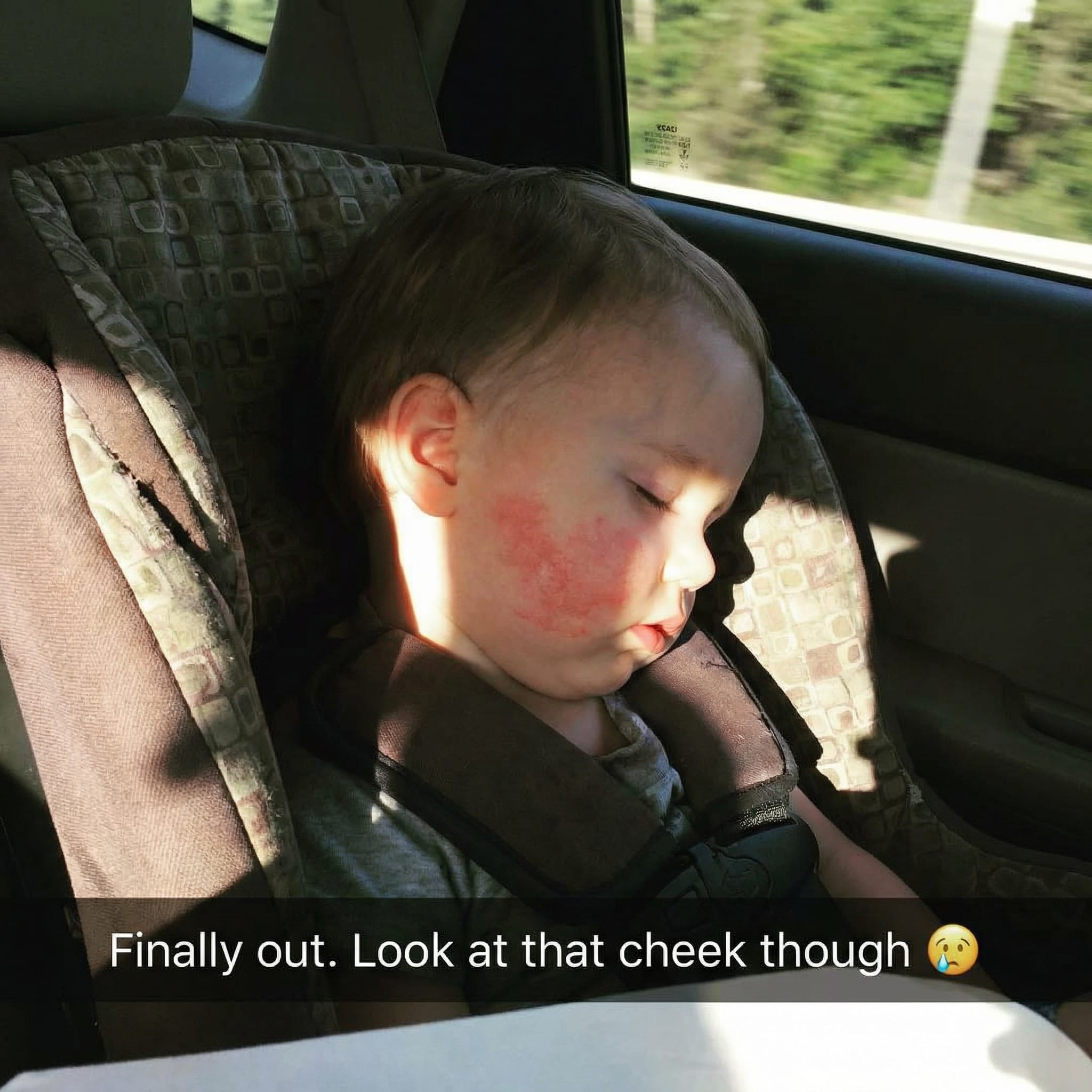
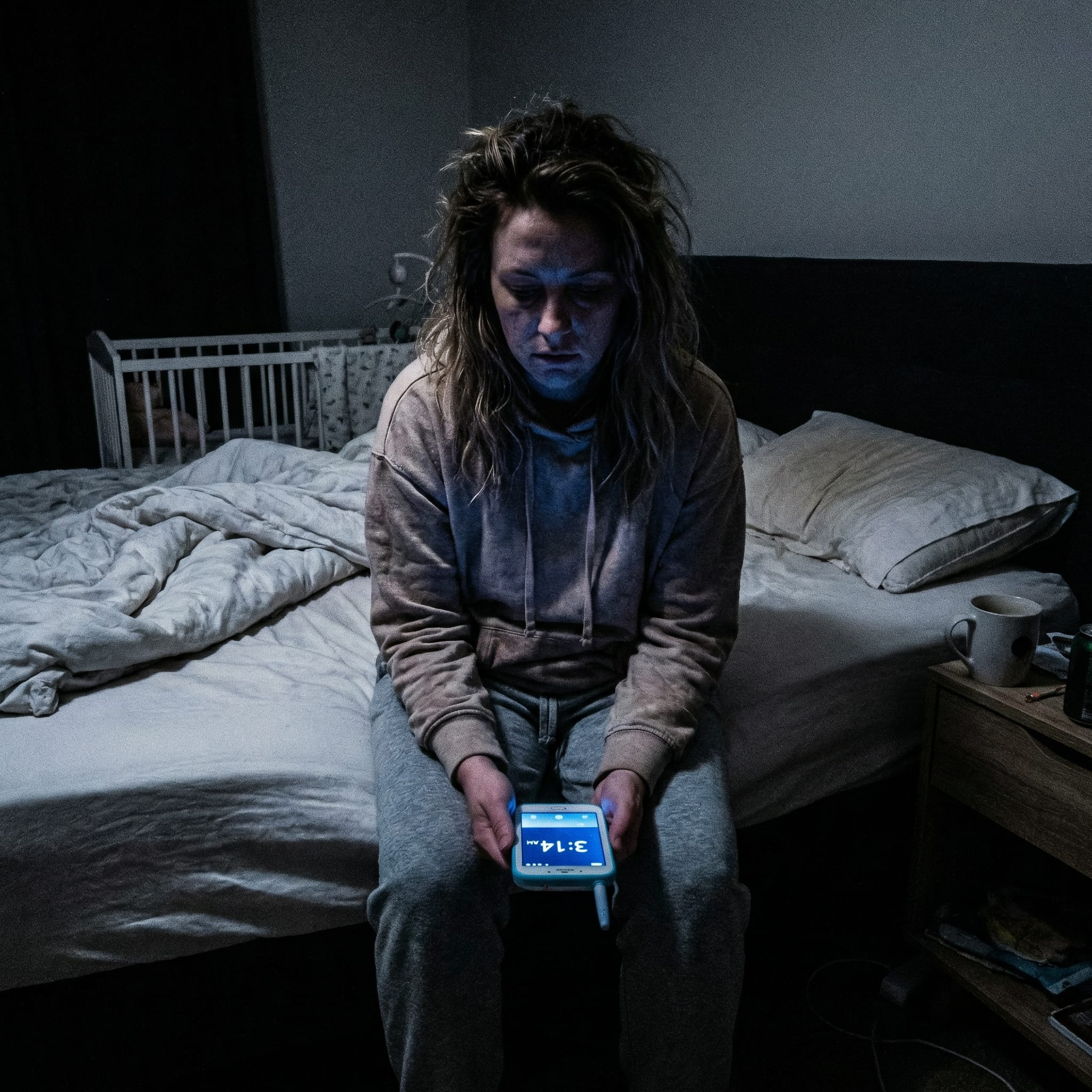
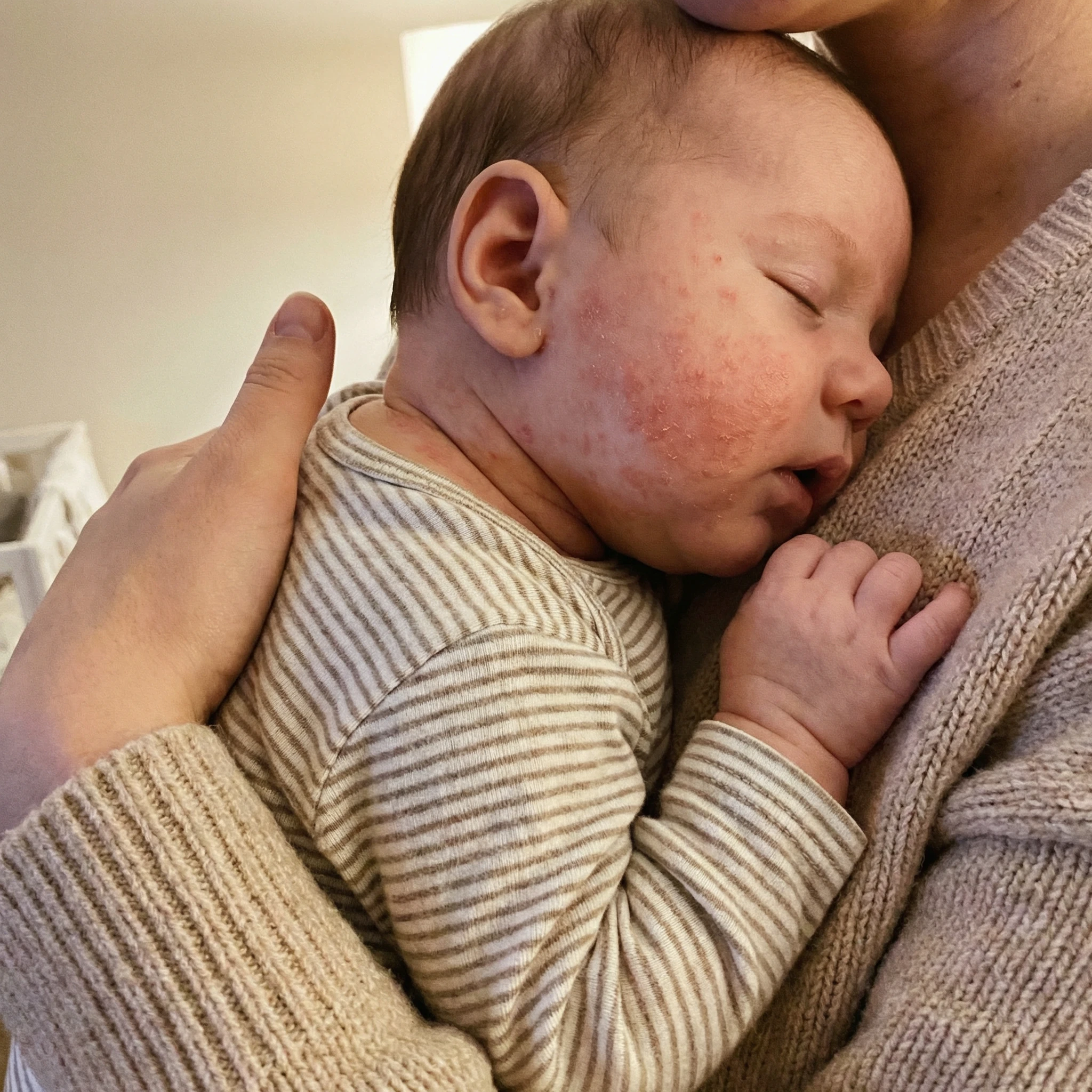
Please STOP moisturizing your baby's eczema like I did. It's the reason it never got better. One night, holding her while she screamed, I had a thought I'll never admit out loud. "I don't know if I can keep doing this." My baby was rubbing her raw, oozing cheeks against my shirt to stop the itch. I looked down and my sleeve was wet. Not from tears. From the patches on her face that were weeping. She wasn't even crying anymore. Just staring at me with huge, glassy eyes. Like she'd given up. That was the night I realized I couldn't remember the last time I felt like myself. --- The pediatrician had told me this would get better. "Just keep moisturizing twice a day," he said at her two-month checkup. "She'll grow out of it." So I did. Every morning and every night, I rubbed cream over the dry, cracked patches on her face and watched them get worse. But I kept doing it because the doctor said it would help. Six weeks later, her eczema had spread from her cheeks down to her neck, behind her knees, inside her elbows. I called the pediatrician's office. "She's bleeding every morning," I told the receptionist. "The eczema is weeping. I need to bring her in today." She put me on hold. When she came back: "The doctor says keep using the cream. If it's not better in two weeks, call back." I hung up and stared at my phone. Two weeks? I couldn't watch my baby in pain for another two weeks. I made an appointment with a different pediatrician. Thursday at 10:45. I sat in that exam room for 25 minutes before he walked in, glanced at my daughter's face, and touched the cracked patch on her cheek with his thumb. "Eczema," he said. "Are you moisturizing?" "Twice a day. But it's getting worse—" "That's normal. Keep moisturizing. She'll grow out of it." I felt my throat tighten. "The patches are bleeding," I said. "The cream isn't helping. I don't think it's working." He was already scribbling on his prescription pad. "Try this one instead. Give it a few weeks." He handed me the paper and left. I sat there holding my baby, staring at the prescription. Another cream. Another "just keep moisturizing." Another few weeks of watching my daughter's skin bleed while every doctor told me it was fine. I drove home and cried the entire way. Because I'd just wasted another morning being told the same useless thing I'd heard six weeks ago. Because my baby's face looked like a war zone and the doctor had spent 90 seconds in the room before dismissing me. Because I was the only person who seemed to think cracked, bleeding eczema on a baby was actually a problem. --- The creams were lined up on her changing table like soldiers. CeraVe. The first recommendation. Worked for three days. Aveeno Baby Eczema Therapy. The one the nurse said "works for most babies." Worked for four days. Aquaphor. The "gold standard" everyone swore by. Made it worse somehow. Eucerin. Vanicream. Tubby Todd. That $42 organic cream from Whole Foods that the mommy blogger promised was "the only thing that finally worked for us." Half-used tubes everywhere. I'd spent over $400 in three months. On creams that did nothing. On hope that kept getting ripped away. --- The elimination diets started around month two. I was still breastfeeding, and I'd read that food sensitivities could cause flares. So I cut dairy. Then gluten. Then soy. Then eggs. Then nuts. I was eating plain chicken and roasted sweet potatoes for every meal because I was terrified that something in my body was poisoning her. I lost eleven pounds in six weeks. Not because I was trying to. Because I was scared to eat anything. My husband would come home and find me crying over a bowl of plain rice because I'd accidentally used a pan that had touched butter and now I was convinced I'd ruined everything. --- My friends stopped inviting me places. Not because they didn't care. Because I always said no. How do you explain that you can't come to dinner because the wrong soap in someone's bathroom might trigger a flare that lasts two weeks? How do you explain that you can't let anyone hold your baby because their lotion or perfume might send her into a scratching fit at 2 AM? You don't explain. You just stop responding. And eventually, they stop asking. I watched their lives continue on Instagram. Brunches and vacations and babies with perfect skin in cute outfits. And I sat in my nursery at 3 AM, holding my daughter's hands so she couldn't tear her own face open. --- My husband and I were taking shifts. Three hours on. Three hours off. Like we were in a war zone. We'd pass each other in the hallway without speaking. Too tired for words. One night, I woke up for my shift and found him sitting in the rocking chair, just staring at her. "I don't know how much longer I can do this," he said. I didn't answer. Because I'd had the same thought an hour earlier. --- His mom kept saying "she'll grow out of it." My pediatrician kept saying "just use the hydrocortisone." And I'd stare at that little tube and feel my stomach twist. Because it worked. God, it worked. For five days, her skin would be almost normal. Soft. Not angry. Then we'd stop—because you're not supposed to use steroids long-term on babies—and it would come back worse. Redder. Oozing. Spreading to places it had never been before. So I'd use it again. Hating myself. Googling "topical steroid withdrawal baby" at 3 AM until my eyes burned. Every time I opened that tube, I felt like I was failing her. And every time I didn't, I watched her suffer. There was no right answer. Only two different ways to lose. --- That night, I made a decision. I was done waiting for her to "grow out of it." Done trusting doctors who barely looked at her before handing me another prescription. If no one else was going to help my baby, I'd figure it out myself. I stopped Googling "best eczema cream" and started looking for real answers. I joined Facebook groups—the ones where moms post graphic photos and desperate pleas. I read every comment, every thread, every story. And then I met someone named Sarah. That's when everything changed. --- Not in person. In one of those Facebook groups. I'd posted a photo of my daughter's cheeks asking if anyone else's kid had eczema this severe. The responses were the usual—coconut oil, elimination diet, try this cream, try that cream. Then Sarah sent me a private message. "I saw your post. My son's skin looked exactly like that six months ago. Can I call you?" That's weird, I thought. But I was desperate enough to say yes. Twenty minutes later, we were on the phone. She told me about her son Liam. Two years old. Eczema since he was four months old. The same cycle I was in—steroid cream works for a few days, the flare comes back, and you start all over again. "I thought I was losing my mind," she said. "I was doing everything right. Every cream. Every bath. Following all the rules. And nothing worked for more than 48 hours." "That's exactly what's happening to us," I said. "Right. And everyone acts like you're not trying hard enough. Like if you just found the right cream or cut out the right food, it would magically get better." She gets it, I thought. She really gets it. Then she said something that stopped me cold. "Did you know there's bacteria living in the eczema patches?" --- I didn't know that. "What do you mean?" I asked. She explained it like this: When your baby has eczema, the skin is broken. Like, actually broken. Not just dry or irritated—there are literal cracks in it. Tiny gaps where the skin should be sealed but isn't. And there's this bacteria called Staph aureus that lives on everyone's skin normally. It's completely harmless when your skin is healthy and intact. But when there are cracks in the skin—when it's broken, raw, inflamed—the bacteria gets in through those cracks, settles deep into the gaps, and starts multiplying. "Wait," I said. "So the eczema patches are... infected?" "Not exactly infected," Sarah said. "More like... colonized. The bacteria is living there. And here's the thing—it makes everything worse." She explained it like she was learning it again herself. Like she still couldn't believe no one had told her sooner. "The bacteria produces stuff that irritates the skin even more. Which makes the skin more inflamed, more itchy, more damaged. That damage creates more cracks in the skin, which lets even more bacteria get inside." It's a loop, she said. A horrible, endless loop. And that's why nothing was working. "All those creams we're using," Sarah said, "they're just moisturizers. Even the fancy expensive ones. Even the ones that say 'eczema cream' on the label. They sit on top of the skin. They might calm things down temporarily, but they don't actually reach the bacteria underneath." "So the bacteria just stays there," I said. "Exactly. Multiplying. Digging deeper. Making the skin weaker. So when you use moisturizers or steroids, you're only masking it. Hiding the symptoms instead of clearing the real problem." I felt like someone had turned on a light in a dark room. That's why the steroids only worked for a few days. They reduced the inflammation, but the bacteria was still there. The minute the steroids wore off, the bacteria was still doing its thing. Making the eczema come right back. "How did you figure this out?" I asked. "I didn't," she said. "I was Googling at like 2 AM and fell down a rabbit hole reading about eczema and skin bacteria. There are all these studies about it. Apparently 90% of eczema patches have this Staph aureus bacteria in them. It's super common. But no one talks about it." We were both quiet for a second. "So what did you do?" I asked. --- She told me she'd tried almost everything to deal with the bacteria after she realized it was what kept making Liam's eczema flare. She'd heard about bleach baths—literally putting bleach in the bathwater to kill bacteria on the skin. But they're harsh, especially for babies. And people said they barely help anyway. She tried antibacterial soap. It helped for a few days, made the dryness worse, and the bacteria came right back. She asked her pediatrician about oral antibiotics. He said they don't usually recommend that for eczema because the bacteria comes right back once you stop. And you can't keep a baby on antibiotics forever. "I felt so stuck," she said. "Like I finally understood what the real problem was, but I couldn't figure out how to get rid of it without making something else worse." "So what changed?" I asked. "I found a cream," she said. "I almost didn't try it because I was so tired of wasting money. But I read the ingredients and realized it was actually designed to deal with bacteria." "What was in it?" "The main ingredient was raw honey. But not regular honey—cold-extracted. Never heated." "Honey?" I asked. "Like... honey honey?" "I know," she laughed. "I thought the same thing. I'd tried honey creams before—the ones everyone raves about. But they were so thick and sticky. Liam screamed when I tried to put his clothes on." "So how is this different?" "Because most honey in skincare products has been heated during processing," she said. "When you heat honey, you destroy the enzymes that actually kill bacteria. So you're just left with sticky sugar. It might feel nice, but it doesn't do anything." She explained that cold-extracted honey—the kind that's never been heated above 95 degrees—keeps all those bacteria-killing enzymes intact. Hospitals use it on infected wounds. Burns. Ulcers that won't heal with conventional treatment. "And Staph aureus—the bacteria living in eczema patches—can't survive in it," she said. "It just dies. And unlike antibiotics, bacteria can't develop resistance to it." "But how is it not sticky?" I asked. "I don't know how they formulated it," Sarah said. "But it absorbs into the skin in like 30 seconds. I can put Liam's clothes on right after and nothing sticks." "What's it called?" "HoneyCalm," she said. "It's a small company. Started by parents who went through the same thing we did. They spent months researching the bacteria connection, finding a source for real cold-extracted honey, figuring out how to make it absorb without being a sticky mess." "And it worked for Liam?" "Yeah," she said. Her voice got quiet. "It worked." The way she said it—so sure, so relieved—made my chest tight. "His skin is clear now. Actually clear. It took about two weeks to really see it, but by week one I could tell something was different. He stopped scratching at night. The redness calmed down. The patches started closing up instead of weeping." Then she sent me a photo. Before and after. I stared at it for a long time. The before looked exactly like my daughter. Angry red patches. Raw skin. You could see where he'd scratched himself bloody. The after? Soft. Clear. Normal baby skin. "That's really him?" I asked. "That's really him." --- I ordered it that night. I didn't tell my husband because I didn't want him to know I was spending more money on another cream that probably wouldn't work. I'd tell him if it actually did something. It arrived two days later. The first thing I noticed was the texture. Light. Smooth. Not thick or goopy like everything else I'd tried. I put a small amount on the worst patch—the angry red one on her left cheek that had been weeping for a week. She didn't cry. That was the first miracle. Every other cream made her fuss and squirm and try to rub it off. Like it stung. With this, she just looked at me with those big eyes and went back to chewing on her toy. The cream absorbed in maybe 30 seconds. No greasy residue. No sticky film. I didn't let myself hope. Not yet. --- That night, I waited for the 2 AM wake-up call. The crying. The scratching. The blood. It never came. I woke up at 3:15 AM in a panic because I hadn't heard her. I ran to the nursery and found her sleeping. Peaceful. Hands by her sides. No scratching. I stood in the doorway and cried. --- Day 2: The weeping stopped. Still red, but not wet. Day 3: She slept through the night again. Day 4: The redness was fading. Day 5: I touched her cheek and she didn't flinch. Day 7: She slept through the night for the fifth night in a row. My husband and I slept in the same bed for the first time in weeks. Week 2: Her face was clearer than it had been since she was two months old. The patches weren't just managed. They were healing. Actually healing. --- I took a photo and compared it to one from a month earlier. I couldn't believe it was the same baby. The angry red patches were gone. The rough texture. The weeping, the crusting, the raw spots—all gone. She had baby skin again. And she was smiling. Not the tight, uncomfortable smile of a baby in pain. A real smile. I called Sarah crying. "It worked," I said. "It actually worked." "I know," she said. And I could hear her smiling through the phone. --- It's been three months now. Her skin is clear. Soft. Healthy. She sleeps through the night. Every night. We haven't touched the hydrocortisone since week two. We haven't had a single flare. --- But here's the thing. The biggest change isn't her skin. It's me. I sleep in my own bed now. Next to my husband. Through the night. I went to brunch last weekend. With friends I hadn't seen in four months. I posted a photo of her without cropping out her face. I eat butter again. I feel like myself. Not the exhausted, guilt-ridden version who couldn't remember the last time she felt okay. Myself. --- Last week, I was putting lotion on her legs—just regular lotion now, because we barely need the HoneyCalm anymore—and she reached down and touched her own skin. "Soft," she said. "Mama, soft." I had to leave the room so she wouldn't see me cry. Because for the first time since she was four months old, her skin actually was soft. --- If you're reading this at 2 AM, scrolling while your baby finally sleeps on your chest, I need you to know something. You're not failing. The creams aren't working because they can't work. Your baby probably has bacteria living in those eczema patches—90% of babies with eczema do—and moisturizers can't touch it. You've been putting lotion on top of an infection. You need something that actually kills the bacteria. Cold-extracted raw honey does that. The kind that's never been heated. The kind that keeps the enzymes intact. That's what HoneyCalm uses. --- I'm not going to tell you it works for every baby. Nothing works for every baby. But I spent $400 on creams that couldn't possibly work because they were never designed to kill bacteria. HoneyCalm costs $39. And if it doesn't work for your baby, you get every penny back. They have a 60-day money-back guarantee. Not 30 days. 60. That's two full months to try it. To see if the scratching stops. If the sleep comes back. If the skin finally heals. If it doesn't? Full refund. No questions. No hassle. You just email them and they send your money back. I would have paid ten times what I paid if I'd known what it would give me back. Sleep. Peace. My marriage. Myself. My daughter saying "soft, Mama" while touching her own cheek. You've got nothing to lose except the sleepless nights. Link below.
Like this ad? Make it yours.
Crush rebuilds this exact creative around your product — your brand, your colors, your offer — in about a minute.