Jessica Bennett
 Facebook ad: “Feel Like Yourself Again”
Running for 23 days since October 9, 2026. Crush last saw it on November 1, 2026.
Run by Jessica Bennett on Facebook. Crush is not the advertiser and does not verify its claims. See this ad in Meta's Ad Library(opens in a new tab)
Make your own version of this ad
Crush makes it, launches it in your own Meta ad account, scales the winners and pauses the losers.
About this ad
- Meta Ad Library ID
- 1359644367235733
- Platforms
- Facebook, Instagram, Audience Network, WhatsApp and Threads
- Relaunches
- 0
Ad text
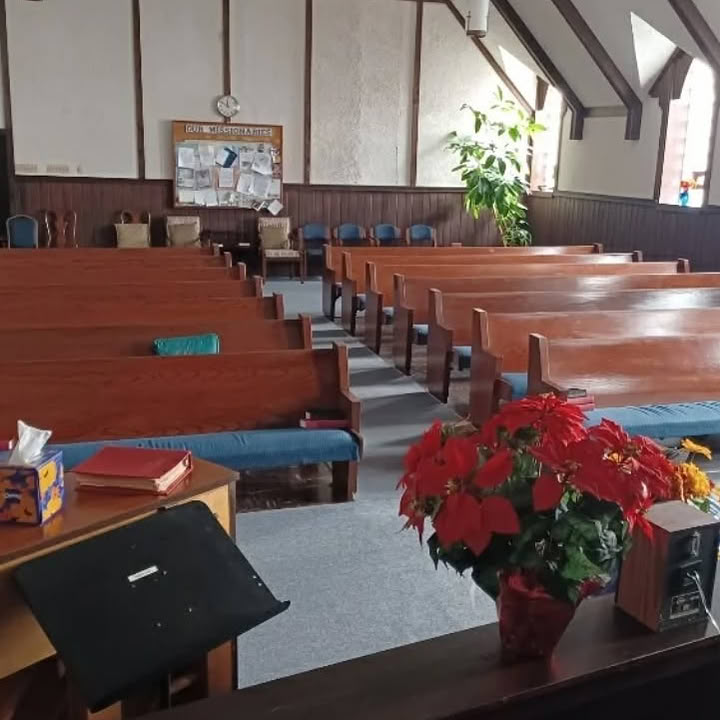
I almost went down in front of the whole congregation on Easter Sunday. Right there in the center aisle. Third pew from the front. Communion tray in my hands. I remember the moment my knees started to buckle. The way the sanctuary tilted just a little to the left, like somebody had bumped the whole building. The stained glass window behind the pulpit went from a bright red cross to a smear of pink. I heard Pastor Whitfield say something about the blood of the lamb but his voice sounded like it was coming from under water. I gripped the back of the pew. Real tight. My knuckles went ashy. Sister Loretta was next to me. She grabbed my elbow without even looking at me, the way women in that church have been catching each other for 60 years. Nobody else saw. Or if they did, they had the grace to pretend they didn't. I sat down. Passed the tray on. Kept my head bowed like I was praying so nobody would see the sweat on my upper lip. I got through the rest of the service. I got through the potluck in the fellowship hall. I got in my car in the parking lot behind the church and I sat there for 20 minutes before I could trust myself to drive home. That was seven months ago. The christening is in four weeks. My granddaughter Amara. Six months old. My daughter Jasmine's first baby. First grandbaby on both sides of the family. And Jasmine has been planning this christening since before Amara was born, picking out the little white dress, ordering the programs, telling everybody in Tuscaloosa to save the date. And I have been laying awake at night trying to figure out how to tell my only daughter that I can't stand up in front of that congregation and hold her baby over the baptismal font without going down. My name is DeShawna. I'm 54 years old. I've been the church secretary at First African Baptist here in Tuscaloosa for 16 years. That means I know every family in that congregation. I know whose grandmama is in hospice. I know who just made deacon. I know which teenagers are on the prayer list and which ones we're just praying about quietly. I type the bulletins on Thursday nights. I put the flowers on the altar Saturday mornings. I unlock the office at 7:30 AM Monday through Friday and I lock it back up at 4:30. That church is my second home. My husband Marcus says it's my first home and our house on 22nd Avenue is my second, and he's not exactly wrong. Marcus works at the construction supply place off McFarland Boulevard. Has for 31 years. We raised two kids in a three bedroom brick ranch. Jasmine is 27, works for the school system, just had Amara last April. Our son Kendrick is 24 and lives out in Birmingham working for a bank. I have been blessed. I know that. I say that every morning before my feet hit the floor. But two years ago something started going wrong with my body and I have not been able to figure out how to fix it. It started with the dizziness. Just here and there at first. I'd stand up too fast from my desk and I'd have to grab the file cabinet. I'd bend down to pick up a bulletin somebody dropped and when I stood back up the room would swim for a second. I told my doctor. Dr. Patel over at the medical office on Hackberry Lane. Sweet man. Kind eyes. Been my doctor for 12 years. He took my blood pressure. Frowned. Took it again. Frowned deeper. "DeShawna. This is 168 over 102. When did this start?" I told him I didn't know. I hadn't been checking. I thought high blood pressure was something old people had. I was 52. He put me on a pill. Little white one. Take one every morning with breakfast. I took it. Every morning. With breakfast. Three months later my pressure was 162 over 98. He added a second pill. Slightly bigger. Take it at night. I took it. Every night. Three months after that my pressure was 156 over 96. He increased the dose on the first one. Told me to cut out salt. Told me to lose 20 pounds. Told me stress was probably part of it and had I thought about maybe doing yoga. I did not do yoga. I did not have time to do yoga. I was working 40 hours a week at the church and helping Jasmine set up her nursery and my mother in Bessemer had just been diagnosed with something the doctors couldn't quite name yet. But I cut the salt. I stopped putting it on my eggs. I stopped adding it to my greens. Marcus complained about the greens. I told Marcus to hush. I lost 8 pounds. My pressure came down 4 points. The dizziness kept getting worse. Then came the headaches. The kind that start at the base of your skull and creep up over the top of your head like a hot washcloth being pulled tight. I'd get them at my desk around 2 in the afternoon. I'd get them driving home. I'd get them in the middle of the night and wake up with my pillow damp from the sweat. I started keeping a bottle of Tylenol in my purse. Then one in my desk drawer. Then one in the glove box. Marcus noticed. He notices everything, even when he pretends he doesn't. One night he came into the bathroom while I was shaking two more tablets into my palm and he said, "Baby. That's the fourth time today." I said I was fine. He said, "You're not fine." I said, "I said I'm fine, Marcus." He didn't push. That's not his way. But I saw him put the bottle back in the cabinet slow, the way you handle a thing you're worried about. The Easter Sunday thing was the worst of it. But it wasn't the only time. I nearly went down again at the Piggly Wiggly reaching for a bag of rice on the bottom shelf. I nearly went down in the church office standing up from my chair to answer the door. I nearly went down at my mother's bedside in Bessemer trying to help her get to the bathroom. Every time, I'd catch myself. Grab something. Sit down. Breathe. Every time, I'd tell myself it was fine. Every time, I'd think about the fact that both my grandmothers had strokes. My daddy's mama died of one at 61. My mama's mama had one at 66 and lived another eight years but never walked right again. I'm 54. I did the math on the drive to work every morning. I did it while I was making Marcus's coffee. I did it while I was sitting at the church office typing up the visitation list. Every prayer I said started the same way. Please Lord. Just let me get to Amara's christening. Just let me hold that baby over the water. That's all I want. Jasmine called me on a Wednesday night about three months after Amara was born. She was crying. Not sad crying. Happy crying. The kind of crying my daughter does when she's got something big to tell you and she can't get the words out. "Mama. Mama, listen. Pastor Whitfield said yes. October 18th. We can do it October 18th." The christening. She'd been going back and forth with the church about the date for weeks. October 18th was 10 weeks away. She kept talking. About the dress. About the reception at her house after. About whether I thought Aunt Regina would fly in from Detroit or if we should Facetime her in. About whether Marcus wanted to read a scripture. About whether I'd hold Amara during the actual ceremony because Jasmine's hands would be shaking too bad. I sat on the edge of my bed with the phone pressed to my ear and I said "of course baby, of course" and I smiled with my voice because that's what mamas do. I hung up. I looked at Marcus. He was in his chair reading the paper. I said, "I don't know if I can do it." He put the paper down. He said, "DeShawna. Come here." I went and sat next to him. He put his arm around me. He smelled like the Old Spice he's been wearing since 1992. He said, "Baby. What's going on." And I told him. The dizziness. The Easter Sunday thing. The Piggly Wiggly. The Tylenol. The math I was doing about my grandmothers. All of it. Everything I'd been carrying by myself for two years because I didn't want him to worry and I didn't want Jasmine to know and I didn't want anybody at the church to see me as anything other than the woman who unlocks the door at 7:30. He held me while I cried. Then he said, "We're going to figure this out. Together. But you have got to stop pretending." I went back to Dr. Patel. He was kind about it. He always is. He looked at my chart. He looked at me over the top of his glasses. He said, "DeShawna, I want to be honest with you. We're doing what we can with these medications. But your numbers aren't where they need to be. We may need to add a third medication. And I need you to understand, at 54, with your family history, this is something we need to take very seriously." He said the word stroke. Right out loud. I heard it and I felt my whole face get hot. He said, "I'm not trying to scare you. I'm trying to be straight with you." I nodded. I told him I appreciated it. I told him I'd do whatever he said. He wrote me a new prescription. Third pill. Take it in the morning with the first one. I filled it at the Walgreens on 15th Street on the way home. I put it in the cabinet with the other two. I stood in front of the bathroom mirror that night and I looked at myself and I thought, I am 54 years old and I am on three blood pressure medications and I still feel like I might drop dead at my granddaughter's christening. Something has to give. The next Sunday after service I stayed behind in the fellowship hall. Everybody else was outside in the parking lot doing what Baptists do after service, which is stand around talking for another 45 minutes when the service already ran long. I told Marcus I'd be out in a minute. I sat down at one of the folding tables with a paper plate of cornbread I wasn't going to eat. Miss Ernestine came and sat next to me. Miss Ernestine is 71. She's been the head deaconess at First African for longer than I've been the secretary. She's got short salt and pepper hair that she keeps in tight curls, and she wears reading glasses on a beaded chain around her neck, and she carries herself like a woman who has seen a whole lot and is not particularly impressed by any of it. Before she retired, she was a labor and delivery nurse at DCH Regional Medical Center for 39 years. She delivered half the babies in this church. She probably delivered me, come to think of it, though I've never asked. She sat down across from me. Didn't say anything for a minute. Just watched me not eat my cornbread. Then she said, "Sister DeShawna. How long?" I said, "How long what?" She said, "How long have you been sitting down at the top of the stairs before you go up. How long have you been holding onto the pew when you stand for the doxology. How long have you been walking to the office instead of driving because you're scared you'll pass out at a red light." I stared at her. She said, "Baby. I was a nurse for 39 years. I see everything." I started crying right there at the table with the cornbread in front of me. Miss Ernestine did not hug me. Miss Ernestine is not a hugger. She reached across the table and put her hand on top of mine. Her hand was warm and dry and covered in fine wrinkles and had two big rings on it, one wedding band and one that used to belong to her mother. She said, "Tell me everything." So I did. Right there in the fellowship hall while the rest of the church was outside. The dizziness. The three medications. Dr. Patel. My grandmothers. The christening. All of it. She listened. Really listened. She did not interrupt. She did not offer solutions. She did not say "I know just how you feel." When I was done she was quiet for a long time. Then she said, "Come to my house Tuesday afternoon. 2 o'clock. I want to talk to you about something." Miss Ernestine lives in a little brick house over in Alberta City. Marcus dropped me off on his way to work on Tuesday and I told him I'd call him when I was done. She had sweet tea and a plate of Nilla wafers on the coffee table. That's Miss Ernestine's way. She feeds you before she talks to you. She sat in her chair. I sat on her couch. Between us on the coffee table she'd laid out three things. A little brown bottle. A book with a green cover. And a printout of some kind, folded in half. She said, "DeShawna. What did Dr. Patel tell you about why your pressure is high?" I said, "He said it's genetic. And that I need to lose weight and reduce salt." She said, "That's what he told you the cause is. But did he ever tell you what's actually happening inside your blood vessels?" I said no. He hadn't. She said, "Let me tell you what I learned in 39 years at DCH. Some of it from the cardiologists. Some of it from paying attention. And some of it from what I started reading after my husband Cleveland passed." She unfolded the printout. It was some kind of article. She didn't hand it to me. She just kept talking. "Your blood vessels aren't just tubes, DeShawna. They're alive. The inside of every artery in your body is lined with a layer of living cells. It's called the endothelium. It's not something they teach you in high school biology. But it's the most important thing in your whole cardiovascular system." "Those cells have a job. Their job is to keep your vessels relaxed and open. They do that by producing a molecule called nitric oxide. When those cells are healthy, they make plenty of nitric oxide, and your vessels stay soft and flexible and open. Blood flows through easy. Pressure stays low." "But those cells get worn down. By years of processed food. By stress. By inflammation. By pollution. By just living a long time in a hard world." "When they get worn down, they can't make as much nitric oxide anymore. And when they can't make nitric oxide, your vessels stay tight. Blood has to force its way through. That's what high pressure is. It's not really a problem of too much blood. It's a problem of tubes that won't open." I was leaning forward on the couch. She said, "Now here's what they don't tell you at the doctor's office. Your medications don't fix the wall. They can't. What they do is force your vessels open from the outside. Which is fine. It brings the number down. But the wall keeps getting worse. Every year that goes by, the cells that line those arteries are more worn down than the year before. Which is why you keep needing more medication. And why the pressure keeps creeping back up." She looked at me over her glasses. "You are not failing your treatment, DeShawna. Your treatment isn't addressing what's actually broken." I sat there with my tea getting warm in my hand. She said, "About four years ago, after Cleveland passed and I retired, I started reading everything I could find on this. I lost him to a stroke, you know. He was 74. His pressure had been managed for 20 years. His numbers looked fine. And he still had a stroke. I could not let that go. I had to understand why." "And what I kept coming back to was this endothelial wall. If you don't support the wall, you're always fighting the symptom and never touching the cause." She picked up the little brown bottle. Handed it to me. I turned it in my hand. The label said Auniva. Underneath that, in smaller letters, it said Amla. I said, "What is this?" She said, "Amla. It's a fruit. Grows on a tree in India. They call it the Indian gooseberry. It's been used in traditional medicine for thousands of years, but that's not why I take it. I take it because of what the research says about a group of compounds in it called emblicanins." "Emblicanins have been studied for what they do to that endothelial wall. They help support those cells. When the wall is better supported, those cells can start producing more nitric oxide on their own. Not from the outside. Not forced. On their own. The way they did when you were younger." "And when the wall makes its own nitric oxide again, vessels can relax more naturally. Blood can flow easier. Pressure can ease. Not because something forced it. Because your body started doing what it already knows how to do." She paused. "You have to support the wall first. Everything else is downstream of that." I sat there for a long minute. I thought about all the money I had spent on medications that were not doing what I needed them to do. I thought about my grandmothers. I thought about Amara. I said, "Miss Ernestine. Can I be honest with you? I've tried supplements before. I took a fish oil for two years. My daughter got me on some magnesium. I did the garlic pills. Nothing did anything." She smiled a small smile. She said, "I know. I did all of those too. And I'll tell you why they didn't do what you needed them to do." "Fish oil is fine. It's got its place. But it doesn't touch the wall. Neither does magnesium. Neither does garlic. Beetroot juice, that's a big one right now, all it does is dump nitric oxide into your system from the outside. Which is like pouring water into a bucket with a hole in it. Your body already knows how to make nitric oxide. That was never the problem. The problem was the wall was too worn out to make it." "Amla is the only thing I've come across that goes to the wall. That's why it made a difference for me when nothing else did." She rolled up her sleeve. She held out her forearm. She said, "Take my pulse." I put two fingers on her wrist the way she taught the deaconess board to do it when we did the CPR training three years ago. Her pulse was slow and steady and even. She said, "I was on two blood pressure medications when Cleveland died. I've been off both of them for two and a half years. My last reading at Dr. Owens's office was 118 over 76. I take this and I take a walk around the block every morning and that is the entire program." I did not decide right there at Miss Ernestine's coffee table. I am not that kind of woman. I sit with things. I went home. I told Marcus. He listened the way he listens, which is with his whole body. He looked at the bottle. He looked at me. He said, "Baby. You've been on three of Dr. Patel's pills for four months and your pressure is still 154 over 92. What is there to lose." I said, "It's $60." He said, "Sixty dollars. DeShawna. We spent 60 dollars on that ridiculous pizza last Friday from that place on Skyland." I laughed. First time I'd laughed in weeks. He said, "It's got a 90 day money back thing. Miss Ernestine told you. If it doesn't do anything you send it back and you get your money. But you don't try, and that christening is going to come and go and you are going to have spent 10 weeks scared out of your mind." I sat with that. I ordered it that night. From the website Miss Ernestine wrote down for me on the back of a church bulletin. Two capsules a day. Free shipping. Made right here in the USA. It came in three days in a plain box on the porch. I started the Wednesday it arrived. Two capsules with breakfast. I didn't stop any of my medications. I wasn't about to do anything stupid. Dr. Patel didn't know I was taking it. Nobody knew except Marcus and Miss Ernestine. The first week I didn't feel anything different. I checked my pressure every morning on the little cuff Marcus bought me from CVS. Same numbers as before. 152 over 91. 155 over 93. 149 over 90. I told Marcus, "I don't know." He said, "Give it time." Week two I was still checking. Numbers were maybe a little lower. Hard to tell. Could have been anything. Week three, on a Tuesday afternoon, I stood up from my desk in the church office to answer the door for the UPS man and I realized something didn't happen. The room didn't tilt. I stood there in the doorway with the package in my hand and I thought about it. I put the package down. I sat back at my desk. I stood up again just to see. Nothing. No swim. No hot flash across my forehead. No grabbing the file cabinet. I sat back down and I put my head in my hands and I cried at my desk with the door open. Week four the headaches started thinning out. I still got them here and there. But they weren't every day anymore. Some days I'd get to 4 o'clock and realize I hadn't reached for the Tylenol once. Week five I checked my pressure and it was 138 over 84. I checked it twice because I didn't believe it. I checked it a third time. 136 over 82. I sat down on the toilet lid in our bathroom holding the cuff. I looked at myself in the mirror. I said out loud, to nobody, "Oh my God." Week six I told Dr. Patel. He looked at the numbers on my chart from his own equipment. He said, "DeShawna. These are the best numbers you've had since I've known you. What are you doing different." I told him about the amla. He didn't roll his eyes. Dr. Patel is not that kind of doctor. He just looked at me thoughtful over his glasses and he said, "I don't know anything about that. But I'm not going to tell you to stop. Your numbers are speaking for themselves." He said we could talk about maybe backing off the third medication in another month if my numbers held. Week eight was the christening. I woke up at 5:47 AM on October 18th and I laid in bed next to Marcus and I did the thing I always do, which is check in with my body before my feet hit the floor. Any dizziness. Any tightness. Any warning sign. Nothing. I got up. I made coffee. I sat on the back porch and watched the sky go from grey to pink to gold over the neighbor's fence. Marcus came out in his robe and stood behind my chair and put his hands on my shoulders. He said, "You ready, baby?" I said, "I'm ready." The church was full. Every pew. Aunt Regina flew in from Detroit. Kendrick drove down from Birmingham. Jasmine's in-laws came up from Selma. Marcus's whole shift from the construction place came in their Sunday clothes and sat in the back three rows. Amara was in the little white dress with the lace at the collar. She had a bow in her hair the size of her whole head. She was smiling at everybody. Six months old and already flirting with the congregation. Pastor Whitfield called Jasmine and Terrell up to the front. Then he called me and Marcus up as the grandparents. I walked up that aisle in my navy blue dress and my sensible shoes and I did not once feel the floor tilt. Jasmine handed me Amara. That baby was heavier than I expected. Warm through the little white dress. Her little hand grabbed a fistful of my necklace and would not let go. Pastor Whitfield said the words. He poured the water over Amara's head. She did not cry, which everybody says is a good sign for the child, though I'm not sure that's in the Bible. I held my granddaughter over the baptismal font of the church where I have worked for 16 years and where my mother was baptized and where my mother's mother was baptized before her. I did not go down. I did not even sway. Miss Ernestine was in the third row on the right side. When I looked up after the water, her eyes met mine across the sanctuary. She did not smile. She just nodded. One small nod. Nurse to nurse. Woman to woman. That was all. It was enough. I am still on two of Dr. Patel's medications. He weaned me off the third one at the four month mark. My last reading was 128 over 79. He is a cautious man and he says we will keep watching. I am fine with that. I am not trying to prove anything. I am trying to get old with my husband and my children and my granddaughter, and if I do that on two pills a day plus Miss Ernestine's fruit from India, I am not going to argue. I am not a doctor. I am a church secretary. I am not telling you what to do with your body. I am telling you what happened to mine. There is something to that endothelial wall. There is something to those cells that make nitric oxide. There is something to a fruit that has been used for 3,000 years that a labor and delivery nurse in Tuscaloosa put in my hand at her coffee table on a Tuesday afternoon. If your blood pressure has been creeping up on you, and your doctor keeps adding medications, and you keep doing everything you're supposed to do and the numbers won't come down, I am asking you to think about that wall. Nobody at the doctor's office is going to tell you about it. I understand why. It is not what they were trained on. It is not what the insurance pays for. That is not a criticism. It is just how the world works. But you are allowed to try something else at the same time. Auniva Amla comes in a little brown bottle. Two capsules a day. They ship it free from right here in the USA. And if you take it for 90 days and nothing happens, you send it back and you get every penny back. You do not lose anything except the postage. The link is at the bottom of this post. That is the same website Miss Ernestine wrote down for me on the back of a church bulletin. P.S. My granddaughter Amara is 11 months old now. She has two teeth. She is standing up holding onto the coffee table. Yesterday I picked her up from Jasmine's house and I carried her out to the car on my hip. I could not have done that a year ago. Not for the weight. For the dizziness. P.P.S. Miss Ernestine and I now walk the Riverwalk together on Saturday mornings at 7 AM. Two miles. Round trip. She sets the pace. I keep up. P.P.P.S. Please. If you are going to try it, do the whole 90 days. That is how long it took me to really feel it settle in. The first three weeks felt like nothing. The change happened slow. It is not one of those things where you take one and feel it that afternoon. It is a slow, steady, quiet coming back to yourself. Give it the time. And if it does not do for you what it did for me, you will not be out one dollar. That is the whole promise. 👉 https://auniva.co/amla/33
Where the ad sends people
auniva.co
Feel Like Yourself Again
"This actually worked, thank you so much." - Emily T.
Learn more: auniva.co(opens in a new tab)