USA Ready Families
USA Ready Families Facebook ad: “If You Care About Your Family Read This”
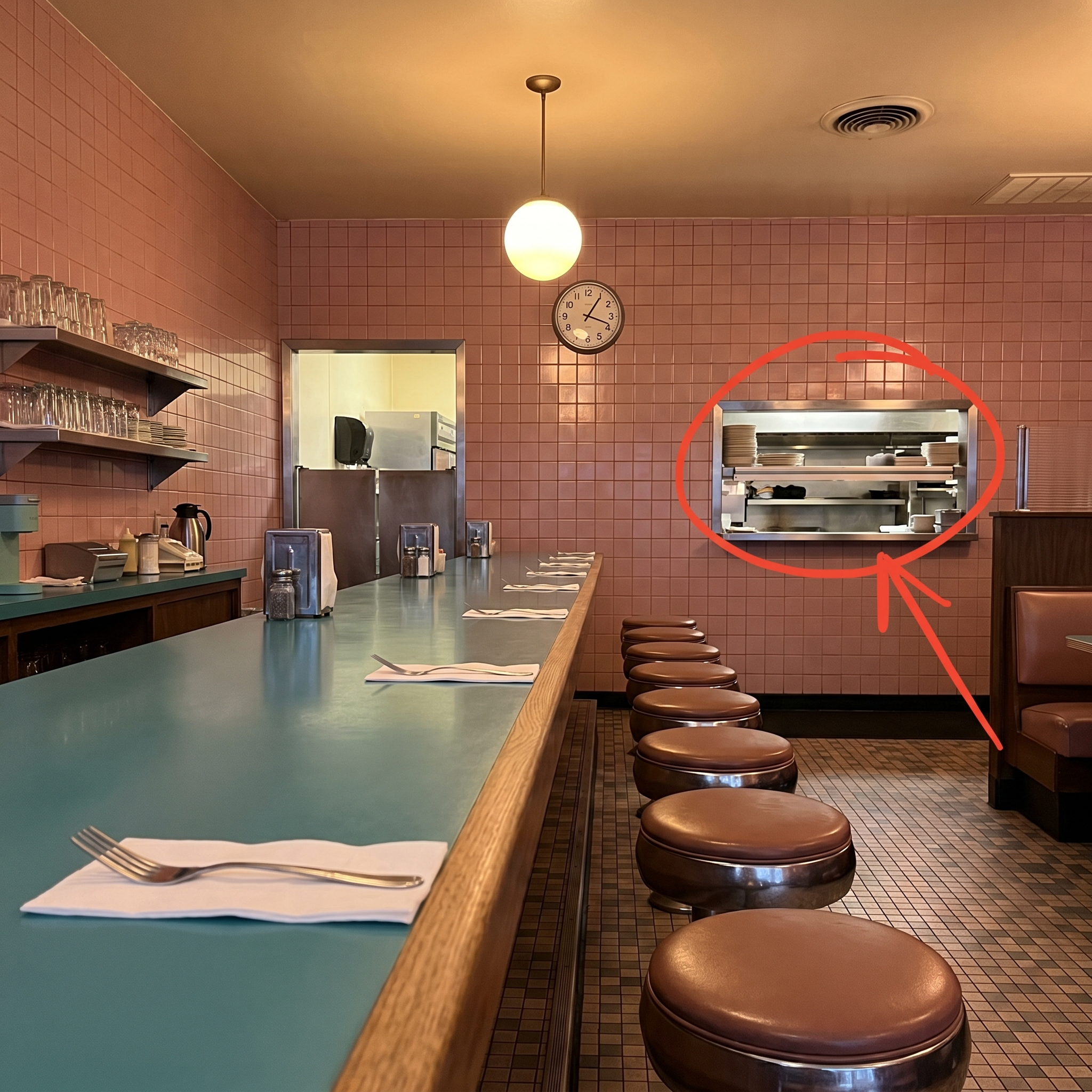
Ran for 14 days, from June 16 to June 30, 2026, the last day Crush saw it.
Run by USA Ready Families on Facebook. Crush is not the advertiser and does not verify its claims. See this ad in Meta's Ad Library(opens in a new tab)
Want an ad like this for your product?
Crush makes new ad images for your product from this ad: your logo, your product photo, your offer.
Trials from $19.95 USD, then $79.95 USD a month. Cancel anytime.
About this ad
- Meta Ad Library ID
- 1360104492738189
- Platforms
- Facebook, Instagram, Audience Network and Messenger
- Relaunches
- 0
- Niche
- Jewelry & Watches
Ad text
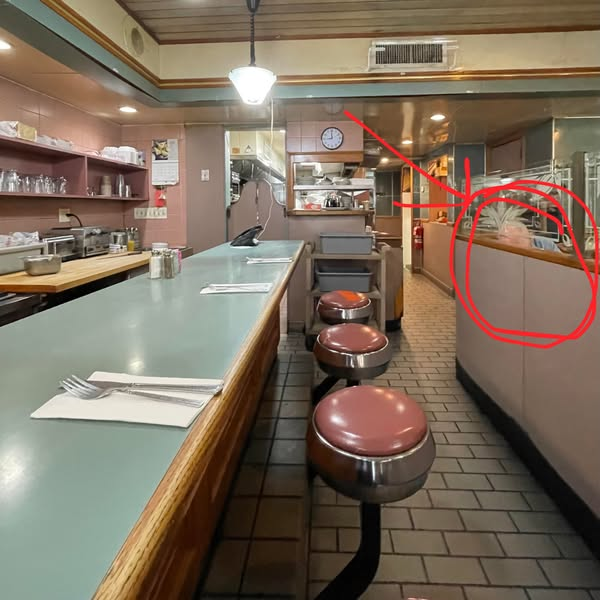
My Tuesday lunch regular just brought another man with him into my diner. In sixteen years he has come in alone every single time. His name is John Walsh and he spent the Cold War running secret operations against the Soviet Union in East Berlin. The other man with him was in his fifties, military bearing, expensive watch, did not order food. They sat at the counter together for forty minutes and spoke very quietly. After his companion left John stayed twenty more minutes, did not open his newspapers, did not finish his coffee, and walked out without saying goodbye to me for the first time since 2008. What he said the following week, in the parking lot after he walked me out to his truck, is the reason I am writing this down. I run a diner. Started running this place in 1998 when I was thirty-four. Bought it from a man named Henry Pavlik who had run it since the seventies. My husband Bill thought I was crazy to take it. I have been here every weekday and most Saturdays for twenty-eight years. I am sixty-two now. My son Kevin runs the line. My husband does the books. We are on a two-lane road about ninety minutes out of Washington. The kind of road where the cars are either headed east toward the federal jobs or west toward the dairies and the corn. We get both. I have eight regulars who have been coming in every week for more than a decade. I know what they order before they sit down. I know who tips on the meal and who tips on the bill. I know which one is fighting with his wife by what time he shows up. You learn to read people fast when you do this for thirty years. John Walsh has been the quietest of them. Sixteen years. Every Tuesday. Counter stool, third from the end. Black coffee, BLT, fries. Two newspapers, the Washington Post and the Wall Street Journal. Always paid in cash. Always tipped a five on an eleven dollar check. In sixteen years he has told me three personal things about himself. His wife's name was Eleanor. She died in 2019. He grew up in Bethlehem, Pennsylvania. Everything else I know about him I pieced together from sixteen years of small observations. He worked for the federal government. I know that from the lanyard he wore for the first few years before he retired, and from where the corner of his mail went when he sometimes left it on the counter. He spent the 1980s running secret operations against the Soviet Union in East Berlin. The Tuesday after he brought the other man into my diner he came back alone. I had spent the week putting the other man's face back together in my head. He had walked in a step behind John and sat at the counter without taking his jacket off. He kept his hands flat on the counter the whole forty minutes. Did not look at me once. He held his coffee cup the way a man holds it after a long drive. He did most of the talking. John listened more than he usually does. He did not open his newspapers. He let the BLT sit until it got cold. When I came over with the coffee pot the third time he looked up at me from his stool and said: "Patty. Walk out to the truck with me when the rush dies down." He paid first. I told Kevin to take the register. Walked out into the parking lot with him in the heat. First week of September, asphalt still ninety degrees at one in the afternoon. His truck was at the far end of the lot under the only shade tree we have. He went around to the driver's side and motioned me to the passenger side. I climbed in. He started the engine for the air conditioning. Did not put it in gear. For a few seconds he did not say anything. Then: "I owe you something, Patty. I'm going to give you something." "All right." "Before I tell you anything you tell me. Who do you have at home." "Bill. My husband. Kevin is back inside." "Anyone else." "My daughter Megan lives in Columbus. She has a five-year-old. Tess." He nodded. "Five." "Five last month." He looked out the windshield. "All right. Patty. I am going to tell you what I worked on for thirty-six years. I haven't told my own sister and she lives forty minutes away. I'm telling you because you've been feeding me a BLT every Tuesday for sixteen years and your son is on your line and your granddaughter is five." He paused. "And because of the man I had lunch with at your counter last Tuesday. You noticed him." "I noticed." "He's an old colleague. We worked together from '92 until I retired in 2017. He's still in. Runs a specific desk in Washington that has him sitting in the briefings I am about to tell you about. He drove up from Norfolk that morning to give me three things face-to-face. He was not going to put any of them in writing." "All right." "What he gave me at your counter last Tuesday is the reason I am out here in this truck with you today. Up until last Tuesday I had been watching a pattern form for ten years and telling myself I might still be wrong. After those three things I cannot tell myself that anymore." "What three things." "I'll tell you. One at a time. As we get to them." He looked at me. "You ever lose power for more than a day." "Few times. Once for three days about two winters ago. Big ice storm came through." "What did you do." "Drove out to my sister's. She has a generator." "What if she didn't." I thought about it. "I don't know." "That's the answer, Patty. Most people don't know. That's where this whole thing starts." He shifted in his seat. "I spent the 1980s running assets in East Berlin against the Soviets. The twenty-seven years after that I sat at a federal desk in Washington and studied how authoritarian governments use information control to manage their own populations. The Soviets were the most thorough at it. Information rationing tiers. Sectional communications blackouts. Plans for shutting down broadcast access to specific regions when compliance was needed. They had it all written down. I read it all." "All right." "What I am going to tell you next is the single principle that ran through every one of those documents." He paused. "In any modern country, the people who control what the population knows control the population. Not the courts. Not the police. Not the army. The information. What people hear. What they do not hear. What they believe is happening versus what is actually happening." "All right." "You take away information and you do not have to make anybody do anything. People will go to the distribution center because they heard that is where help is. People will accept any instruction as long as they believe the people giving it know more than they do. The moment people lose access to information they become entirely dependent on whoever is still broadcasting." He paused. "That is the principle. The Soviets understood it better than anyone in the twentieth century. They did not need to lock people in their homes. They needed to control what people believed was happening outside their homes. Once you control that, the population controls itself." "And then about ten years ago I started seeing the same architecture in continuity studies coming across my desk in Washington." "Continuity studies." "What happens in a crisis. How the government keeps functioning. How the population gets managed. Not the same Soviet words. Same logic. Same tiers. Same leverage points. Whoever drafted those American studies had read the same plans I had." I sat with it. He looked out the windshield. "Patty. Listen to me carefully. The reason this architecture works on a country like the United States especially is that we are uniquely defenseless against it. More defenseless than the population it was originally designed for." "How." "Think about your grandmother. Mine grew up on a farm outside Allentown." He paused. "If the power had gone out in 1935 for two months her household would have been fine. She had a radio that ran on batteries. She had neighbors who could walk to her door. She had a community that shared information face to face. She knew what was happening because the information did not depend on infrastructure someone else controlled." He looked at me. "What do you and Bill have." I started to answer and stopped. We had our phones. Our televisions. The internet. Every single piece of information that came into our house came through a wire or a tower that ran on power that somebody else controlled. The news. The weather. The emergency alerts. The ability to call Megan. The ability to call 911. The ability to know what was happening anywhere beyond what we could see from our own porch. I did not say anything for a few seconds. He nodded slowly. "You see it now." "I see it." "My grandmother could have survived a year with no infrastructure and still known what was happening in her community. You and Bill cannot go eight hours without being completely blind to anything happening outside your street. Neither can anyone else in your county. That is the population we have now. We replaced every skill our grandparents had for getting information with infrastructure. And the infrastructure runs through one wire." "The power." "The power. Pull the power and the cell towers follow within eight hours. Eight hours of backup battery at standard load. In a real emergency when every family in your county is calling at once the load runs three to four times higher and the batteries drain faster. Two to three hours at many installations before the tower goes completely dark." "After that you have no calls. No texts. No internet. No news. No emergency alerts. No way to know what is happening outside your own street. No way to reach Megan if something moves fast and she is somewhere else. No way to know if it is safe to stay or leave. No way to know where help is. No way to know anything." "All of it. Gone. In hours." I sat still. "Why now." He looked at me. "Because a playbook like this needs a real crisis to give it cover. It cannot just be activated. There has to be a reason the news will accept and that ordinary people will accept. That reason arrived on the twenty-eighth of February." "The strait." "The strait." He looked out the windshield. "Twenty percent of the world's oil and gas moves through one piece of water between the Persian Gulf and the Gulf of Oman. Iran closed it on the twenty-eighth of February. The shipping companies pulled out. Tankers were attacked. Mines were laid. The US Navy says it will take six months to clear them. Fifteen hundred ships are stranded right now. The strait is closed and it is going to stay closed." "The IEA called this the worst supply disruption in modern history. Worse than the seventies. They released four hundred million barrels from emergency reserves last month. Largest release in their fifty-year history. Did not move the needle on the price." "And that is the cover. That is what lets them pull the playbook off the shelf. The oil is not flowing. There is a genuine supply problem. So the rationing makes sense. The travel restrictions make sense. The energy lockdowns make sense. Every piece will be explained by something true. That is the genius of the timing." He looked at me. "They did not manufacture a reason. The reason was handed to them." I sat with it. "How does it come." "In pieces. Each piece small. Each piece with a name that does not sound scary. The architecture is built around making sure no single piece scares anyone enough to push back on the next." "How long." He looked at me for a long second. "Six to ten weeks. That is the window. That is the first of the three things the man at your counter last Tuesday gave me. He does not give a window unless he is sure of it." "Six to ten weeks." "Six to ten weeks." "All right. Tell me the pieces." "First piece is the fuel. Allocation cards. They will not call them rationing cards. Military first. Hospitals second. Emergency services third. Everyone else waits." "Second piece is travel. Flights thinned out. Routes cancelled. People stopped going more than ten miles from their house. A settled population is a controllable population." "Third piece is the grid. Rolling brownouts. They will start as advisories. We are recommending residents reduce non-essential power use between four and nine PM. Voluntary. Polite. You will ignore the first one. By the third one it is not voluntary. By the fourth or fifth they have a phrase for it." "What phrase." "Energy lockdown. Watch for those two words. They are going to appear on one of the big cable anchors in the next four to six weeks. After that everyone will use it." "How do you know that is the phrase." "Because the man at your counter last Tuesday told me. That phrase is in the briefing materials being shared with senior cable producers and major newspaper editors right now. He has read them." He paused. "That was the second thing he gave me." "What is the third thing." He looked at me. "The trigger. The signal that the operational phase has actually started. Up until that signal everything is preparation." "What is the signal." "A US refinery announcing extended maintenance for the first time. That phrase. Out of a US refinery. The moment a US refinery uses that language in a public announcement, the operational phase has begun. Everything I just described starts running from that signal." "How sure is he." "He writes the assessments for the people who would know when that signal comes. He is sure." "And then it starts. Fuel cards inside thirty days. Travel restrictions inside sixty. Energy lockdowns inside ninety. The full architecture rolling." "All right." "Once the energy lockdowns start, the control mechanics kick in fully." He turned to look at me. "People who cannot run their phones or their televisions or their computers need to go somewhere that has power. They register. People who do not know what is happening because they have no signal need to go to information distribution points. They register. People who cannot reach their family members because the towers are dark need help coordinating. They register." He looked at me. "You see how it works." "I see it." "The control is the registration. The registration is voluntary. The voluntariness comes from the fact that they took away the alternative. They did not have to make anybody do anything. They had to make it impossible to know what was happening any other way. Once it is impossible, you come to them. You bring your family. You sign in. You become a household number in a database." "That is the playbook." He was quiet for a few seconds. "And every single piece of it runs on the same lever. The information. Pull the information and they have every American household at their door within days. Not weeks. Days." I sat with it. He turned to look at me. "But the brownouts. The lockdowns. The fuel cards. The travel restrictions. The registrations. None of those is the part I am out here in this truck to tell you about." I waited. "The part I am out here to tell you about is the communications. Because everything else is gradual. The fuel cards take three months. The travel restrictions take four. The energy lockdowns take six. People have time to adjust." "The communications are different. The communications do not take months. The communications take eight hours." "Eight hours." "Eight hours." He looked at me. "The towers that carry your signal run on electricity. They have backup batteries. Eight hours at standard load. In a real emergency, two to three hours at many installations. After that every tower in your county goes dark." "And the moment every tower in your county goes dark, every family in your neighborhood is completely blind. No calls. No texts. No internet. No news. No emergency alerts. No way to know what is happening. No way to reach anyone." "Puerto Rico after Maria. The grid went down and within twenty-four hours, ninety-five percent of cell towers on the island were completely dark. Three and a half million people with nothing. Making life and death decisions with zero information. Wrong evacuation routes. Wrong shelter choices. People who drove into flooded roads because nobody told them the road was flooded. People who sheltered in place when evacuation was ordered hours before." "That was a hurricane. One island." He paused. "What is coming is not one island. And it is not three days." He looked at me. "Picture your own kitchen in three weeks. Power flickering on and off. Phone showing no bars. You have no idea what is happening anywhere beyond what you can see from your window. You do not know if it is safe to stay or leave. You do not know which roads are open. You do not know if Megan can get to you or if she should stay where she is. You do not know if help is coming in two days or two months. Tess at her mother's kitchen sink asking what is happening. Megan calling you and getting nothing because the tower between you and her went dark six hours ago." "That is the moment the playbook wins." I felt the cold come into my hands. He looked back at me. "Now. Here is what most people miss." "The control only works on people fully dependent on the system for information. People who can receive information independent of the towers do not have to go to the registration centers. They know what is actually happening. They can make decisions based on reality instead of fear and rumor. The playbook cannot grip them." "You cannot step outside all of it. But there is one piece you can step outside of completely. The most acute one. The one the whole playbook hinges on." "The information." "The information is the lever the whole playbook depends on. The information is also the easiest piece to step outside of. Real information is not actually scarce. The government emergency broadcast system has been running continuously through every American disaster for over seventy years. Puerto Rico. Texas. Every blackout. Every hurricane. Every grid failure. It kept broadcasting through all of them. Clear. Accurate. Real time. Shelter locations. Road conditions. Evacuation routes. Aid timelines. What is actually happening versus what fear and rumor says is happening." "It runs on dedicated broadcast infrastructure that does not depend on cell towers or the internet. It was specifically designed to survive grid failures because the people who built it understood exactly what I am telling you right now." "Most people have absolutely nothing to receive it with when their phone goes dark." He paused. "The moment you have something that receives that broadcast without depending on the towers, you are outside the playbook on the most critical piece. You know what is actually happening. You know what to do. You can reach your family. You can make real decisions instead of blind ones." "The men I worked with for thirty-six years figured this out six months ago. Most of them moved on it then. The colonel I ran assets with in Berlin in '85. The deputy director I reported to until I retired in 2017. My counterpart at one of the regional grid offices outside DC. The man who came up from Norfolk to your counter last Tuesday." "Their families are not going to be making any decisions blind. They stepped outside that one piece." He looked at me. "The man from Norfolk took care of his family in April. He came up here last Tuesday because the window had moved forward by six weeks and he thought I should know. He wanted me to move faster on mine." "He wanted you to move faster." "He wanted me to move faster. He did not tell me to tell anyone outside my world. That part is my decision." "And you decided to tell me." "I decided to tell you." He was quiet for a few seconds. "The women who run their diners and the men who frame their houses and the people who teach their kids are not going to be told. Not by the news. Not by anyone in my world. Not in time." "All right." "I am going to tell you." He looked down at the briefcase between his feet on the floor of the cab. "I have something for you, Patty." He did not open it. "Before I pull this out I want you to understand something. What I am about to show you is not classified. There is no document that says I cannot show it to you. But it is also not something I show outside my world. The minute enough people know it exists the supply tightens and the people who have been moving quietly end up in the same position as everyone else. The men I worked with for thirty-six years have spent the last six months trying to keep that from happening." He paused. "I am about to let it happen for one person. So I need you to use what I am going to show you. I do not need you to talk about it." "All right." He lifted the briefcase onto his lap. Unclipped the latches. Opened it. The lid had a row of compact orange and black devices clipped into a foam insert. I counted six of them. All identical. Rubberized casing. Solar panel on top. Antenna folded alongside each one. About the size of a thick paperback. He took one out. Held it up between us. "This is what it is." I took it. Heavier than I expected. Solid. Built the way something is built when it is meant to be used in conditions you would rather not think about. I turned it over in my fingers. "That is it." "That is it." I waited. He almost smiled. "That is the part most people get caught on, Patty. They look at it. They wait for the other shoe to drop. They wait for the part where it is complicated." "There is not a complicated part." "Four independent power sources. Solar panel on top. Hand crank on the back. USB rechargeable. AAA battery backup as a last resort. When one runs out you move to the next. No grid required. No tower required. No internet required." He tapped the front. "AM. FM. NOAA weather band. Direct reception of the government emergency broadcast system. The signal that does not run on towers. The signal that has been broadcasting through every American disaster for over seventy years because it was built on dedicated infrastructure specifically designed to survive grid failures." "When your phone shows zero bars and every tower in your county is dark and your neighbors are making decisions based on fear and whatever the last rumor was, this is locked into what is actually happening. Where the shelters are. Which roads are open. Whether it is safe to move. What the government emergency system is actually saying." He looked at me. "And it charges your phone through the USB port on the side. So even when your phone has no signal, at least it has power. And when the towers briefly flicker back on, you are ready." He looked at me. "How long does it keep working." "As long as the sun comes up and your hand still cranks. There is no scenario where this stops working." "Where do you get them." He looked at me. "That is the part of this you are going to need to remember." He held the device between his thumb and index finger. "They are made by a company called TGP. The Tactical RadioX. They do not sell in stores. Not Amazon. Not Costco. Not Walmart. You only get them direct. That is by design." He looked at it. "The day a Costco picks this up is the day it stops being a thing only certain people have. That is the whole architecture we have been talking about. The system controls what most people see. This product is not on the shelves the system controls." He let it sit. "How many do you have." "In this briefcase. Six." "At your house." "I will not tell you exactly, Patty. Enough for my daughter's family in Boston. Enough for my brother's in Pittsburgh. Enough for me for as long as I need one. Enough." He looked at me. "I am not going to ask you to take my word for any of this. My place is fifteen minutes from here. Kevin can cover the diner for an hour." I looked back at the building through the windshield. Lunch rush was done, dinner rush was not until five. "All right." He set the briefcase between his feet and pulled the truck out of the lot. We drove west on the two-lane for about ten minutes. Then a gravel road, a metal gate, and a driveway through oak and maple that ended at a small stone and clapboard house set back from the trees. He did not take me inside. He drove past the house and around to the back of the property where a path ran into the woods. He parked. We got out. I followed him down the path. It was cool under the trees. The path ran maybe two hundred yards. Then it opened into a clearing, and at the bottom of a small slope a creek ran through the woods. Six or seven feet wide. Brown rocks. The water moving fast over them because it had rained two days ago. He pulled the Tactical RadioX out of his jacket pocket. He extended the antenna. He turned the dial to the NOAA weather band. A voice came through. Clear. Steady. Government emergency broadcast. Real time weather information and civil alerts for the region. Clear as a kitchen radio on a Sunday morning. In the middle of his woods with no cell tower within miles. He held it out to me. I took it. Listened. He looked at me. "That signal has been transmitting through every one of the disasters I just told you about. Puerto Rico. Texas. Every grid failure in American history. Continuously. Without interruption. It was there the whole time. Most people just had nothing to receive it with." I stood there in the clearing holding a device that received a broadcast that had never stopped transmitting. In a dead zone where my phone had shown no signal since we turned onto the gravel road. He took it back. Collapsed the antenna. Slipped it back into his jacket pocket. "That is the whole thing, Patty." "That is the whole thing." We walked back up the path. When we got to the truck he reached through the open passenger window, opened the briefcase, and took out two of the devices from the foam insert. He handed both to me. "One for the house. One for your purse. Order more for the rest of your people when you get home. Bill. Kevin. Megan. Tess. Your sister with the generator. Anybody in your family who is going to be making decisions from a kitchen that has no signal in February." "All right." I stood there with the two devices in my hand. Solid. Heavier than a phone. The solar panel warm even in the shade from what little light came through the trees. The whole architecture of what he had told me in the truck, the playbook, the lever, the man from Norfolk, the towers going dark in eight hours, Tess at her mother's kitchen asking what is happening and Megan calling and getting nothing, collapsed against the two devices in my palm. I closed my fingers around them. The drive back to the diner was eight minutes. He did not say much. I did not either. When he pulled into the parking lot he put the truck in park but did not turn it off. He looked over at me. "Patty." "Thank you." He nodded once. I got out. He pulled out of the lot. I watched the truck turn west onto the two-lane. The two devices were in my apron pocket. I went back inside. Kevin was at the register. He looked up. "You all right, Mom." "I am all right." I worked the rest of the shift on autopilot, the devices in my apron pocket the whole time. I got home at six-thirty. Bill was watching the news in the den. I did not tell him. I do not know why. I think I needed to sit with it by myself for a night before I let anyone else's common sense talk me out of mine. I went to bed early. The next morning the devices were on the kitchen counter beside my purse. I did not order any more. I told myself I would order after my shift. I worked Tuesday. Worked Wednesday. Walsh did not come in Tuesday. First Tuesday he had missed in eight years that was not a family wedding. I still did not tell Bill. Three days after the conversation a refinery in Louisiana went offline. The news called it extended maintenance. Kevin had the TV on at the counter and the breaking-news banner came up during the lunch rush. The exact phrase Walsh had told me to watch for. The third thing the man from Norfolk had given him at my counter the week before. Five days after the conversation I was walking to my car after the dinner shift and an alert came up on my phone. The California Independent System Operator had issued a voluntary advisory. Residents asked to reduce non-essential power use between 4 and 9 PM through the weekend. Stress on the regional grid. Word for word what he had told me to watch for. I sat in my car in the parking lot for ten minutes before I drove home. Eight days after the conversation I was making coffee at the diner before the opening shift. The TV was on at the counter. A market commentator was talking about reserve releases and the strait. He used a phrase. What we may be looking at is something closer to an energy lockdown by Thanksgiving. I put the coffee pot down. Stood at the counter for a long time. That night I waited until Bill was in bed and reading. Sat down on the edge of the mattress and set the two devices on the comforter between us. "Bill. I need to tell you about a conversation I had nine days ago." He put his book down. I told him all of it. The truck. The Soviet desk. The control theory. The man from Norfolk and the three things he gave Walsh. The woods and the creek clearing. The dead zone and the broadcast that came through anyway. Tess at her mother's kitchen asking what is happening. The refinery. The California advisory. The phrase on the TV that morning. He listened the whole way through. When I was done he picked one of the devices up off the comforter. Turned it over in his hand the way I had turned it over in Walsh's truck. He extended the antenna. Turned the dial. The NOAA weather band came through our bedroom. Clear. Steady. He turned it off. "That is it." "That is it." He set it back down. "Did you order any more." "Not yet." "Get the laptop." I got the laptop. He sat up against the headboard. I sat down next to him. I pulled up the link Walsh had given me. We ordered ten. For Bill and me. Kevin. Megan's family. My sister with the generator. Bill's brother in Ohio. A couple of extras. The shipment came four days later. I told Megan on the phone that night. She told her husband. He called me back the next morning and ordered six more. He told two of his friends. They ordered. That is how it moves. I do not know who is reading this. I do not write things on the internet. I have not posted anything on Facebook since my granddaughter was born. I am writing this because the man in my truck three weeks ago was the closest thing to a warning a person like me is going to get from inside that world. Most of the people I know are not going to get even that. If something in what I wrote about him sounds familiar, the way the news has felt these last six months, the small knot in your stomach when you fill up at the pump, then you already know most of what I am telling you. This is the link he gave me. https://try.thegreatproject.com/tr-lis12-v3 The same one his daughter's family in Boston used. The same one his brother in Pittsburgh used. The same one his counterpart at the regional grid office used in March. The same one the man from Norfolk used in April. The math is what the math is. The window is what he said it was. I waited nine days because I wanted to be sure. After what I saw on the news those nine days, I do not think there is any more being sure to do. P.S. Yesterday morning a fifth refinery announced extended maintenance. This one in Southern California. After my shift I stopped at the Giant and there was a sign up in the electronics aisle. The portable power stations and battery banks were all sold out. The manager said it had started Monday. She has been at that store seventeen years and had never seen them clear out that fast. The first refinery went offline two weeks before the run on power stations started. That is the warning window we are inside right now. P.P.S. Bill ordered five more last Tuesday morning. He did not tell me he was going to. He just opened the laptop with his coffee and ordered. We have been married thirty-three years. I have spent most of them telling him things he does not quite believe until he sees them for himself. He saw the devices. He saw the news. He has not asked me one follow-up question since. P.P.P.S. The Tactical RadioX. Four independent power sources. Solar. Hand crank. USB. AAA battery backup. AM, FM, NOAA weather band. No towers needed. No grid needed. No internet required. Charges your phone via USB. Works in any dead zone. Receives the government emergency broadcast that was transmitting through Puerto Rico and Texas and every grid failure in American history. That signal is transmitting right now. All you need is something to receive it. P.P.P.P.S. Walsh has not been back to the diner. The Tuesday after we talked his stool was empty. So was the one after. So was the one after that. I think his daughter pulled him up to Boston. I do not know. What I know is the devices arrived.
Where the ad sends people
try.thegreatproject.com
If You Care About Your Family Read This
Shop now: try.thegreatproject.com(opens in a new tab)