
Inactive· since May 31, 2026
- 3
- days it ran
- 0
- relaunches
- 22
- EU reach
Ad copy
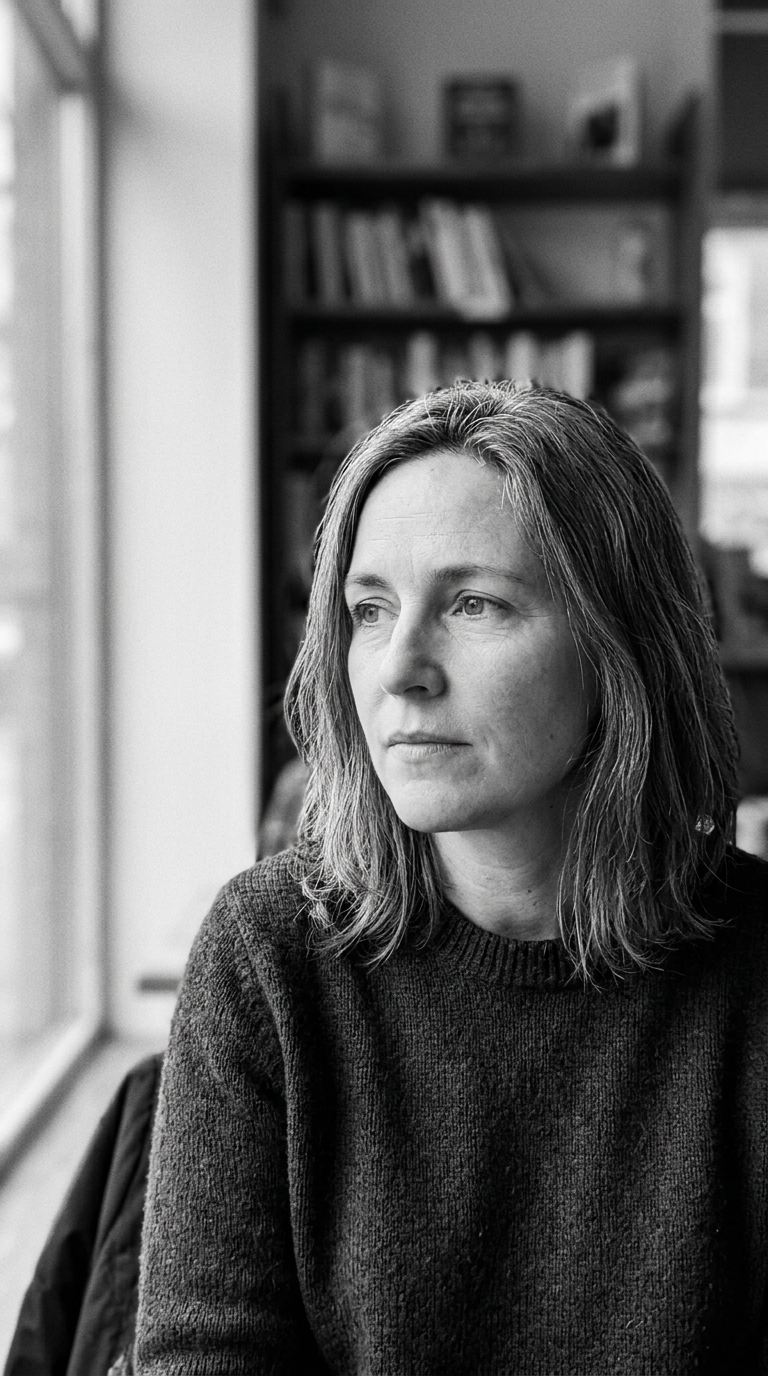
47 years old. Someone asked what I liked to do. I stood there for a full minute and had absolutely nothing. It was a dinner party. A Tuesday night in October. Someone's husband — nice man, just making conversation — turned to me between the salad and the main course and said, "So what do you do for fun?" And I froze. Not the way you freeze when you can't think of the right word. The way you freeze when you reach for something and your hand closes around nothing. I smiled. I opened my mouth. I said something like "oh, you know, the usual" and pivoted to asking about his work, and he let me, because people always do. But in the car on the way home I kept turning it over. What do I do for fun? What do I actually, genuinely like? Not what I used to like. Not what I tell people I like. What, right now, in this life, brings me something I'd call pleasure? I had nothing. And that, I realized, was not a small thing. For twenty-three years, I had been the person who handled things. Two kids, a career that required constant output, a marriage that needed maintenance, a household that ran because I made it run. I was good at it. I was, if I'm being honest, proud of it. There was a version of my identity that was entirely made of competence — being the one who showed up, who remembered, who didn't fall apart. And then, gradually, the urgency started to ease. The kids got older and needed me differently. The career reached a ceiling — not a failure, just a plateau, a place where the adrenaline of climbing had run out. The marriage went quiet in the way long marriages do, not broken, just settled, two people who had become more like roommates who loved each other than people who were still discovering each other. And I waited to feel relieved. I waited for the spaciousness to feel good. Instead, I felt like I was standing in a house after all the furniture had been moved out. The walls were still there. The structure was intact. But the echo was wrong. I started to think: maybe this is just what getting older feels like. Maybe the women who seem like themselves at fifty have just made peace with the emptiness. Maybe there's a grief in this stage of life that everyone is quietly experiencing and no one talks about at dinner parties. I thought this for almost two years. The mornings were the worst part. Not because anything was wrong — that was almost the problem. Nothing was wrong. The day would open up in front of me with actual space in it, and instead of knowing how to inhabit that space, I'd fill it. I'd find tasks. I'd check my phone. I'd manufacture urgency because the absence of urgency felt like falling. I didn't understand why I couldn't simply rest. Why I couldn't just be. What I didn't understand then — what nobody had ever explained to me — is that a nervous system that has spent two decades in high-demand mode doesn't automatically know how to come down. The constant alertness of motherhood, the performance pressure of a career, the background-level vigilance of being the person everyone needs: those aren't just habits. They're physiological states. Your nervous system learns to read calm as danger. It learns to read spaciousness as the moment before something goes wrong. So when the demands finally eased, my system didn't relax into itself. It kept scanning. It kept waiting. And underneath the scanning, there was no settled sense of self waiting to emerge — because building that self had never been the priority. Surviving had been the priority. Performing had been the priority. I wasn't empty because I was boring, or shallow, or because I'd wasted my life. I was empty because there had never been room. That reframe — when I finally encountered it — was the thing that cracked something open. Because it meant I wasn't broken. It meant I was running on a system that had been optimized for a set of demands that no longer existed. And a system can be recalibrated. A self that was always there, just buried under two decades of necessary urgency, can be found again. It started small. Embarrassingly small. A kind of gentle, curious inquiry into what I actually noticed, what I was drawn to, what felt different in my body on different days. Not grand reinvention. Not a new identity project. Just: paying attention in a way I had never had the bandwidth to pay attention before. I started noticing that I felt something in the late afternoon that wasn't tiredness — it was something closer to a specific kind of restlessness, and that restlessness had a texture to it that I recognized, eventually, as creativity that had nowhere to go. I started noticing that some conversations left me more alive than others, that some places — a particular park, a particular quality of light — registered differently in my chest. None of this was dramatic. There were no revelations. What happened was slower and stranger than that: I started to become, incrementally, legible to myself. The woman who froze at that dinner party wasn't a woman with nothing inside her. She was a woman who had never learned to listen for herself under all the noise of being needed. And the noise had finally quieted, and she didn't know how to use the silence. I'm still learning. I want to be clear about that. This isn't a story with a clean ending where I now know exactly who I am and spend my weekends blissfully pursuing meaningful passions. It's messier than that, and more interesting. Some days I still default to filling the space. Some mornings I still manufacture urgency out of habit. But I know what's happening when I do it now. I can name the pattern. And naming it, I've found, is the first thing that makes any of it possible to move through. If something in this landed — if you recognized the dinner party moment, or the echo in the house, or the strange grief of a life that looks fine from the outside — there's a place worth starting. Liven built a short quiz, about three minutes, that looks specifically at how your nervous system has been running and what that means for the way you experience your sense of self. It's not about fixing you. It's about finally understanding what's actually been happening underneath all those years of handling things. Link is below.
THIS IS what you need to do
LEARN MORELike this ad? Make it yours.
Crush rebuilds this exact creative around your product — your brand, your colors, your offer — in about a minute.