Cacao Research Institute
 Facebook ad: “The Ancient Protocol For Artery Plaque”
Ran for 7 days, from October 12 to October 19, 2026, the last day Crush saw it.
Run by Cacao Research Institute on Facebook. Crush is not the advertiser and does not verify its claims. See this ad in Meta's Ad Library(opens in a new tab)
Make your own version of this ad
Crush makes it, launches it in your own Meta ad account, scales the winners and pauses the losers.
About this ad
- Meta Ad Library ID
- 1368816755070695
- Platforms
- Facebook, Instagram, Audience Network, WhatsApp and Threads
- Relaunches
- 0
Ad text
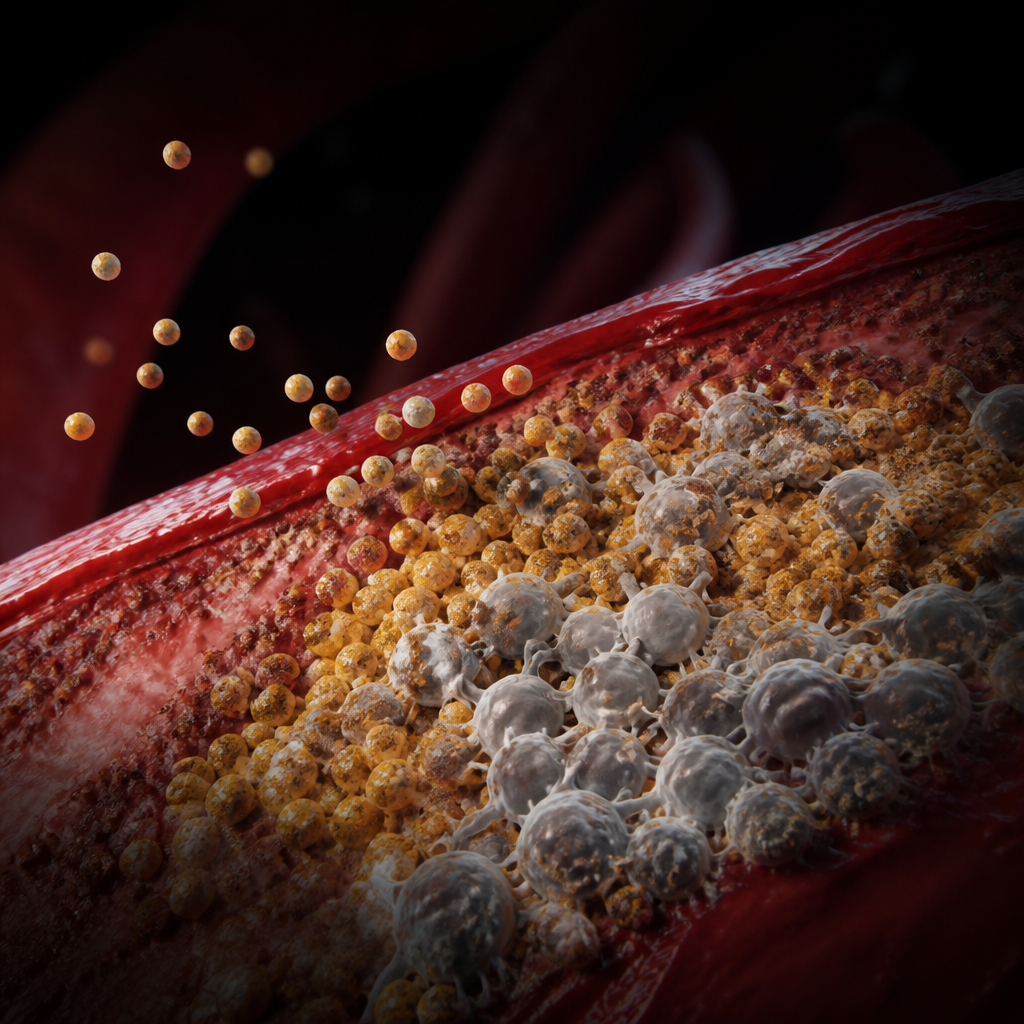
I got my calcium score back on a Thursday afternoon. 412. I sat in my truck in the parking lot and stared at that number on the printout until the ink started blurring. 412 means plaque. Built up inside your arteries. Calcium deposits layered into the artery walls like sediment in an old pipe. You can't feel it happening. You can't see it. You just get a number on a piece of paper that tells you it's already there. My name is Gene. I'm 62. I ran a transmission rebuild shop in Dayton for 27 years before I sold it. You want to know what 412 feels like for a man who spent three decades looking inside machines? It feels like pulling a transmission pan and finding metal shavings in the fluid. The damage is already done. The question is how much worse it's going to get. My specialist said, "You have significant calcified plaque in your coronary arteries. This didn't happen overnight. This has been building for years." Years. I sat there thinking about every bacon cheeseburger. Every sixteen-hour day running on gas station coffee and vending machine garbage. Every year I told myself I'd "start eating better next month." The plaque didn't care about next month. It was building while I was busy. He told me to clean up my diet. Exercise more. Lose some weight. Come back in twelve months for another scan. That was it. No explanation of WHY the plaque was building. No explanation of what was happening inside the artery wall that made calcium deposits accumulate in the first place. Just... eat better and come back. I went home and told my wife, Donna. She handled it the way she handles everything. She took over. Within a week, our kitchen looked like a health food store exploded in it. Oatmeal. Steel-cut, not instant, because the lady at the store said instant doesn't count. Fish oil capsules so big I had to take them with a full glass of water. Garlic supplements. Turmeric. A bag of flaxseed she ground up in the blender every morning and sprinkled on everything like it was seasoning. She threw out the butter. Threw out the cheese. Threw out my half-and-half. I love this woman, but she threw out my half-and-half. For six months, I ate like a man being punished. Oatmeal every morning. Salmon three nights a week. Salads with no dressing. Almonds by the handful. Beet juice that tasted like someone liquefied a baseball diamond. I lost 18 pounds. My cholesterol dropped. My specialist said, "Good progress." But here's what was eating at me. None of it was about the plaque. Everything we were doing, every single thing, was about what was floating through my blood. Cholesterol levels. Triglycerides. LDL numbers. Nobody was talking about the buildup itself. The calcium deposits already cemented into my artery walls. The narrowing that was already there. And nobody was explaining WHY it got there in the first place. I started reading. Not health blogs. Not supplement ads. Actual research papers. I printed them out and read them at my kitchen table with a highlighter, the same way I used to read technical service bulletins when a new transmission problem came across my bench. And what I found made me angry. Because it's not complicated. It's just not talked about. Here's what happens inside an artery. Every artery in your body is lined with a single layer of cells. One cell thick. It's called the endothelium. That lining has one critical job. It produces a molecule called nitric oxide. Nitric oxide does three things. One. It tells the artery walls to relax and stay flexible. Two. It keeps the inner surface smooth and slick, so things flowing through don't grab on and stick. Three. Research has shown it helps protect LDL cholesterol from oxidizing. That third one is the key. Because here's what the research says about how plaque actually forms. Regular LDL cholesterol floating through your blood isn't the problem by itself. LDL becomes a problem when it gets OXIDIZED. When it changes form. When it gets damaged. Oxidized LDL is what gets trapped in the artery wall. It triggers an inflammatory response. Your immune system sends cells to try to clean it up, and those cells get stuck too. Layer after layer. Year after year. That's plaque. Not cholesterol sitting in your blood. Cholesterol that oxidized, got trapped, and triggered a pileup inside the wall. And what's supposed to prevent that? A healthy endothelium producing plenty of nitric oxide. Nitric oxide supports healthy LDL so it's less prone to oxidation. Nitric oxide keeps the lining smooth so there are fewer rough spots for anything to catch on. Nitric oxide keeps the artery walls flexible so blood flows through with less turbulence. When the lining is doing its job, the whole system runs clean. But here's the part that made me put the highlighter down and just sit there. Nitric oxide production declines with age. The enzyme responsible for making it, called eNOS, slows down decade by decade. By the time most men reach their late fifties or sixties, their lining is producing a fraction of the nitric oxide it made when they were young. Less nitric oxide means stiffer arteries. Less nitric oxide means a rougher inner surface. Less nitric oxide means less natural protection for LDL from oxidation. More oxidized LDL means more of it getting trapped in the artery wall. More getting trapped means more plaque. The buildup isn't random. It's a cycle. And it starts with the lining. I put the research papers down and looked at everything in my kitchen. Oatmeal. Lowers cholesterol in the blood. Doesn't touch the lining. Fish oil. Supports healthy triglycerides in the blood. Doesn't touch the lining. Garlic. Mostly works on what's in the blood. Doesn't touch the lining. Flaxseed. Same. Beet juice. This one got close. Beets have nitrates that convert to a temporary burst of nitric oxide. But it's like throwing a bucket of water on a fire and walking away. You get a short spike, then it's gone. It doesn't support the enzyme that's supposed to be producing nitric oxide all day, every day, on its own. Six months of eating like a monk. Not one thing I put in my body was supporting the actual lining of my arteries. I was cleaning the fluid and ignoring the converter. If a customer brought me a transmission with metal shavings in the pan, I didn't just change the fluid and send him home. I opened it up and found out what was grinding. You fix the source of the contamination or you're just changing fluid every six months until the whole thing seizes. Same principle. Nobody was fixing the source. So I went looking for what actually supports eNOS activity and nitric oxide production at the lining level. And I kept landing on the same compound. Epicatechin. A flavanol found naturally in the raw cacao bean. I closed my laptop the first time I read it. Cacao. Sure. Chocolate's going to fix my arteries. Let me just eat a Snickers bar and call it health care. But I kept seeing it. Study after study. Clinical trials. Research documenting that high-flavanol cacao supports endothelial function. Supports nitric oxide production. Supports healthy arterial flexibility. Supports healthy blood flow. Supports healthy blood pressure levels already within the normal range. And the mechanism made sense to me. Epicatechin supports eNOS. eNOS produces nitric oxide. Nitric oxide supports the lining. A healthy lining keeps things running smooth. It wasn't magic. It was maintenance. The kind of maintenance every mechanic understands. You don't just clean what's flowing through the system. You maintain the system itself. Now. Before you go to the grocery store and buy a can of Hershey's cocoa powder, let me save you the trip. Because I did that first. I bought three different brands of cocoa from the grocery store and one "premium organic" brand from the health food place downtown. I looked up the processing methods for every one of them. All four were Dutch-processed. Dutch processing is when the manufacturer washes the cacao in an alkaline solution to make it darker, smoother, less bitter. Great for baking. Research shows it destroys 60 to 90 percent of the flavanols. Gone. Washed out. The exact compound I was looking for, stripped away to make it taste like a brownie. Then there's roasting. Most commercial cocoa is roasted at high temperatures for flavor. More heat, more flavanol destruction. So I had four cans of brown powder on my counter that looked like cacao, smelled like cacao, and had almost none of the active compound left in them. I went online next. Searched "high-flavanol cacao." Dozens of products. Big claims. "Rich in antioxidants." "Superfood blend." "Ancient recipe." I emailed every company the same question I used to ask parts suppliers. "What's the actual specification? How many milligrams of flavanols per serving, and where's the test report?" Most never answered. A few sent marketing language. "Naturally rich in beneficial compounds." That's the supplement industry version of "trust me." One company answered with a number. Printed on the label. Verified by an independent third-party lab. MAÏA Super Cacao. https://checkout.getmaia.co/shocking-discovery-plaque When the pouch arrived, the mechanic in me was satisfied before I even opened it. One ingredient. Cacao. No sugar. No dairy. No fillers. No "proprietary blend" hiding the fact that half the scoop is rice flour. Criollo variety. That's the heritage cacao the Aztecs and Maya were drinking five thousand years ago. Not the mass-produced commodity bean. The original. Cold-processed. No high-heat roasting. The flavanols survive because nobody cooked them out. Never Dutch-processed. No alkali wash. And the number is right there on the label. Tested. Verified. You know what you're getting in every scoop. It's not a capsule. It's not a tablet. It's a drink. One scoop in warm water or milk every morning. Dark, rich, a little bitter. The way cacao is supposed to taste when it hasn't been stripped and sugared into candy. I started on a Monday. Didn't tell Donna. Didn't tell anyone. I wanted to know if this was real or if I was just another sucker buying hope in a pouch. Week one. Nothing I could point to. The drink tasted good. Earthy. Like coffee's more serious older brother. I looked forward to it, which surprised me. Week two. I noticed my hands were warm when I woke up. Both hands. I'd been waking up with cold, stiff fingers for over a year. Thought it was just the house. It wasn't the house. Week three. I walked a mile and a half to the hardware store and back. Didn't think about it until I got home and realized my legs hadn't cramped once. I'd been getting calf cramps at half a mile for months. Week five. Donna noticed before I said anything. "You're not falling asleep on the couch anymore," she said one night around 9 PM. I was sitting there reading. Alert. Not wired, not jittery. Just... present. I hadn't been present after 7:30 in over a year. Week six. I climbed the stairs to the attic to get the Christmas decorations down. Came back down without stopping, without the tight, heavy pressure across my chest I'd been feeling for months. Donna was standing at the bottom of the stairs, looking at me. "What?" I said. "You didn't stop halfway." "No. I didn't." Week eight. Went back for bloodwork. Blood pressure was sitting in a healthy range. The numbers had come down to a place my specialist said was "exactly where we want to see them." He asked what I'd changed beyond the diet. "I started drinking cacao every morning. Real cacao. Not the store stuff." He looked at me for a long time. Wrote something in my chart. Said, "Keep doing whatever you're doing." I still go every six months. Still get the bloodwork. Still do every follow-up. I walk into that office like a man checking his own gauges instead of a man waiting for the engine light to come on. Here's what I want to tell you. If you've gotten a calcium score and the number scared you. If you're eating oatmeal and fish oil and beet juice and nothing feels different. If you're lying in bed at night thinking about the plaque sitting inside your artery walls right now, building, narrowing, tightening. You're not wrong to be scared. But you're cleaning the fluid and ignoring the system. The plaque cycle starts at the lining. When your endothelium stops producing enough nitric oxide, the inside of your arteries gets stiff, rough, and vulnerable. Oxidized LDL catches on the rough spots. The buildup begins. And everything you've been told to eat or swallow is working on what's in the blood, not on the wall itself. The flavanols in MAÏA Super Cacao support eNOS activity. They support nitric oxide production. They support healthy endothelial function, healthy circulation, healthy blood flow, and healthy arterial flexibility. Not from a capsule you forget in a drawer. From a cup you drink every morning. It comes with a 30-day money-back guarantee. One month. If you don't feel a difference, send it back. You won't have to explain yourself to anyone. You've already spent more than that on supplements that didn't do what they promised. https://checkout.getmaia.co/shocking-discovery-plaque But I have to be honest with you about something. MAÏA is a small operation. Criollo cacao is rare. Cold-processing it correctly takes time. They don't sell in stores. And when they sell out, they sell out. I've seen it happen. If you click the link below and they're in stock, grab it. If they're out, get on the waitlist and order the second it's back. Because plaque doesn't take days off. Every morning your lining goes without support, the cycle continues. Stiffer walls. Rougher surface. More oxidized LDL catching and sticking. More narrowing. More buildup. Oatmeal won't stop that cycle. Fish oil won't stop that cycle. You have to support the lining. I got my calcium score on a Thursday and sat in my truck staring at 412 like it was a death sentence. That was eleven months ago. I still have the printout in my glovebox. I look at it sometimes before my morning cup. Not because I'm scared anymore. Because it reminds me that I almost spent the rest of my life cleaning the fluid and never touching the system. Here's where to get the only cacao that actually has the flavanols in it: P.S. Donna still won't give me back my half-and-half. But the cacao's good enough black that I've stopped arguing about it. Mostly. https://checkout.getmaia.co/shocking-discovery-plaque
Where the ad sends people
checkout.getmaia.co
The Ancient Protocol For Artery Plaque
Learn more: checkout.getmaia.co(opens in a new tab)