
Inactive· since Jun 10, 2026
- 8
- days it ran
- 0
- relaunches
Ad copy
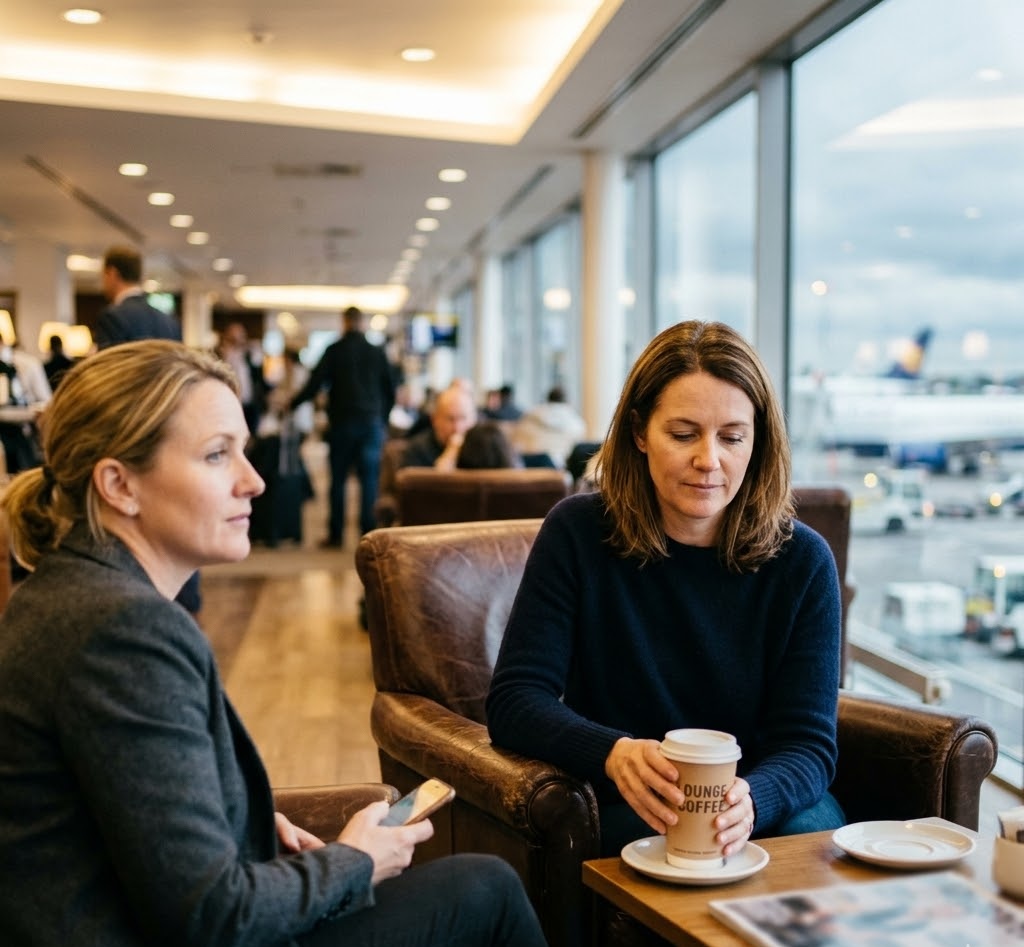
I have dressed women for the Oscars, the Met Gala, and twelve-city press tours. I have also watched $6,000 dresses arrive at a hotel looking like they had been folded at the bottom of a suitcase for five hours. Which is exactly what happened to them. More times than I have ever told a client. I am telling you now. My name is Diana Reeves. I have spent eighteen years as a wardrobe stylist working with women whose names you would recognize on a call sheet. I do not have a publicist or an Instagram following. My job is to be invisible. The work is visible. I am not. Which is exactly why I can tell you what I am about to tell you. There is a reason the women I dress never check a bag. There is a reason every stylist who has worked at this level for more than five years travels with a system the average person has never heard of. It is not a secret exactly. Nobody swore us to silence. It is simply knowledge that exists inside a professional world most people never enter, and nobody thought to explain it to the people outside it. I am going to explain it now. **The night I stopped pretending the system worked** In 2019 I was on the seventh city of a twelve-city press tour. My client had four appearances in the next thirty-six hours. I had packed her wardrobe for the entire tour in two garment cases that the production company had been checking as oversized luggage at every stop. By city seven, I was spending two hours per city on garment recovery that should have taken twenty minutes. The travel steamer I had used for eleven years was not keeping up. The dry cleaner bags I had wrapped around every hanging piece were doing what they always did at this point in a long tour, helping, but not enough. I was finding creases in fabric I had packed perfectly forty-eight hours earlier. Not catastrophic creases. Not visible from ten feet away under stage lighting. But the kind I could see. The kind she could see. The kind that, on a $4,200 Armani column dress under the lights of a morning television studio, I had no business leaving in the car. I fixed it. I always fixed it. I smiled and said it was fine and she never knew how close it came. That is the job. But sitting in that hotel room at eleven-thirty at night, steamer in one hand and a dress that cost more than my first car in the other, I understood something I had been ignoring for eighteen years. I did not have a solution to this problem. I had a collection of workarounds that slowed the damage down. And every one of them was treating the result rather than the cause. I went looking for the cause. **Why everything you have tried has failed** Clothes wrinkle for one reason. Pressure applied to a fold. That is the complete mechanism. Not fabric quality. Not how carefully you pack. Not which rolling technique you use or how many layers of tissue paper you interleave. If a fold in your garment is held under load during transit, a crease is set into the fiber. It is not a packing failure. It is physics. Every solution the luggage industry has ever sold you operates on the same broken principle. Rolling creates different folds under different load. Packing cubes organize the problem without solving it. Compression bags are the worst option of all, you are pressing more force into more folds and calling it efficient. The steamer works on some fabrics in some hotels with adequate water pressure, which is roughly half of them. Every single one of these is managing the crease after the fold has already done its damage. The only environment where clothes reliably do not wrinkle is the one where they have always not wrinkled. Your closet. Garments hang freely. Gravity distributes the fabric along its natural grain. No fold under load. No crease set into fiber. You pull a blouse out of your closet after two weeks and it looks exactly as it did when you put it in. Not because it is made of special material. Because it was suspended rather than compressed. I have known this for eighteen years. What I did not know, until a colleague told me on the last morning of that press tour, was that someone had finally built a carry-on bag around it. She called it the Closet Principle. I had never heard that phrase before. I have used it to describe the concept to every client I have worked with since. **What my colleague already knew** Her name is Greta. She has been styling for twenty-six years and has worked every major awards show on both coasts. I had seen her travel for a decade before I noticed she never stood at a baggage carousel. Never. Not once. I had assumed it was a logistical arrangement with production. It was not. She pulled the bag out in the crew room on the last morning of that tour. I stood looking at the interior for a long moment before I said anything. The hanging compartment was not a flap or a folder. It was a genuine suspension system inside a carry-on dimension bag. Garments hung freely during transit. The fold was removed from the equation entirely before departure. "How long have you been using this," I said. "Fourteen months," she said. "I stopped thinking about it after the first trip." That is the register of someone who has solved a problem so completely it ceased to exist. Not enthusiasm. Certainty. The quiet kind. I ordered one before I boarded my flight home. **What a fashion editor noticed without being told** Six weeks later I was traveling to Paris for a fitting. I was in the Air France lounge at JFK when a woman I recognized sat down across from me. Senior editor at one of the three publications that matter in this industry. We had met twice at events. She noticed the bag before she noticed me. "What is that," she said. Not a question exactly. The tone of someone identifying something. I told her. She asked how it worked. I explained the Closet Principle, the suspension system, the physics of why every other solution addresses the symptom rather than the cause. She listened the way editors listen, which is to say she was already deciding whether the information was useful before I finished the sentence. "I have been to forty-one cities in the past year," she said. "I have spent more money on hotel pressing services than I want to calculate. Why has nobody told me about this." She photographed the bag before we boarded. I do not know whether she bought one. I know she was not asking to be polite. **What the Luhxe bag actually is** It is the only carry-on I am aware of that applies the Closet Principle at full carry-on capacity. The hanging interior suspends garments during transit. They arrive the way they left. Seven compartments. Dedicated shoe storage separated from clothing. Laptop pocket. Toiletry section. Detachable wheels that come off for the overhead bin and snap back on when you land. Full-grain leather construction. 2.2 pounds empty. Compliant with carry-on regulations on more than 150 airlines. It holds ten-plus days of clothing. I have packed client wardrobes for five-day press appearances in a single bag that fit in an overhead bin. I have done it repeatedly. The clothes arrive looking the way I packed them. For the average traveler, the secondary benefit is the one that will register most immediately. The average round-trip checked bag fee is between $85 and $125. If you fly four times per year that is $400 to $500 annually handed directly to an airline for a service that damages your clothes and occasionally loses them entirely. Over ten years that number reaches $4,000 to $5,000 at conservative estimates. The bag pays for itself on the first trip and keeps paying after that. But the fee calculation, as real as it is, is not the reason I use this bag. I use it because I spent eighteen years watching a problem that had a solution nobody had thought to apply to carry-on travel, and now that someone has, I am not going back to steamers and dry cleaner bags and hotel irons at midnight. **What you need to know right now** Luhxe manufactures in limited production runs. This is not a marketing phrase. It is the operational reality of a bag made in the United States to a quality standard that does not allow for unlimited volume. The current run has a fixed number of units available. When this run closes, the next availability is not guaranteed and the waitlist from the previous sellout ran for several weeks. The price on the current run is the lowest it will be. Every production run has come in at a higher price than the one before it as manufacturing costs have increased. If you are reading this after the current inventory window has closed, you will pay more for the same bag. That is not speculation. That is the pricing history of this product. Luhxe offers a 90-day money-back guarantee. You can use it on a real trip and return it if it does not deliver what I have described. The risk of trying it is close to zero. The cost of not trying it is measured in every garment you have ever pulled out of a suitcase and spent twenty minutes trying to fix before something that mattered. I have dressed women for the highest-stakes appearances of their professional lives for eighteen years. I have one bag I travel with now. The current production run will not last. Your move. Diana Reeves has worked as a wardrobe stylist for eighteen years, with credits across major awards shows, international press tours, and editorial campaigns.
Limited Time Offer
JUST IN: 🏆 New & Improved 2.0 Version is is here! 👜 Fits 3 dresses plus 10+ days of clothes ✈️ Save $45 on extra luggage fees ⏳ Get 2 Free Gifts included with every order made today only!
SHOP NOWLike this ad? Make it yours.
Crush rebuilds this exact creative around your product — your brand, your colors, your offer — in about a minute.