
Inactive· since May 16, 2026
- 95
- days it ran
- 0
- relaunches
Ad copy
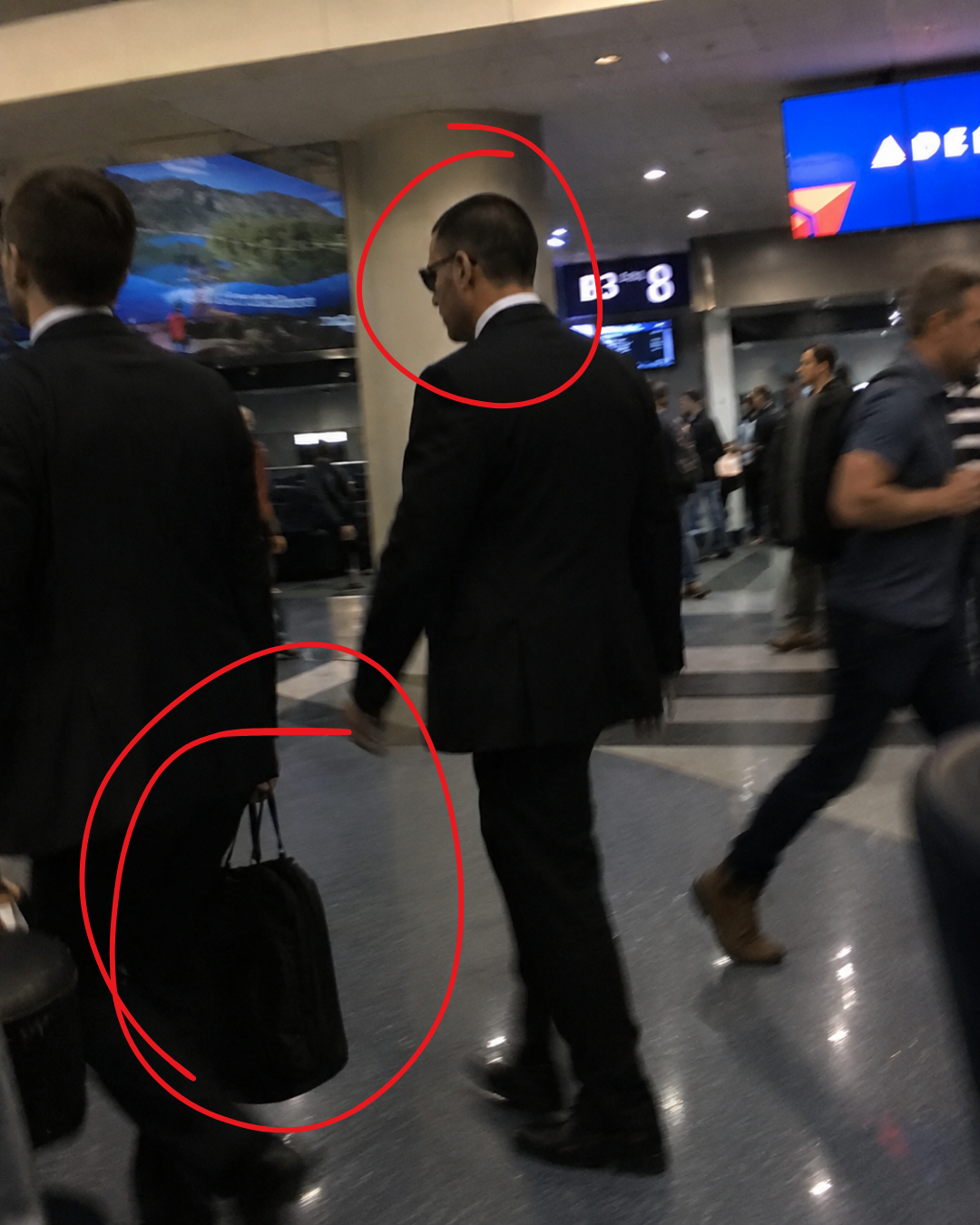
Two weeks ago I was at the airport when Spirit Airlines shut down overnight — every screen in the terminal flipped red, gates went dark, seventeen thousand people lost their jobs before most of them woke up. While everyone rushed the counter trying to rebook on airlines that are quietly cancelling thousands of flights of their own, the man three seats to my right didn't move. Suit that cost more than my rent. Two phones. The kind of guy who looks like he just came from a room where decisions get made about things you'll read about two weeks later. He picked up his phone, dialed one number, and said "cancel everything this month. All of it. I was right." I should have rebooked my flight and gone home. Instead I sat down next to him. What he told me over the next forty minutes in that empty gate is the reason I never rebooked, cancelled my son's summer camp, pulled my daughter out of her July trip, and have spent every night after my kids go to bed doing things my wife thought were crazy until she asked me one question and stopped asking anything at all. I need to back up. I'm 42. Wife, two kids — Lily's 9, Mason's 6. I live outside Charlotte. I was flying Spirit to see my mom in Fort Lauderdale because it was $138 round trip and I don't spend money I don't have to. I got to the airport at 5:30 AM. Coffee from the kiosk. Gate B14. Scrolling my phone like everyone else. That's when I noticed him. Not because he was loud. Because he was the quietest person in the building. Three seats away, legs crossed, reading something on his phone the way someone reads something they've been expecting. Dark suit that wasn't off a rack. Leather case on the seat next to him. Two phones. No carry-on. No neck pillow. He didn't look like a man going on a trip. He looked like a man coming back from one. I remember thinking — lawyer. Or lobbyist. Or something where you fly somewhere, say things behind closed doors, and fly home before anyone knows you were there. I went back to my phone. Then the screens went red. All of them. At the same time. Every board. Every monitor in Terminal A flipped to the same message. "We regret to inform you that Spirit Airlines has ceased all operations effective immediately." Three seconds of silence. Then chaos. A woman dropped her bag. A family with three kids just froze. A guy in a Panthers hoodie started yelling at the counter agent who looked just as confused as the rest of us. People pushing forward, holding up phones, screaming questions nobody had answers to. I got up and walked toward the counter. Not to rebook — I didn't even know what was happening yet. None of us did. It hadn't hit the news. No push alerts. Just red screens and a gate agent trying to get fifty people to stop yelling and form a line. They weren't answering anything. Just repeating the same line — "please remain calm, we'll have more information shortly, please form a single line" — over and over while people shouted over each other. Then the man in the suit stood up. He didn't get in line. He walked straight to the counter — past the line, past the guy in the Panthers hoodie who was mid-sentence — and did something I almost missed. He opened the left side of his jacket, just slightly, and showed something to the agent. A card. An ID. Something clipped to the inside pocket. She looked at it. Squinted. Then her whole face changed. She didn't tell him to get in line. She picked up a phone behind the counter and called someone. Within thirty seconds another agent came out from a back door I didn't even know was there. The two of them stepped to the side with him — away from the crowd — and started talking. Low. Close. But here's the thing. They weren't telling him what was going on. He wasn't asking questions. He was standing there, arms crossed, checking his watch, like he was waiting for someone above them to show up. Like THEY were briefing HIM. The whole thing lasted maybe two minutes. Then he walked back to his seat, sat down, picked up his phone, and made the call. "Cancel everything this month. All of it. I was right." He hung up. Put the phone down. Took off his glasses. And just stared out the window at the tarmac like a man watching the first crack spread across a windshield. I should have sat back down and minded my own business. But I was only three seats away. And the terminal had gone quiet around us — most people had moved to the counter or left the gate entirely. So when he made his second call, I heard more than I was supposed to. Not all of it. Fragments. The kind you piece together after. "...just like we talked about. It's starting." Then a pause. He was listening to whoever was on the other end. "...no. Get them ready now. Before the lockdowns start. Not next week. Now." Another pause. "...I told you. 2020 was the rehearsal. This is the real one." He hung up. Sat back. Rubbed his eyes with his thumb and forefinger like a man who hadn't slept in days. I sat there trying to make sense of what I'd just heard. Lockdowns. Rehearsal. Get them ready. My pulse was doing something it doesn't usually do at six in the morning in an airport. And then I did something stupid. I looked at him and said — almost under my breath — "what do you mean 2020 was a rehearsal?" His head snapped toward me. Not slow. Fast. The way someone reacts when they hear a sound that shouldn't be there. "What did you just say." "I — I heard you on the phone. I wasn't trying to listen. But you said—" "Keep your voice down." He leaned toward me. Not threatening. Controlled. "Do not repeat that. Not here. Not to anyone." I sat there frozen. He looked around the gate. Checked who was nearby. The janitor. A woman asleep two rows over. Nobody close. Then he looked at me like he was running some calculation — risk, trust, whether I was worth the trouble. "How old are your kids?" Nine and six. He took a breath. Looked at the departure board one more time. Then back at me. "Alright. I'm going to tell you something. And I need you to actually hear it." He didn't start with some big speech. He just sat there for a second, looking out at the tarmac, and said: "What do you think just happened here?" I said what everyone was saying. Spirit went bankrupt. Bad management. Cheap airline finally ran out of money. "That's what they'll put on the news tonight." He let that sit. "You know what actually killed this airline?" No. "Fuel. Jet fuel has doubled since March. Doubled. You know what that means for an airline like Spirit — thin margins, cheap tickets, no business class to absorb the hit? Every seat on every plane loses money. So they stopped flying." I told him okay, fuel prices are up, everyone knows that. But that's Spirit. One budget airline. "One airline." "Yeah." "Lufthansa — one of the biggest airlines on the planet — just cancelled twenty thousand flights through October. Not weather. Not strikes. Fuel." I didn't say anything. "KLM cut flights. Vietnam Airlines slashed a quarter of their routes. Cathay Pacific is cutting. Ryanair's CEO said if the strait doesn't open they'll cancel up to ten percent of every flight this summer." "What strait." He looked at me like he expected that question. "The Strait of Hormuz. Twenty-one miles wide. Between Iran and the Arabian Peninsula. Twenty percent of the world's oil moves through that lane every single day. When the war started and Iran closed it — the spigot shut off." He said it the way you'd explain something to someone who should already know. Not mean. Just tired. "The head of the International Energy Agency — not a blogger, not a pundit, the top energy authority on the planet — said on the record that Europe has maybe six weeks of jet fuel left. The EU's energy commissioner said this could last months. Maybe years." Six weeks. "Spirit's not the story. Spirit is the first domino." I sat there for a minute. The noise around us — yelling, crying, the gate agent still asking people to please form a line — it sounded different now. Like I was hearing it from underwater. "First domino of what." He didn't answer right away. He picked up his phone. Checked something. Put it back down. "You know where this ends if the strait doesn't open?" "No." "Think about what's happening right now. Not here. Everywhere else." He started listing things the way someone reads off a briefing. "The Philippines declared a national energy emergency in March. They import 98% of their oil from the Gulf. When the strait shut, their fuel prices doubled overnight. The government put workers on a four-day week to keep people off the roads." "Sri Lanka made every Wednesday a public holiday. Not a perk. Because they can't afford to let people drive five days a week. They're rationing gas — less than four gallons per person per week. Their president went on television and said 'prepare for the worst.'" "Bangladesh cut work hours. Shut malls by six. Egypt is dimming streetlights and closing restaurants by nine at night. India ran out of cooking gas. People are burning wood and coal. Thailand is telling citizens to turn off the AC and work from home." He looked at me. "That's not one country having a bad month. That's a dozen countries on three continents all doing the same thing at the same time. Cutting hours. Rationing fuel. Telling people to use less. And every one of them is calling it something soft. 'Energy conservation.' 'Temporary measures.' 'Emergency protocols.'" "And you're saying it's not temporary." "I'm saying it's the first round." He leaned forward. "Now think about where the flights are going. Spirit's dead. Lufthansa cut twenty thousand. Vietnam Airlines gutted a quarter of their routes. Jet fuel doubled. Think two years out. Three years. If this doesn't stop — and there is no reason right now to believe it stops — who is still flying? Not families going to Fort Lauderdale for $138. The only people in the air will be military, government, and people who were already at the top. Everyone else stays on the ground." "People wouldn't let that happen." "They won't have a choice. That's the whole point." He sat back. "You asked me what I meant about 2020." "Yeah." "2020 proved something. It proved they could shut down your job, your kids' school, your church, your ability to move freely — all of it — and people would go along with it. Because they called it safety. Stay home. Wear this. Please comply." "Okay." "What's coming is the same playbook applied to energy. Same language. Same structure. Reduce your usage. Limit your travel. Accept the rolling blackouts. It's for the greater good. Please comply." "Energy lockdown." I don't know why I said it like that. It just came out. Like my brain connected it before I gave it permission. He looked at me. Almost surprised. "That's the phrase. Watch for it. You'll hear it on the news inside of six weeks." "And it'll be like 2020." "Worse. 2020 you could argue about it at a school board meeting. You could refuse to wear the mask. You could keep your business open and take the fine. There was a debate. Two sides." "And this one?" "This one isn't a debate. You can't argue with an empty gas pump. You can't protest a grid that shut off. This is the DMV. You show up. You wait. You take what they give you. You comply because there's nothing else to do." "So why isn't everyone panicking right now?" He almost smiled. That same tired smile. "Because they learned. In 2020 they told everyone to panic and everyone did. Bought all the toilet paper. Rushed the stores. Made the whole thing ten times worse. They learned from that. So this time they're doing the opposite. Telling everyone to stay calm. Gas prices will come back down. The peace talks will work. The strait will open. Go about your day." "But—" "But look at what they're DOING. They're rationing fuel in a dozen countries. They're shutting down airlines. They're dimming streetlights. They're closing businesses early. They're putting people on four-day weeks because they can't afford five. What they're saying and what they're doing are two completely different things. That's what keeping a lid on it looks like." He checked his phone again. "The small dominoes fall first. Cuba. Sri Lanka. Bangladesh. Philippines. Nobody here pays attention to those. Then the medium ones start cracking. Europe. Australia. Asia. That's what you're watching right now — flights cancelled, fuel doubled, brownout advisories going from 'voluntary' to 'required.' That's the middle falling." "And then us." "And then us. But by the time the average person in this country looks up and realizes what's happening — the shelves are empty. The gas is gone. The power's going in and out. And the one thing nobody thought about is the one thing that matters most." "What's that." "Water." "Water?" "When the grid starts going down — and it will, because the same fuel that flies these planes generates your electricity — what do you think happens to your tap?" I didn't answer. "Your water doesn't come from a well. It comes from a treatment plant. That plant runs on electricity. The pumps that push the water from that plant to your house run on electricity. The pressure that keeps it flowing through the pipes — electricity." "Okay." "When the power goes, the pumps stop. When the pumps stop, the pressure drops. When the pressure drops, your tap goes dry. Not in a week. Not in a day. Hours." "Hours?" "Texas. 2021. Three-day grid failure. Fifteen million people lost safe drinking water. Boil advisories for weeks. People were melting snow in their bathtubs. And that was a winter storm. An accident. Nobody planned it." "Fifteen million." "From a three-day accident." He paused. "Cuba. Right now. Their grid has collapsed completely — four times since last October. The whole island goes dark. Ten million people. Eighteen hours a day without power. And you know what happened the second the power went out? The water stopped. Same chain. No fuel. No power. No pumps. No water. A woman on the news last week — two little kids — said if the electricity doesn't come back by morning she won't be able to get water for her family. Not can't afford it. Can't GET it. The pumps are dead." "That's been going on for months. That's what it looks like when the fuel runs out and nobody comes to fix it." He looked at me. "Now think about what happens when it's not Cuba. When it's not some island the news barely covers. When it's Charlotte. Or Atlanta. Or Phoenix. Same chain. Same result. The only difference is the number of people standing in their kitchen staring at a faucet that doesn't work." I sat there staring at the empty gate. The Spirit logo on the wall. The red departure board. The janitor sweeping up around us like nothing was different about today. "Everyone's looking at gas prices right now. Everyone's talking about flights and the strait and oil. Nobody — nobody — is talking about the water. And the people in the rooms I've been sitting in? They know. They've known for months. But the second the public understands what happens to the water when the grid goes down, the shelves go empty in hours. You keep people focused on the thing that scares them a little so they don't find the thing that should scare them a lot." "So what do you do about it." "About what." "The water. If the tap goes dry and the stores are empty and there's no truck coming — what do you actually do." He looked at his leather case. Looked at his phone. Looked back at me. "I've got it handled." "What does that mean." "It means my family is taken care of." "Okay, but how." He shook his head. "I don't talk about this." "You just spent twenty minutes telling me my kids might not have water. You can't say that and then tell me you've got it handled and leave it there." He didn't say anything for a long time. Longest silence of the whole conversation. Then he picked up his phone. Tapped through something. Turned the screen toward me. It was a photo. A drawer in what looked like a hallway closet. Inside the drawer — rows of small devices, lined up tight. Maybe thirty or forty of them. Each one about the size of a thick marker. "What am I looking at." "Water filters. Military-grade. Each one pulls clean drinking water out of any freshwater source — creek, pond, river, rain barrel, bathtub you filled before the pumps went out. No power. No batteries. No chemicals." He swiped to another photo. His car — back seat, center console open. More of them packed inside. Five or six. "I keep them in both cars. Both my kids' cars. My mother's house. My office. Two per person minimum. That's the number." "Two per person?" "One for where you live. One for where you go. Because if this hits while you're at work or on the road, you're not making it home to the one in your closet." "Where does something like this even come from." "Small company called Primitive Labs. Not a brand you'd know. Not Amazon, not Walmart, not anything in a store. The same filtration they build for field operations overseas — guys who deploy to places with no infrastructure, no clean water, no supply lines. They pack these because there's no guarantee anyone's coming to resupply them." "How much water does one do." "Four hundred gallons. One filter. That's a full year of drinking water for one person. From any creek or pond you can walk to." "A year." "A year. And it weighs nothing. Fits in a glove box. Fits in a purse. Fits in a kid's backpack." He put the phone down and looked at me. "Forget the gas. Forget the flights. Forget the pantry. Forget the cash. All of that matters but none of it matters as much as this. You can survive expensive gas. You can survive cancelled flights. You can survive eating rice and canned soup for a month. Your body shuts down in three days without water. Three days. There's no backup plan for that. There's no toughing it out." "The person who can walk to a creek and drink clean water from it — that person is covered. On the one thing that can't be replaced by anything else." I stared at the photo on his phone. That drawer full of them. This man had been getting ready for months. Quietly. While the rest of us were watching gas prices and complaining about flights. "Why don't more people know about this." "Because most people think their tap is going to work forever. And by the time they find out it won't — everyone will want these at the same time. And there won't be enough to go around." He put the phone down. Looked at his watch. Then at me. "I need to go. I have calls to make." "Wait — can I get your number? In case—" "No." He said it flat. Not rude. Just final. Then he reached into the inside pocket of his jacket and pulled out a pen. Black. Heavy. The kind that comes with a leather case, not a desk cup. "You have a piece of paper? Anything?" I patted my pockets. Pulled out a crumpled boarding pass — the Spirit ticket to Fort Lauderdale that was never going to get me anywhere. I handed it to him. He flipped it over to the blank side. Wrote a URL in clean block letters across the back. Then underneath it, in smaller writing, he wrote: "Two per person. Don't wait." He handed it back. He picked up his case. Put on his glasses. Stood up. Then he stopped. Turned back. "Last thing. The people I know who have these — the ones who've been watching this for months — they've already stocked up. When enough people figure out the connection between the grid and the water, the demand is going to be more than any small company can handle. I don't know what the timeline is on that. But I know it's coming." He looked at me one more time. "I don't know you. I'm not going to know you after today. But you have two kids and you seem like you actually heard what I said. So do something with it." Then he walked out of the terminal. I sat there for another ten minutes staring at the back of that boarding pass. The URL in block letters. The note underneath — "Two per person. Don't wait." Then I booked a $380 last-minute Southwest flight home. I didn't go to Fort Lauderdale. I called my mom and told her something came up. That night I sat at the kitchen table staring at that boarding pass. My wife asked me what I was looking at. I told her about the airport. The screens going red. The man in the suit. What he said about the fuel. The flights. The lockdown. Cuba. The countries rationing. The water. The drawer full of filters. The photo of his car. She listened the way she listens when she's not sure if I've lost my mind or if I'm onto something. When I was done she said: "So you think he's right?" I said I didn't know. She went back to the dishes. I put the boarding pass in the junk drawer. For three days I told myself the guy was being dramatic. Rich people are paranoid. That's why they're rich. He probably has a bunker somewhere too. I'm not that guy. Then Thursday morning I opened the news. Lufthansa confirmed the twenty thousand flight cancellations. Fuel costs cited directly. Friday — a refinery in Louisiana announced an unplanned shutdown. Third one that month. Saturday — Costco started limiting bottled water purchases in four states. No explanation. Just a sign at the register. Sunday morning I was scrolling and saw a clip of a cable news anchor. He used a phrase I'd never heard on television before. Two words. "Energy lockdown." The man at the airport told me I'd hear those words within six weeks. It had been twelve days. I got out of bed at 1:47 AM that night. Went downstairs. Opened the junk drawer. Pulled out the boarding pass. Sat down at the table and typed in the URL. I ordered twenty. Two per person for my family. The rest for my parents, my brother, my in-laws. When I came back upstairs my wife was sitting up in bed. "What did you just do." "Ordered the filters." She didn't say I was crazy. She didn't roll her eyes. She sat there for a second. Then she asked me one question. "Is there a creek near us?" There is. Half a mile from the house. Runs behind the neighborhood. I'd walked past it a thousand times and never thought about it once. When the filters showed up three days later I took one straight to the creek. I didn't tell my wife. I needed to see it for myself. The water in that creek is brown. Leaves floating. Bugs skating across the surface. You wouldn't wash your hands in it. I filled a bottle. Put the filter on. Stood there for a second. Then I drank. Clean. Cold. Like water from a kitchen faucet on a normal Tuesday. No taste. No grit. No film. Nothing. I pulled the bottle away and looked at it. The water in the bottle was still brown. What came through the filter was clear. I stood at the edge of that creek for a long time just staring at it. This little thing — the size of a marker, lighter than my phone — had just turned a creek I'd ignored for twelve years into a water supply for my entire family. I went home and told my wife. She didn't need convincing. She'd been up since I left, reading about the Louisiana refinery on her phone. She ordered ten more that afternoon. Five for her parents. Five for her sister's family. I called my brother that night. He listened. Said I sounded like a conspiracy theorist. I told him I didn't care. He ordered eight the next morning. Didn't tell me until a week later. I mailed four to my mom in Fort Lauderdale. The trip I never took. This is what I sent instead. I don't know who's reading this. I don't know if you've had that knot in your stomach — the one where you can't name what's wrong but you know something is. I didn't have a name for it either. Not until I sat next to a man in a dark suit in an empty airport gate and he named it for me. The flights are the first domino. The gas is the second. The grid is the third. And when the grid goes — the water goes with it. You don't want to be figuring this out on the day it happens. You want to have already figured it out. This is what I ordered. Same site he wrote on the back of my boarding pass. 👉 https://primitivelabsresearch.com/products/hydra-x1-portable-filtration-unit EDITED: Four days ago California issued a brownout advisory. "Reduce non-essential usage between 4 and 9 PM." The language shifted from "voluntary" to "required." The man at the airport said the word "brownout" sitting three seats away from me at Gate B14. I typed it into my phone that morning. It's still there. Yesterday a news anchor used the phrase "energy lockdown" for the second time in a week. A school district in Texas cancelled all field trips for the rest of the year. The letter to parents said "fuel allocation concerns." A Costco in my area just dropped the limit to one case of water per family. Everything the man at the airport said is matching. Every single thing. Since I posted this the messages haven't stopped. Guys from my gym. Two dads from Mason's baseball team. My wife's friend from book club. Her husband is a lineman for the power company. He read this and ordered thirty. Thirty. He told my wife "your husband isn't crazy. He's early." If you're reading this and they're still in stock — get them. Two per person. Every person in your family. 👉 https://primitivelabsresearch.com/products/hydra-x1-portable-filtration-unit P.S. — My wife hasn't said much about all of this. She's not a talker when things get heavy. But last Saturday she did something that told me everything. She drove to the creek by herself. Brought a bottle. Tested the filter alone. Came home and put it in her purse. She hasn't taken it out since. When I asked her about it she said "I just wanted to know where it was." That was enough. P.P.S. — Each filter does 400 gallons. That's a full year of clean drinking water for one person — from any creek, pond, rain barrel, or bathtub you filled before the pumps quit. No batteries. No power. No chemicals. No refills. Lifetime warranty. 60-day money-back guarantee. Free shipping. The man in the terminal had a drawer full of them at home. Both cars stocked. His mother covered. His kids covered. Two per person. If the people who see what's coming trust their families' lives to these, that's enough for me. P.P.P.S. — We also got their emergency bivvy and their solar radio. After everything the man at the airport said about the grid going in and out for months — rolling blackouts, no warning, no AC in the heat, no heat in the cold — I wanted backups for the kids. But if you only get one thing, get the filter. You can sit in the dark. You can sit in the cold. Your body shuts down in three days without clean water. That's the thing he kept coming back to. That's the part that made him walk past fifty people in line without blinking. P.P.P.P.S. — If you're thinking you'll just buy cases of water and stack them in the garage — do the math. A case of water is about three gallons. A family of four goes through that in less than a day. You'd need over fifty cases to last six weeks. That's a wall of plastic in your garage that runs out and can never be refilled. One filter fits in your pocket and does what a hundred and thirty cases does. Doesn't expire. Doesn't run out until you've drunk four hundred gallons from whatever creek or pond is closest to your house. That's the difference between running out and never running out. 👉 https://primitivelabsresearch.com/products/hydra-x1-portable-filtration-unit
If you're a parent or grandparent, please read this👆
Lightweight portable emergency water filter removes 99.99% of contaminants. Perfect for evacuations, disasters, and family emergency preparedness. Free shipping.
SHOP NOWLike this ad? Make it yours.
Crush rebuilds this exact creative around your product — your brand, your colors, your offer — in about a minute.