Megan Hartwell
Megan Hartwell Facebook ad: “I Used To Stop Traffic. Then I Turned 50 and Gained 34…”
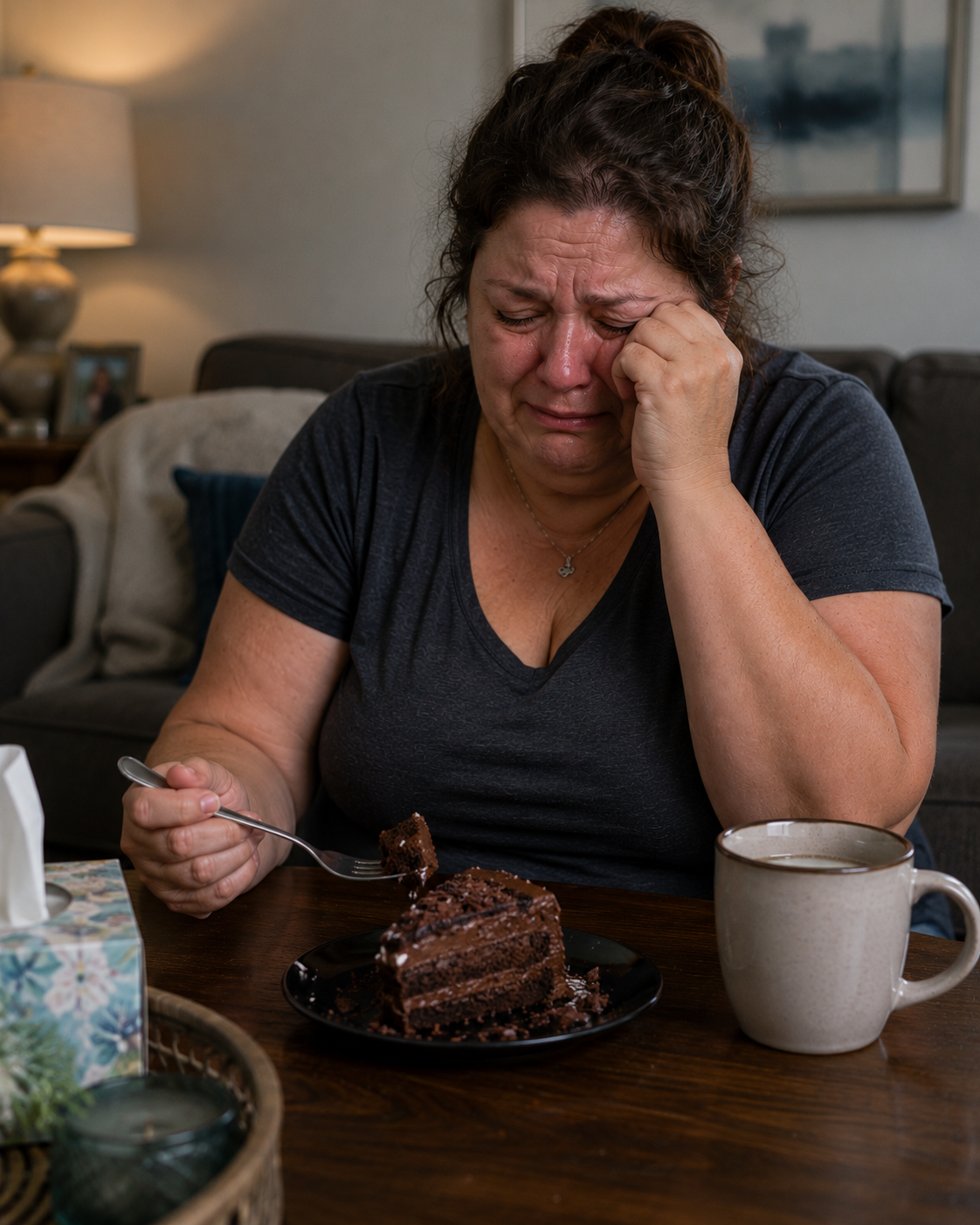
Ran for 39 days, from June 19 to July 28, 2026, the last day Crush saw it.
Run by Megan Hartwell on Facebook. Crush is not the advertiser and does not verify its claims. See this ad in Meta's Ad Library(opens in a new tab)
Want an ad like this for your product?
Crush makes new ad images for your product from this ad: your logo, your product photo, your offer.
Trials from $19.95 USD, then $79.95 USD a month. Cancel anytime.
About this ad
- Meta Ad Library ID
- 1387508893218367
- Platforms
- Facebook, Instagram, Messenger and Threads
- Relaunches
- 0
Ad text
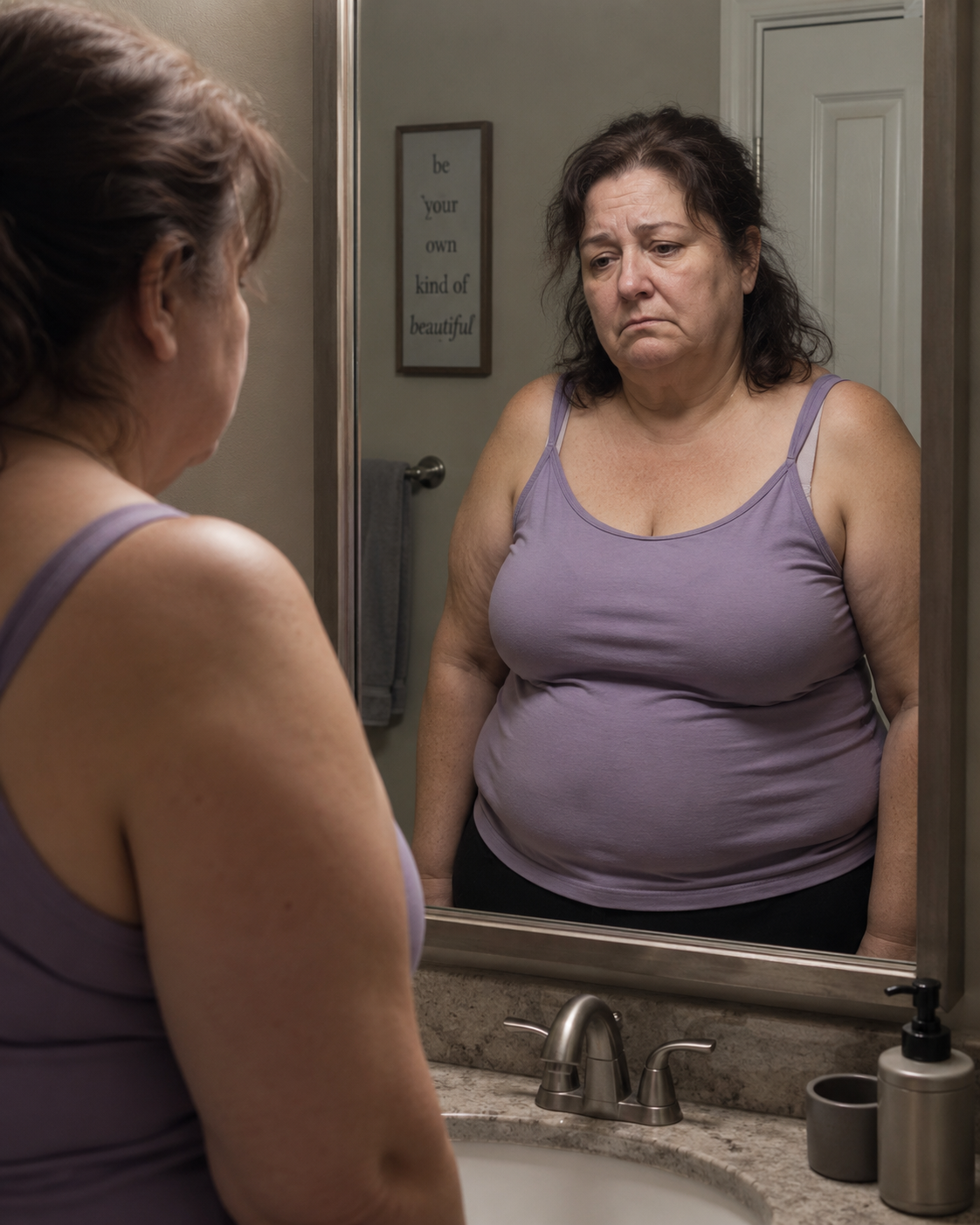
This is how I regained the confidence I had when I was young after years of being overweight. I want to tell you about the moment I realized something had fundamentally changed. I was at a restaurant I'd been going to for fifteen years. Same maitre d'. Same table they used to hold for me without being asked. The kind of place where the sommelier remembers your name and the chef sends out a little something extra just because you walked in. I stood at the host stand for four minutes. Nobody came. I'm not a vain person. I know how that sounds. But I need you to understand something: for most of my adult life, rooms changed when I walked into them. Doors opened before I reached them. Men held eye contact a beat too long. Women studied me and then smiled — the way women smile when they're deciding whether to be friendly or competitive. That was just my life. Not because I was wealthy. Not because I was powerful. Because I was beautiful. Because I had a body that people noticed. Because I was, for thirty-some years, the kind of woman the world pays attention to. I'm 52 now. And somewhere between 49 and 51, all of that stopped. My name is Megan. I was a model in my twenties — regional work, catalog, some commercial print. I stopped modeling when I was 34. Got married, started a business, had a life. But the body stayed. The way I carried myself stayed. The attention stayed. Until it didn't. The weight started coming on when I was 49. Not dramatically. Not all at once. Just gradually, steadily, like water rising in a basement. A few pounds in the fall. A few more by spring. I'd think: okay, I'll course-correct. Clean up my eating, add an extra workout, cut the wine. And nothing would happen. Or it would happen — I'd lose two pounds — and then I'd gain four. By the time I was 51, I was carrying 34 pounds I'd never carried before. Thirty-four pounds doesn't sound like a lot. But on a 5'7" woman who'd been 128 pounds for most of her adult life, it changed everything. My clothes didn't fit. My face looked different. My walk was different — I could feel it. This loss of ease. Like something had changed in the way I occupied space. And people noticed. Not the way they used to. That restaurant — the one where I waited four minutes at the host stand — was just the most obvious moment. There were a hundred smaller ones. The salesperson who helped the woman behind me first. The party where I introduced myself twice and got the same slightly blank look both times — from someone who'd met me a dozen times before at 128 pounds and apparently retained nothing. The dermatologist's waiting room where I filled out new patient paperwork and the receptionist didn't look up once. I had become invisible. This is not a thing I expected to happen to me at 52. I know beauty is not the most important thing. I've raised daughters. I've run a business. But something in me broke, a little, in ways I didn't anticipate. Because for thirty years, the attention, the ease, the way rooms shifted — had just been ambient. Like gravity. And then it was gone. I noticed its absence the way you notice a sound that's suddenly stopped. I want to be honest with you because I think other women feel this and pretend they don't. We're supposed to be beyond caring about this. We're supposed to have better things to think about. I do. But I also cried in a parking garage after that restaurant. And I'm not pretending otherwise. So I tried everything. I already ate well. I already exercised. But I got more strict. Found a trainer who worked specifically with women over 50. Did the blood panels — thyroid, hormones, everything. Everything came back "within normal range." Which is a way of saying: we see nothing wrong. Which is not the same as: nothing is wrong. I tried intermittent fasting. Lost three pounds in six weeks. Gained them back in two. I tried the Mediterranean diet with such dedication that my husband started calling himself a fisherman. I tried cutting sugar entirely — for ninety days. My cravings got worse, not better. Then my doctor mentioned the GLP-1 injections. Ozempic. Wegovy. The ones everyone was talking about. She wasn't pushy about it. She just said: "Megan, your body isn't responding to lifestyle changes the way it used to. This is a real option." I went home and researched for three hours. The price stopped me first. $1,200 to $1,500 a month without insurance coverage. Then I read the side effects. The nausea that some women described as so severe they couldn't leave their house. The vomiting. The days spent in bed. And the needles. Weekly injections, forever, or the weight comes back. I'm not afraid of much. But I sat with that information and felt something close to despair. I wasn't willing to do that to my body. I wasn't willing to spend that kind of money. And I wasn't willing to be dependent on a needle for the rest of my life just to feel like myself again. So I said no. And I went back to being invisible. About six months later, a friend called me. Her name is Margot. We'd known each other since our modeling days — she understood, in a way most people couldn't, exactly what I was grieving. She said: "Megan. I need to tell you something. Have you heard of Ledisa?" I hadn't. She told me it was a patch — a transdermal patch you wear on your skin — that supports your body's own GLP-1 production. Not an injection. Not a prescription. Not $1,500 a month. I was skeptical. Very skeptical. Because I'd been skeptical of everything by that point and I'd earned it. But Margot is not a person who gets swept up in things. She's careful. She researches. She doesn't recommend something unless she's seen it work. "I'm down 18 pounds," she said. "And I feel like myself again." That got my attention. So I looked into it. Here's what I learned — and what nobody had ever explained to me in all those doctor's appointments: GLP-1 is a hormone your body naturally produces. When it's working properly, it tells your brain you're full. It slows how quickly food leaves your stomach. It quiets the cravings — that mental noise that makes you want things you don't need. After 50, especially with the hormonal shifts of menopause, GLP-1 activity declines. Your body is still producing it. But the signal is weaker. The volume turns down. And when the volume turns down, your brain stops getting the "you're full" message until you've already eaten more than you should. That's not a willpower failure. That's biology. What Ledisa does is support your body's ability to produce and maintain healthy GLP-1 activity — not by injecting a synthetic version, but by giving your body the natural compounds it needs to do the job itself. Berberine — which has been studied extensively for its effect on metabolic hormones and blood sugar regulation. Garcinia Cambogia — long used to reduce appetite and support healthy fat metabolism. Cinnamon extract — which helps stabilize blood sugar so the cravings don't spike and crash. Green Tea extract — one of the most potent natural metabolic supporters, shown in studies to improve how the body processes glucose. Apple Cider Vinegar — which slows digestion in a way that extends the feeling of fullness. Chromium Picolinate — which reduces carbohydrate cravings specifically. And a full B-vitamin complex — B1, B2, B3, B6, B9, B12 — because metabolic function depends on these, and most women over 50 are quietly depleted. The patch delivers all of it through the skin, steadily, all day. No spikes. No crashes. No nausea from something hitting your stomach all at once. Just a quiet, consistent signal to your body: you're supported, your hormones have what they need, you can stop fighting. I ordered Ledisa on a Thursday. It arrived Saturday. I put on the first patch Sunday morning — small, discreet, low on my hip — and went about my day. I want to be honest about what week one was like. It was not dramatic. There was no moment where I felt a switch flip. I just noticed, around day three, that I'd eaten a smaller lunch than usual and not thought much about it. That the 3:30 PM window — the window when I'd historically eaten everything that wasn't nailed down — had passed without incident. By week two, my husband mentioned I seemed calmer. Not physically. Emotionally. He said I seemed less effortful. Less like I was bracing against something. He was right. The constant low-level negotiation with myself — the ongoing, exhausting internal conversation about food and portions and willpower and failure — had quieted. Not gone. Quieted. Week three: Down four pounds. Week five: Down seven. Week eight: Down eleven. My clothes were starting to fit differently. But here's the thing I want to tell you, because it's the thing I didn't expect: The weight wasn't the first thing I noticed changing. The way people treated me was. This sounds impossible. Eleven pounds in eight weeks, and I was already noticing a difference in how I moved through the world. I was carrying myself differently. There was something in my posture that had come back — some ease, some confidence, something I'd lost without knowing I was losing it. My husband's assistant, who'd known me for six years, commented that I "seemed like myself again." She said it like a compliment. I received it as one — and also as a small grief, for the months when I apparently hadn't seemed like myself. I went back to that restaurant. Same host stand. Same maitre d'. I was shown to my table immediately. He said "Good evening, Mrs. —" and used my name. Which he'd always known. Which he'd apparently forgotten somewhere in the last two years. I know what you're going to say. I know the lesson here is supposed to be that I shouldn't care about that. That what matters is my health, not whether a maitre d' recognizes me. And that's true. I believe it. And I also sat at that table and felt something relax in my chest that had been held tight for two years. Because here's what I've decided: it's allowed to be both. It's allowed to care about your health AND notice that the world responds differently when you inhabit your body with ease. Those things aren't contradictions. They're the same thing. I'm not back to 128 pounds. I'm not sure I want to be — I'm fifty-two, not thirty. But I'm down 22 pounds from my peak. I'm in clothes I hadn't been able to wear for two years. I'm walking the way I used to walk. And the rooms have started changing again, just a little. Not the way they did at twenty-eight — that's gone, and that's fine. But something. An ease. A recognition. I'll take it. Here's what I wish someone had told me when this all started: The weight you're gaining after 50 is not a willpower problem. It's a GLP-1 problem. Your body's natural appetite-regulating hormone is weaker than it used to be — and no amount of discipline fixes a hormone. You need to give your body the compounds it needs to support that system naturally. That's what Ledisa does. No needles. No prescription. No $1,500 monthly bill. No nausea that keeps you in bed. No injection bruises. No dependency on a pharmacy. Just a patch you put on in the morning — with Berberine, Garcinia Cambogia, Cinnamon, Green Tea, ACV, Chromium, and a full B-vitamin complex — working together through your skin, all day, to give your body what it needs to regulate appetite the way it was designed to. I was the most skeptical person in the room before I tried this. Twenty-two pounds later, I'm the most grateful. If you're a woman over 45 who's tried the diets, tried the discipline, watched the GLP-1 ads and wanted the results but not the needles or the price tag — this is what I wish I'd found two years ago. Click the link below. Give your body what it's been asking for. You deserve to feel like yourself again. - Megan P.S. — The thing that convinced me to finally try Ledisa was that it doesn't override your body — it supports it. There's a big difference between injecting a synthetic hormone and giving your body the natural compounds it needs to produce that hormone on its own. Berberine alone has dozens of published studies on its effect on metabolic function. The rest of the formula just deepens and extends that. Your body knows what to do. Ledisa gives it what it needs to do it. P.P.S. — I know some women are already on GLP-1 injections and swear by them. That's a real option and I'm not arguing against it for everyone. I'm talking to the women like me — the ones who wanted a different path. A natural path. One that didn't cost more than a car payment every month. If that's you, click the link.
Where the ad sends people
shopledisa.com
I Used To Stop Traffic. Then I Turned 50 and Gained 34 Pounds. Here's What Finally Got My Body — and My Life — Back.
Activates your body’s natural GLP-1 fullness hormone so your appetite drops, your metabolism speeds up, and food stops controlling your day.
Shop now: trvl.shopledisa.com(opens in a new tab)