The Thyroid Journal
The Thyroid Journal Facebook ad: “rhodiola rosea”
Ran for 9 days, from September 17 to September 26, 2026, the last day Crush saw it.
Run by The Thyroid Journal on Facebook. Crush is not the advertiser and does not verify its claims. See this ad in Meta's Ad Library(opens in a new tab)
Want an ad like this for your product?
Crush makes new ad images for your product from this ad: your logo, your product photo, your offer.
Trials from $19.95 USD, then $79.95 USD a month. Cancel anytime.
About this ad
- Meta Ad Library ID
- 1392913759003059
- Platforms
- Facebook, Instagram, Audience Network, WhatsApp and Threads
- Relaunches
- 1
Ad text
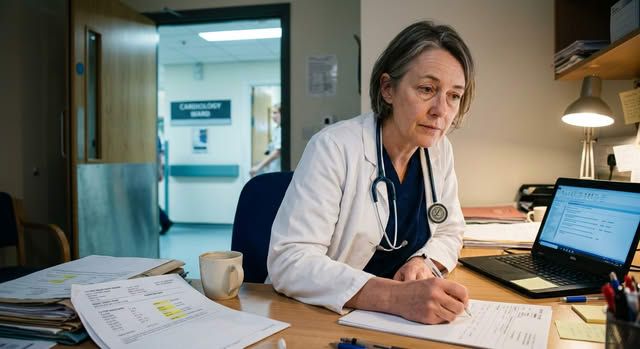
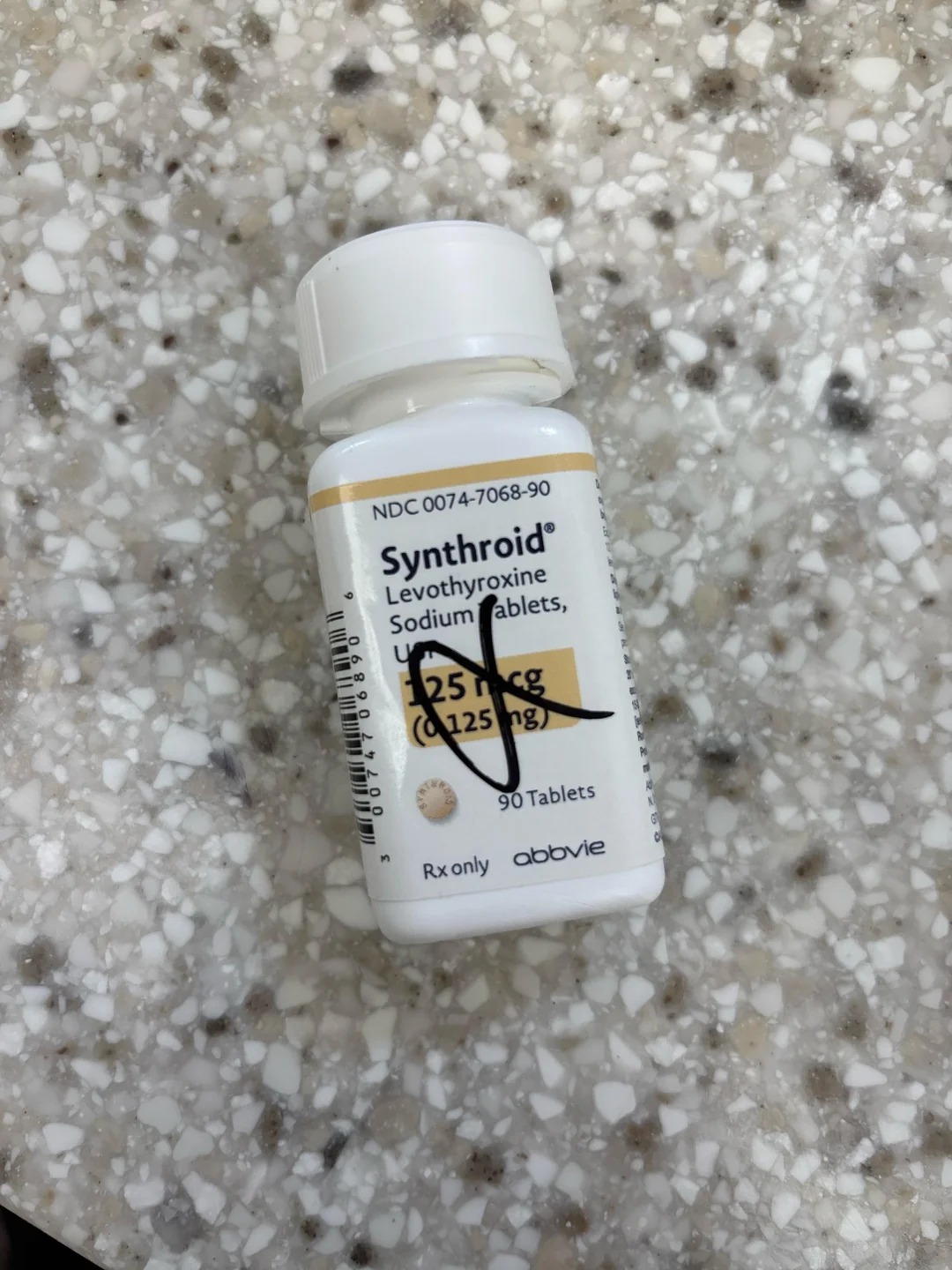
I have been a thyroid specialist for fifteen years. The first thing you learn in my field is that stress is the enemy. Stress makes every thyroid condition worse. Managing it is the first thing every clinic in Britain tells an exhausted woman to do. Then I spent two weeks in a village above the Arctic Circle. A place where women live through four months of winter without a single sunrise. The most stressful environment a human body can live in. And I met an 87-year-old woman with Hashimoto's who has more energy than my patients half her age. What I found in her kitchen broke everything I thought I knew. Let me back up. I run a small thyroid clinic in the North of England. Women come to me when the NHS has run out of answers for them. They have been on levothyroxine for years. Their blood tests are normal. And they still feel dreadful. By the time a woman sits down in front of me, I already know what her file is going to say. Because it always says the same thing. Visit one. Tiredness that sleep doesn't fix. Notes: probably her age, probably menopause. Advised to rest more. Visit two. Weight creeping up on 1,200 calories a day. Notes: dietary discipline discussed. Advised to eat less and move more. Visit three. Heart thumping on the stairs. Notes: likely anxiety. Beta blocker offered. Visit four. Can't sleep. Exhausted all day, wide awake at midnight. Notes: sleep hygiene leaflet given. Advised to try yoga. Visit five. Brain fog. Losing words mid-sentence. Crying in the car park afterwards. Notes: low mood. Antidepressant discussed. Five visits. Five years. Five different explanations. And somewhere along the way, somebody told her to download a mindfulness app. For her thyroid. Then someone finally sends her to me. I pull up her bloods. I look at her results — the ones nobody ordered, next to the ones everybody did. And in under half an hour I can usually find what explains every single one of those visits. It is not her thyroid. It is not her willpower either. It is the stress signal sitting on top of both — and nobody in the system is paid to look at it. So when I was invited to a thyroid conference in Tromsø, in the far north of Norway, I added two weeks to the trip. Because something had been bothering me for years. Northern Norway should be the worst place in Europe to have a thyroid condition. Four months of winter darkness. Brutal cold. Isolation. Everything we are taught drives cortisol — the stress hormone — through the roof. By my training, the women up there should be the most exhausted women in Europe. They are not. Women in these northern counties are four times less likely to be living with crippling daytime exhaustion than British women the same age. Not slightly less likely. Four times. Sharper minds well past 80. Still walking the hills. Still working. They should have more of what is flattening the women in my clinic. Not less. I needed to understand why. After the conference I drove out to a fishing village on a fjord, two hours from Tromsø, and arranged a homestay through a colleague's research project. The woman I stayed with was called Sigrid. She is 87. She lives alone in the wooden house she was born in. She has had Hashimoto's for over fifty years. On my third morning I came down at half six and she was already back from feeding her neighbour's sheep. Snow still on her coat. Coffee already made. I sat at her kitchen table doing the maths. This woman has lived through more than eighty Arctic winters. Months of darkness, every year, for a lifetime. By everything I know, her condition should be raging. She should have been flattened decades ago. But she is sharp. Her eyes are clear. She had done more by seven in the morning than most of my patients manage in a day. I had to ask. Her English was excellent — she'd worked the tourist boats out of Tromsø for thirty years. "Sigrid, the darkness. The winters. Doesn't the stress make your thyroid worse?" She stopped pouring the coffee. Looked at me. And started laughing. "Everyone worries about something. British women worry about stress. We learned something different." She wiped her hands and sat down across from me. "You did not come here for a conference. Something is telling you. The tiredness that sleep does not touch. The weight that will not move. Lying awake at two in the morning while your body hums like a fridge. Yes?" I am 51. I have spent three years telling myself it was my age. I nodded. She leaned across the table. "You are not going mad. And you are not lazy. Your body is telling you the truth. Nobody has been listening." She put her hands flat on the table. "I had a sister. Astrid. Two years younger. She left for London at twenty-three and never came home. She thought what our mother taught us was old-fashioned. She had the same condition as me. Her blood tests were normal her whole life. And I watched her turn into a grey woman on the telephone. Tired at forty. Old at fifty. Her heart gave out at sixty-eight, in a queue at the post office." She looked at me for a long moment. "You are walking my sister's road. You should turn around." She went to the dresser and took down a small dark jar with a twist of paper under the lid. "Your tablet is only half of the medicine. Did you know this?" I did. Levothyroxine is T4 — a storage hormone. It does nothing until the body converts it into T3, the active hormone every cell actually runs on. What I said was: "Go on." "The tablet delivers the wood. But the body decides whether to light the fire." She tapped the table. "Think of a house in a storm. When the storm comes, you shut every door. You burn as little wood as you can. You save everything, in case it gets worse." "A body that believes it is in danger does the same. It will not spend. It hoards. It keeps the wood stacked and the house cold." "Your body has decided the storm never ends." I sat very still. Because that is it. That is the thing I see in chart after chart and have no prescription for. Chronically raised stress hormones telling a woman's body, day after day, that it is under siege. And a body under siege does not finish the job her tablet started. The T4 arrives. The conversion slows. The active hormone her cells are begging for never quite gets made. So she is exhausted — because her cells are running on rations. She gains on almost nothing — because a body in a storm hoards every log. And at night she is wide awake — because the watchman will not stand down. Her TSH, the only number anyone checks, can look perfect through all of it. Normal on paper. Under siege in every cell. And in one stroke it explained the graveyard of things my patients have already tried. The dose increase that made her heart race but never touched her energy. More wood, delivered faster, to a fire that is not lit. The selenium. Useful for the gland itself — but her problem was never the gland. The months of cutting out gluten, then dairy, then sugar. You cannot eat your way out of a siege. The magnesium. The B12. The vitamin D. All supply. None of them the storm. Even eating less — especially eating less. To a body that already believes it is in danger, a diet is simply proof the famine has arrived. Every one of them treating the delivery. Not one of them touching the reason her body would not spend. "So what is in the jar?" I asked. "The root that grows through the frost." Golden root. Rhodiola rosea. It grows wild inside the Arctic Circle — one of the only medicinal plants on earth that thrives where nothing else survives. Sigrid's mother dug it from the hillside every autumn. Her mother before that. The women of that coast have taken it through every winter for as long as anyone can remember. "The root lives through the storm," she said. "And it teaches your body the storm has an end." I flew home and did what I am trained to do. I went to the literature. And this is where I stopped feeling like a tourist and started feeling like a specialist who had missed something. Rhodiola is not folklore on a shelf. It is the main adaptogen recognised by Europe's own medicines regulator for stress. Its two active compounds — rosavins and salidroside — have been studied for exactly the thing I could never prescribe for: fatigue and burnout in people whose stress response is stuck switched on. The Vikings took it for strength. Sherpas took it at altitude. Siberian families gave it as a wedding gift and guarded where it grew like money. Different centuries. Different continents. No contact with each other. Same root, same reason. In medicine, when that happens, we pay attention. An 87-year-old on a fjord had skipped forty years of journals and gone straight to the answer. I started taking it myself when I got home. I want to be careful here, because I am a specialist and you should be suspicious of anyone who promises you the moon. So here is exactly what happened, no more. Week one. My afternoons were steadier. Not transformed. Steadier — the four o'clock slump arrived later and hit softer. Week two. I stopped waking at three in the morning with my mind roaring. Not every night. Most nights. Week three. This is the week I was waiting for, because week three is when every supplement my patients have ever wasted money on quietly stops doing anything. It held. Week four. A colleague stopped me in the corridor and asked if I'd been away. "You look better," she said. "Rested." By week six my clothes sat differently. I had changed nothing else — I want to be honest, it was not dramatic. But the direction had changed. After three years of one-way traffic, the direction had changed. I did not find a miracle. I found what happens when a body finally stops bracing for a storm. Before you go and buy the first rhodiola you find — don't. I tried that route first, out of professional stubbornness. The tubs on the shop shelf just say "rhodiola extract." No standardisation. No stated ratio of the two compounds the research is actually built on. The studied extracts are standardised to 3% rosavins and 1% salidroside, at 400 to 600 milligrams a day. Most shop capsules are ground-up root at a fraction of that. A decorative dose. And rhodiola's actives are poorly absorbed on their own — without help, much of what is in the capsule passes straight through you. Wrong spec, wrong dose, wasted absorption. Three separate ways to take rhodiola and feel nothing. Which is exactly why half my patients tell me "I tried an adaptogen once, it did nothing." The one I take is from a small UK company called Rosewyn. It is the only one I found that got all three things right. 400 milligrams — the clinically studied dose, not a token sprinkle. Standardised to exactly 3% rosavins and 1% salidroside — the specification from the research, printed on the label. And it includes BioPerine, a black pepper extract, for one reason only: to help the actives actually absorb instead of passing straight through. One ingredient doing the work. One helper making sure it arrives. Nothing else bulking it out. Made in the UK. Third-party tested. One capsule in the morning. It is the modern version of what Sigrid's family has been digging out of a frozen hillside for two hundred years. If you have a thyroid condition, I need you to hear the next part as if you were sitting in my clinic. You keep taking your medication. Your levothyroxine is doing the front half of the job — delivering the hormone. Nothing replaces that. What I added does the other half of the picture: it supports a stressed body in coming back to balance, so the medicine you already take is working in a calmer system. They are not rivals. They are teammates. And any change to your dose is a conversation with your GP. Full stop. Here is what I suggest, because it is what I did. Try it for sixty days. Note your afternoons in week one. Note your three-in-the-mornings in week two. Ask the person who lives with you what they notice by week six. Rosewyn gives you a 60-day money-back guarantee — if nothing shifts, you send it back, even empty, and you have lost nothing. Whatever offer is running on their site when you look, the sixty days is the part that matters. And here is what makes me angry, after fifteen years inside the system. If millions of men on a correctly dosed medication were exhausted all day, wide awake all night, and gaining weight on 1,200 calories — there would be a protocol. There would be a campaign. There would be a test. But it is women. On levothyroxine. With "normal" bloods. So she gets told it's her age. She gets told to try yoga. She gets a mindfulness app for her thyroid. There are six ways I can adjust a woman's dose to keep her TSH in range. There is no protocol — none — for the stress signal quietly sitting on top of her treatment for a decade. We don't even look. So if your bloods are normal but you still feel like a stranger in your own body. If you are exhausted all day and your mind flips on the second your head hits the pillow. If you have put on weight eating less than everyone around you. If you are cold in July, losing words mid-sentence, and running on coffee and willpower. If you have been quietly wondering whether it really is all in your head. It is not. You are not going mad. You are not lazy. Your medication has been doing its half of the job. Your body has been too braced to finish the other half. Nobody was looking at the storm. You are standing where Sigrid's sister once stood. One road: keep doing everything right while nothing changes. Another year of "normal" results. Another size up. Another winter of running on empty. Becoming the grey woman on the telephone. The other road: keep taking your tablet — and finally take the siege off the body it is trying to help. Sigrid is 87. She fed the sheep before I was out of bed. She is not an exception. She is what the women of that coast have always known. Rosewyn is a small company, and this does sell out. If it is in stock when you look, that is the moment. One capsule tomorrow morning. Sixty days. See which road you are on by spring. https://rosewynhealth.com/pages/rhodiola-rosea P.S. My honest timeline: steadier afternoons in week one, quieter nights from week two, a colleague noticing by week four. Yours will be different. Sixty days tells you, and the guarantee means the test costs nothing. P.P.S. I am 51. For three years I told myself that feeling like this was simply what my age feels like. I was wrong, and if you have been telling yourself the same thing, I am writing this so you stop.
Where the ad sends people
rosewynhealth.com
rhodiola rosea
Rosewyn
Learn more: rosewynhealth.com(opens in a new tab)