Senior Health Guide
 Facebook ad: “I Couldn't Feel My Foot. My Labs Were Fine”
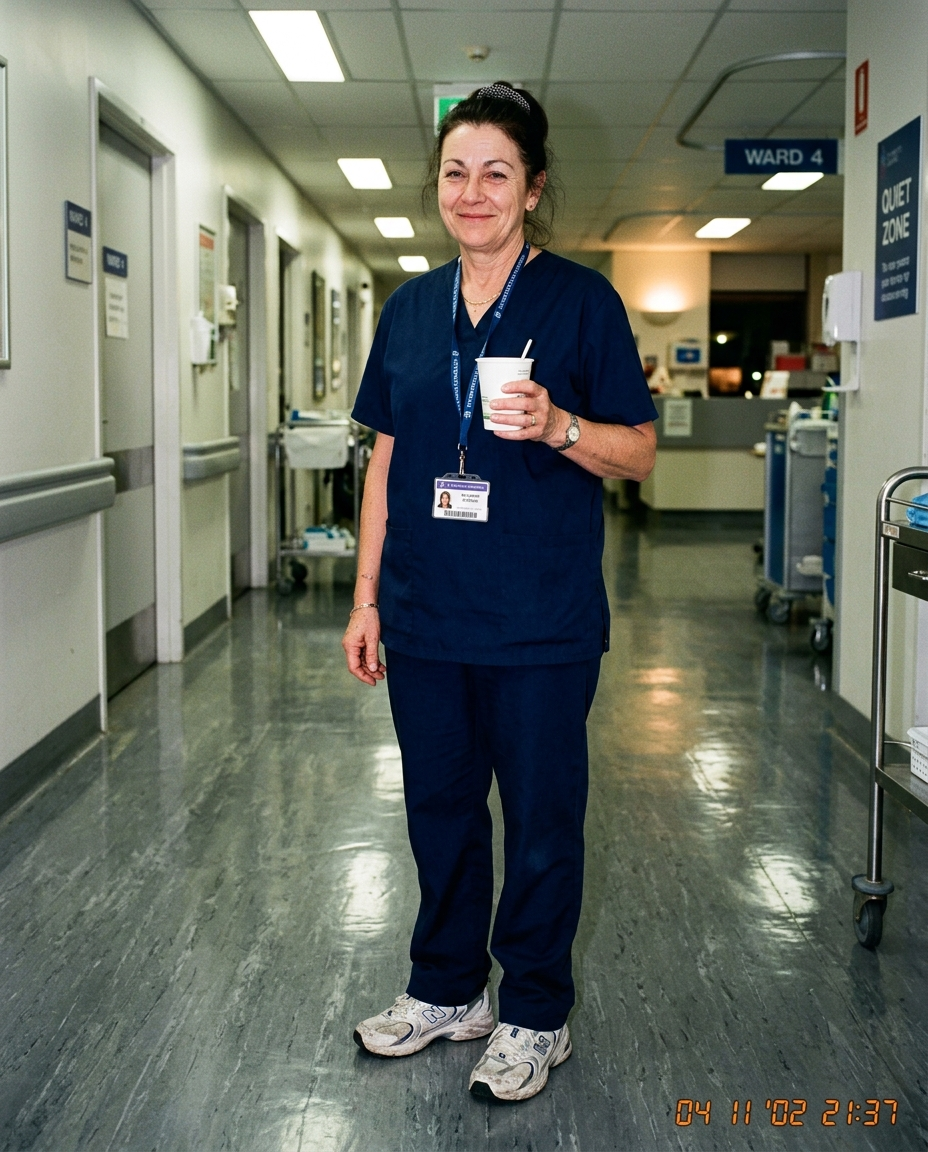
Ran for 47 days, from September 4 to October 21, 2026, the last day Crush saw it.
Run by Senior Health Guide on Facebook. Crush is not the advertiser and does not verify its claims. See this ad in Meta's Ad Library(opens in a new tab)
Make your own version of this ad
Crush makes it, launches it in your own Meta ad account, scales the winners and pauses the losers.
About this ad
- Meta Ad Library ID
- 1395018248692101
- Platforms
- Facebook, Instagram, Audience Network, Messenger, WhatsApp and Threads
- Relaunches
- 0
- EU reach
- 898
- Niche
- Clinics & Medical
Ad text
I wrote “well controlled” in a patient's chart on a Tuesday in March. ⠀ Four days later, I was standing in my own kitchen at 11 p.m., staring at my own foot, trying to figure out why I couldn't feel the tile underneath it. ⠀ I'm a board-certified neurologist. 54 years old. Twenty-four years in practice. ⠀ I've spent my career reading nerve damage in other people. ⠀ I have Type 2 diabetes. I was diagnosed at 44. For the past six years, my A1C has been what my doctors would call well controlled. My lab work has consistently looked good. ⠀ My mother had diabetic nerve problems, too. ⠀ For years, she was told her numbers were fine. By the time anyone took her feet seriously, she'd lost most of the sensation below her ankles. ⠀ She spent the last years of her life terrified of stepping on something she couldn't feel. ⠀ I used to think that was just bad luck. ⠀ I don't anymore. ⠀ I felt the first tingle in my left foot about eight months ago. ⠀ I blamed my shoes. ⠀ Then it became a burning sensation that woke me around 2 a.m. ⠀ I blamed the extra hour I'd been standing at the counter that week. ⠀ I'm the person patients come to when they've been dismissed by three other doctors. ⠀ And I dismissed it in myself for months. ⠀ Because my labs looked exactly the way they were supposed to. ⠀ Then, four weeks ago, I finally did something I tell my patients to do all the time and had been avoiding in myself. ⠀ I performed a full sensory examination on my own feet. ⠀ Not a glance. ⠀ The actual filament test, point by point—the same type of sensory examination I've performed on hundreds of patients. ⠀ I could clearly feel six of the ten points. ⠀ The other four weren't registering the way I'd expect. ⠀ My A1C, drawn that same week, was 6.3. ⠀ Textbook. ⠀ I sat there looking at my own chart for a long time. ⠀ Because suddenly I was looking at the exact contradiction I'd seen in my patients for years. ⠀ The blood test looked reassuring. My feet didn't. ⠀ And that's when something clicked. ⠀ My A1C was measuring my average blood sugar. ⠀ It wasn't measuring what was happening in the tissue surrounding the nerves in my feet. ⠀ It was never designed to. ⠀ Two weeks later, a patient of mine—I’ll call her Priscilla—came in for a follow-up. ⠀ She'd been dealing with burning feet for more than a year. ⠀ She was taking Gabapentin, but the burning hadn't changed much. ⠀ And, just like me, her numbers looked good. ⠀ I asked her whether she'd tried anything else. ⠀ She hesitated. ⠀ Then she told me her aunt had been telling her for years about a topical botanical preparation she'd used for her own nerve problems. ⠀ Priscilla hadn't mentioned it before because she was worried I would dismiss it. ⠀ Normally, I might have. ⠀ But after what I'd just discovered about my own feet, I was curious. ⠀ So I asked if I could speak with her aunt. ⠀ The following weekend, I found myself sitting in Louisa's kitchen. ⠀ She'd been using topical botanicals for years. ⠀ She wasn't a doctor. ⠀ She didn't pretend to be. ⠀ But she'd spent more than fifteen years dealing with the same kind of burning and numbness herself, and she'd become unusually interested in what she was putting on her skin and why. ⠀ She listened while I told her what had happened to me. ⠀ My mother. ⠀ My own symptoms. ⠀ The filament test. ⠀ The A1C. ⠀ Everything. ⠀ When I finished, she looked at me and said something I'll never forget. ⠀ “You already know your blood test isn't the whole picture. You just needed someone to say it out loud.” ⠀ She was right. ⠀ I knew the anatomy. ⠀ I knew that nerves don't exist in isolation. They're surrounded by tissue, blood vessels, connective tissue, and other structures that help support their normal function. ⠀ I also knew that when tissue around a nerve remains chronically irritated and doesn't get adequate circulation, the nerve can become more vulnerable to abnormal signaling. ⠀ That's when you may start feeling the burning. ⠀ The tingling. ⠀ The numbness. ⠀ Those strange electrical sensations that seem to come from nowhere. ⠀ What I hadn't paid enough attention to was what happens around the nerve. ⠀ Louisa put a small jar on the table. ⠀ “This is the part most people don't think about,” she said. ⠀ “What part?” ⠀ “Getting the ingredients where they're supposed to go.” ⠀ That got my attention. ⠀ Because she was right about something simple. ⠀ It doesn't matter how interesting an ingredient is if the formulation isn't designed to deliver it effectively through the skin. ⠀ I started looking into the formulation. ⠀ And that's where things became much more interesting. ⠀ The myelin surrounding many nerve fibers is rich in lipids. ⠀ So I started asking a different question: ⠀ What happens when you use a lipid-based topical formulation instead of simply putting another water-based cream on the skin? ⠀ That's when I came across a balm built around sesame oil and beeswax as its base. ⠀ It was called Senzio Miracle Balm. ⠀ I looked past the marketing and into the formulation. ⠀ The base was different from the typical water-heavy creams I'd seen. ⠀ And the botanicals were interesting, too. ⠀ Frankincense and myrrh have been studied for their anti-inflammatory properties and have a long history of topical use. ⠀ Angelica Sinensis has been investigated for effects related to circulation. ⠀ Comfrey has a long history of topical use for irritated tissues. ⠀ And peppermint provides something patients can actually feel—a cooling sensation on the skin. ⠀ The idea is much more straightforward. ⠀ Support the tissue around the nerve. ⠀ Help calm local irritation. ⠀ Support healthy circulation in the area. ⠀ And provide that support consistently. ⠀ That was enough to make me want to try it myself. ⠀ So I ordered Senzio. ⠀ I started using it twice a day. ⠀ I didn't change anything else about my routine. ⠀ At first, I didn't notice much. ⠀ And honestly, I was glad. ⠀ Because I wasn't looking for a dramatic overnight transformation. ⠀ Around the end of the first week, though, something happened that got my attention. ⠀ The burning that normally woke me around 2 a.m. didn't. ⠀ I actually lay there for a moment waiting for it. ⠀ Then I realized I was still asleep. ⠀ A couple of weeks later, I repeated the sensory examination. ⠀ The result surprised me enough that I checked it again. ⠀ Then I called Priscilla. ⠀ She'd been trying the same approach. ⠀ Her experience wasn't identical to mine. ⠀ But she told me the burning wasn't dominating her evenings the way it had before. ⠀ She was sleeping better. ⠀ And she'd started noticing stretches of time when she simply forgot about her feet. ⠀ That was the kind of change I was looking for. ⠀ Not a miracle. ⠀ Not a claim that her nerves had suddenly repaired themselves. ⠀ Just a reduction in how much the symptoms were interfering with her life. ⠀ And that's when I realized something I'd been missing for years. ⠀ We spend a lot of time talking about the numbers. ⠀ A1C. ⠀ Blood glucose. ⠀ Medication doses. ⠀ But those numbers don't tell the entire story of what a person is experiencing. ⠀ Your A1C tells you about your average blood sugar over time. ⠀ It doesn't tell you exactly how every nerve in your feet is functioning. ⠀ That's why someone can have an A1C that looks reassuring and still have burning, tingling, numbness, or reduced sensation. ⠀ And it's why I no longer dismiss those symptoms simply because the lab report looks good. ⠀ I brought my own experience to a neurologist colleague I trust. ⠀ I showed her the sensory results I'd recorded. ⠀ She looked at them. ⠀ Then she looked at me. ⠀ “What did you change?” ⠀ I told her. ⠀ I'm still taking my prescribed medication. ⠀ I'm still monitoring my A1C. ⠀ I'm still doing everything I was doing before. ⠀ This isn't about replacing any of that. ⠀ It's about addressing another part of the picture. ⠀ The tissue surrounding the nerve. ⠀ That's ultimately why I started recommending Senzio Miracle Balm to selected patients. ⠀ Not because I believe there's a magic cream that can reverse nerve damage. ⠀ There isn't. ⠀ But because after 24 years of treating nerve pain, I believe we should pay more attention to the environment surrounding the nerve—not just the signal coming from it. ⠀ If you've been taking your medication, watching your numbers, doing what you're supposed to do—and your feet still don't feel right—I understand how confusing that can be. ⠀ I lived with that contradiction myself for eight months. ⠀ And I nearly ignored it because my lab report told me everything was fine. ⠀ The lab report wasn't lying. ⠀ It just wasn't asking the whole question. ⠀ Senzio Miracle Balm is currently available at 50% off, with a 60-day money-back guarantee. ⠀ If it doesn't work for you, you can get your money back. ⠀ — Dr. Emily Hartman, MD ⠀ Board-Certified Neurologist | 24 Years Treating Nerve Pain ⠀ P.S. My mother spent years being told her numbers were fine while she gradually lost feeling in her feet. I built my career trying to catch in my patients what nobody caught in her. I nearly missed it in myself. If your numbers look good but something still feels wrong, don't ignore what your body is telling you. Talk to your doctor—and make sure you're looking at more than just the number on the lab report.
Where the ad sends people
senzio.store
I Couldn't Feel My Foot. My Labs Were Fine
Unlock the power of nature with Senzio Miracle Balm. This herbal powerhouse soothes, heals, and rejuvenates your skin—experience the magic!
Learn more: senzio.store(opens in a new tab)