
Inactive· since Jul 29, 2026
- 22
- days it ran
- 0
- relaunches
- 1,189
- EU reach
Ad copy
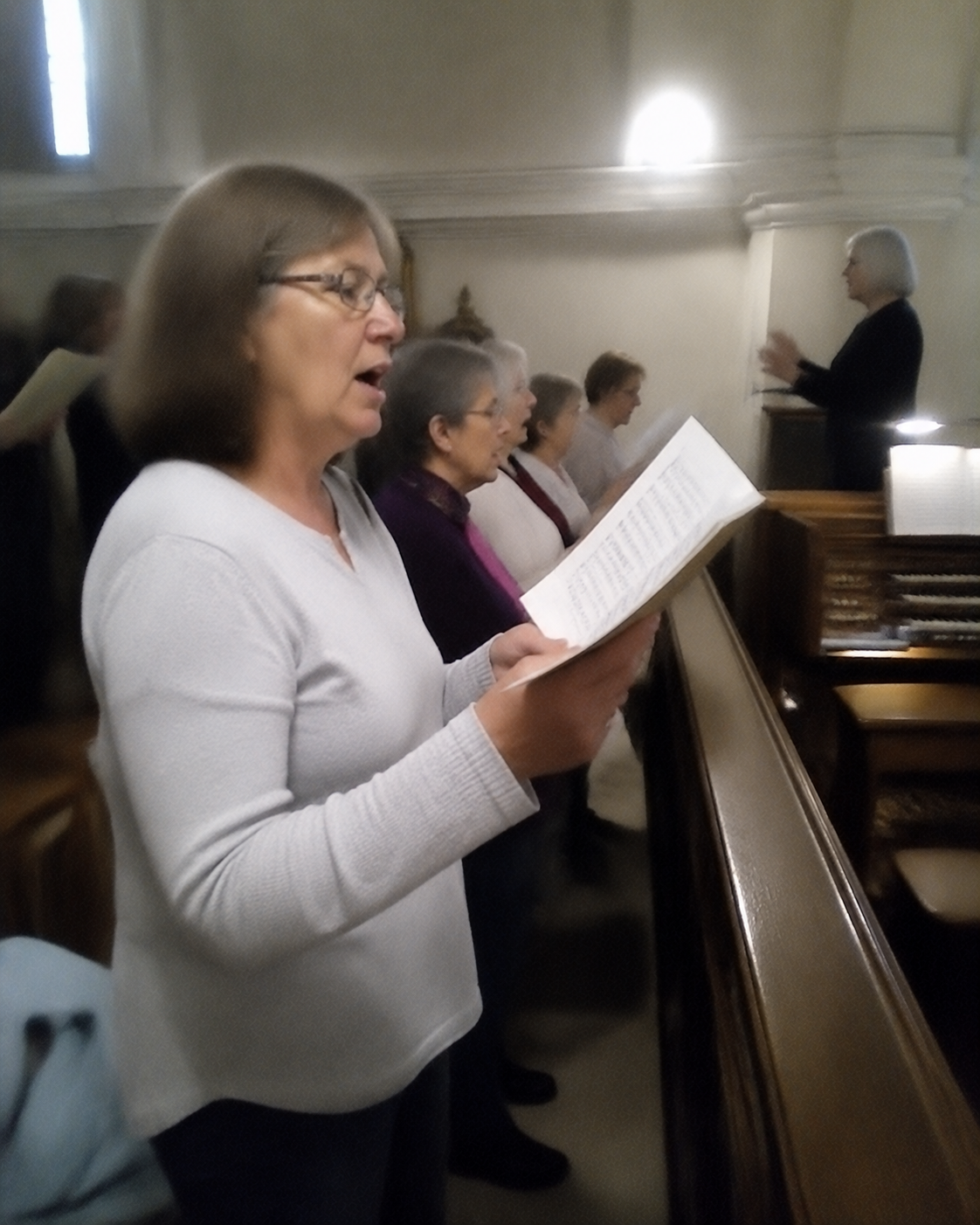
I Was the Lead Soprano in My Church Choir for Twenty-Two Years. Last March I Could Not Make It Through a Hymn. I am writing this because Linda, who has been in the alto section of our church choir for eleven years, told me at a Wednesday evening rehearsal in late April that her grandsons had noticed in July that Grandma was back. She had been faking the alto descants in the upper passages for a year. She had been mouthing the words. She had been ashamed to tell anyone. She is back to holding her own descants. I am writing this for her. For my older sister Margaret, who had been a sustained-high-A soprano in her own church choir before she died of a sudden cardiac event at sixty-eight five years ago. For my husband Dale, who came up to the choir loft on Easter Sunday this year and told me he had heard the high B-flat. For the next woman in her sixties, about a decade past menopause, who has been sitting down on the bench at the back of her own life and has been telling herself she is allowed to. I am Audrey. I am sixty-three years old. I retired five years ago after twenty-four years as the senior court clerk at the family court in our county. I am married to my husband Dale for thirty-seven years. He is sixty-five. He retired three years ago after thirty-three years as a high school math teacher. He still tutors three students a week in algebra and pre-calculus from a small desk in our spare bedroom. We have two grown daughters, Karen and Lisa. We have four grandchildren — two from each daughter, ranging from three to eleven. I have one sister. I had two sisters. Margaret was my older sister. Margaret died of a sudden cardiac event five years ago. She was sixty-eight. She had been the older sister my whole life. She had been a sustained-high-A soprano in her own church choir at the church she had attended for forty years. She had stopped singing in her choir about a year before she died. She had not told me she had stopped. I had not known until her funeral. My remaining sister, Patricia, lives in another state. She is fifty-nine. She is younger than me. She is healthy. I want to tell you about my church choir. Because my church choir is what I had been part of for the twenty-two years before the Sunday morning in March when I had to sit down. I want to back up first and tell you who I had been in the choir for twenty-two years. I had been a lead soprano in the choir of the small Methodist church we have been members of since we moved to our town thirty-one years ago. I had joined the choir at forty-one. I had been raising our daughters at the time. Karen had been a senior in high school. Lisa had been a freshman. I had been a soprano in high school choir and in college choir. I had not been singing in a choir for about fifteen years before I joined the church choir. I had been working at the court and raising the girls and there had not been time. When I had joined the choir at forty-one, the choir director at the time — a woman named June — had heard me sing through a few measures of "Be Thou My Vision" and had said: "Audrey. You are a soprano. Stand at the front of the soprano section." I had been at the front of the soprano section since. June had retired about thirteen years ago. The choir director since then has been a man named Walter. Walter is sixty-eight. He had been a high school music teacher for thirty-five years before he retired. He had been directing our choir for nineteen years. The choir has about twenty people. Eight sopranos. Six altos. Four tenors. Two basses. We sing at the eleven AM service most Sundays. We sing at the Christmas Eve service and the Easter service. We sing at funerals when family members ask. I had been the lead soprano for the last fourteen of my twenty-two years. The lead soprano sits at the front of the soprano section. The lead soprano takes the sustained high notes the line is built around. I had been the woman who had been taking the sustained high A in the Lenten anthem for ten years. I want to tell you about the Sunday morning in March. Before the Sunday morning in March, I had been having trouble holding sustained high notes for about a year and a half. The trouble had not been dramatic. I had been managing. I had been taking the high A at lower volume than I had been used to. I had been breathing more often than the line had been built to require. I had been hiding the workaround by standing slightly behind one of the other sopranos — a woman named Karen, who was at the front of the soprano section next to me — so my drop in volume had not been obvious. I had also been carrying something else. A warm pressure behind my breastbone. It had been coming up in the afternoons. About three or four o'clock. It had been lasting about ten to fifteen minutes. It had been a fullness across my chest from the inside. I had not been telling Dale. I had not been telling Dr. Pemberton at my annual physical. My last annual physical had been about eight months earlier. Everything had come back clean. I had been telling myself I was sixty-three and the high notes had been going and the warm pressure had been the weather and these were the years. I had been doing all of this since the spring before the Sunday morning in March. I had not been thinking about my sister Margaret. The Sunday morning in March was the second Sunday of Lent. The choir had been working on the Lenten anthem for three weeks. The anthem was a piece I had been singing for twenty years. It had a sustained high A in the second verse on the word "calvary." Four counts. The line had been built around the high A. The lead soprano had been the voice that carried it. I had been at the front of the soprano section in the choir loft. Dale had been at home — he had been recovering from a small knee surgery two weeks before. He had been missing church. The service had started at eleven. We had sung the opening hymn and the introit. The Lenten anthem had come at the offertory at eleven thirty. The first verse had been the choir in unison. The second verse had been the sopranos with the sustained high A. I had been three measures into the sustained high A on "calvary." I had been about to cut to a breath early. I had felt a sudden warm pressure behind my breastbone. The pressure had been different from the afternoon pressure I had been carrying for a year. It had been like a band tightening across my chest from the inside. I had stopped singing. I had taken two steps backward in the choir loft. I had sat down on the small bench at the back of the loft. The bench at the back of the loft is for choir members who are not singing on a given Sunday. The bench had been empty that morning. I had been the only one on it. The other sopranos had finished the anthem. Karen had glanced back at me from the front of the section. She had not stopped singing. She had taken the high A herself the next phrase. She had been competent. She had carried it. The choir director Walter had been at the organ console. He had seen me sit down. He had not been able to leave the organ. I had been on the bench for the rest of the service. The pressure had quieted within about ten minutes. I had sat through the closing hymn and the benediction. After the service, the congregation had filed out of the sanctuary. Walter had come back to the choir loft. He had asked me if I was okay. I had said: "Walter. I sat down." He had said: "Audrey. I saw. Are you okay?" I had said: "Walter. I do not know." He had said: "Audrey. Will you go to your doctor this week?" I had said: "Walter. I will." I had driven home from the service. Dale had been at home. He had been on the couch with his leg up. I had told him about the high A and the bench at the back of the choir loft. I had not told him about the warm pressure behind my breastbone. I had been telling him only the surface story. I had been telling myself the warm pressure had been an isolated event. I had been telling myself I would mention it to my doctor if it happened again. I had not called my doctor that week. Over the next two weeks, the warm pressure came up four more times. Once at the kitchen sink while I was washing the dinner dishes on a Tuesday evening. Once at the grocery store on a Thursday morning reaching for a high shelf for a box of cereal. Once on a Wednesday afternoon walking up the small hill from my car to the front door of the public library. Once in bed at three in the morning on a Saturday night, waking me up. Each episode had been about ten to fifteen minutes of the warm pressure followed by it going away. I had been telling myself I would call my doctor. I had not been calling. The morning after the three-in-the-morning episode, I had been awake at the kitchen table at four with my hands wrapped around a cup of decaf tea. I had been thinking about my sister Margaret. Margaret had been a sustained-high-A soprano in her own church choir at the church she had attended for forty years. She had stopped singing in her choir about a year before she died. She had not told me she had stopped. I had not known until I had gone to her funeral and her choir director had told me at the reception that Margaret had been on a leave of absence from the choir for a year. I had not known. Margaret had died at sixty-eight of a sudden cardiac event in her own kitchen on a Wednesday afternoon. She had been making lunch. Her husband Frank had found her on the kitchen floor at one thirty when he had come home from his accountant's office for lunch. I had not been thinking about Margaret much in the five years since she had died. I had been thinking about Margaret at four in the morning at the kitchen table the Sunday after the third-in-the-morning warm pressure episode. I had called Dr. Pemberton's office at eight when the receptionist had picked up. I had asked for an appointment that week. The receptionist had given me a Wednesday morning appointment. I had told Dale about the appointment Tuesday night. I had told him everything. The choir loft. The four episodes since. The warm pressure. The three-in-the-morning episode. Margaret. He had been quiet for a moment at the kitchen table. He had said: "Audrey. I am coming with you tomorrow." I had said: "Dale. Yes." Dale came with me into the exam room on Wednesday morning. Dr. Pemberton has been my doctor for sixteen years. She is in her early sixties. I told her about the year and a half. I told her about the bench. I told her about the five episodes of warm pressure. I told her about Margaret. She listened. When I was done, she said: "Audrey. I want to run the full cardiac workup this morning. EKG, bloodwork including a troponin and a lipid panel and inflammation markers and thyroid. I want you to have an echocardiogram and a stress test and a coronary calcium scan this week. I want to refer you to a preventive cardiologist for the longer-range assessment. Given your sister Margaret's history, I want to be thorough." I did the EKG that morning. The bloodwork went out from the same morning visit. I had the echocardiogram on Thursday. I had the stress test on Friday. I had the coronary calcium scan the following Tuesday. I saw the preventive cardiologist the second week. The EKG was unremarkable. The troponin was normal. The lipid panel showed a mildly elevated total cholesterol that Dr. Pemberton noted but did not consider actionable at my age. The thyroid was fine. The inflammation markers were unremarkable. The echocardiogram showed no structural problems. The stress test was unremarkable. I had completed the protocol without ECG changes. The coronary calcium scan showed a small amount of calcium consistent with my age. Below the threshold that would trigger preventive medication. The preventive cardiologist had been a woman in her late forties. She had spent forty minutes with me. She had reviewed everything. She said: "Audrey. The standard cardiac workup does not show anything that requires medication or a procedure today. The mild lipid elevation is in the range I want to watch but not in the range I want to medicate at this point. The coronary calcium is consistent with your age. I do not see acute disease." She paused. She said: "Audrey. What you have been experiencing is real. It does not show up on the standard panel. What I see in a lot of women in their sixties about a decade out from menopause is a layer of cardiovascular and cellular wellness that the standard panel is not built to capture. The body's natural antioxidant balance. The body's natural circulation. The body's natural cellular function. The layer underneath the lifestyle layer. The layer quietly thins in the decade following menopause as estrogen's cardio-protective effects wind down. It is not a disease. It is real." She told me the warm pressure I had been experiencing was consistent with this wellness-layer thinning. It did not show up on the standard panel. It was not a disease. It was not something she would put me on a medication for today. She gave me the standard advice. Keep walking. Eat well. Sleep. Manage stress. Come back at six months for a re-evaluation. She also said something I want to write down here exactly. She said: "Audrey. I want you to call me directly if the warm pressure intensifies, lasts longer than thirty minutes, or comes with any other symptoms — shortness of breath, pain radiating to the jaw or arm, lightheadedness. The standard advice is for the wellness-layer thinning. The standard advice does not replace your judgment about a new symptom. I want you to keep my number in your phone. Call it directly. Do not wait for an appointment." I said: "Dr. Pemberton. I understand." Dale had been sitting next to me in the small exam room. He had been writing the cardiologist's instructions in a small notebook he had brought with him. He had circled "call directly" and "do not wait for an appointment" in the notebook. I asked Dr. Pemberton — the primary care doctor — about a supplement at my follow-up with her the next week. I had been the one who had been reading for the previous two weeks while the workup had been happening. I had read about beetroot for cardiovascular wellness. I had read about the active compound — the betalains, the deep red pigment in the root. I had read about cold-pressing at low temperatures. I had read about a small company called Rosabella. I had been satisfied enough to bring it to my follow-up with Dr. Pemberton. Dr. Pemberton said: "Audrey. I have been hearing about beetroot for cardiovascular wellness for several years from a few of my patients. The research is decent. It is sensible. It supports the layer underneath. It is not a treatment for what you have been feeling. It is support for the layer. I am comfortable with you adding it." She told me the same thing the preventive cardiologist had told me about new symptoms. Call directly. Do not wait. She said: "Start it. Don't change anything else. Come back at six months." I ordered the bottle that evening from the website. It arrived three days later. I started the supplement the following Monday. Two capsules with a glass of water in the morning. I did not change anything else. I had also been keeping up the standard advice — the walking, the sleeping, the eating. I want to tell you what happened over the next twelve weeks. I am not going to make a claim about what caused what. I had been doing the standard lifestyle advice from the cardiologist before I had started the supplement. I had also been managing my stress more deliberately than I had been before the workup. I am going to tell you what happened in the order it happened. The first thing was the absence. About three weeks in, on a Tuesday afternoon at three thirty, I noticed that I had not had the warm pressure that day. I had been waiting for it. It had not come up. The afternoon went without it. The next afternoon went without it. The afternoon after that, it had come up for about five minutes and quieted. By the end of the third week, I had not had a full warm-pressure episode in eight days. I told Dale at the kitchen table on Saturday morning. He said: "Audrey. Are you sure?" I said: "Dale. I am sure." He said: "Audrey. Are you watching for it?" I said: "Dale. I have been watching for it for two months. I am sure." He hugged me at the kitchen table. He did not say anything else. About five weeks in, I went back to choir rehearsal on a Wednesday evening. I had not been at rehearsal for three weeks. I had been telling Walter I had been recovering from a small thing. That Wednesday I drove over at six forty-five. Walter was at the organ console setting up the music for the rehearsal. He saw me come in. He said: "Audrey. Welcome back." I said: "Walter. Thank you." He said: "Audrey. Take it easy tonight. Sit in the choir loft. Sing what you can sing. If you need to sit down, sit down. We will not be doing the Lenten anthem tonight." I said: "Walter. Thank you." I sang at the rehearsal that Wednesday. I did not sit down. About seven weeks in, on a Wednesday evening rehearsal, Walter put the Easter anthem on the music stand. The Easter anthem is "Christ the Lord Is Risen Today." A traditional setting we have been singing for fifteen years. The third verse has a sustained high B-flat on the word "earth" in the second-to-last phrase. Four counts. The lead soprano line. Walter had been planning to give the high B-flat to Karen for Easter. He had asked me before rehearsal if I wanted to try the high B-flat in rehearsal that night. I said: "Walter. I will try." We rehearsed the anthem at the end of rehearsal. I made it through the high B-flat without sitting down. I held it for the four counts the line called for. I did not breathe early. I did not step behind another soprano. Walter had his back to the choir at the organ console. I could see his shoulders from behind. His shoulders had stopped moving when I held the high B-flat. When the anthem was done, he turned around on the organ bench. He said: "Audrey. You held it." I said: "Walter. I held it." He said: "Audrey. The lead is yours for Easter." The other sopranos clapped at me in the choir loft. I cried for a minute in front of them. Karen the second soprano said: "Audrey. The lead is yours." I said: "Karen. Thank you for carrying it in March." She said: "Audrey. That is what the second soprano is for." About nine weeks in, I was back at the lead soprano position in rehearsals. The other sopranos had noticed without commenting on it directly. Easter Sunday was about eleven weeks after I had started the supplement. The choir was in our robes in the choir loft at the eleven AM service. I was at the lead soprano position at the front of the soprano section. Dale was in his usual pew in the main sanctuary. He had been at the eight thirty service as well. He had wanted to hear me sing both services that morning. He had been at home for the bench in March. The opening anthem was "Christ the Lord Is Risen Today." The sustained high B-flat was in the third verse, second-to-last phrase, on the word "earth." I took the high B-flat at full volume. I held it for the four counts. I did not breathe early. I did not step behind another soprano. I had been singing in church choirs since I was eight years old. I had been a lead soprano for fourteen years. The Easter service was the first one in two years where I had not been hiding behind another soprano. After the service, Dale came up to the choir loft. The other choir members were taking off their robes. Dale said: "Audrey. The high B-flat." I said: "Dale. I held it." He said: "Audrey. I know. I heard." He hugged me in the choir loft. I cried into his shoulder for about thirty seconds in the choir loft. The other choir members did not comment. We walked out of the church together. We had brunch at the small diner about two blocks from the church with Karen our daughter and her two kids. Our other daughter Lisa had her own family Easter that day at her in-laws' house. I ate my Easter brunch the way I had been eating Easter brunches for thirty years. I did not have the warm pressure that afternoon. I have not had a full warm-pressure episode since mid-April. I went back to Dr. Pemberton at my six-month follow-up at the end of September. She ran the bloodwork. Took my blood pressure. Listened to me describe the previous six months. She sat back in her chair. She said: "Audrey. Your numbers are in the best place they have been in years. The cholesterol is back in the normal range. Whatever you have been doing, keep doing it." I told her about Easter Sunday. She smiled. She said: "Audrey. I am so glad." The preventive cardiologist also did a six-month re-evaluation. She ran a fresh stress test. She listened to me describe the previous six months. She said: "Audrey. The stress test is even better than it was in March. Whatever has been happening has been happening at the wellness layer in a real way. Keep doing what you have been doing." She did not change her instructions to me about new symptoms. She said: "Audrey. Keep my number in your phone. Call directly if the warm pressure intensifies, lasts longer than thirty minutes, or comes with any other symptoms. The standard advice does not replace your judgment about a new symptom." I said: "Dr. Pemberton — meaning Dr. Pemberton the cardiologist, not the primary care doctor — I will." (The preventive cardiologist's name is Dr. Whitfield. I had been calling her Dr. Pemberton in my head by accident a few times because my primary care doctor's name is Dr. Pemberton. I told Dr. Whitfield this at the six-month follow-up. She laughed. She said: "Audrey, the two of us think alike. Take that as a good sign.") I want to be careful here. I am not a doctor. I am not in healthcare. I am a retired municipal court clerk and a lead soprano. I am one sixty-three-year-old woman whose body had been quietly telling her something for a year and a half before she had to sit down in the choir loft on a Sunday morning in March. I do not know for certain that the Rosabella was responsible for what changed. I changed several things at the same time. I started walking. I added a stress-management piece I had not been doing — fifteen minutes of quiet reading every afternoon. I started the supplement. I also stopped pretending. I called my doctor. I went through the full cardiac workup with a primary care doctor and a preventive cardiologist. I cannot tell you which of these was the thing. I know all of them together happened. I know I sang the Easter anthem at the lead soprano position. I know the timing. I also know I am sixty-three and I am going to keep aging, and there will come a day when no supplement and no walking and no stress management will hold back the slow turning of the years. There will come a day when I will not be at the lead soprano position. There will come a day when I will be on the bench at the back of the choir loft on a Sunday morning by my own choice. I am at peace with that day coming when it actually comes. I am not at peace with my body pretending it had already come for a year and a half when it had not. I am also not at peace with my sister Margaret having been on a leave of absence from her own choir for a year before she died of a sudden cardiac event and not telling me. I had been doing what Margaret had been doing. I had stopped. What I am telling you is what I tried. What I noticed. What my doctor said about it. What my cardiologist said about it. That is all. If you are a woman in your sixties about a decade out from menopause who has been managing a warm pressure behind your breastbone in the afternoons and who has been quietly stepping back from the parts of your life that had been the parts that made you who you were, and your last annual physical came back clean, here is what I would say. Tell your husband. Tell your sister. Tell your best friend. Tell someone. Call your doctor. Ask for the full cardiac workup. EKG, bloodwork, an echocardiogram, a stress test, a coronary calcium scan if your doctor agrees, and a referral to a preventive cardiologist if your family history warrants it. Rule things out at depth. Tell the doctor the truth about your family history. If your sister or your mother or your grandmother had a sudden cardiac event at any age, tell the doctor. Do not minimize it. If everything comes back clean and the standard answer is to keep walking and keep sleeping and manage stress, do that. If your doctor agrees that adding a supplement in the additive layer is sensible, add it. Do not subtract anything. Do not change anything else. Keep your cardiologist's number in your phone. If the warm pressure intensifies, lasts longer than thirty minutes, or comes with any other symptoms — shortness of breath, pain radiating to the jaw or arm, lightheadedness — call the cardiologist directly. Do not wait. The standard advice is for the wellness-layer thinning. The standard advice does not replace your judgment about a new symptom. Give the lifestyle changes and the supplement a few weeks before you decide anything. Bodies are different. Some women notice something within the first week or two. For me, the first thing I noticed was the absence of the warm pressure on a Tuesday afternoon around the start of week three. That is the whole story. P.S. Linda has been in the alto section of our church choir for eleven years. She is sixty-five. She is a retired pediatric dentist. She had been at the same dental practice for thirty-one years before she retired three years ago. She had been telling parents to bring their kids in for cleanings for three decades. In late April, at a Wednesday evening rehearsal three weeks after Easter, she came up to me in the choir loft after rehearsal. She said: "Audrey. Can I ask you something? I have been watching you. Something has changed. What did you do?" I told her about the bench in March. About the warm pressure. About Dr. Pemberton. About the preventive cardiologist. About the supplement. About Margaret. Linda listened. When I was done, she said: "Audrey. I have not been holding my own sustained notes for the last year. I have been faking the alto descant in the upper passages by dropping out and pretending to mouth the words. I had been ashamed to tell anyone." I said: "Linda. Call your own doctor. Get the workup. If your doctor agrees the supplement is sensible to add, add it around whatever your doctor recommends." She said: "Audrey. Will you sit with me at rehearsal next Wednesday if I tell you I called?" I said: "Linda. Yes. I will sit with you at rehearsal whether you call or not." She called her own doctor that Thursday. Her doctor ran the full cardiac workup. Everything came back clean. Her doctor gave her the wellness-layer framing. She approved the supplement around it. Linda started in mid-May. She has been holding her own alto descants in the upper passages since early August. She has been telling me at Wednesday rehearsals that her grandsons noticed in July that Grandma was "back." Her three grandsons are eight, six, and four. The eight-year-old had asked her at a family lunch in July: "Grandma, did you take a vitamin?" Linda had said: "Buddy. Sort of." The eight-year-old had said: "Grandma. You should keep taking it." Linda has been keeping taking it. That is how this works. A sixty-three-year-old soprano has to sit down at the back of a choir loft in the middle of a Lenten anthem on a Sunday morning in March because she cannot hold a sustained high A. She does not call her doctor for two weeks. She has five warm-pressure episodes in those two weeks. She thinks about her sister Margaret at four in the morning at the kitchen table. She calls her doctor. She does the full cardiac workup. She does the preventive cardiology referral. The standard cardiac workup is clean. The preventive cardiologist gives her the wellness-layer framing. The cardiologist tells her to call directly if new symptoms come up. She starts the supplement. She does the standard lifestyle changes. She does the additional stress management piece. She does the work. Twelve weeks later she sings the Easter anthem at the lead soprano position. Her husband meets her in the choir loft after the service. Three weeks after that, an alto in her own choir asks her what she did. The alto calls her own doctor. Four months later the alto's eight-year-old grandson asks his grandma if she took a vitamin. The grandma says sort of. The choir keeps going. The Easter service keeps going. The grandsons keep noticing. P.P.S. Here is what I would tell you to do if you are thinking about trying it. Check with your doctor first. That is the most important step. If you have been carrying any cardiac symptoms — warm pressure, shortness of breath, anything — get the full cardiac workup before you add anything in the additive layer. Tell the doctor the truth about your family history. If your doctor approves the supplement, take two capsules with a glass of water in the morning. Do not change anything else. Just add this. Keep your doctor's number and your cardiologist's number in your phone. Call directly if new symptoms come up. Give it a few weeks before you decide anything. Some women notice something within the first week or two — the absence of a symptom they had been managing, a high note held for four counts, an alto descant carried instead of mouthed. Others take longer. Be patient with your body. P.P.P.S. Rosabella has a 90-day money-back guarantee. If you are not satisfied for any reason, every penny back. No questions asked. That is a sensible policy for a supplement. It gives you time to actually see whether it helps. P.P.P.P.S. Rosabella is a small operation. They harvest and bottle on their own schedule. I keep an extra bottle in the kitchen cabinet just in case. Dale started the supplement about two months after I did. He called his own doctor first. His doctor said the same thing Dr. Pemberton had said. Sensible thing to add. He is sixty-five. He has been finishing his small woodworking projects on Saturday mornings for the last three months for the first time in two years. He had been telling me his knee from the surgery. It had not been his knee. My remaining sister Patricia called me in early August. She had not called me in three weeks. She is in another state and we call about once a month. She said: "Audrey. Karen told me about your Easter." (My daughter Karen had called Patricia in June. I had not asked her to. Karen had wanted Patricia to know.) Patricia said: "Audrey. I have been carrying my own version of what you had been carrying. I am fifty-nine. I had been telling myself I was fifty-nine." I said: "Patricia. Call your doctor." She said: "Audrey. I called yesterday. I have an appointment Monday." Her doctor ran the workup. Everything came back clean. Her doctor gave her the wellness-layer framing. Patricia has been on the supplement since late September. I do not know yet how she is doing. I am going to fly out to see her at Thanksgiving. The bench at the back of the choir loft is the bench I sat down on in March. I have not sat down on it since. I am the lead soprano on Sunday mornings. I sit on the front row of the soprano section. I take the sustained high notes the line is built around. I will not be the lead soprano forever. I will be the lead soprano this year. That is what I want to tell you about. The supplement is one thing. The full cardiac workup that Dr. Pemberton ran is another thing. The preventive cardiologist who told me to call directly is a third thing. A bench at the back of a choir loft on a Sunday morning in March that I had to sit down on so that I would stop pretending is a fourth thing. It is the thing my sister Margaret did not have. It is the thing that let me sing the Easter anthem. https://track.tryrosabella.com/cdc16426-3e48-40a7-9fad-21098084f6cf Individual experiences vary. These statements have not been evaluated by the FDA. This product is not intended to diagnose, treat, cure, or prevent any disease.
Support stamina and heart health every day
LEARN MORELike this ad? Make it yours.
Crush rebuilds this exact creative around your product — your brand, your colors, your offer — in about a minute.