
Active· since Mar 18, 2026
- 177
- days running
- 0
- relaunches
Ad copy
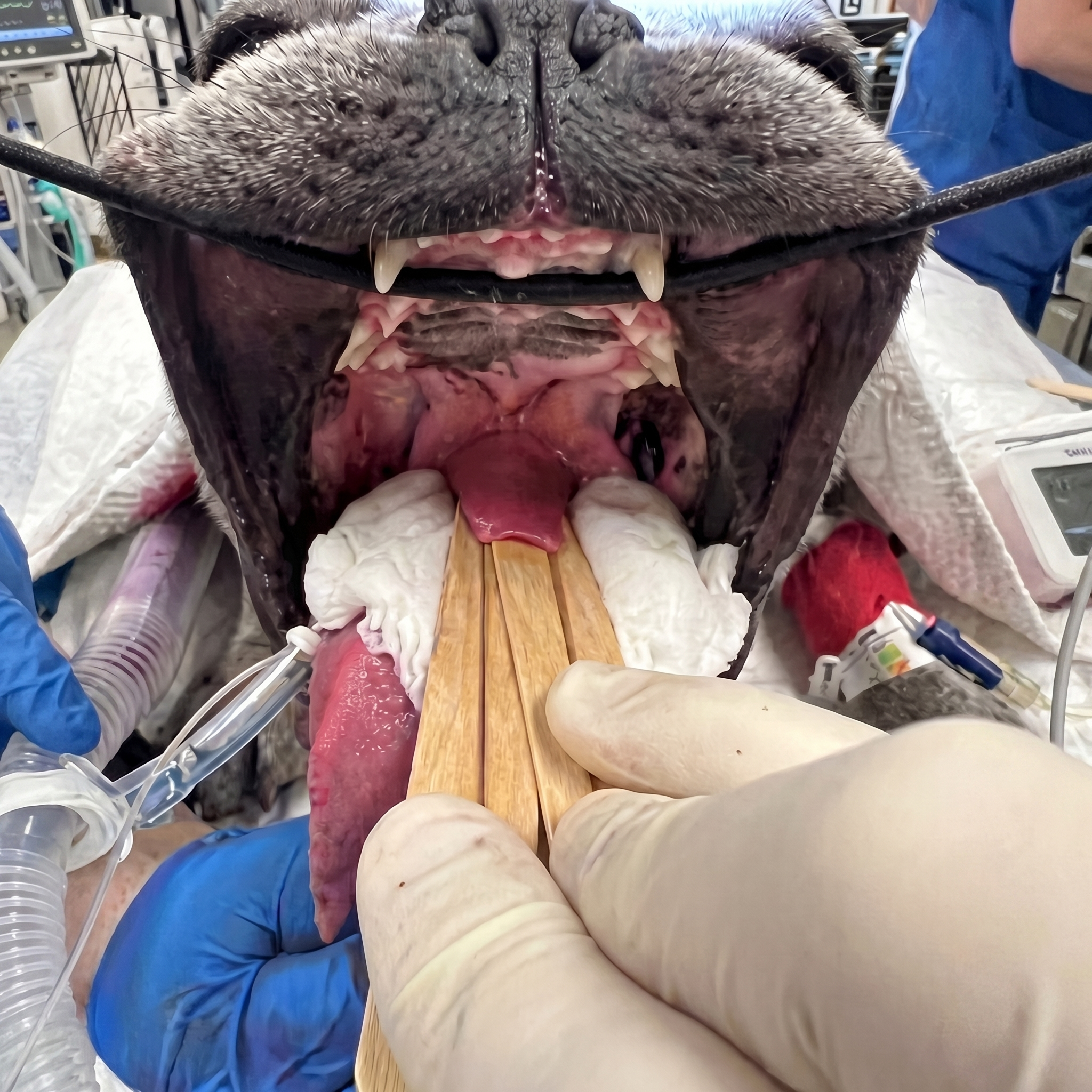
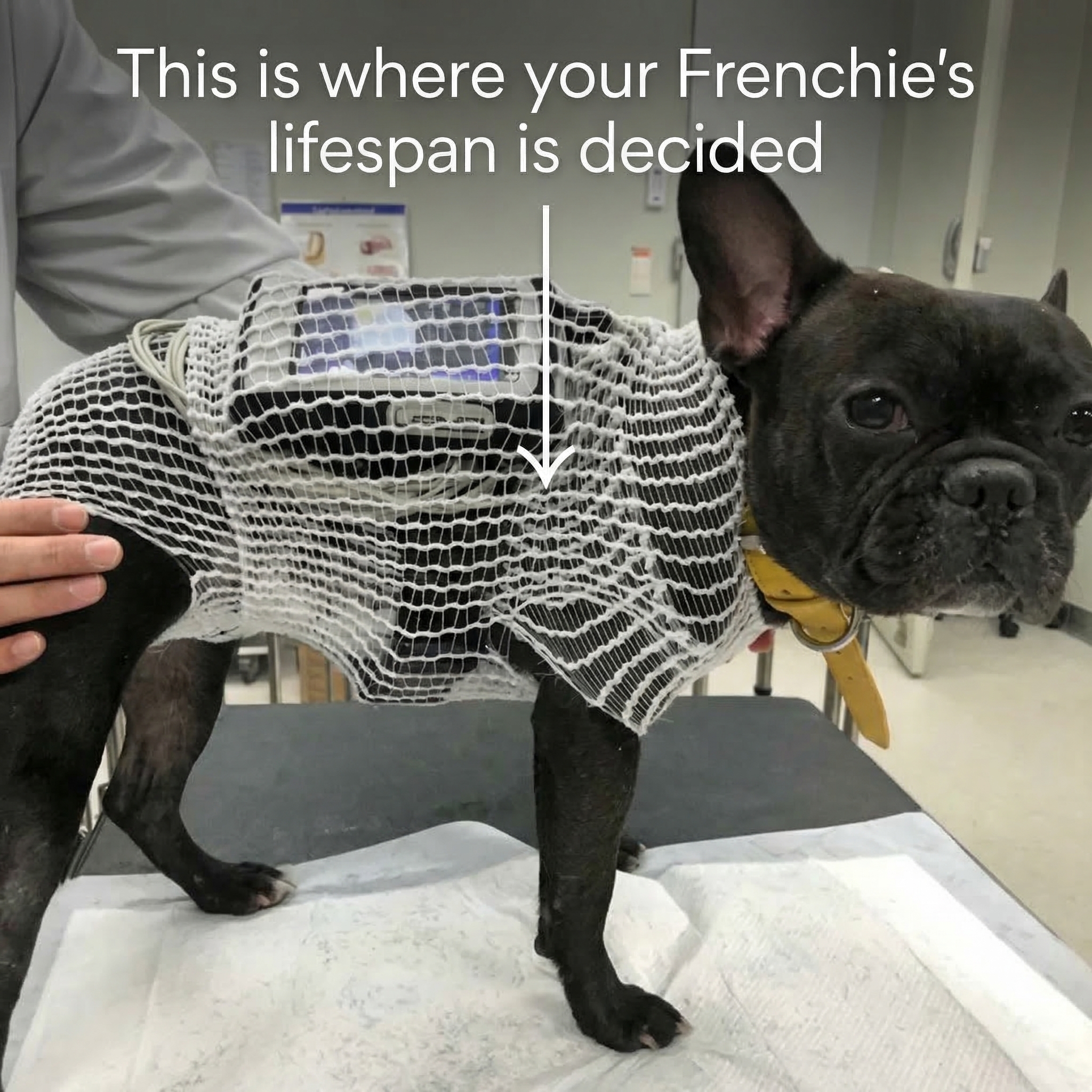
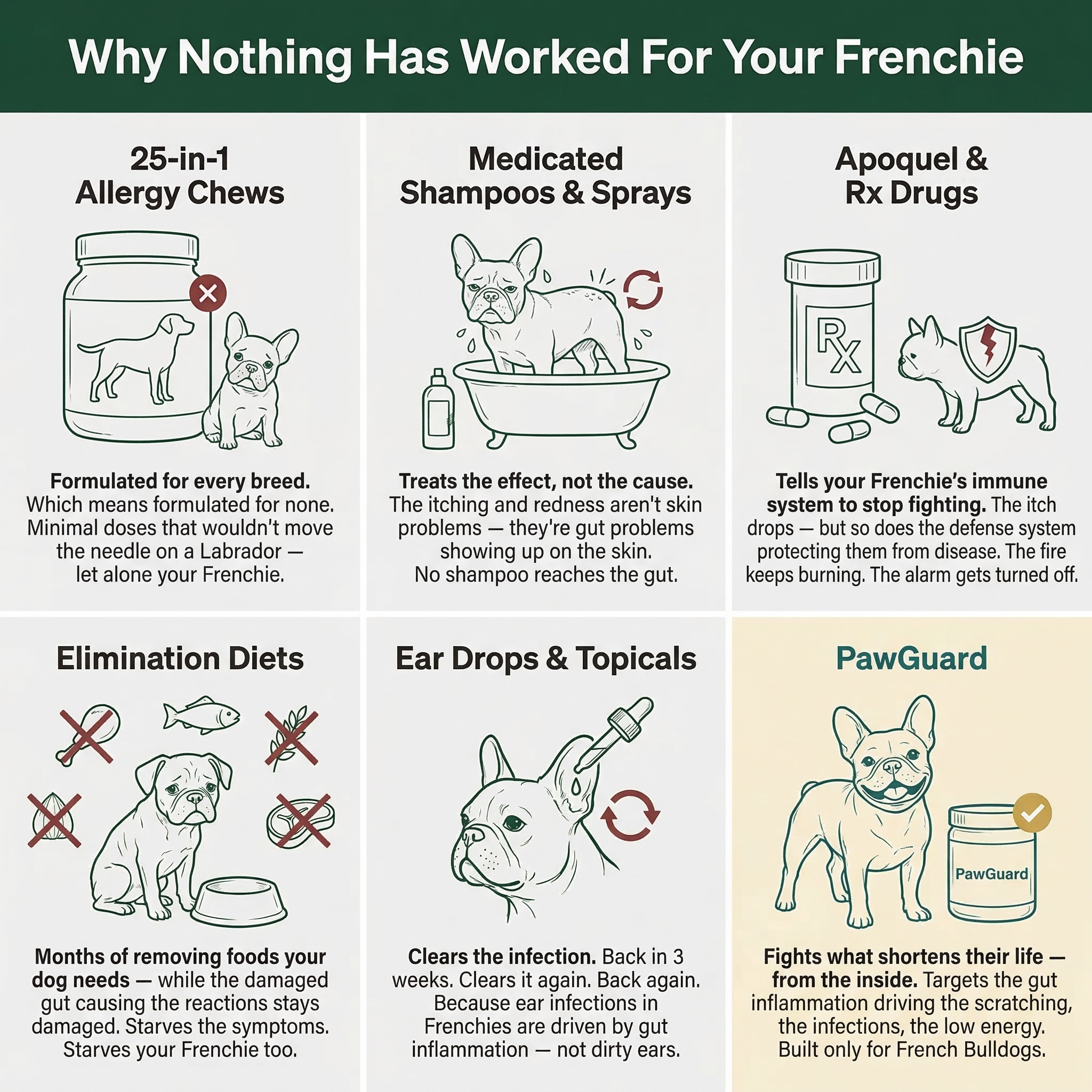
If your French Bulldog is between 1 and 4 years old and you're feeding them the same food every day without knowing what it's doing to their lifespan — this might be the most important thing you read this year. And I already know what you're thinking. Your Frenchie is fine. Maybe a little gassy — but all Frenchies are gassy. Maybe some scratching here and there — but nothing serious. Maybe one ear infection — but the vet handled it. Overall? Healthy. Happy. Young. I thought the same thing about my patients' dogs for years. And then I started seeing what happens at age 5, 6, 7 — when the damage that was building silently during those "healthy" years finally shows up. And by then, for a lot of them, the window to change it has narrowed to almost nothing. What I'm about to tell you is going to make you angry. Not because you're doing something wrong — you're probably doing everything a loving owner should do. You're angry because nobody told you that the things you think are keeping your Frenchie healthy might be feeding the one thing that shortens their life. I'm Dr. Sarah Mitchell. I've been a veterinary nutritionist for over 12 years, and for the last several years, French Bulldogs have been the majority of my practice. Not by plan — but because this breed keeps ending up in my office when things go wrong. And the thing that breaks me is that by the time I see most of them, years of invisible damage have already accumulated. I want to catch your dog BEFORE that happens. Because what I'm about to explain is something I wish every Frenchie owner heard at year 1, not year 5. There are three things happening right now: One — Your French Bulldog is eating the same processed food every single day, and that food — even the "premium" kind, even the expensive kind, even the one with the clean label and the veterinary seal — is feeding a low-grade inflammatory cycle in your dog's gut that you cannot see, cannot feel, and will not notice until the symptoms become impossible to ignore. French Bulldogs have one of the most sensitive microbiomes of any breed alive. What a Labrador's gut handles easily, your Frenchie's gut is fighting every meal. Two — You're probably spending more on your dog than you ever expected — premium food, regular vet visits, the best treats, the best bed, the best everything — because you love this dog and you want to give them the longest, healthiest life possible. And nobody has told you that spending on premium food without supporting the gut that has to PROCESS that food is like putting premium gas in a car with a cracked engine. The fuel isn't the problem. The system processing the fuel is broken. Three — French Bulldogs have the shortest lifespan of almost any popular breed their size. The median is 9.8 years. Many don't make it to 8. And the owners who lose their Frenchies at 6, 7, 8 almost always say the same thing: "But they were healthy. They were fine until a year ago." They weren't fine. The damage was building silently during the years they SEEMED fine. Nobody told them what to look for. Nobody told them what to do about it. Let me tell you about a French Bulldog named Coco. Because what happened to Coco is what I see happening right now in millions of "healthy" young Frenchies whose owners have no idea. Coco was a cream-colored Frenchie. Her owner, Rebecca, was 44. Marketing director. Got Coco as a puppy. Did everything by the book — premium food from day one. Not the grocery store stuff. The real stuff. The one with the whole-protein ingredient list, the limited fillers, the fancy packaging that costs more per bag than Rebecca's own weekly food budget. She researched for weeks before choosing it. Regular vet checkups every six months. All vaccinations on schedule. Teeth cleaning once a year. Flea and tick prevention monthly. The best harness. The best bed. An orthopedic mattress — for the dog. Rebecca was the kind of owner every vet loves to see. Thorough. Caring. Willing to spend whatever it took. She had a monthly "Coco budget" in her banking app. She wasn't tracking it to cut costs — she was tracking it because she liked seeing how much she invested in her dog's health. It made her feel like a good dog mom. And by every visible metric, Coco WAS healthy. Energetic. Playful. The full-body wiggle at the door. The zoomies after dinner. The snoring that rattled the bedroom. To Rebecca, Coco was the picture of a happy, healthy French Bulldog. There were small things. Things Rebecca noticed but dismissed because everyone told her they were normal. Gas. Every evening, after dinner. The room-clearing kind. Rebecca would laugh about it. She'd posted about it in her Frenchie Facebook group. "Welcome to Frenchie life!" everyone said. "That's the breed tax!" Laughing emojis. People sharing their own gas stories. It felt like a bonding moment, not a warning sign. It was a warning sign. Occasional soft stools. Not diarrhea — just inconsistent. Some mornings firm, some mornings soft. Rebecca figured the food just didn't agree with Coco on certain days. Maybe she'd eaten a treat that upset her stomach. Nothing consistent enough to worry about. It was consistent enough to worry about. A little scratching. Nothing obsessive — just Coco rubbing her face on the carpet after meals, or licking her paws for a few minutes before bed. Rebecca's vet saw it at a checkup and said: "A little scratching is normal in Frenchies. If it gets worse, we'll look at it." It was already the beginning. Some redness in the folds. Rebecca cleaned them every day — she was diligent. But sometimes the face fold or the neck rope would get a little pink, a little irritated. She'd apply the antiseptic wipe and it would clear up in a day. She figured she was staying on top of it. She was treating the surface of something that was starting beneath it. These weren't four separate minor things. They were four early expressions of one internal process: chronic gut inflammation. Already running at age 1. Already leaking inflammatory compounds into Coco's bloodstream. Already beginning to weaken the skin barrier, the immune system, the digestive efficiency. But because each symptom was mild — because the gas was "just a Frenchie thing," the soft stools were "occasional," the scratching was "a little," the fold redness "cleared up quickly" — nobody connected them. Nobody said: these are all coming from the same place. Nobody said: this is the beginning of something that gets worse. Here's what was happening inside Coco that Rebecca couldn't see: Every day, Coco ate her premium kibble. And every day, her gut struggled to process it — not because the food was bad, but because her breed's microbiome is one of the most fragile in the canine world. Even premium kibble is highly processed. The extrusion process — the way dry food is manufactured, cooked at extreme temperatures and pressure — kills a significant amount of the beneficial bacteria and enzymes that a gut needs to properly break food down. For a Labrador, this isn't a crisis. Their gut microbiome is robust enough to compensate. For a French Bulldog — with a genetically sensitive, inflammation-prone digestive system — it's a daily assault that the gut barely manages. The food ferments instead of fully digesting. That's the gas. But the gas is just what you can HEAR. What you can't hear is the gut lining slowly weakening. The tight junctions between intestinal cells loosening. Inflammatory compounds — cytokines, lipopolysaccharides — beginning to leak through the gut wall into the bloodstream. This is what veterinary immunologists call "chronic low-grade inflammation." It's not dramatic. It's not an emergency. It doesn't show up on a standard blood panel. It's a slow, quiet, daily erosion that you cannot detect without looking for it specifically. And 72% of your dog's immune system lives in that gut. When the gut is chronically inflamed — even at a low grade — the immune system is perpetually slightly compromised. Slightly weakened. Slightly less capable of fighting off the bacteria in the ear canals. Slightly less capable of maintaining the skin barrier in the folds. Slightly less capable of protecting cells from the kind of damage that, over years, leads to the conditions that kill French Bulldogs early. "Slightly" doesn't sound scary. But "slightly" multiplied by 365 days a year multiplied by 5 years is how a "perfectly healthy" Frenchie suddenly has cancer at 6. That's the part nobody tells you. That's the part that makes me furious. Rebecca didn't know any of this. She fed Coco premium food and believed she was doing the best possible thing for her dog's health. She WAS doing a good thing. Premium food is better than grocery store food. But premium food into a compromised gut is still food that isn't being fully processed, still causing fermentation, still feeding the low-grade inflammation that's running every single day. It's like eating a healthy diet but never exercising, never sleeping well, never managing stress — and wondering why your health declines at 50. The food alone isn't enough. The system that processes the food needs support too. Coco's system wasn't being supported. Nobody told Rebecca it needed to be. At age 3, things escalated. The gas got worse. The scratching went from occasional to nightly. The paw licking became obsessive — thirty minutes at a stretch, paws turning rust-brown. The fold redness stopped clearing up with wipes. Ear infections started — the first one at 3 years and 2 months. Then another three weeks later. Then another. Rebecca was blindsided. "She was FINE. She was completely healthy until a few months ago. What happened?" Nothing happened. Nothing SUDDEN happened. What happened was three years of low-grade gut inflammation finally crossing the threshold from invisible to visible. The gut had been weakening since year 1. The immune system had been gradually compromised since year 1. The skin barrier had been slowly thinning since year 1. It just took three years for the damage to accumulate enough to produce symptoms she could actually see. And now Rebecca was in the cycle. The cycle every Frenchie owner on this page knows. Vet visits. Medicated shampoos. Ear drops. Antihistamines that do nothing. Apoquel that masks the symptoms while suppressing the immune system that was already struggling. Supplements from Amazon that are formulated for all breeds and none of them. She spent thousands in year 3 and 4. On treatments that never touched the source. Because the source — the gut inflammation that had been running since puppyhood — was never addressed. Here's what I need you to understand: **First** — Your "healthy" young Frenchie is almost certainly running low-grade gut inflammation right now. If they have gas — even "normal Frenchie gas" — the gut bacteria are out of balance. Food is fermenting. The lining is being stressed. This is not a cute breed quirk. It's the earliest warning sign of the cascade that drives every major health issue in this breed. Gas at 1 is scratching at 3 is ear infections at 3.5 is medications at 4 is declining energy at 5 is gone too soon. **Second** — premium food is not enough. You can feed the best food available and still have a dog whose gut can't process it properly. French Bulldogs need enzymatic support, probiotic support, and anti-inflammatory support ALONGSIDE good food — because their genetically sensitive microbiome cannot do the job on its own. The food isn't the problem. The gut that has to break down the food is the problem. And nobody in the pet food industry is going to tell you this, because they need you to believe that the food alone is the answer. **Third** — the difference between a Frenchie that lives to 7 and a Frenchie that lives to 12 is often not what happens at year 6 or 7. It's what happens — or doesn't happen — at year 1 and 2. The owners who start supporting the gut early, who manage the inflammation before it compounds, who protect the joints before the damage starts, who support the immune system instead of waiting until it's overwhelmed — those owners get more years. That's not a sales pitch. That's twelve years of treating this breed and watching the outcomes diverge based on when intervention started. About six months ago, a colleague — a veterinary dermatologist specializing in brachycephalic breeds — told me about a supplement she'd started recommending. Something she'd never seen before: a chew formulated exclusively for French Bulldogs. Not for small breeds. Not for sensitive stomachs. For French Bulldogs. The brand was PawGuard. I examined the formula. And I understood why she was excited — because for the first time, I saw a supplement that addressed what I've been explaining to owners for twelve years. Wild Alaskan Salmon Oil — omega-3 fatty acids that directly counter the chronic inflammation running in the background of every Frenchie's body. At a real dose, not the token amount in generic supplements. A billion CFU probiotics — to restore and maintain the microbiome balance that this breed's gut can't maintain on its own. A billion. Not the 50 million in the generic chew with the Labrador on the label. Glucosamine and chondroitin — joint protection that should start at year 1, not year 6 when the damage is advanced. French Bulldogs carry disproportionate weight on a compact frame. Every step is joint stress. Under inflammatory conditions, the cartilage degrades years faster. Ashwagandha and boswellia — natural anti-inflammatories that modulate inflammation at the source without suppressing the immune system. This is what should exist BEFORE Apoquel enters the conversation. Cranberry and zinc for immune defense. Papaya digestive enzymes so food is actually broken down instead of fermenting — giving the gut the enzymatic support it can't produce on its own. I have no affiliation with PawGuard. No commission. No sponsorship. I recommend it because it's the first thing I've seen that does what I've been telling owners to do for twelve years: support the gut, manage the inflammation, protect the joints, strengthen the immunity — BEFORE the damage compounds. I told Rebecca about it at Coco's appointment. By then Coco was 4 and deep in the symptom cycle. Rebecca's response: "Why didn't someone tell me this when she was a PUPPY? I would have started this at day one." That question is why I'm writing this. Because Rebecca is right. If she'd started supporting Coco's gut at age 1 — when the gas was "just a Frenchie thing" and the stools were "only occasionally soft" — the cascade might never have crossed the threshold. The scratching might never have become obsessive. The ear infections might never have started cycling. The immune system might never have been weakened to the point where Apoquel became the only option. But even starting at 4, the results came. Day 5: "The gas is different. I can't believe I'm saying this but dinner was quiet last night. No gas. My roommate didn't even comment, which means she didn't notice, which means there was nothing to notice." Week 2: "Stools are firm. Every day. I haven't had a surprise soft stool in two weeks. And the fold redness is down — I'm still doing the wipes but there's barely anything there." Week 3: "She slept through the night without scratching. I keep waking up out of habit, listening for it, and it's not there." Month 2: "Her coat. Look at her coat." Rebecca sent me a photo. Shiny. The dry, dull baseline that she'd accepted as "just Coco's coat" was transforming. "My groomer said she looks like a different dog. And the ears — seven weeks clean. SEVEN. After having infections every three weeks." Month 3: "She did the zoomies. After dinner. Full-speed zoomies around the apartment like she used to do when she was a puppy. She hasn't done that in over a year. I didn't even realize she'd stopped until she started again." Rebecca cried when she told me that. Not because the zoomies came back. Because she realized how much of Coco she'd lost gradually — so gradually she didn't see it happening — and how much of that loss was preventable if someone had explained the gut to her at year 1. I told Rebecca what I tell everyone at month 3: this is where supplement becomes longevity. Months 1 and 2 fixed the visible symptoms. Month 3 and beyond is where daily inflammation management starts protecting against the compound damage that shortens this breed's life. This is why you don't stop. I've recommended PawGuard to dozens of French Bulldog owners. No affiliation. The pattern is consistent: A 2-year-old with "normal Frenchie gas" — gas gone in under two weeks. Owner said she wished she'd started at puppyhood. A 3-year-old just starting to scratch — scratching stopped escalating within a month. Owner potentially avoided the entire Apoquel cycle. A 4-year-old deep in the symptom cascade — gas, scratching, ears all improved within three months. Vet was able to taper Apoquel. A 1-year-old whose owner started preventively after reading about French Bulldog gut sensitivity — no gas, no scratching, no ear infections at age 2. Owner told me: "I don't know what we prevented. But I know what my friend's Frenchie is going through at the same age without it. And that's enough for me." That last one is the point. You don't have to wait until the symptoms force your hand. You don't have to spend thousands treating the cascade after it starts. You can support the gut NOW — during the years when your Frenchie seems healthy — and change what happens at year 5, 6, 7. 90-day money-back guarantee. If you don't see changes — gas, stools, coat, energy — send it back. Full refund. That’s why I respect this comapny. One jar costs less than a single vet visit. A fraction of what you're already spending on premium food that your dog's gut is struggling to process. Less than one month of the medication you might never need if you start supporting the gut before the cascade begins. I'm not asking you to believe me. I'm asking you to test it. Because right now, while your Frenchie seems healthy, while they're young, while they're doing the zoomies and the wiggles and the things that make you love them — something is quietly building. And you have a choice that most owners don't get: the chance to address it before it compounds. Every Frenchie owner I've ever sat across from who lost their dog too early has said the same thing: "I wish I'd known sooner." Now you know. 8 years is not enough. It's not even close to enough. Here’s the link ThePawGuard.com --- In short — I'm Dr. Sarah Mitchell, veterinary nutritionist, 12+ years with French Bulldogs. Your "healthy" young Frenchie is almost certainly running low-grade gut inflammation right now — even if the only sign is gas. Premium food alone isn't enough — your Frenchie's genetically sensitive gut can't fully process it without support. The inflammation that starts silently at age 1 is what drives the scratching at 3, the ear infections at 3.5, the medications at 4, and the conditions that take them too early. PawGuard is the first supplement formulated exclusively for French Bulldogs — supporting the gut before the cascade starts. No affiliation, no commission. 90-day guarantee. You can get yours at ThePawGuard.com
⭐⭐⭐⭐⭐ 40,000+ Happy French Bulldogs
Fights What Shortens Their Life - Because 10 Years Isn't Enough.
LEARN MORELike this ad? Make it yours.
Crush rebuilds this exact creative around your product — your brand, your colors, your offer — in about a minute.