
Inactive· since Mar 21, 2026
- 8
- days it ran
- 1
- relaunches
- 7
- EU reach
Ad copy
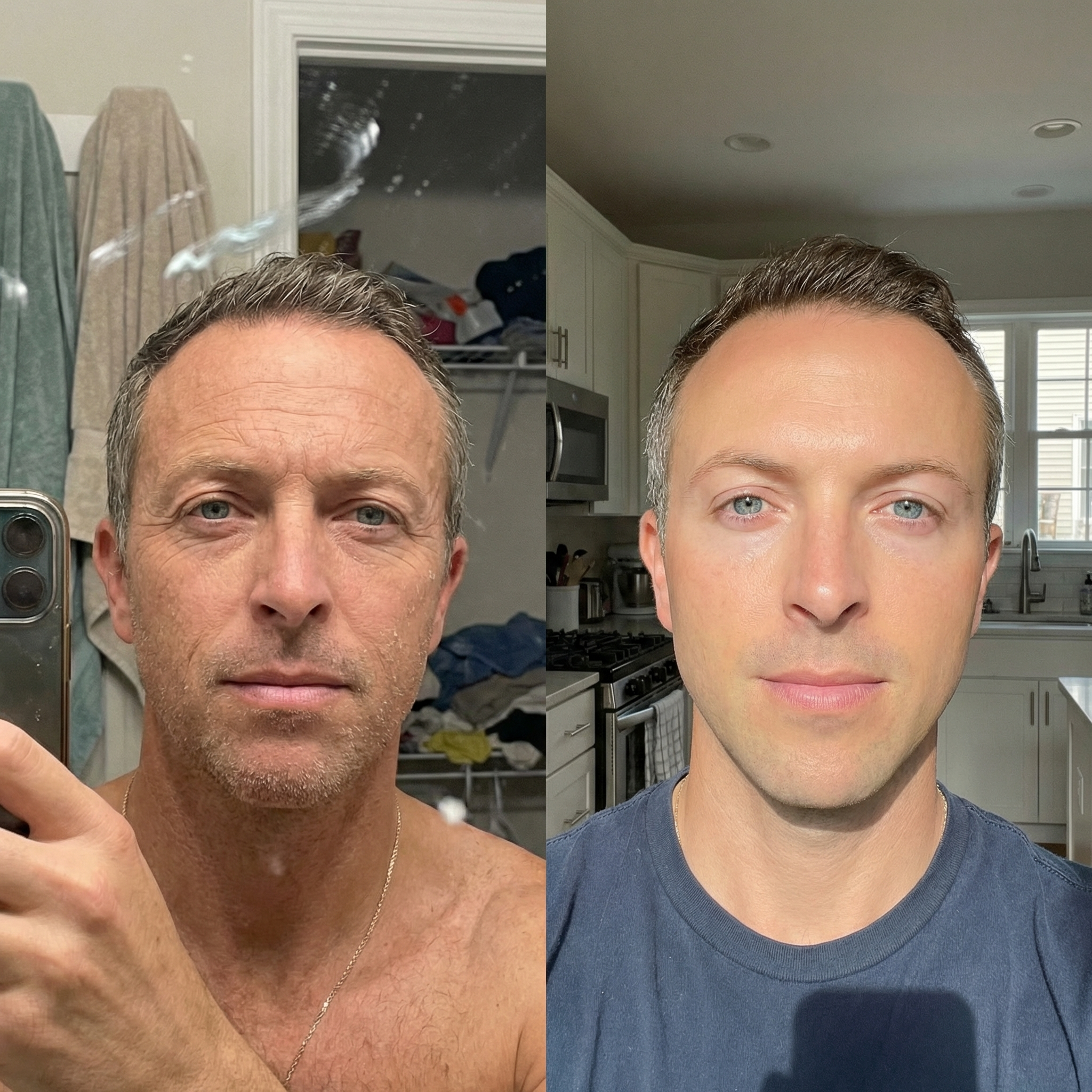
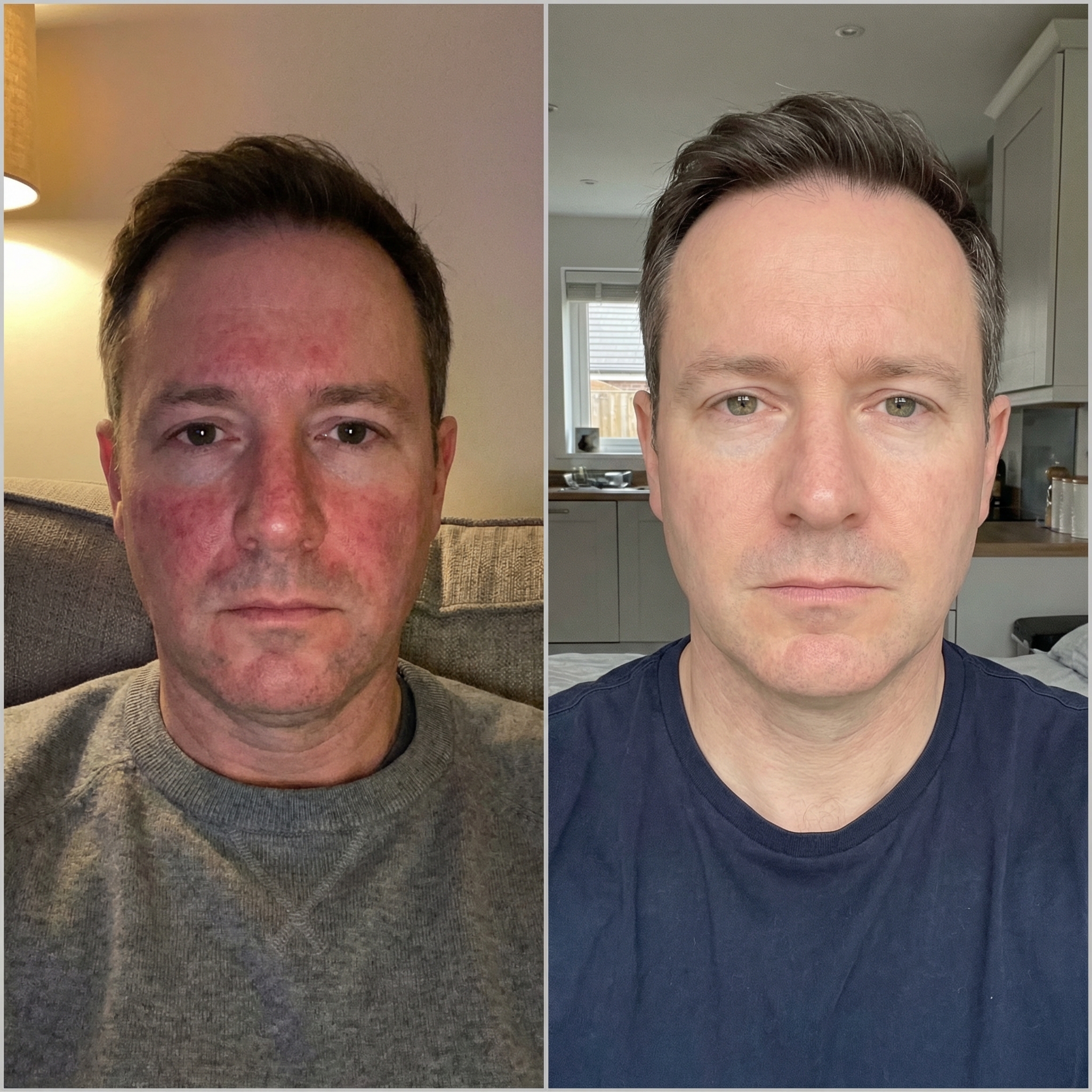
For three years my face communicated something I wasn't feeling. I want to be precise about what I mean by that, because it's a specific kind of problem and I think men who've had it will recognise the description immediately. I'm not someone who worries about his appearance. I've never been that person. I work hard, I look after my family, I get on with what needs doing. Vanity is not something I associate with myself. But when your resting face — relaxed, neutral, unbothered — reads to every person who looks at it as angry, or stressed, or unwell — that's not a vanity problem. That's a communication problem. And communication problems have consequences. Colleagues asked me, with genuine concern, if everything was alright. Regularly. My wife's sister mentioned, once and carefully, that I'd seemed tense lately. My son — thirteen years old, honest in the way thirteen-year-olds are honest before social conditioning rounds the edges — asked me one Saturday afternoon why I was always angry. I was sitting on the couch watching football. Completely unbothered. Nowhere else to be. But my face said otherwise. I'd been through the dermatologist cycle. Rosacea. Prescription creams. The creams worked while I used them. The redness returned when I stopped. Two dermatologists, three prescriptions over two and a half years. Management, the second one said. Long-term management. My son's question sent me in a different direction. I stopped researching treatments and started researching mechanisms. Not what manages rosacea — what causes the skin to behave this way. What I found was the first explanation that made the pattern make sense. Your skin has a physical protective layer — the lipid barrier — built from specific fatty acids that your skin produces naturally as sebum. That layer regulates the immune response. When it's intact, your immune system is calm. When it degrades — stripped by synthetic cleansers, by prescription actives, by the compounding effect of years of treating the symptom while further stripping the structure — the immune system activates chronically. Chronic immune activation means chronically dilated blood vessels. Chronically dilated blood vessels means persistent redness. Persistent redness means a resting face that looks like it's under stress that isn't there. The prescriptions suppress the immune activation temporarily. They don't repair the layer. The layer stays stripped. The activation returns. The repair material — the actual fatty acids the barrier is built from — is structurally identical to grass-fed beef tallow. Same composition as human sebum. Your skin absorbs it and uses it to rebuild the thing that should have been preventing all of this. I used it for twelve weeks. I didn't mention it to my wife. She noticed at week ten. Unprompted, across the kitchen, on a normal evening. She said I seemed less stressed. I wasn't less stressed. I was the same man I'd always been. My face just finally looked like it. My son hasn't asked his question since. I don't know which I'm more grateful for — the face that changed, or the conversation I don't have to have with him about it.
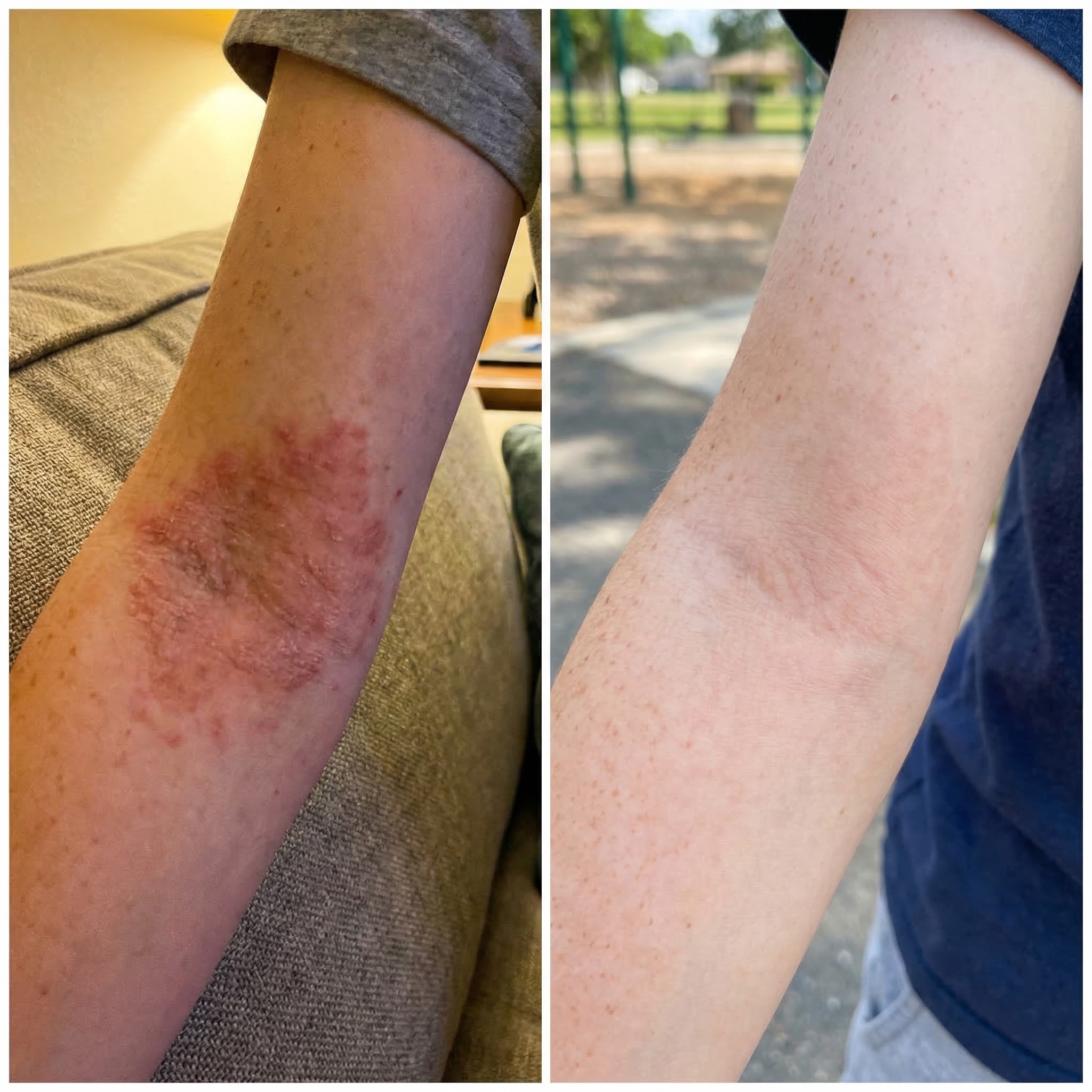
I stopped the cream. Face finally cleared up.
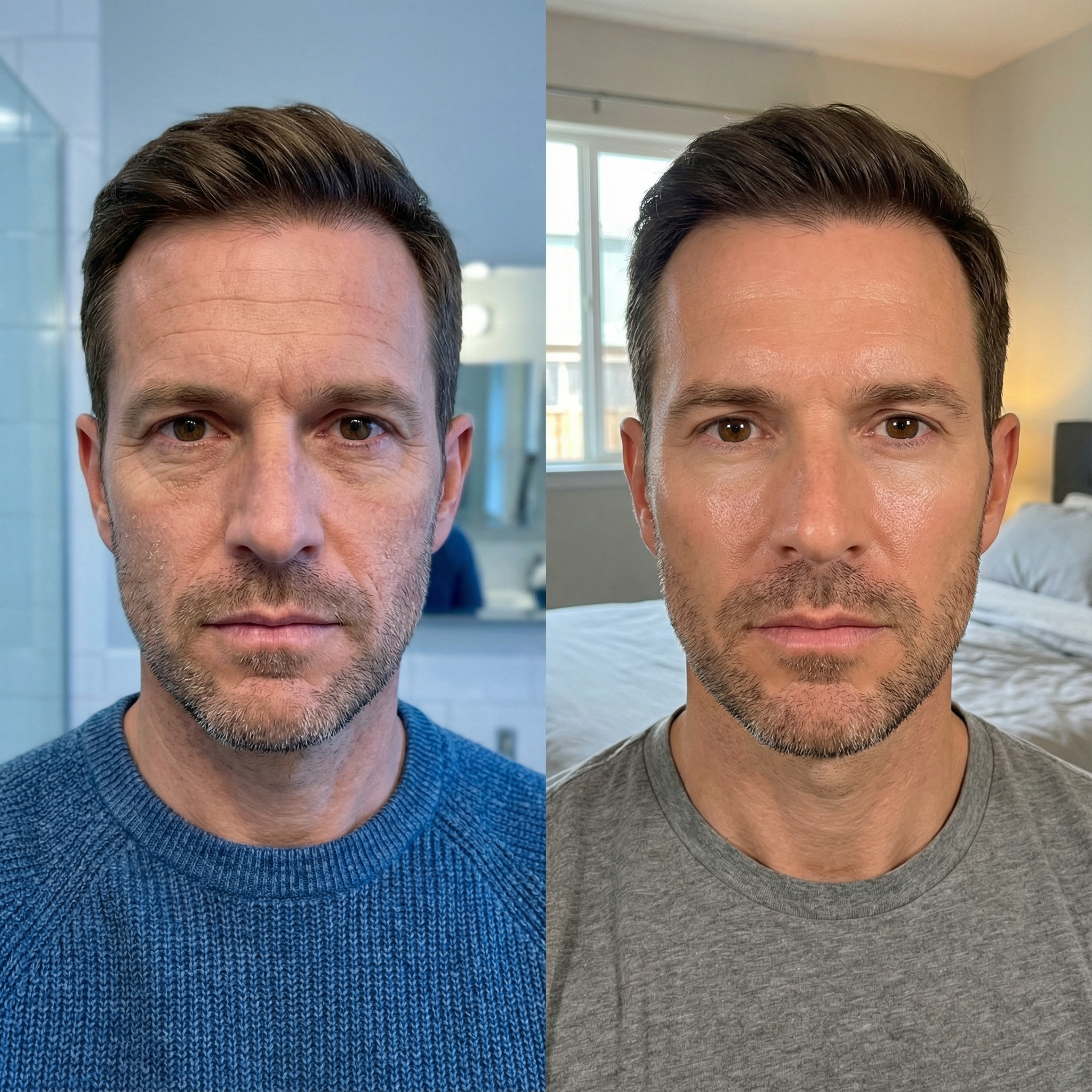
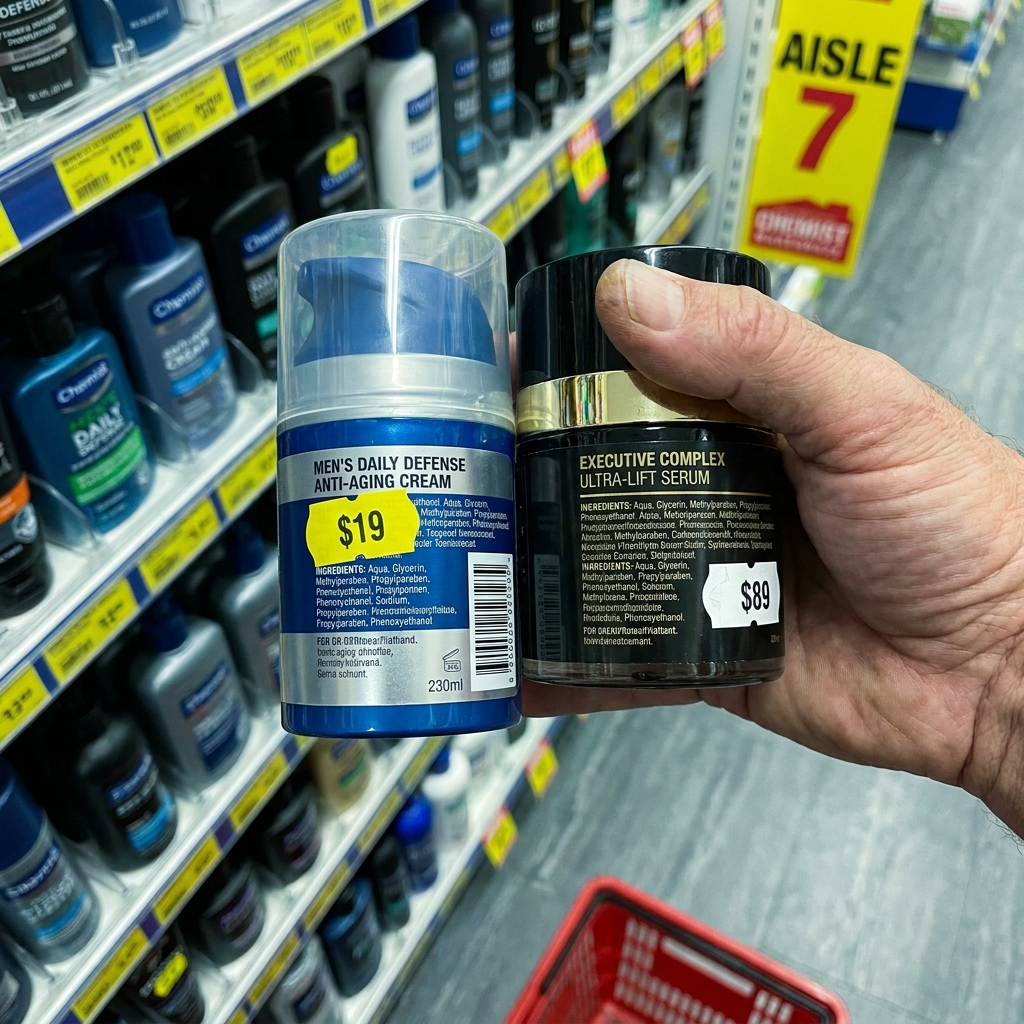
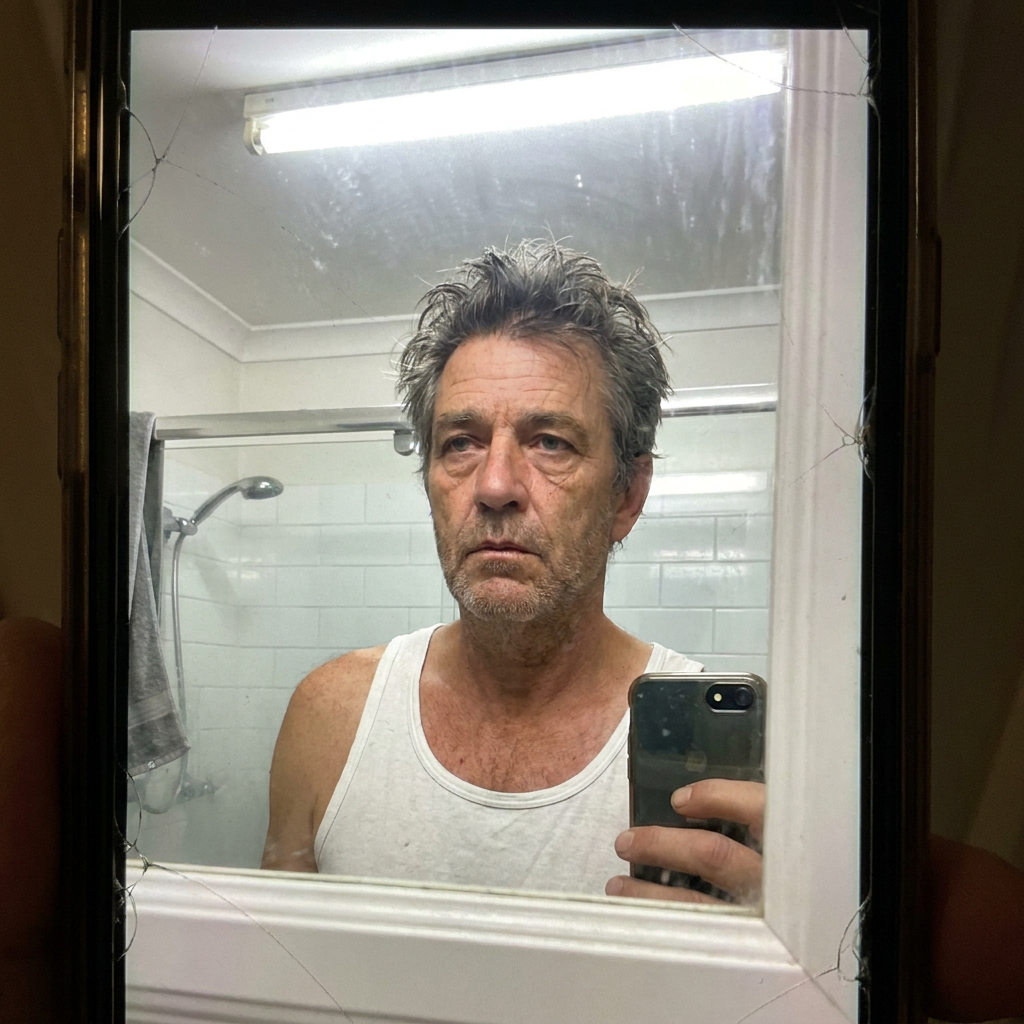
A guy comes to me frustrated. He went to a dermatologist because his skin was getting worse—dryness, redness, fine lines that shouldn't be there yet.
LEARN MORELike this ad? Make it yours.
Crush rebuilds this exact creative around your product — your brand, your colors, your offer — in about a minute.