
Active· since Sep 11, 2026
- 13
- days running
- 0
- relaunches
- 1,758
- EU reach
Ad copy
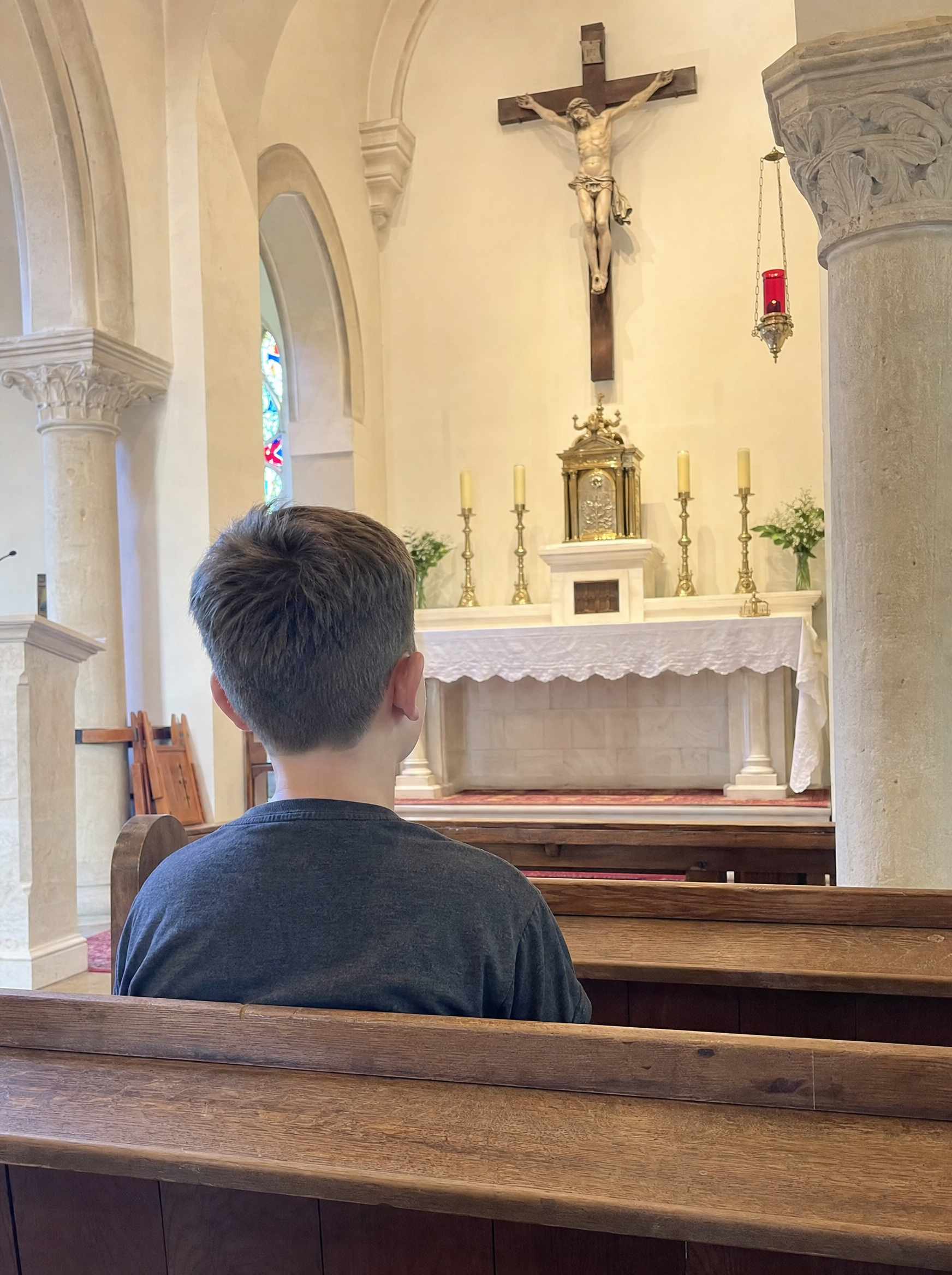
Our catechist's son just told him he's an atheist. And suddenly I looked at my 12-year-old son and realized: he knows the entire catechism by heart, but he can't answer a single "why" question. My name is Paul, and I'm Anthony's dad. It was 10:32 PM on a Wednesday. Mark — the catechist at our parish — was sitting in our prayer group circle. Hands folded. His voice kept breaking. His son Daniel. Homeschooled all through high school. Altar server at Mass since he was 8. Now a sophomore in college — at a Catholic university — telling his dad that faith is "intellectually dishonest." "He said I taught him WHAT to believe. But I never taught him WHY it's true." The room went silent. I drove home gripping the wheel with both hands. Anthony was at the kitchen table when I walked in. 11 years old. Finishing his religion homework. Filling in blanks about the twelve apostles. I sat down across from him. "Anthony. Why do you believe the Bible is true?" He looked up. "Because… it's the Word of God?" "And how do you know it's the Word of God?" Blank stare. "Because the Bible says so?" My stomach knotted up. "And how do we know the Bible is right when it says that?" His face turned red. "I don't know, Dad. We just believe it." Circular reasoning. The exact thing that destroyed Daniel's faith the moment one professor started questioning it. I sat there looking at my son — a kid who can recite answers from the whole catechism by memory — unable to defend the most basic truth of Christianity. The next morning I tested him again. "Why did Jesus have to die? Why couldn't God just say: I forgive you?" "Because… we needed Jesus to save us?" "But WHY? What would happen if God forgave everyone without the cross?" Silence. He knew the story. He had no idea what it meant. That Friday at our parish men's group I brought it up. Four other dads. Same story. Kids who got straight A's in religion. Kids who'd been confirmed. Kids who couldn't explain why they believed a single word of any of it. We were raising a generation of kids who'd fall apart at the first "why" question. I couldn't sleep that weekend. 1:47 AM, Saturday. I read every article I could find about young people leaving the Church. About the whole exodus from the faith. The pattern was the same everywhere. Kids from believing homes. First semester of college. First atheist professor. Zero answers. Not because they were rebelling. Because they were taught WHAT. Never WHY. 3:22 AM. I caught myself scrolling through Daniel's Instagram. Three years back. Bible verses. Youth retreat photos. Pilgrimage photos. "God is good ✝️" everywhere. Then freshman year. Philosophy quotes. Richard Dawkins. Then — not a word about faith. I could see the exact moment it broke. Third week of philosophy lectures. One post: "Turns out I can't answer basic questions about what I supposedly believe. Maybe I never really believed." Sunday morning I sat at Mass watching Anthony answer on autopilot. "And with your spirit." He looked so sure. But it was a house built on sand. One professor. One smart friend. One hard question. And it would all collapse. That afternoon I asked him to explain the Holy Trinity to me. He knew "the Father, the Son, and the Holy Spirit." When I asked HOW it works — nothing. When I asked WHY Jesus had to be God and not just a good teacher — he guessed. When I asked how we know the Bible wasn't changed over the centuries — he said: "I guess somebody checked?" Eight years of religion class. He couldn't defend his faith for 60 seconds. Two weeks later I was standing in a Catholic bookstore in front of the apologetics shelf. Thick apologetics books, one big name after another. All of it too hard for a 12-year-old. I needed something that would teach him to THINK — not just memorize better. And that's when I heard a conversation one aisle over. A dad and his son. Maybe 14. "So what do you say if someone tells you Jesus was just a copy of other religions?" The kid didn't even blink. "I'd say the manuscript evidence shows the Jesus story came first. And I'd explain how the dying-and-rising god myths are different from the Gospels in six important ways. We had that in week 19." I walked over. "Excuse me — what are you studying from?" The dad showed me a thick workbook. Systematic Theology for Kids: 52 Week Workbook. "Where'd you get it?" "Online. My wife found it." Not just stories. Not memory verses. Real arguments. Week by week. Why the Bible is historically reliable. Why the resurrection proves Jesus is God. How Christianity is different from every other worldview. His son had been working through it for seven months. "Last month he took his teacher's doubts apart piece by piece," the dad said, laughing. "The teacher said in class that science disproves Genesis. My son spent 20 minutes explaining why that's a category error. I just sat there and listened." The kid shrugged. "I like knowing WHY something is true. It's like solving puzzles." I ordered it on my phone before I even left the bookstore. That Sunday after lunch, Anthony and I sat down and opened lesson 1. "How do we know God exists?" Not "because the Bible says so." The cosmological argument. At a 6th grade level. With examples from his own life. A logic puzzle where he had to work through cause and effect himself to understand why there has to be a First Cause. Anthony leaned over the table. "Wait — so EVERYTHING that begins to exist has to have a cause? Even the universe?" We spent 1 hour and 14 minutes on lesson 1 alone. He asked 9 questions. Not "what's the answer" questions. "How does that work" questions. "What if someone says something different" questions. Real thinking. After two weeks, something changed. Anthony started arguing with me at dinner. Not disrespectfully. Theologically. "Dad, I don't think it works like that. Because in lesson 6 it said that since God exists outside of time…" He was THINKING. In week 5 he came to me frustrated. "Dad, I can't figure out the problem of evil. I get the free will answer — but what about natural disasters?" He was wrestling with it. Not just accepting. Really working through the hardest stuff. Week 8. Family dinner. My brother — agnostic, sharp guy — made some comment about the Bible being "written by men." Before I could open my mouth, Anthony said: "Uncle Chris, do you know about the manuscript evidence? We have more copies of the New Testament than any other ancient document. And they were written way closer to the actual events. If you don't trust the Bible, then you can't trust anything we know about Julius Caesar." My brother stared at him without a word. So did I. That's when I understood. This wasn't memorization. This was real understanding. We're on lesson 31 of 52 now. Anthony can explain the Holy Trinity using the right theological terms. He knows why Jesus had to be fully God and fully man. He can give you four reasons why the resurrection is historically credible. Last week he asked if his friend Jake could join our Sunday sessions. "Jake says he doesn't believe in God. But I think I can show him why faith is actually the most logical option. Can we do the cosmological argument week again?" My 12-year-old asked to redo a theology lesson so he could share it with a friend who doesn't believe. Those Sunday afternoons did what eight years of religion class never did. They turned my son into someone who knows what he believes and why. I keep thinking about Daniel. About Mark's voice breaking at 10:32 on a Wednesday night. About those Instagram posts — from "God is good" to silence. Those kids weren't stupid. They weren't rebellious. They had no foundation. They were taught WHAT. Nobody taught them WHY. Picture your child three months from now. Someone challenges their faith — a friend, a teacher, a cousin at dinner. And instead of turning red and going quiet — they lean forward. They answer. Clearly. Calmly. With real reasons. It's the other person who goes quiet. Afterward your child looks at you. Not proud. At peace. Like someone who knows where they stand. That's within your reach. But every week without it is another week your child practices circular reasoning instead of real thinking. One philosophy lecture. One hard question. One Daniel. The Systematic Theology for Kids: 52 Week Workbook is still available. Don't let your child find out in college that their foundation was sand. While there's still time. - Paul Doyle
If you have a child, read this ☝️
This is about a fundamental mistake in the way we teach children the faith. A mistake that starts destroying it as early as age 8.
LEARN MORELike this ad? Make it yours.
Crush rebuilds this exact creative around your product — your brand, your colors, your offer — in about a minute.