Sandra Hillings
Sandra Hillings Facebook ad: “12 years of joint pain gone in 15 minutes?”
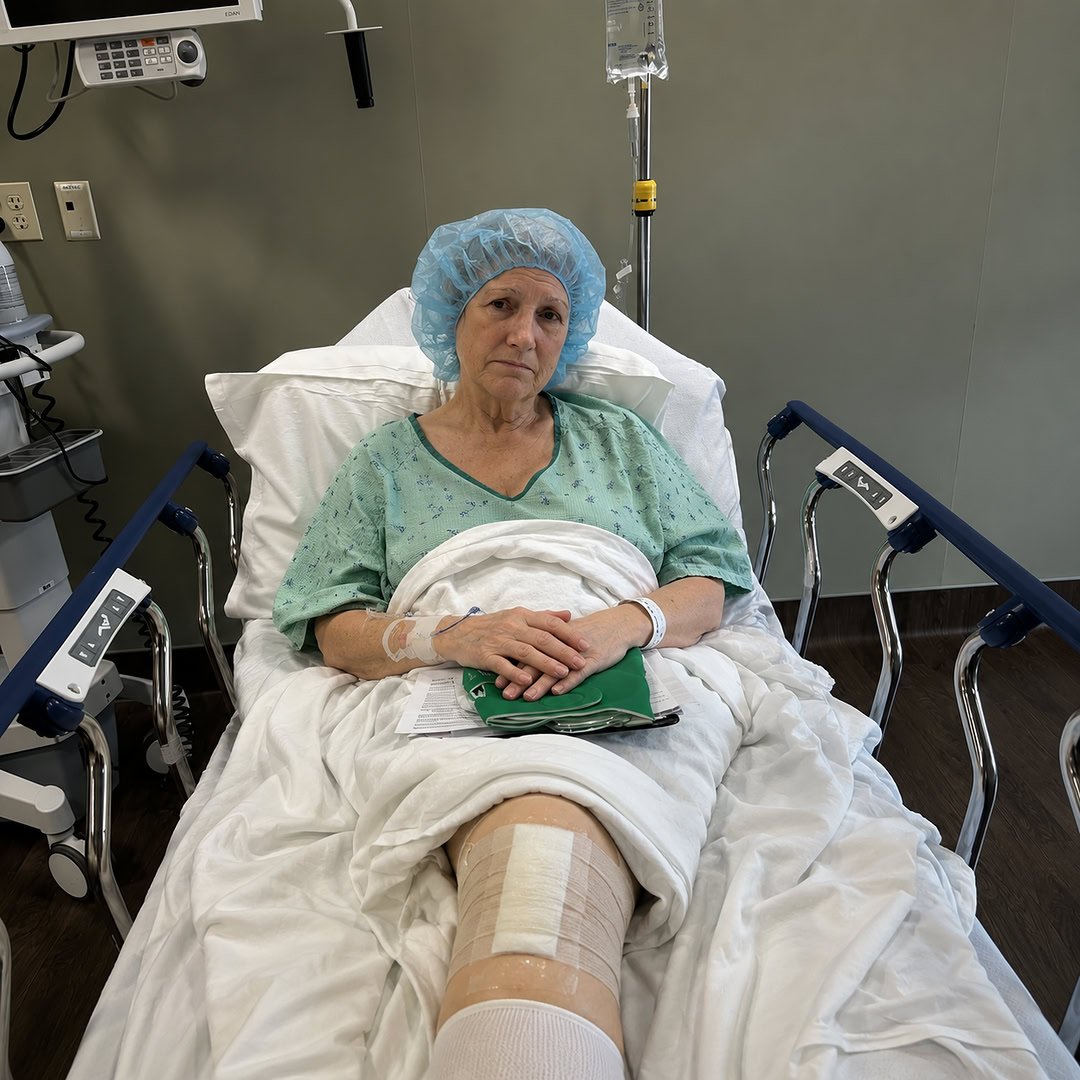
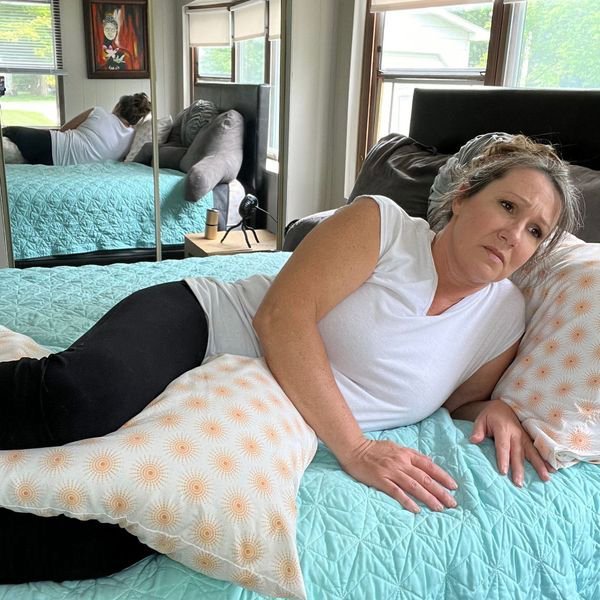
Ran for 14 days, from August 7 to August 21, 2026, the last day Crush saw it.
Run by Sandra Hillings on Facebook. Crush is not the advertiser and does not verify its claims. See this ad in Meta's Ad Library(opens in a new tab)
Want an ad like this for your product?
Crush makes new ad images for your product from this ad: your logo, your product photo, your offer.
Trials from $19.95 USD, then $79.95 USD a month. Cancel anytime.
About this ad
- Meta Ad Library ID
- 1420492966560410
- Platforms
- Facebook, Instagram, Audience Network, Messenger, WhatsApp and Threads
- Relaunches
- 0
Ad text
I was diagnosed with rheumatoid arthritis at 32. I'm 47 now. For fifteen years, every doctor I saw told me the same thing. My immune system had turned against me. My own body was attacking my joints. And I would be managing it for the rest of my life. Turns out my body was never the enemy. I wish someone had told me that fifteen years ago. It would have saved me fifteen years of thinking I was broken. Let me tell you what those fifteen years actually looked like. Fifteen years of Methotrexate that left me foggy and nauseous every single week. Fifteen years of Prednisone that bloated me, wrecked my sleep, and made my face puffy and unfamiliar in the mirror. Fifteen years of expensive biologic injections that helped for a while, then stopped working, so they switched me to another one. Fifteen years of being handed prescriptions and told, "it's autoimmune, you'll need these for life." I did everything they asked. I followed the anti-inflammatory diet for two straight years. No sugar. No gluten. No dairy. No nightshades. Plain grilled chicken and steamed vegetables while my husband and kids ate real dinners across the table from me. I spent over £150 a month on turmeric, fish oil, and probiotics that promised to calm inflammation and support my immune system. When none of it worked, they ran more blood tests. My inflammation markers were high. My rheumatoid factor was positive. The antibodies were elevated. An ultrasound showed inflammation in both wrists. "Classic rheumatoid arthritis," they said. My rheumatologist looked at the results and said, "Your immune system is attacking your joints. Very common in women your age." She prescribed the Methotrexate and told me to come back in three months to see if we needed to add another injection. I felt broken. Like my body had turned against me. And the tests seemed to prove it. My immune system was the villain, my joints were the crime scene, and there was nothing to do but keep it suppressed for the rest of my life. But here's the thing nobody could explain to me. Nothing I tried ever made a lasting difference. If my body was the problem, why did suppressing it never fix it? Every morning, both hands were so stiff I couldn't grip my toothbrush. Not one hand. Both. Locked up in the exact same way on both sides. I'd run them under hot water for an hour just to get them working. By mid-afternoon, both knees would start to ache. By evening, I couldn't walk normally because the pain was on both sides at once. Some nights the pain in both hands woke me at 2 a.m. I'd lie there flexing my fingers in the dark, feeling that deep ache in the matching joints on both sides of my body, wondering how much smaller my life was going to get. I started wearing slip-on shoes because I couldn't tie laces. Zips became impossible. I bought clothes with elastic waistbands and magnetic buttons. I stopped going to dinner with friends because I couldn't open a bottle or cut my own food without help. I stopped gardening. Stopped playing guitar. Stopped picking up my daughter, because I was terrified I'd drop her. And I was exhausted. Not tired. Bone-deep exhaustion that made every day feel like dragging myself through wet cement. Some days I'd run a low-grade fever for no reason at all. My body felt like it was at war with itself, around the clock. Every doctor just nodded. "That's rheumatoid arthritis. It's progressive. We'll manage the inflammation as best we can." I tried physiotherapy. Acupuncture. Cupping. Red light. Cryotherapy. CBD creams that cost £60 a jar and smelled like a health food shop. I even got cortisone shots in both hands. They worked for six weeks. Then the pain came roaring back, worse than before. Nothing worked long-term. Nothing. I started to believe this was just my life now. That I'd spend the rest of it avoiding stairs, asking people to open jars, and watching my independence slip away a little more every year. Then my physiotherapist asked me a question no doctor ever had. Dominic was different from the others. Early fifties. And there was something about the way he moved. Loose. Easy. Pain-free. Like a man who'd been somewhere dark and found his way back. We were doing another round of resistance-band exercises that weren't really helping. He watched me struggle to grip the band. Watched me wince trying to get up off the floor mat. Noticed how both knees gave me trouble, not just one. Then he stopped mid-session. "Can I tell you something?" he said. "I see myself in you. The pain in both hands. The morning stiffness that lasts forever. The exhaustion. I had all of it. Same diagnosis. I was 34 when they told me I had rheumatoid arthritis." I stared at him. He did not move like a man who had rheumatoid arthritis. "What happened?" I asked. He sat down across from me. "I had to stop working. Both hands got so inflamed I couldn't demonstrate an exercise. I was on the medication, dealing with the fog and the nausea. My rheumatologist wanted to start injections." "What did you do?" "I went down every rabbit hole you've probably already been down. Every supplement. Every diet. Every protocol. None of it lasted. And then I stopped asking what to take, and I started asking a different question. Why my joints were inflamed in the first place. Once I understood that, and once I went after that, my function came back. I was back on the floor coaching people through their exercises a year later. Moving like this." "What was it?" He leaned forward. "Has anyone ever told you why your immune system is attacking your joints in the first place?" I looked at him. "Because it's autoimmune?" He leaned back. "That's the label. It's not the reason. It tells you what's happening. It never tells you what's feeding it." He paused. "Your body isn't the villain here," he said. "It never was. I need you to hear that, because I spent years believing the opposite." "Then what is it?" "Let me explain it the way it was explained to me." And what he told me over the next twenty minutes changed the way I understood every single one of those fifteen years. Your joints are alive. Most people don't think of them that way. You picture a hinge. Two bones and a pad of cartilage that wears down like a brake pad until one day you need a new knee. That is not what a joint is. The cartilage, the fluid that keeps everything gliding, the cushioning that lets you move without grinding, all of it is living tissue. And there are cells living inside it whose whole job is to look after it. They tend the surface, make the fluid, and here's the part that mattered for me. When inflammation flares up to deal with something, those cells are the ones that switch it back off once the job is done. Your joint isn't a brake pad. It's a job site with a crew on it. And one of that crew's jobs is turning the alarm off. But that crew can't lift a finger without power. And here's where the story gets specific. Because the reason the power runs out isn't random. It's driven by something researchers have been studying for years but that never makes it into the standard treatment conversation. Damaged senescent cells — zombie cells — accumulate inside the joint tissue over time. These cells refuse to clear out the way healthy cells do. Instead they sit there releasing enzymes called matrix metalloproteinases that dissolve the cartilage matrix from the inside. They flood the joint with inflammatory chemicals. They block the repair signals the body keeps trying to send. And they drain the NAD+ — the cellular fuel — that the repair crew needs to do its job. When NAD+ is depleted, the crew starves. The inflammation alarm that was only ever supposed to flare and switch off never switches off. It just stays. Year after year. And inflammation throws off more signals, which accumulate more zombie cells, which starve the crew further. The alarm was stuck on. Not because my body wanted to hurt me. Because the cells that reach up to switch it off had run out of power. And the magnesium those same repair cells need to actually carry out the work — collagen synthesis, tissue regeneration, cellular energy production — was being depleted further by every anti-inflammatory and every injection I'd taken. "So my body isn't broken," I said. "Your body has been trying to shut this off the whole time," Dominic said. "It just couldn't. That's not the same as broken. That's not the same as a body attacking itself for no reason. There's a reason. Nobody ever went looking for it." And the exhaustion, I asked him. The bone-deep kind. "Same root," he said. "When NAD+ is low, it's not just your joints. Every cell is running on empty. Your brain cells need enormous amounts of energy, so you get the fog. Your muscles can't recover, so you feel drained. The joint pain is just the loudest symptom. The starving is everywhere." Everything he said matched. All of it. "So why didn't any of it work?" I asked. "The diet. The turmeric. The fish oil. The medication." "Because none of it went after the zombie cells or restored the power," he said. "The medication turns the alarm down with chemistry. It makes the pain quieter. It doesn't clear a single zombie cell or put one unit of NAD+ back into the crew. Which is why it works for a while and then stops. And the supplements? Turmeric, collagen, fish oil — they're raw material. Building blocks. You were dropping off lumber at a job site where the zombie cells were demolishing everything that arrived and the power was cut. And then blaming the lumber." That image hit me like a truck. Because it was exactly what I'd been doing. Real money. Real discipline. Every morning, right on schedule, for years. All delivered to a crew that couldn't pick any of it up. I had it backwards the whole time. I thought the problem was my body. The problem was the zombie cells draining the power. And nobody had ever addressed them. So I stopped looking for another thing to suppress the inflammation, and I started looking for something that went after the zombie cells and restored the NAD+ they had been depleting. And here's the other thing Dominic explained that changed everything. Most of what people try to address this comes in a pill or a capsule. It has to survive digestion, compete for absorption, navigate through the liver, and somehow arrive at the joint tissue in meaningful concentration. Most of it never gets there. The zombie cells are not in your stomach. They are in your joint tissue. And to clear them, you need the compounds to arrive at the tissue — not as a diluted trace after the gut is finished with them, but at the concentration the cells actually need. Transdermally. Through the skin. Directly into the tissue. Bypassing the gut entirely. That's what Magnesium Freeze from Radiance Labs does. Applied directly over the joint, morning and night. The niacinamide supports NAD+ production directly in the local tissue — restoring the fuel the cleanup crew has been starving for. When NAD+ comes back, the cells responsible for clearing zombie cells finally have the power to do it. The enzymes dissolving the cartilage matrix start being shut down. The inflammatory cascade that has been stuck on for years finally starts switching off — not because something masked it, but because the cells doing the job can finally finish it. The pharmaceutical-grade magnesium absorbs transdermally alongside it — straight through the skin, bypassing the gut entirely — and gives those same cells the cofactor they need for collagen synthesis, tissue regeneration, and cellular energy production inside the joint. Without magnesium, even cells that have had their zombie cell burden reduced cannot carry out the rebuild. And every cortisone shot and every anti-inflammatory depletes it further. Niacinamide clears the zombie cells and restores the NAD+. Magnesium gives the repair crew what they need to use it. One without the other is only half the answer. Then a cool-to-warm wave — menthol, Coolact 10, camphor, Hotact VBE — opens the blood vessels and floods the starved tissue with oxygen-rich blood that chronic inflammation has been restricting. Most topical creams fade in four minutes. This keeps working for up to two hours. And a layer of botanicals — arnica, frankincense, aloe vera, vitamin E — calms the remaining inflammation and protects the tissue while the deeper repair work takes hold. Three layers. Twelve ingredients. One application. Directly at the joint. Not through the gut. Into the tissue. I ordered it the same night Dominic explained it to me. And I kept taking everything my rheumatologist had me on. I wasn't about to change a single thing about my medication over something my physiotherapist told me. That's between me and my doctor. I told myself ninety days. Don't expect anything before then. The first two weeks, nothing dramatic. The stiffness was still there every morning. I stayed with it. By the start of week three, something shifted. The bone-deep exhaustion, the wet-cement feeling I'd carried for years, started to lift at the edges. I made it to evening without feeling like I was dragging myself through the day. And I slept through the night without the 2 a.m. ache in my hands waking me. Could be a good week. I wasn't counting it yet. Week four, I woke up on a Saturday and my hands opened. Not after the hour of hot water. Not after the slow flexing routine. They just opened. The morning stiffness was gone in twenty minutes. I went to the fridge and opened a jar. With one hand. Without thinking about it. Without running my hands under the tap first. Without asking anyone. I stood there in the kitchen holding that open jar like I'd just done something impossible. Week five, I got down on the floor to play with my daughter. Wren wanted to build a tower of blocks. So we built one. She knocked it down. We built it again. And then I stood up. Without bracing on the sofa. Without that familiar grinding pain in both knees. Without needing a hand to pull me up. I just stood up. Like a person. Wesley was watching from the doorway. His eyes were wet. "When's the last time you did that?" he asked. I couldn't remember. Years. Maybe five years. Week six, I sat down with a notebook and started tracking everything, the way the people on the forums did. How long the morning stiffness lasted. How many stairs I could climb. What I could grip. And I'll be honest with you about the timeline, because I don't want to sell you something I can't hand you. Seven weeks was mine. It won't be everyone's. Some people's joints have been starved longer than mine were, and I don't know your body. That same week I started gardening again. Kneeling in the soil, planting tomatoes. And I picked up my guitar for the first time in years. My calluses were long gone, so it hurt a little at first, but my joints didn't stop me. I played for an hour. Week seven, I spent a whole Sunday afternoon in the garden, and I only realised when I came inside that I hadn't thought about my hands once the entire time. I sat down at the kitchen table and just breathed for a while. At my next appointment, my rheumatologist, Dr. Odom, watched me take off my coat and get settled, and she stopped. "Your range of motion is different," she said. "Your grip. You're moving differently than last time. What are you doing differently?" I told her about the zombie cells. About the NAD+ depletion. About transdermal delivery bypassing the gut so the niacinamide and magnesium actually reached the tissue. About the reason none of the supplements had ever worked — lumber to a demolition site where the power was cut. She listened. She didn't tell me I was right. She didn't tell me I was wrong. "I don't know how much of this is that, and how much is your treatment finally having less to fight against," she said. "Honestly, I'm not sure anyone could tell you for certain." And she's right. I can't untangle it either, and I'm not going to pretend to. I was on my medication the whole time. What I know is that I added one thing, and my hands came back. "Keep doing what you're doing," she said. "We'll keep making the medication calls together, with your labs in front of us. But whatever's helping you move like this, don't stop it." I walked out of that office and sat in my car for ten minutes. Then I drove home and got back on the floor with my daughter. Here's what I understand now that took me fifteen years to see. I had rheumatoid arthritis. That part was real. But for fifteen years, not one person ever told me what was feeding the inflammation. They told me my body had turned against me, and I believed it. I spent fifteen years thinking I was the enemy. My body was never the enemy. The zombie cells were draining the power it needed to shut this off. The label was "autoimmune." The label was never the reason. And until I addressed the zombie cells directly — transdermally, into the tissue, bypassing the gut — nothing I tried could work. Not the drugs that turned the alarm down without asking why it was ringing. Not the supplements that delivered raw material the zombie cells demolished. Not the diets, the shots, the creams from the chemist. Every single one of them was lumber, dropped off at a demolition site with the power cut. For fifteen years. Now let me be as clear as I possibly can, because this matters more than anything else I've told you. I did not stop my medication. Rheumatoid arthritis is not something you manage off a stranger's story on the internet. Every decision about my prescriptions, I make with my rheumatologist, in her office, with my labs in front of us. If you're on something right now, do not touch it because of me. Not without the person who prescribed it. What I did was add the one thing that finally went after the part of this that nobody had ever addressed. That's the only thing I'm telling you to look at. When I think about what those fifteen years cost me, it makes me sick. Over £150 a month on supplements that never once touched the zombie cells or restored the NAD+. Two years of a diet that made me miserable at my own dinner table. £60 jars of cream from the chemist. Cortisone shots that bought six weeks and then made it worse. Acupuncture, cupping, red light, cryotherapy. And beyond the money, fifteen years of my life. Fifteen years of slip-on shoes and magnetic buttons. Fifteen years of not picking up my daughter. Fifteen years of skipping dinners because I couldn't cut my own food. Fifteen years of believing my own body was out to get me. That's the part I can't get back. Magnesium Freeze from Radiance Labs has a 180-day money-back guarantee. If you don't feel a real difference, every penny back. No forms. No questions asked. After fifteen years of things that didn't work and never came with a guarantee, a cream that addresses the actual mechanism and stands behind it completely was the easiest decision I've ever made. And I need you to hear one more thing. It didn't get better on its own for me. I waited fifteen years for it to, and it never did. The stiffness didn't plateau. The list of things I couldn't do only got longer. I'm not going to scare you with a countdown. I'll just tell you the truth. Waiting cost me fifteen years, and nobody warned me it would. I think about that morning a lot. Week four. Standing in my kitchen with an open jar in my hand. My hands just worked. No hot water. No flexing. No asking for help. For fifteen years I believed my body was the enemy. It wasn't. The zombie cells had been draining the power it needed to finish the job. And nobody had ever gone directly into the tissue to address them. You don't have to wait fifteen years to find that out. Magnesium Freeze from Radiance Labs. 180-day money-back guarantee. I'll put the link below. Elise Renner P.S. If you take one thing from all this, take this. Being told your body is attacking itself is a terrible thing to carry, and I carried it for fifteen years. Your body isn't the villain. It's been trying to shut this off the whole time. The zombie cells draining the NAD+ it needed to finish the job — that's what nobody ever looked at. P.P.S. My timeline, honestly, so you can measure yours against something real. First two weeks, nothing, and I nearly stopped. Week three, the exhaustion and the sleep improved. Week four, my hands opened and I opened a jar. Week five, I got up off the floor. Week seven, a whole afternoon in the garden without thinking about my joints once. Yours may run differently — some joints have been starved longer than mine were — but 180 days is your window and you risk nothing finding out. P.P.P.S. Don't skip past the guarantee. 180 days, full refund, no questions. In fifteen years of watching my life get smaller, not one pill, powder, cream, or shot ever offered me a penny back when it failed. The system doesn't do refunds. Radiance Labs does. That difference tells you who stands behind what they sell. P.P.P.P.S. And to say it one more time, because it's the most important line here: don't stop or change any medication you're on. Add, don't subtract, and let your own doctor make the calls with your labs in front of them. That's exactly what I did.
Where the ad sends people
radiancelabs.shop
"12 years of joint pain gone in 15 minutes?"
See details: radiancelabs.shop(opens in a new tab)