Dr.Gary Hutchinson, MD
Dr.Gary Hutchinson, MD Facebook ad: “This is why your cabinet is full of half-empty supplement…”

Ran for 1 day, from March 29 to March 30, 2026, the last day Crush saw it.
Run by Dr.Gary Hutchinson, MD on Facebook. Crush is not the advertiser and does not verify its claims. See this ad in Meta's Ad Library(opens in a new tab)
Make your own version of this ad
Crush makes it, launches it in your own Meta ad account, scales the winners and pauses the losers.
About this ad
- Meta Ad Library ID
- 1424900605784936
- Platforms
- Facebook, Instagram, Audience Network, Messenger and Threads
- Relaunches
- 0
Ad text
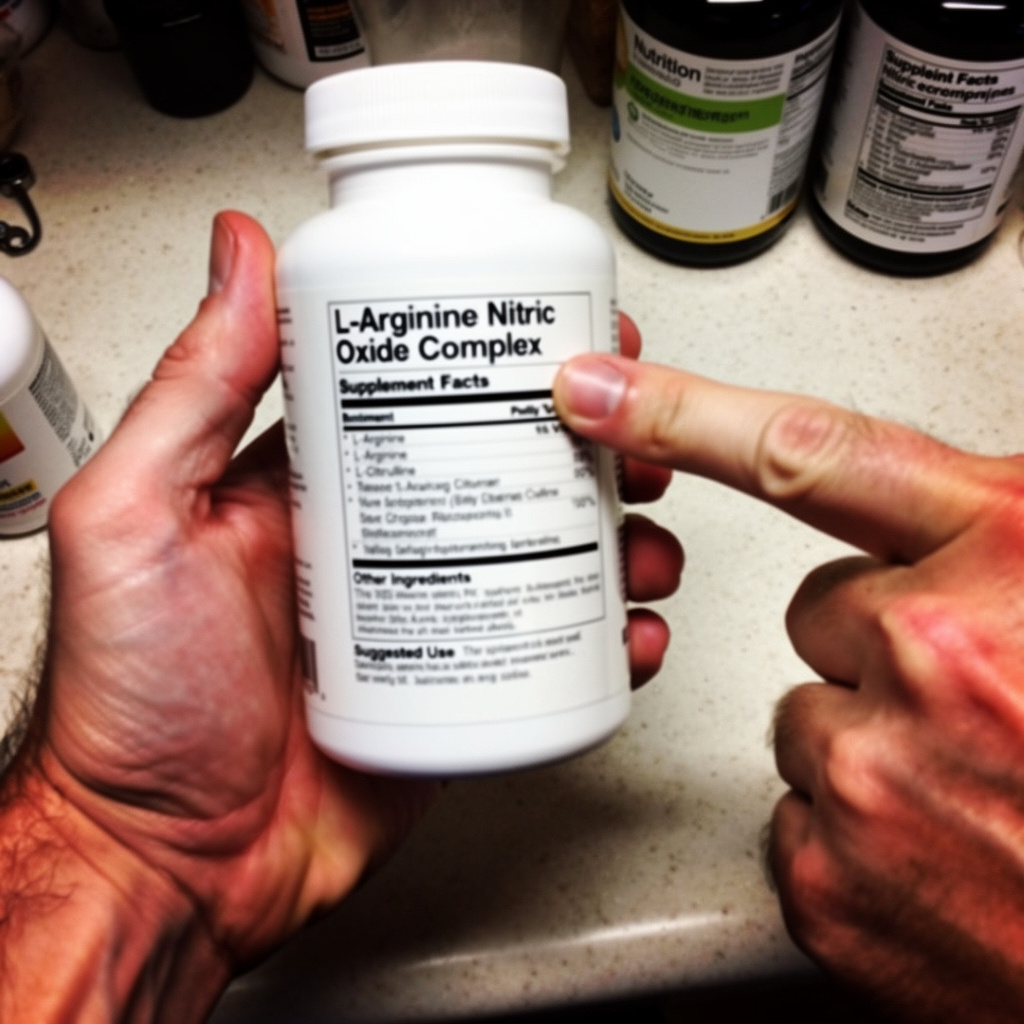
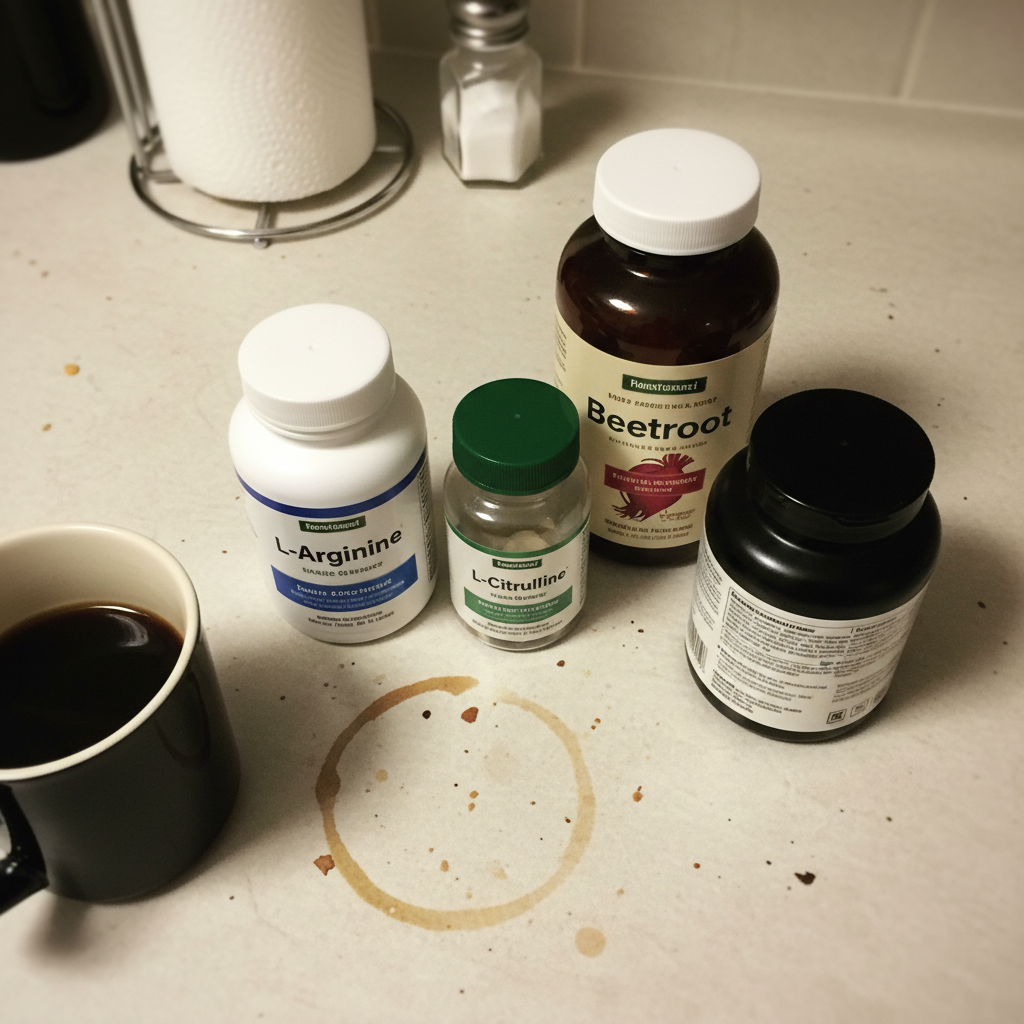
This is why your cabinet is full of half-empty supplement bottles.I know what it looks like because I've now seen photos of over 200 of them. L-arginine. Beetroot. Citrulline. Stacks. Every cabinet looks the same. Every bottle was abandoned at the same point. And the reason has nothing to do with the products. I'm going to explain something that nobody selling you these supplements will ever explain. Not because it's a secret. Because there's no money in it. I've been in practice for 19 years. About two years ago I started noticing something I couldn't ignore. Patient after patient was telling me the same story. Not similar stories. The same story. Word for word. Almost scripted. "I tried L-arginine. Worked for about two weeks. Then it stopped." "Switched to beetroot. Same thing. Two weeks. Then nothing." "Tried citrulline. Tried a combined stack. Same wall. Same week." After the fifteenth or twentieth time I heard this I stopped attributing it to bad products or inconsistent dosing or placebo wearing off. I started asking my patients to do something unusual. I asked them to send me a photo of their supplement shelf. The first photo that came in showed a bathroom medicine cabinet. Door open. Four bottles visible. L-arginine from a pharmacy brand. Beetroot extract. Some citrulline capsules. A combined NO stack. All of them roughly half full. All of them sitting there untouched. Dust on the caps. The second photo looked identical. Different bathroom. Different brands. Same bottles. Same level. Same dust. By the time I had 50 photos I stopped looking at them individually and started looking at them as data. Same four or five products in every photo. Same ingredients in different packaging. Same amount remaining in every bottle — almost exactly half. And every single man told me the same timeline. Something shifted around week two. Wall around week three. Abandoned shortly after. I started calling it the Graveyard. Every man over 40 who's tried to fix this problem on his own has one. A shelf. A cabinet. A drawer. A plastic bag under the sink. Full of bottles that represent hope that didn't last. Each bottle was purchased with the belief that this one would be different. Each one felt like it was working for about ten days. Each one stopped. And each time one stopped, something else stopped with it. Not in his body. In his house. I need to tell you what I noticed in the photos that arrived later. The first photo a man sent me usually had three or four bottles. Some of them recent purchases. Caps still clean. Labels still bright. He was still in the cycle. Still trying. Still looking for the one that worked. The second photo ,if I asked for an update six months later ,had the same bottles in the same position. He hadn't added any new ones. The caps were dusty. The labels were fading. The bottles hadn't moved. That's when I knew the damage had crossed over from his body into his life. Because a man who is still buying new supplements is a man who is still fighting. His wife can feel that. Even if they never discuss it directly. She sees a new bottle on the counter and she feels a small pulse of something ,maybe not hope exactly, but acknowledgment. He's still trying. He hasn't accepted this as permanent. A man who has stopped buying new supplements is a man who has surrendered. His wife can feel that too. The shelf doesn't change. No new bottles appear. The ones that are there gather dust. And she understands ,without a word being spoken ,that he has decided this is just how things are now. And that is the moment I've learned to fear most. Not the supplement failing. Supplements fail all the time. The moment a man stops trying. Because his wife is watching. She is always watching. And when he stops, something in her stops too. She stops mentioning it. Stops suggesting. Stops leaving articles on the kitchen table. Stops buying him things to try. He interprets that silence as acceptance. As peace. As her being okay with it. It's not acceptance. I have been in practice for 19 years. I have watched this pattern repeat in dozens of marriages. The silence is not acceptance. The silence is her protecting herself from hoping one more time. Because every bottle that started strong and died at week three took a piece of her hope with it. And she's run out of pieces to give. The photos made me ask the question I should have asked years ago. Why does every product fail at the same point? Not why does one product fail. Why do ALL of them fail. Same week. Same wall. Same curve. Regardless of brand, dose, form, or price. If the products were the problem, the failure points would be random. Different products would fail differently at different times. They don't. They all fail identically. Which means the products aren't the problem. The system they're entering is the problem. I spent three months in the published research. Not supplement marketing research. Primary biochemistry studies. Enzyme kinetics. Age related metabolic changes in the nitric oxide production pathway. Two failures. Running simultaneously. Invisible on every label in every photo every patient has ever sent me. The first is an enzyme called arginase. Your body produces more of it every year after 40. Its only job is to find arginine in your bloodstream and destroy it before it can be converted into nitric oxide. When you start taking an L-arginine supplement, the initial surge of raw material temporarily overwhelms your existing arginase levels. More arginine gets through to the conversion point. Nitric oxide production increases. You feel the shift. That's the first ten days. Then arginase adjusts upward to match the new supply. Your body is regulating itself the way it's designed to. More arginine arrives. More arginase is produced to compensate. Equilibrium is restored. Day 15. Wall. The supplement didn't stop working. Your body adapted to it and neutralized it. This happens identically with citrulline. With beetroot. With combined stacks. Because they're all feeding the same pathway that arginase is regulating. Different inputs. Same checkpoint. Same shutdown. That's why every bottle in every photo is abandoned at the same point. The body's adaptive response kicks in at the same window regardless of what you're taking. The second failure is worse. And it's the one that made me angry at my own training. The enzyme that converts arginine into nitric oxide is called eNOS. It's the engine. Without it nothing happens. eNOS requires a compound called CoQ10 to function. CoQ10 is the fuel. After 40, your CoQ10 production declines every year. Measurably. Documentably. This is not disputed in the literature. When CoQ10 drops low enough, eNOS doesn't just slow down. It uncouples. Instead of producing nitric oxide, it begins producing superoxide radicals. Oxidative waste. Molecules that actively damage the endothelial lining of the very blood vessels the nitric oxide was supposed to be relaxing. The engine doesn't stall. It starts running in reverse. So here is what's happening inside the body of every man over 40 who opens a bottle of L-arginine: The raw material is being intercepted and destroyed by arginase before it reaches the conversion point. Whatever raw material gets through arrives at a conversion engine that is underpowered and producing damage instead of nitric oxide. The supplement label says "supports healthy nitric oxide production." The system it's entering is doing the opposite of that. And no label in any photo any patient has ever sent me mentions arginase. Or CoQ10. Or eNOS uncoupling. Or the adaptive response that shuts everything down at day 15. Because there is no money in explaining why your product only addresses one-third of the problem. Once I understood this I knew what a complete approach would require. Not more raw material. The Graveyard is already full of raw material. First — inhibit arginase. Stop the enzyme from destroying the ingredients before they arrive. Pomegranate extract has published research showing specific arginase inhibition. This is not theoretical. It is mechanism-level, peer-reviewed data. Second — power eNOS. Restore CoQ10 levels so the conversion engine runs correctly instead of producing oxidative damage. Without this, it does not matter how much arginine or citrulline or beetroot you take. The engine that processes it is broken. Third — protect the compounds through the gut. Piperine — black pepper extract standardized to 95% — inhibits the intestinal enzymes that destroy these compounds before they ever reach the bloodstream. Without it, a significant percentage of every ingredient on the label never makes it to where it needs to go. Then , and only then , you add the arginine. The citrulline. The beetroot. The raw material riding on top of a system that can finally receive it, convert it, and sustain the conversion past day 15. I found one formula built around this approach. Not as an afterthought. As the core architecture. I gave the information to the patients whose photos I had. The ones still engaged. The ones whose Graveyards hadn't completely collected dust yet. About eight weeks later one of them sent me a new photo. Same cabinet. Same shelf. But different. The old bottles were still there. L-arginine. Beetroot. Citrulline. The stack. All half empty. All dusty. All exactly where they'd been for months. But next to them was a new bottle. And it wasn't half empty. It was almost gone. He wasn't abandoning it at week three. He was still taking it. Still opening that cabinet every morning and reaching for it. Eight weeks in. He sent a message with the photo. Short. Three lines. "Week three came and went. No wall." "Cabinet looks different now." "So does my house." I didn't ask him what that last line meant. I didn't need to. I've been in practice for 19 years. I knew exactly what it meant. His wife could feel it. The same way she could feel it when the bottles stopped being opened. The same way she could feel it when he stopped adding new ones. The same way she could feel the surrender even though he never said a word. She could feel this too. Something had shifted. He was present in a way he hadn't been. She could feel him coming back. And whatever she had been protecting herself from hoping for , she was starting to hope for it again. Another patient told me his wife left a bottle of vitamins on the counter last week. Nothing to do with any of this. Just a multivitamin she'd picked up at the store with a note that said "thought of you." He said she hadn't left him anything like that in over a year. He said that note hit him harder than any test result I could have given him. Because it meant she was investing again. Paying attention to his health again. Thinking about him in a way she'd quietly stopped thinking about him. He said "She's back." I hear that phrase more than any clinical term in my practice now. "She's back." Two words that mean more than any graph or lab value or research paper I've ever read. I've been collecting photos of supplement cabinets for two years. The Graveyards all look the same. Same bottles. Same dust. Same story of hope that peaked at week two and died at week three. But some of those Graveyards have a new bottle on the shelf now. One that isn't dusty. One that's being used up instead of abandoned. And in every one of those homes something else changed that has nothing to do with supplements and everything to do with the woman who lives there. If your cabinet looks like the photos I've been collecting .four or five bottles, all half empty, all abandoned around the same week — I can tell you exactly what every one of them was missing. And if your wife has stopped leaving things on the counter for you. If she's stopped suggesting you try something new. If there's a silence in your house that you've been telling yourself is normal. It's not normal. I've watched this in too many homes to call it normal. But it is fixable. Because what those bottles were missing is specific. And the reason your wife went quiet has nothing to do with her giving up on you. It has everything to do with her watching you give up on yourself. She's still in there. Waiting to see you fight again. Here's what those bottles were missing. And here's what a complete approach actually looks like. The man who sent me the photo sent me a new one eight weeks later. The Graveyard had a new bottle on the shelf. Almost empty. Being used. His wife left a note on the counter last week. That note is worth more than every half-empty bottle in that cabinet combined.
Where the ad sends people
tryvaseon.com
This is why your cabinet is full of half-empty supplement bottles.
Vaseon
Learn more: tryvaseon.com(opens in a new tab)