Dr.Gary Hutchinson, MD
Dr.Gary Hutchinson, MD Facebook ad: “Don't buy another L-arginine supplement until you see this…”
Ran for 1 day, from March 29 to March 30, 2026, the last day Crush saw it.
Run by Dr.Gary Hutchinson, MD on Facebook. Crush is not the advertiser and does not verify its claims. See this ad in Meta's Ad Library(opens in a new tab)
Make your own version of this ad
Crush makes it, launches it in your own Meta ad account, scales the winners and pauses the losers.
About this ad
- Meta Ad Library ID
- 1481566860084623
- Platforms
- Facebook, Instagram, Audience Network, Messenger and Threads
- Relaunches
- 0
Ad text
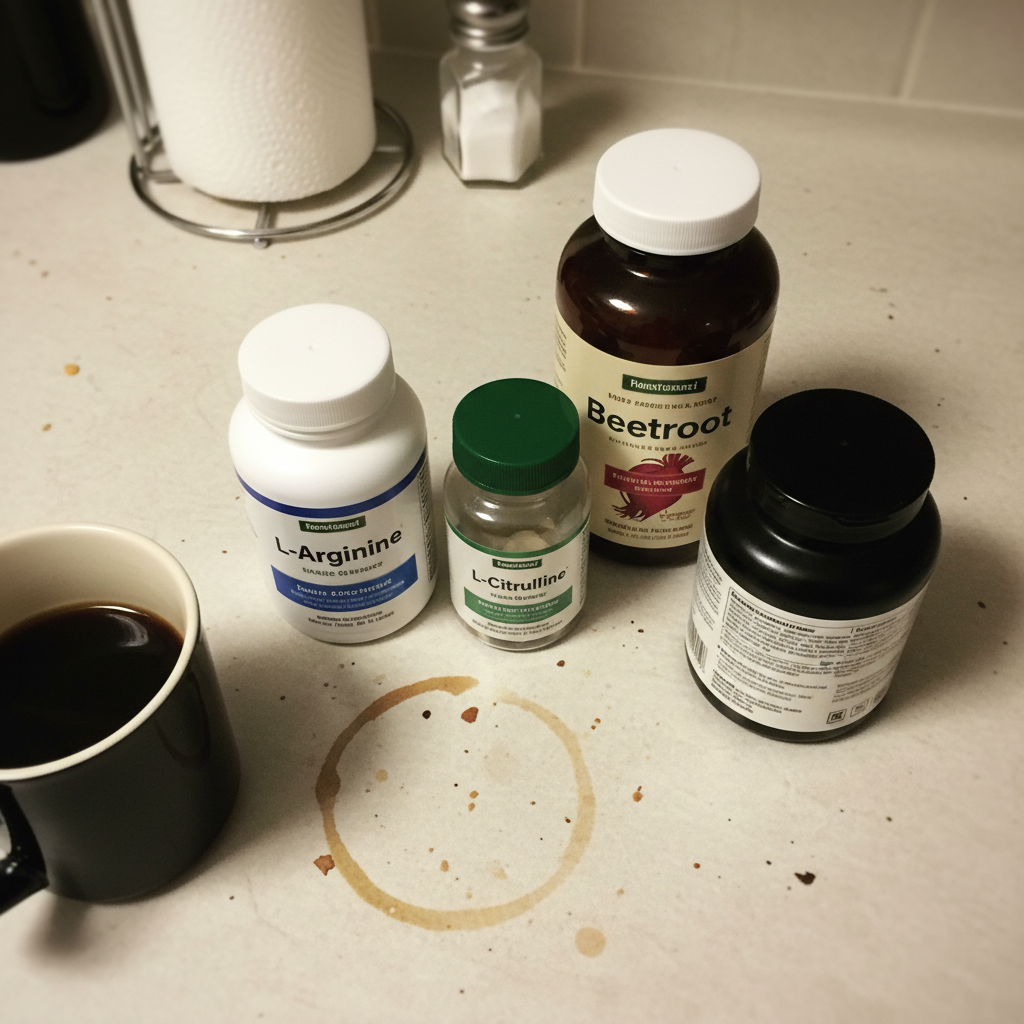
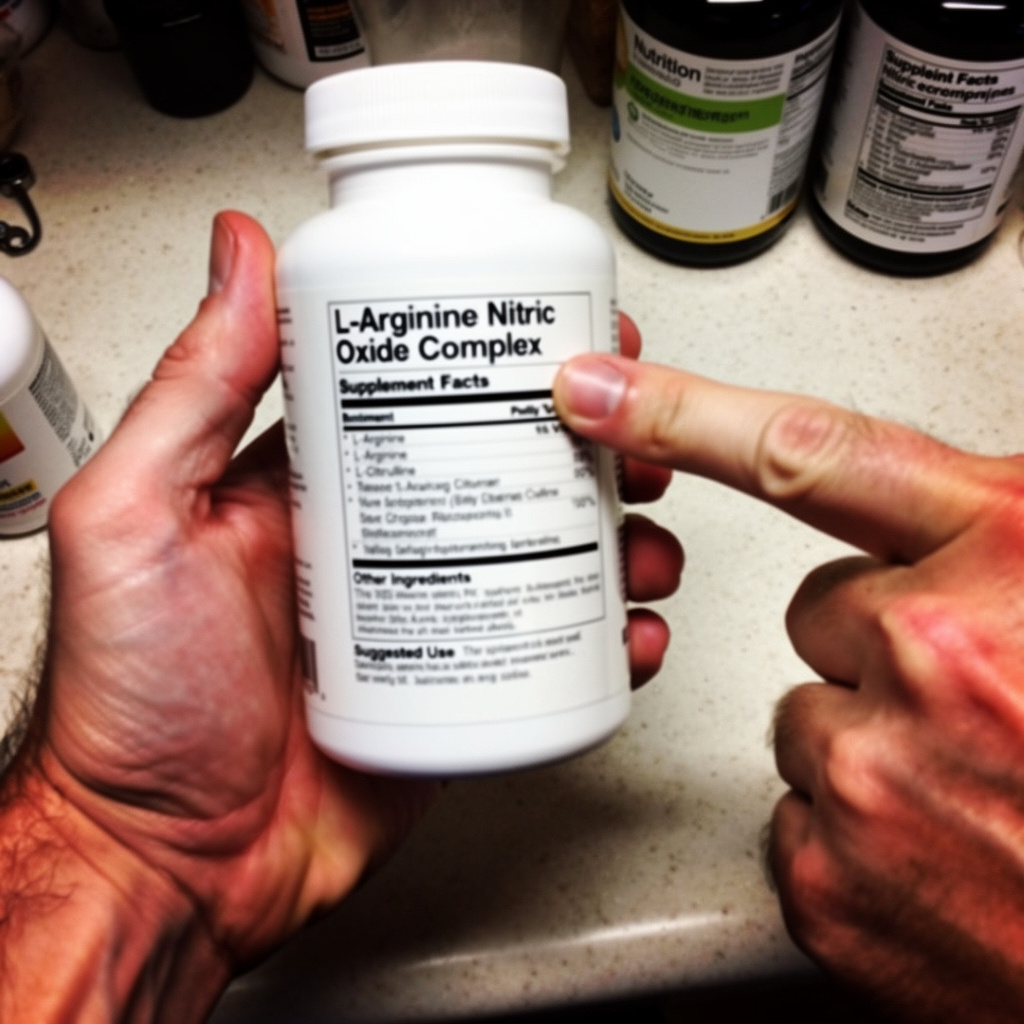
Don't buy another L-arginine supplement until you see this data.I tracked 200 patients over 14 months. Every single one who tried L-arginine, beetroot, or citrulline reported the same result at the same week. When I graphed it, the pattern was so consistent it looked manufactured. I need to explain what I mean by that because it changed the way I practice. I've been in medicine for 19 years. For most of that time when a patient told me he'd tried a nitric oxide supplement and it "didn't work," I filed it under the same mental category I filed most supplement complaints. Inconsistent quality. Underdosing. Placebo regression. Patient error. I had a drawer full of explanations. All of them comfortable. None of them tested. About two years ago I started doing something no one in my field does. I started asking my patients to track their results by week. Not how they felt generally. Not "better" or "worse." Specific. Day by day. What they noticed, when they noticed it, and exactly when it stopped. I gave them a simple form. Seven columns. One for each day of the week. Fill it out every morning. Bring it back in 60 days. At first I was just curious. After 30 patients I was suspicious. After 100 I was concerned. After 200 I was angry. Here is what the data showed. It didn't matter what product they were taking. L-arginine from the pharmacy. Beetroot extract from the health food store. Citrulline from Amazon. Combined stacks from specialty brands. Expensive. Cheap. Capsules. Powder. Didn't matter. The pattern was identical. Days 1 through 5. Nothing noticeable. Patient assumes it hasn't kicked in yet. Continues taking it. Days 6 through 12. Something shifts. Not dramatic. A change in energy. Morning vitality returning. A sense that the body is responding. Patient gets hopeful. This is the window where most men think they've finally found the right product. Days 13 through 17. The shift stalls. Doesn't get worse. But stops getting better. Patient notices but tells himself to give it more time. Days 18 through 21. Decline back to baseline. Sometimes below baseline. The window closes. Whatever was building has stopped. The patient either increases the dose, switches products, or gives up entirely. 200 men. Four different product categories. Same curve. Same peak around day 10. Same wall around day 15. Same decline by day 21. I printed the graphs and laid them side by side on my desk. If you removed the patient names and the product labels you could not tell them apart. That's not a supplement quality problem. That's not a dosing problem. That's not a compliance problem. That is a biological system behaving identically regardless of what you feed it. Which means the system itself is the problem. Not the input. I want you to understand what that means if you've lived this pattern. It means you weren't doing anything wrong. The L-arginine wasn't bad. The beetroot wasn't fake. The citrulline wasn't underdosed. The stack wasn't a scam. Your body took the raw material, did something with it for about ten days, and then a biological mechanism kicked in and shut the whole thing down. Same mechanism. Every time. In every patient. Regardless of the product. Once I understood that, I had to find the mechanism. Because 200 men tracking the same failure curve on my desk wasn't something I could put back in the drawer and label "placebo regression." It took me three months in the research. Not review articles. Primary studies. Enzyme kinetics. Age-related metabolic changes. The actual biochemistry of what happens to nitric oxide production after 40. Two failures. Running simultaneously. Invisible on every label. The first is an enzyme called arginase. Your body produces it naturally. Its job is to break down arginine in the bloodstream. After 40, arginase production increases steadily year over year. More arginine you take, more arginase your body produces to meet it. This is why the first ten days show improvement. The initial flood of supplemental arginine temporarily overwhelms the existing arginase. More raw material gets through to the conversion point. Nitric oxide levels bump up. The patient feels it. Then arginase production adjusts upward to match the new supply. Equilibrium is restored. The extra arginine is being neutralized as fast as it arrives. Day 15. Wall. The graphs don't lie. The second failure is what made me angry at my own profession. The enzyme that converts arginine into nitric oxide is called endothelial nitric oxide synthase. eNOS. It's the engine. Everything depends on it. eNOS requires CoQ10 to function. CoQ10 is essentially the fuel that powers the conversion process. After 40, CoQ10 production declines measurably every year. When CoQ10 drops low enough, eNOS doesn't just slow down. This is the part they should be teaching in medical school and aren't. When eNOS is underpowered it begins to "uncouple." Instead of converting arginine into nitric oxide, it starts producing superoxide radicals. Oxidative waste. Molecules that actively damage the endothelial lining of the blood vessels it was supposed to be relaxing. The machine doesn't just stop working. It starts working in reverse. So here is what is happening to every man over 40 who takes a nitric oxide supplement: The raw material is being intercepted and destroyed by arginase before it reaches the conversion point. The conversion point itself is underpowered and producing damage instead of nitric oxide. And the supplement label says "supports healthy nitric oxide production" while addressing neither of these failures. When I mapped this onto the patient data, the graphs made perfect sense for the first time. Days 1-12: temporary arginase overwhelm creates a brief window of increased NO production. Patient feels the improvement. Days 13-17: arginase adjusts. CoQ10 deficit prevents eNOS from processing the remaining raw material. Plateau. Days 18-21: system fully compensated. Net NO production returns to baseline or below. Patient feels the wall. The supplement didn't stop working. The system adapted to it and shut it down. Every single product in this category triggers the same adaptive response. Because every single product in this category addresses the same one-third of the problem and ignores the other two-thirds. I called a colleague I trust. Told him what I'd found. Told him about the data. The graphs. The mechanism. He was quiet for a while then said "So what would a complete approach look like?" I said it would need to do three things no current product does. First — block arginase. Specifically. Not with more arginine. With a compound that inhibits the enzyme that's destroying the arginine. Pomegranate extract has published research showing specific arginase inhibition. That's not speculation. That's mechanism-level data. Second — power eNOS. CoQ10 supplementation to restore the fuel supply to the conversion enzyme so it runs correctly instead of producing oxidative damage. Third — protect the compounds through the gut. Piperine — black pepper extract at 95% standardization — inhibits the intestinal enzymes that break down these compounds before they ever reach the bloodstream. Without it, a significant percentage of everything on the label is destroyed before absorption. Then , and only then , you add the arginine, the citrulline, the beetroot. The raw material. Riding on top of a system that can actually receive it, convert it, and sustain the output past day 15. He said "Does that product exist?" I said I'd found one. I gave the information to 14 patients from my tracking study. The ones who were still engaged. The ones whose graphs showed the clearest pattern. The ones who hadn't given up yet. I asked them to use the same tracking form. Same seven columns. Same daily observations. The results did not follow the pattern. Day 10. No peak. A steady incline instead of a spike. Day 15. No wall. The incline continued. Day 21. Still building. I laid those graphs next to the original 200. They looked like they belonged to a different species. The first set .the L-arginine, the beetroot, the citrulline, the stacks — all showed a spike-and-crash. Sharp rise. Sharp wall. Decline. The new graphs showed a slow, sustained build with no plateau point. Because there was nothing to plateau against. Arginase was being inhibited. eNOS was being powered. The raw material was arriving at a functional conversion system and being processed continuously instead of being destroyed or mishandled. The system wasn't being overwhelmed and adapting. It was being repaired and running. One of the 14 men came back at his eight-week check-in. Set his tracking form on my desk. I looked at the graph. Steady line. No wall. I asked how he was doing. He said something that stopped me. He said "Doc, my wife planned a weekend away." I looked at him. He said "She hasn't done that in three years. She stopped planning things like that a long time ago. I thought she'd just gotten busy. I don't think she was busy. I think she'd stopped expecting anything to be different." He said last week she left a new bottle of something on the counter. A multivitamin. Nothing related to any of this. Just a bottle with a note that said "saw this, thought of you." He said that note meant more to him than any graph on my desk. Because it meant she was paying attention again. Investing again. Thinking about his health again. Not because he asked her to. Because something had shifted and she could feel it. He said "She's back." Two words. Same weight as 200 graphs. I have 14 months of data. 200 patients with identical failure curves. 14 patients with a different outcome. The difference between the two groups is not willpower. Not dosing. Not brand quality. Not compliance. The difference is that one group was feeding raw material into a broken system. And the other group was repairing the system first. That's it. That's the entire explanation for why every nitric oxide supplement you've ever tried plateaus at the same point. The system adapts. The system compensates. The system shuts it down. Unless you fix the system. I'm sharing this because data this clear carries a responsibility. I can't sit on 14 months of patient tracking and pretend the pattern isn't there. If you've been through the cycle — L-arginine, beetroot, citrulline, stacks, different brands, different doses, same wall — the pattern is not random. It's not you. And it's not going to change by switching to another product built on the same incomplete model. The products are missing the same two things. Every time. Here's the full breakdown of the research, the mechanism, and the approach that broke the pattern in my practice. One of my patients said his wife left a note on the counter last week. First time in three years she'd done something like that. He came in for a supplement question. He left with his marriage back. I don't know what your cabinet looks like right now. But if it looks like the photos 200 of my patients have described to me — four or five bottles, all half empty, all abandoned around the same week — the reason is specific, the mechanism is documented, and the answer exists. You just haven't been given the complete picture yet. Here it is.
Where the ad sends people
tryvaseon.com
Don't buy another L-arginine supplement until you see this data.
Vaseon
Learn more: tryvaseon.com(opens in a new tab)