Nutragrace
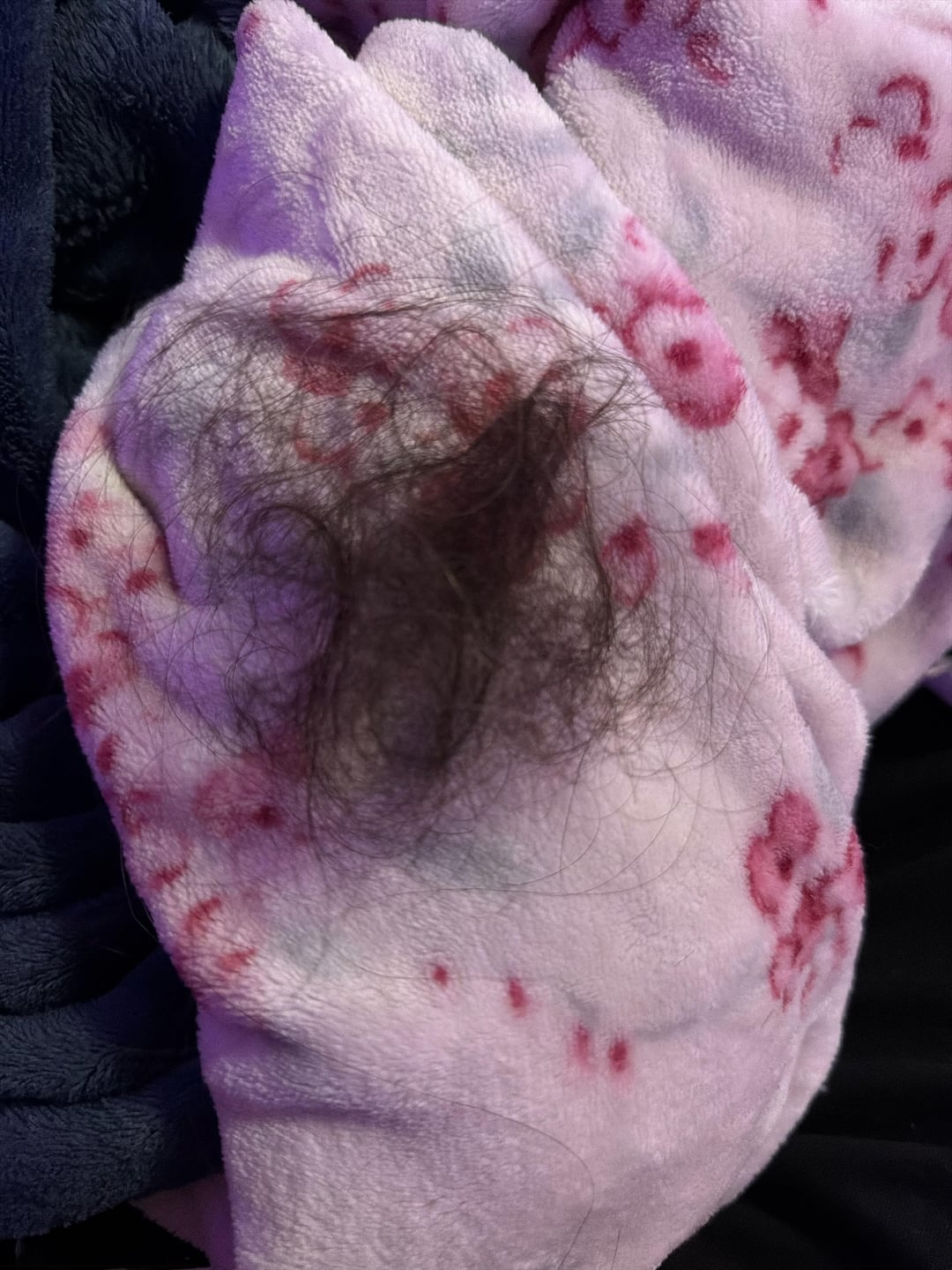
 Facebook ad: “Support healthy hair and bladder control every day”
Running for 43 days since September 20, 2026. Crush last saw it on November 2, 2026.
Run by Nutragrace on Facebook. Crush is not the advertiser and does not verify its claims. See this ad in Meta's Ad Library(opens in a new tab)
Make your own version of this ad
Crush makes it, launches it in your own Meta ad account, scales the winners and pauses the losers.
About this ad
- Meta Ad Library ID
- 1427074996082616
- Platforms
- Facebook, Instagram, Audience Network, WhatsApp and Threads
- Relaunches
- 0
Ad text
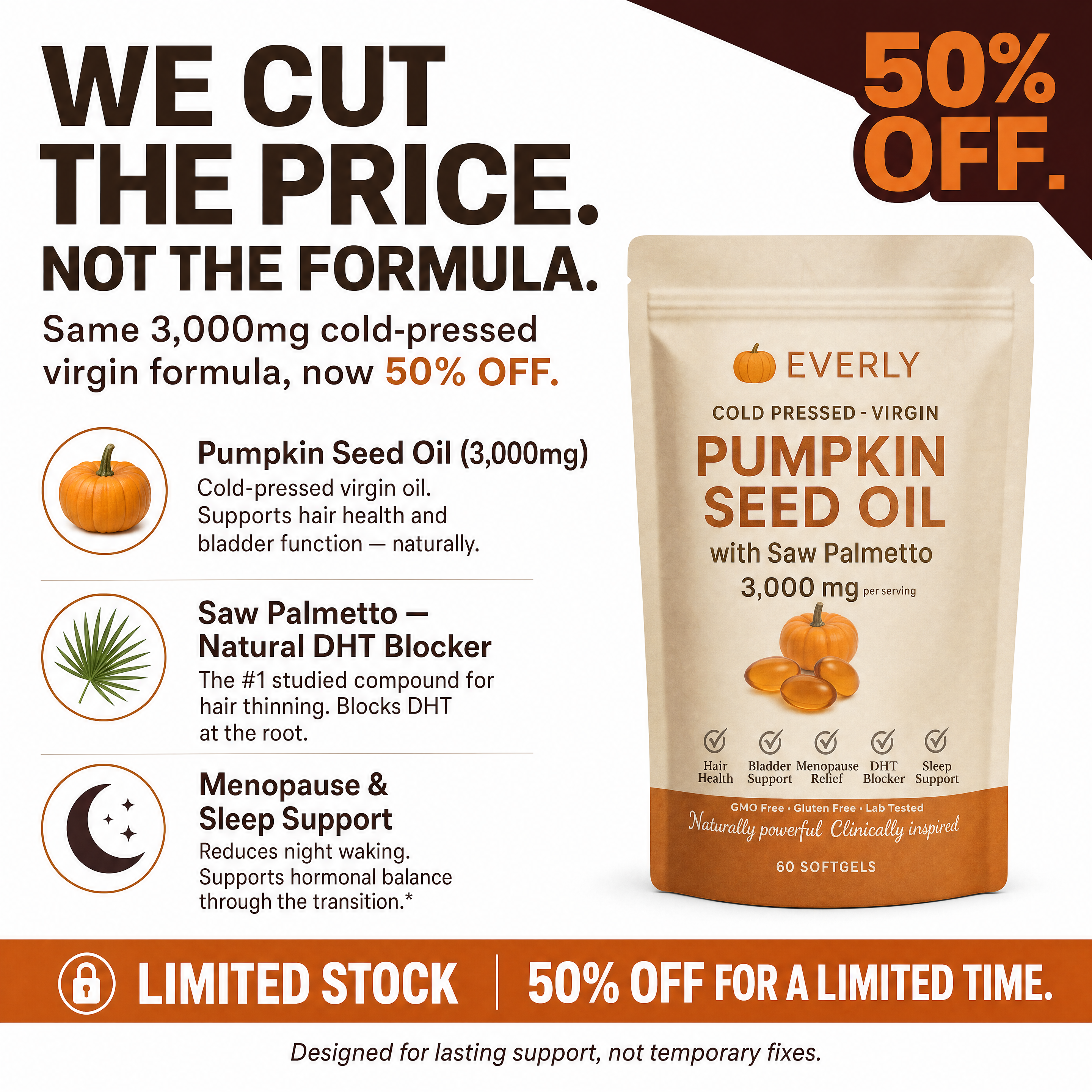
Amish women don't wear pads. They don't map out every bathroom between the house and the grocery store. They don't cross their legs when they sneeze. They don't keep a change of underwear in the glove box, just in case. And most of them have had six children. Some have had ten. I wouldn't have believed it either. I've been a pelvic floor physical therapist for 22 years. I've been taught what pregnancy and menopause do to a woman's bladder since before some of you had your first baby. Then I took a booth at the Green Dragon Farmers Market in Ephrata, Pennsylvania, and a 79-year-old Amish grandmother walked up to my table and made me question everything I thought I knew about why women leak. She wasn't there for me. She was buying lard from the stand next to mine. But she heard me explaining Kegels to a younger woman who'd driven forty minutes for advice, and she stopped, and she listened, and when I was done she said something I'll never forget. "My mother had eleven children and never leaked a day in her life. Neither did her mother. We don't do those exercises." I smiled politely. You do that when you're a clinician and someone says something that contradicts twenty-two years of training. Then she said the second thing. "It's the seeds. It's always been the seeds." My name is Diane Kessler. I'm 58. I've been a licensed physical therapist since 2003, specializing in pelvic floor rehabilitation in Wilmington, Delaware, and for the last three years in Lancaster County, Pennsylvania. I moved here because my daughter married a man from Lititz and because my husband Ray took early retirement from the school district and because the truth is, I needed to be closer to a bathroom than I wanted to admit. I want to be honest about that, because if you're reading this, you already know. It started the way it starts for most of us. I was 52. Perimenopause had been creeping in for a year. Hot flashes, the hair coming out in the shower drain in clumps that made me hold my breath, the sleep that stopped being sleep and started being something I just waited through. But the leaking is the one nobody talks about at the dinner table. The first time it happened, I was at Target. I sneezed in the cleaning aisle and felt it. Not a lot. Just enough to know. I stood there next to the Swiffer display and thought, oh. So this is happening now. Within six months it was every day. A cough. A laugh. Lifting a bag of groceries. Getting out of the car wrong. I started wearing pads. I'm a pelvic floor therapist. I teach women how not to need pads. And I was wearing them. I did my own exercises. Every morning, every night, the same protocol I'd been prescribing to patients for two decades. The same one that had a 70% improvement rate in the clinical literature I could cite in my sleep. It helped some. Maybe 30%. Enough to go from three pads a day to two. Not enough to stop planning. Not enough to stop the underwear in the glove box. Not enough to laugh without thinking about it first. Then the nighttime started. Two trips a night became three. Three became four. I'd lie in bed at 2 AM calculating whether I could hold it another twenty minutes or whether I needed to get up right now, and the calculation was always the same, and I'd get up, and I'd walk to the bathroom in the dark, and I'd sit there and think, I am fifty-four years old and I am a pelvic floor specialist and I cannot fix myself. Ray never said a word. He pretended to stay asleep. I pretended he was asleep. We're good at that. But I could see it in the mornings. The way he looked at me over coffee, trying to figure out if I'd slept, knowing I hadn't, not knowing what to say about it because I'd made it clear there was nothing to say. I went to my own doctor. A woman. Smart. Thorough. She said what they all say. "I'm going to start you on oxybutynin. Five milligrams. We'll see how you do." I knew what oxybutynin was. I'd been in rooms when it was prescribed a thousand times. I knew the mechanism. It's an anticholinergic. It blocks the nerve signals that make the bladder muscle contract when it shouldn't. That's the good part. The part in the brochure. Here's the part that isn't. The same nerve signals it blocks are used by every organ in your body. Your mouth. Your gut. Your eyes. Your brain. Dry mouth so bad you can't swallow bread without water. Constipation that turns a normal day into a planning exercise of a different kind. Blurred vision. And the fog. A mental fog that the research now links to a 50% increased risk of dementia in long-term users. I took the prescription. I filled it. I put the bottle on the counter next to my toothbrush and I took it every morning for fourteen months. I want you to sit with that. A pelvic floor therapist. Taking a drug she knew the risks of. Because she had run out of options. My mouth was so dry I kept a water bottle on the nightstand, in my bag, in the car, in the treatment room. I chewed gum between patients to produce enough saliva to talk. My gut slowed down so much I won't describe it. And the fog. I'd be writing a patient note and I'd stop in the middle of a sentence because the word I needed — a word I'd used ten thousand times — was gone. Just gone. Like somebody had lifted it out of my vocabulary while I wasn't looking. Did the leaking stop? Some. Maybe 40% improvement on top of what the exercises had given me. Enough to go from two pads to one on a good day. I was drier. I was also duller, thirstier, and slower, and I was losing my hair faster than before, which my doctor said was unrelated and which I have since learned was not unrelated at all. That's the drug I took for fourteen months. Now let me take you to that farmers market. The Green Dragon is open Fridays, spring through fall. It's an old-fashioned market in Ephrata, about twenty minutes north of Lancaster. Half the vendors are Amish. The other half are English, and they all know each other, and they all sell too much food and not enough of anything else. I'd rented a small booth to offer free pelvic floor screenings. I thought I was doing outreach. I thought I was helping. The Amish women walked past my booth all morning. Polite. Smiling. Not stopping. One stopped. The 79-year-old. Her name was Anna. She was buying lard from the man next to me and she overheard me and she said the thing about the seeds. I filed it where I file all of it. Folk wisdom. Home remedy. Right next to apple cider vinegar and cranberry juice and the forty other things patients tell me about every week. But Anna didn't file it. She stood there. "My husband is 83," she said. "He was getting up five, six times a night. It's the prostate, you know. Started the seeds, same as his father. Within a month, once. Maybe twice." I said that was wonderful. "My daughter-in-law had her seventh last year. She's 34. No leaking. Not after the first, not after the seventh. She takes the oil every morning." I said that was remarkable. "Come to the house," she said. "I want to show you something." I didn't go that Friday. Or the next. I went the third Friday, because she came back to the market and asked me again, and there was something in the way she asked that wasn't selling. It was showing. The way you'd show somebody a well that hasn't gone dry. The house was off a dirt road, past a covered bridge, up a lane with no mailbox. White clapboard. A barn twice the size of the house. Garden bigger than both. Anna's kitchen table was long enough for twelve and there were eleven people at it when I arrived. Four generations. A baby in a wooden high chair and an old man at the head of the table who turned out to be 87. She fed me, the way they do. There's no polite way to refuse, and after the first bite of pie there's no honest reason to. After dinner she took me out to the garden. Late September. The pumpkins were still on the vine, big and orange, but she walked past those. She stopped at a patch in the back corner, smaller plants, darker fruit, almost gray-green. "Styrian," she said. "The seed has no hull." She split one open with a knife. Inside, instead of the white-shelled seeds you'd scoop out of a Halloween pumpkin, there were dark green seeds, naked, no shell, slippery with oil. "That's the oil," she said. "In the seed. You don't have to crack anything open. God made it ready." She told me they press the seeds every fall after the first frost. Low heat. Slow. The oil comes out dark green, almost black, and it smells like roasted nuts. She told me every woman in her family takes a spoonful every morning. Has for as long as anyone can remember. Through every pregnancy, through every decade after, into old age. She told me the men take it too. For the prostate, for the kidney, for the hair that thins on top. She told me her mother-in-law died at 91 and never wore a pad in her life and had eight children and worked in the garden the morning she died. I said that was extraordinary. And then she said the thing that broke it open. "The doctors have a word for it now. They call it smooth muscle tone. The pill your doctor gave you — it shuts the muscle off. That's not tone. That's silence." She said it the way they say things. Plain. Looking at the pumpkin in her hand, not at me. "The seed doesn't shut anything off. It feeds the muscle. Makes it strong enough to hold on its own. The way it was supposed to work before the hormones left." I drove home with a jar of cold-pressed oil on the passenger seat and a head full of things I needed to look up, because an 87-year-old man had just gotten up from dinner and walked to the barn without a bathroom stop, and a 34-year-old woman with seven children had laughed at the table hard enough to cry and hadn't flinched, and I was the only one at that dinner wearing a pad. That night, after Ray went to bed, I sat down at the kitchen table with the laptop and the PubMed login and I typed two words. Pumpkin seed oil. I want to tell you I was looking for the debunk. The one poorly designed study, the one folk-remedy website, close the laptop, take the oxybutynin, go to bed. That's not what I found. I found 340 published studies. Urology journals. Gynecology journals. Phytotherapy research. Clinical trials from Germany, from Japan, from Korea. I'd been a pelvic floor therapist for 22 years. I'd read every study on Kegels, electrical stimulation, biofeedback, pessaries, and surgical slings. I thought I knew the literature. Nobody had ever once shown me a study on pumpkin seed oil. Let me tell you what I found, the way I finally understood it, because it's the part that changes everything. There's a reason women leak. It's not weakness. It's not damage. It's not "just what happens after kids." It's a hormone. When estrogen drops — and it drops off a cliff during menopause — the smooth muscle tissue in the pelvic floor and bladder loses its tone. Not its strength. Its tone. The quiet, constant holding tension that keeps everything closed without you having to think about it. That's why Kegels help some but don't fix it. Kegels train the voluntary muscle. The squeeze you can do on purpose. But the holding — the thing that keeps you dry when you sneeze, when you cough, when you laugh, when you're asleep — that's involuntary. That's the smooth muscle. And it runs on hormones the body stopped making. Oxybutynin doesn't fix the tone. It paralyzes the bladder muscle entirely so it can't spasm. That's why the leaking slows down. It also slows down everything else the nerve touches, which is why your mouth goes dry and your gut stops and your brain fogs. It's a chemical silence, not a fix. And when you stop taking it, everything comes back, because nothing was ever actually stronger. It was just quiet. Now the seeds. Pumpkin seed oil contains a compound called Delta-7-sterine. It's a phytosterol — a plant compound that mimics the effect of the hormones the body stopped making. Not estrogen. Not testosterone. Something between. Something that reaches the smooth muscle tissue of the pelvic floor and the bladder sphincter and says, hold. That's not a metaphor. That's the mechanism. Published in the Journal of Traditional and Complementary Medicine, replicated in Urologia Internationalis, confirmed in a randomized double-blind trial from Japan that showed a 39% reduction in urinary urgency and a 68% improvement in nighttime urination in postmenopausal women. But that's only the first thing it does. The oil is rich in zinc and specific fatty acids that block an enzyme called 5-alpha-reductase. That's the enzyme that converts testosterone to DHT. DHT is the reason your husband gets up four times a night. It's what swells the prostate until it squeezes the urethra like a fist. It's also the reason your hair is thinning. Same enzyme. Same conversion. Different tissue, same damage. Block the enzyme, and the prostate pressure drops. The hair stops falling. The follicle wakes back up. I'd been losing hair for three years and my doctor told me it was perimenopause and "normal." It was DHT. The same thing. And then the kidneys. The oil is one of the strongest natural anti-inflammatories in the literature for renal tissue. It reduces proteinuria — protein in the urine, the marker that something's gone wrong with the kidney — in multiple animal and human studies. One oil. Three problems my patients had been bringing to me for twenty years. And I'd never once heard of it in a classroom, a continuing education course, or a single one of the forty medical conferences I've attended. An Amish grandmother told me in a pumpkin patch. I stopped the oxybutynin cold. My doctor knew. I told her I was going to try something for twelve weeks and I wanted her to monitor me. She gave me the look. The one clinicians give other clinicians who've gone to the farmer's market and come back with ideas. "Twelve weeks," she said. "But if it gets worse, you call me." The jar of oil Anna had given me was enough for about three weeks at a tablespoon a day. I started the next morning. Straight off a spoon, chased with coffee. It tasted like roasted pumpkin seeds, which is exactly what it was. Week one: nothing. My mouth was already getting wetter now that the oxybutynin was clearing out, but that was the drug leaving, not the oil arriving. Week two: nothing I could measure. But I slept until 3 AM without getting up, which hadn't happened in two years. I noted it and didn't trust it. Week three: I sneezed in the kitchen and didn't feel anything. I stood there with the pepper grinder in my hand and I waited for the leak and it didn't come. Then I laughed, and that was dry too, and I put the pepper grinder down and I stood at the counter and cried, which is a stupid thing to do when you're trying to prove that you don't leak anymore. Week four: Ray noticed before I said anything. He said, "You slept last night." I had. One trip to the bathroom, at 5 AM, and then back to sleep until the alarm. One. After four years of three, four, five. Week five: the oil ran out. Three weeks of hand-pressed oil from an Amish kitchen doesn't last. I knew that when I took it. I wasn't going back to that family's house with my hand out. They'd given me what they had. That jar was from their own supply. So I went looking. Anna had told me what to look for. Styrian pumpkin. The hull-less variety. Cold-pressed. Never heated past the point where the compounds break down. "Heat kills it," she'd said. "Same as the beet, same as the herb. God put it in there cold and it has to stay cold." I checked the pharmacy first. Then Amazon. Then the health food store in Lancaster. Every pumpkin seed oil I found was one of two things. Either it was a cooking oil — refined, heated, stripped of the compounds that matter — or it was a capsule made from commodity pumpkin seed, the hulled kind, the kind you buy in a bag at the gas station, spray-dried and pressed into a gelatin shell with no assay and no certificate. I read nineteen labels in three nights. Not one of them said Styrian. Not one of them said cold-pressed below a specific temperature. Not one of them had a third-party test result on the website. And then I found Everly. Everly Pumpkin Seed Oil Softgels. Cold-pressed. From Styrian pumpkin seeds — the hull-less variety, the one Anna's family grows. Extracted at low temperature to preserve the Delta-7-sterine, the zinc, the fatty acid profile. No fillers. No commodity seed mixed in. Third-party tested, with the results available. I ordered it that night at the kitchen table with the laptop and the PubMed tabs still open. Two softgels every morning with water. Same spot next to the coffee where the oxybutynin used to be. Week six from the first spoonful of Anna's oil, week one on the softgels: the gains held. One bathroom trip a night. Dry during the day. I was watching closely because the oil had run out and I wanted to know if the capsules would keep what the jar had started. They did. Week eight: I looked at my brush after my morning routine and counted the hairs. Fourteen. I'd been counting since the shedding started. Three months before, the count was sixty to eighty. Every morning. Sixty to eighty hairs on the brush, in the drain, on the pillow. Fourteen. Week ten: Ray looked at me at dinner and said, "Your hair looks thicker." I said it was the same hair. "It's not," he said. And he was right. Week twelve: I went in for the check. My doctor ran a full urinalysis, a hormone panel, and — at my request — a kidney function test, because I'd been reading the studies on renal inflammation and I wanted to see. Here's the sheet. Post-void residual urine: 12 mL. Normal is under 50. Before the oxybutynin, mine had been 94. Urinary frequency: from 11 times per day to 6. From 4 times per night to 1. Kidney function (eGFR): 92. Healthy range. It had been 78 fourteen months earlier and trending in a direction nobody had mentioned to me. My doctor looked at the numbers. Then she looked at me. "What did you do?" I said, "Pumpkin seed oil." She didn't reach for the pad. She scrolled back through my chart to the visit fourteen months ago when she'd written the oxybutynin script. She looked at those numbers, then these numbers, the way you'd look at two photos of the same woman a decade apart. "And you stopped the oxybutynin entirely?" I said I did. Week one. She was quiet for a long time. Then she said, "Your brain fog. Did that clear?" It had. I hadn't listed it because I'd gotten used to it. The words were back. The patient notes came easy. I could read a journal article and retain it the way I used to, before the drug took a piece of every thought and held it just out of reach. "Keep doing what you're doing," she said. "I'm noting it in the chart." That's as far as she went. She's a careful doctor. She watched the numbers and the numbers told her what to do. Ray started taking Everly the same week I got my results. He'd been getting up twice a night himself. Not a bladder problem. A prostate problem. The swelling that comes after 55, the one his doctor said was "just age" and handed him a prescription for tamsulosin that made him so dizzy he stopped taking it after a month. Within three weeks, he was sleeping through the night. One trip, sometimes none. His doctor didn't believe it until the ultrasound showed a 22% reduction in prostate volume. Then he believed it. Now. Here's what a real pumpkin seed oil has to do. I didn't get this from a textbook. I got it from a jar in a kitchen and then I proved it in a journal, and then I proved it on myself. It has to feed the smooth muscle. Not silence it. Not paralyze it. Give it back the tone the hormones took away. It has to block DHT. The enzyme that swells the prostate and kills the hair follicle. Block it at the source. It has to reduce renal inflammation. Quietly, without touching the drugs your doctor has you on, without interfering with anything else. It has to be from the right seed. Styrian. Hull-less. The variety with the compound profile that makes all of this work. Not the commodity seed with the thick white shell and half the medicine bred out of it. It has to be cold-pressed. Below the temperature that destroys the Delta-7-sterine. If it was heated to speed up production, the compound is dead before the capsule is sealed. Five things. All five. In one softgel. Everly is the only one I've found that does all five. That's not me being loyal. That's me having checked nineteen labels, called six companies, and read the assay data on every pumpkin seed oil product I could find. I've been on Everly for eleven months now. Nothing else for the bladder. Nothing else for the hair. I threw the pads away at month four. I don't have them in the house. I don't have them in the glove box. I don't have them. My hair is the thickest it's been since I was 48. Ray's barber asked him what he was doing differently. He said, "My wife's got me on seeds," and the barber laughed, and Ray let him laugh because the mirror was doing the talking. And Anna. I saw her at the market last month. She asked after Ray. I told her he was sleeping through the night. She nodded like that was the least surprising thing she'd heard all week. I want to say something about why nobody told you this. Because I know what it feels like to find out late. Nobody hid it. Nobody looked. A company can patent a drug. Nobody can patent a pumpkin seed an Amish grandmother has been pressing in her kitchen for four generations. So nobody ever spent the money to run the kind of trial that gets a drug rep into your doctor's office with lunch and a pamphlet. There's no villain in this story. There's a nerve signal, and a drug that shuts it off, and a symptom everyone watches, and an organ that's slowly losing its strength where no one can see it. And one family that kept the thing that feeds it. Here's how to get it. Everly Pumpkin Seed Oil Softgels. Direct from the link below. Every batch is third-party tested. I read the certificate before I ordered. You should too. Two softgels every morning with water. Next to the coffee. I know that spot. I put something else there for fourteen months. https://get.shopeverly.shop/pumpkin-seed-oil/subtxt/mm-sht-ps — Diane K., DPT Licensed Physical Therapist, 22 years Lancaster County, PA --- P.S. About the oxybutynin. I made my own decision, my own way, with my doctor reading my numbers at every step, and I'm a clinician, so I insisted on it being done exactly that way. Coming off an anticholinergic on your own can cause rebound symptoms. Take this to your doctor, ask for a follow-up in eight to twelve weeks, and make the call together. That decision belongs to you and your doctor. P.P.S. You don't have to come off anything to start. I didn't stop the oxybutynin because I started the oil. I stopped it because of what it was doing to my brain. The oil works alongside whatever your doctor has you on. It doesn't interfere with anticholinergics, with tamsulosin, with finasteride, or with any of the standard prescriptions. It works on a completely different pathway. The drug shuts the signal off. The oil feeds the muscle. They don't talk to each other. P.P.P.S. Week one, nothing. Week two, nothing. I'm telling you now so you don't quit. This isn't a drug that hits in an hour. It's a seed oil rebuilding smooth muscle tone that took years to lose. My first sign was a sneeze at week three. My first clear lab sheet was week twelve. Give it the twelve weeks. Then get the numbers and let the paper do the talking. P.P.P.P.S. I took oxybutynin for fourteen months. I went through dry mouth, constipation, brain fog, and the knowledge that I was increasing my dementia risk every morning I swallowed it. Not once did anyone offer me a refund when the leaking was still there on a bad day. That's not how it works with a drug. You keep paying, they keep renewing the script. Everly gives you a money-back guarantee. One round of wearing white pants to the grocery store is all it takes to know. Either you stopped planning your day around a bathroom, or you send it back. P.P.P.P.P.S. This is for the women who've been told it's "just part of aging." It's not. It's a smooth muscle that lost its fuel, and it can get it back, and an 87-year-old Amish man and his 79-year-old wife and their 34-year-old daughter-in-law with seven children are the proof that it was never supposed to happen in the first place. Not at 50. Not at 60. Not at 79. https://get.shopeverly.shop/pumpkin-seed-oil/subtxt/mm-sht-ps
Where the ad sends people
get.shopeverly.shop
Support healthy hair and bladder control every day
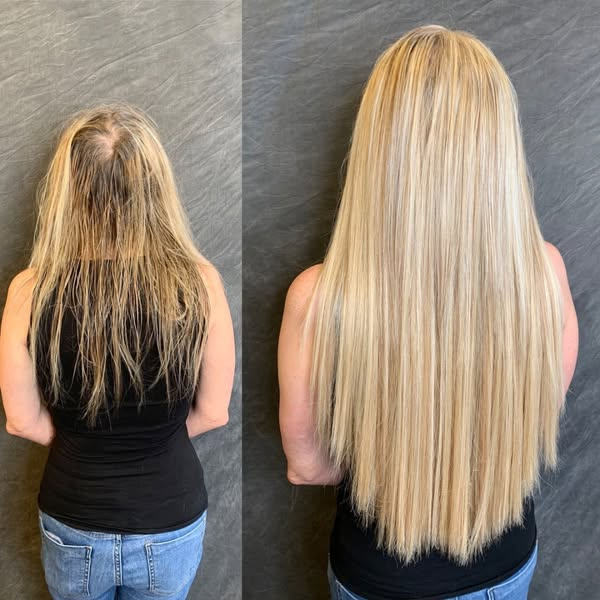
"I've been taking this for three months. I used to pull out handfuls every time I washed my hair. Now I barely shed at all, and my stylist actually asked me what I changed. My part looks fuller than it has in years."
Learn more: get.shopeverly.shop(opens in a new tab)