
Inactive· since Sep 10, 2026
- 7
- days it ran
- 0
- relaunches
Ad copy
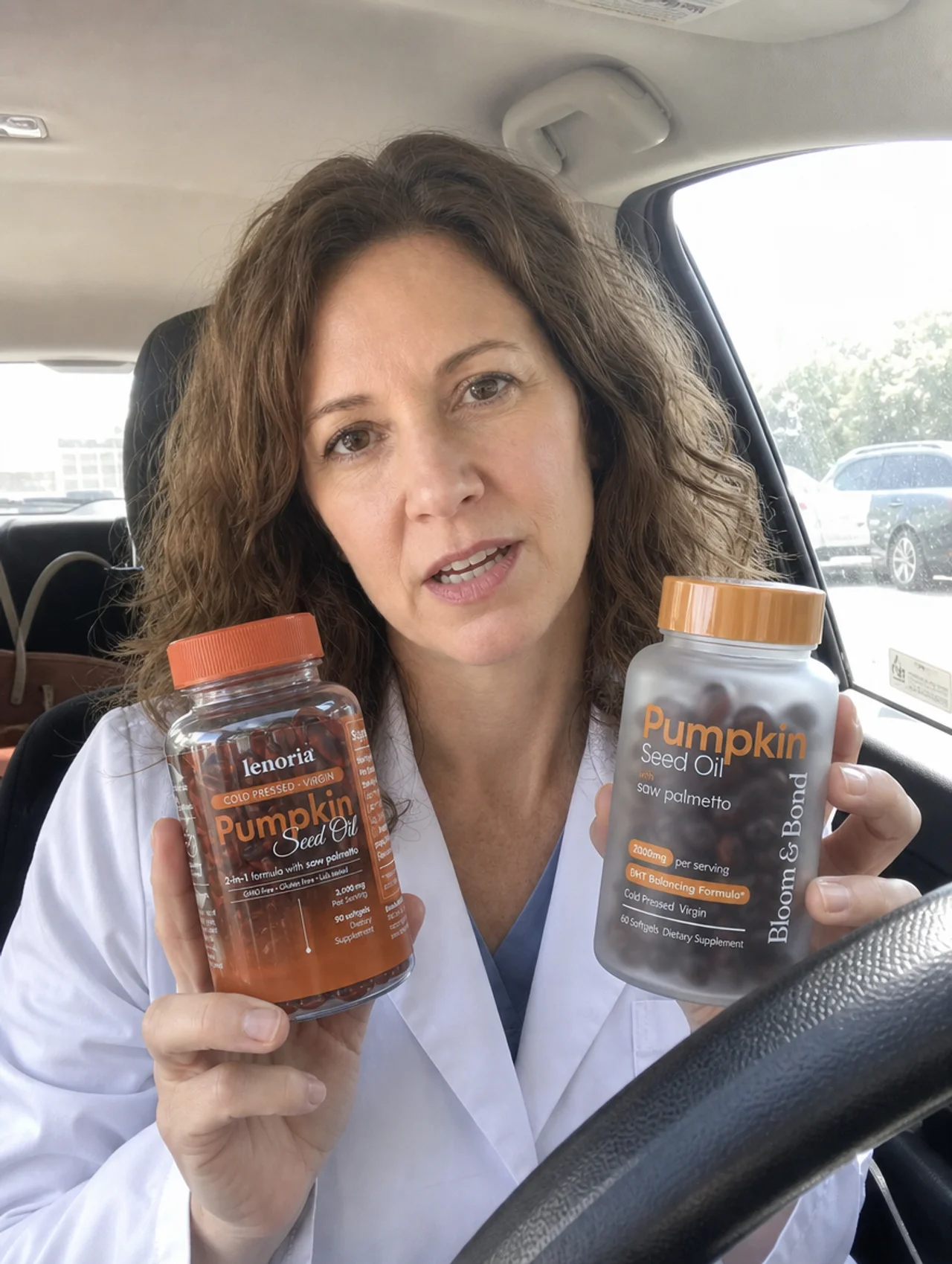
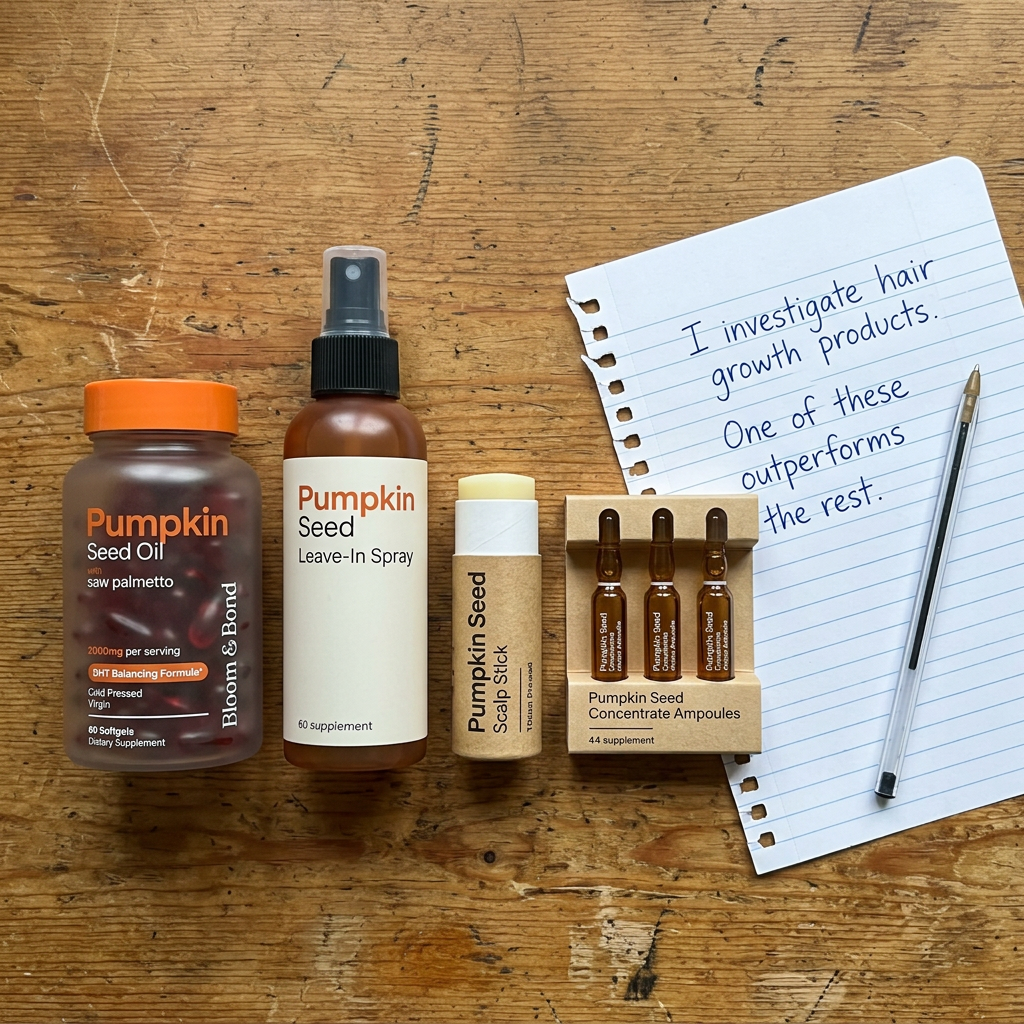
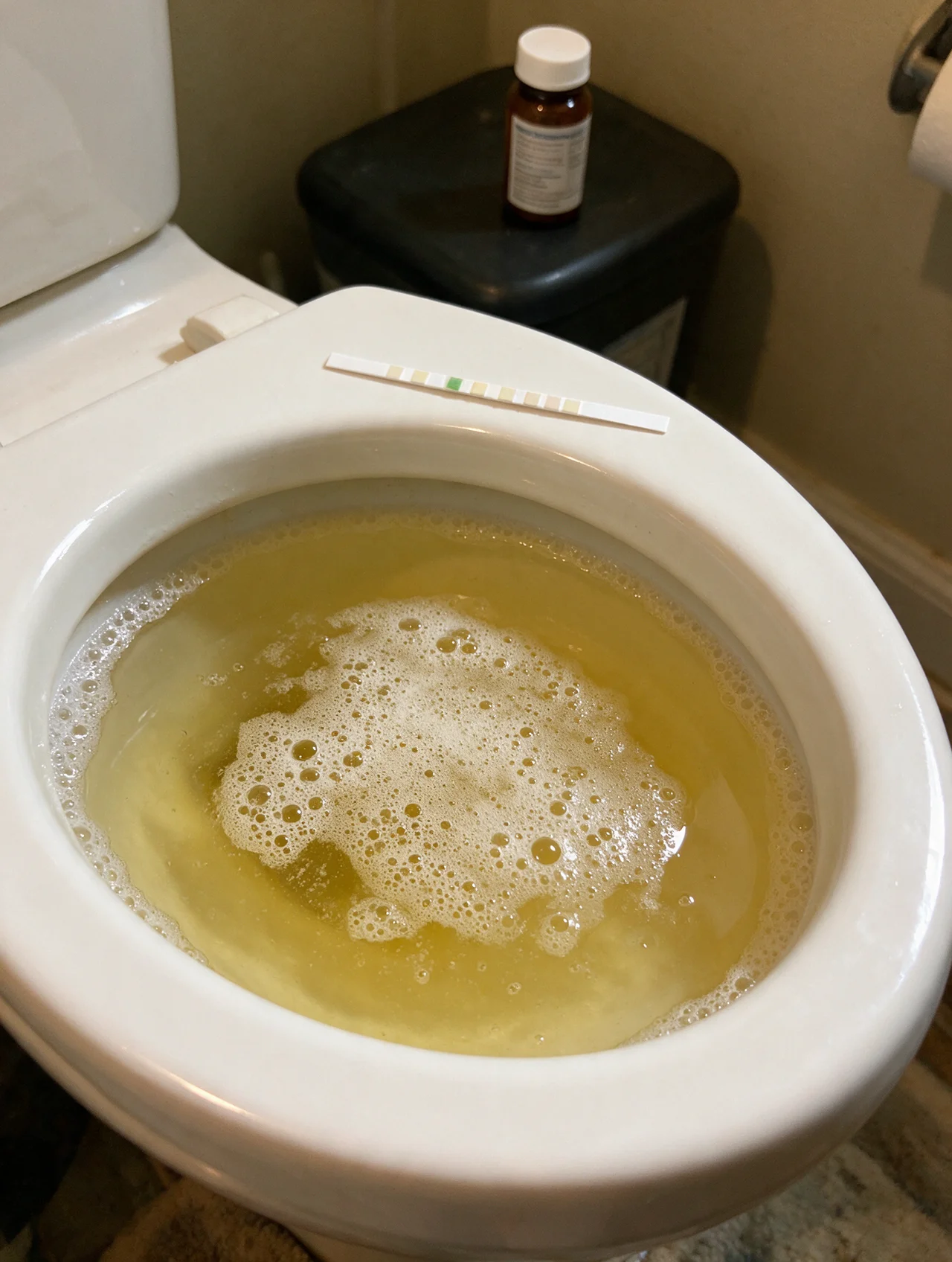
I run 20 urine dipsticks a day for a family practice, and the morning I saw foamy urine in my own toilet, I did what I tell patients never to do. I Googled it. My name is Renee. I am 53. I have been a medical assistant at the same family practice for 27 years, twelve of them beside the same doctor. I room the patients. I take the blood pressure. I hand you the cup and recite the clean-catch instructions without hearing myself say them any more. And I run the strips. If you have never seen one, a urine dipstick is a strip of plastic with ten little coloured squares on it. You dip it, you wait, you hold it against the chart on the side of the bottle. One of those squares is protein. I have held that strip against that chart something like a hundred thousand times. By the end of this you are going to understand three things. One. If you have been looking at foam in the toilet and reading it the way Google reads it, you have been reading it wrong. Two. The strip in a doctor's office says protein to women our age for a reason nobody in the room explains, because most of the people in the room don't know it either. I didn't. Three. The thing that was actually causing my foam is the same thing that had been waking me up three times a night for two years. And nobody was treating that one at all. Here is why the foam frightened me more than it would frighten you. My mother's kidneys failed when she was 61. The first thing anyone noticed, years before, was her urine. She used to say it looked like somebody had poured dish soap in the bowl. She told her doctor. She was told to drink more water. By the time anybody took it seriously she was on a machine three afternoons a week, and I was 26, sitting in the waiting room of a dialysis unit with a college prospectus on my lap, deciding to work in medicine. So I know what real foam looks like. I have known for thirty years. Let me tell you about my days, because my bladder was running them long before the foam turned up. The practice opens at eight. I am on the floor from 7:30 until 4, and the floor does not let you leave it. Patients back to back, twelve minutes each. If I walk off to the staff bathroom, somebody sits in a gown waiting for a blood pressure that isn't coming, and Dr. Kessler comes out looking for me. So about six years ago, without ever deciding to, I stopped drinking water on shift. Not less. Stopped. A coffee at six. Nothing until I got to the car. Because my bladder had started doing the thing yours may be doing. Nothing, then emergency. No warning any more. I go from fine to running in about ten seconds, I arrive at the bathroom door absolutely bursting, and half the time there is barely anything there. I count. Around twenty trips a day. Up three times a night, four on a bad one. I have a bag in my locker with a spare pair of everything. Nobody at work knows why. And I am the woman who hands you the cup. Four months ago, on a Tuesday, I looked down before I flushed. I don't know why that morning. Foam. A layer of small white bubbles sitting on top of the water, and they did not go anywhere. I flushed. I came back after I had made the coffee and looked again. I looked the next morning, and the next. I checked the toilet at work. The staff bathroom has not seen a cleaning tablet in the entire time I have worked there. Foam. I checked the toilet at my sister's. Foam. It was not the cleaner. I had wanted very badly for it to be the cleaner. So at five in the morning, on the edge of the bath, I Googled foamy urine. And I got the three answers every woman gets. Infection. Too much protein in your diet. Kidneys. I would have laughed at a patient for doing what I did next. I went into the supply closet at work, took one strip out of the bottle, and put it in my scrub pocket. I dipped it at home the next morning. The protein square went green. Trace. I dipped again the morning after. Trace. Then one morning it was a shade darker, and the chart said one plus, and I stood in my own bathroom with my hand shaking, holding a thing I have held a hundred thousand times. That day I got to work early, ran my own sample through the analyser before anybody was in, and roomed four patients with my own printout folded in my scrub pocket. Blood pressures. Weights. "The doctor will be right with you." Trace protein, in my pocket, in the same font as everybody else's. I showed Dr. Kessler at lunch. Twelve years beside him. He looked at it for about four seconds. "You're dehydrated. Drink more water. I'll send it out and we'll monitor it." I have heard him say that sentence to five hundred women. I have written it in five hundred charts. Monitor. I didn't believe him either. So I did everything. Everything I would tell you to do. I cut protein, because Google said protein bars, and I had been living on them since my daughter left home. Six weeks. Foam. I threw out the toilet cleaner, even though I already knew. I tried the water. I drank a litre before seven one morning and paid for it on the floor all day. Sprinting. Arriving bursting. Barely anything there. Dr. Kessler coming out looking for me twice. By Thursday I was back to a coffee at six and nothing until the car. And I kept dipping. I stopped counting at thirty-one strips. The lab result came back on a Friday. Protein: negative. Culture: no growth. And under microscopy, a line I have read on hundreds of women's reports and never once thought about. Squamous epithelial cells, many. Probable contamination. Dr. Kessler read it, said "well, that's good," and told me if the foam was still bothering me I could see a urologist. He wasn't worried. He could not explain the bubbles and he wasn't worried. I had just been told, by my own practice, that the thing I could see every morning wasn't there. The next Monday I sat in my car in the practice lot at five past seven, before the doors were unlocked, and I did not cry. I was very still. Because the annual staff screening was in thirty days. Bloodwork, and Dr. Kessler is thorough, so a urine albumin-to-creatinine ratio as well. A number I have run on other people for twenty-seven years. And for the first time in my life I was afraid of it. Then a Wednesday. Room three. A 58 year old woman in for a follow-up. Her urinalysis from the week before was clipped to the chart. I had run it. Trace protein on the strip. Lab: negative. Culture: no growth. Squamous epithelial cells, many. She had come in because it felt like an infection and kept testing clean, because she was up four times a night, and because she had seen foam. I took her blood pressure and stayed in the room, which I don't usually do. And Dr. Kessler explained it to her. Not to me. To her. Slowly, the way he does when he has the time. He said the tissue that lines the urethra and the vagina runs on estrogen, and after menopause it thins, and thin tissue sheds cells. Those cells end up in the cup. The strip in his office reads them as protein, because the strip is a crude thing. The lab, under a microscope, sees the cells for what they are and calls it contamination. He said her urine was concentrated because she had been rationing water to cut the trips, and concentrated urine turns the protein square on its own, and it irritates that thin lining, which makes the trips worse. He said the bladder underneath all of that had become irritable. It was telling her to go when it was nowhere near full. That was the no-warning. That was the four times a night. That was arriving at the door bursting, and a bursting bladder empties hard, and a hard stream hitting the water makes foam. He said, most of the foam I see in women your age is the stream and the concentration. It isn't the kidneys. Your kidneys are fine. The lab proved it. Then he said, "the frequency is the thing to deal with," and stood up, and left. I was holding the blood pressure cuff. I did not move. He had just described me. To somebody else. Every line of it. I want to put it the way I finally understood it, because once I saw it I could not stop seeing it in every report I ran. There are two things wrong, and they show up in two places. ⚠️ The tissue. Estrogen goes, the lining thins, it gets dry and easily irritated and it sheds. That is the burning that tests negative. That is the cells in the cup. That is the strip going green in a doctor's office and the lab saying no. ⚠️ The signal. The bladder wall starts squeezing when it has no reason to, and the nerves that are supposed to tell you you're full fire early. That is the no-warning. That is twenty trips ending in barely anything. That is three times a night. And that is why you arrive bursting and empty like a hose, and why there is foam in the bowl. The foam and the three o'clock wake-ups were one problem showing up in two places. I had spent four months treating them as two. The woman in room three saw my face. I was unhooking the cuff. She said, "honey, I've had that for six years." And then she told me what she takes. Bloom & Bond. Pumpkin seed oil and saw palmetto. I laughed. Out loud, in room three. My husband Dave takes saw palmetto for his prostate. I have never had one of those. She said, read it before you decide it's for men. I did what I always do. I read the label. Pumpkin seed oil. So I bought the pumpkin seed oil in the drugstore aisle, because it was fourteen dollars and I can read a label as well as anyone. Two months. The alarm was maybe a little quieter. Maybe. I decided the whole thing was a placebo for women who had given up. Then I read hers properly, on my phone in the car, and understood what I had done. The drugstore bottle was one ingredient. Pumpkin seed oil works on the tissue side. Its fatty acids and vitamin E support irritated, thinned lining, its magnesium helps the bladder muscle relax instead of clenching, and its plant lignans give estrogen-starved tissue a gentle plant-based nudge without being a hormone. That is the first problem. It does nothing for the second. Saw palmetto is the signal side. Its fatty acids help quiet the receptors that tell the bladder muscle to squeeze, and settle the nerves that keep firing the false alarm. And it turns out there is a trial of it in women over fifty, not men, twelve weeks, placebo controlled, with fewer daytime trips, and in the women who also leaked, fewer wake-ups. I went and read it, because I am the person who reads things. One calms the tissue. One calms the alarm. Bloom & Bond puts both in one softgel, cold-pressed oil rather than heat-processed, a tested extract rather than ground berry powder. Two softgels in the morning. Nothing to remember at eleven at night. I had not been wrong about the ingredient. I had been sold half of it. I ordered it because they do a money-back guarantee, which after the drugstore bottle was the only reason I ordered anything. I kept everything else the same. Coffee at six. No cleaner. Still dipping. ✅ Weeks one and two, nothing. I want to say that plainly, because I nearly stopped. ✅ Around week three the door alarm was quieter. I got my scrubs down before it started shouting. If you know, you know. ✅ Week five I counted two wake-ups. Two. I assumed it was a fluke week. Then the next week was two as well. ✅ Week seven I did something I had not done in six years. I drank a bottle of water at my desk at ten in the morning, and I got through to lunch. I wasn't sprinting, so I wasn't arriving bursting. And because I was drinking, the bowl started to look different. ✅ Week eight I looked down and it was just water. Not always. Most mornings. ✅ Week ten I realised I had not dipped a strip in nine days. I had not decided to stop. I had just stopped looking. The screening came. Albumin-to-creatinine ratio: normal. It was always going to be normal. I want to be honest about that, because I have been lied to enough. The softgel did not touch my kidneys. There was never anything wrong with my kidneys. What was different was that I walked into that screening having drunk a whole bottle of water on the drive in, and it did not cross my mind until I got there. Now let me tell you what this is not. It is not a cure and it is not a drug and it did not fix me. I still know where the bathroom is. It is not a kidney treatment, and if you take one thing from a woman who has run a hundred thousand strips, take this. If your foam sits on the water like the head on a beer and does not move, if your ankles swell, if there is blood, if you have diabetes or high blood pressure, that is my mother's door. It is a real door. Go through it. Get the albumin test and look a nephrologist in the face. But if you have been tested, and it was clean, and somebody said drink more water and monitor it, and you are still looking down every morning, and you are still up three times a night, then I think you are where I was. Two problems in two places, and only one of them anybody was even looking at. It took weeks, not days. Bodies are different. Talk to somebody before you add anything, especially if you are already on a bladder medication. I want you to picture a morning where you flush without looking. I want you to picture drinking water at your desk at ten because you can. I want you to picture a night in one piece. And I want you to picture filling in a screening form with your hands still. I did not think I was getting any of that back. There is a bottle of strips in the supply closet at work that I have not opened in two months. If you are dealing with any of this: → Foam you keep checking for before you flush → A strip that said protein and a lab that said no → Told it's dehydration by someone who has never worked an eight-hour floor → Up two, three, four times a night → Twenty trips a day and barely anything there → A feeling like an infection that keeps testing clean → Rationing water to survive your own day → Decided somewhere in the last year that this is just what you are now Then read the two-problems part again, and then read this. 👉 https://trybloomandbond.com/pages/menopause-bladder Give it more than two weeks. That is my whole piece of advice. If it does nothing for you, you send it back and you are out nothing but the time. Renee P.S. The strip and the lab. If a strip said protein and the lab said no, you were not imagining it and the strip was not lying. It was reading your lining, not your kidneys. Nobody explained that to me in twenty-seven years of running them. I am explaining it to you. P.P.S. You do not have to stop anything you are on. I didn't. This goes alongside it. P.P.P.S. If you already tried pumpkin seed oil from a drugstore and it did almost nothing, you were not wrong about the ingredient. It was working alone. That was the single thing I got wrong for two months. P.P.P.P.S. My mother. I have not mentioned her to be dramatic. I mentioned her because for thirty years foam in a toilet meant one thing to me, and it was the wrong thing, and it cost me four months of looking into a bowl. If yours is her kind, please go. If it is my kind, I hope you get your mornings back.
Like this ad? Make it yours.
Crush rebuilds this exact creative around your product — your brand, your colors, your offer — in about a minute.