Anna Hayes
 Facebook ad: “Please read this if you are a parent or a grandparent”
Ran for 2 days, from October 22 to October 24, 2026, the last day Crush saw it.
Run by Anna Hayes on Facebook. Crush is not the advertiser and does not verify its claims. See this ad in Meta's Ad Library(opens in a new tab)
Make your own version of this ad
Crush makes it, launches it in your own Meta ad account, scales the winners and pauses the losers.
About this ad
- Meta Ad Library ID
- 1435200728599709
- Platforms
- Facebook, Instagram, Audience Network and Threads
- Relaunches
- 2
- Niche
- Education & Courses
Ad text
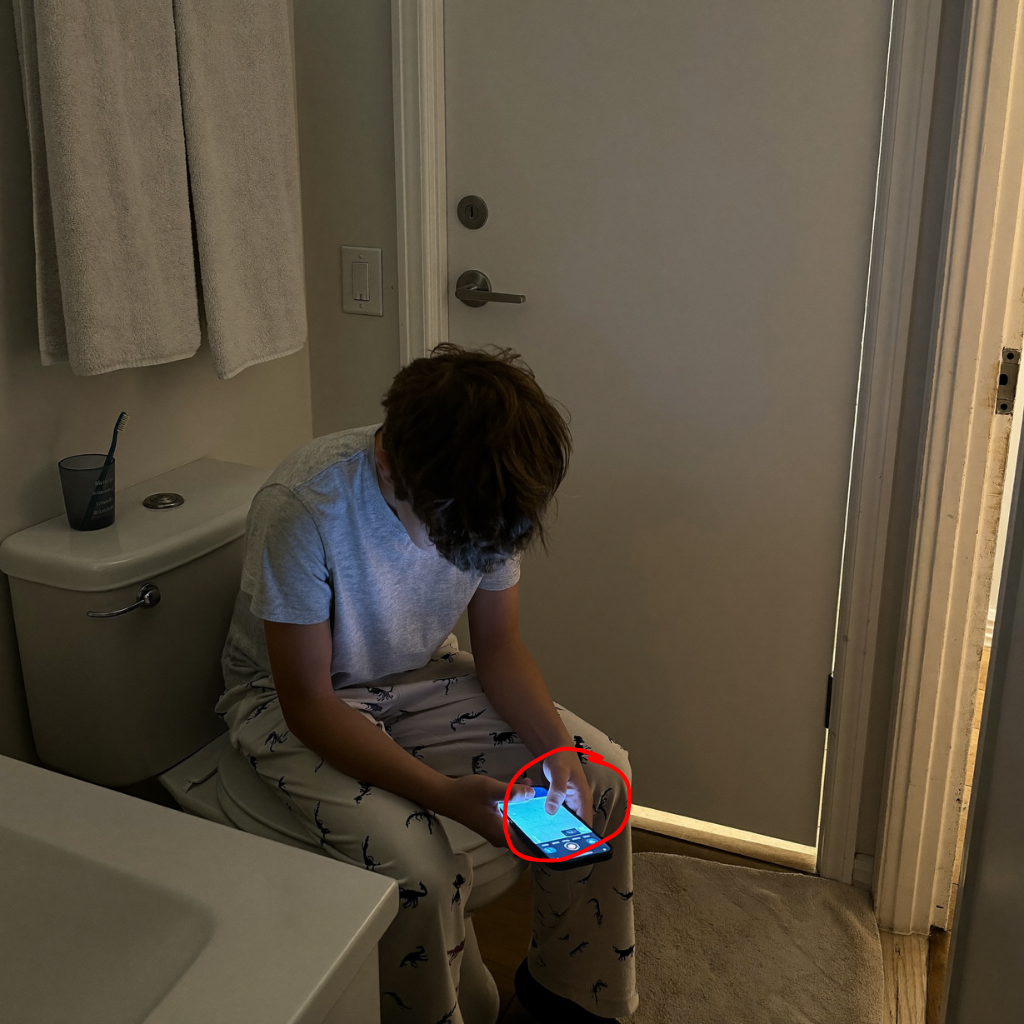
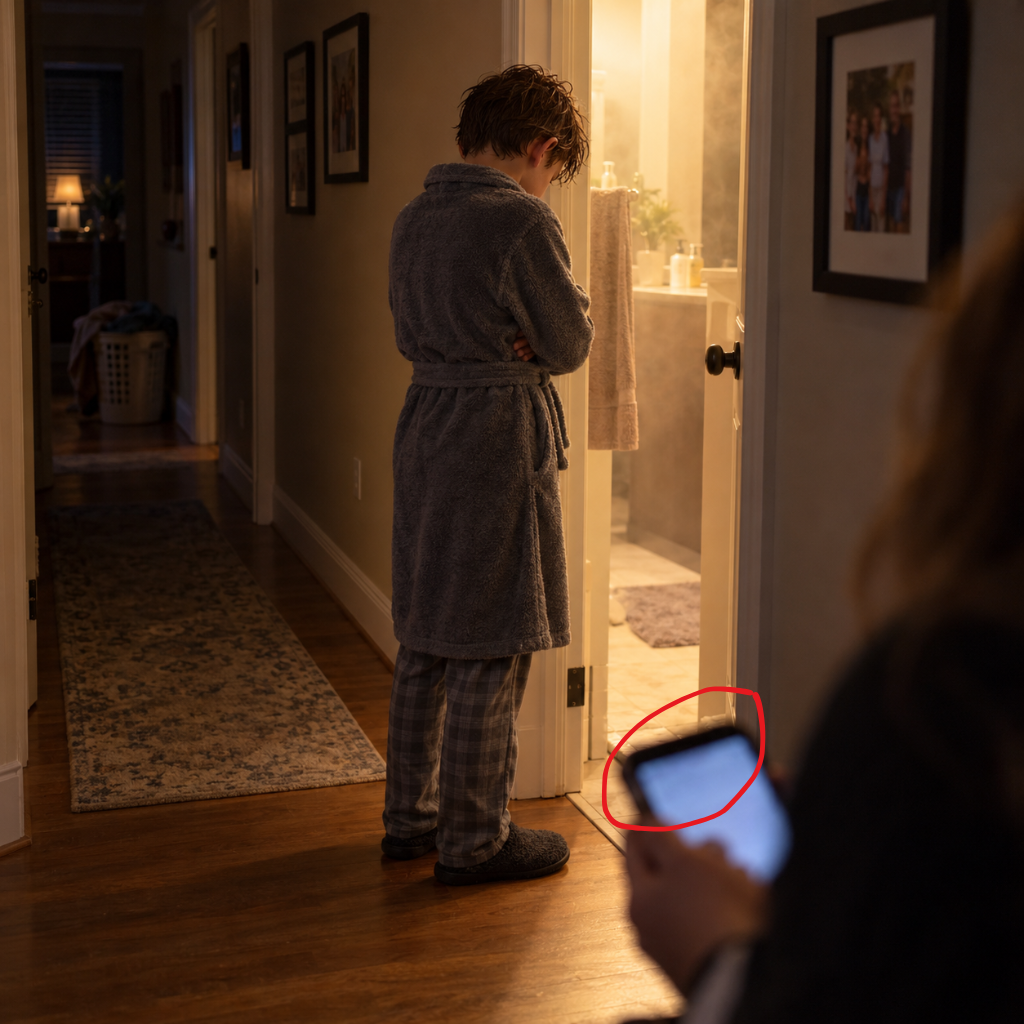
At 9:47 on a Tuesday night, my son's phone buzzed on the kitchen counter. Then it buzzed again. And again. Eleven times in less than a minute. He was in the shower. I picked it up to turn it face-down, the way I always do. The notification on the lock screen said: "Leo's Fan Club 🤡 — 14 new messages" Leo is my son. He's eleven. --- We have a rule in our house. Phones stay in the kitchen after nine, and I know the passcode. I'd never once used it. I used it that night. The chat had twenty-three kids in it. Almost his entire grade. The first thing I saw was a photo of Leo eating lunch, taken from across the cafeteria. Someone had drawn a pig nose on him. Underneath it, nine laughing emojis. Then a video of him tripping in gym class. Slowed down. Someone had added a cartoon "boing" sound effect. Forty-one reactions. Then a poll. I won't tell you what the poll asked. I'll just tell you that thirty kids voted. I kept scrolling. My thumb was shaking. It went back five weeks. Hundreds of messages. Screenshots of things he'd posted, with captions. Nicknames I'd never heard. Stickers someone had made out of his school photo. And under every single message, in small gray letters, the same two words: Seen by Leo. He wasn't just in the chat. They'd added him on purpose. So he'd see it. And he had. Every message. Every night. For five weeks. He'd been reading it in the bathroom with the door locked, then coming out and telling me goodnight. --- Here's what you need to know about Leo. He's the funny one. The kid who does impressions of his teachers at dinner until his little sister snorts milk out of her nose. He builds Lego cities on our dining table that I'm not allowed to move. He plays trumpet, badly, with total confidence. He's the kind of kid who gives his last cookie away and then pretends he wasn't hungry. Every report card said the same thing. "A joy to have in class." "Kind to everyone." I believed every word. What I didn't know was that his best friend since kindergarten, a boy I'll call Tyler, had started the chat. And that Leo had spent two months trying to win him back. --- He came out of the shower and saw me holding his phone. He didn't get angry. That's what I'll never forget. He just stood in the hallway in his towel, with his hair dripping, and his whole face sort of folded. "Please don't do anything," he said. "Please. It'll get worse." "Leo, why didn't you leave the chat? Why didn't you tell me?" He looked at the floor for a long time. "Because if I leave, they'll just talk about me somewhere I can't see. At least this way I know what they're saying." Eleven years old. And that was his strategy. Read every cruel word, every night, alone, so at least nothing could surprise him. --- We sat on the edge of his bed until almost midnight. He told me everything. How Tyler started making jokes about him in September. How Leo laughed along so it would look like he didn't care. How he started giving Tyler his snacks. Letting him copy math homework. Spending his birthday money on game skins for Tyler and his friends. "I thought if I was really nice to them, they'd stop," he said. "But it got worse. The more stuff I gave them, the worse it got." Then he asked me the question I couldn't answer. "Mom, is there, like, a rule I don't know about?" "What do you mean?" "Like, everybody else knows how this works. Tyler knows exactly what to say to make everyone laugh at me. The other kids know they have to go along with it. Everybody knows the rules. I did everything you said. I was nice. I shared. I didn't fight back. And it made it worse. So there has to be a rule I don't know about. Why does everybody else know it except me?" I opened my mouth. Nothing came out. Because I didn't know the rule either. I'm forty-one years old. I've had a manager who played favorites and turned the whole team against one person. I've had a "friend" who only called when she needed something. I've watched it happen a hundred times. And I could not explain to my son why it works. Or how to make it stop. Everything I'd ever taught him was about being good. Be kind. Share. Don't fight. Treat people the way you want to be treated. Not one word of it told him what to do when the people around him don't play by those rules. --- The next morning I did everything you're supposed to do. I called the school. The vice principal was sympathetic and completely useless. "Because this is happening off campus, on personal devices, there's very limited action we can take." They'd "keep an eye on things." My husband told Leo to block them all and delete the app. Leo did. Tyler made a new chat the next day. Leo just wasn't in this one. That was worse. Now he spent every night imagining what they were saying instead of reading it. He stopped eating breakfast. He started getting stomachaches on Sunday nights. We took his phone away for a week to "give him a break." He lost the only two kids who were still texting him normally. My mother told him kids have always been mean and he needed to toughen up. I downloaded a monitoring app. It told me what they were saying. It didn't tell my son why. That's what he kept asking for. Not protection. Not a lecture. He wanted to understand the rule. And every resource I found that actually explained how manipulation and group cruelty work was written for adults. Psychology books. Business books. Leadership courses. Nothing he'd ever read. --- It was my sister who changed everything. Rachel has taught middle school for fifteen years. I called her on a Thursday night, crying in my car outside the pharmacy. She listened to the whole thing. Then she said something I've thought about every day since. "You know what I've noticed? The kids who get through this stuff aren't tougher than the others. They're not more popular either. They just understand what's happening to them. Somebody gave them the words." "What words?" "There are names for all of this. Real names. The stuff Tyler's doing has a name. The stuff Leo's doing back has a name. We spend twelve years teaching these kids algebra and not one single afternoon teaching them how people actually work." There are names for all of this. I sat in that parking lot for another hour. Then I went home and started reading. --- What I learned over the next few weeks, I need to explain carefully. If you're anything like me, it'll be hard to hear at first. Human behavior isn't random. The way a group turns on one kid. The way a "friend" uses you. The way a bully always seems to know exactly what to say. These patterns have names. They've been studied for decades. Adults learn them all the time. Managers learn them in leadership training. Salespeople learn them in their first week. Negotiators, therapists, marketers, lawyers. Whole professions are built on understanding them. But children? Never. Not in school. Not in any curriculum, anywhere. We hand our kids a phone, a group chat and a cafeteria full of other kids, every single day. Places that run entirely on these patterns. And we never once explain the rules. The kids who seem to "just know"? Kids like Tyler? They haven't studied anything. They've just figured out what works, by accident. And kids like Leo, the kind ones, the ones who share and don't fight back, are left playing a game where everyone else can see the board and they can't. That's not a gap in your parenting. It's a gap in what anyone teaches children. --- The first principle I read about explained why giving them everything made it worse. It's called the Reciprocity Principle. You know it. You know that friend who only ever called when she needed a favor. The coworker who asked you to cover "just this once" every single week. You kept saying yes because some part of you believed that if you gave enough, eventually they'd give something back. They never did. Psychologists have studied reciprocity for decades. It's why free samples work. It's why we feel guilty when someone does us a favor we didn't ask for. Most of the time it holds people together. But there's a dark side nobody teaches kids. When you keep giving to someone who never gives back, you're not earning their respect. You're teaching them what you'll accept. Leo gave Tyler his snacks. His homework. His birthday money. Every gift said the same thing: I'll pay anything to belong. And Tyler heard it. So the price kept going up. --- The second one explained why they never stopped. It's called the Wild Horse Effect. The story goes like this. A small bat lands on a wild horse's leg and bites it. The bite is tiny, barely a scratch. But the horse panics. It bucks, kicks and runs, and keeps running until it collapses. It wasn't the bite that wore it out. It was the reaction. You've done this. One rude email on a Friday afternoon, and it ruined your whole weekend. You reread it forty times. You wrote six replies in your head. The email took the sender ten seconds. You gave it three days. Now look at that chat again. Every message Leo saw, he reacted to. Sometimes he replied "lol" to show he didn't care. Once he snapped back, and that screenshot got sixty reactions. Every night he read it all, alone, and carried it into school the next morning on his face. None of this was his fault. Not one bit. But nobody had ever told him the one thing every bully knows: the reaction is the reward. He was giving them the best show in the sixth grade. For free. Every day. --- The third one explained what it was doing to him. And it scared me the most. It's called the Flea Effect. Put a flea in a jar and it jumps. It hits the lid, over and over. Eventually it learns to jump just below the lid. And here's the part that stays with me: when you take the lid off, the flea keeps jumping at the lower height. Forever. Not because the lid is still there. Because it stopped testing. You know this one too. The job you never applied for after one rejection. The idea you stopped sharing in meetings after one person laughed. In August, Leo was going to try out for the travel basketball team. He'd been practicing all summer. In October he told me he didn't want to anymore. "I'm not really that kind of kid." He'd started saying that a lot. I'm not that kind of kid. About the school play. About the trumpet solo. About the birthday party he didn't want to have. The chat was the lid. And my son was learning to jump lower every week. --- I read those three principles in one night, at the kitchen table, at 1am. And I cried. Not because it was sad. Because it was so clear. Three ideas. Each one fits on a page. Each one has a story you can explain to an eleven-year-old in two minutes. And each one would have given my son the rule he was begging me for, two months earlier. --- The problem was, I couldn't just lecture him about crabs and fleas and wild horses. He was eleven. He'd roll his eyes before I finished the first sentence. That's when I found a book called Murphy's Law for Kids. It's a comic-style book. [42] of these principles, Reciprocity, the Wild Horse Effect, the Flea Effect and dozens more, each told through a short illustrated story about kids in situations they'll recognize. A few pages each. Genuinely funny. Written for kids, not for parents. I ordered it that night. When it arrived I didn't say anything. I left it on the arm of the couch where he plays video games. He walked past it for four days. On the fifth night, I went to check on him and his light was still on. He was lying on his stomach with the book open, halfway through it. I didn't say a word. I just closed the door. The next morning he came down for breakfast for the first time in two weeks. He sat down and said, with his mouth full of cereal: "Mom. They're the bat." "What?" "In the book. There's a horse and a bat. The bat bites the horse and the horse goes crazy and runs until it falls over. But the bite was tiny. It was the horse freaking out that did it." He put his spoon down. "Tyler's the bat. I'm the horse. Every time I react, I'm running. If I stop running, there's nothing to watch." I didn't trust my voice, so I just nodded. "I think I'm going to leave the chat," he said. "If they want to talk about me where I can't see it, that's their show. Not mine." He left it before the bus came. --- Something I didn't expect: his little sister Ellie is six. She started sneaking the book into her room because she liked the pictures. Now she asks for "the flea one" at bedtime, every night, and I read it to her. Last week she told me a girl in her class "has a lid on her" because she won't try the monkey bars after falling once. Then she went and helped her try again. Six years old. --- I won't tell you a book fixed everything overnight. It didn't. But here's what happened. Week one: he left the chat. He didn't announce it. He just left. Week three: a boy from his class told him the chat had basically died. "It's not funny anymore when you don't do anything." Leo told me this like it was a weather report. Week five: he came home and asked if it was too late to try out for the basketball team. It wasn't. He made it. Week eight: at practice, one of the boys from the chat, I'll call him Marcus, came over while they were tying their shoes. He said, "That stuff with Tyler was messed up. I'm sorry I was in it." Leo told him it was fine. Then he told him about the Herd Effect. His coach pulled me aside after a game a few weeks later. "Your son's got something a lot of kids his age don't have. When things go sideways on the court, he doesn't fall apart. He just resets. I wish I could teach that." I know where he learned it. He had the rules. For the first time in his life, he could see the game while it was being played. And once you can see it, it can't push you around the same way. --- There are group chats running on phones in kids' bedrooms right now that their parents have never seen. How many kids are reading every message, alone, with the bathroom door locked? How many think they've done something to deserve it? How many are giving away everything they have, trying to buy their way back in? How many are learning to jump lower? Our kids aren't the problem. Nobody ever gave them the rules. --- So here's what I want to pass on, parent to parent. The book is called Murphy's Law for Kids. I got ours from a small shop called Kiyora Kids. When Rachel heard what happened, she wanted copies for her classroom. I went back to order three, and it was sold out. Turns out moms had been passing the link around in groups like mine. They print in small batches, and every time they restock, it goes again. Rachel waited [two weeks] for hers. So if the link below still works, they have copies. If it doesn't, it's worth waiting for. It's a full-color illustrated softcover for ages 6 to 12. Leo reads it on his own. Ellie needs it read to her. It works for both. Shipping is free, and they give you 30 days with it. If it sits on the couch untouched, they'll refund you. We never got close. What I needed was for someone to tell me about this two months earlier. So I'm telling you. 👉 https://getkiyora.com/products/murphys-law-the-essential-life-skills-for-children --- P.S. Last Tuesday, Leo's phone buzzed on the kitchen counter during dinner. My stomach dropped out of habit. I looked at the screen. It was the basketball team chat. "Leo you coming Saturday??" He grabbed the phone, grinned, and typed back: "obviously." P.P.S. Free shipping, ages 6–12, and 30 days to see it for yourself. If nobody touches it in a month, every penny back. 👉 https://getkiyora.com/products/murphys-law-the-essential-life-skills-for-children
Where the ad sends people
getkiyora.com
Please read this if you are a parent or a grandparent ☝️
Kiyora Kids
Learn more: getkiyora.com(opens in a new tab)