Kathy Reynolds
Kathy Reynolds Facebook ad: “My dermatologist had an answer for everything. Except why…”
Ran for 8 days, from March 27 to April 4, 2026, the last day Crush saw it.
Run by Kathy Reynolds on Facebook. Crush is not the advertiser and does not verify its claims. See this ad in Meta's Ad Library(opens in a new tab)
Want an ad like this for your product?
Crush makes new ad images for your product from this ad: your logo, your product photo, your offer.
Trials from $19.95 USD, then $79.95 USD a month. Cancel anytime.
About this ad
- Meta Ad Library ID
- 1438979943802702
- Platforms
- Facebook, Instagram, Audience Network, Messenger and Threads
- Relaunches
- 0
Ad text
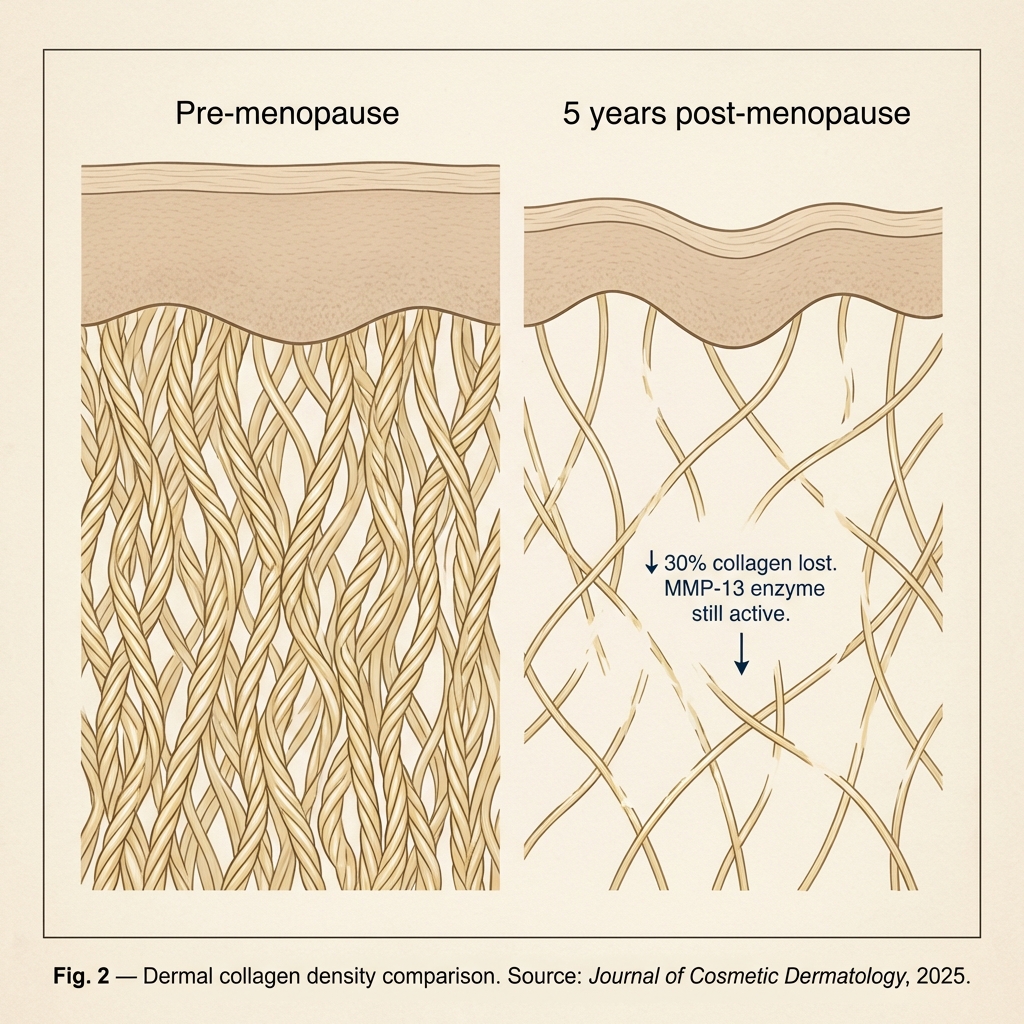
I have been using retinol since I was 45. My dermatologist recommended it. Every skincare article I read recommended it. Every "best anti-aging products" list I could find recommended it. So I used it. Every night, without fail, for three years. My skin got thinner. More sensitive. Drier. Products I'd used for a decade started causing redness that wouldn't go away. My moisturizer — the same one I'd trusted for years — started stinging. I thought I was doing something wrong with the application. I switched brands. I tried lower concentrations. I added more layers of moisturizer. I bought a $90 barrier cream because someone on a forum said that would fix it. Nothing fixed it. And every six months I'd sit across from my dermatologist and describe what was happening and she would nod and adjust the concentration and send me home with a sample. Not once did she ask: why is this happening at all? Not once. I went home after one of those appointments and I started actually reading. Not beauty blogs. Not Reddit. Research papers. Clinical literature. The kind of studies that don't have a product to sell at the end of them. What I found made me genuinely angry. And I think it will make you angry too. Here's something your dermatologist probably hasn't told you. After menopause, your skin is not the same organ it was at 35. Estrogen doesn't just affect your mood or your cycle. Estrogen drives collagen production. It tells your skin cells to rebuild, to hold moisture, to maintain the structural protein that keeps skin firm and thick. When estrogen drops — which it does, sharply, around menopause — your skin loses that signal. The Journal of Cosmetic Dermatology published research showing women lose up to 30% of their skin collagen in the first five years after menopause. Not gradually over a lifetime. In five years. After that, it continues to decline at more than 2% per year. That's not aging. That's a specific biological event with a specific cause. And here's the part that should make you put down your retinol. Retinol was studied, recommended, and built into the orthodoxy of skincare based primarily on research conducted on younger skin. Skin with intact estrogen. Skin with a healthy barrier. Post-menopausal skin is already compromised. The barrier is already thinner. Moisture retention is already reduced. Research published in peer-reviewed medical literature — Narsa et al. (2024), Quan et al. (2023) — shows that retinoids in compromised skin don't just fail to help. They actively weaken the barrier further. Increasing dryness. Increasing sensitivity. Reducing the skin's ability to hold onto moisture. The thing I was using to fix the problem was making the problem worse. And my dermatologist — who I paid, who I trusted, who I followed exactly — never told me this. Because the recommendation hadn't changed. Because nobody in that office had any reason to revisit it. Now here's what the research does point to. There's a compound called Madecassoside. It comes from Centella Asiatica — a plant that has been used in Korean and Southeast Asian medicine for centuries. Not as a trend. As a treatment. Long before there was an industry to profit from it. What Madecassoside does is specific. It stimulates collagen production. But it also inhibits an enzyme called MMP-13 — the enzyme your body uses to break collagen down. Most skincare products work on one side of that equation. They try to push more collagen in. But if MMP-13 is still running, the breakdown continues. You're filling a leaking bucket. Madecassoside addresses both sides simultaneously. Rebuilding and protecting. Not treating the surface — working at the structural level where post-menopausal skin actually fails. A 28-day clinical trial published in Cosmetics (2025) showed measurable improvements in hydration, elasticity, and skin texture. A separate clinical trial tested it on highly sensitive, post-laser skin: 97% of participants showed improvement. Zero irritation. Zero peeling. No adjustment period. That last number matters more than any other. Because if you've been on retinol for years and your barrier is compromised, the last thing you need is something that demands a painful six-week adjustment phase while your skin gets worse before it gets better. I want to be honest with you about something. I felt stupid when I understood all of this. I had done everything right. I had been a good patient. I had read the articles, followed the protocols, gone to the appointments, bought the products. I had spent real money on the "right" things. And the right things were the wrong things — because they were designed for someone else's biology. That wasn't my fault. It wasn't yours either. The skincare industry is worth hundreds of billions of dollars. It runs on the same customers, year after year, buying new products to fix problems that last year's products created. There is no revenue model for a woman who genuinely repairs her skin barrier and stops needing half the shelf. There's a lot of revenue in a woman who keeps trying. I was that woman for three years. The product I switched to is called Evelare Korean Time Reverse Cream. It's built around Madecassoside as the active mechanism. Applied twice daily — morning and night. No adjustment period. No purging phase. It's formulated specifically for post-menopausal skin — not adapted from a formula built for 30-year-olds and relabeled. Built from the beginning for the biology of skin after estrogen loss. I'm not going to tell you it reversed everything overnight. It didn't. But three weeks in, my skin stopped reacting to my moisturizer. Six weeks in, the redness my dermatologist had been "monitoring" for two years was gone. I don't look younger. That's not what I wanted. I wanted to look like myself again — the way I looked before my skin started failing the way my routines told me it shouldn't. That's what I got. If you've been using retinol on post-menopausal skin and wondering why you're getting drier, more sensitive, and less firm despite doing everything right — you're not failing your skincare. Your skincare was failing you. Edit: People keep messaging me, asking for the link. Here it is: https://shopevelare.com/products/madeca-anti-aging-cream
Where the ad sends people
shopevelare.com
My dermatologist had an answer for everything. Except why my skin kept getting worse while I did exactly what she told me.
Evelare
Learn more: shopevelare.com(opens in a new tab)