Rachel Morgan
 Facebook ad: “I noticed it when I zoomed in”
Ran for 27 days, from October 6 to November 2, 2026, the last day Crush saw it.
Run by Rachel Morgan on Facebook. Crush is not the advertiser and does not verify its claims. See this ad in Meta's Ad Library(opens in a new tab)
Make your own version of this ad
Crush makes it, launches it in your own Meta ad account, scales the winners and pauses the losers.
About this ad
- Meta Ad Library ID
- 1448221620494765
- Platforms
- Facebook, Instagram, Audience Network and Threads
- Relaunches
- 0
- Niche
- Parenting & Kids
Ad text
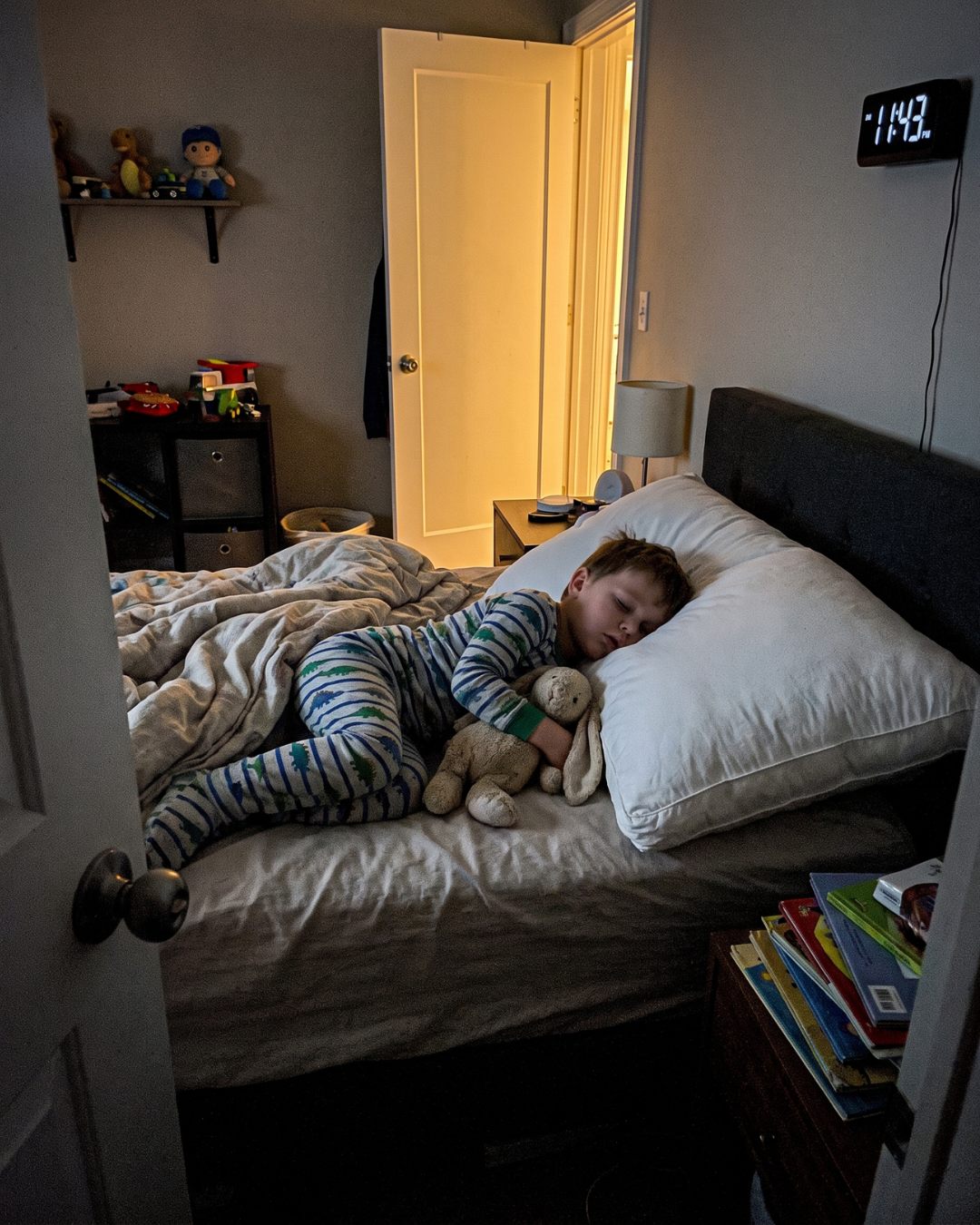
A mom sent me a photo of her 5-year-old sleeping at 11:43 PM. I zoomed in and immediately knew what I wanted her to change. It wasn't her bedtime. It wasn't the tablet on her nightstand. And it wasn't anything most parents would think to check. I need you to read this if you have a child between 2 and 10. Because after years of helping families with sleep, I've realized there is one part of a child's sleep setup we spend surprisingly little time thinking about. Even though their head can spend thousands of hours on it before they grow up. The mom who sent me the photo was called Emily. She'd first reached out because bedtime with her daughter, Sophie, had slowly become exhausting. Not terrible. Not the screaming, two-hour bedtime battles you sometimes hear about. Just... never easy. Sophie was tired. Emily knew she was tired. But the moment she got into bed, her little body seemed to find a second wind. She'd roll onto her side. Then her stomach. Then her back. She'd pull her blanket up. Kick it off. Ask for water. Grab her stuffed bunny. Play with her mom's hair. Then roll over again. Some nights she'd finally settle quickly. Other nights Emily would leave the room, hear movement ten minutes later, and go back in to find Sophie sideways across the bed. And in the morning? Sometimes her head was on the pillow. Sometimes beside it. Sometimes the pillow was pushed against the wall. Emily had done what most caring parents would do. She started trying things. First, she tightened up the bedtime routine. Bath. Pajamas. Story. Lights out at the same time. Still restless. So she moved bedtime earlier. Then later. She cut out the tablet before bed. Bought blackout curtains. Turned the thermostat down. Tried white noise. Bought new pajamas. Changed the nightlight. Let Sophie choose a new stuffed animal. She even bought a better mattress because she wondered if the old one wasn't comfortable enough. Some things helped a little. Some made no difference at all. But she kept feeling like there was something she was missing. And honestly? When she first described all of this to me, nothing immediately jumped out at me either. Kids move. Kids fidget. Kids ask for water. Some children simply need more time to transition from a busy day into sleep. A pillow isn't going to magically fix all of that. I wish sleep were that simple. So I asked Emily a few questions about Sophie's room. Then, almost as an afterthought, I asked: "Can you send me a photo of how she actually sleeps?" Not a staged photo. Not a freshly made bed. Just Sophie asleep the way she normally ended up at night. At 11:43 PM, my phone buzzed. I opened the photo. And zoomed in. Sophie was curled up on her side. Tiny shoulders. Little dinosaur pajamas. Stuffed bunny tucked against her chest. And underneath her head was this huge, thick pillow. Not a children's pillow. Just a regular adult pillow. Her little head was propped up on one edge of it, while the rest of the pillow seemed to take up half the top of her bed. I asked Emily where it came from. Her answer is one I've heard in different versions more times than I can count. "I don't actually know." She thought for a second. Then: "I think it used to be in our guest room." And there it was. Not some dramatic parenting mistake. Not neglect. Not something she'd consciously chosen. Just a spare pillow that had somehow made its way into her daughter's bed and stayed there. For years. That conversation stuck with me. Because Emily had thought about almost everything. The mattress. The room temperature. The light. The routine. The screen time. The pajamas. The stuffed animals. But the thing directly underneath Sophie's head for hour after hour, night after night? Nobody had ever told her to think about it. And once I noticed that, I started noticing it everywhere. Adult pillows passed down to children. Old guest-room pillows. Thick decorative pillows. Whatever spare pillow happened to be in the linen closet when a child moved into their first big-kid bed. And it makes perfect sense. Nobody hands you a checklist when your toddler moves out of the crib saying: "By the way, think carefully about their pillow." We obsess over mattresses. We research car seats for weeks. We measure little feet before buying shoes because we know their bodies are still growing. But pillows? For a lot of families, a pillow is just... a pillow. That was the assumption I started questioning. Because a 4-year-old isn't simply a smaller 35-year-old. Their proportions are different. Their shoulders are smaller. Their neck is smaller. Their head sits differently relative to the rest of their body. So why had we normalized putting so many little heads on pillows originally designed around adult bodies? And again, I want to be very clear. I am NOT saying an adult pillow is secretly the reason your child doesn't sleep. It isn't. Children wake up for hundreds of reasons. They get thirsty. They have bad dreams. They're too warm. They're processing a busy day. They need reassurance. Sometimes they're simply not ready to sleep yet. There is no pillow on earth that fixes every bedtime problem. But that's not really the point. The question I couldn't stop thinking about was much simpler: If our children spend so much of their childhood asleep... shouldn't the thing underneath their head at least be designed with a child in mind? So I started paying closer attention. Not just to pillows. To what children actually DO with them. And that's when the second part became interesting. Some kids simply put their head down and sleep. Others? Their hands never stop. They rub the edge of the blanket between their fingers. Twist a corner of the pillowcase. Hold a stuffed animal by one ear. Stroke their mom's hair. Tuck their hands underneath the pillow. Grab anything soft that's nearby. You can almost watch their little body slowing down one piece at a time. And parents kept describing the same thing: "My child always needs something in their hands." That made me think differently about what a children's pillow could actually be. Not a medical device. Not some complicated sleep gadget. Not a pillow with speakers, lights, apps or technology. Just something comfortable for their head... with something soft for their hands. That's when I started looking at children's pillows differently. And honestly, a lot of what I found disappointed me. Some were basically miniature adult pillows. Some were incredibly flat. Others looked adorable but seemed designed more for decorating a bedroom than actually sleeping on. Some had covers I wouldn't want to deal with after one sweaty night or a spilled cup of water. And many of the cute animal pillows were essentially stuffed toys. Lovely for cuddling. Not necessarily what I'd choose as the pillow underneath a child's head every night. I wanted something that checked several boxes at once. A size that actually made sense for a child. Supportive foam. Not unnecessarily bulky. Comfortable for the different positions kids somehow rotate through during the night. A removable cover you can actually wash. A cooler-feeling surface. And ideally, something a child would WANT in their bed. Not something that looked clinical. That combination turned out to be surprisingly difficult to find. Then I came across a pillow from a company called Bombees. At first, I assumed it was just another cute animal pillow. Then I looked closer. And stopped scrolling. 17.7 × 10.6 × 2.8 inches. A compact size made specifically with children in mind. Ergonomic foam inside. A removable Ice Silk cover with a cool, soft feel. And then I noticed the part that made the whole concept click for me. The ears. The tail. They're not just there to make the pillow look cute. They're soft little sensory details that busy hands can hold, rub and fidget with while winding down. No batteries. No noise. No lights. Nothing to charge. Just a pillow designed around two things children actually bring to bed every night: Their little body. And their busy little hands. So I sent it to Emily. Not with some ridiculous promise that Sophie would suddenly sleep twelve hours straight. I told her exactly what I'd tell any parent: "Don't expect a pillow to solve bedtime. Just try giving her something that's actually designed for her." And that is ultimately why I kept coming back to Bombees. Because the more I looked at it, the more the little decisions made sense. The compact proportions. The foam. The cool-feeling cover. The washable outer layer. The soft sensory details. The animal designs children can actually get excited about. None of those things alone are revolutionary. That's almost the point. They're small details. But sleep environments ARE made of small details. A dark room doesn't make a child sleep. A bedtime story doesn't make a child sleep. Comfortable pajamas don't make a child sleep. A familiar stuffed animal doesn't make a child sleep. A predictable routine doesn't make a child sleep. And a pillow doesn't make a child sleep. But put enough thoughtful little things together... and you create a place where winding down simply feels easier and more familiar. That's the part parents sometimes miss when they're desperately searching for the ONE thing that will fix bedtime. There usually isn't one thing. Sometimes it's about making the whole environment work a little better. And apparently, a lot of parents had already reached the same conclusion. Because when I started reading through the experiences around Bombees, I realized this wasn't some tiny product nobody had heard of. More than 50,000 families had already chosen one. Parents talked about the size. The comfort. The animals. The little ears and tails their children liked to hold. And something about those comments kept reminding me of Sophie. Not because every child was suddenly sleeping perfectly. They weren't. But because so many parents were describing tiny behaviors I'd seen over and over again. The fidgeting. The cuddling. The changing positions. The desire to have something familiar nearby. It felt like somebody had actually watched children sleep before designing the thing. And that's why I want you to do something tonight. I'm not asking you to buy anything yet. I'm not asking you to diagnose your child's sleep. And please don't start worrying that you've somehow been doing bedtime wrong. Just wait until your child is asleep. Walk into their room. And look. Really look. Look at how small their shoulders are. Look at where their head ends up. Look at the size of the pillow underneath them. Look at what their hands are doing. Look at whether they fold it, push it, bunch it up or slide away from it. Then ask yourself one question: "Did I actually choose this pillow for my child?" Or did it just... end up here? Because that's what happened with Emily. She cared deeply about Sophie's sleep. She'd researched routines. Bought blackout curtains. Changed the temperature. Replaced the mattress. She wasn't missing something because she wasn't trying hard enough. She simply hadn't thought to question something most of us were never taught to question. The pillow. And the more you think about the time involved, the stranger that blind spot becomes. One night doesn't sound like much. Neither does one nap. But then there are hundreds of nights. Then thousands. All those bedtime stories. All those sleepy cuddles. All those nights you tuck them in and hear: "One more kiss." All those mornings when they somehow wake up sideways with their hair pointing in six directions. Childhood feels endless while you're in it. Then suddenly the pajamas don't fit. The stuffed animal stays on the shelf. They don't ask you to lie beside them anymore. They don't need you to check under the bed. And somehow that tiny person you used to carry upstairs is nearly as tall as you are. Kids spend thousands of hours asleep before they grow up. That's the thought I keep coming back to. Not because parents need one more thing to worry about. Quite the opposite. Because sometimes taking care of them isn't about finding some enormous hidden problem. Sometimes it's noticing one small thing you never thought to look at before. If you look at your child's pillow tonight and realize it was never really chosen for them, take a look at Bombees. Here's what I like about it: ✓ Child-sized 17.7 × 10.6 × 2.8 inch design ✓ Ergonomic foam designed with kids in mind ✓ Soft ears and tail for busy little hands ✓ Cool-feeling Ice Silk outer cover ✓ Removable and washable cover ✓ Multiple animal friends children can choose from ✓ Already chosen by 50,000+ families And you can try it for 60 days. Because ultimately, you shouldn't have to guess whether your child likes sleeping on it. Let them tell you. I still think about that photo Emily sent me at 11:43 PM. Not because there was anything shocking in it. That's exactly why it stayed with me. It looked completely normal. A sleepy 5-year-old. Dinosaur pajamas. Her favorite bunny. A mom who was trying her best. And one ordinary pillow nobody had ever thought to question. So tonight, when you go in for that last check... take another look. They're only little for so long. And while they are, I think the little things are worth getting right. 👇 See the Bombees Calming Kids Pillow here:
Where the ad sends people
bombees.com
I noticed it when I zoomed in
10 reasons parents are switching to this calming kids pillow
Learn more: bombees.com(opens in a new tab)