
Active· since Jul 28, 2026
- 48
- days running
- 0
- relaunches
- 7,877
- EU reach
Ad copy
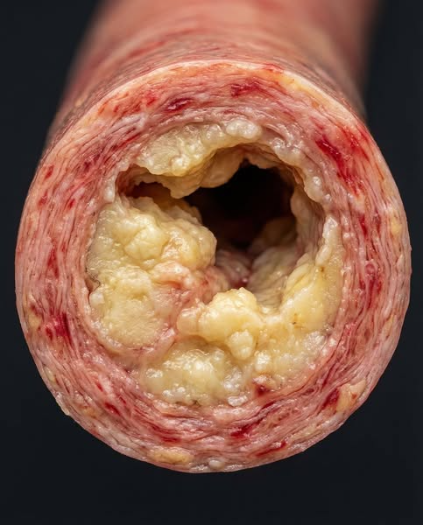
My husband slid a jar of pickles across the kitchen table one Thursday morning last spring. He set it down by my coffee, lid pointed up at me. Then he went back to his eggs. And he didn't say a word about it. For 41 years, opening jars was his job. I never asked him to make it his. It was just the way our kitchen ran. The garbage was his, the folding was mine. So I looked at the jar a second. Then I gave the lid a twist, and it went. I set a pickle on his plate like it was nothing at all. Neither of us mentioned it. But I'd been married too long for a thing like that not to snag on me. Dale had opened every jar in that house for 41 years. He wouldn't just slide one across the table for me to do unless he'd already tried it out in the pantry, where I couldn't see, and it wouldn't give. He'd sooner pass it over than say so. I washed up the breakfast dishes and couldn't get that jar out of my head. Because Dale had opened that exact brand a thousand times. And that morning he decided, before he ever pulled out his chair, that he wasn't even going to try. Let me back up and tell you about Dale. We've been married 41 years. He's 68, and he retired 3 years ago from the county water department. Now he's a gardener, and I mean serious about it. Tomatoes, pole beans, three kinds of peppers, and a compost pile he guards like the family silver. I raised our three kids and worked the front desk of a dentist's office for 22 years. So I've spent my life watching people across a counter, keeping track of what's off about them. Remember that about me. That kitchen table has been ours for most of our marriage. We've eaten most every breakfast of our lives at it, the two of us across from each other. I came to know that man at a table like that. We each took up the little jobs over the years, without either of us ever deciding who got what. He salts his eggs before he's tasted them. Opening the jars was his, for as long as we've had that table. It was one of the ways he loved me, though neither of us would ever have put it that way. A jar I couldn't budge would come to him at the counter, and he'd plant his feet and work it till it gave. Then he'd hand it back open and never look up from what he was doing. A whole marriage of that. So small neither of us ever gave it a thought, till the morning it stopped. I came by the noticing honestly, years before that jar. The front desk of a dentist's office taught me to read people. I sat there year after year and learned to size a person up while they were still filling out the clipboard. The man cracking jokes about the drill is the one scared half to death. More than once I watched a woman swear she felt fine while she held her jaw so it wouldn't shake. So I trust that part of me, the part that catches what's off. It's almost never wrong. And that spring, something about Dale had started to bother me. The jar made three. There'd been two other things that spring, and I'd talked myself out of both of them. The first was the garden, back in May. Dale's usually out there by 7 on a Saturday, and he won't come in till he's good and hungry, well past noon. But one cool Saturday in May, he came in at 9:30. He was gray in the face. He sat down hard at the table, his hand shaking a little around a glass of water. "You alright?" "Just hot out there." It was 64 degrees. I looked past him out the window, at the gray sky and the maple not even stirring. I got him a second glass of water and said nothing about the thermometer. I decided he'd overdone it, that maybe he was coming down with something. His cholesterol was perfect and the doctor was happy, so what on earth was there to worry about? I wiped down the counter and told myself I'd keep half an eye on him. That's the small lie you tell so you can get on with your day. I saw that man every morning, and after a while I'd stopped really seeing him. The second was him dozing off during random timings. Dale had never been a napper a day in his life, and he thinks naps are for people who've quit on the afternoon. But that spring he started dropping off in his chair at 3, right in the middle of talking. He'd be halfway through a story about some fellow he used to work with, and his head would go down. The sentence would just stop. And I'd be left holding up my end of a conversation that had quit on me. Our son saw it once that spring, when he came by for supper on his way through town. Dale started in on a story about a truck he used to drive for the county, and partway through, his chin dropped to his chest right there at the table. The two of them had been mid-sentence. Our son looked over at me and stayed quiet, but I knew the look. He caught me alone by the sink while Dale slept. "Is Dad alright, Mom?" "He's just been working too hard." His numbers were perfect, I told him, and the doctor was thrilled. He let it go, because I was his mother and I'd said so. And I told myself the same thing I'd told myself about the garden. He's 68, men slow down, his numbers were perfect. And then, that Thursday, the jar. Standing at the sink afterward, I finally understood why it hit so hard. Any other morning, Dale would have tried the lid first. He'd have gripped it and grunted and run it under hot water. He'd have made a whole show of it before he passed it over. He had too much pride not to. But this time he didn't even try. He handed it across before he'd sat down. And that was the morning the two things I'd been waving off stopped looking small next to the third. I stood there with my hands in the dishwater and let myself think the thought I'd been ducking for weeks. I'd trusted the paper. Every lab, every number, came back good. His doctor read those numbers and told us to keep right on going, so I did too. And the better that number looked, the less anybody looked at the man holding it. That's how I'd ended up believing a tired man in a chair was only tired. Right up until the morning he slides you a jar. Before I understood a word of what I'm about to tell you, I did a small foolish thing I'm not proud of. By then the slipping had spread past pickle jars, to the ring on a jam lid, the cap on the milk. So I drove down to the drugstore and bought one of those rubber grips, the kind meant to help you twist a stubborn lid. I set it out on the counter, right by the jars. I told myself it was for my own hands, which have their share of arthritis, and maybe it was, a little. But I knew exactly who I'd bought it for. He never touched it. For a day or two I even let myself believe I'd solved something. His pride wouldn't have it. It was the same pride that had slid the jar across the table in the first place. That rubber ring sat out on my counter for weeks and did nothing at all. Every time I wiped the counter I had to move it, and every time I moved it, it told me the same thing. I'd bought a fix for the wrong part of him. One evening I picked it up and dropped it in the junk drawer with the twist ties and the dead batteries. A rubber ring only reaches as far as the wrist. And whatever was wrong with Dale was deeper than that. Now I need to show you the drawer. Every Sunday night for 5 years, I've filled Dale's pill organizer at this same table. It's one of the big ones. 14 little compartments with snap lids, two rows, morning and night, all 7 days. His name's on it, DALE, on a strip of masking tape I lettered myself when the print wore off the plastic. The doctor put him on Lipitor 5 years back, for his cholesterol. Atorvastatin, 20 milligrams, one tablet after dinner. And in 5 years, that man never missed a dose. Not on the trip out to see the kids in Oregon, where I counted his pills into a sandwich bag for the plane. Not the week we both had the flu so bad we couldn't keep water down. Not the morning we buried his brother. I put the little white pill in his hand in the funeral home parking lot, and he swallowed it without even looking. Keep that one. He did every single thing they asked of him. He took the medicine, on time, every day, for 5 years. And I've got the proof in a kitchen drawer, 5 years of empty compartments. That's the part I keep circling back to. He held up his whole end of the deal. The trouble was on the paper he kept handing me, and I hadn't learned yet how to read it. His next checkup was that June, and I went along, which I don't usually do. I sat in the corner chair with my purse in my lap and I paid attention. The nurse had drawn his blood the week before, so the doctor had the paper in front of him when he walked in. He read it off happy. "Total cholesterol, 176." "LDL, 96." He smiled. "That's better than mine, Dale." And Dale sat up a little, proud, like a boy who'd had a star pinned on his shirt. Then I said the thing which was the reason for the trip. "Doctor, he's tired all the time, he fell asleep in his chair yesterday at 3 in the afternoon, his hands aren't right, and this morning he couldn't open a jar he's opened his whole life." The doctor looked at me, then back down at the paper. He was kind about it. "Well, he's not a young man anymore." "Some of that's just the years." Then he tapped the number with his pen. "But these are exactly where we want them." And that was that. 15 minutes, a waiting room full of people behind us. A good man read one line off one page and told me the one line looked fine. He wasn't cruel and he wasn't lazy. He just never looked up off the number long enough to look at my husband. We drove home. Dale was pleased, because he'd gotten his gold star. I rode in the passenger seat with a feeling I couldn't name yet. Like somebody had handed me a receipt for something I never bought. The number said one thing, and the man who'd come in gray from the garden at 9:30 said another. They couldn't both be true. That feeling wouldn't let me be. I'd lie in bed with Dale's breathing gone slow beside me, and every time I shut my eyes I'd see him again. Gray, coming across the grass at the wrong hour. Then I'd hear the doctor. Better than mine, Dale. And the two of them wouldn't line up no matter how I turned them. So I got up. I didn't switch on the hall light. I sat down at the kitchen table with my reading glasses and the laptop, and the clock on the stove said a little after 2. I typed in the plainest question I had. Why is my husband so tired if his cholesterol is good. I went down a hole for about three hours. And I came out of it knowing a thing about Dale's blood that nobody at any checkup had ever said to us. Here's how I finally got it straight, standing at my own kitchen counter. When the doctor measures your LDL, that number is a headcount. It counts how many cholesterol particles are floating around in there. That's all it does. It counts them. It doesn't say one word about the shape those particles are in. And the shape turns out to be the whole ballgame. Here, I'll show you. You ever cut an apple and leave it out on the counter? Give it a few hours and it's gone brown. Nobody added a thing to it. The air did that. The apple rusted. Same as a nail you leave out in the rain, goes orange and rough. And the same thing happens to a cholesterol particle in your blood. The doctors have a word for it. Oxidized. A fresh one is smooth. It floats along minding its own business, bothering nobody. A rusted one goes sticky. It catches on the wall of the artery the way a burr catches on your sock. The body sees it stuck there and swells up around it, trying to deal with it. And that swelling, year on year, is the thing that actually closes an artery down. The rust does that, slow, over a lot of years. So here's where it landed on me, sitting there in the dark. The statin, the Lipitor Dale takes every night after dinner, does one job. It brings the headcount down. That's a real job and it does it well, and his count came down and stayed down for 5 years. But it does nothing about the rust. It was never built to. It counts the crowd. It never asks which ones have already gone bad. So a man can have a low, gorgeous, better-than-the-doctor's count. And be rusting on the inside the whole time. Nobody would ever catch it, because the only number anybody looks at is the headcount. Think what that meant for Dale. For 5 years, every appointment, they drew his blood and counted his particles and the count looked wonderful. And in all 5 of those years, nobody ever checked whether those particles were fresh or gone to rust. They watched the one number that couldn't tell them the one thing that was happening inside him. His perfect number was the whole reason nobody ever looked any closer at him. I didn't take any of this on faith, mind you. I've filled out enough insurance forms in 22 years to know a real medical word from one somebody made up to sell you a jar. So I didn't stop at the first website that told me what I wanted to hear. I read the actual studies, the ones with the tiny print and the charts I had to squint at. I read the ones that argued with each other. And the rust held up, no matter which door I came at it from. Then I found the thing that made me set my coffee down. There's a test for the rust. It has its own name and its own number, kept separate from the regular one. Oxidized LDL, ox-LDL for short. It measures the exact thing I'd just spent three hours learning about, how much of his cholesterol has already gone bad. And almost nobody runs it. It isn't on the standard panel, and it wasn't the number the doctor read us off the paper. But it's a real test, and anybody can walk into their next blood draw and ask for it by name. The nurse won't blink. It's a normal enough test to run. It's only a strange one to think of, and nobody had ever given us a reason to think of it. I'd been married to that man for 41 years, filling his pill box every Sunday, and I'd never heard those two words. I sat with all of it for the better part of a week before I did a single thing. Those were the worst days, the ones I spent just turning it over at the sink. Part of me wanted to march back into that office and make him look up off that number for one minute. But I'd already tried talking in that room, and I'd watched him tap the good number and hand my worry right back to me. Part of me wanted to sit Dale down and tell him every word I'd read. But I know my husband. Dale hears his own wife say the word rust about his own body one time, and he's up from the table and done listening. And part of me, the tired part, just wanted the paper to be right so I could stop. It would have been so much easier. It would have let me sleep. A woman my age, chasing a scare off a laptop in the middle of the night. Some part of me was sure that's all it was. But then I'd picture him coming in gray at the wrong hour, and our son by the sink who couldn't quite meet my eye, and I'd know better. And I decided I'd rather be the foolish woman who was wrong than the one proved right too late. I know how the next part sounds. I'd have rolled my eyes at it a year ago too. The more I read about the rust, the more one word kept turning up. Antioxidant. I'm 66 years old, and the second I see that word on a bottle, my hand goes to my purse to guard it. The year before, on a neighbor's say-so, I'd bought a bottle of fish oil and swallowed it every morning like it was doing something. All it ever did was empty out and cost me more than the pickles it sat next to on the shelf. So if you just felt yourself go suspicious, good. Stay that way. That suspicion is what saved me money in the end. But the reading kept pointing at one plain thing. A tea. Oolong tea, in particular. The compounds in it are the kind that go to work on the rust. So I did the cheap and obvious thing first. I drove to the grocery store and bought a box of oolong bags, the kind sitting right there by the regular tea. And I started making Dale a cup after dinner. I did it for weeks. Every night after I cleared the supper dishes, I'd set the cup by his elbow, and every night he drank it down without a single question. The box on the shelf got lower and lower. Nothing happened. Nothing at all. He was every bit as tired as before. I nearly quit right there and filed oolong away with everything else that had ever let me down. But something nagged at me, so I went back and dug out the study those articles kept pointing to. And there was my whole mistake, sitting in a number. The amount they used to get a real result was around 640 milligrams of the tea compounds a day, taken for 3 months. Then I looked up what was actually in my grocery bag. About 12 milligrams a cup of the compound that does the work, the one they call EGCG. Twelve. I sat at the kitchen table and did the arithmetic twice, because I couldn't believe it the first time. A so-called premium bag runs about 25 of it, a good loose-leaf maybe 44 on a fine day. I'd been giving my husband 12 and hoping for the results of 640. I'd been dosing him by the thimbleful and calling it a fair trial. The leaf never had a chance. I'd starved it from the very first cup. So I went looking for real tea, at a real dose. That's how I found PiPi. It's a whole-leaf oolong, grown up high, over 4,500 feet, and picked by hand. The thing that sold me was the number printed right on the page. 187 milligrams of EGCG in a single cup. More than 15 times what had been in my grocery bag. At 2 or 3 cups a day, that finally came out to the kind of dose the study was talking about. An honest amount, and not a thimbleful. So I ordered some and got it into the house. And here's the part I'm almost proud of. I never sat Dale down and lectured him about oxidized cholesterol. I never showed him a thing I'd read at 2 in the morning. I just set a warm cup by him after supper, the same easy way I'd set down a slice of pie. Dale will drink a cup of tea I hand him without a word. That same man will get up and leave the room if I try to lecture him about his own body starting to give out. I know my husband. So I pour, and I don't preach. The Lipitor still goes in the organizer every Sunday, all 7 nights, right where it's sat for 5 years. He still takes his 20 milligrams after dinner. That pill holds the count down, and it does that job well. The tea works on the rust, the job the pill was never built for. I set the cup down beside the pill and let each of them carry its own half. Now, I'm a front-desk person by training, so I wanted it down on paper. Before I let the tea take one bit of credit, I had him get the rust number measured, so we'd have a true starting line. At his next blood draw, I had him ask for it by name. Oxidized LDL. The lab ran it. His ox-LDL came back at 63 U/L, and the lab had printed the word HIGH right next to it in bold. 63, flagged high. That same morning, out of the same arm, his regular LDL was 96 and his total was 176. The good numbers the doctor loved, sitting right next to a rust number nobody had ever checked, flagged in bold. So the tea started. 2 to 3 cups a day, every day, on top of the pill he never skipped. I didn't tell the lab why we were checking, and I didn't tell Dale to expect a thing. I just wanted that number to tell the truth without anybody leaning on it. The grocery box was weeks behind us by then, so nothing but the pill was in him when they drew it. 3 months later, same lab, same test. Ox-LDL, 46. His LDL that morning was 97, his total 174, both right about where they'd always sat. 3 more months. 6 months of the tea in all. Ox-LDL, 39. His LDL was 95, his total 175, flat as this kitchen table the whole way through. So look hard at what moved and what didn't. The count the drug controls never budged. 96, then 97, then 95. And the rust number, the one nobody had ever been watching, went from 63 down to 39. That's a drop of better than a third, in the exact number that turned out to be the dangerous one. I keep all 3 lab sheets in the kitchen drawer, right next to the pill box. 63. 46. 39. And here's the strange part. By the time that second sheet came back at 46, I already knew what it was going to say. Because I'd been watching him at this table for weeks. The jar issue got resolved first. One evening I was coming down the hall, and I saw him in the kitchen from the doorway, where he couldn't see me. He picked up a jar of applesauce, turned the lid clean off in one motion, and spooned it into a bowl. He didn't even notice he'd done it. I stood in that doorway with my hand over my mouth. Then, over the months that followed, the garden came back. By the next June he was out there 4 hours at a stretch. He'd come in sunburned across the back of the neck and tired. But it was the good kind of tired, the hard-earned kind. Not the gray kind that had scared me back in May. Then the dozing let go of him. One night during the 10 o'clock news I glanced over. He was wide awake, with a cup of tea gone stone cold in his hand, because he'd gotten too caught up in the program to drink it. Our granddaughter was the one who put it into words, at supper. She'd climbed up in the chair beside her grandpa, and partway through the meal she looked over at me. "Grandpa finishes his stories now." I asked her what she meant. She shrugged. "He used to stop right in the middle, and now he doesn't." I'd never told that child a single thing about it. She'd just watched him over a plate of supper and named it before any doctor ever had. Our daughter called me that same week. "Mom, what in the world is going on with Dad?" "I called just to check in and he talked my ear off 20 minutes about his beans." I stood in the kitchen holding the phone, and I didn't trust my voice enough to answer right away. I finally told her the truth, that her father was drinking a cup of tea after supper and getting his old self back one evening at a time. She was quiet a second. "I thought we were starting to lose him, Mom." And I'll tell you what put the real fear in me, what has me sitting here writing all this down for a stranger. A man two doors down from us went the very same slow gray way Dale was going. He got tired. He started nodding off in the afternoons. And every checkup, they told him his numbers were fine. His numbers were fine right up until the morning I was standing at my own sink with a coffee cup in my hand and a red light started swinging across my kitchen wall. I went to the window. There was the ambulance in his driveway two doors down, and I watched them bring him out on the stretcher in the gray early light. That could have been my house. His wife is a lovely woman, and she did everything the doctors told her, same as me. The only thing between her morning and mine is that I got curious at 2 in the morning and went looking for a number nobody had ever shown me. I came within an inch of being the wife who saw every single warning and did nothing about a single one of them. Because a piece of paper had told me not to worry. So here's what I'd have you do, if you're the one who fills the pill box in your house and something about your husband has been nagging at you. First, the night the tea arrives, you can see this rust thing with your own two eyes for the price of one apple. Cut an apple in half. Brush one cut face with a little of the cooled PiPi, and leave the other one plain. Set them both on the counter and go to bed. By morning, really by about two hours, the plain half will have gone brown and the brushed half will still be a pale gold. It will not turn bright white, and anybody who tells you it turns white is lying to your face. Pale gold sitting next to brown. That's all it is, and that's plenty. And don't bother trying it with a grocery bag, because I did. That half browns almost as fast as the plain one. A thimbleful can't hold back the browning on an apple, same as it couldn't hold back the rust in my husband. It takes the real dose to keep that slice pale gold. You won't need a doctor or a lab or my word for it. Just an apple, a splash of the real tea, and two hours. Now, an apple isn't an artery, so this proves nothing about what's going on inside your husband. All it shows you is that the thing is real. This tea, at this dose, slows the browning right there on your counter, where you can watch it. The proof about your husband is the other test. At his next bloodwork, whenever it falls, have him ask for oxidized LDL by name. Get his number, and write it down. That number is the truth the regular panel has never shown you. If you want to do exactly what I did, the tea is PiPi, 187 milligrams of EGCG in a cup, the real dose and not the thimbleful. And here's the only kind of guarantee I'd ever trust, the kind tied to the one number that matters. Have his ox-LDL measured before he ever starts. Then have him drink it for 90 days and measure that number again. If it didn't come down, send the tea back and get every dollar returned. Nobody ever offered to refund us the Lipitor if his rust number stayed high, because nobody was ever measuring his rust number at all. You can order it right here. https://shop.pipitea.com/ppch/sp-nm It's a test you run on your own husband, on his own timeline. I ran it. His went from 63 to 39. Dale's out in the garden right now, as I sit here writing this to you. And last night at supper, he reached across the table, opened a jar of my bread-and-butter pickles, and set it down by my plate. Then he picked his fork back up and went on with his supper, easy as anything. I didn't say a word. But I sat there and watched his hands work that lid, and I have not stopped being grateful since. P.S. If you're the one who fills the box in your house, hear me on this. You don't have to win the argument first. I never argued Dale into a thing, never sat him down and made my case. I just became the one who set the cup down after supper, every night, and let it go at that. Be the one who gets the tea into the cupboard. The rest of it he'll do himself, one cup at a time, and never know he's doing it. P.P.S. Here's the part a person skimming might fly right past. The guarantee is tied to his own bloodwork, not to my say-so. Get his oxidized LDL measured before he starts. Have him drink it 90 days. Then measure again, and if that number didn't move, you send the tea back and they hand back every dollar. That's one round of labs to know for certain. Try getting that deal out of the drug company that sells the statin. P.P.P.S. Don't make my mistake with the cheap tea. A grocery bag is about 12 milligrams of EGCG a cup. A premium one about 25. A good loose-leaf maybe 44. The PiPi is 187. Buy a cheap box to save the price of a sandwich, and all you'll do is waste a whole month the way I wasted mine. And then you'll decide tea doesn't work, when the truth is you never gave it a real dose. P.P.P.P.S. This past Sunday my granddaughter sat with me while I filled the box. She saw the three papers folded in the drawer. "What are those, Grandma?" I told her they were her grandpa's report cards. 63, then 46, then 39. I told her he'd been bringing his grade up. "Good," she said, and turned back to her crayons. She has no idea what those numbers are, only that they matter, and that they're headed the right way. P.P.P.P.P.S. One last thing. It's a little outfit, and they do run out. The last time I reordered, I had to wait on it, and I don't like Dale's cupboard sitting empty of the stuff, now that I know what I know. If you're going to do this, get it into the cupboard while they still have it. https://shop.pipitea.com/ppch/sp-nm
Natural Relief in Weeks
LEARN MORELike this ad? Make it yours.
Crush rebuilds this exact creative around your product — your brand, your colors, your offer — in about a minute.