
Active· since Feb 16, 2026
- 211
- days running
- 0
- relaunches
Ad copy
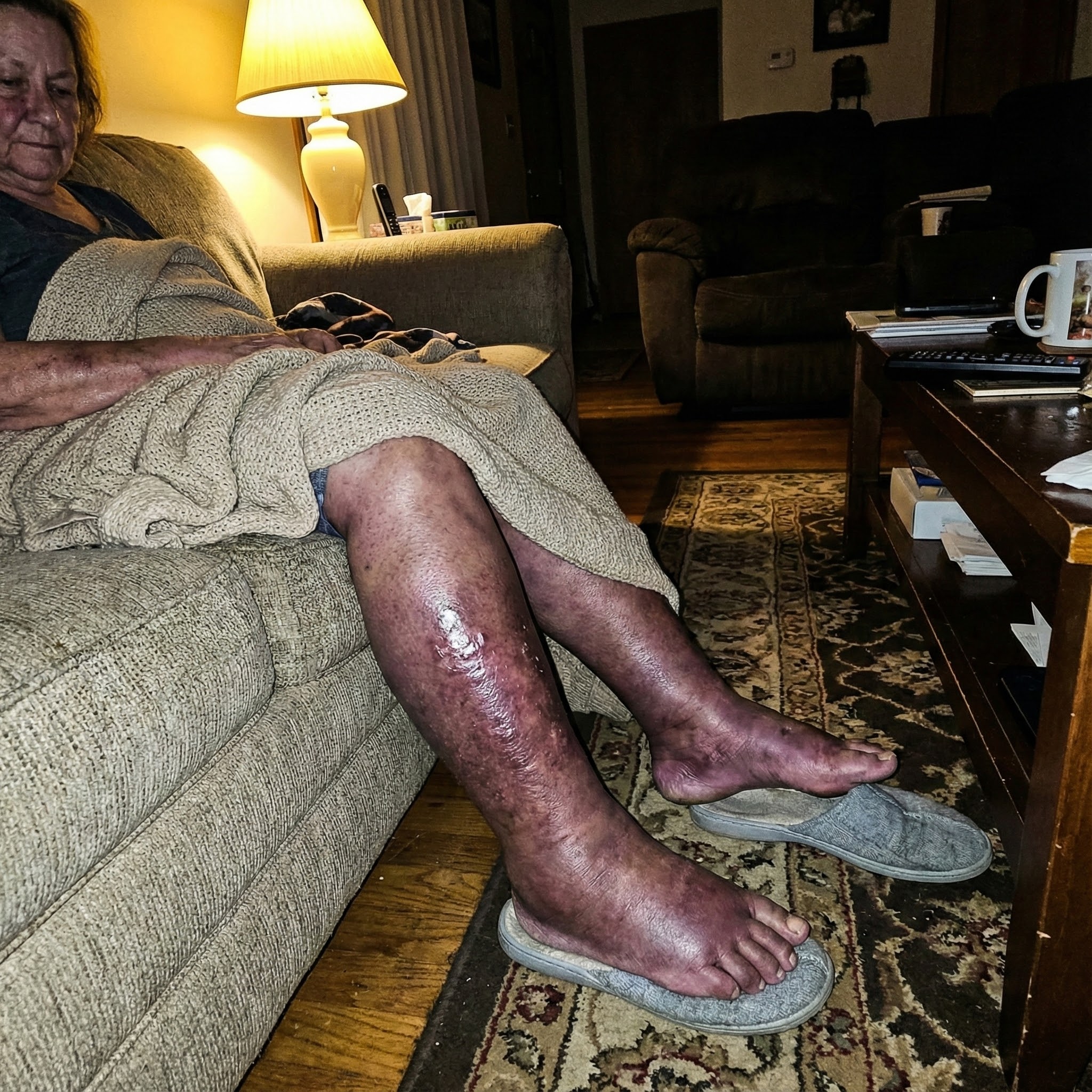
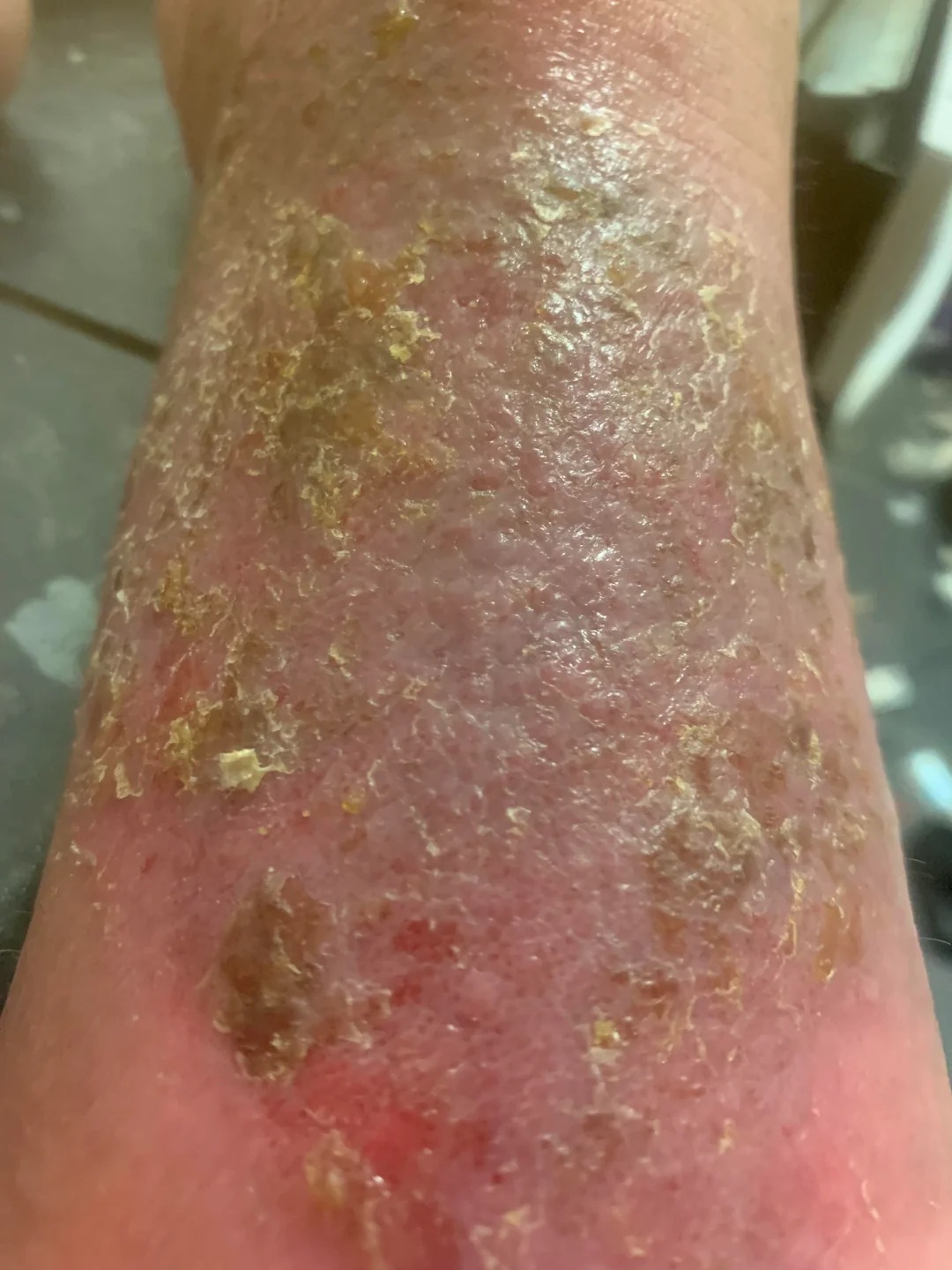
I spent 40 years as a nurse caring for others. Now my 6-year-old granddaughter asks, "Grandma, why do your legs look like that? Are they sick?" That's what retirement gave me. Not relaxation. Not freedom. Humiliation. Last Thanksgiving, my daughter Karen hosted dinner. The whole family was there. Kids running around. Grandkids laughing. The smell of turkey and pie filling the house. I was sitting in the corner in floor-length linen pants, trying to keep my ankles hidden while everyone else wore holiday dresses. My six-year-old granddaughter Emma came over and tugged at my pant leg. "Grandma, why do your legs look like that? They're all red and bumpy. Are you sick?" The room went quiet. I saw my daughter's face. That flash of pity. The quick change of subject. "Emma, leave Grandma alone. Go play with your cousins." But Emma wasn't being mean. She was just asking what everyone else was thinking. Why do Grandma's legs look like that? I smiled and told her I was fine. But when I went to the bathroom, I locked the door and cried for ten minutes. I'm 67 years old. I spent 40 years taking care of other people. Now I'm the one everyone looks at with pity. That's not retirement. That's a prison. My Name Is Margaret Collins. And I've Become Someone I Don't Recognize. I used to be the woman who handled everything. Forty years as an ICU nurse. Twelve-hour shifts. Emergencies. Life and death. I was strong. Capable. The one everyone counted on. Now I'm the woman who can't sit through a church service without clawing at her ankles. Who wears long pants in the Florida summer because she's too ashamed to show her legs. Who hasn't worn a dress in three years because the skin on her lower legs looks like alligator hide. My ankles are covered in rusty brown "cayenne pepper" spots that seem to spread a little more each week. The skin is red, rough, and so scaly it catches on my sheets at night. The itch — God, the itch. Not a surface itch you can scratch and forget. A bone-deep, burning itch that fires at 2 AM and doesn't stop until I've scratched myself raw. I wake up to blood on the sheets. Yellow stains from the weeping sores. Scratch marks I don't remember making. I catch people staring. At church. At the doctor's office. At my own family gatherings. They don't say anything. They don't have to. I see it in their eyes. Poor Margaret. Look at her legs. She really let herself go. The worst part? I started believing them. Maybe I did let myself go. Maybe I should've taken better care of my skin. Maybe I should've caught it sooner. Maybe if I'd applied the cream more diligently, used the compression socks more faithfully, seen the dermatologist more often... The shame was eating me alive. I Stopped Leaving the House It started small. First, I stopped going to my book club. Too many women in capri pants and sandals while I sat sweating in long pants, trying not to scratch. Then I stopped going to church. The pews are hard. Can't shift around without people noticing. And the 90 minutes of sitting still while the itch fires across my ankles — torture. Then I stopped visiting my grandchildren. Their house has a pool. And I couldn't bear another innocent question about why Grandma's legs look "weird." Couldn't bear wearing long pants while everyone else was in swimsuits. My world shrank to the size of my living room. My husband Richard would try to get me out. "Let's go to dinner, Margaret. Let's take a drive." I always had an excuse. Legs are flaring. Skin is too raw. Maybe tomorrow. The truth? I was too ashamed to be seen in public. One night, Richard sat down next to me and took my hand. "I'm losing you," he said. "You're disappearing. And I don't know how to help." I couldn't look at him. Because he was right. The Moment I Hit Rock Bottom Last December, my daughter invited me to Emma's school Christmas play. Emma had a solo. She'd been practicing for weeks. "Please come, Mom," Karen said. "She keeps asking if Grandma will be there." I wanted to go. God, I wanted to go. But it meant sitting in a school auditorium for two hours. In hard bleacher seats. With the itch already firing because it was evening and the flare was at its worst. And the skin on my ankles was so raw from last night's scratching that my pants rubbing against it made me flinch. "I don't think I can," I told Karen. "My legs are really bad right now." The silence on the phone said everything. "Okay, Mom. I'll tell her you're not feeling well." I hung up and sat in my recliner, staring at my legs. Red, scaly, covered in those awful brown spots. The skin around my ankles looked like cracked earth. The steroid cream sat on the end table — the fourth one the dermatologist had tried. It stopped working after a week. Like all the others. My granddaughter was singing a solo. A moment she'd remember forever. And I was missing it because I was too ashamed of my legs and in too much pain to sit still. That's when I realized: the skin condition wasn't just taking my comfort. It was taking my life. My family. My purpose. I was becoming invisible. I Thought Retirement Would Fix Everything Forty years as a nurse, I blamed the job. The long shifts. The standing. The compression stockings rubbing my already-irritated skin raw for twelve hours a day. "Once I retire," I told myself, "my skin will finally heal." I was so wrong. Within six months of retirement, my legs were worse than ever. I wasn't on my feet all day anymore. I was sitting. Resting. Elevating. Applying the steroid cream twice a day like clockwork. Doing everything I was supposed to do. But the rash spread. The brown spots multiplied. The itch got worse. The skin got rougher, scalier, more like reptile hide every month. And the steroid cream? My skin was getting thinner. More fragile. I bumped my shin on the coffee table one morning — the kind of bump you don't even think about — and my skin split open like tissue paper. Blood everywhere. I went to my dermatologist. He barely looked at my legs. "The redness is managed, Margaret. Keep using the Triamcinolone. We might need to rotate to Clobetasol if it stops responding." Managed. The redness was "managed." But my skin was falling apart. The itch was worse than ever. The brown spots were spreading. I was hiding from my own grandchildren. That's "managed"? I tried everything he prescribed: Triamcinolone — worked for a week, then stopped. Made my skin thinner. Clobetasol — same story. Skin started cracking and tearing. Three rounds of antibiotics — because he thought one patch was cellulitis. It wasn't an infection. Compression stockings — a torture device on raw, scaly skin. Twenty minutes wrestling them on every morning. Skin rubbed rawer by afternoon. CeraVe, Eucerin, Vaseline — greasy, stained the sheets, trapped heat under the scales. There's no dignity in any of it. None. And the worst part? None of it worked. I was doing everything "right" and getting worse. Then My Daughter Sent Me Something That Made Me Angry Karen is a nurse too. ICU, just like me. She called one Sunday and said, "Mom, I need you to read something. It explains why nothing is working." She sent me an article by a vascular specialist. His own wife had the same thing — stasis dermatitis. Red, scaly legs. Alligator skin. Brown spots. Bone-deep itch. Tried every cream, every treatment. Nothing worked. Then he discovered the truth: The problem isn't the skin. The problem is a pump that had stopped working. Your calf muscle is supposed to be your "Second Heart." Every time you walk, it squeezes your veins and pushes blood upward against gravity. But when you stop moving — whether you're standing still on a nursing shift or sitting in a recliner in retirement — that pump goes dormant. And when the pump goes dormant, blood pools in your legs. Pressure builds. The veins start to leak. Red blood cells leak into your skin tissue. They break down and release iron — literally rusting under your skin. That's the brown "cayenne pepper" spots. Proteins leak out too and harden around your capillaries like cement — blocking oxygen from reaching your skin cells. That's why your skin is scaly, rough, and hard. It's suffocating. That bone-deep itch at 2 AM? That's your skin screaming for oxygen. Starving from the inside. And here's what made me furious: Steroid cream can't restart the pump. It suppresses the surface redness while the leak continues underneath. Compression socks can't restart the pump. They squeeze from the outside but can't make the muscle contract. Moisturizers can't restart the pump. They sit on the surface while the skin suffocates from within. Forty years as a nurse. Three years of stasis dermatitis. And not one doctor explained this to me. They just told me the redness was "managed." Rotate the cream. Try a stronger steroid. Apply more often. While my pump stayed asleep. And my veins kept leaking. And my skin kept dying from the inside out. What My Daughter Uses After Her Shifts Karen told me she'd been dealing with the same thing. Runs in the family, I guess. But hers had gotten better. "I use something after every shift," she said. "An EMS foot plate. It sends electrical pulses into your calf muscles and forces them to contract — like walking while you sit. It restarts the pump. Pushes the pooled blood up. Stops the leak. And fresh, oxygenated blood can finally reach your skin cells." "And your skin cleared up?" I asked. "The itch stopped first. Then the redness faded. Then the scaly patches smoothed out. My legs look normal again, Mom. I can wear scrubs without patients asking what's wrong with my skin." She'd been using it for eight months. Her lower legs looked smooth. Clear. Healthy. Meanwhile, I was hiding mine under blankets at Thanksgiving. "It's called Ornexis," she said. "I'm ordering you one tonight." I Didn't Believe It Would Work I've been a nurse for 40 years. I've seen every gadget. Every gimmick. Every "miracle cure." I've got a bathroom cabinet full of things that promised relief and delivered nothing. Steroid creams. Antifungals. Vein cream from an Instagram ad. Tea tree oil. Arnica gel. Three hundred dollars of half-used tubes. A monument to failure. But Karen knows her stuff. And when she told me the price — $59.95 — I figured I had nothing to lose. I'd spent more than that on a single tube of prescription steroid cream that stopped working after a week. The First Time I Used It, I Cried The box arrived three days later. Small. Simple. I put my feet on the plate. Turned it on. My calf muscles started contracting. Not vibrating — actually contracting. Squeezing and releasing. Like my legs were walking while I sat in my recliner. After 15 minutes, I stood up. The burning, tight sensation around my ankles — the one I'd been smearing steroid cream on twice a day — it was quiet. Not gone. But quiet. Like someone had turned the volume down. I looked down at my legs. The angry red patches looked... less angry. Just slightly. But something had shifted. I pressed the skin on my shin. It didn't feel as hot to the touch. I sat back down and cried. Not from sadness. From hope. For three years, I thought this was my life now. Alligator skin. Bone-deep itch. Stained sheets. Shrinking world. Mounting shame. But sitting there with my feet on that plate, I felt something I hadn't felt in years: Maybe I could get my legs back. The Next 30 Days Changed Everything Day 3: I slept through the night without scratching. No blood on the sheets. No yellow stains from weeping sores. Just clean sheets. Day 7: The scaly patches on my shins felt different. Softer. The hard, flaky crusts were breaking up. I could see smooth skin underneath. Day 14: The redness was fading. Not the temporary steroid-cream fading that comes back in four hours. Actually fading. The angry, hot red patches were calming to pink. Day 21: I looked at my ankles and could see the brown spots were lighter. Not gone — but lighter. Fading. For the first time in three years, they weren't getting darker. Day 30: I put on capri pants. Stood in front of the mirror. My legs looked like... legs. Not perfect. But not alligator hide. Not something to hide. Nobody stared at my legs. Because there was nothing to stare at. Last Month, I Went to Emma's Spring Concert Karen called and said Emma had another solo. "Can you come, Mom? She's been asking about you." This time, I didn't hesitate. I used the Ornexis that morning. Wore a dress — a real dress, not long pants. Showed my lower legs for the first time in three years. I walked into that auditorium. Climbed the bleachers. Sat down. Sat through two hours without clawing at my ankles. Without flinching. Without thinking about the itch. When Emma came on stage, she looked out at the audience and found me. Her face lit up. "GRANDMA!" She waved. I waved back. After the show, she ran into my arms. "You came, Grandma! You actually came!" She grabbed my leg while hugging me. Touched my bare shin. Didn't flinch. Didn't pull away. Didn't ask why my skin looked "weird." Because it didn't look weird anymore. I held her tight and whispered, "I wouldn't miss it for the world." Karen was crying. I was crying. Because six months ago, I almost missed this moment. I almost let shame steal my granddaughter's concert from me. But not anymore. I'm Done Being Invisible For three years, I let red, scaly, itchy legs turn me into someone I didn't recognize. The woman who hid. Who made excuses. Who missed Thanksgivings and Christmas plays and pool parties. The woman who was too ashamed to be seen. That woman is gone. The Ornexis didn't just fix my skin. It gave me back my dignity. I go to church now. I go to the grocery store. I visit my grandchildren. I wear real shoes. I wear dresses. I don't hide under blankets anymore. I haven't used steroid cream in four months. My skin isn't thinning anymore. It's actually healing. Getting stronger, not weaker. Last week, my husband Richard looked at me and said, "There you are. I missed you." I missed me too. If Shame Is Shrinking Your World, Please Read This I know what you're feeling. The embarrassment when someone looks at your legs. The excuses you make to avoid going out. The way you've stopped doing things you love because you can't bear anyone seeing your skin. The itch at 2 AM that no cream can reach. The blood on the sheets. The brown spots spreading. The skin getting rougher, scalier, more like something that doesn't belong on your body. The stasis dermatitis isn't just physical. It's stealing your life. But here's what I learned: It's not your fault. You're not doing anything wrong. The cream was never going to fix it. Your pump went to sleep. And everything you've been trying — the steroids, the compression, the moisturizers — can't restart it. Because they treat the surface while the leak continues underneath. The Ornexis EMS Foot Plate can. It restarts the dormant calf muscle pump. Stops the toxic leak. Floods fresh, oxygenated blood to your starving skin cells. So your skin can finally heal from the inside instead of suffocating. It's $59.95. Fifteen minutes a day. And a 100-day guarantee — if it doesn't work, send it back. You have nothing to lose. But you have everything to gain. Your book club. Your church. Your grandchildren's concerts. Your pool parties. Your dignity. Don't let another Thanksgiving go by hiding under a blanket. Margaret Collins, 67, Retired ICU Nurse, Florida P.S. — Emma's birthday is next month. She's having a pool party. I already bought a new swimsuit cover-up. First one in four years. I'm showing my legs. I'm not hiding anymore. P.P.S. — My husband Richard ordered one for himself last week. His legs were starting to show the same brown spots. "If it can bring you back," he said, "maybe it can help me before mine get as bad." Forty-seven years of marriage, and he's still taking care of me. P.P.P.S. — If you're sitting in your living room right now, staring at your scaly, itchy legs, making excuses for why you can't go to that dinner, that party, that grandchild's game — please try this. $59.95 is nothing compared to what shame has already cost you. Trust me. I know.
I spent $1,200 on steroid creams, antibiotics, and "miracle" lotions that did nothing
The secret to smooth, clear skin again. Deep muscle activation that stops the toxic leak from within.
LEARN MORELike this ad? Make it yours.
Crush rebuilds this exact creative around your product — your brand, your colors, your offer — in about a minute.