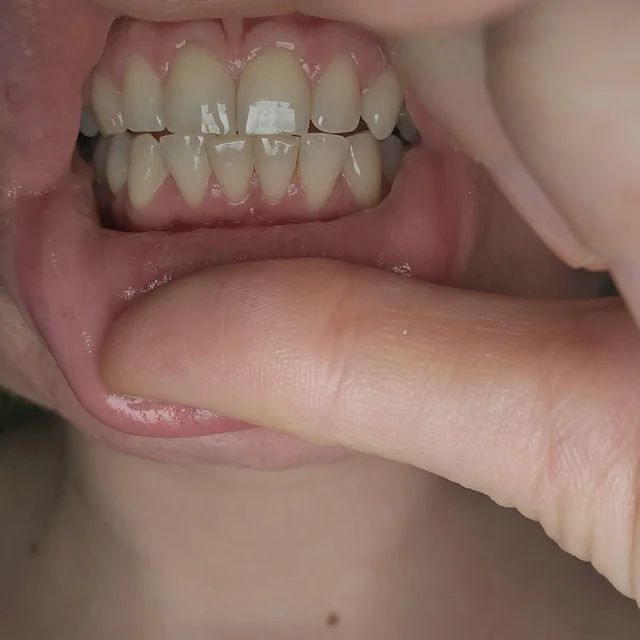

Inactive· since Mar 4, 2026
- 17
- days it ran
- 0
- relaunches
Ad copy
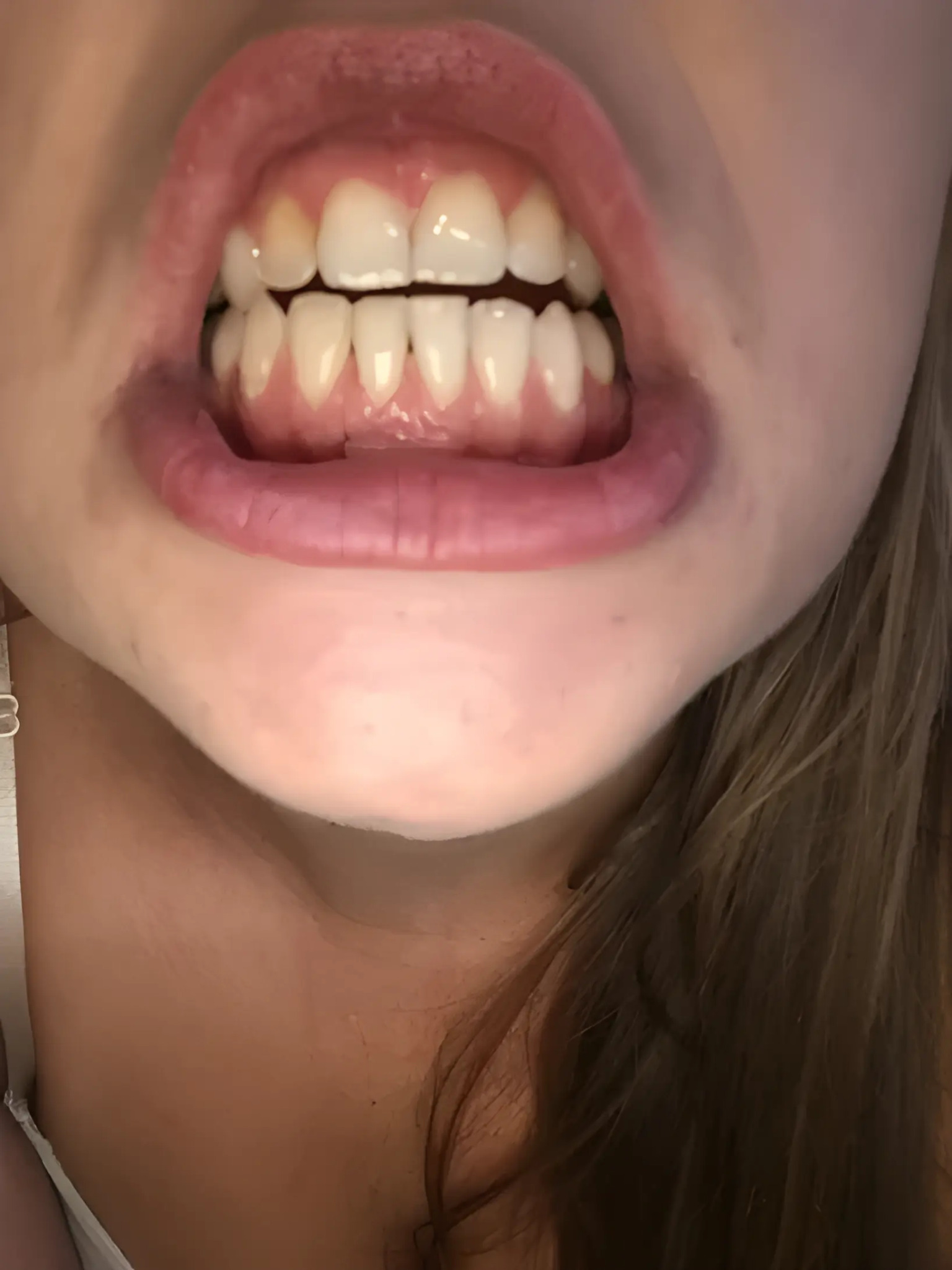
Got scheduled for deep cleanings today. The same treatment that turned my mother's mouth into a war zone for nine years before she lost every tooth anyway. Periodontist says my gums are "showing signs of advanced chronic periodontal disease." Whatever that means. She's starting me on Scaling and Root Planing. All four quadrants. $1,600. Plus Chlorhexidine rinse. Twice daily. For the rest of my life, probably. I took the treatment plan. Walked to my car. Sat there. Couldn't drive. Couldn't move. Just sat there holding this piece of paper. Scaling & Root Planing — 4 quadrants. Chlorhexidine 0.12% — BID. My mother did this for nine years. I don't know what to do. March 15th Didn't schedule it yet. Husband asked why. I couldn't answer. Just keep thinking about Mom. She went every single appointment. Every four months. Never missed a cleaning. Had this little calendar on the fridge with all her dental visits circled in red. Would show me every January — all four appointments booked for the year. "See? I'm going. I'm doing everything right." She'd show me her gums too. After the appointments. "The hygienist said the pockets went down a little. The treatment is working." But she wasn't working. Year 2, she stopped going to Sunday brunch with her girlfriends. Said her breath was so bad she couldn't sit close to anyone. Had to turn her head when she talked because the smell — that deep, rotting infection smell — made people lean away. "It's the gum disease," she'd say. "The deep cleanings help for a few weeks but then the smell comes back." Her friends thought she was pulling away. Being antisocial. She wasn't being antisocial. She was being destroyed from the inside out. But her pockets were "a little better" after each scraping. I keep coming back to that. If the treatment was working — if the pockets were going down — why was the infection still there? Why did the bleeding come back within weeks? Why was her breath getting worse? That doesn't make sense. March 18th Periodontist's office called. "You haven't scheduled your Scaling and Root Planing." I said I needed more time. The receptionist sounded annoyed. "Your pocket depths are 6mm and your bleeding on probing is significant. This is urgent." Urgent. Mom's teeth still fell out after nine years of "urgent" treatment. What's urgent is I don't want to end up like her. March 22nd Can't stop thinking about the recolonization. Year 3 of treatment. Mom called me crying at 2 PM. "It's getting worse, Margaret. Not better. My pockets were 5mm after the last cleaning. Just went back. They're 6mm again. The bleeding never stopped. I've been swishing Chlorhexidine twice a day for eight months and my gums are WORSE." I drove over shaking. Found her in the bathroom. Pulling her lower lip down. Staring at gums so red and swollen they looked like raw meat. "Bacterial recolonization," her periodontist said. "The pathogens have re-established in the deep pockets. We'll schedule another round of Scaling and Root Planing." They scraped her roots raw again. Sent her home with a sorer mouth and the same prescription rinse. More scraping. To fix what the first scraping couldn't hold. Two rounds now. Every year. Her periodontist's response? "This is normal for chronic cases. We'll monitor it more closely." Monitor it. While the bacteria rebuilt their fortress every single time. I remember finding her one morning. 6 AM. Standing at the bathroom sink. Toothbrush in her hand. Pink foam everywhere. "It bleeds every single time," she whispered. "Every morning. Every night. I brush so gently — I barely touch them — and blood just pours out. Three years of treatment and I can't brush my teeth without bleeding." The bleeding was happening at every single brushing by then. The latest round of deep cleanings was "working." But she was still bleeding. And her pockets? Deeper than ever by the next appointment. I'm already noticing my own gums bleeding when I floss. That pink foam in the sink every morning. The metallic taste when I wake up. What if it gets worse on the Scrape-and-Rinse Playbook? What if my pockets keep growing despite the cleanings like hers did? What if I end up doing two rounds, three rounds, four rounds a year — and my gums are STILL bleeding and receding? March 25th The side effects. God, the side effects. Year 4. Mom stopped being Mom. Dad called me one morning. Voice shaking. "Margaret, something's wrong with your mother's mouth. Her teeth have turned brown. She won't smile anymore. She cancelled lunch with the girls again. She's been sitting in the bathroom staring at her teeth and crying." The Chlorhexidine had stained every tooth a deep yellow-brown. Within three months of starting the rinse. A woman who used to have a beautiful smile — people always commented on her smile — looked like she'd been chewing tobacco for twenty years. I found sticky notes all over her bathroom. She'd written herself reminders everywhere. "Don't forget the rinse — 7 AM and 7 PM." "Brush BEFORE the rinse, not after." "Don't eat for 30 minutes after rinsing." Every moment of oral care, regimented. Controlled. Chlorhexidine doesn't care about your smile. It doesn't care about your confidence. It just carpet-bombs everything in your mouth. Good bacteria. Bad bacteria. All of it. Twice a day. For the rest of your life. I'm 63. I want to smile at my grandchildren. I want to recognize my own teeth in ten years. I don't want to spend my final years with brown teeth and a mouth that tastes like chemicals. March 28th Husband found me up at 2 AM last night. Sitting at the kitchen table with my laptop. Research articles everywhere. "Margaret. What are you doing?" "Research." He sat down. Looked at the screen. I'd typed: "do deep cleanings actually fix gum disease long term" First result: Medical journal. "Scaling and Root Planing provides initial pocket depth reduction but does not address the underlying hydrophobic biofilm matrix that shields pathogenic bacteria in deep periodontal pockets. Recolonization to pre-treatment levels occurs within 4-8 weeks in the majority of chronic cases." Initial. Temporary. Not curative. Not fixing the problem. He didn't say anything. Just sat there reading with me. Clicked another link. Patient forum. "I've been doing deep cleanings every 4 months for seven years. My pockets are deeper than when I started. The Chlorhexidine stained my teeth so bad I'm embarrassed to smile. Meanwhile I've spent over $30,000, I can't taste my food anymore, and my front tooth is starting to wiggle. Nobody warned me this would be my life." That could be Mom writing that. Another post: "Spent $43,000 on periodontists, deep cleanings, LANAP, Caredo paste, bone grafts, and gum grafts over eight years. My gums look exactly the same as when I started. Except now I have brown teeth from the Chlorhexidine and enamel damage from the sandpaper paste I never had before." Another: "My periodontist keeps saying 'come back in four months, we'll clean again.' I've been coming back for six years. My pockets keep getting deeper. At what point do we admit this isn't working?" Another: "The deep cleaning removed the surface buildup. Then they put me on Chlorhexidine which destroyed my good bacteria. So the bad bacteria came back faster than before. Then they scraped again. For the symptoms caused by the treatment for the original symptoms. Does anyone else see how insane this is?" My husband looked at me. "These people... they sound exactly like your mom." "I know." "But their dentists keep prescribing the same thing." "I know." "So what's going on?" "I don't know. But I'm not scheduling that deep cleaning until I figure it out." April 2nd Found something. Was searching "why don't deep cleanings work long term for gum disease" and found a study. "Chronic periodontal disease is primarily driven by a hydrophobic biofilm fortress — an oily bacterial shield that water-based antimicrobial treatments physically cannot penetrate. Mechanical debridement (scraping) temporarily disrupts the biofilm surface but does not dissolve the hydrophobic extracellular matrix protecting pathogenic bacteria in deep pockets." Read it three times. Deep cleanings scrape the surface. That's all they do. Your gum pockets are supposed to heal after the bacteria are removed. That's what healthy tissue does. It tightens. Re-adheres to the tooth. Doctors call it "reattachment." If that system is blocked... the bacteria just rebuild their fortress. The moment the scraping is done. You could do deep cleanings every four months for twenty years. If the oily biofilm fortress keeps rebuilding, the infection keeps coming back. Oh my god. What if that's what happened to Mom? April 3rd Couldn't sleep. Back at the laptop. Searched: "hydrophobic biofilm periodontal disease" Article after article. "The subgingival biofilm in chronic periodontal pockets is encased in a hydrophobic extracellular polymeric substance (EPS) matrix composed of lipids, proteins, and polysaccharides. This matrix physically repels water-based antimicrobial agents, creating a protected reservoir for pathogenic bacteria that recolonizes treated sites within weeks of mechanical debridement." There it is. That's the fortress. That's the mechanism. An oily bacterial shield can't be broken with water-based treatments that bounce right off. Found a study: "Over 60% of patients on traditional periodontal maintenance protocols experience bacterial recolonization to pre-treatment levels within 8-12 weeks. Mechanical debridement does not address the underlying hydrophobic biofilm matrix." Over sixty percent. And the standard treatment? More scraping. More rinses. They never dissolved Mom's biofilm. April 4th Went down a rabbit hole. If deep cleanings don't dissolve the fortress... what happens over time? Searched: "long term deep cleaning periodontal complications" "Repeated Scaling and Root Planing can result in progressive root surface removal, increased tooth sensitivity, gum recession from mechanical trauma, and diminishing returns as root structure is depleted. Chlorhexidine use is associated with tooth staining, taste alteration, calculus formation, and oral microbiome disruption." I sat back from the laptop. Stared at the screen. Mom's problems didn't appear all at once. They appeared in sequence. Year 1: Bleeding gums. Started deep cleanings and Chlorhexidine. Year 2: Teeth stained brown from the rinse. Breath still bad despite treatment. Year 3: Bacterial recolonization — pockets deeper than before. Second round of SRP. Year 4: Couldn't taste food. Chlorhexidine destroyed her taste buds. Mouth dry as a desert. Added specialty toothpaste. Year 5: Caredo paste. Gritty like sandpaper. Terrified it was grinding her enamel. Tasted like drywall mud. Pockets still 6mm. Year 6: LANAP laser surgery. $10,000. Six weeks eating through a straw. Moderate improvement that lasted five months. Then right back to bleeding. Year 7: Gum grafts. $2,700 per site. Tissue harvested from the roof of her mouth. The pain. The partial failures. Year 8: Tried to stop the Chlorhexidine. Rebound infection was so severe her gums bled just from eating soft bread. Went right back on it. Year 9: Periodontist sat her down. "Margaret, we've exhausted our options. We need to discuss extractions." One treatment led to another led to another led to another. What if it wasn't nine separate failures? What if it was one problem — an oily biofilm fortress that none of those treatments could dissolve? While the treatments themselves created new problems? Deep cleanings scrape the surface. But the oily fortress rebuilds within weeks. So the bacteria come right back. Meanwhile the Chlorhexidine destroys your microbiome. Stains your teeth. Kills your taste buds. Dries your mouth out. And nobody ever dissolves the fortress. Nine years. Three periodontists. Not one dissolved her biofilm. Not once. April 5th Why didn't the deep cleanings ever work long-term for Mom? Every four months she'd go in and feel cleaner. "See? The cleaning helped!" Every six weeks later, the bleeding was back. The pockets refilling. The breath returning. She'd pull her lip down in the mirror. Press her finger against the gumline. Watch it bleed. "It's better right after the cleaning," she'd say. "But by the next appointment it's worse again." That's not better. That's temporary. The scraping was removing surface buildup every four months. By six weeks later, the oily biofilm fortress had rebuilt and the bacteria were right back in their bunker. Because nobody was dissolving the hydrophobic shield protecting them. Nine years of "it's better right after the cleaning." Nine years of bleeding, receding gums between appointments. Nine years of thinking the treatment was "working" because one window looked okay while her teeth slowly loosened and her bone slowly dissolved. Of course nothing got better. You can't fix a flooded basement by mopping the floor while the pipe is still broken. April 8th I'm showing symptoms now. Not just the bleeding. The recession. My gumline is visibly pulling away from my lower front teeth. I can see the roots starting to show. The tissue is so red and puffy it looks angry. Like raw meat. The wiggle. My lower left incisor moves. Just slightly. But I can feel it when I press my tongue against it. It didn't move last year. The breath. That deep, rotting smell that comes from infection living under the gumline. My husband hasn't said anything. But I see him lean back slightly when I talk to him in the morning. He's too kind to mention it. The dread. That feeling at 6 AM when you know what's coming. Picking up the toothbrush and your stomach drops because you know the sink will be pink again. This is how it started with Mom. Year 2. Couldn't eat an apple without seeing blood on it. Started cutting everything into tiny pieces. By Year 7, she had a kitchen drawer full of foods she used to love that she couldn't eat anymore. Corn on the cob. Steak. Crusty bread. Nuts. All sitting there. Mocking her. I have that same dread now. Sitting in my chest. Mocking me. I'm on the same path. April 10th Okay so it's an oily biofilm fortress. But what am I supposed to do about that? Can't "just brush harder." Brushing IS limited to 2-3mm. The infection lives at 6-9mm. Can't "just rinse more." My rinse is water-based. Water bounces off oil. "Use a Waterpik to blast the pockets clean." Everyone says that. My hygienist said that last month. "You need to flush those pockets out with the water flosser." As if I'm not trying. As if I'm choosing to spit blood every morning. I tried the Waterpik. Used it religiously. Twice daily. Blasted water into my pockets. Gums still bled. Still receded. The moment the water hit the oily biofilm — it beaded up and rolled off. Like trying to wash a greasy pan with cold water. Tried Caredo "periodontal repair" toothpaste. The hygienist's second suggestion after the Waterpik. They call it healing. I call it sandpaper. Spent three weeks scrubbing my teeth with a paste so gritty I could feel it grinding my enamel. $25 a tube. Tasted like drywall mud. The grit sat on top of my teeth. But it didn't reach the pockets. The paste scrubs the surface. But it doesn't dissolve the fortress. I need something that actually reaches the infection. Not on the surface. In the pockets. At 6mm depth. April 12th Searched "how to dissolve periodontal biofilm" Deep cleanings came up. Don't want more scraping. Specialty rinses came up. "Chlorhexidine, CloSYS, ioRinse." Tried them. Months of swishing. Didn't notice any lasting improvement. Just brown teeth and a destroyed microbiome. Then I found something else. "Lipid-soluble antimicrobial compounds — specifically carvacrol (from oregano oil) and thymoquinone (from black seed oil) — penetrate hydrophobic biofilm matrices at rates 400-600% higher than water-based antiseptics, dissolving the oily bacterial shield from within using the 'Like Dissolves Like' chemistry principle." Read it again. Oil-based compounds. Merge with the oily biofilm. Dissolve it from within. Like a makeup remover melting waterproof mascara. Water won't touch it. But oil dissolves oil. Found a study: "A 2019 meta-analysis in the Journal of Ethnopharmacology reviewed 31 clinical studies and concluded that lipid-soluble essential oil compounds demonstrate antimicrobial activity against periodontal pathogens at rates 4-6x higher than water-based treatments." Published research. Peer-reviewed. Not a blog post. That's... that's what I need. Ordered a generic oregano oil supplement from Amazon. $12. Two-day shipping. Started using it Tuesday. May 24th Six weeks on the generic oregano supplement. Nothing has changed. Still bleeding. Still receding. Still dreading mornings. Looked up the label. "Oregano oil blend — 150mg." No standardization. No carvacrol percentage listed. No mention of bioavailability. Herbal blend. Marketing fluff. That's not what the studies used. I needed pharmaceutical-grade concentration. Standardized carvacrol. The actual lipid-soluble compounds at clinical levels — not a watered-down capsule from a warehouse. Wasted six weeks. Bought a different brand. More expensive. "Premium oregano oil." Still just a generic herbal supplement. No standardized thymoquinone. No black seed oil. July 19th Eight more weeks. Still nothing. I don't know what else to do. Every morning the dread builds. That sinking feeling at 6 AM when you pick up the toothbrush and know what's coming. Every time I brush. See the pink foam. Taste the metal. Feel the soft, spongy tissue that should be firm and tight. Every time my husband looks at me talking and I know — I KNOW — he can smell the infection. He's too kind to say it. I see Mom. Year 1: Bleeding gums. Deep cleanings. Year 3: Recolonization. Pockets deeper. More scraping. Year 5: Brown teeth. Destroyed taste buds. Four treatments deep. Year 7: Couldn't eat anything that required biting. Year 9: Extractions. I'm on Year 1. What comes next? July 27th Something happened today. I was at my daughter's house. She's a dental hygienist. Telling her about the generic oregano supplements. How they didn't work. How nothing works. She got quiet. Then she walked over to her work bag. Pulled out a clinical journal. "Mom. Generic oregano supplements aren't the same as pharmaceutical-grade lipid-soluble formulations." She opened to an article on biofilm penetration. "A generic herbal blend from Amazon has maybe 20-30% carvacrol. Unstandardized. Mixed with fillers that reduce bioavailability. That's it. The studies showing 4-6x biofilm penetration used minimum 70% carvacrol, pharmaceutical-grade, with standardized thymoquinone from black seed oil. Completely different potency." She showed me the research. "Your gum pockets are shielded by an oily fortress. The bacteria — P. gingivalis, T. denticola — they're hiding at 6-9mm depth behind a hydrophobic biofilm matrix. Your toothbrush stops at 2-3mm. Your Waterpik sends water that bounces off oil. Your Chlorhexidine is water-based — it kills surface bacteria but can't reach the ones in the fortress. So they recolonize within weeks." Exactly what I found. "You need two things. First: a lipid-soluble compound at pharmaceutical concentration that can actually merge with and dissolve the oily biofilm. Carvacrol from oregano oil and thymoquinone from black seed oil — at standardized clinical levels. Second: systemic delivery. Not topical. A capsule that delivers through your bloodstream directly to the infected gum tissue from the inside. Where no brush, rinse, or paste can reach." "So why didn't my Amazon supplements work?" "Because they were diluted herbal blends with no standardization. The active compounds weren't at clinical concentration. And most of them had fillers that blocked absorption. You were basically taking a flavored oil capsule while the biofilm fortress got thicker." I felt my chest tighten. "I've been wasting months." "Not wasting. Learning. Now you know what to look for." She wrote down what to search. "Pharmaceutical-grade oregano oil. Minimum 70% carvacrol. Standardized thymoquinone from cold-pressed black seed oil. Systemic capsule delivery." July 29th Found one. Company called Orgatics. Their Oregano & Black Seed Oil capsules. Specifically formulated for periodontal biofilm penetration. Not general wellness. Not immune support. Biofilm dissolution. The label listed everything my daughter described. Pharmaceutical-grade Wild Oregano Oil, minimum 70% carvacrol. Cold-Pressed Black Seed Oil, standardized thymoquinone. Systemic capsule delivery designed for one capsule before bed — when anaerobic bacteria are most active and saliva flow is lowest. Checked the reviews. "I'm a nurse and after three years of deep cleanings my pockets kept getting deeper. Two weeks on this and my gums stopped bleeding. My hygienist measured my pockets and asked me what I'd changed." "My mouth finally feels clean in the morning. Not that infected, metallic taste I'd gotten used to. Clean." "Three weeks and I went from bleeding every single brushing to nothing. Not a drop. I'm not saying it's magic, I'm saying it's the piece that was missing all along." "My periodontist actually said 'Whatever you're doing, keep doing it.' First time in six years he didn't recommend more aggressive treatment." These aren't people talking about herbal supplements. They're talking about their biofilm dissolving. About their gums actually healing. About pockets actually shrinking. I ordered it that night. August 1st The capsules arrived this morning. Took one out. Read the label. Simple. Clinical. Not a gimmick. Took one capsule. Before bed. With water. That was it. No swishing for 60 seconds. No sandpaper texture. No chemical taste that makes you gag. No brown staining. No microbiome carpet-bombing. One capsule. Fifteen seconds. Done. The next morning, I brushed my teeth. Looked down at the bristles. Still pink. But less. Noticeably less. My hands trembled. One week: I brushed in the morning. Looked down. The foam in the sink was almost white. Barely any pink. I checked morning and evening. The bleeding was tapering every day. My husband noticed I stopped wincing when I brushed. Didn't comment. Just watched me move through my morning routine without that knot in my stomach. August 5th One week. Woke up this morning. Realized something. My mouth tasted different. Not that stale, metallic, infected taste I'd gotten used to waking up with every single morning. Not the rotting smell that made me breathe into my hand and check before talking to anyone. Clean. Actually clean. I lay there processing it. Seven days. My mouth hadn't tasted this clean in the morning in over a year. Stood up. Walked to the bathroom. Brushed my teeth. Looked down at the bristles. White. No pink. Husband noticed at breakfast. Kept looking at me. "What?" I asked. "You didn't rinse three times this morning." He was right. I'd been compulsively rinsing — gargling with mouthwash multiple times every morning trying to mask the breath. Today I'd just brushed and walked out. Because there was nothing to mask. August 12th Two weeks. Smiled at myself in the bathroom mirror last night. Just to check. Not a grimace. Not pulling my lip down to inspect the damage. An actual smile. Not checking whether my gumline was receding more. Not measuring how much root was showing. Not pressing my tongue against the loose tooth to see if it moved more today. A smile. Looking at my teeth. Just to see what they looked like when I smiled. I haven't done that in... I don't even know. A year? Two years? Then I went to brush. And flossed. And the floss came out clean. Not pink. Not bloody. I came out of the bathroom and my husband was standing in the hallway. "You were smiling," he said. "Yeah." His eyes got wet. He put his arm around me. We haven't stood like that in... I don't even know. I came downstairs and cried. August 19th Three weeks. Went to my granddaughter Sophie's soccer game. Sat in the bleachers the entire game. Cheered. Yelled "GO SOPHIE!" with my mouth wide open. Talked to the other grandparents afterward. Face to face. Not turning my head. Not covering my mouth with my hand. Not calculating the distance between my breath and their face. Someone I hadn't seen in months said, "You look so much happier, Margaret." I was. But the shame that made me hide — the breath, the bleeding, the swollen gums — gone. August 26th Four weeks. Woke up this morning. Brushed my teeth. Looked in the mirror. Pink gums. Not red. Not swollen. Not that angry, puffy purple that looked like raw meat. Pink. Firm. Tight against my teeth. I ran my tongue along my lower gumline. The ridge was gone. That swollen, spongy tissue that had been there for over a year — smooth. Firm. Healthy. I pressed my tongue against my lower left incisor. The one that had been wiggling. Nothing. No movement. Firm. I hadn't felt... firm teeth... in... I don't even know. A year? Longer? I thought healthy gums were gone forever. I thought that's just what happens when you get older. They were there. Hidden behind an oily fortress my water-based treatments couldn't dissolve. Now the fortress was dissolving. I took a photo of my gums in the mirror. Sent it to my daughter. "MOM!!! THEY LOOK AMAZING!!!" September 1st Called my sister tonight. "The bleeding stopped," I told her. "My pockets are shrinking. I can smile again. I can eat without worrying about my teeth." Silence on the other end. "Margaret... how?" I explained everything. The hydrophobic biofilm fortress. Why deep cleanings fail. Why Mom's gums got worse even with perfect treatment compliance. The difference between generic herbal supplements and pharmaceutical-grade lipid-soluble compounds. The systemic delivery that reaches the infection from inside the bloodstream. "I felt it working the first week," I said. "My mouth tasted clean in the morning — actually clean. Then over the next few weeks — the bleeding stopped. The swelling went down. The tissue firmed up. My tooth stopped wiggling." Her voice cracked. "If this works — if you don't end up like Mom—" "It's working. I promise." "I'm ordering it," she said. "Right now." September 8th Dental appointment today. Hygienist looked at my chart. Looked at me. Looked at the chart again. "You haven't scheduled your Scaling and Root Planing." "No." She frowned. Started to say something. Dr. Chen came in. Probed my pockets. She stopped mid-measurement. "Margaret. These numbers are significantly improved." She measured every site. Asked me to open wider. Measured again. "Three of your 6mm pockets are now 4mm. Two of your 5mm pockets are 3mm. Bleeding on probing: zero." She asked about my routine. What changed. What I was doing differently. I told her. Lipid-soluble antimicrobial capsule. Pharmaceutical-grade oregano oil and black seed oil. Systemic delivery through the bloodstream. Dissolves the hydrophobic biofilm from the inside. She typed notes. Asked questions. What brand. What concentration. How often. "This makes sense," she said finally. "Water-based antimicrobials can't penetrate the hydrophobic biofilm matrix. If the bacterial fortress was rebuilding within weeks of every cleaning, the infection would just recolonize. A lipid-soluble compound delivered systemically would reach the pockets from inside the tissue — where topical treatments can't go." She closed the laptop. "Keep doing what you're doing. We'll monitor. But based on what I'm seeing... you don't need the Scaling and Root Planing at this time." Don't need the deep cleaning. No nine years of scraping while my roots get thinner. No Chlorhexidine. No brown teeth. No destroyed taste buds. No carpet-bombed microbiome. No following Mom's path. I walked to my car. Got in. Sat there. Then I called my husband. "She said I don't need the deep cleanings. My pockets are shrinking. My gums are healthy. No treatment." I heard him exhale. Then his voice broke. "Thank God. Margaret, I was so scared you'd—" "I know. Me too." Today It's been eight weeks since I started the Orgatics Oregano & Black Seed Oil capsules. Went to my granddaughter's birthday party yesterday. First one in two years I actually enjoyed. Smiled in every photo. Not pressed-lip smiles. Real smiles. Mouth open. Teeth showing. Then we had dinner. Sat at the table for two hours. Laughed. Talked. Ate everything — corn on the cob, ribs, crusty bread. No calculating "can I chew this?" No hiding behind my napkin. No turning my head when people got close. Went to Sophie's school play last Saturday. Sat in the front row. For the whole performance. No embarrassment. No covering my mouth. No leaving early because I couldn't bear the thought of someone smelling my breath. Just normal teeth. In a normal mouth. Doing normal things. What I Know Now: Deep cleanings don't fix chronic gum disease. They scrape the surface temporarily while the oily biofilm fortress rebuilds within weeks and the bacteria recolonize the moment your mouth heals from the trauma. You can do deep cleanings every four months for twenty years. If the hydrophobic biofilm keeps rebuilding, the infection keeps coming back. And the scraping keeps removing root structure. And the Chlorhexidine keeps carpet-bombing your microbiome. The real problem isn't "bad hygiene." It's an oily bacterial fortress that water-based treatments physically cannot penetrate. Standard dental protocols don't dissolve the biofilm. Not because it doesn't matter. Because it's not in the protocol. Most "gum health" supplements are just generic herbal blends. They contain trace amounts of active compounds. They don't deliver at pharmaceutical concentration. They don't reach the deep pockets. The version that works — pharmaceutical-grade carvacrol from oregano oil and standardized thymoquinone from black seed oil — merges with the oily biofilm and dissolves it from within. Delivered systemically through your bloodstream to the infection site. "Like Dissolves Like." You notice it working within the first week. Your morning mouth tastes clean. Not infected. Then over weeks: the bleeding stops. The swelling goes down. The tissue firms up. The pockets shrink. Your breath comes back. Your smile comes back. Because you dissolved the fortress. I'm writing this down because I want to remember. Six months ago I was terrified. Holding a treatment plan for the protocol that destroyed my mother's mouth for nine years. Watching my body start the same decline. Bleeding gums. Receding gums. Loose teeth. Thought I was trapped. But I wasn't. The trap was believing: Deep cleanings fix gum disease (they don't — they scrape the surface while the oily fortress rebuilds) The pockets going down after scraping means it's working (it doesn't — they refill within weeks) Chlorhexidine is safe long-term (it's not — it destroys your microbiome, stains your teeth, kills your taste) Periodontists test for the underlying cause (they don't — they follow the Scrape-and-Rinse Playbook) Generic oregano supplements are the same as pharmaceutical-grade (they're not — concentration and standardization matter) Getting older means accepting gum disease (it doesn't) All gum health products are the same (they're not) Once I stopped believing those things — once I saw the contradictions — the path became clear. An oily biofilm fortress needs to be dissolved. Not scraped. Not rinsed with water. Dissolved. Simple. Not easy. But simple. I don't know who will read this. Maybe no one. Maybe just me in ten years, looking back. But if you're reading this and you see yourself in my story— If your gums bleed every time you brush and the deep cleanings only help for a few weeks. If you're exhausted from spitting pink into the sink every single morning. If your gumline is receding and you can see roots that weren't visible last year. If your teeth are starting to wiggle and you press your tongue against them compulsively, checking if they moved more today. If your breath has that deep, rotting smell that comes from infection under the gumline — and you've stopped leaning close to people because of it. If Chlorhexidine stained your teeth brown and destroyed your taste buds and dried your mouth like a desert. If it carpet-bombed your microbiome while the bacteria in their oily fortress were untouched. If you've been sentenced to the Scrape-and-Rinse Playbook — deep cleanings every four months, prescription rinses twice daily — while your pockets keep getting deeper anyway. If you've spent thousands on specialty pastes, lasers, grafts, and surgeries — and your gums are STILL bleeding and receding. If you're terrified of ending up like your mother. Dentures. Extractions. A smile you lost forever. What I want you to know: If I hadn't talked to my daughter about pharmaceutical-grade formulations, I'd be in the Scrape-and-Rinse Playbook right now. My gums might feel "a little better" right after the cleaning. And by six weeks later the bacteria would have recolonized. And in two years, I'd be on round three of deep cleanings with deeper pockets. And in five years, I'd be staring at LANAP surgery quotes — $10,000 for a 40% success rate. And in nine years, I'd be hearing the word "extractions." Just like Mom. Because the deep cleanings would "work" — they'd scrape the surface temporarily. But they wouldn't dissolve the oily biofilm fortress. So the bacteria would keep rebuilding. And the treatments would keep destroying my roots, my microbiome, my taste buds, my confidence. Over and over and over. But I had a choice I didn't know existed. I dissolved the fortress instead. Not instead of caring for my teeth. Not against dentists. Just fixed the underlying problem. So my gums could actually heal. That choice changed everything. The capsule is Orgatics Oregano & Black Seed Oil. I found it at tryorgatics.com I verified it was pharmaceutical-grade before I bought it. Not generic. Not diluted. Minimum 70% carvacrol. Standardized thymoquinone. Systemic capsule delivery. I felt it working the first week. My morning mouth tasting clean. Not infected. Then week by week: the bleeding stopped. The swelling went down. The tissue firmed up. The pockets shrank. My smile came back. There's a 60-day guarantee. Try it. Watch your bleeding. Track your gum color. If it doesn't work, get your money back. I risked nothing. And got my smile back. I'm writing this because I needed to process what happened. How close I came to following Mom's path. How one conversation with my daughter changed everything. How finding the right solution — not another scraping, not another rinse — actually fixed the problem. If you read this and something clicks — if you see the contradictions I saw — if you realize your deep cleanings aren't fixing anything, just temporarily scraping a surface that rebuilds within weeks— Then maybe this diary entry finds you at the right time. Maybe you're standing where I was six months ago. Holding a treatment plan. Terrified. Trapped. You're not trapped. There's an exit. I found it. You can too.
Stop the "Scrape-and-Rinse" Cycle and Finally Reclaim Your Smile
"I used to dread picking up my toothbrush every morning — pink foam, bleeding gums, that rotting taste — but since starting this one-capsule nighttime ritual, my gums finally feel firm and healthy. I love that I can smile in every photo with my grandkids again without the constant fear of loose ...
LEARN MORELike this ad? Make it yours.
Crush rebuilds this exact creative around your product — your brand, your colors, your offer — in about a minute.