
Inactive· since Mar 22, 2026
- 69
- days it ran
- 0
- relaunches
Ad copy
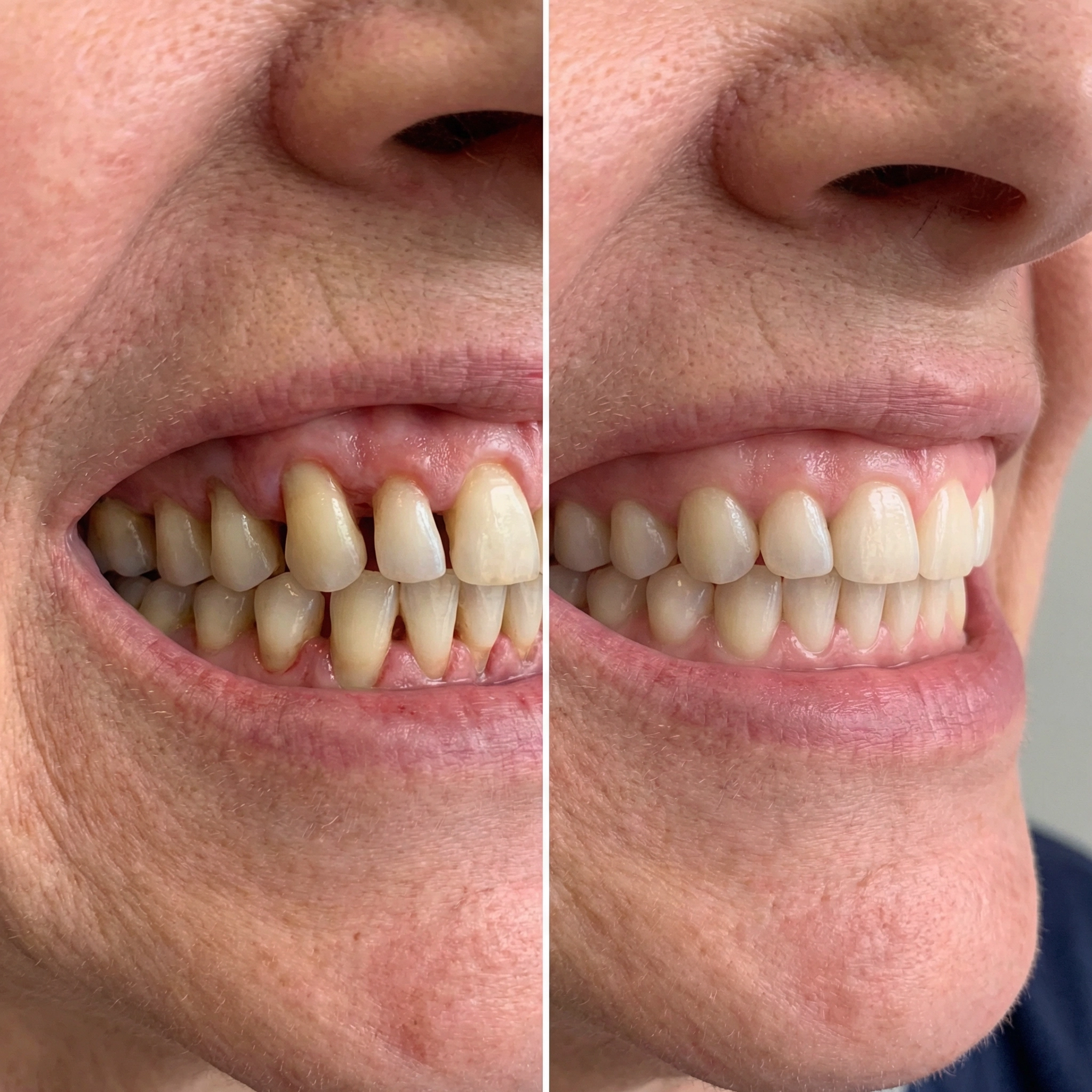
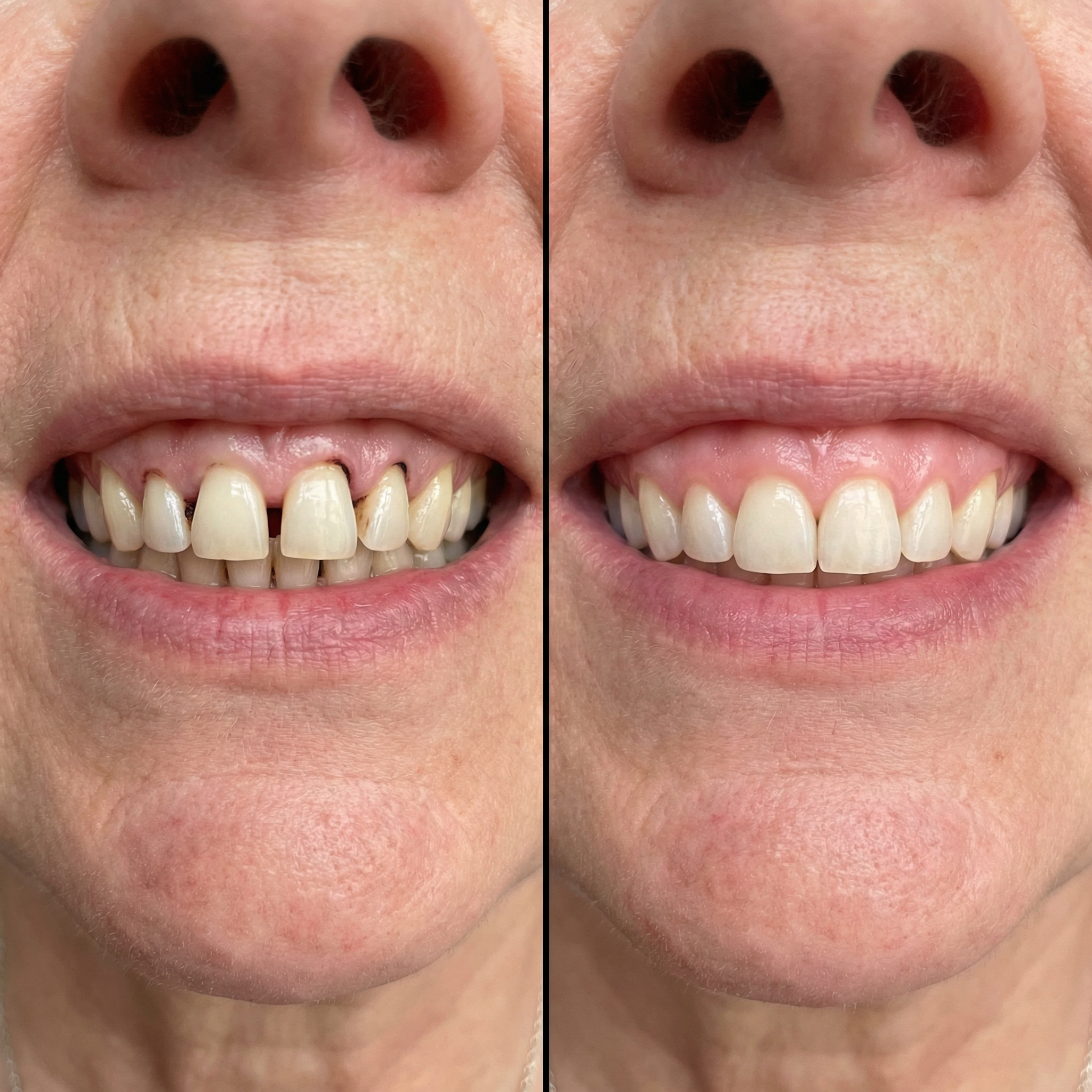
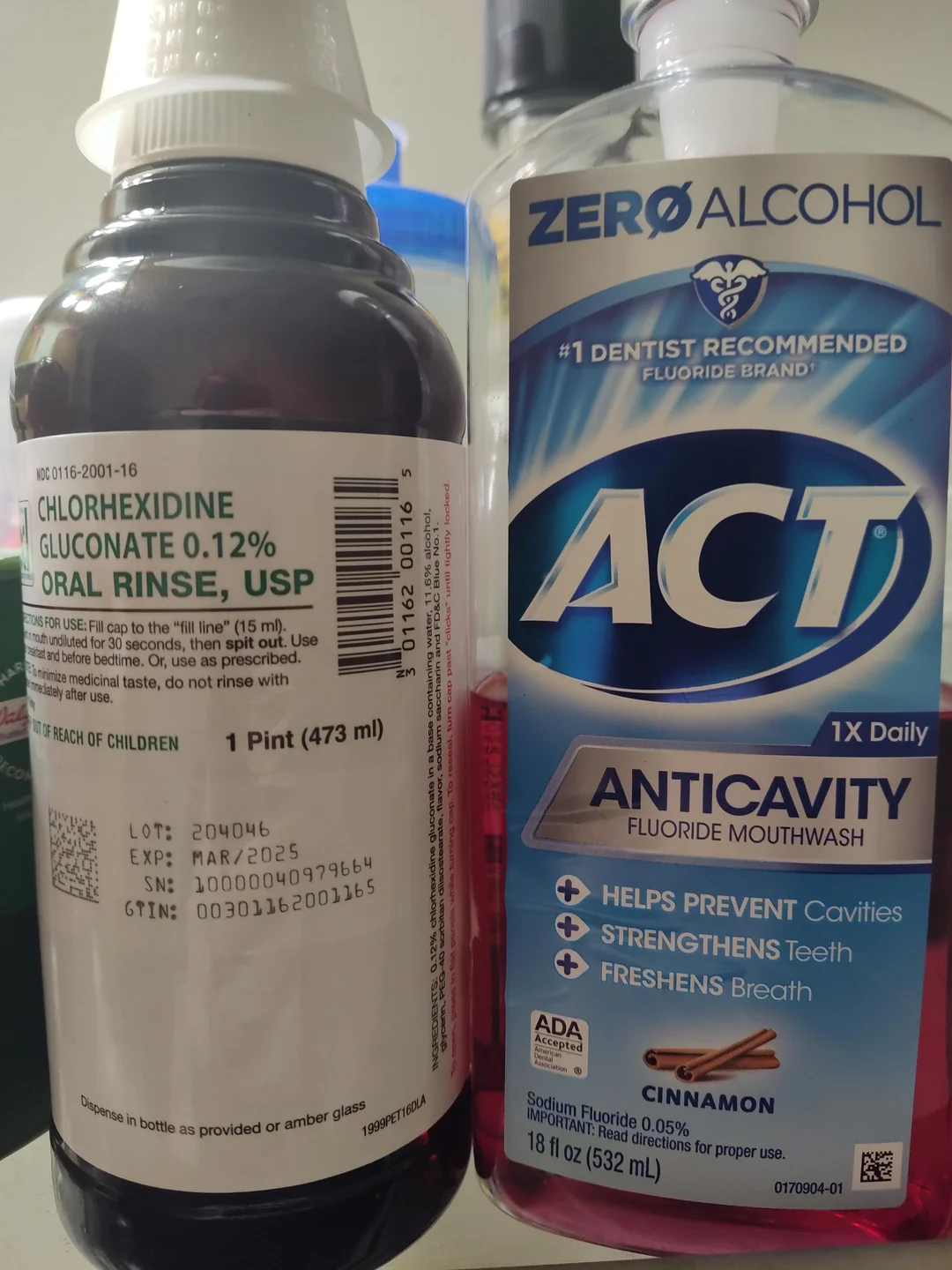
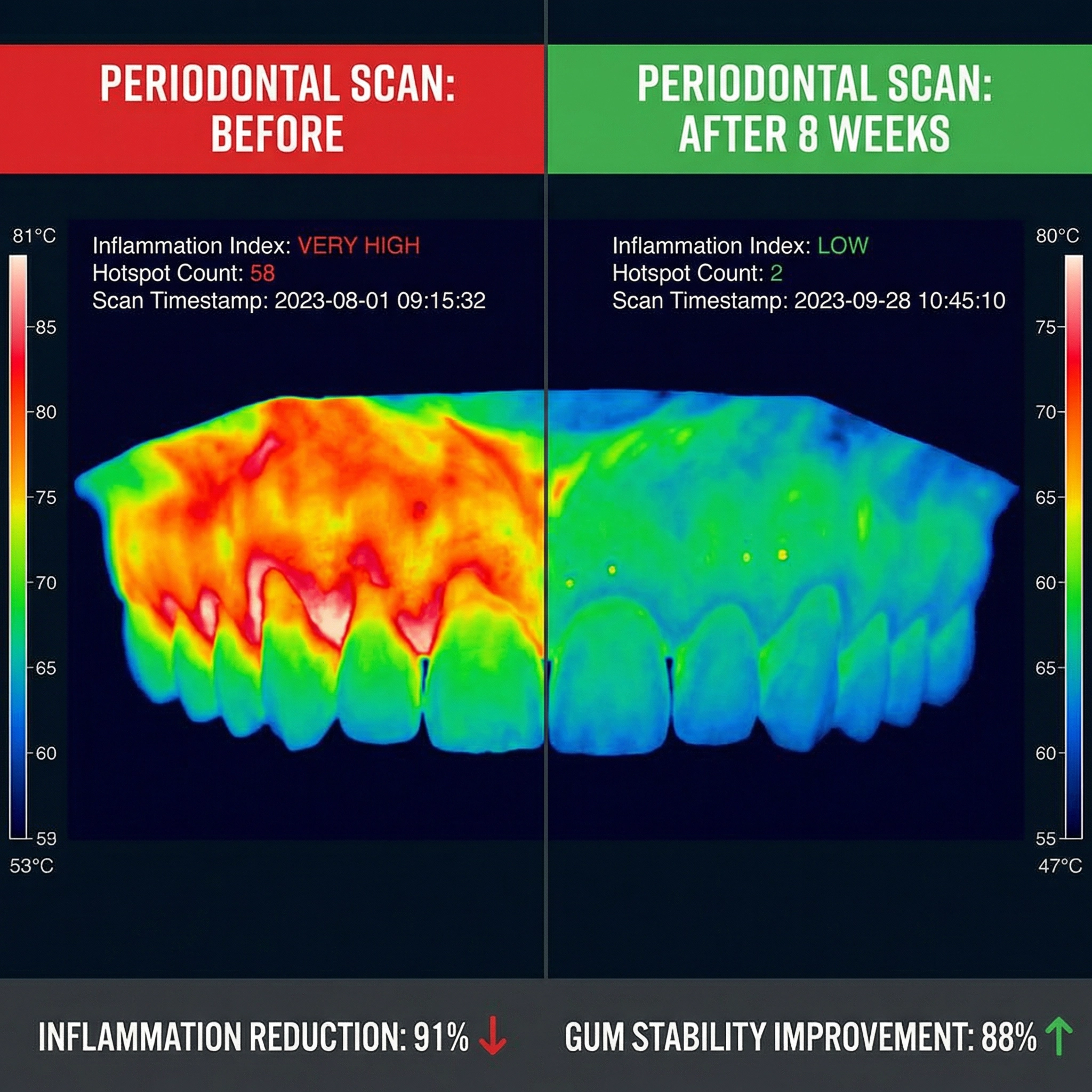
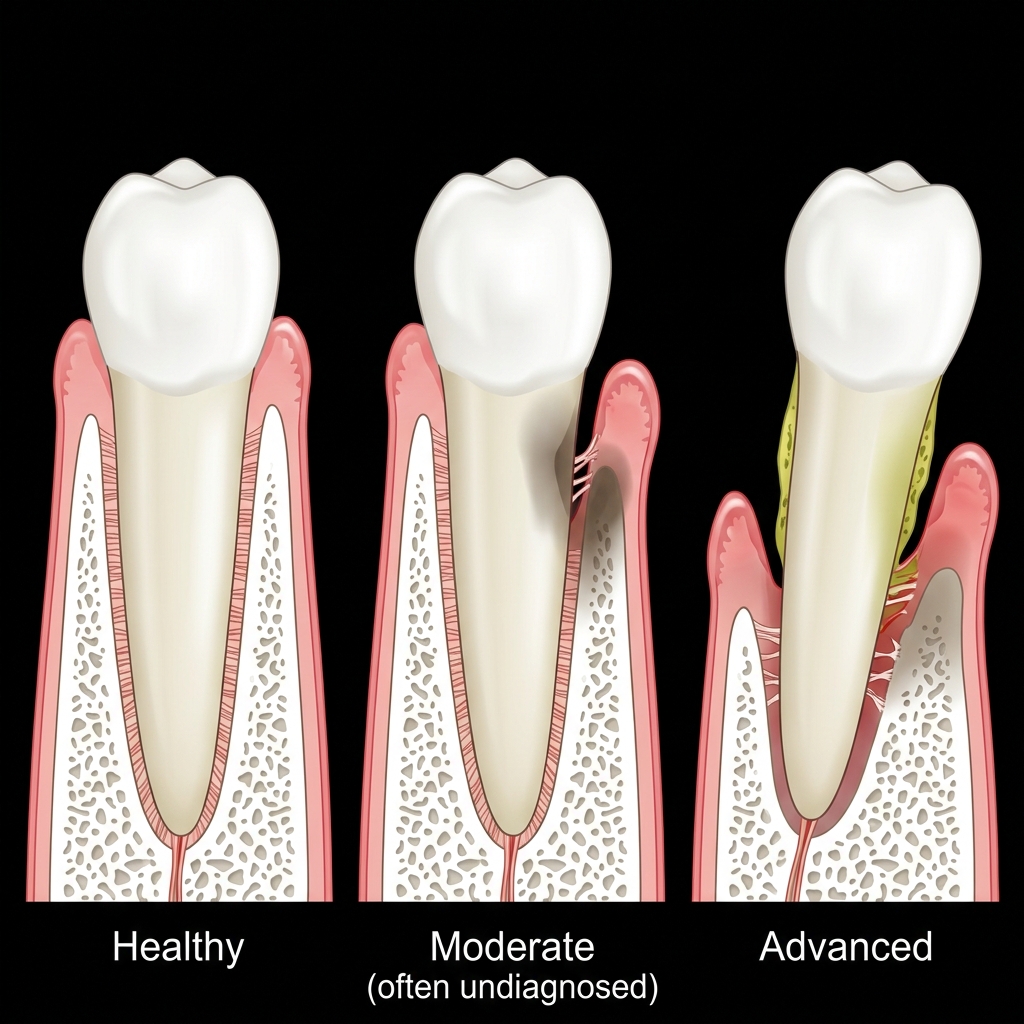
My periodontist said if I skipped another deep cleaning, she'd document it in my chart as "patient non-compliant with recommended treatment." I had eleven minutes with her. She'd never met me before. Dr. Warren's retirement letter came on a Tuesday. Standard form letter. "After 30 years of practice, I'm stepping away effective October 1st. Your care will be transferred to Dr. Sarah Mitchell." I sat at the kitchen table staring at it. Fifteen years. I'd been seeing Dr. Warren for fifteen years. He knew my history. My mother's dentures at 62. My fear of losing my teeth. He'd always worked with me. "Let's keep you on the deep cleaning schedule, Margaret. Every four months. We'll stay ahead of it. You're doing the right things." Now he was gone. My first appointment with Dr. Mitchell was October 17th. Routine cleaning. Transfer of records. Meet the new periodontist. I sat in the exam room. Same room I'd been in for over a decade. Same posters about gum health and flossing technique. Different doctor. Dr. Mitchell walked in. Young. Maybe 38. Laptop in hand. "Mrs. Collins." Firm handshake. All business. "I've been going through your file." She sat down. Pulled up my records. Scrolled. Her expression changed. "Your pocket depth history." She turned the screen toward me. "2021: 4mm average. 2022: 4.5mm. 2023: 5mm. 2024: 5.5mm. Today: three sites at 6mm, two at 7mm. Bleeding on probing across the board." She looked at me. "Five years of progressively worsening periodontal disease. Significant bone loss on the X-rays. Fourteen deep cleanings in that time. And the pockets got deeper every single year." "Dr. Warren and I had a plan. Deep cleanings every four months. Prescription rinses between visits. He was monitoring—" "Monitoring what? The decline?" Her voice was sharp. "Mrs. Collins, you've had fourteen scaling and root planing sessions and your disease has progressed every year. Your previous periodontist kept scheduling the same procedure that wasn't working. I need to get you on an aggressive protocol immediately." My stomach dropped. "What does that mean?" "Deep cleaning all four quadrants today. Then every three months instead of four. Chlorhexidine rinse twice daily between visits. And I want to add Arestin — antibiotic microspheres placed directly into the pockets after each cleaning. $75 per tooth per visit." She was already typing. "If the pockets don't stabilize after two rounds, we discuss surgical options." "I've been doing deep cleanings for five years and they haven't—" "More frequent cleanings. More aggressive rinses. Antibiotic placement. This isn't the same plan Dr. Warren had you on. This is the protocol that should have been started years ago." "But the cleanings never held. Every four months they'd scrape and within weeks the bleeding would—" "That's exactly why we need to do them more often. Every three months. With antibiotics. If you skip cleanings or refuse the new protocol, I'm required to document it as non-compliance." The printer hummed. She handed me the treatment plan. Deep cleaning all four quadrants: $1,600. Arestin placement, 8 sites: $600. Chlorhexidine prescription: $45/month. Follow-up cleaning in 12 weeks: $400. Repeat indefinitely. $2,200 today. Then $1,000 every three months. Forever. She stood. Left the room. The whole appointment took eleven minutes. I sat there holding the treatment plan. Hands shaking. Non-compliance. In the parking lot, I called my husband. "How was the new periodontist?" "She says Dr. Warren wasn't cleaning aggressively enough. Wants me on a new protocol. Deep cleanings every three months with antibiotics packed into the pockets. $2,200 today. Then $1,000 every three months. Indefinitely." Silence. "Every three months?" "She said if I refuse, it goes in my chart as non-compliant." "But... you've been getting deep cleanings for five years. They cost us—" "$5,600. I know. And my pockets got worse every year." "So her solution is... more deep cleanings?" I didn't have an answer. That night I couldn't sleep. Lay in bed staring at the ceiling. My husband's breathing steady next to me. Dr. Warren had done exactly what Dr. Mitchell wanted to do. Just less frequently. Deep cleanings. Prescription rinses. Monitoring. The standard protocol. Fourteen cleanings. $5,600. My pockets deepened every single year. And Dr. Mitchell's plan was the same thing — just more of it. More often. More expensive. With antibiotics added. Was more of the same going to fix what the same hadn't fixed in five years? Or was I about to spend another $4,000 a year on a protocol that was never going to work? At 3 AM I went downstairs. Sat at the kitchen table with my laptop. why don't deep cleanings fix gum disease permanently do deep cleanings actually work for chronic periodontal disease why do pockets come back after scaling and root planing Every article from the dental industry said the same thing. Deep cleanings are the gold standard. Essential for periodontal maintenance. Must be repeated regularly. But then I found the forums. The patient forums. Women like me. "I've been getting deep cleanings every 4 months for 6 years. My pockets are deeper now than when I started. My periodontist just says 'keep coming in.' At what point do we admit this isn't working?" "$400 every cleaning. Four times a year. That's $1,600 a year. For seven years. $11,200. And my gums still bleed every morning. But my periodontist acts like I'd die without them." "My hygienist scraped so aggressively last time I couldn't eat for three days. Gums were raw. Bleeding worse than before the cleaning. Two months later? Right back where I started. Scheduled for another one." "Spent $8,000 on deep cleanings over five years. Periodontist finally said 'we need to discuss surgery.' If the cleanings were going to work, wouldn't they have worked by now?" My heart hammered. These women sounded exactly like me. Maybe Dr. Mitchell is right that the cleanings weren't enough. But what if more cleanings wasn't the answer either? Then I searched: why do deep cleanings wear off And my mother's face flashed in my mind. She'd been on the deep cleaning treadmill for eight years before they gave up and moved to surgery. Every four months. Sometimes every three. Same chair. Same scraping. Same "your numbers improved slightly" followed by "your numbers are back up." Eight years. Over $12,000. And her pockets never stabilized. The deep cleanings became her whole life. She'd schedule vacations around them. Cancel plans if a cleaning fell on the same week. Organized her entire calendar around sitting in a chair while someone scraped her roots raw. And the Chlorhexidine between cleanings. The brown stains on her teeth. The taste buds that went dead. The dry mouth so bad she kept water on her nightstand because she'd wake up feeling like she'd swallowed sand. Then the surgery. Three rounds. $23,000. All failed. Dentures by 62. I remember her sitting at the kitchen table one evening. Staring at her dentures in a glass of water. "Eighteen years," she whispered. "Eight years of cleanings. Three surgeries. And I still lost them all." She died at 71. Not from her teeth. But she was never the same. Stopped going out. Stopped eating at restaurants. Stopped smiling. I closed the laptop. Rubbed my face with both hands. $5,600 on deep cleanings over five years. Pockets worse every year. And Dr. Mitchell's answer was more cleanings. More often. More expensive. With antibiotics that cost $75 per tooth. The same approach that failed my mother for eight years before they moved to surgery that also failed. What do I do? The treatment plan sat on the counter. Five feet away. Mocking me. $2,200 today. $1,000 every three months. Forever. I didn't schedule it. One week passed. Then two. Dr. Mitchell's office called. "Mrs. Collins, you haven't scheduled your cleaning. Dr. Mitchell wants to confirm you're proceeding with the treatment plan." "I need more time to think about it." "Ma'am, your pocket depths are at 6 and 7 millimeters. Delaying treatment allows the disease to progress. Dr. Mitchell was very clear—" "I said I need more time." I hung up. My husband found me in the living room one evening. "Margaret. What are you doing?" "Thinking." "About?" "Why fourteen deep cleanings didn't work." "The new periodontist said you need more aggressive—" "More aggressive cleanings. That's her answer. The same thing that hasn't worked in five years, but more of it. More often. More money." His chin trembled. "But what if she's right? What if your teeth get loose? What if you can't eat? What if you end up like—" "What if I spend another $4,000 a year on cleanings that wear off in six weeks? What if I do this for another five years and my pockets are still getting deeper? What if I end up exactly where my mother was — $12,000 in cleanings that failed, then surgery that also failed, then dentures anyway?" He had no answer. That weekend I searched everything. Research papers. Clinical journals. Published studies. And I found the answer to the question that had been gnawing at me since Dr. Mitchell's appointment. Why don't deep cleanings work long-term? Journal of Clinical Periodontology. 2020. Volume 47, Issue 6. The bacteria in chronic periodontal pockets aren't just sitting there exposed. They've built a fortress around themselves. It's called biofilm — a slimy, oily extracellular matrix made of lipids, proteins, and polysaccharides. This matrix is hydrophobic. It physically repels water. The scaler during a deep cleaning scrapes past this fortress. Disrupts it mechanically. That's why your numbers drop 1mm right after a cleaning. That's why Dr. Warren kept saying "the cleanings are working." But a metal instrument can't dissolve an oily matrix. It scrapes past it. Within four to eight weeks, the bacteria behind the fortress recolonize. The biofilm rebuilds. The numbers bounce right back. That's why I needed a cleaning every four months. Not because the cleanings were maintaining my gums. Because the cleanings were wearing off. Every single time. And every water-based rinse prescribed between cleanings — Chlorhexidine, ioRinse, CloSYS, Listerine — hits that same oily surface and beads up. Rolls off. Like trying to wash a greasy pan with cold water. The bacteria behind the fortress were untouched between every cleaning for five straight years. And the antibiotics Dr. Mitchell wanted to pack into my pockets? Arestin. $75 per tooth. Water-based microspheres. They dissolve and release antibiotic into the pocket. Into a pocket shielded by an oily, water-repelling fortress. The antibiotic hits the oily biofilm. Beads up. Rolls off. Kills surface bacteria floating in the pocket fluid. The ones behind the fortress? Untouched. $75 per tooth. Eight sites. $600. To send water-based antibiotics against an oil-based fortress. I sat back from the laptop. Stared at the screen. Fourteen deep cleanings that scraped past the fortress but couldn't dissolve it. Five years of water-based rinses that bounced off the fortress. And the new plan? More scraping. More water-based rinses. Plus water-based antibiotics. The same approach. Repeated harder. Repeated more often. At three times the cost. Dr. Warren wasn't negligent. Dr. Mitchell wasn't wrong about the urgency. They were both doing exactly what they were trained to do. But the training was wrong. You can't dissolve an oily fortress by scraping past it more aggressively. You can't dissolve it with water-based rinses, no matter how often you swish. You can't dissolve it with water-based antibiotics at $75 per tooth. The fortress needs to be dissolved. Not scraped past. Dissolved. Then I found the second study. Journal of Ethnopharmacology, 2019. Meta-analysis reviewing 31 clinical trials. Lipid-soluble compounds — specifically carvacrol from oregano oil and thymoquinone from black seed oil — penetrate hydrophobic biofilm at rates 400-600% higher than water-based antiseptics. The chemistry principle: "Like Dissolves Like." Oil dissolves oil. You can't wash a greasy pan with cold water. You need something that speaks the same chemical language as the grease. And the delivery method: systemic. Through the bloodstream. A capsule that enters your blood and is carried directly to inflamed gum tissue from the inside — at 6mm depth, at 7mm, at 8mm. Not topical application that stops at 2-3mm. Not a rinse that washes away in 30 seconds. Continuous delivery from the inside, all night, while anaerobic bacteria are most active and saliva flow is lowest. So I started trying oregano supplements. First: the highest-rated oregano oil capsule on Amazon. Five stars. Thousands of reviews. Took it for six weeks. Didn't miss a day. Checked my bristles every morning. Same bathroom. Same light. Same toothbrush. Still pink. Still bleeding. Next: the oregano oil from the health food store. The one the naturopath recommended. Eight weeks straight. Still bleeding. Maybe slightly less. Could be wishful thinking. I wasn't trusting it yet. My follow-up with Dr. Mitchell was four weeks away. I tried a "clinical strength" oregano supplement from a specialty vitamin site. Most expensive one they had. Nothing. Bleeding didn't stop. Gums still spongy. Still swollen. Three weeks until my appointment. I was going to have to schedule the aggressive cleaning protocol. $2,200. Then $1,000 every three months. With the antibiotics at $75 per tooth that would bounce off the fortress just like everything else. Two weeks before the appointment, I was at Whole Foods picking up groceries. Found myself standing in the supplement aisle. Staring at the oregano products. Nice labels. Health claims. All useless. A woman was reading labels next to me. Late 60s. Sharp eyes. Reading glasses pushed up on her head. "Save your money," she said without looking up. I turned. "What?" "Generic oregano supplements." She gestured at the shelf. "Most of these don't work for gum disease." "I've tried three brands. None of them stopped the bleeding." She looked at me. "Periodontal?" "6 and 7mm pockets. Fourteen deep cleanings in five years that never held. New periodontist wants me on an even more aggressive cleaning protocol. $4,000 a year." She nodded slowly. "My sister. Same exact story. Years of deep cleanings that never lasted. Then spent over a year trying every oregano supplement on the shelf. None of them touched her numbers." "Did she end up on the aggressive protocol?" "Almost. Then I started digging into why the supplements weren't working." She picked up a bottle from the shelf. Flipped it around. "Read the carvacrol percentage." I looked. It didn't list one. Just "oregano oil extract." "That's what you're actually paying for," she said. "Generic oregano extract. Could be 10% carvacrol. Could be 5%. The clinical studies that show biofilm penetration use minimum 70% carvacrol. These supplements are giving you a fraction of what you need and charging you $30 for the privilege." "So all of these—" "Most of them. You need pharmaceutical-grade oregano oil — minimum 70% carvacrol — combined with black seed oil for thymoquinone. Both lipid-soluble. Both proven to penetrate hydrophobic biofilm. And you need systemic delivery through the bloodstream — not topical swishing that stops at 2-3mm while the infection lives at 6-9mm." She pulled out her phone. "There's one brand my sister found that actually does it right. Orgatics. Pharmaceutical-grade Wild Oregano Oil — minimum 70% carvacrol — combined with Cold-Pressed Black Seed Oil with standardized thymoquinone. One capsule before bed. Systemic delivery through the bloodstream to reach deep pockets from the inside." She showed me the site. The ingredient list matched exactly what the Journal of Ethnopharmacology study used. And a 90-day money-back guarantee. "My sister's been taking it five months. Three of her 6mm pockets dropped to 4mm. Bleeding stopped completely by week three. No aggressive cleaning protocol. After years of deep cleanings that never held." "Her periodontist accepted this?" "Her new periodontist, yes. The first one wanted more frequent cleanings with antibiotics — just like yours. She got a second opinion from a periodontist who actually reads current research. Said if the numbers keep improving, just quarterly monitoring. No more scraping every three months." "And it's held?" "Five months. Pockets stable. No bleeding. No more deep cleanings wearing off in six weeks. Her periodontist checks her every four months. Monitoring only. First time in years she's not dreading an appointment." I ordered it on my phone standing in that aisle. The bottle arrived five days later. I took the first capsule before bed. Didn't expect much — I'd been burned three times already. And fourteen deep cleanings before that. Checked my bristles the next morning. Pink. Basically where they always were. Too early to tell. Week one — I checked every morning. Still pink. Maybe slightly lighter. Small change. Could be noise. I wasn't trusting it yet. Week two — Lighter bristles. I checked three mornings in a row to make sure. Lighter. Lighter. Lighter again. Consistent. Less pink than I'd seen in years. Less pink than after any of the fourteen deep cleanings. Now I'm paying attention. My husband noticed I wasn't wincing when I brushed anymore. Stopped hearing me spit and sigh in the bathroom every morning. "Something's different," he said one night. "You don't seem as... dreading it." Week three — White bristles. Checked again. White. Again. White. Three mornings in a row. No blood. Not a trace. I pressed my finger firmly against my gumline. Nothing. No seeping. The tissue felt different. Not spongy. Firm. Tight against the teeth. Fourteen deep cleanings in five years never gave me white bristles. Not once. The best I ever got was "lighter pink for a few days" before the bleeding came right back. I sat on the edge of the bathtub and put my head in my hands. Not from stress. From relief. Week four — the day before my appointment with Dr. Mitchell. White bristles. Firm tissue. The breath — that deep, stale smell I'd carried for years despite every cleaning, every rinse, every paste — was gone. My husband mentioned it before I did. At the appointment, the hygienist probed my pockets. Measured. Paused. Measured again. She typed the numbers in. Routine for her. For me? Everything. Dr. Mitchell walked in. Pulled up my chart. Stopped. "Three of your 6mm pockets are reading 4mm. Bleeding on probing: zero." "Yes." She looked at the previous visit. 6mm and 7mm across the board. Bleeding everywhere. Fourteen deep cleanings that never held. Then today. 4mm. Zero bleeding. "You started the new cleaning protocol?" "No." Her head came up. "No?" "I found something else. A capsule. Pharmaceutical-grade oregano oil — minimum 70% carvacrol — combined with black seed oil. Lipid-soluble compounds that dissolve the hydrophobic biofilm from the inside through systemic bloodstream delivery. The biofilm that fourteen deep cleanings scraped past but never dissolved." Her jaw tightened. "Mrs. Collins, supplements aren't the same as—" "My pocket depths dropped an average of 1.5mm in four weeks. Bleeding on probing went from every site to zero. Fourteen deep cleanings in five years never achieved that. Not once. That's on your screen right now." She stared at me. Then at the chart. Then back at me. Long silence. "What's it called?" "Orgatics." She typed it in. Read the site. Looked at the ingredient list. Pharmaceutical-grade carvacrol. Standardized thymoquinone. Systemic delivery. Another silence. "Continue what you're doing. I want to see you back in eight weeks. If it holds, we'll maintain this approach with quarterly monitoring." If it holds, we'll maintain this approach. No aggressive cleaning protocol. No $2,200 today. No $1,000 every three months. No antibiotics at $75 per tooth bouncing off the fortress. I walked out of that office. Sat in my car. Called my husband. "Three 6mm pockets down to 4mm. Zero bleeding." I heard him exhale. Then a sob. "Thank God. Margaret, I was so scared you'd—" "I know. Me too." That was four months ago. My pocket measurements this morning at my quarterly check? Stable. 4mm across the board. Zero bleeding. Tissue pink and firm. Normal. Healthy. No aggressive cleaning protocol. No $4,000 a year. No scraping my roots raw every three months while the fortress rebuilds in six weeks. I'm not following my mother's path. Yesterday I ate an apple. A whole apple. Bit right into it with my front teeth. Didn't think twice. My granddaughter Sophie was sitting next to me at the kitchen table. She watched me bite into it and said, "Grandma, you eat apples like me now!" My eyes burned. Because the answer was yes. I could eat like a normal person again. If you're reading this, you see yourself in my story. Your pockets are deepening. Your gums are bleeding. You've been getting deep cleanings every three or four months for years — sitting through the scraping, the raw gums, the bleeding that's worse after the cleaning than before — and your numbers keep getting worse anyway. Your periodontist wants to schedule them more frequently. Add antibiotics. Increase the cost. Your mother or grandmother was on the same treadmill — years of deep cleanings that never held, then surgery, then more surgery, then dentures anyway. You've done the math at 3 AM. $400 per cleaning. Four times a year. Five years. Ten years. $8,000. $16,000. For pockets that keep deepening. You've tried other oral care products between cleanings. Prescription rinses. Specialty pastes. Waterpik. Nothing's worked long-term. Because nothing was dissolving the fortress. Here's what I want you to know: If I hadn't overheard that conversation at Whole Foods, I'd be on Dr. Mitchell's aggressive protocol right now. Deep cleanings every three months. Antibiotics at $75 per tooth. $4,000 a year. Watching my numbers bounce back six weeks after every cleaning. Dreading the next appointment. Following the same path my mother took for eight years before the cleanings failed completely and she moved to surgery. Then more surgery. Then dentures. All while the oily biofilm fortress in my pockets — the actual barrier that every cleaning scraped past but never dissolved — rebuilt itself every single time. But I had a choice I didn't know existed. I chose to try one more thing. To find a solution that actually dissolved the barrier — not just scraped past it temporarily every three months. That choice changed everything. If you're where I was four months ago — exhausted from years of deep cleanings that never hold, watching your numbers get worse despite perfect compliance, terrified you're on the same path as your mother — try Orgatics. One capsule before bed. Watch your bristles. Give it an honest trial. Your future self will thank you. I tried three generic oregano supplements before Orgatics. And fourteen deep cleanings before that. None of them worked because none of them dissolved the biofilm fortress. Here's why Orgatics is different. 1. Pharmaceutical-Grade Carvacrol (Not Diluted Extract) Most oregano supplements use generic oregano extract. Could be 5% carvacrol. Could be 10%. The label just says "oregano oil." You're barely getting any of the compound that actually dissolves biofilm. Orgatics uses pharmaceutical-grade Wild Oregano Oil — minimum 70% carvacrol. That's the exact concentration used in the clinical studies published in the Journal of Ethnopharmacology showing 400-600% higher biofilm penetration than water-based antiseptics. Deep cleanings scrape past the fortress. This dissolves it. 1. Dual Lipid-Soluble System (What Deep Cleanings and Generic Supplements Can't Do) Orgatics combines carvacrol with Cold-Pressed Black Seed Oil — standardized thymoquinone. Two lipid-soluble antimicrobial compounds working together. The "Like Dissolves Like" chemistry principle — oil dissolves the oily biofilm fortress that water-based rinses bounce off and that scalers scrape past but can't dissolve. Deep cleanings disrupt temporarily. This dissolves from the inside. 1. Systemic Delivery Through the Bloodstream (Not Scraping That Wears Off in Six Weeks) Here's why deep cleanings don't last: the scaler disrupts the biofilm mechanically, but the oily matrix reforms within four to eight weeks. That's why you need a cleaning every three to four months. That's why your numbers always bounce back. That's why you've been on the treadmill for years. Orgatics delivers carvacrol and thymoquinone through your bloodstream — reaching infected gum tissue from the inside. At 6mm. At 7mm. At 8mm. Every night. Continuously. Not once every three months for thirty minutes in a chair while someone scrapes your roots raw. One capsule before bed. The lipid-soluble compounds circulate through your gum tissue all night while anaerobic bacteria are most active and saliva flow is lowest. 1. 90-Day Money-Back Guarantee (You Risk Nothing) Try Orgatics for up to 90 days. Watch your bristles every morning. Track the bleeding. Feel your tissue. If you don't see improvement — if your bristles aren't lighter, your tissue isn't firmer, your bleeding hasn't stopped — full refund. No questions asked. You risk nothing. You've already risked $5,600 on deep cleanings that didn't hold. Over 9,847 people have tried it. 89% report bleeding stopped within 14 days. 71% measured pocket depth reduction. Average decrease of 1.4mm. Return rate: 0.7%. You're being pressured. Your periodontist wants you on a more aggressive cleaning protocol. More frequent visits. More scraping. Antibiotics at $75 per tooth. Maybe $4,000 a year. Maybe more. Maybe with threats about documenting your refusal. Maybe making you feel like wanting alternatives is the same as wanting to lose your teeth. You have two choices: One path: Start the aggressive protocol. $2,200 today. Then $1,000 every three months. Watch your numbers bounce back in six weeks. Schedule another cleaning. Repeat forever. Follow your mother's path. Another path: Do what I did. Try a capsule that actually dissolves the barrier that every deep cleaning scraped past but never dissolved. Watch your bristles. Give it an honest 90-day trial with zero financial risk. I chose the second path. It saved me from the cleaning treadmill. From $4,000 a year. From following my mother's path. From years of scraping my roots raw while the fortress rebuilt every single time. It gave me my mouth back. Four months ago, I was paralyzed. My pockets were 6 and 7mm. Fourteen deep cleanings had failed. My periodontist wanted more aggressive cleanings at three times the cost. I was three years younger than my mother was when her cleaning treadmill failed completely and they moved to surgery. Then more surgery. Then dentures. I sat at my kitchen table at 3 AM reading forum posts from women who'd spent $10,000, $15,000, $20,000 on deep cleanings over the years. Pockets still deepening. Still bleeding. Still being told "keep coming in." I felt trapped. Like there was no good choice. Just two different ways to lose my teeth. But I was wrong. There was a third option I didn't know existed. If you're where I was — exhausted from years of deep cleanings that wear off in weeks, watching your periodontist schedule the next one before the last one has even healed — try Orgatics. Watch your bristles. Give it an honest 90-day trial. Your future self will thank you. 👉 https://tryorgatics.com/pages/receding-gums — Margaret Collins, 63 P.S. — I saw lighter bristles by week two. White bristles by week three. Brought my results to Dr. Mitchell at week four. She cancelled the aggressive protocol immediately. Fourteen deep cleanings never gave me white bristles. Not once. Your periodontist might back off too — if you have results to show them. P.P.S. — Every deep cleaning you schedule is another $400 to scrape past a fortress that rebuilds in six weeks. The fortress doesn't care how aggressively you scrape. It's oily. The scaler can't dissolve oil. Only oil dissolves oil. Don't spend another year on the treadmill. Order now. P.P.P.S. — I ate an apple yesterday. Bit right into it. My granddaughter said, "Grandma, you eat apples like me now!" Fourteen deep cleanings and $5,600 never let me do that. A $34.95 capsule did.
Like this ad? Make it yours.
Crush rebuilds this exact creative around your product — your brand, your colors, your offer — in about a minute.